South Pole - Page 5
The team “Alpari on top of the world” came in Antarctica
South Pole.
"Yes, we are now already in Antarctica. In the morning the phone woke us up at 6 am. We leave. At 9 am we took off from Punta Arenasand arrived at Union Glacier. Now it's warm here, we can say even hot. This is summer. In general, we are ...
"Yes, we are now already in Antarctica. In the morning the phone woke us up at 6 am. We leave. At 9 am we took off from Punta Arenasand arrived at Union Glacier. Now it's warm here, we can say even hot. This is summer. In general, we are not fooled, we really came to the south. We all feel good, the mood is amusing. And we hope that today, a little later, we will fly to the Vinson Base Camp".
Lyudmila Korobeshko, Ivan Dusharin and Maxim Shakirov will climb the last mountain of their attempt “Seven Summits in 300 days”.
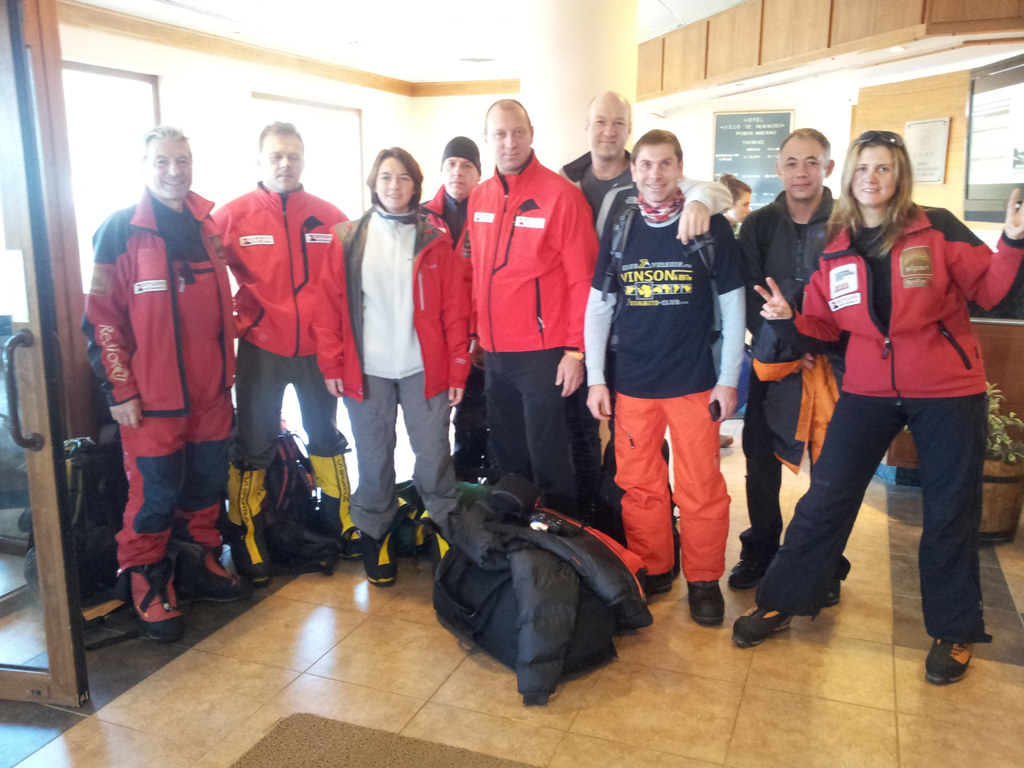
In Punta Arenas
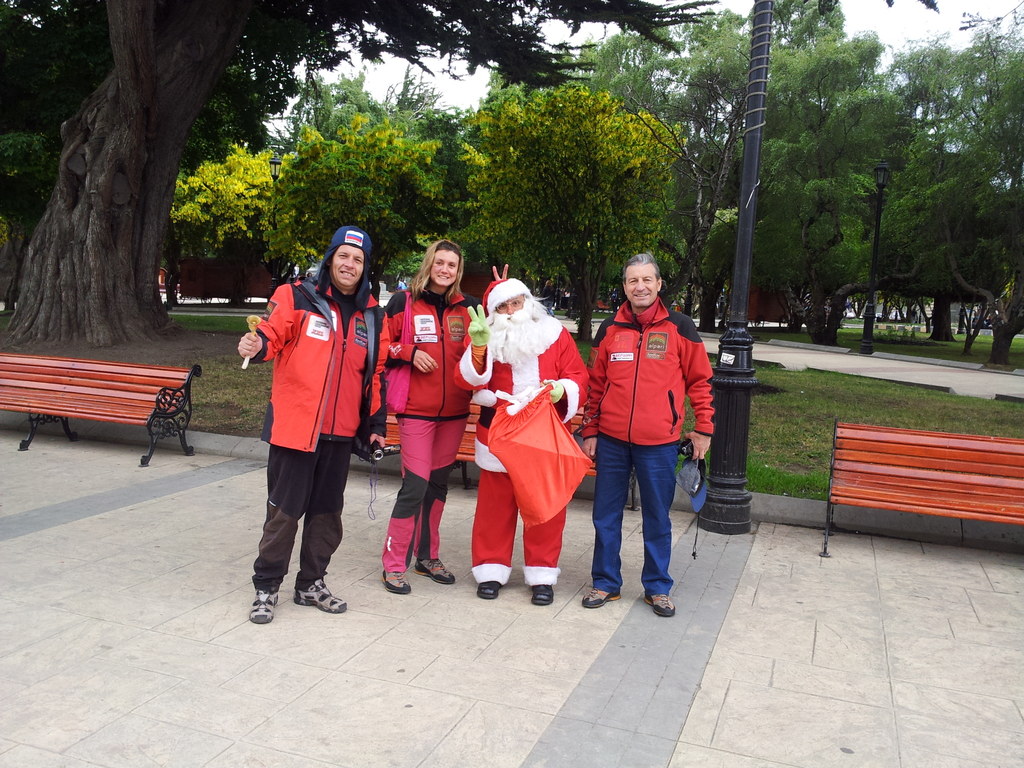
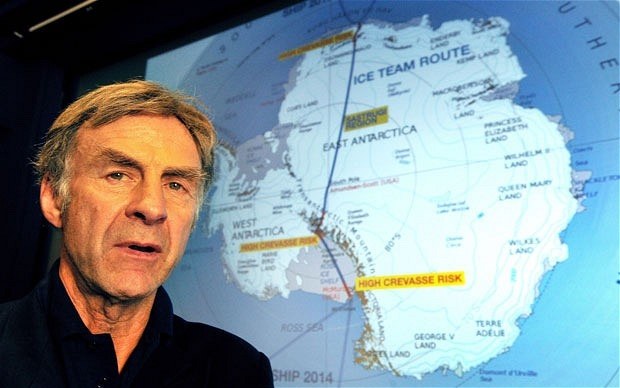
Sir Ranulph Fiennes to attempt record Antarctica trek
South Pole.
By Matthew Price. BBC News. British explorer Sir Ranulph Fiennes is to lead the first team on foot acrossAntarcticaduring the southern winter. The six-month expedition next year is being called the Coldest Journey, crossing terrain where ...
By Matthew Price. BBC News.
British explorer Sir Ranulph Fiennes is to lead the first team on foot acrossAntarcticaduring the southern winter.
The six-month expedition next year is being called the Coldest Journey, crossing terrain where the temperature has hit -90C.
It will be 68-year-old Sir Ranulph's latest record attempt. Past feats have seen him go pole to pole and climb Everest as a pensioner.
Guinness World Records describes him as the world's greatest living explorer.
"We do it because we like to break world records," says Sir Ranulph, his bushy eyebrows icing up while on a training session close to theArctic.
"Sometimes we don't succeed, but it's what we go for. It's our specialty."
The team will be dropped off by ship on the Pacific coast of the continent and wait for the equinox on 21 March 2013 before setting off over the ice shelf.
'Impossible' expedition
A hundred years ago on the same ice shelf, Capt Scott died on his polar expedition as he was caught out by the start of the southern winter.
Achievements of Sir Ranulph Fiennes
2009: Became the oldest Briton to reach the summit ofMount Everest, aged 65, after earlier attempts
2003: Ran seven marathons on seven continents in seven days - after suffering a heart attack a few months earlier
2000: Lost most fingers on his left hand to frostbite during an unaided attempt to reach the north pole - and carried out amputations himself using a fretsaw
1992-93: First unaided crossing of the Antarctic continent
1991: Led an expedition that discovered the Lost City of Ubar on the Yemeni border
1990: Set world record for unsupported northerly polar travel
1979-82: Made the first journey round the world crossing through both the north and south poles, travelling on sea and land
- First to reach both poles and cross Antarctic and ArcticOceans
1968-69: Led the first hovercraft expedition up the Nile- the longest river in the world
Sir Ranulph and his team will start their expedition as the winter begins.
They will then ascend 10,000ft (3,000m) on to the inland plateau, and head onwards to the south pole.
After that, it is several hundred miles before they drop 11,000ft back on to the ice shelf, and finally some 2,000 miles (3,200km) after they started, they hope to reach the Ross Sea.
"We looked at this 25 years ago and realised it was impossible," says Sir Ranulph.
So why do it now?
Rivalry is a large part of the answer.
"We heard a rumour that Norwegian explorers were contemplating this. We realised we were going to have to have a go."
There are other motivations. As with previous expeditions they will raise money for charity - this time for Seeing is Believing, an initiative to fight avoidable blindness.
During the sea voyage to get to the Antarctic coast, the team will carry out scientific tasks to provide data on marine life, oceanography and meteorology.
While crossingAntarctica, they will also help scientists who are compiling information about changes to the ice shelf and the effect of climate change upon the poles.
Sir Ranulph and his fellow explorers normally pull sledges carrying everything they need with them on such journeys.
This time will be different.
The explorer is well known for taking part in the first successful circumnavigation of the world on its polar axis, completed with Charles Burton in 1982
The British government stipulates that any team heading toAntarcticafor such a trip needs to be self-sufficient.
So while Sir Ranulph and a skiing partner will lead on foot, they will be followed by two bulldozers dragging industrial sledges.
Inside three containers on the sledges will be their living quarters, supplies, and a science lab. Dragged behind this will be the fuel they need.
'Coldest place on earth'
It is as extreme as you can possibly get... Your lungs definitely suffer. The air going in is so cold it's going to freeze some of the moisture that's in that system”
Every bit of kit needs to be tested - even invented - if they are to make it alive across one of the most inhospitable terrains.
So, Sir Ranulph and his team spent several days at a vehicle testing ground in northernSwedenearlier this year.
They will expect blizzards, darkness, and whiteouts. "At -70C a wind of even just 10mph will cut you like a knife," says Sir Ranulph.
To help them avoid crevasses up to 200ft deep, the two skiers will pull a ground-penetrating radar system which will relay pictures to the lead vehicle.
Like much of the equipment, though, they do not know if it will work.
"This technology is used extensively inAntarctica, but in the summer," says Steve Holland, who is running the expedition's equipment research team.
This team is "taking a technology and pushing it even further", he adds.
"For smaller items of equipment we can do cold chamber work - and we did this with clothing. But that's to see whether it becomes brittle and is going to break.
Sir Ranulph is heading to the coldest place on Earth at the coldest time of year
"It doesn't tell you if it's going to work at those temperatures."
"It is as extreme as you can possibly get," says Dr Mike Stroud, who has accompanied Sir Ranulph on several expeditions and has been advising him on this one.
"The challenge is whether it is possible to operate and be out there in the coldest place on earth at the coldest time of the year."
"Your lungs definitely suffer. The air going in is so cold it's going to freeze some of the moisture that's in that system."
Frostbite will inevitably be a problem. At -40C during the Swedish training, the fingers of one team member simply froze up after exposure to the cold for too long.
They have been experimenting with boot warmers. Ski bindings will have to be adapted to fit the clumpy footwear.
They are also developing a giant "thermal bag" for the vehicles so the engines do not freeze during rest stops.
On one night inSweden, the temperature was -35C outside the cover, 35C inside it, simply from the heat of the running engine.
However, if any of this is to succeed it is Sir Ranulph who must make it across on foot.
And at 68 years old, is it really a wise thing to be attempting?
"You just must not think about getting old. If you still are lucky enough to be able to walk around not stooped, no crutch, no Zimmer frame, then you might as well go for it."
Antarctic Season for the 7 Summits Club is successfully ended. Photos
South Pole.
Dmitry Ermakov sent a message and photos already from Punta Arenas. He and his groupe came back from Antarctica. Dragan Jovovich from Serbia, the Russians Dmitry Kuznetsov and Vladimir Pankratenko with Dmitry successfully completed the Last ...
Dmitry Ermakov sent a message and photos already from Punta Arenas. He and his groupe came back from Antarctica. Dragan Jovovich from Serbia, the Russians Dmitry Kuznetsov and Vladimir Pankratenko with Dmitry successfully completed the Last Degree program. Before that, Dmitry Ermakov went up on Mount Vinson with a large group of 7 Summits Club. Total for season 7 Summits Club had two groups on the Vinson and two in the Last Degree.
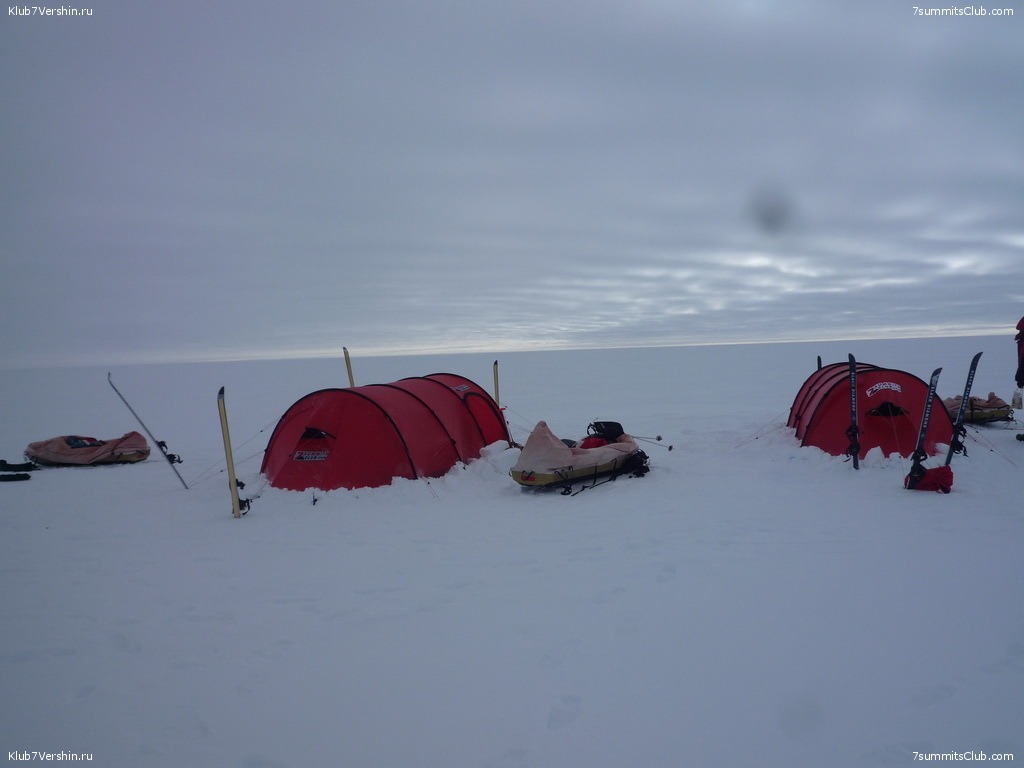
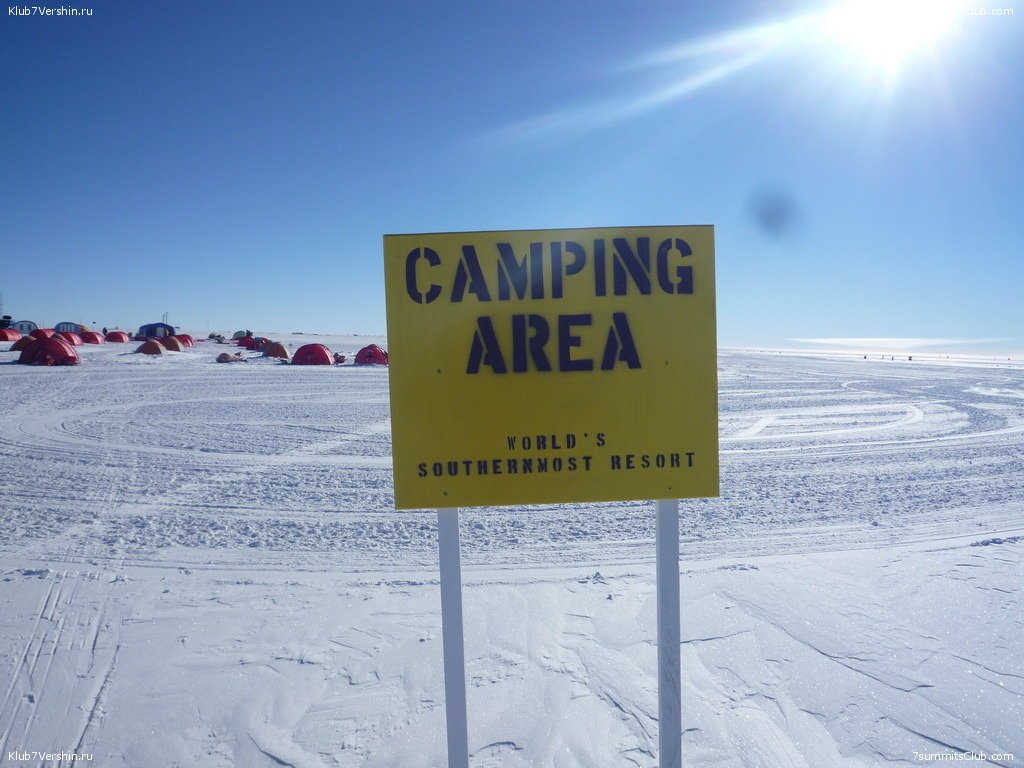
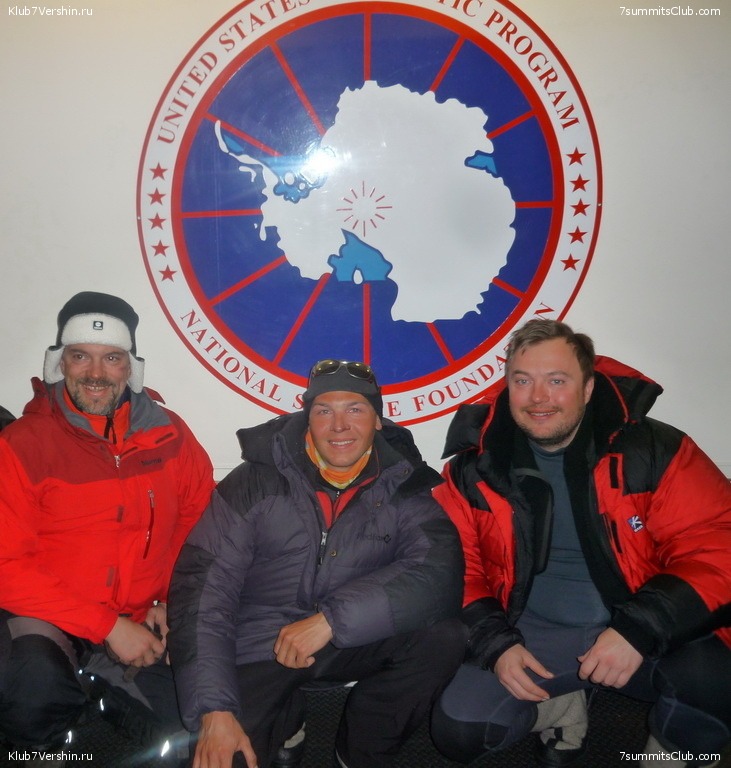
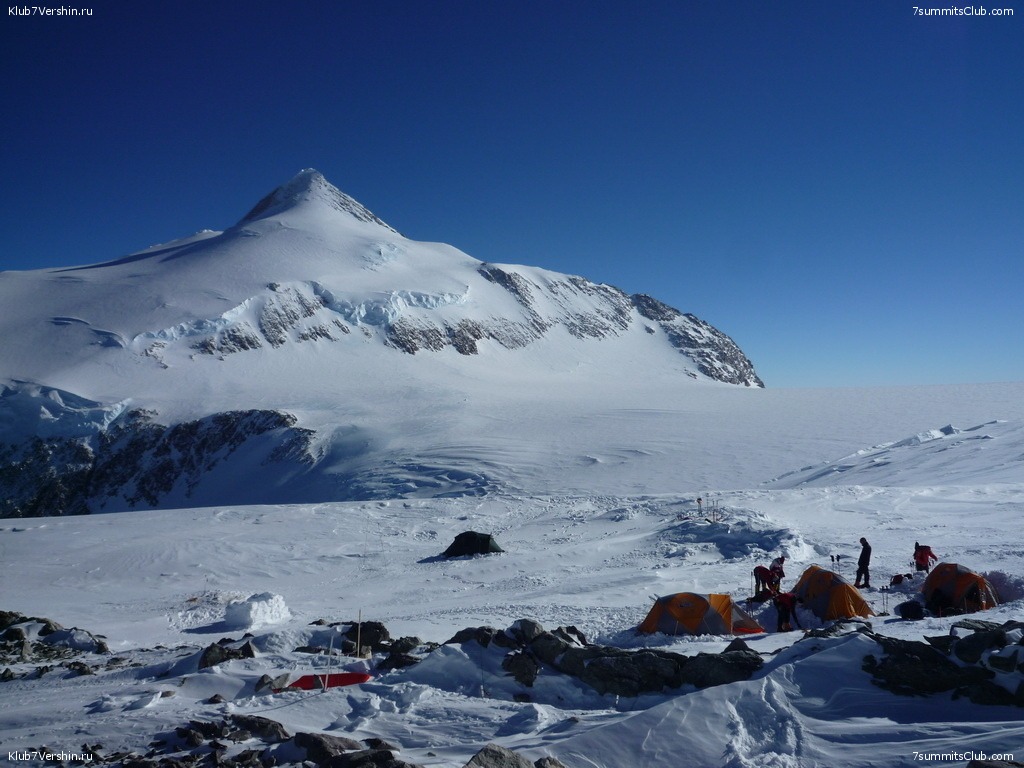
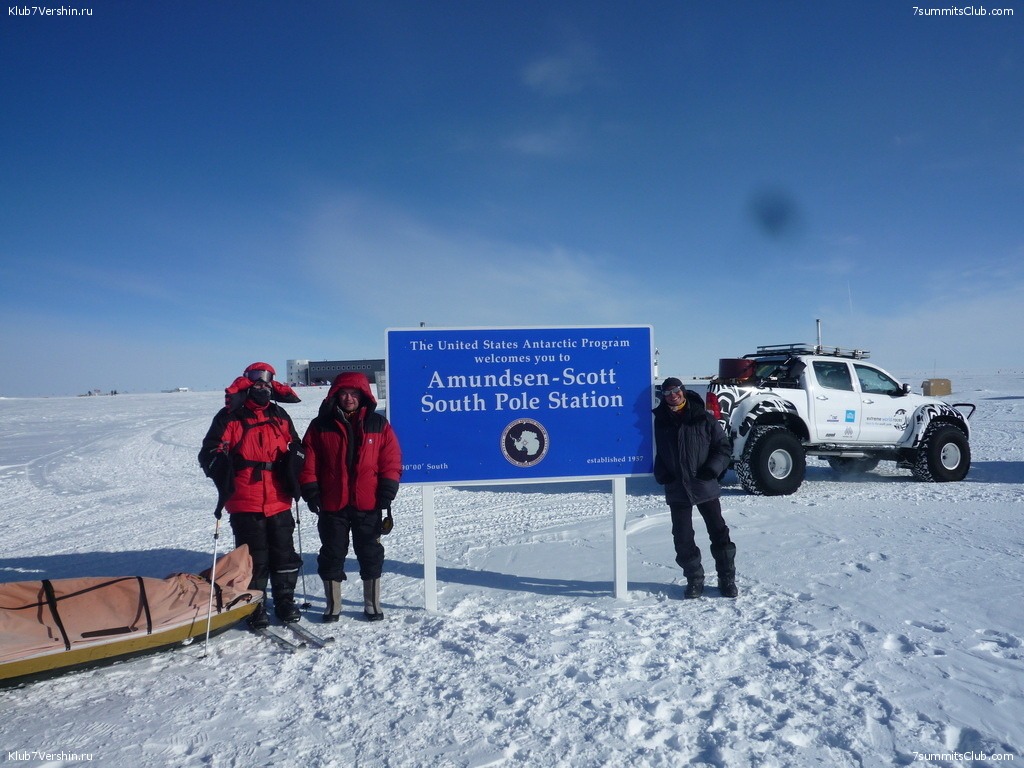
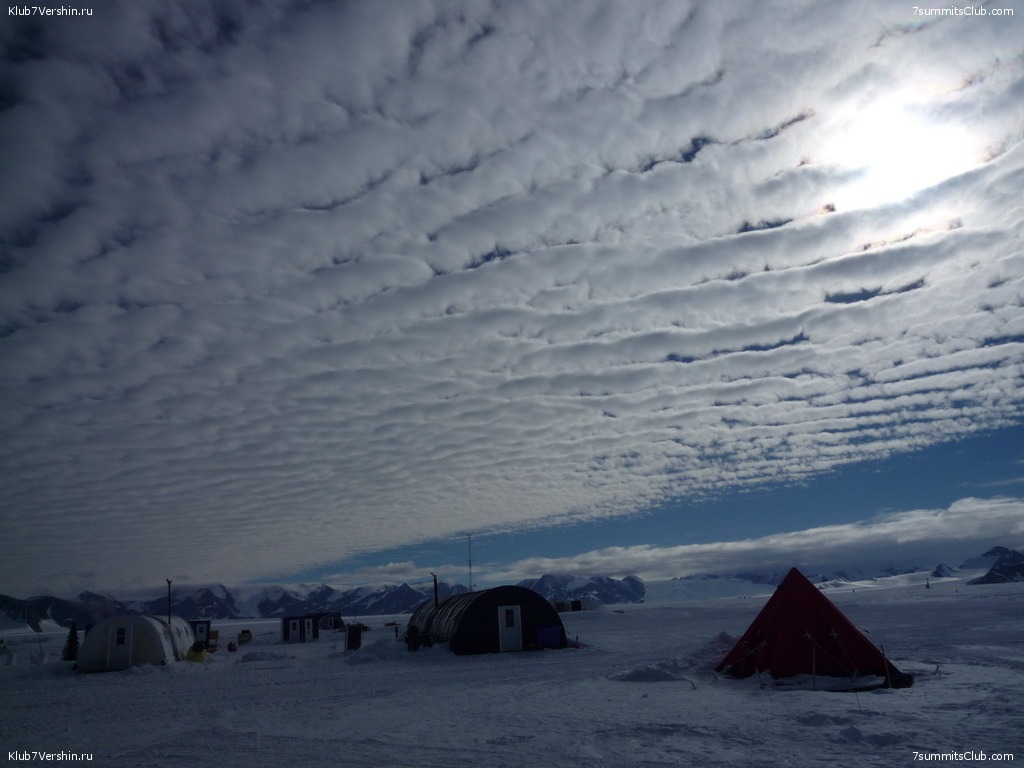
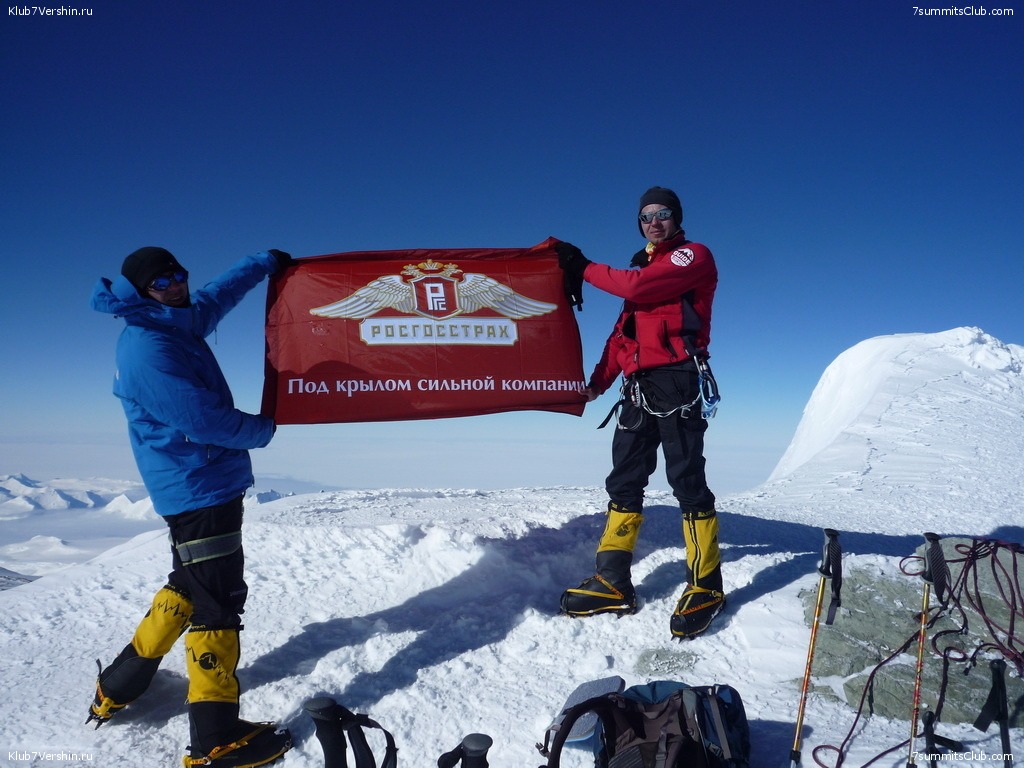
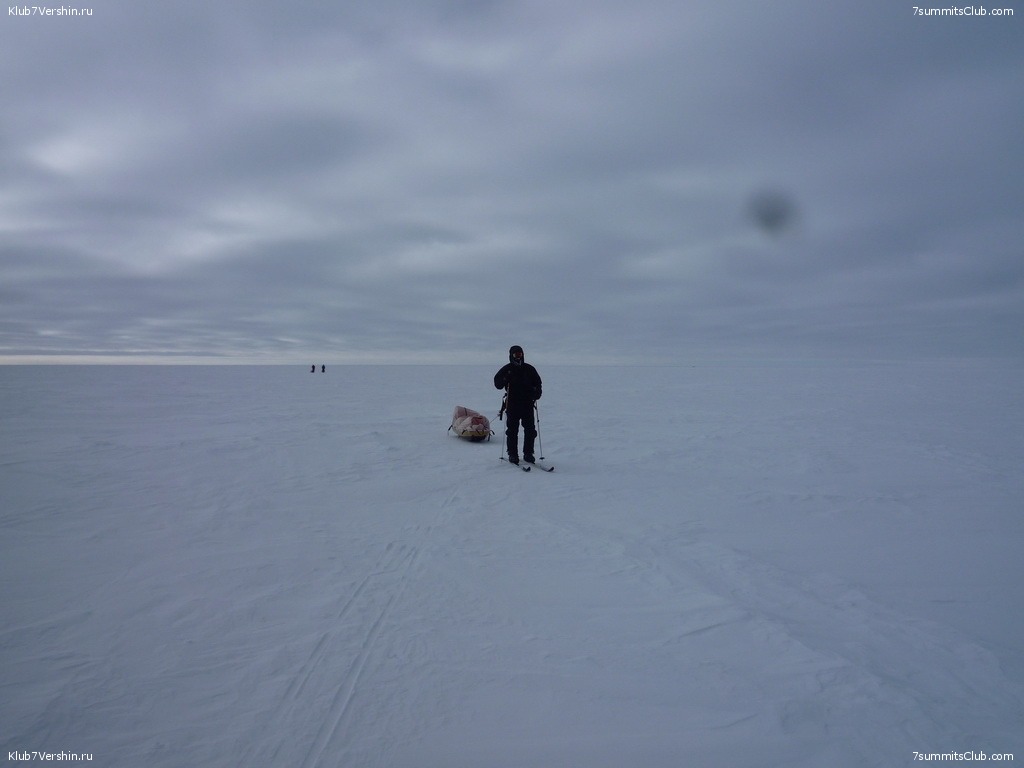
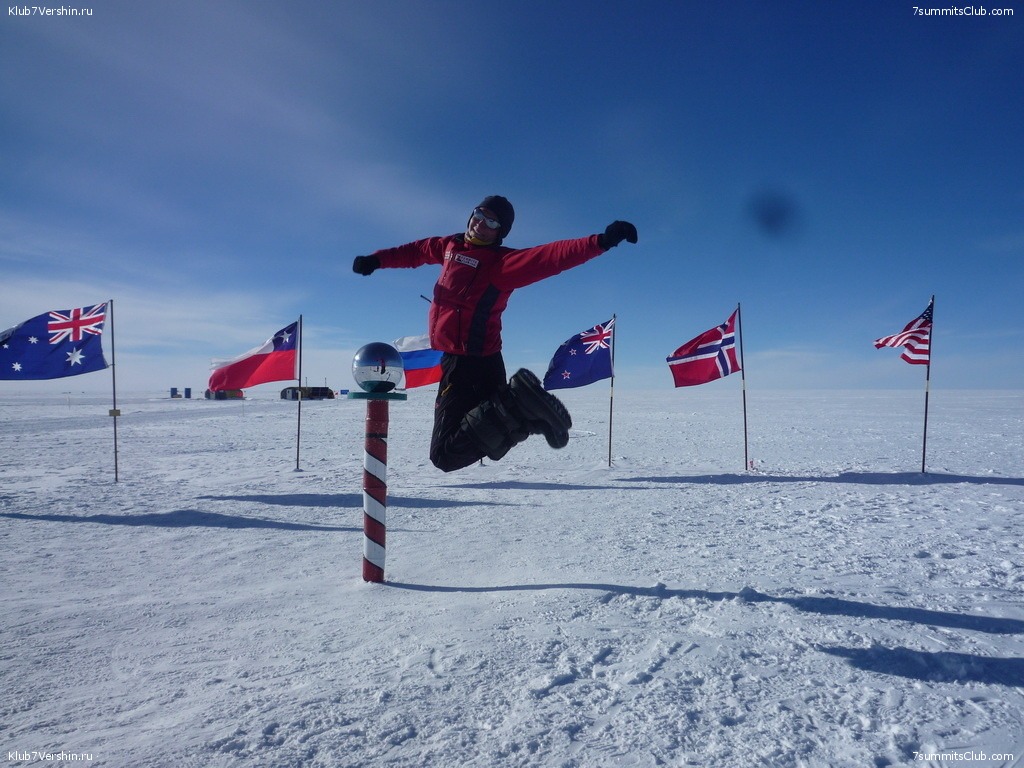
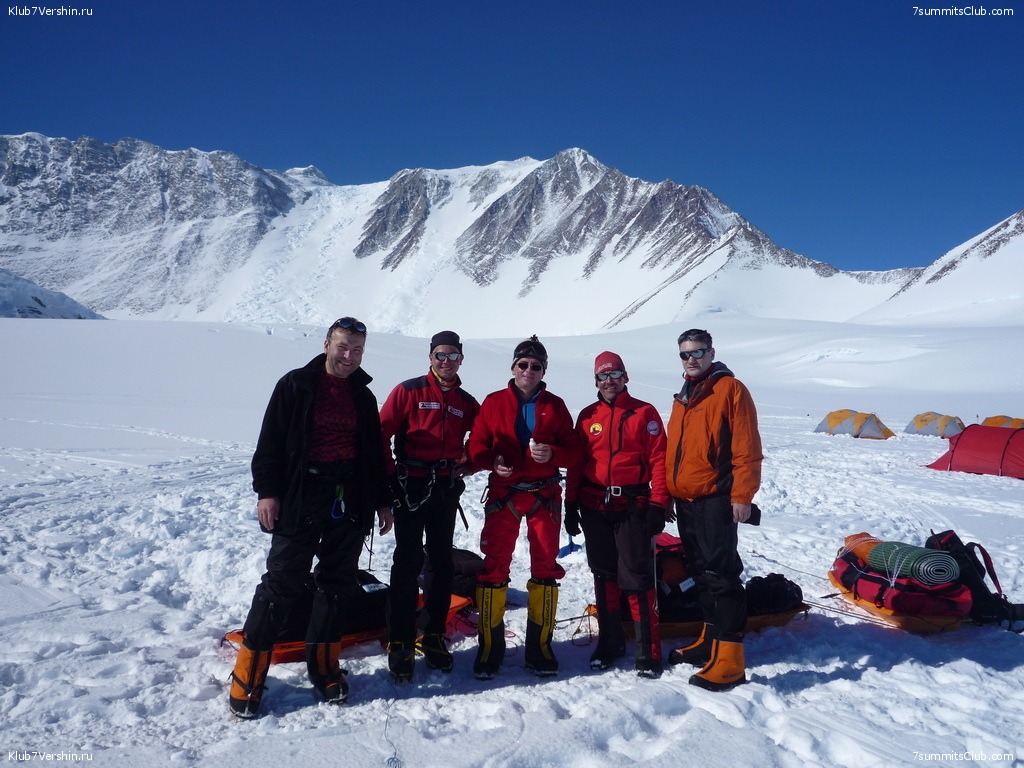
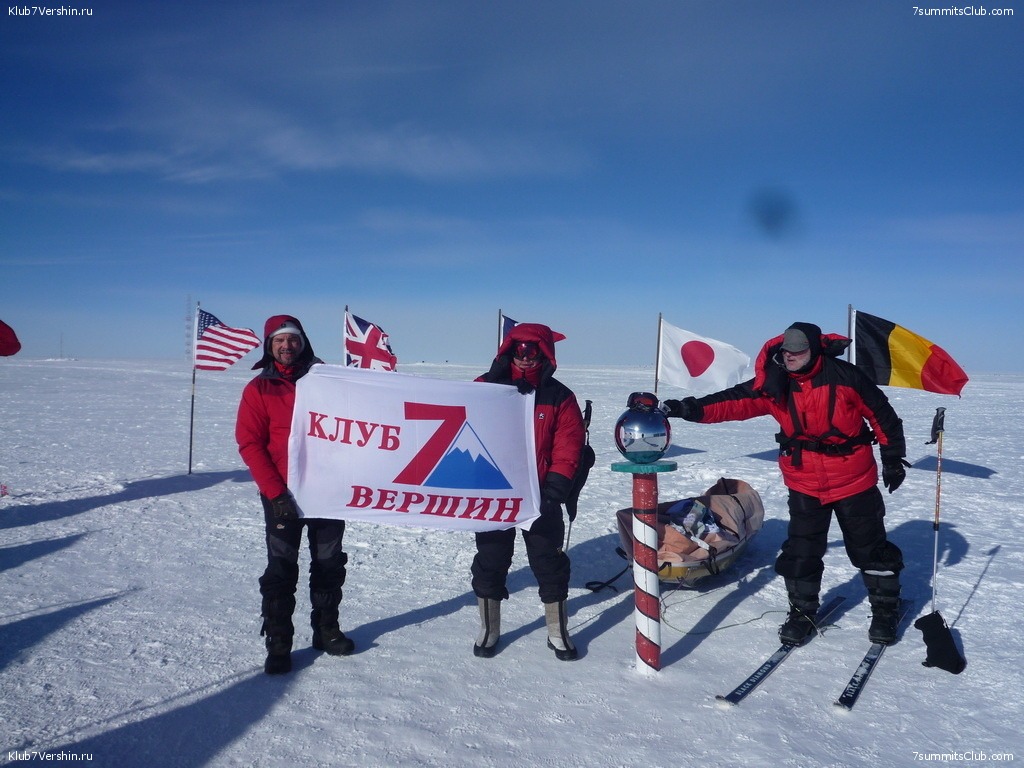
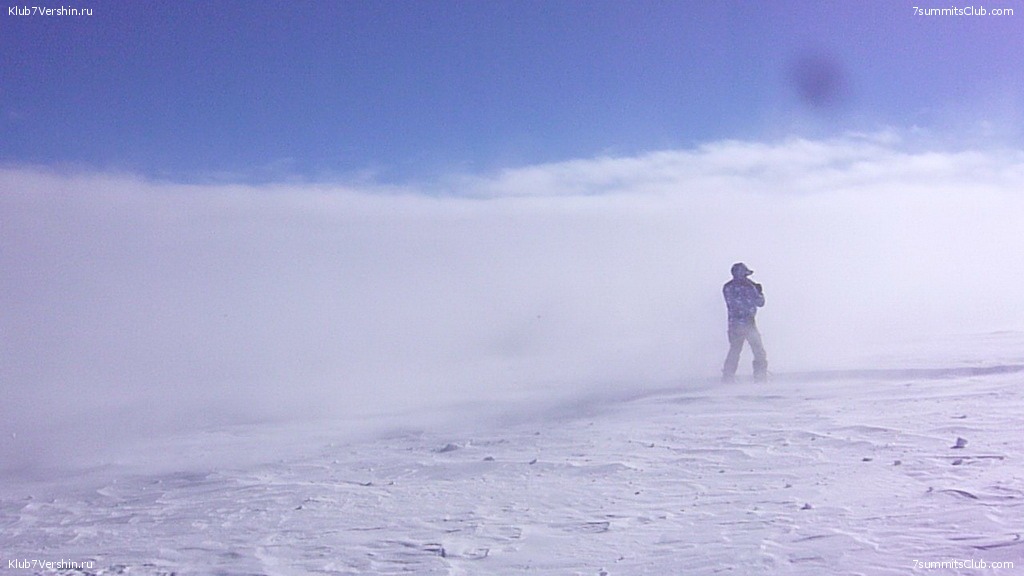

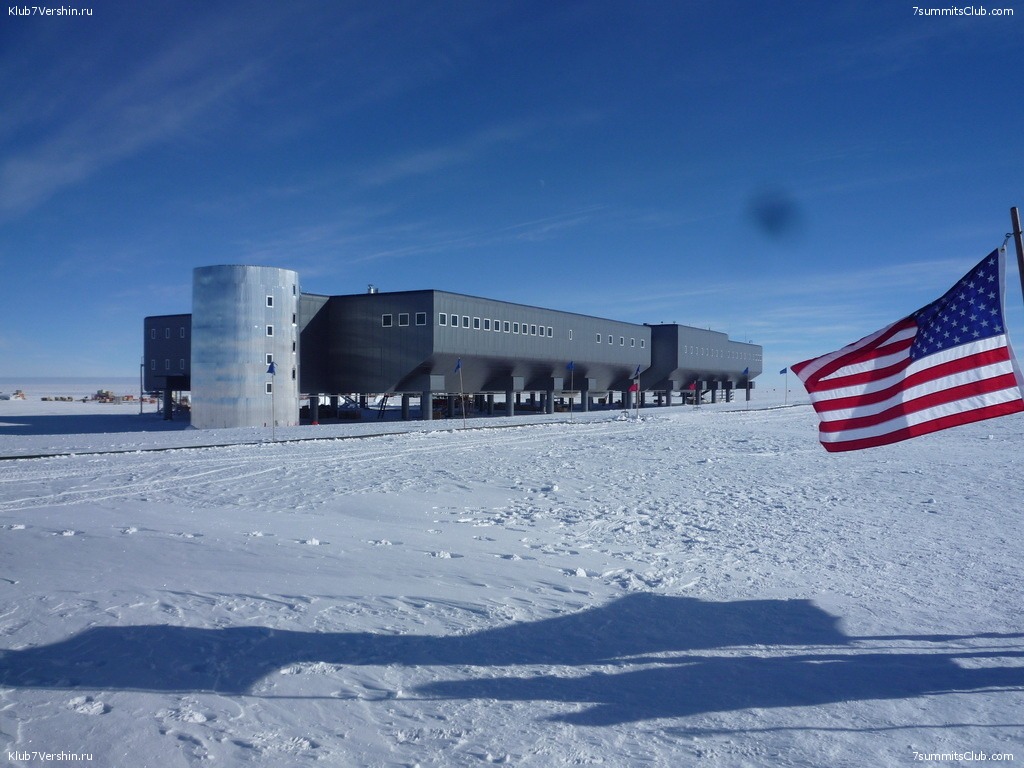
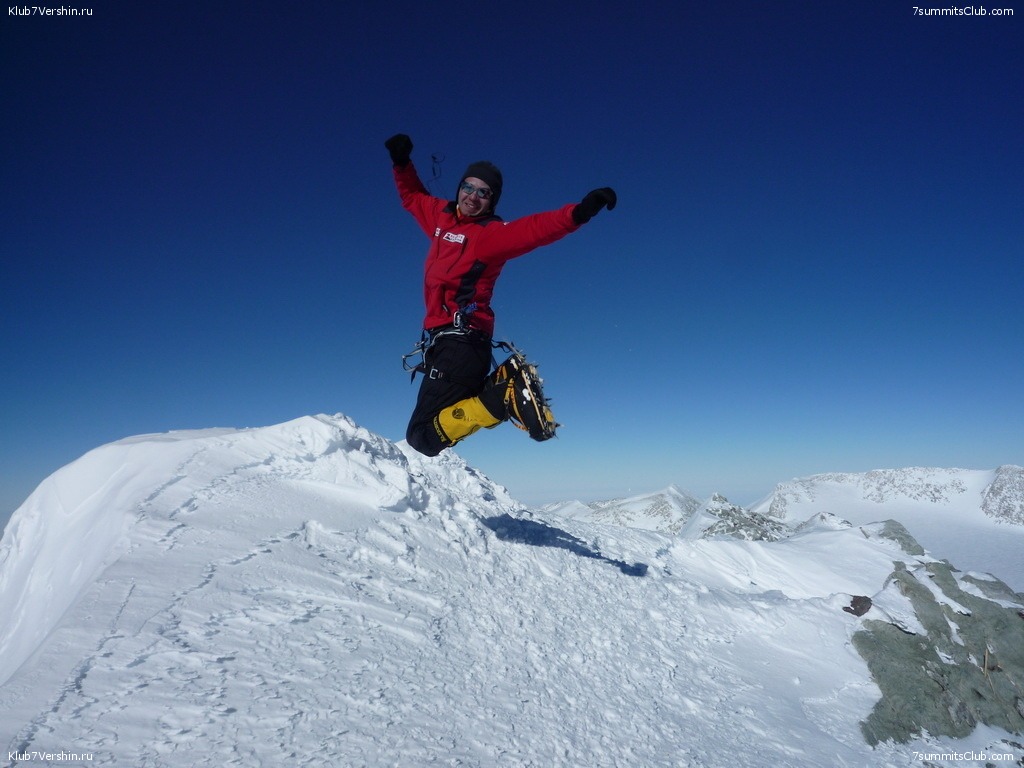
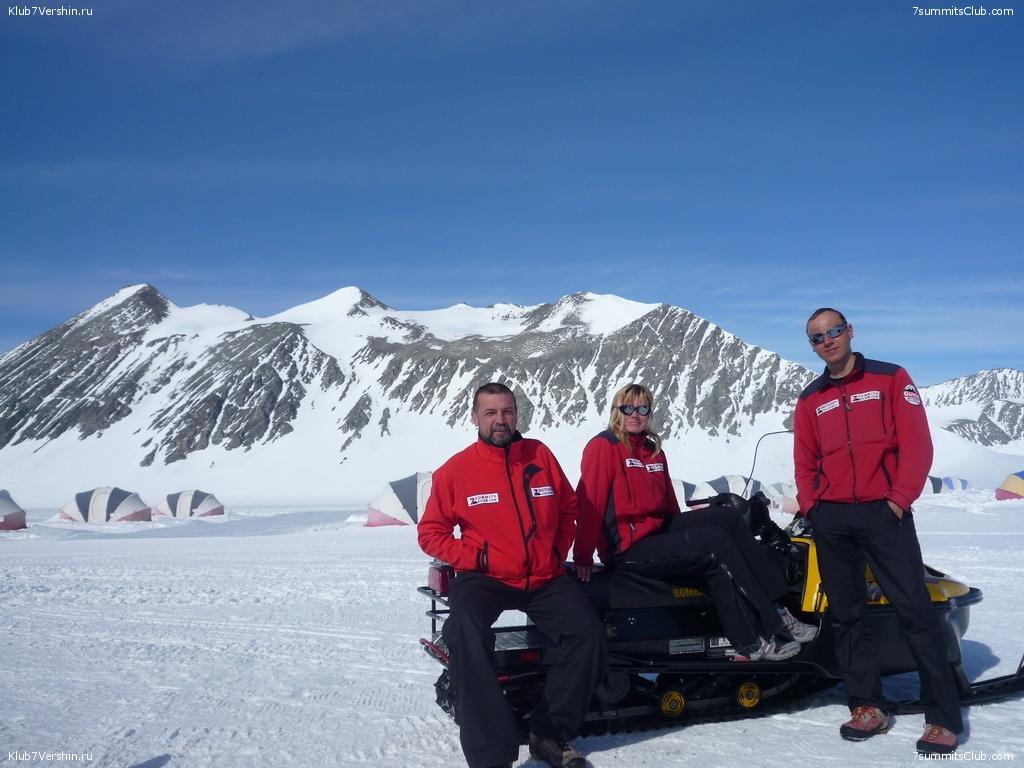
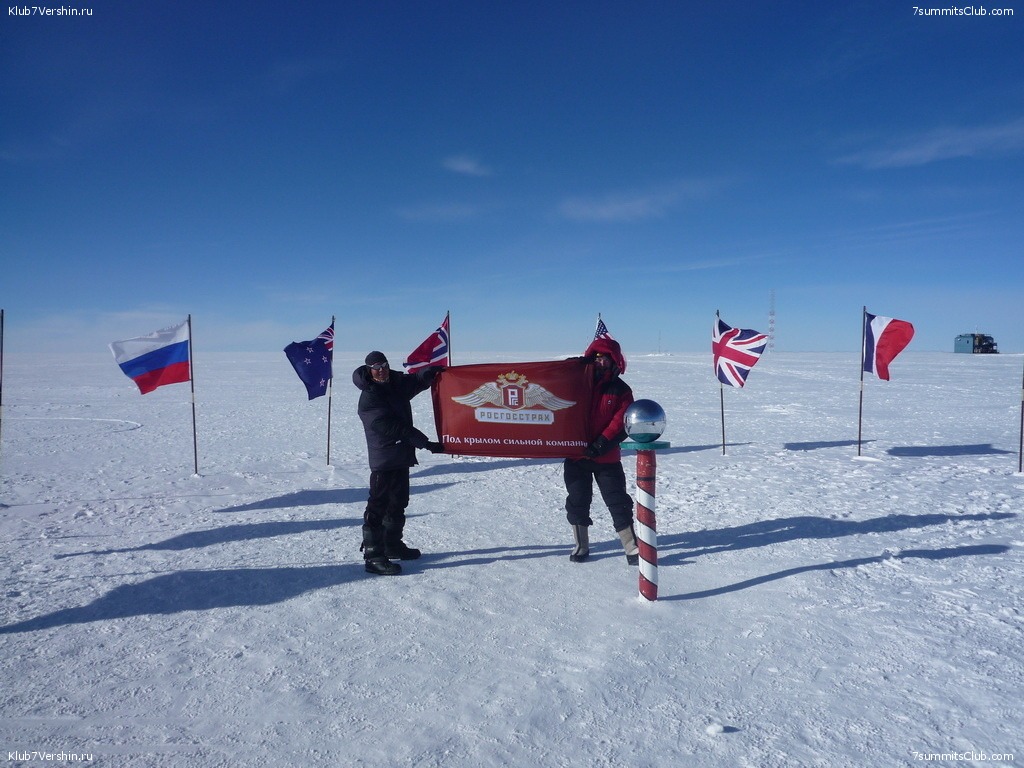
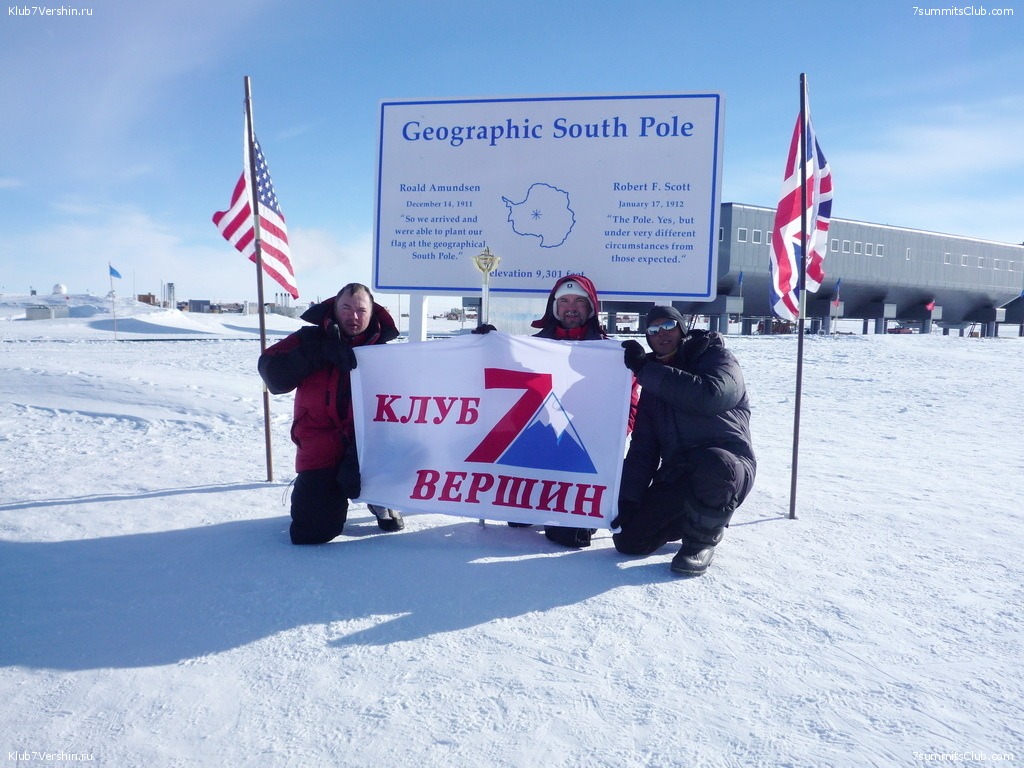
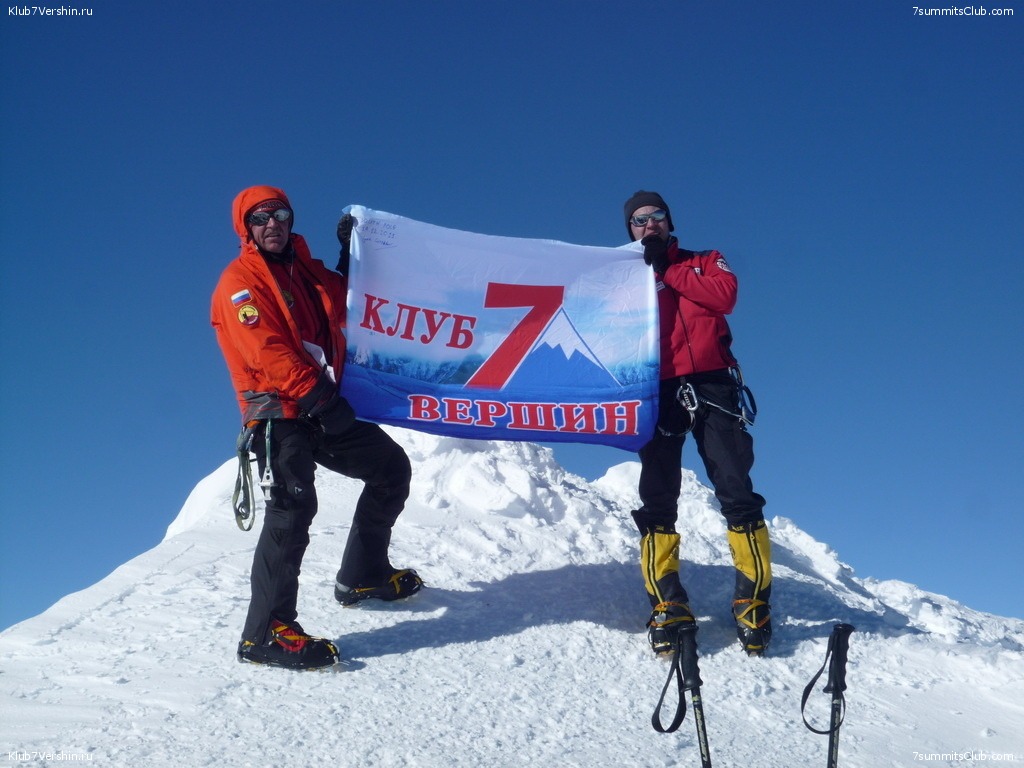

Today we successfully reached the South Pole
South Pole.
7 Summits, hello! Dmitry Ermakov, from Antarctica, from the South Pole. Today we successfully reached the South Pole. And today, we visited the Amundsen-Scott Polar station. All team members are satisfied and happy. Tomorrow we will stay ...
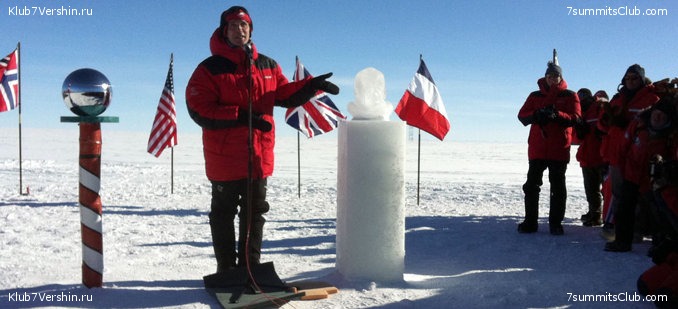
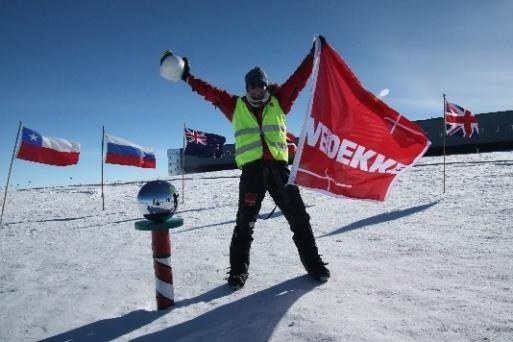
7 Summits, hello! Dmitry Ermakov, from Antarctica, from the South Pole. Today we successfully reached the South Pole. And today, we visited the Amundsen-Scott Polar station. All team members are satisfied and happy. Tomorrow we will stay for the 100th anniversary of the conquest of the Pole by Robert Scott. The day after tomorrow we fly to the Union Glacier and on .... All is well, the mood is perfect...
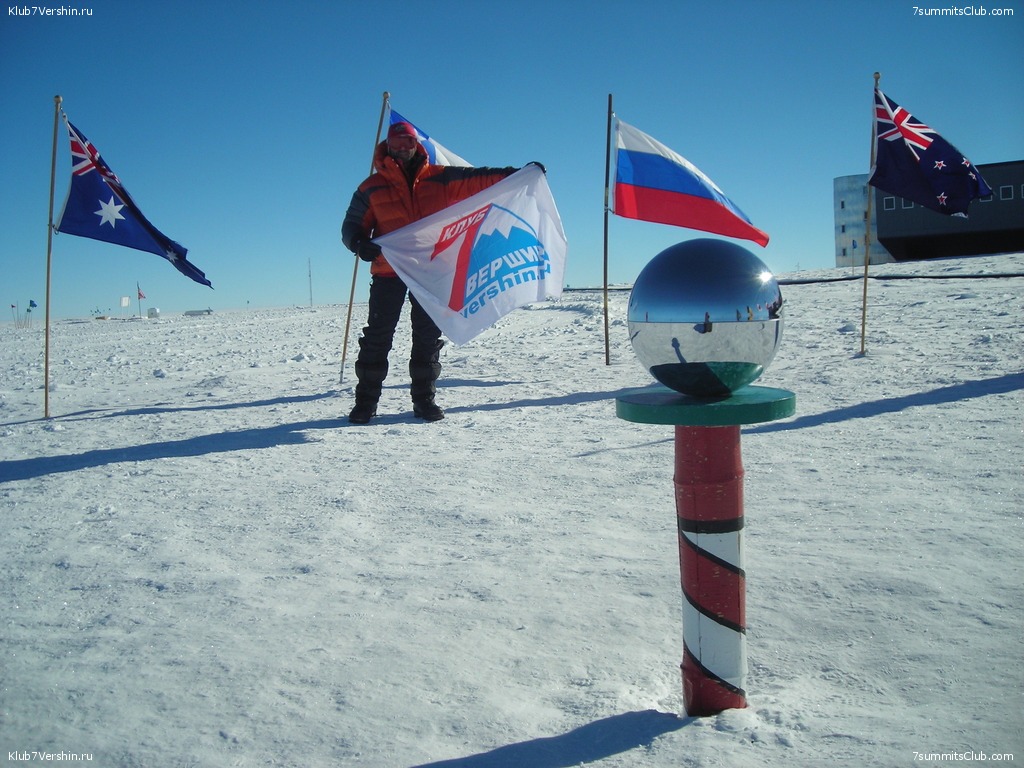
The group went on the route for the Last Degree program
South Pole.
7 Summits, hello! This is Dmitry Ermakov from Antarctica. Today is the first day of our journey on the program Last Degree. After three days of waiting, the plane took us to the 89 degrees mark. Today we went about four kilometers. Now we ...
7 Summits, hello! This is Dmitry Ermakov from Antarctica. Today is the first day of our journey on the program Last Degree. After three days of waiting, the plane took us to the 89 degrees mark. Today we went about four kilometers. Now we are eating, getting ready for bed. Everything is okay, all right. Members feel good. In general, everything goes according to the plan. By !
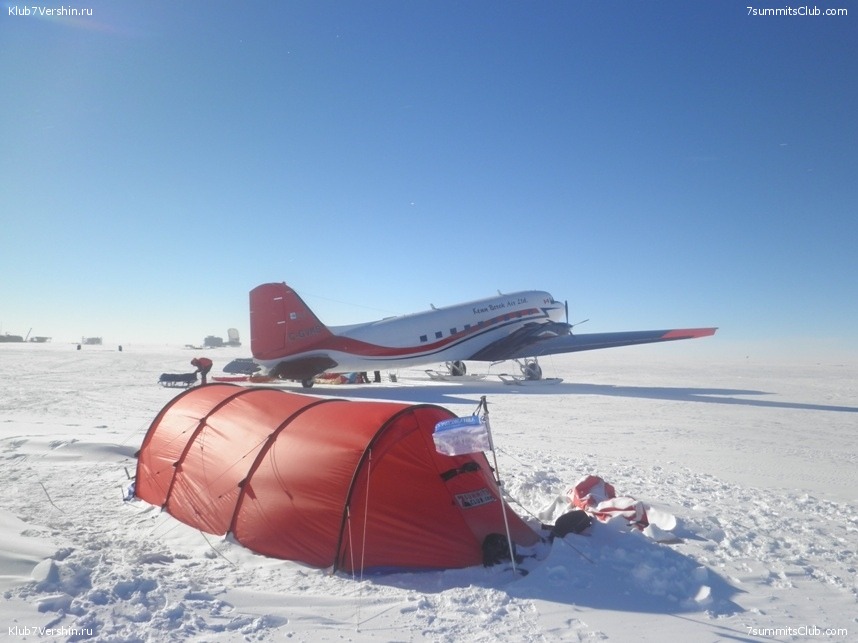
News from Antarctica
South Pole.
This is Alex Abramov from Punta Arenas. We have a very important message. Victor Boboc with the entire team successfully climbed the summit of Massif Vinson. That means, all members of the second team, as well as the first one, summited ...
This is Alex Abramov from Punta Arenas. We have a very important message. Victor Boboc with the entire team successfully climbed the summit of Massif Vinson. That means, all members of the second team, as well as the first one, summited Vinson Massif. Hooray! Next, Dima Ermakov is on the Union Glacier. Tomorrow his team should begin their journey Last Degree. In parallel, seven international teams will go. This will be a beautiful international campaign to the South Pole. I and Lyuda Korobeshko with a team of Russian IL-76 pilots celebrate Russian Christmas. Bye all!
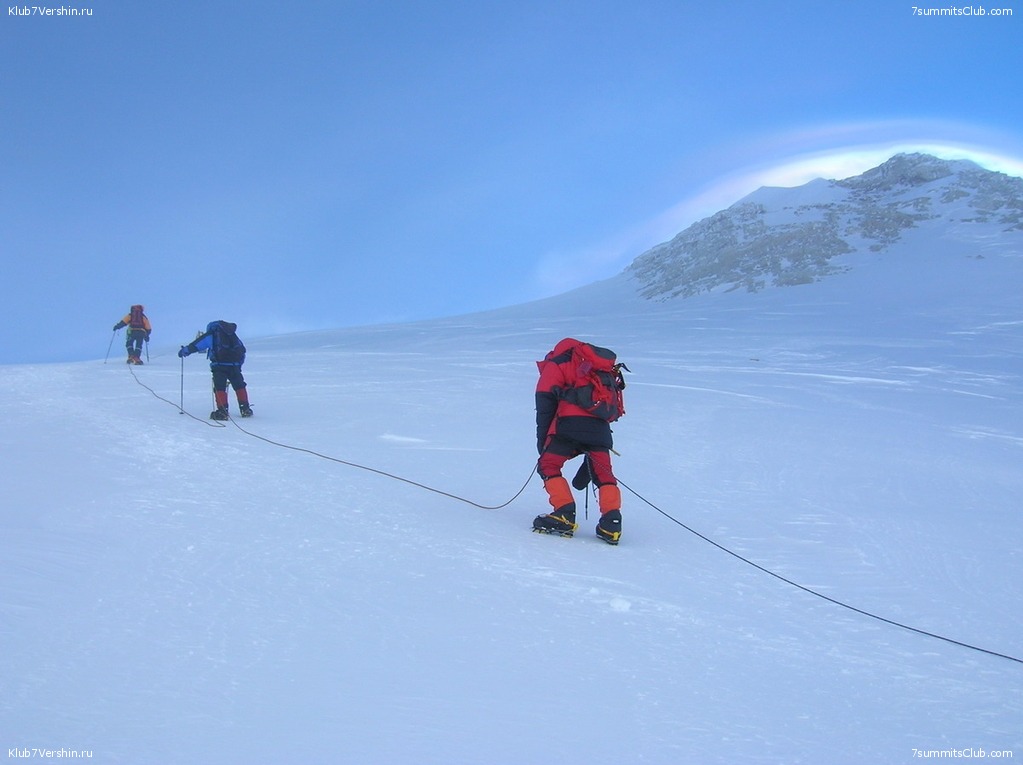
The last degree. Luda Korobeshko called from the South Pole
South Pole.
12/29/2011 Lyudmila Korobeshko, George Kuzmin and Alexander Viktorov from 7 Summits Club expedition reached the South Pole. The last two days have been quite heavy and intense. Alexander Viktorov was patient with his foot, and then George ...
12/29/2011 Lyudmila Korobeshko, George Kuzmin and Alexander Viktorov from 7 Summits Club expedition reached the South Pole. The last two days have been quite heavy and intense. Alexander Viktorov was patient with his foot, and then George suddenly fall ill. All plans have been violated. It is especially valuable that the group was able to reach the Pole without help of plane...
Antarctic Ice Marathon and World record of Richard Donovan
South Pole.
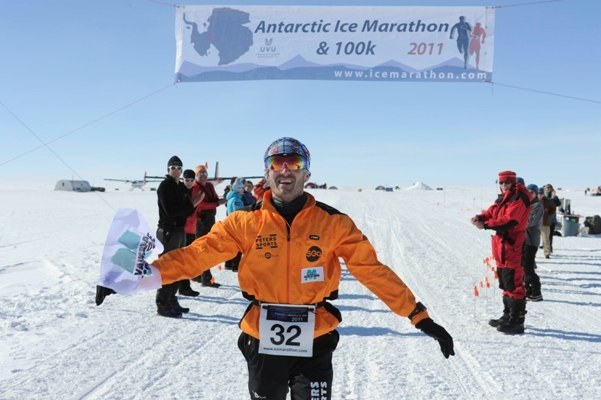
7 December 2011: Remarkable records were set across the board at the seventh running of the Antarctic Ice Marathon races, the southernmost marathon in the world, over the weekend. More than 40 competitors from 15 countries gathered on the ...
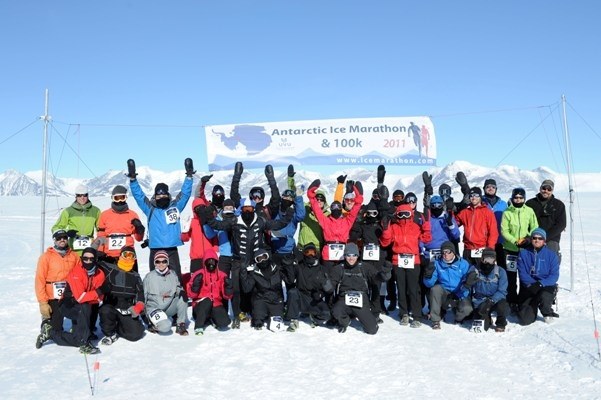
7 December 2011: Remarkable records were set across the board at the seventh running of the Antarctic Ice Marathon races, the southernmost marathon in the world, over the weekend. More than 40 competitors from 15 countries gathered on the frozen continent to take part in half,-marathon, marathon and ultramarathon races that would test the resolve of the most steely of running enthusiasts.
The events, which are held at Union Glacier camp, are the only official foot races within the Antarctic Circle on the mainland continent. This year’s event was particularly special as it coincided with the Centenary year of Man reaching the South Pole. On 1 December, Clement Thevenet (FRA) dominated the men’s marathon (42.195km) distance when running a record time of 3:47:07. In amazingly bright sunshine and temperatures of -18C, the Frenchman led from start to finish to take the title ahead of the USA’s Alvin Matthews and Matthew Von Ertfelda.
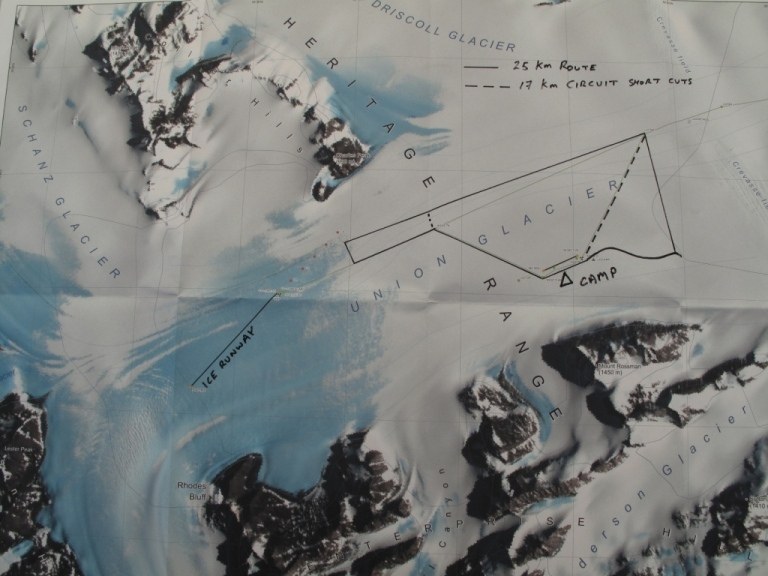

Yvonne Brown (GBR) was a worthy winner of the women’s race in 4:26:10, finishing ahead of two previous North Pole Marathon winners, Emer Dooley (IRL) and Alison Hamlett (GBR). The first three finishers broke the previous female record.
On 2 December, the Antarctic 100km began at 13:00 GMT and it took Thevenet a mere 12:09:06 hrs, another new Antarctic record, to add the title to his marathon victory. It was a colder affair with windchill temperatures dropping down to about -25C and the prolonged exposure causing two competitors , including Thevenet, requiring IV fluids after the race. Former winner, Mark de Keyser (BEL) was a very close second with Dave Deany (AUS) third.
To round off the record setting weekend, Richard Donovan (IRL) ran an epic 100 miles in a day (24:35:02 hrs) to coincide with the Centenary year celebrations. Darkness was not a problem for the Irishman as there are 24 hours of daylight in the interior of the Antarctic at this time of year.
Registration is now open for next year's Antarctic Ice Marathon & 100k trip, which is scheduled to occur from 19th - 23rd November 2012. For full details, see www.icemarathon.com.
MEN'S MARATHON
1. Clement Thevenet (FRA) - 3:47:07 hrs
2. Alvin Matthews (USA) - 4:38:19 hrs
3. Matthew Von Ertfelda (USA) - 4:52:58 hrs
4. Simon Abrahams (GBR) - 4:56:49 hrs
4. Joey McBreary (USA) - 4:56:49 hrs
6. Krzysztof Szachna (POL) - 5:02:50 hrs
7. Dave Kennedy (USA) - 5:06:42 hrs
8. Errol Damelin (GBR) - 5:14:30 hrs
9. Taco Jongman (NED) - 5:23:00 hrs
10. Doug Carrell (USA) - 5:44:26 hrs
11. Christopher Duff (USA) - 5:53:58 hrs
12. Rusty Berther (AUS) - 6:02:12 hrs
13. Ray Miller (USA) - 6:16:29 hrs
14. Riet Van de Velde (BEL) - 6:28:31 hrs
15. Ladislav Simek (CZE) - 6:29:52 hrs
16. Michael Parrott (CAN) - 6:39:06 hrs
17. Michael Bartl (GER) - 6:51:46 hrs
18. Jeremy Cashen (NZL) - 7:28:10
19. Tom Cashen (NZL) - 7:28:11 hrs
20. Mark Kooijman (PHI) - 7:31:18 hrs
21. Don Kern (USA) - 7:53:38 hrs
22. Sebastian Armenault (ARG) - 8:09:41 hrs
23. Anand Anantharaman (IND) - 8:45:40 hrs
* George Nichols (USA) ran a marathon on 2 December in 8:30:12 hrs
WOMEN'S MARATHON
1. Yvonne Brown (GBR) - 4:26:10 hrs
2. Emer Dooley (IRL) - 4:41:30 hrs
3. Alison Hamlett (GBR)- 4:46:39
4. Elizabeth Chapman (GBR) - 5:43:57 hrs
5. Sarah Ames (GER)- 6:35:58
6. Mala Honnatti (IND)- 7:11:26
7. Sophie Woo (NED) - 7:31:18 hrs
8. Rebecca Frechette (USA)- 8:43:50
9. Linh Huynh (CAN)- 8:44:53
* Bonnie Bailey (USA) ran a marathon on 2 December in 8:30:12 hrs
ANTARCTIC 100 KM
1. Clement Thevenet (FRA) - 12:09:06 hrs
2. Marc de Keyser (BEL) - 12:14:18 hrs
3. Dave Deany (AUS) - 13:48:14 hrs
4. Brent Weigner (USA) - 15:41:04 hrs
5. Matthew Von Ertfelda (USA) - 20:03:42 hrs
100 MILE POLAR CENTENARY RUN
1. Richard Donovan (IRL) - 24:35:02 hrs
WHITE CONTINENT HALF-MARATHON
1. Chad Bruce (CAN) - 2:30.32 hrs
2. Matt Kirby (GBR) - 3:01:01 hrs
*******
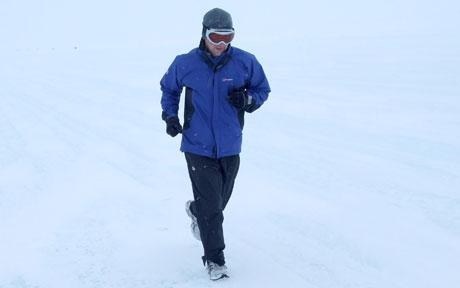
Richard Donovan, 42, from Galway in the west of Ireland, began his challenge in numbing sub-zero temperatures in Antarctica on January 31 and finished in Sydney just five days, nine hours and eight minutes later.

"What he did was staggering, quite remarkable," John O'Shea, founder and chief executive of third world charity Goal, told AFP, adding that the money raised would help the charity's work in Sudan's Darfur region.
"It is extraordinary given the conditions and the time scale involved. I can't believe he managed it. I am in awe of what he achieved to bring attention to the tragedy of Dafur and to alleviate the suffering there.
After starting in the Antarctic, Mr Donovan got on a plane to South Africa and completed a marathon in Cape Town. He then flew to Dubai and ran another one, completing three marathons in two days.
Braving snow storms that shut down London on Monday, Mr Donovan completed his fourth marathon there before going to Toronto in Canada for his fifth. Then it was on to Chile for a Santiago marathon and finally to Australia.
Over 129 hours, Mr Donovan endured extreme temperatures and only slept in the economy class seats of airplanes between continents, said Mr O'Shea.
In total he ran 183 miles and flew tens of thousands of miles.
"It brings into focus how little the world does and how much one man does for Dafur. He feels almost as strongly as I do about the lack of an adequate international response in Dafur where 400,000 people have died," Mr O'Shea said.
Goal has been working in Sudan since 1985 and spent about 18 million euros (£15.7 million) there on aid in 2007.
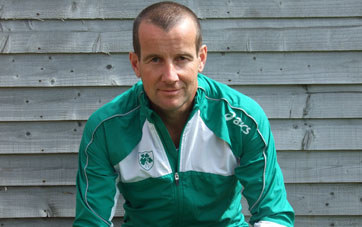
In 2002, Mr Donovan became the first person in the world to run a marathon at both the North and South Poles.
He now organises the northernmost marathon on earth, the North Pole Marathon, and the southernmost marathon on earth, the Antarctic Ice Marathon.
Mr Donovan has won the South Pole Marathon, the Inca Trail Marathon, the Everest Challenge Marathon, the Antarctic 100km and the Himalayan 100-Mile Stage Race.

Right from the Pole
South Pole.
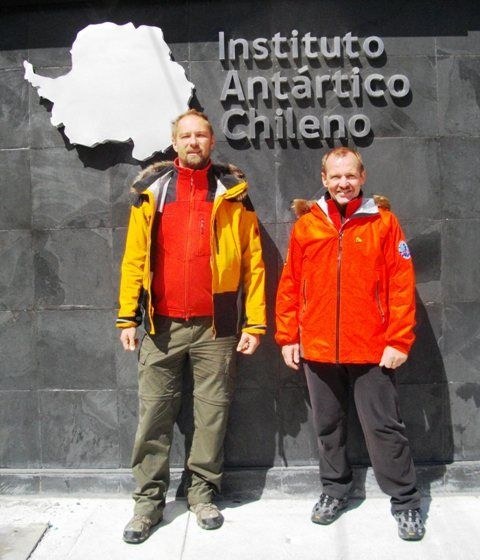
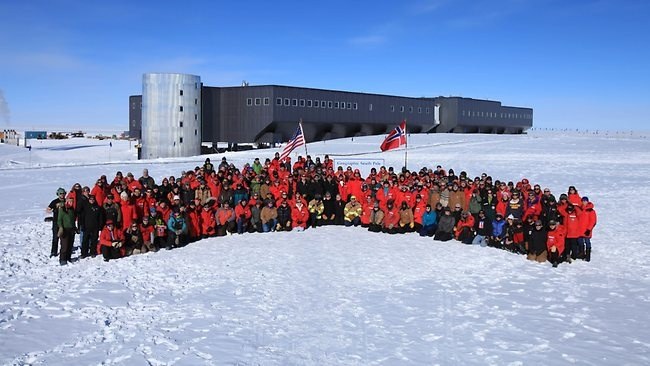
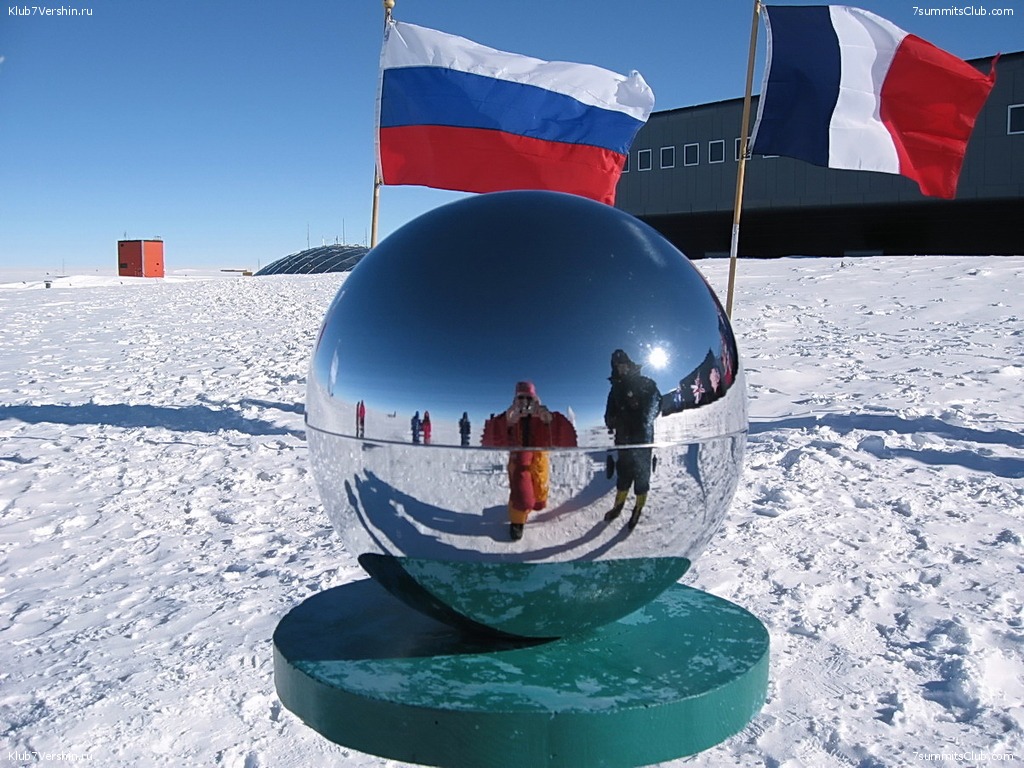
Bobok, right from the center of Antarctica. Today, December 14, Igor and I, together, two years later, and after 100 years since the first man reached the South Pole, we arrived at it. We are just happy with what is happening ! Ahead is a ...
Bobok, right from the center of Antarctica. Today, December 14, Igor and I, together, two years later, and after 100 years since the first man reached the South Pole, we arrived at it. We are just happy with what is happening ! Ahead is a rich cultural program, meeting with Prime Minister of Norway, the whole ceremony of the meeting. We are all very well, all is well. Life has gone right! All ardent greetings! Byu!


We are in ten kilometers from the South Pole
South Pole.
Here Bobok Victor from Antarctica. All is excellent for us! We are in ten kilometers from the South Pole. Now we lie in tent and we will be waiting for the ceremony "the Entry on the Pole", on 14th of December. That is all – we ...
Here Bobok Victor from Antarctica. All is excellent for us! We are in ten kilometers from the South Pole. Now we lie in tent and we will be waiting for the ceremony "the Entry on the Pole", on 14th of December. That is all – we have crossed our 250 kilometers. And now a day of rest that we deserve. We brush up, clean up. And as I have already told, we wait for an input ceremony. Everything is OK. We made it ! The last 10 kilometers we get in any case, any weather. But - on December, 14th.
All ardent greetings!
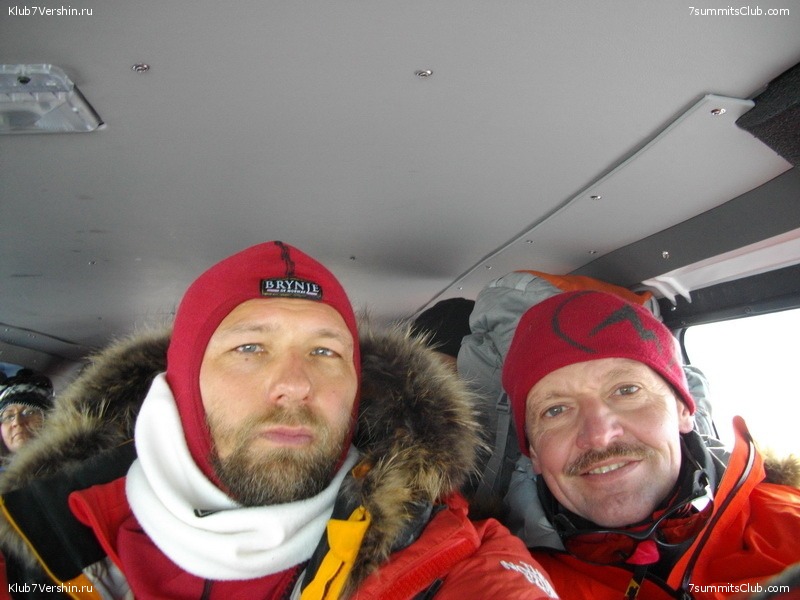
Victor Bobok and Igor Grishkov


Victor Bobok and Igor Grishkov go along Amundsen's camps
South Pole.
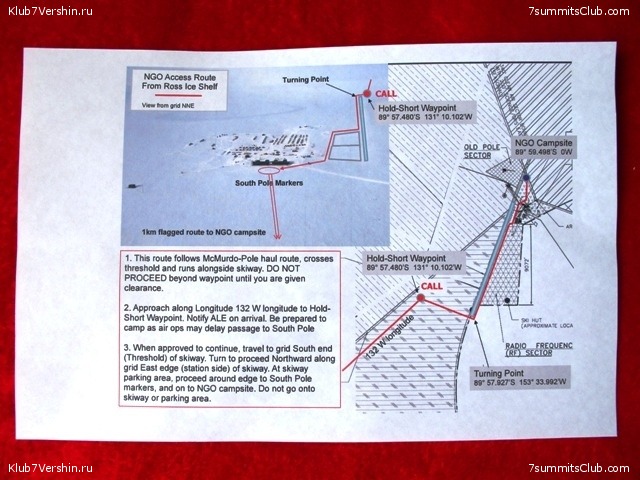
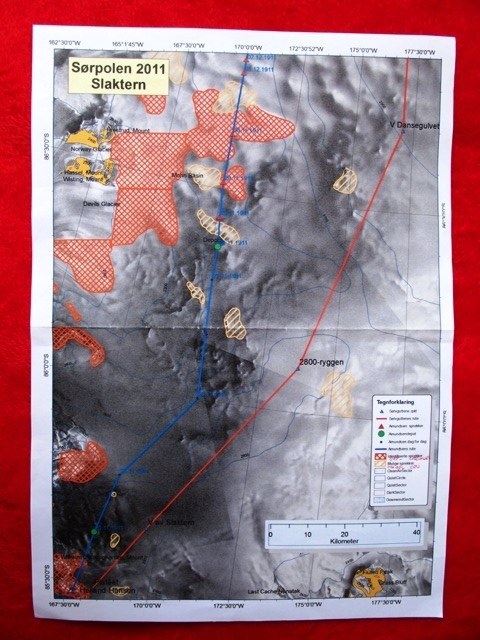
Victor Bobok and Igor Grishkov continue their journey to the South Pole. They go independently, separately from the Norwegian expedition. «For today we have passed 24 km, it remains for three days. If to look on a map, consider on a ...
Victor Bobok and Igor Grishkov continue their journey to the South Pole. They go independently, separately from the Norwegian expedition. «For today we have passed 24 km, it remains for three days. If to look on a map, consider on a straight line, it remains 55 km form 250 km on start. In a reality it will be 60 - 65 kilometers with all detours and obstacles.
We go in accuracy along Amundsen's camps. We read his diaries, we are verifying. The weather as it isn't strange, is the same as hundred years ago. Sometimes the horizon merges with the earth and the sky, then it is visible nothing. Temperatures - approximately from -20 to, one time -50 The most difficult was in the beginning of our way, due the absence of acclimatization at height and heavy sledge!
An altitude of a point of disembarkation was 3150 m., and the Pole, approximately 3800 m.
Every day we worked from 5-30 a.m. till 10 p.m.. The wind somehow blew, 12-19 meters per second, a real storm. So we have managed in this wind to remove our tent, to pass 8,5 km and to put it again! In the beginning we carried sledge on 50 kg everyone. But the sledges become now easier, we eat, we burn fuel down.
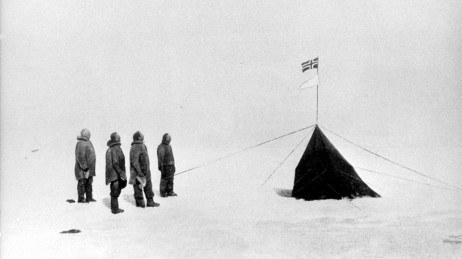
We hope to reach the Pole on December, 14th under the Russian flag with shouts «Forward!». Exactly 100 years after Amundsen.
Now we observe a bad weather, as in Amundsen's diaries.
All greetings!
Victor Bobok and Igor Grishkov
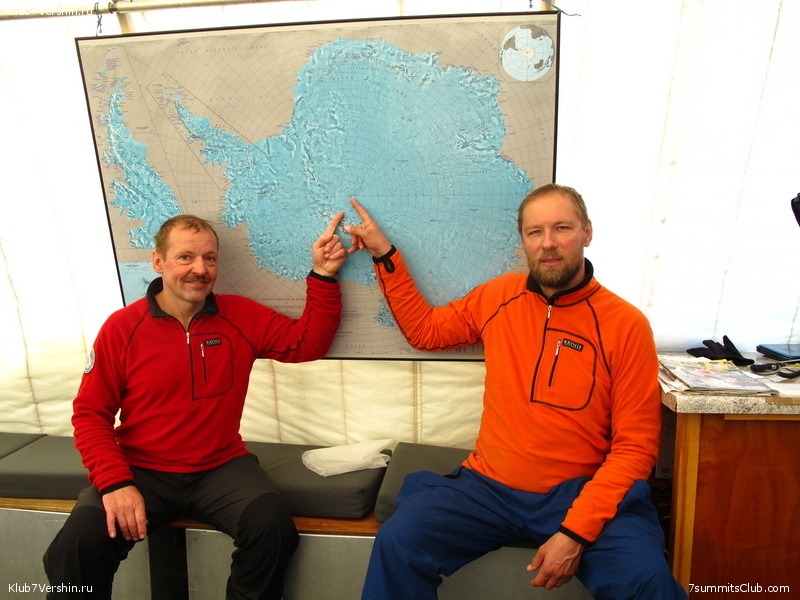
The plan for a season in Antarctica
South Pole.
Yesterday Alexander Abramov and Dmitry Ermakov have taken off for the South America for preparation of the main part of the Antarctic season. The large quantity of luggage has demanded big efforts to push in the plane. The season program ...
Yesterday Alexander Abramov and Dmitry Ermakov have taken off for the South America for preparation of the main part of the Antarctic season. The large quantity of luggage has demanded big efforts to push in the plane. The season program will be strained, and in Antarctica there is no place to buy there. So work, nerves, time – all should be spent, including in advance. Lyudmila Korobeshko will take off for Chile on Monday. So for time, this South American country becomes the main site of our Club.
During change in Madrid the friendly meeting with the Spanish climbers has occurred

The schedule of groups for the Antarctic summer
I Last Degree (16-29 Dec). The South Pole. Last degree.
1 Viktorov Alexander
2 Kuzmin George
The guide - Korobeshko Lyudmila
I Vinson (16-29 Dec). Mount Vinson. The tallest of Antarctica.
1 Beirit Konstantin
2 Kostrikin Pavel
3 Lukjanov Yury - Kazakhstan
4 Lukjanova Nadezhda - Kazakhstan
5 Rudenko Ivan
The guide 1 - Bobok Victor
The guide 2 - Ermakov Dmitry
III Vinson (29 Dec-12 JAN).
1 Ko Kan Fai - Hong Kong
2 Liu Wai Ming Haston - Hong Kong
3 Viktorov Alexander
4 Demjanenko Igor
5 Dudko Sergey
6 Krasnov Dmitry
7 Murtazina Dzhamilja
8 Tcherkashin Igor
The guide 1 - Bobok Victor
The guide 2 - Tsang Chi Sing John - Hong Kong
IV Last Degree (05-19 JAN) the South Pole. Last degree
1 Jovovic Dragan - Serbia
2 Kuznetsov Dmitry
3 Pankratenko Vladimir
The guide - Ermakov Dmitry

Victor Bobok is calling from Antractica.
South Pole.
Victor Bobok from Antractica. For 8 days we have passed more than 100 kilometers. And it remains about 140 km to the Pole. In this time, all was occurred that Antarctica can give. From a full calm and good weather: a minus thirty one, ...
Victor Bobok from Antractica. For 8 days we have passed more than 100 kilometers. And it remains about 140 km to the Pole. In this time, all was occurred that Antarctica can give. From a full calm and good weather: a minus thirty one, without wind, the sun … To a storm with parameters of 13-19 meters per second. And in this weather we have managed to remove our tent, to cross about 8, 5 kilometers. And we could put this tent. So all is good, greetings from Antarctica! By ! So long!
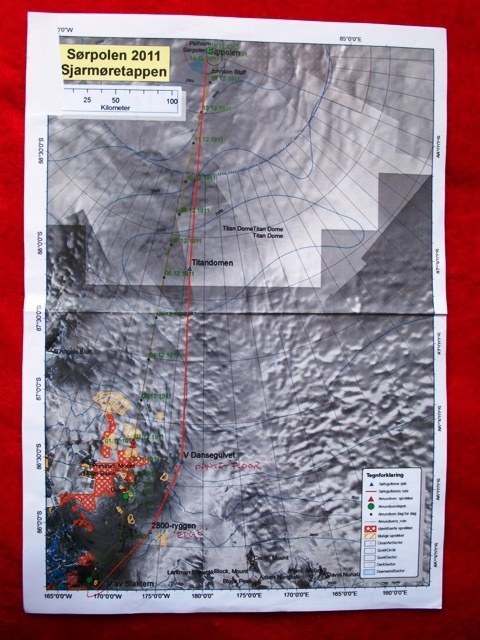
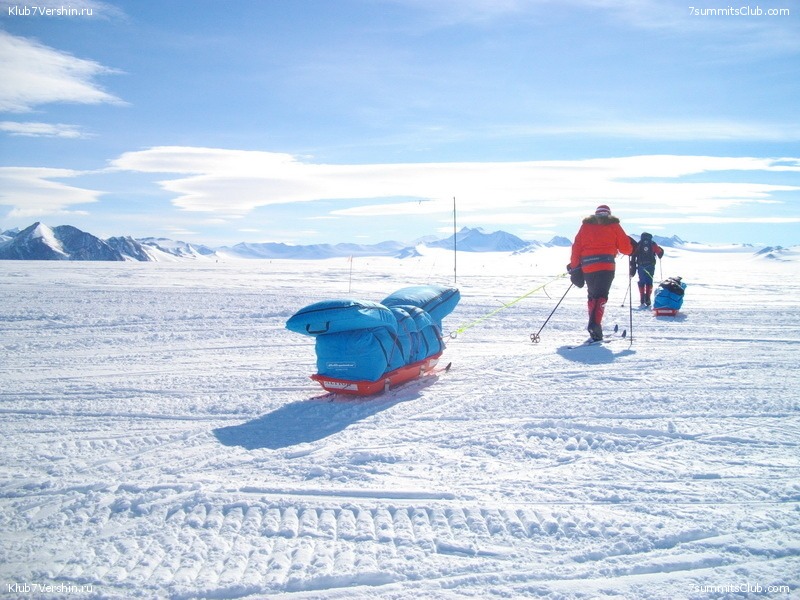


Victor Bobok – «At last!»
South Pole.
According blogs of our Norwegian colleagues and Victor's short message, the group left on a route. More than week they have spent on the basis of Union Glacier. And before the delay for a week was in in Punta Arenas. At first, the weather ...
According blogs of our Norwegian colleagues and Victor's short message, the group left on a route. More than week they have spent on the basis of Union Glacier. And before the delay for a week was in in Punta Arenas. At first, the weather was bad, then malfunction of the plane, then – emergency flight to Vinson. Backlog from the schedule makes almost half-month. The commands which have left on a route earlier, is successful moving on Amundsen and Scott ways. Our expedition only begins the program. Within two days the group has been transfered from the Union Gleacier on the glacier of Axel Hejberg, to the foot of Peak of Nansen, the ascension on which is a part of the obligatory program of the Norwegian anniversary. Our well trained group started quickly forward, covering up to 25 km a day. High tempo for heavy loaded people.
Some pictures from Union Glacier >>>>>>>
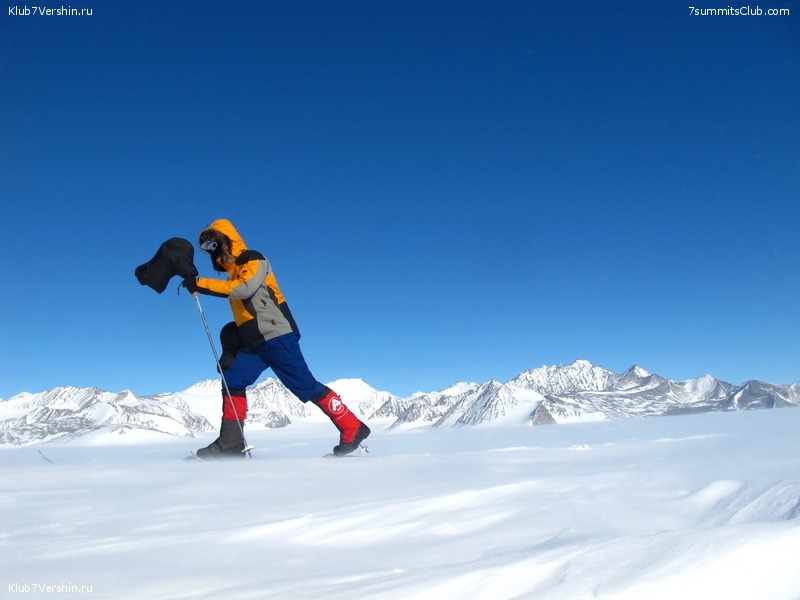
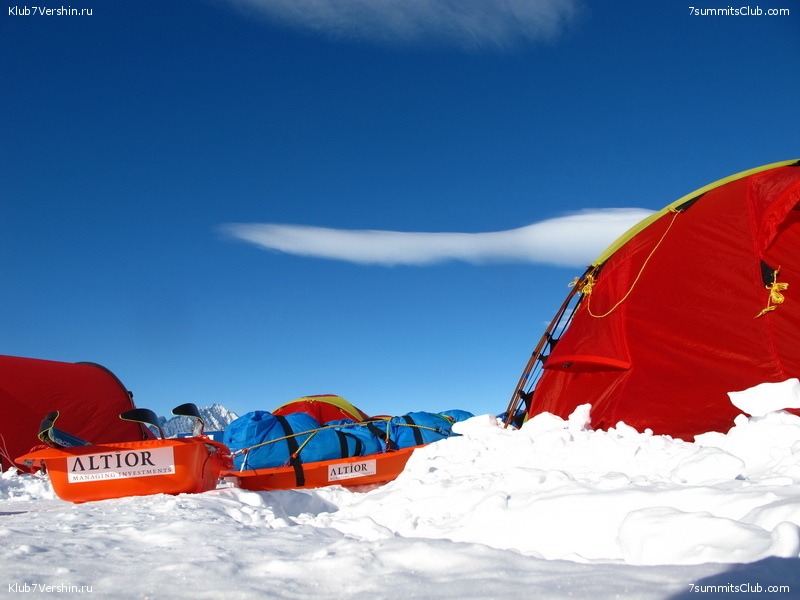
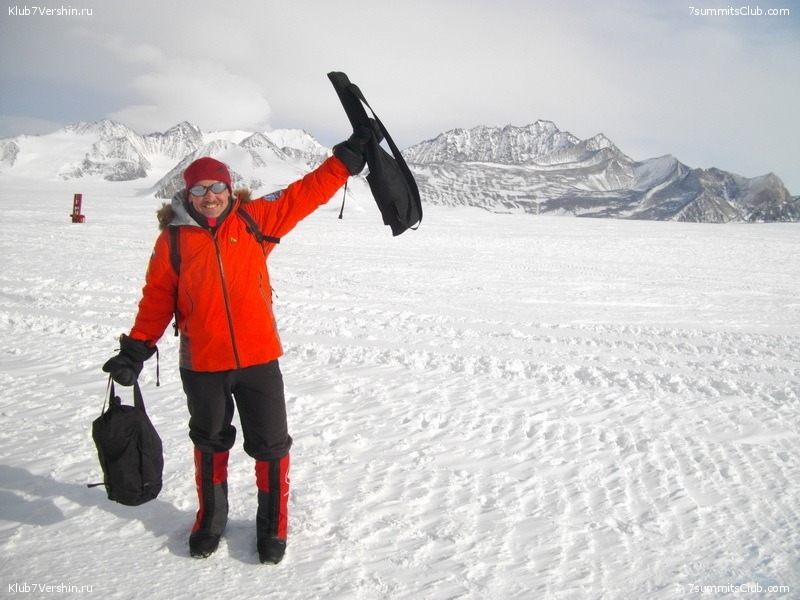
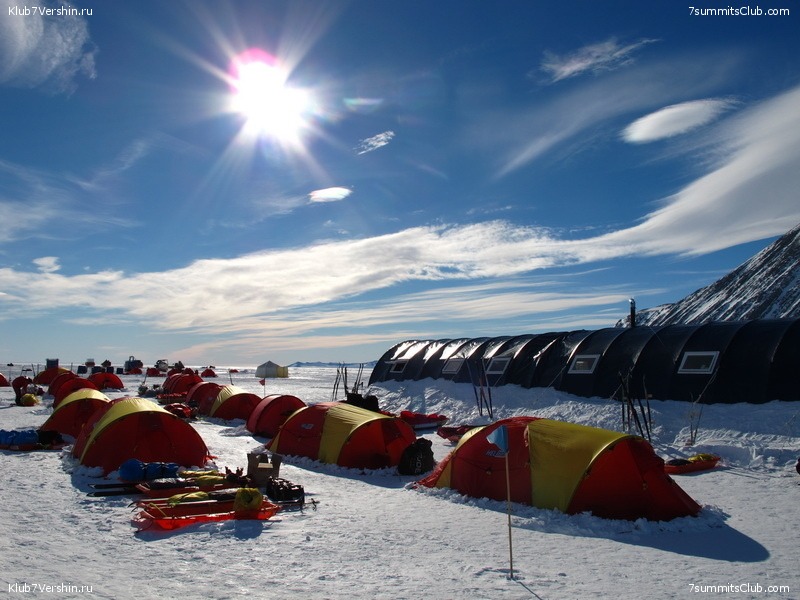
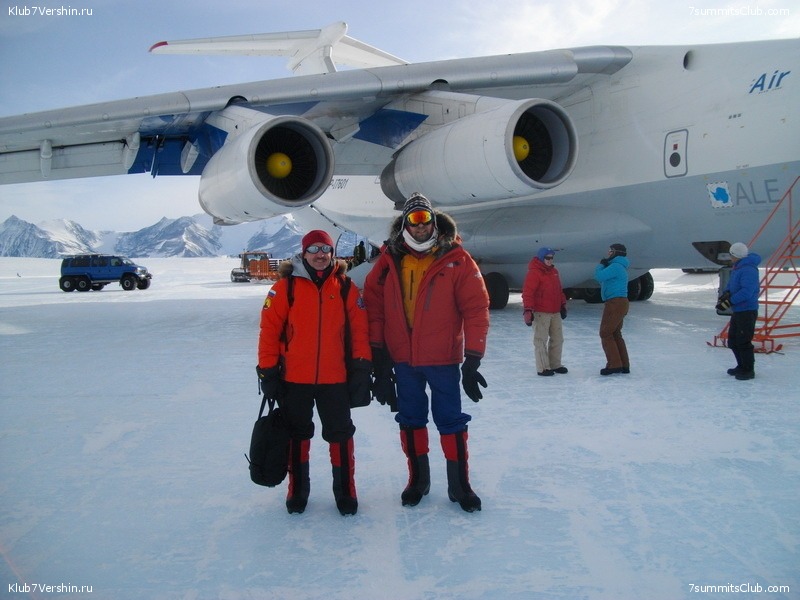
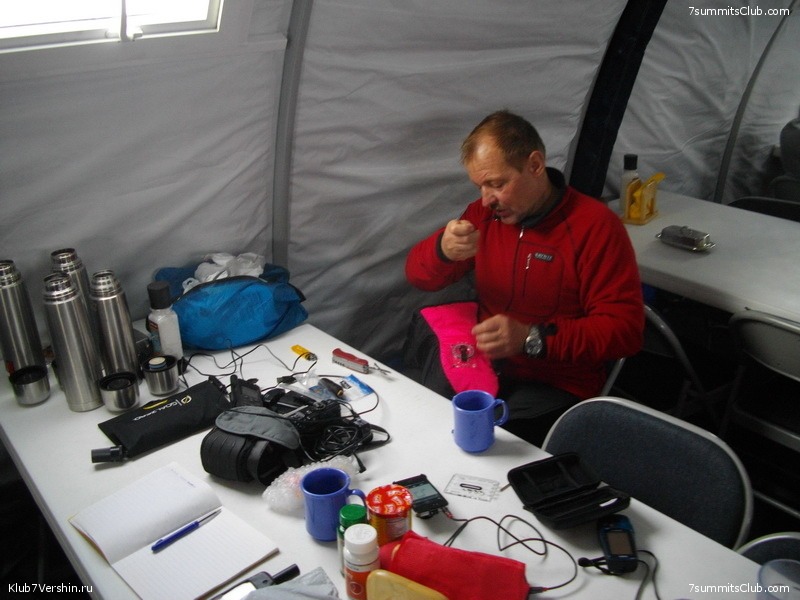
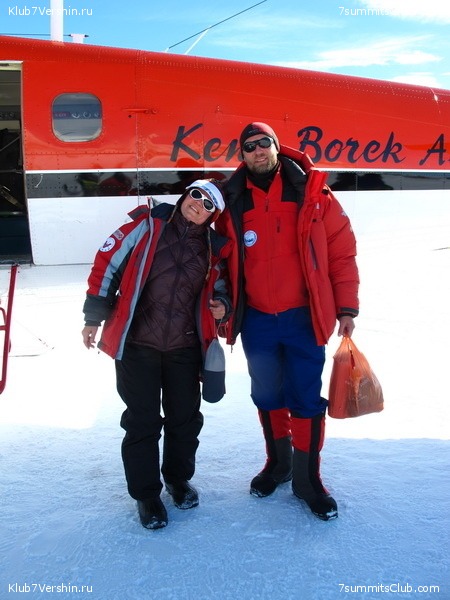


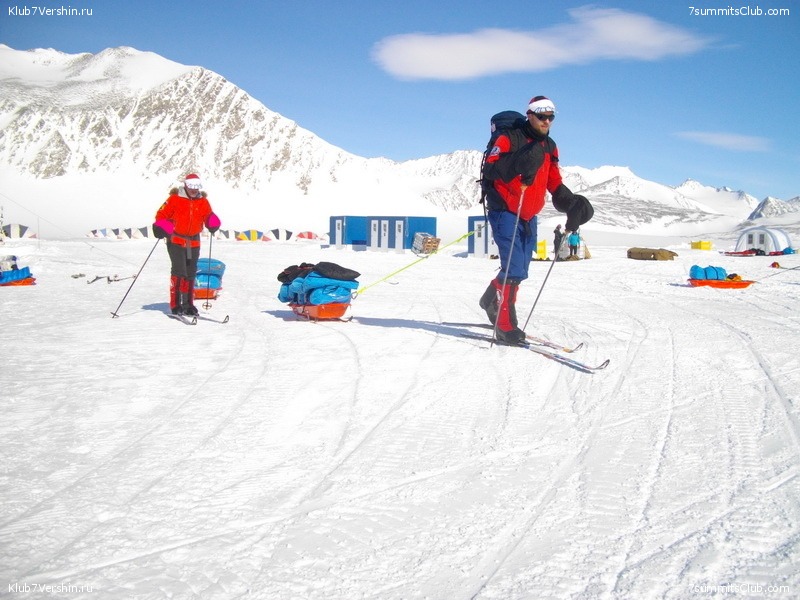
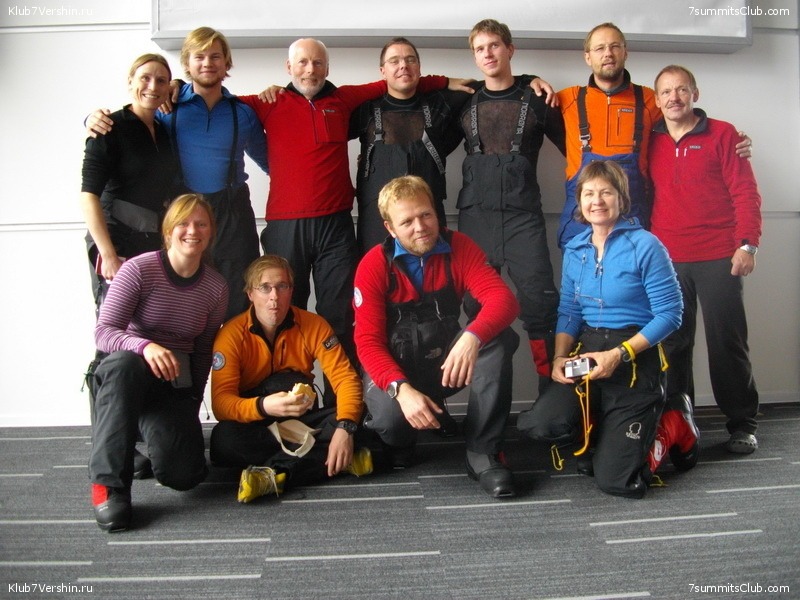
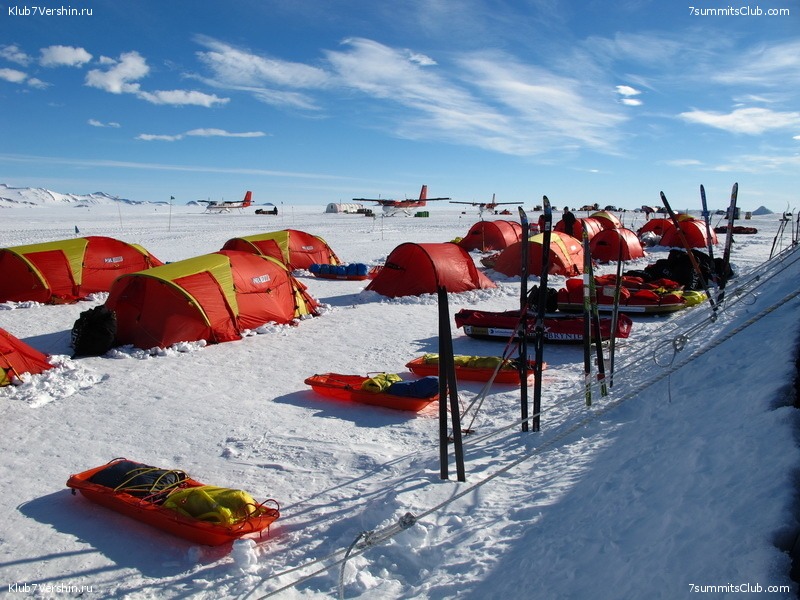
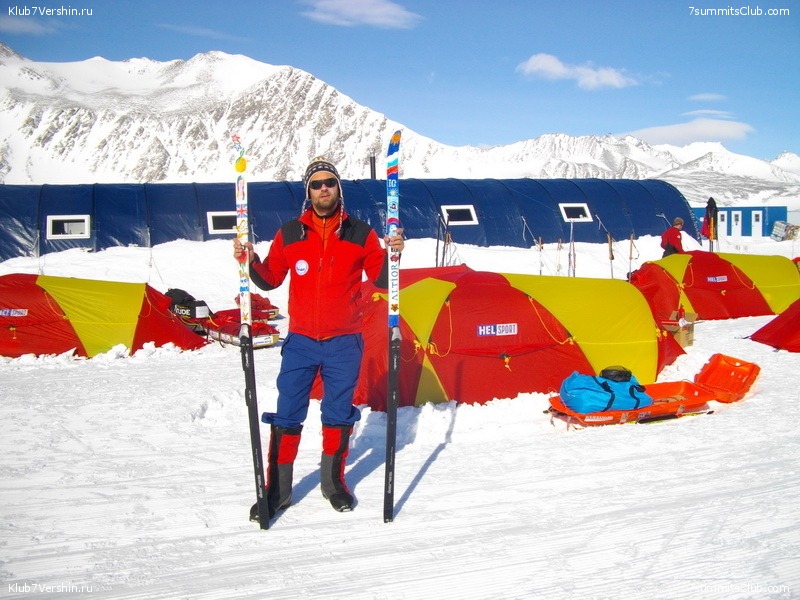
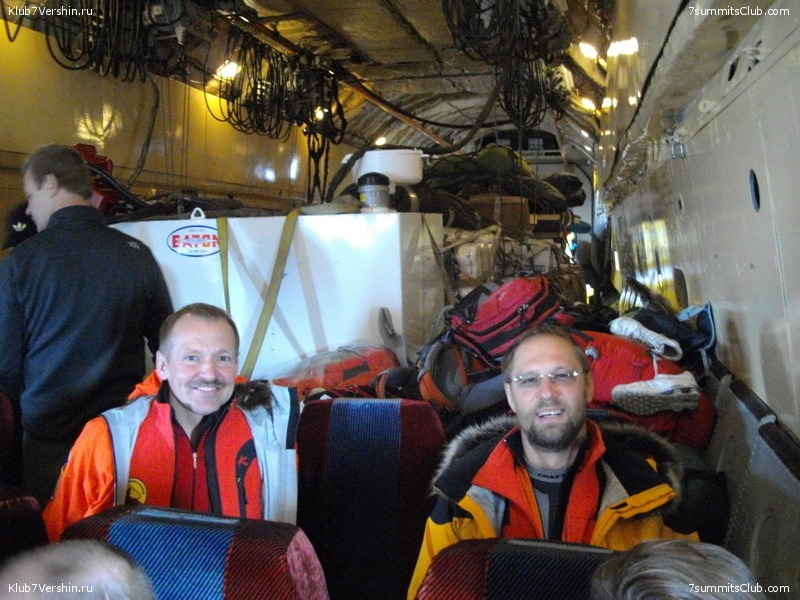

In Antarctica! New Waiting … Videos from BASK Co ..
South Pole.
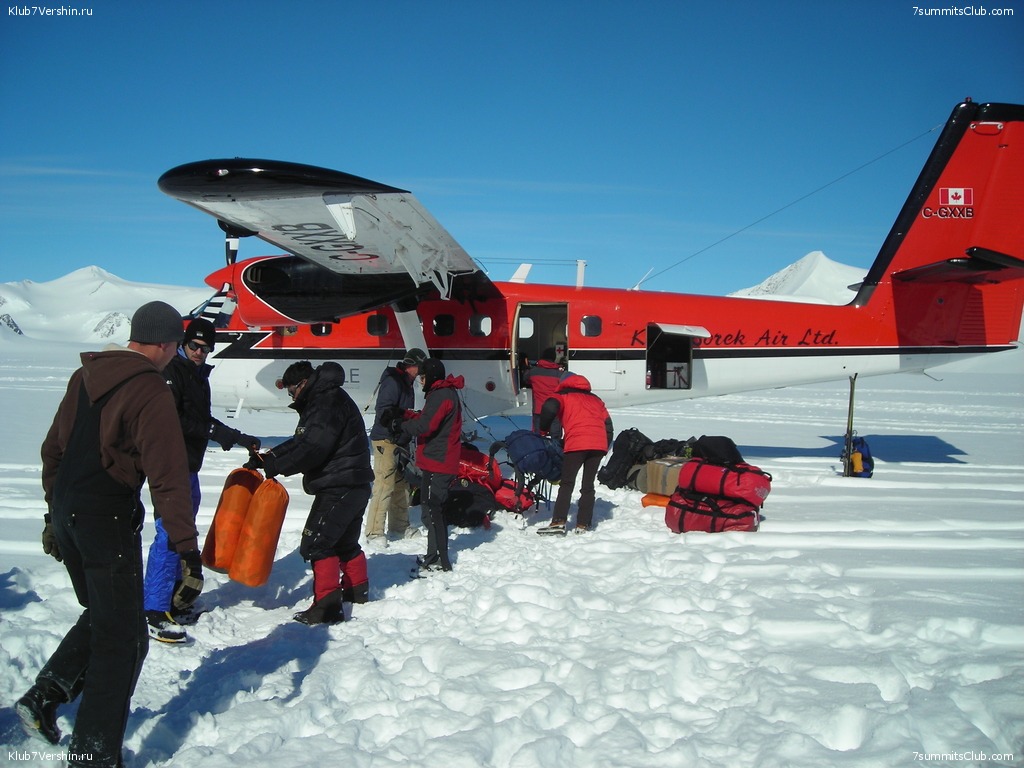
On Thursday, representatives of ALE warned that we should be ready by 6 a.m. Friday. In fact, the departure from Punta Arenas took place around 3 p.m. local time. The adventures began. Our IL-76 and the flight to Antarctica, for beginners, ...
On Thursday, representatives of ALE warned that we should be ready by 6 a.m. Friday. In fact, the departure from Punta Arenas took place around 3 p.m. local time. The adventures began. Our IL-76 and the flight to Antarctica, for beginners, this is a real adventure. Landing, as always, was not soft.
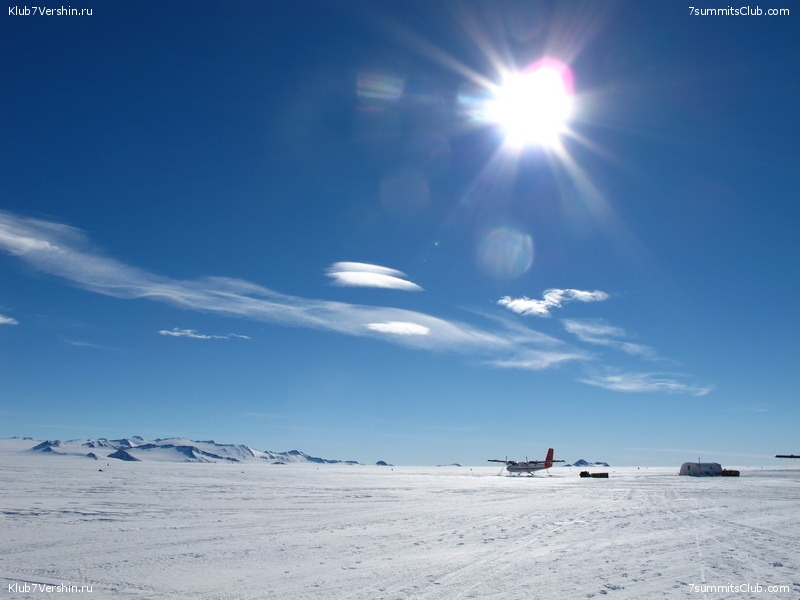
Alas, the first news from the owners, was not good. Axel Heiberg Glacier area, where the group must deliver the following by a smaller plane, is closed by clouds. Again, wait! Now, on the base of Union Glacier. All members are eager to do something, go on skis, walking through the neighborhood. Conditions are excellent, the temperature is about minus ten, around us - magnificent mountains, good snow. And on Sunday evening, representatives of ALE promised flight on Monday.
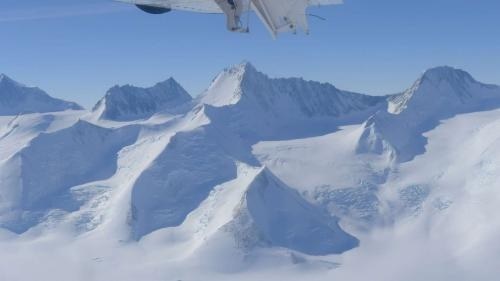

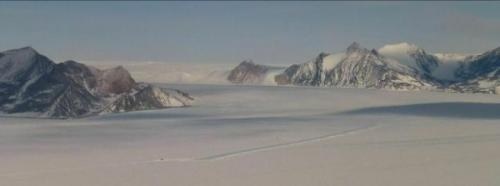
Before the beginning of the expedition, Victor Bobok gave an interview to the company BASK, which equipment has proved itself very well in our Antarctic expeditions.
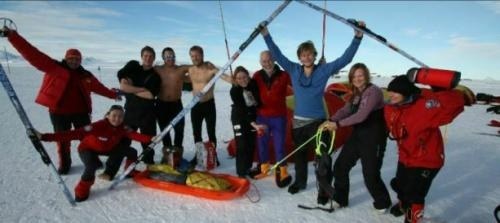
Start of the Great Jubilee Season in Antarctica
South Pole.
The season of 2011-2012 marks the centenary of Amundsen's and Scott's expeditions to the South Pole. Many expeditions have already started and many arrive to Punta Arenas and waiting for next flight to Antarctica. Almost all of them devote ...
The season of 2011-2012 marks the centenary of Amundsen's and Scott's expeditions to the South Pole. Many expeditions have already started and many arrive to Punta Arenas and waiting for next flight to Antarctica. Almost all of them devote their travel to Amundsen's or Scott's Centenary celebrations, paying homage to the courage and determination of these great men and their colleagues. Among them two our travelers Victor Bobok and Igor Grishkov who take part in the South Pole Jubilee Expedition 1911-2011.
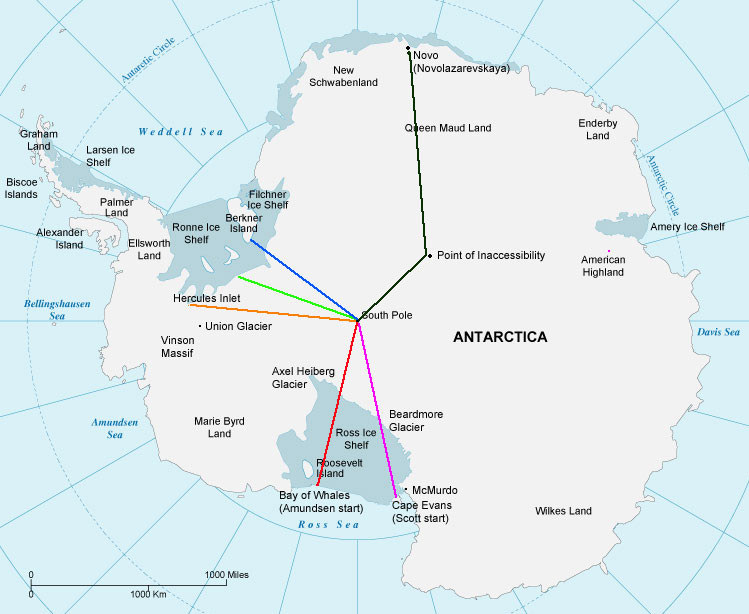
List of expeditions
http://www.antarctic-logistics.com/news.html
South Pole Jubilee Expedition 1911-2011
Norwegian polar explorers Christian Eide and Borge Ousland have organized a South Pole Jubilee Expedition. The Jubilee teams will follow Amundsen's 700 km route up the Axel Heiberg Glacier, arriving at the South Pole by December 14. Along the way they plan to climb Mt Nansen, which has only had one previous ascent. In 2010 Christian Eide set the World record for fastest solo unsupported ski to the South Pole in 2011, while Borge Ousland completed the first solo Antarctic crossing in 1996 and was the first person to ski solo, with no re-supply to the North Pole.
Sørpolen 1911-2011
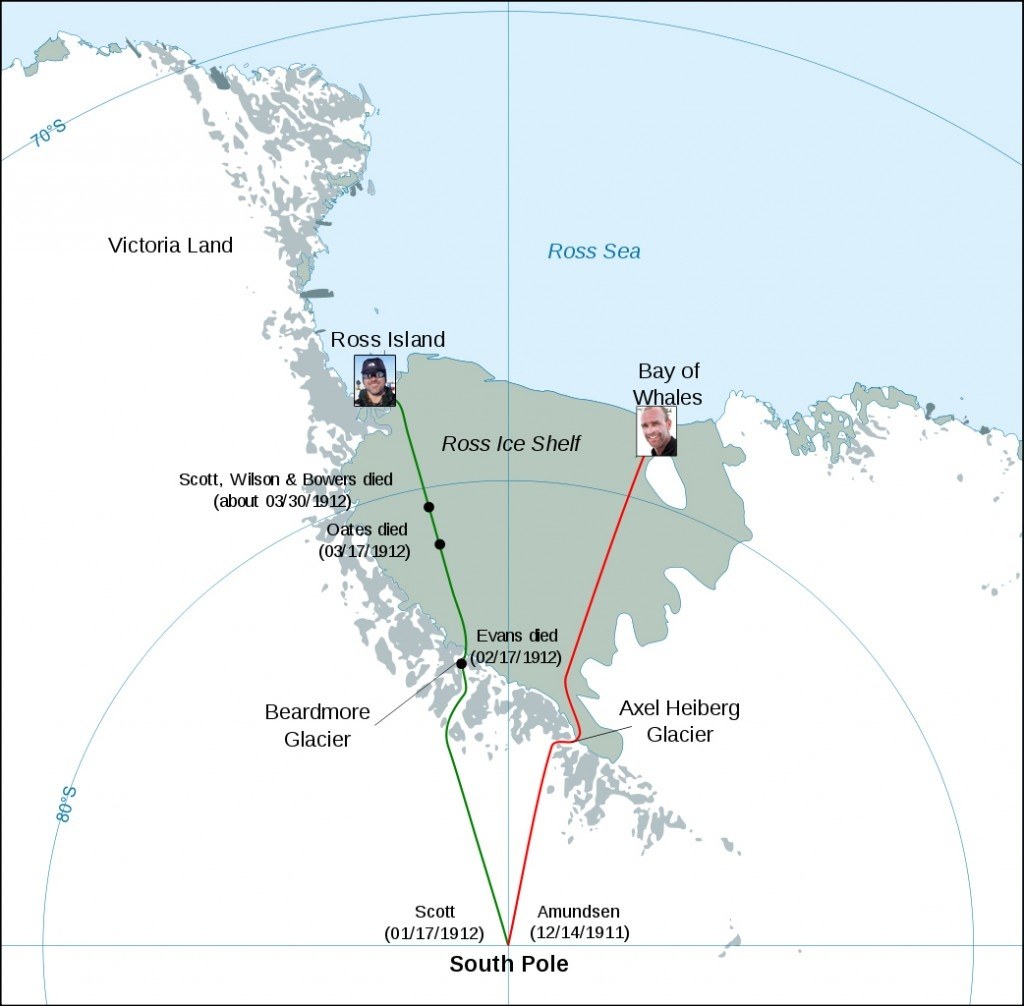
Sørpolen 1911-2011 will follow Amundsen's route from the Bay of Whales to the South Pole, covering the distance in the same number of days as the famous explorer. Led by Jan-Gunnar Winther, head of the Norsk Polarinstitutt, this expedition will showcase Norwegian polar history and spotlight current climatic and environmental challenges. The Expedition is part of the Nansen-Amundsen Year that honors both Amundsen's South Pole conquest and 150 years since the birth of Arctic explorer Fridtjof Nansen.
http://sorpolen2011.npolar.no/en/ (English)
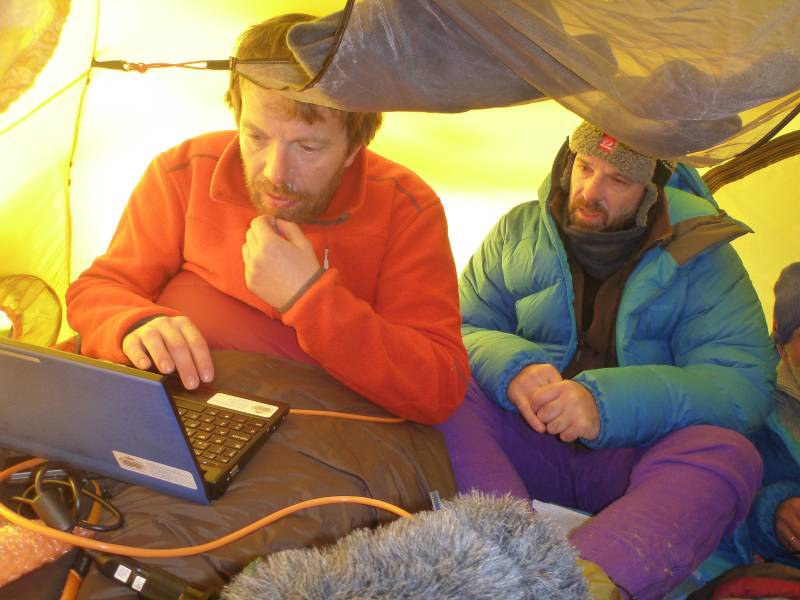
The South Pole - 100 Years After
Asle Johansen crossed Greenland in 1988, one hundred years after Nansen, using period clothing and equipment. Now Johansen will celebrate the Amundsen Centenary in a similar fashion, with teammates Agnar Berg and Gaute Grindhaug. The three Norwegians will follow Amundsen's Axel Heiberg route from the Ross Ice Shelf to the South Pole using replica clothing and equipment to better understand Amundsen's journey. Johansen, a physician and researcher specializing in the body's response to extreme physical and mental stress, emphasizes that this is not just a replica expedition, but a scientific journey.
http://www.nansenamundsen.no/no/events/okt/asle-t-johansen-sorpolekspedisjon.html (Norwegian)
South Pole 1911-2011
Albert Bosch and Carles Gel from Spain will ski unsupported from Hercules Inlet to the South Pole. They plan to arrive by December 14 and thus commemorate Roald Amundsen's historic feat.
http://www.albertbosch.info/en/minisite/29/
Hvitserk Ski South Pole
Norwegian Outfitter Hvitserk will lead an Anniversary South Pole Expedition. The team will follow the 'Messner Route' and ski unsupported to the South Pole, arriving by December 14 to join the Amundsen Centenary celebrations.
Steffen Dahl
Norwegian Steffen Dahl is skiing to both North and South Poles in 2011 to honor the achievements of Fridtjof Nansen and Roald Amundsen. Dahl reached the North Pole on April 11 and will ski alone and unsupported from Hercules Inlet to the South Pole.
http://polfarer.no/ (Norwegian)
Scott-Amundsen Centenary Race 2011-12
Two teams. Two routes. Skiing unsupported to the South Pole. Six members of the British Army will re-trace Amundsen's and Scott's routes to the South Pole, in a tribute to the courage, determination and pioneering spirit of these great explorers. The Amundsen team, led by Henry Worsley (Shackleton Centenary Expedition 2008) will depart from the Bay of Whales, cross the Ross Ice Shelf and ascend the Axel Heiberg Glacier. Mark Langridge (solo to the Pole 2008) will lead the Scott team from Cape Evans, across the ice shelf and up the Beardmore Glacier. Both teams expect to cover their distance in about 70 days, arriving at the South Pole in early January.

http://scottamundsenrace.org/
One Call Wintercamp
Nine Norwegian skiers will ski and kite-ski from 88° 30'S to the South Pole. The expedition celebrates Roald Amundsen's dream to achieve something many believed was unattainable.
http://www.onecall.no/wintercamp2011/ (Norwegian)
Ski Last Degree Expeditions
A number of Antarctic enthusiasts, including the Norwegian Prime Minister, will ski shorter distances to the South Pole in celebration of the Amundsen and Scott Centenaries. Many of the groups will ani ski last degree, the last 60 nautical miles, taking from 7 to 10 days to complete their journey.
Other Antarctic Crossing and Ski South Pole-Return Expeditions
Kaspersky ONE Transantarctic Expedition
Felicity Aston (2009 Kaspersky Lab Commonwealth Expedition Leader) is heading back to Antarctica - this time solo. Felicity will make a 1700km, 65-day journey, becoming the first woman in the world to cross Antarctica alone. The documentary film about Felicity's 2009 expedition will be screened at the Banff Mountain and Dijon Adventure Film Festivals this November. But don't expect to see Felicity there!
http://www.kasperskyonetransantarcticexpedition.com/
Aleksander Gamme
Aleksander Gamme will ski solo from Hercules Inlet to the South Pole, then turn around and ski solo back to the edge of the Antarctic continent. Inspired by Amundsen. Gamme admits to feeling "humble" when he thinks about the physical and mental challenges of being alone in the icy wilderness for so long.
Mark George
Explorer and motivational speaker Mark George plans to ski solo and unsupported from Hercules Inlet to the South Pole, then return by kite-ski to the coast, for a total of 2,300 kms.
http://www.searchingforsanta.com.au/
Crossing the Ice
Two Australians Justin Jones and James Castrission will trek from the edge of Antarctica to the South Pole and back, without assistance of any kind. Their expedition will raise funds for You Can, a fundraising campaign to build specialized youth cancer centres across Australia.
http://casandjonesy.com.au/expeditions/crossing-the-ice/
South Pole and Back - Ski and Kite
Polar explorer and speed-record holder Richard Weber will lead a 35 day, unsupported trek from the "Messner Start" on the Filchner Ice Shelf to the South Pole. From the South Pole the team will kite-ski back to Hercules Inlet at the edge of the continent.
http://www.weberarctic.com/
Ski South Pole - Messner Start and Hercules Inlet
ANI Ski South Pole Messner
ANI guide Hannah McKeand holds the record for most ski expeditions from the Antarctic coast to the South Pole - and this year she will again cross the icy continent. McKeand and fellow ANI guide Charlie Patton will lead two ANI Ski South Pole - Messner teams to the South Pole.
Pole to Pole Run
When endurance runner Pat Farmer starts his Antarctic expedition, he will already have run two marathons every day, no days off, for almost a year and clocked nearly 13,000 miles through 14 countries. This is the last leg on an incredible trek from the North Pole to the South Pole to raise $100 million for the International Red Cross.
http://www.poletopolerun.com/
Mark Wood
"The North South Solo expedition has been classed as the toughest expedition on the planet." But this is exactly what polar explorer Mark Wood plans to undertake. He will ski from Hercules Inlet to the South Pole. Then next spring, head to the Canadian Arctic to ski solo to the North Pole.
PolarExplorers Ski South Pole - Hercules
This guided expedition will traverse from Hercules Inlet at the edge of the Antarctic continent, to the South Pole.
Thompson Reuters Eikon South Pole Expedition
It's about challenge and proving greener technologies for Polar exploration, says their website. This expedition will attempt to beat the overland record to the Pole in a specially-built, efficient, bio-fuelled vehicle. They will use solar panels to further reduce their carbon footprint and real-time GPS Satellite communications and tracking.
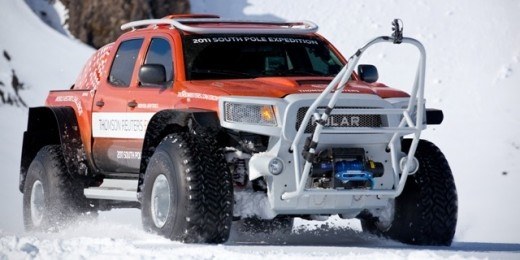
http://thomsonreuterseikon.com/south-pole-expedition/
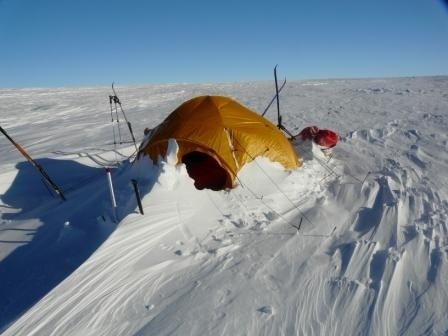

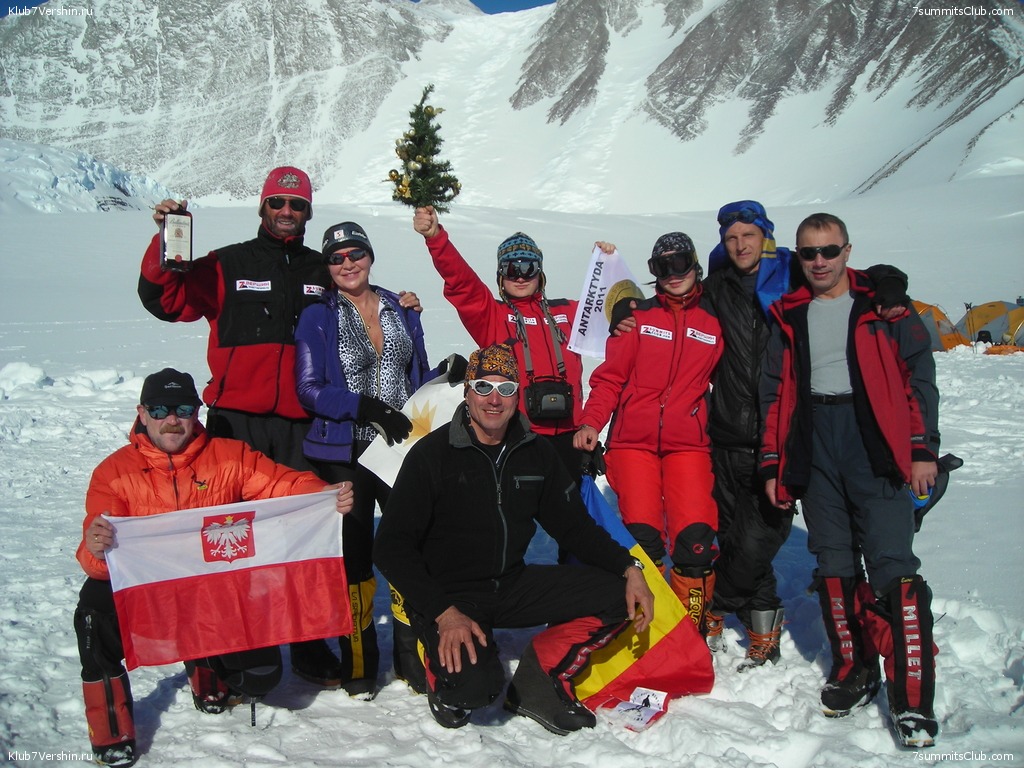
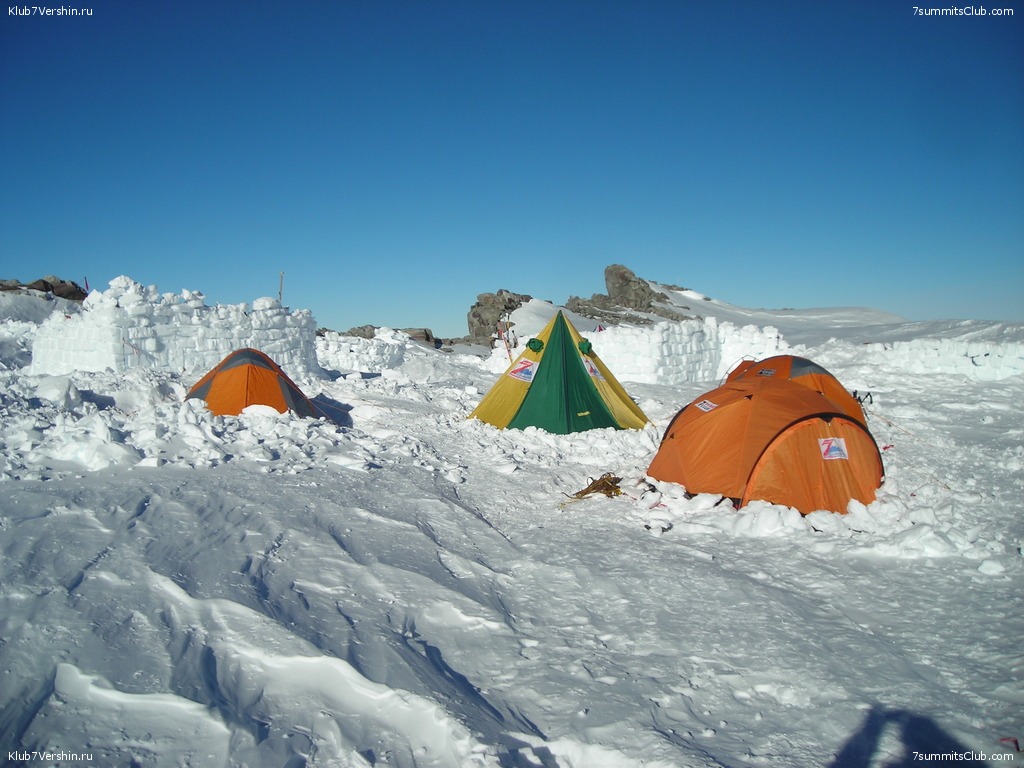
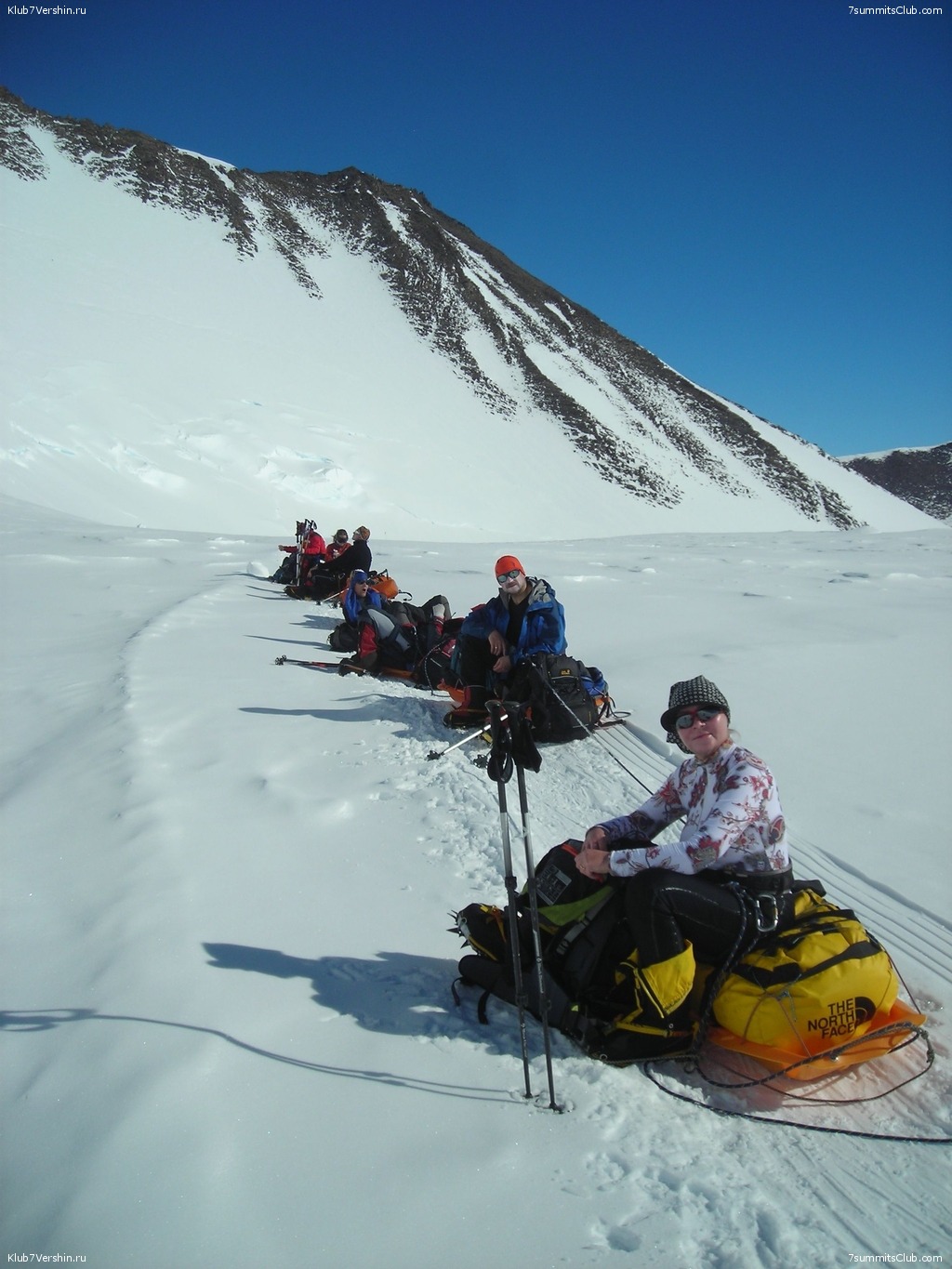
To Celebrate the New Year in Antarctica!!! There are 3 places in Antarctica to the South Pole, and Massif Vinson.
South Pole.
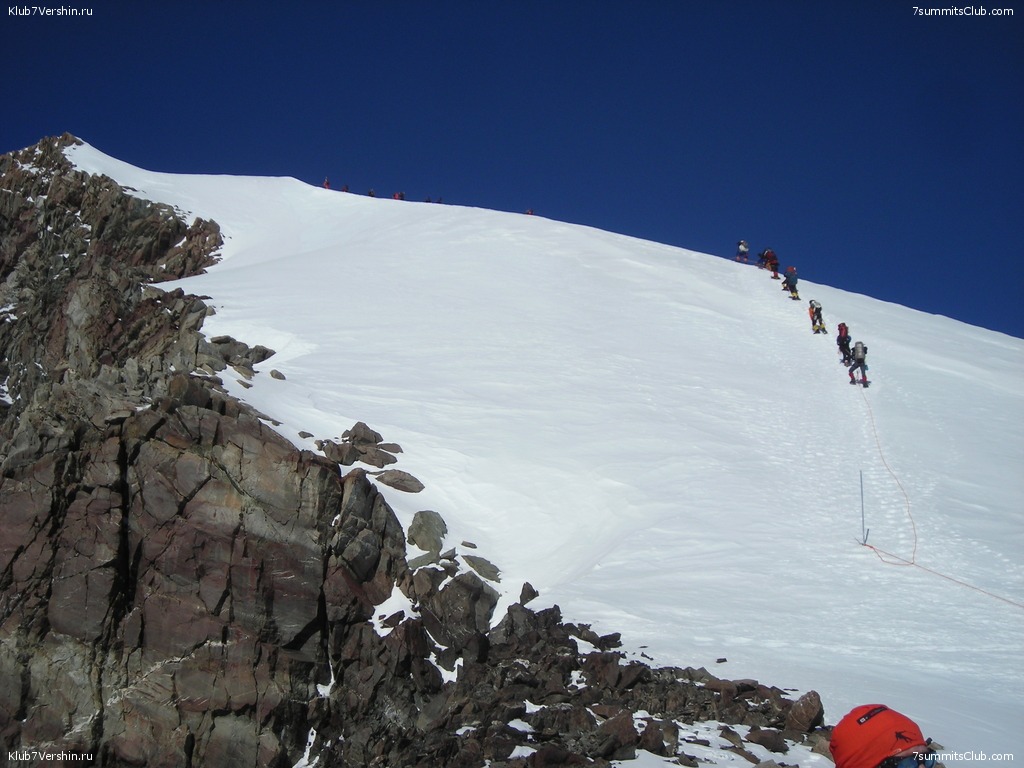
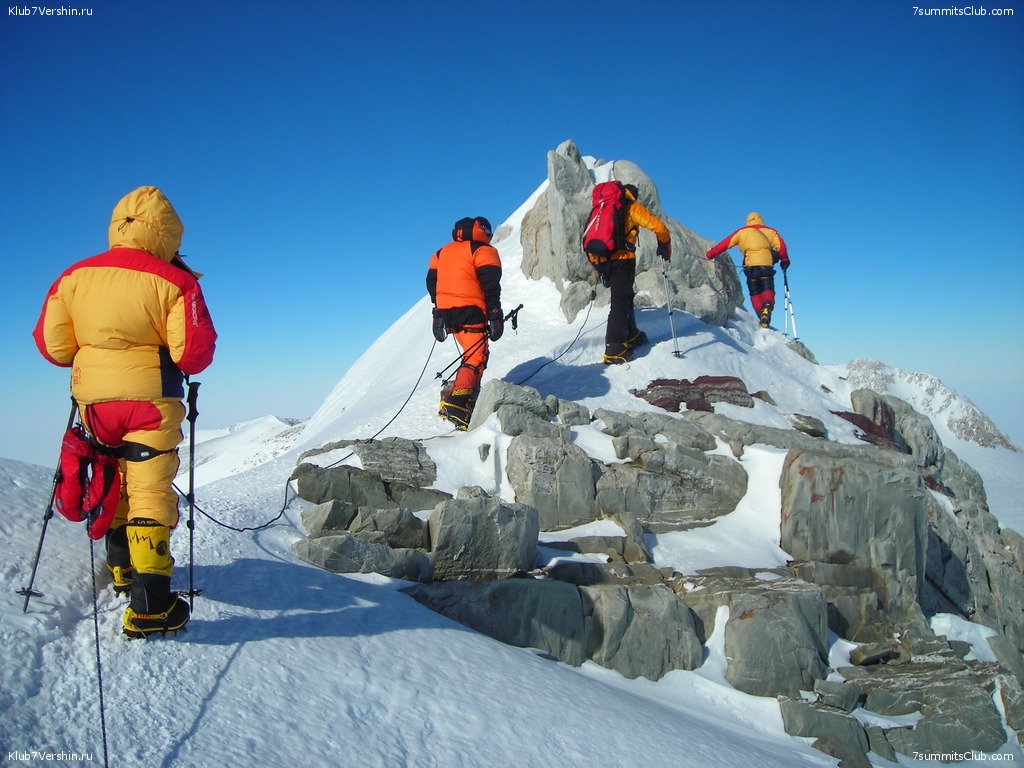
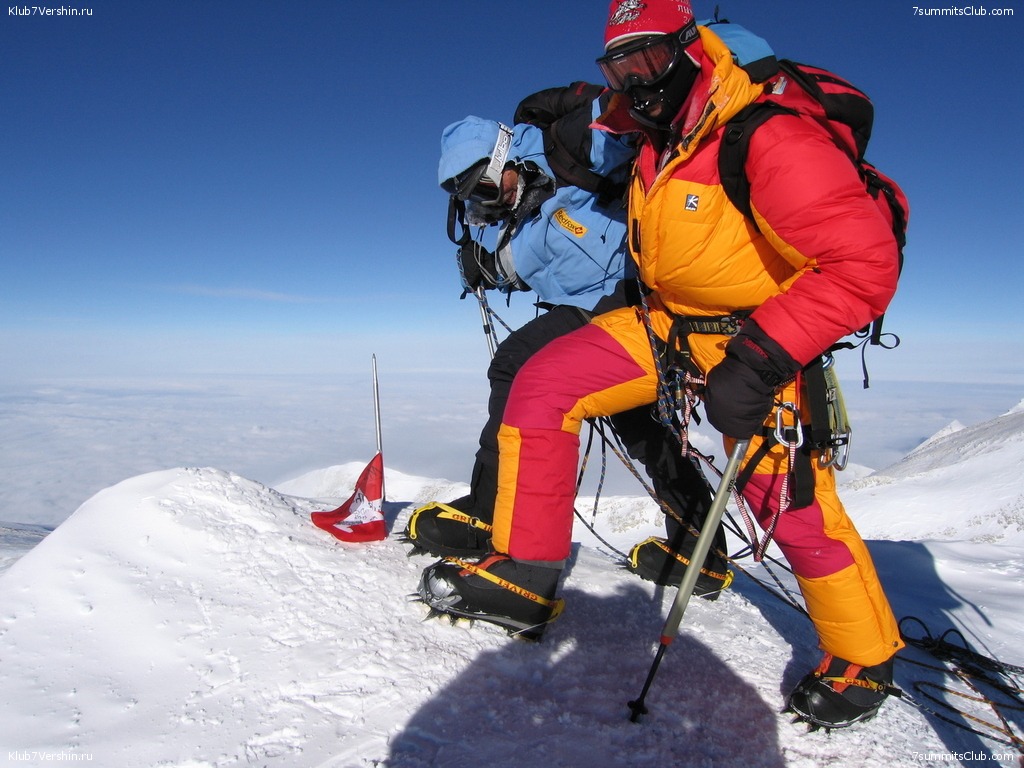
Programs: The ascent of Massif Vinson - the highest peak of AntarcticaExpedition to the South Pole. "The last degree" (Ski tour 111км). Antarctica Hello friends! We still have the last 3 places in Antarctica to the South Pole, and ...
Programs:
The ascent of Massif Vinson - the highest peak of Antarctica
Expedition to the South Pole. "The last degree" (Ski tour 111км). Antarctica
Hello friends!
We still have the last 3 places in Antarctica to the South Pole, and Vinson Massif.
Vinson Massif - check in from December 26 to January 12.
The South Pole - check in from 2 to 19 January.
On all other dates groups have already been formed and there are no places!
Now we have 2 groups of "the Last degree" at the South Pole:
From 13 to 29 December (full)
and from 2 to 19 January (there are 3 places)
2 groups on the Vinson Massif:
From 13 to 29 December (full)
From December 26 to January 12(there are 2 places)
Be defined urgently till August, 15th
Opportunity only knocks once!


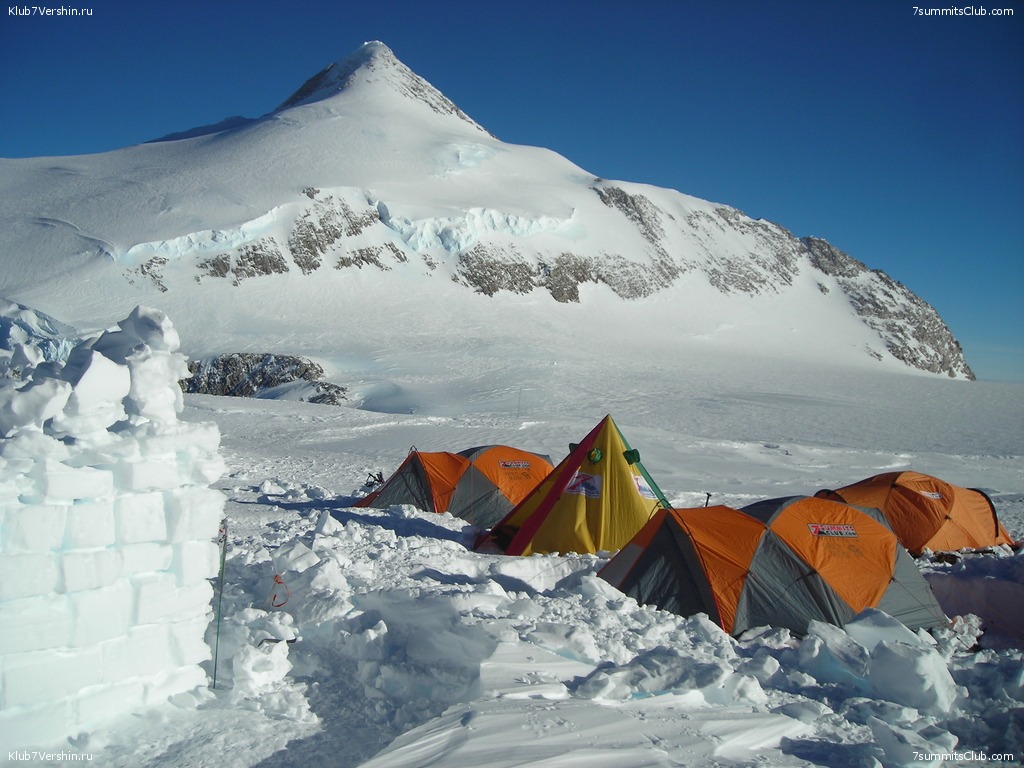
Alexander Abramov has returned home, that is, to our office
South Pole.
A high-day in the 7 Summits Club. Our leader Alexander Abramov returned from Antarctica. Now he is going through a transitional period to get used to germs, darkness, fuss, heavy traffic etc. However, a couple of days, he will be working at ...
A high-day in the 7 Summits Club. Our leader Alexander Abramov returned from Antarctica. Now he is going through a transitional period to get used to germs, darkness, fuss, heavy traffic etc. However, a couple of days, he will be working at full capacity. Expedition on Everest will start soon, it needs a lot of work. By the way, you still have a good opportunity to join our expedition. Details here >>>>>>>
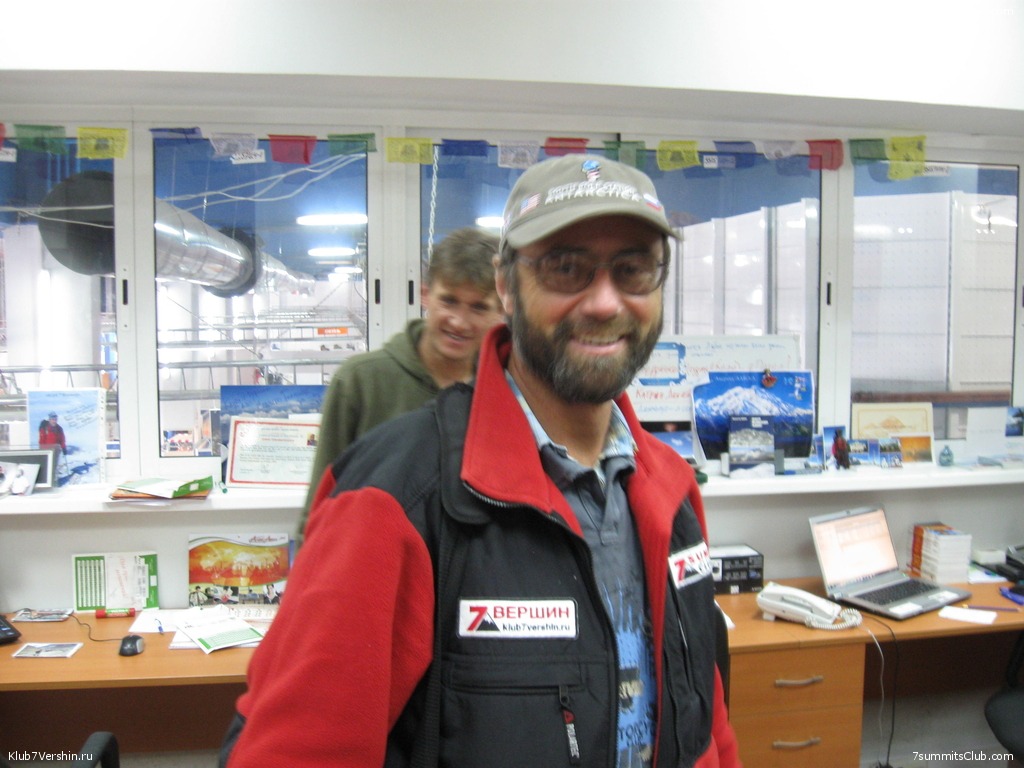
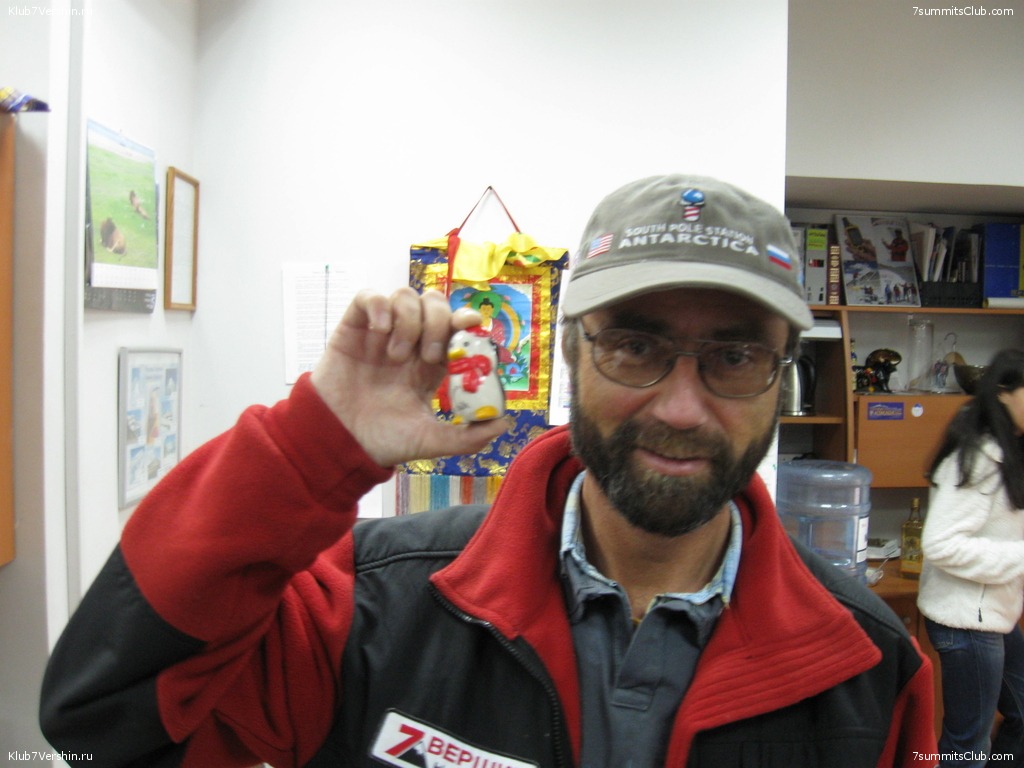
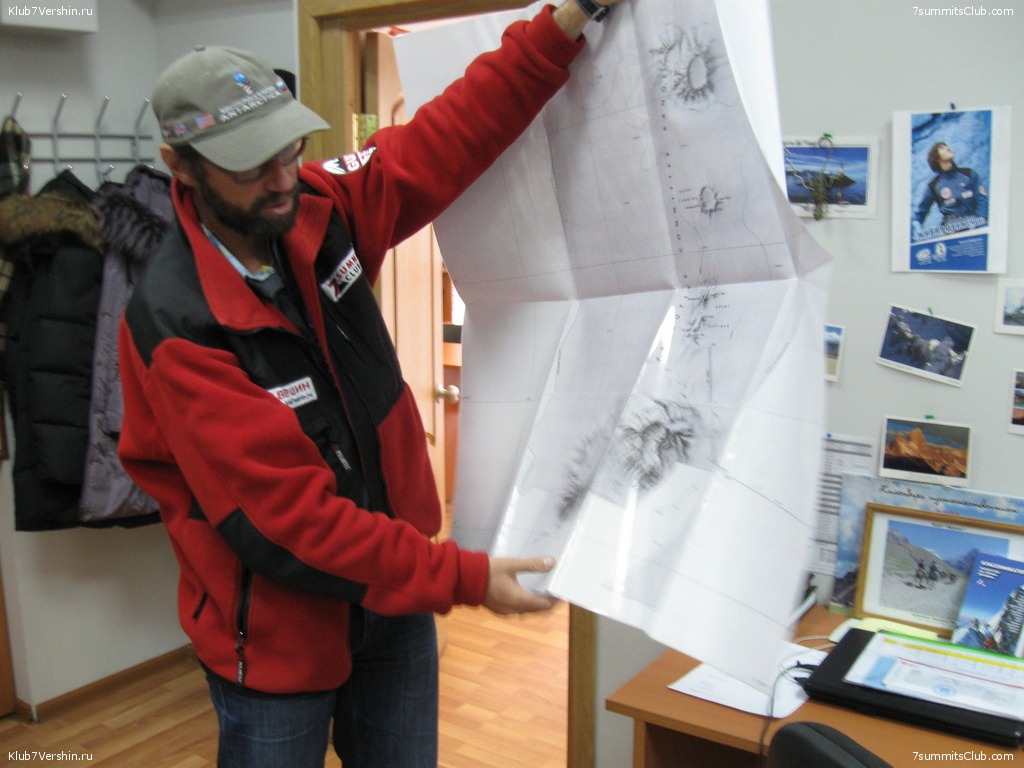
And here are some stories from Antarctica. Photos from Mt. Sidley are posted here >>>>>>>
New records of Antarctica
South Pole.
British team sets new speed record for Antarctic crossing. In late November, a group of British adventurers and scientists set off on a mission to the interior of the Antarctic continent in specially designed research vehicles. Their plan ...
British team sets new speed record for Antarctic crossing. In late November, a group of British adventurers and scientists set off on a mission to the interior of the Antarctic continent in specially designed research vehicles. Their plan was to undertake several environmental research experiments while journeying through one of the most in hospitable environments on the planet, but they also managed to set a new speed record for an Antarctic crossing at the same time.
Dubbed the Moon-Regan Transantarctic Expedition in favor of its two organizers, Andrew Moon and Andrew Regan, the plan was for the team to conduct research along the way. For example, they collected samples of the Antarctic snow in order to test the impact of pollutants in the atmosphere of the Southern Hemisphere on the frozen continent itself. They also drove a specially designed snow buggy, powered by biofuels, in order to see how those experimental fuels performed in extreme conditions.
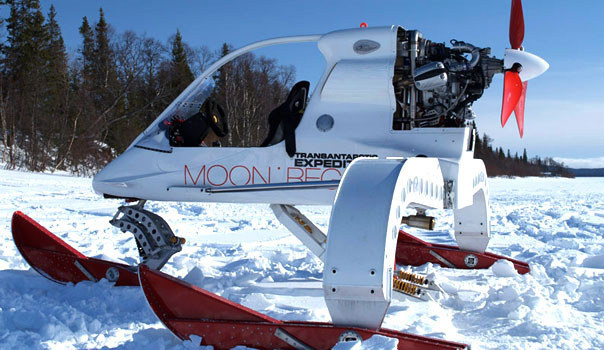
By all accounts, those research elements came off very well, but the real success of the mission was the speed crossing. It took the team just 13 days to drive from the Union Glacier Base to the Ross Ice Shelf, by way of the South Pole, on the far side of the continent. The expedition covered 1209 miles in 303 hours, using specially designed ground penetrating radar to help them avoid crevasses and other obstacles.
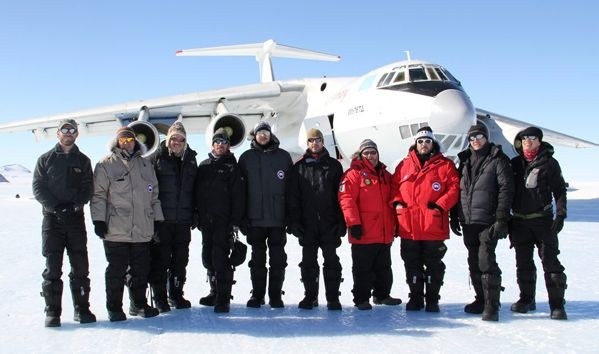
The expediton actually reached their destination back on December 9th, but then turned around and made the return trip so that the 10-man team, along with all their research vehicles and gear, could be plucked from the ice by Antarctic-Logistics and Expeditions, a company that specializes in delivering explorers to Antarctica. That happened last week, when the team was returned to Punta Arenas, Chile before making their way back home in time for the holidays.
Taking just 13 days to cross Antarctica is quite an impressive feat. While the team did indeed use motorized vehicles to do it, the terrain that they crossed is quite brutal on any kind of machine and the cold weather played havoc with their engines at times. Throw in the very real danger of driving into a crevasse, and you can start to appreciate the challenges of such a drive. This just might have been the most challenging road trip ever.

*******
Weather blocks expedition team from crossing Antarctica
A Cloudy Antarctica Stymies Solar Snowmobile Trek
A Korean expedition team looking to trek across Antarctica using solar-powered snowmobiles has run into trouble as unseasonably humid weather leaves the usually sunny and clear summer skies overcast and dull.

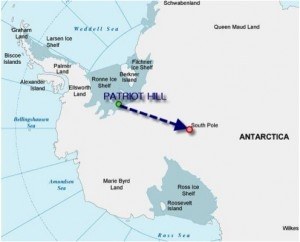
The expedition, led by veteran mountaineer Park Young-seok, set off from Antarctica’s Patriot Hill in late December on a 1,056km journey to the South Pole, but the from the beginning the team has been beset by difficulties, not least of which is heavy cloud cover – part of the massive storm system causing record rainfall on the Australian mainland – which dumped more snow than the region has seen in 20 years.
The initial idea was to utilise Antarctica’s "endless summer," in which the sun never fully sets from November through until February, a major bonus when running heavy machinery with solar power. But the team’s best laid plans played second fiddle to the weather gods and Antarctica’s white night never eventuated, leaving the team 330km from their destination. Unless they can reach the South Pole by Sunday, they will have to abandon solar-powered sledding and fill their snowmobiles with gasoline to make it back to base camp.
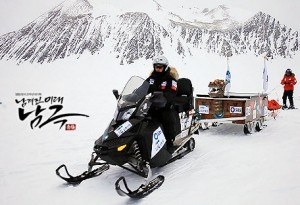
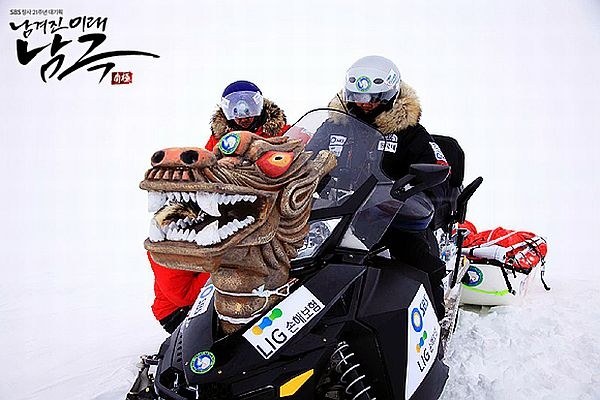
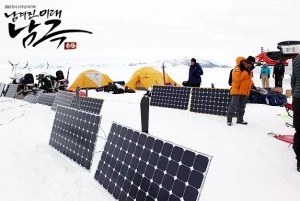
This solar energy-blocking cloud greatly impacted the portable solar recharging equipment for the team's eco-friendly snowmobiles and other camp equipment for much of the time. The solar recharging stations use high-efficiency SunPower solar panels. In full sun they can provide enough power for a three hour drive from a nine hour charge.
Park’s expedition will be made into a documentary for the Seoul Broadcasting System as part of its 21st anniversary year celebrations. They hope the trip will raise the profile of solar energy use in Korea and around the world.--
*******
Norwegian breaks South Pole record
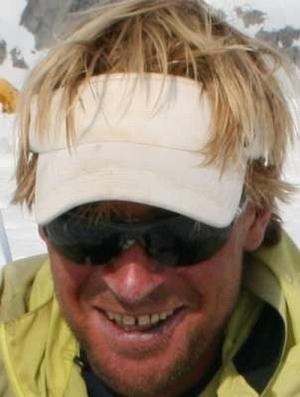
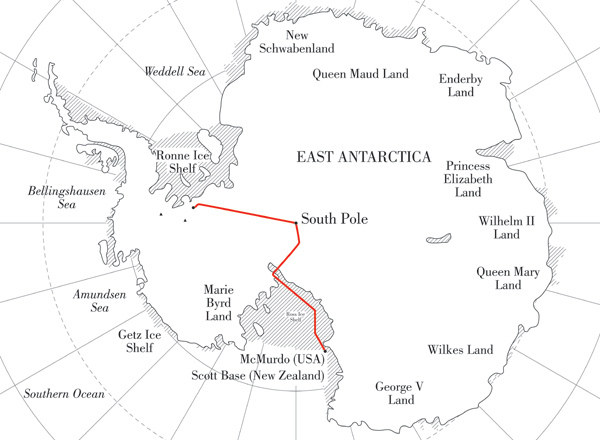
Christian Eide, a 35-year-old expedition leader from Oslo, was still relishing his record-breaking solo trek to the South Pole over the weekend. He arrived at his goal last Thursday, just 24 days, one hour and 13 minutes after leaving Hercules Inlet on December 20, 1,150 kilometers away from his goal.
Oslo expedition leader Christian Eide, after breaking a world record skiing to the South Pole.

His solo world record soundly beat that set by American Todd Carmichael, who used 39 days and seven hours. Eide said he was so excited as he neared his destination that he couldn’t manage to sleep on the last night. He had expected to spend 30 days skiing to the South Pole, so surprised himself with his own speed.
“I just had to keep going,” said Eide, who runs an Oslo-based expedition company called L’atitude. He arrived on Thursday January 13, after skiing alone for three-and-a-half weeks. He average around 47 kilometers a day, but skied around 90 on the last day.
He wrote in his firm’s online diary, though, that he didn’t get a very warm welcome from the Americans running the Scott-Amundsen base. ”I got a strict message that I wasn’t allowed to go inside the base to get my sheet of paper with my official arrival time,” he wrote. “The Americans have decided to have a strict policy towards ‘tourists.’ Is it really necessary to be so unwelcoming? The Americans are otherwise usually very nice.”
On Sunday he was resting after a flight back at the ALE base (Antarctic Logistics & Expeditions LLC) on Union Glacier, where he described spring-like conditions with temperatures as high as minus-7C and sunshine, compared to minus-32 at the South Pole. Around 70 persons were at the base camp, waiting for flights back to Punta Arenas or for new arrivals, and the mood was festive.
Eide wrote that the wait was “perfect” for him, giving him a chance “to relax, calm down, rehash the tour and the result.” He admitted he could still feel the effects of the strenuous tour, and he had some frost and sun damage on his nose.
--
Alexander Abramov: Eleven days into the camp Union Glacier
South Pole.
Hello ! I am pleased to greet you from Antarctica. The latest climb was over on January 5, and since then we sit on the Union Glacier camp, expecting our fourth group, which will arrive on the Vinson Massif. And we look forward for Igor ...
Hello ! I am pleased to greet you from Antarctica. The latest climb was over on January 5, and since then we sit on the Union Glacier camp, expecting our fourth group, which will arrive on the Vinson Massif. And we look forward for Igor Grishkov, which must fly from Punta Arenas to climb Mount Sidley. We, I, Alexander Abramov, who has a birthday today, Coco Popescu and Mario Trimeri. In the area of Union Glacier is very fun, there are more than 70 people sitting in the camp. Due to the fact that earlier in the week in Chile began rioting and strikes, our team was not able to fly from Punta Arenas. 50 people could not get to the airport. Finally, yesterday, they broke through the barricades, walked 30 km and reached the airport. But it is occurred that a plane engine was broken.
Union Glacier - it's just an ideal place for mountaineering in Antarctica. Around is a set of mountains, which no one has yet climbed. Many climbers make ascents right now.
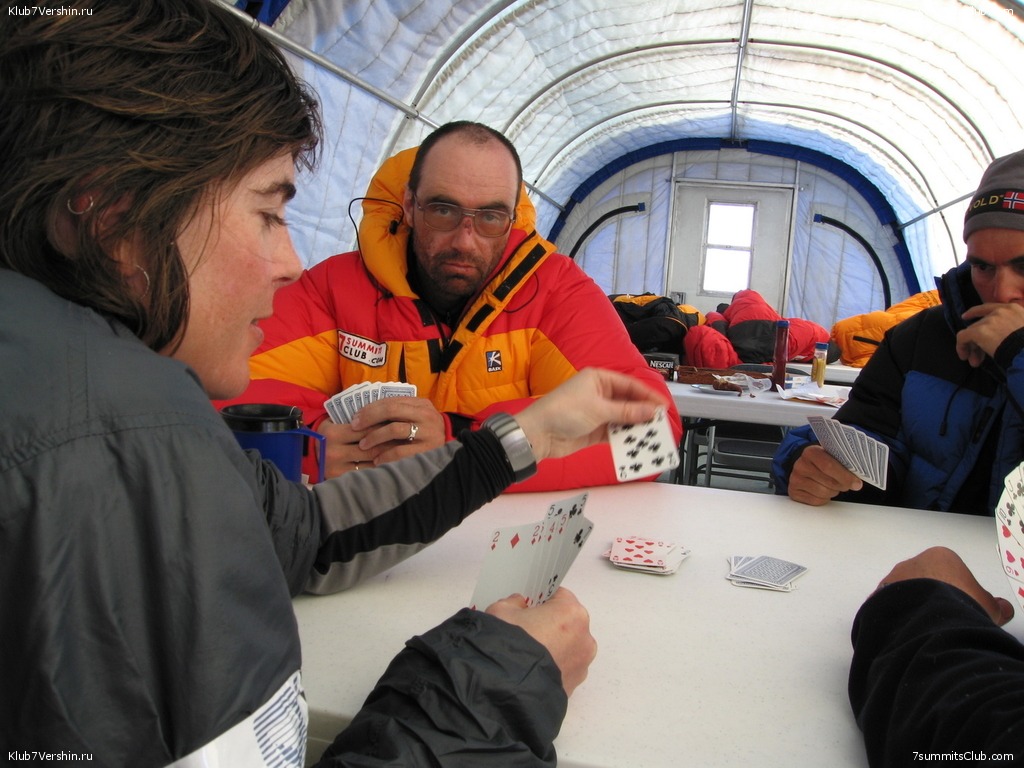
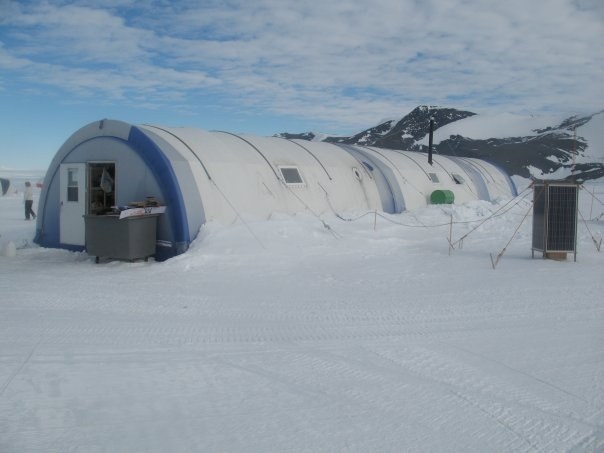
A lot of interesting people is now in the camp. Every day, everyone gathers in a large tent, where there is a big TV, computers. People regularly give lectures, telling what they know about Antarctica, about the world around us, about the Globe, about global problems. We watch movies, play cards. Perfect weather, no wind, the sun shines. Snow shines around. The temperature outside is minus five - minus twelve, and in tents - plus. We are here for 11-12 days, in principle, we do not complain. We are fed well. So do not worry for us. We are waiting for the next group and still hope. .