Nepal - Page 50
On the way to Baruntse
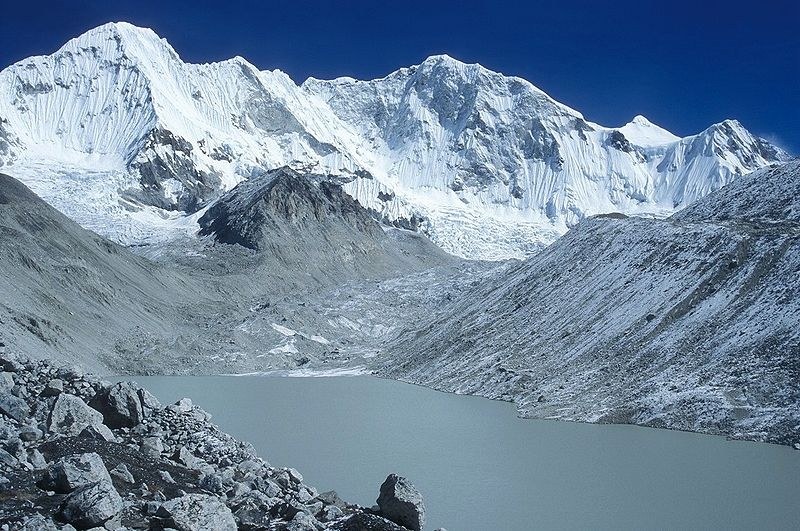
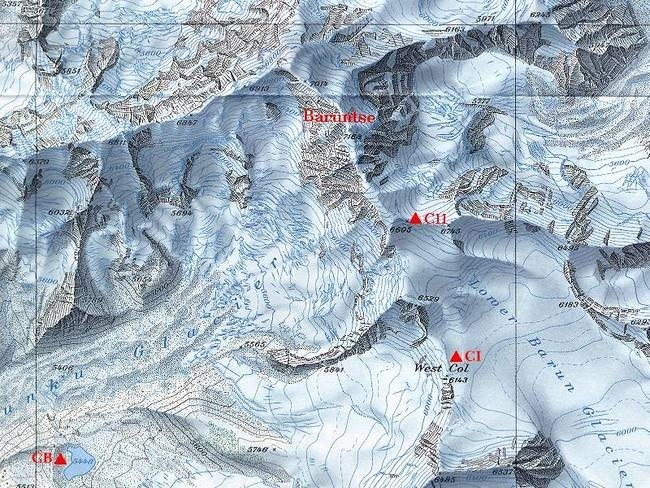
April, 24 A team of 7 Summits Club Victor Bobok (guide) and Andrey Filkov flew to Nepal to climb Mount Baruntse 7129 mThe ascent is planned via the normal route - the Southeast Ridge. Baruntse of is located between Everest and Makalu ...
April, 24 A team of 7 Summits Club Victor Bobok (guide) and Andrey Filkov flew to Nepal to climb Mount Baruntse 7129 m
The ascent is planned via the normal route - the Southeast Ridge. Baruntse of is located between Everest and Makalu (8471m). The approach to base camp is a multi-day trekking. The nature of the route, mostly snow and ice. The steepness of the ice can reach 50 degrees. One steep step is above 7,000 meters. Route is avalanche dangerous after snowfall. In the spring, it is often equipped with fixed ropes. But it depends on the number of climbers who have subscribed to this program.


Start a new expedition to Nepal
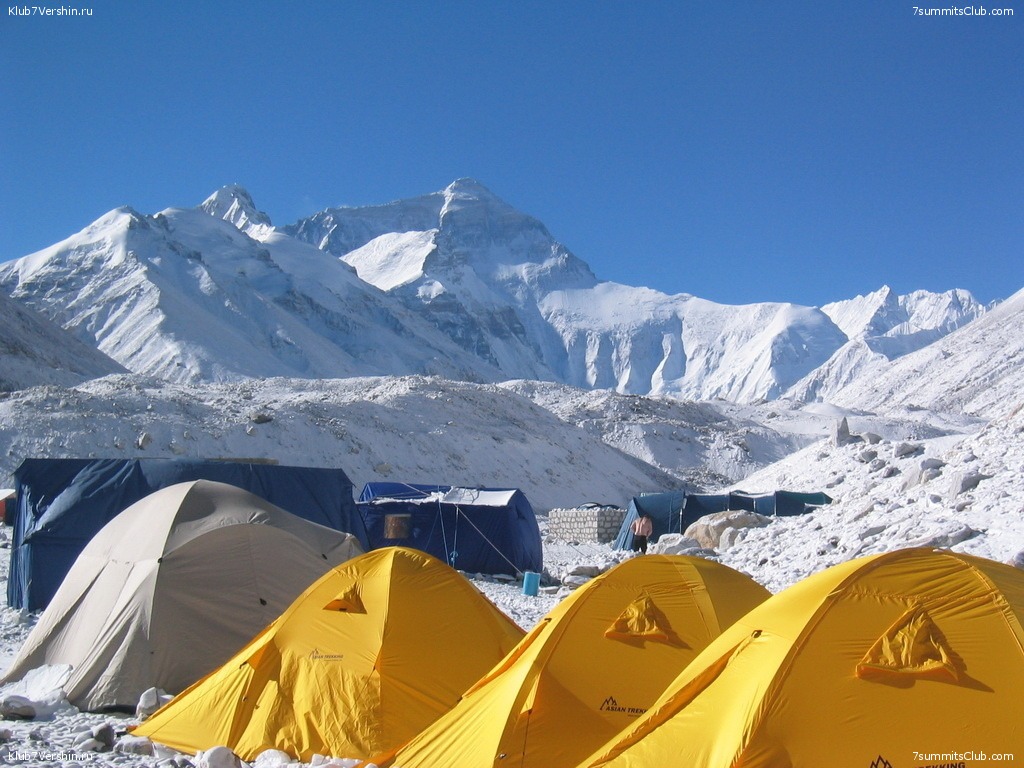
Everest BC (Nepal).
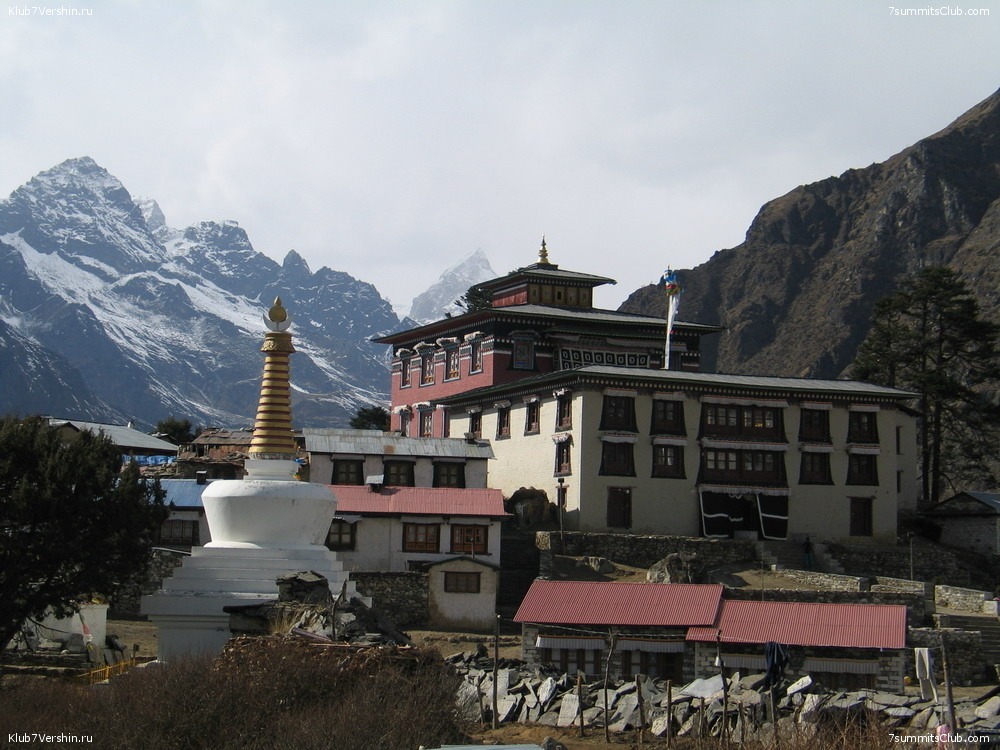
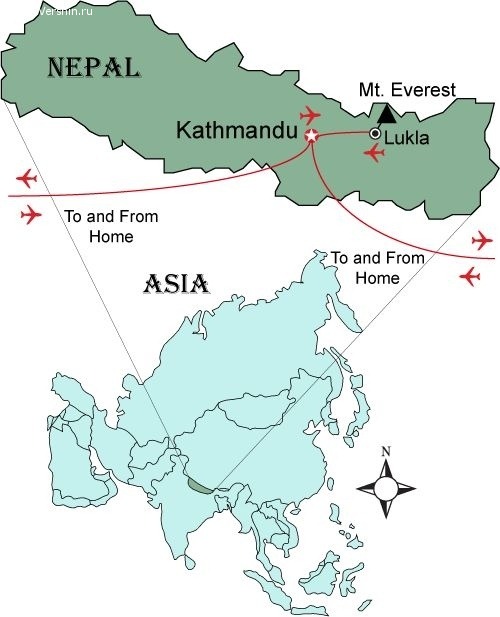
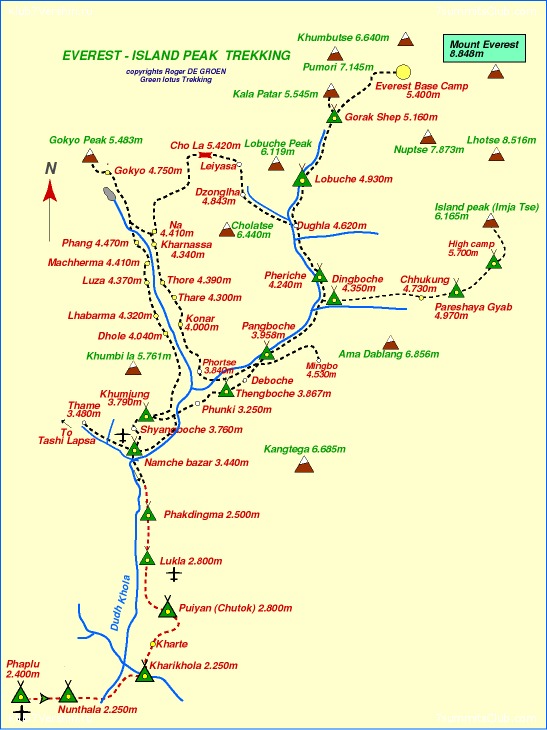
Today, a large group of 7 Summits Club flies from Moscow to Kathmandu. They are members of the trek programs Everest Base camp and ascent of Island Peak. Guide of the 7 Summits Club Denis Saveliev rested after a heroic climb of Mera Peak ...
Today, a large group of 7 Summits Club flies from Moscow to Kathmandu. They are members of the trek programs Everest Base camp and ascent of Island Peak. Guide of the 7 Summits Club Denis Saveliev rested after a heroic climb of Mera Peak and is ready to meet the group.
List of the members.
Island peak:
Petryaev Alexander
Emelyanov, Elvira,
Lutikov Alexander
Aglitsky Constantine
Lerner Roman
Lerner Julia,
Moiseeva Lola.
Trek to Everest base camp:
Manizada Jamil,
Tinin Yuri
Kovalenko, Ruslan.
Good luck, good weather, a good trip!


Den Saveliev from the route to Mera Peak
We are at Khare at a height of 5000 meters, the weather is again, bad. Tomorrow the plan is one more part and then we come to the camp. Everybody feels fine. Yesterday we saw coming down the British. They have not reached the ...
We are at Khare at a height of 5000 meters, the weather is again, bad. Tomorrow the plan is one more part and then we come to the camp. Everybody feels fine. Yesterday we saw coming down the British. They have not reached the summit, said that met a kind of opened crevasse, which did not exist before. And they could not get around it ... Now we sit and think what to do next. Probably, we will take an aluminum ladder there.
Everest pioneer's Olympic medal heads to summit
Everest.
UKclimber Kenton Cool will fulfil vow to take medic ArthurWakefield's Olympic medal toHimalayas90 years after tragic prior expedition Peter Beaumont. The Observer, Sunday 1 April 2012 British mountaineer Kenton Cool was ...
UKclimber Kenton Cool will fulfil vow to take medic ArthurWakefield's Olympic medal toHimalayas90 years after tragic prior expedition
Peter Beaumont. The Observer, Sunday 1 April 2012
British mountaineer Kenton Cool was sitting in the check-in lounge at Gatwick airport last Thursday with a locked waterproof box that, if all goes according to plan, will not leave his side until he reaches Everest's summit for a 10th time this spring.
The box contains the Olympic medal awarded to Arthur Wakefield, a medic on the unsuccessful 1922 Everest expedition that ended in tragedy when an avalanche killed seven porters.

If Cool succeeds in climbing the world's highest mountain again, he will have honoured a pledge by Lieutenant Colonel Edward Lisle Strutt, deputy leader of the pioneering 1922 expedition, made to Baron Pierre de Coubertin, who awarded the climbers medals at the 1924 Winter Olympics in Chamonix. Strutt promised to return to Everest and take a medal to the summit, something he never managed.
The attraction of Everest to Cool remains undimmed even if he is ambivalent about aspects of its commercialisation. A professional mountain guide who has climbed Everest more times than any otherUKclimber, Cool was also the first Briton to ski down an 8,000m peak.
"I still really like Everest. I enjoy working with my Sherpa friends. I get to see people at base camp – friends like American climbers who I never see except there. It feels a bit like escapism."
Cool is pragmatic, too. The high prices paid by clients to climb on Everest and the media attention that surrounds every Everest season has allowed him the freedom to be more selective about what he does in his own climbing and what guiding he does in a gruelling profession.
"When I first met my wife Jazz a few years ago she was clever about it and asked me where I saw myself in five, 10 years. I said I wanted to be climbing. When we got to 20 years, she said: 'You'll be crippled by then [by the punishing strain of guiding].'"
In some respects it is remarkable that Cool has done as much as he has. In 1996, he suffered a serious accident in Snowdonia, shattering the bones in his heels and damaging his ankles, which forced him to take a year out of the sport. He still has metal in his limbs, finds running difficult and struggles, he says, with an awkward gait. Despite that he will run one of the relays with the Olympic torch inLondonon 23 July.
After his recovery, Cool was recruited as an Everest lead guide after an ascent of a new route on Annapurna III – which saw his team nominated for the Piolet d'Or mountaineering award.
In an interview last year he recalled reaching the world's highest point for the first time. "The first client was just behind me, so I had five minutes at the top to savour the moment. It was a great sunny day so I sat there trying to pick out all the other nearby mountains. It was a mind-blowing moment."
This year he will be climbing only with a cameraman to record the ascent with the Olympic medal. "I didn't guide during my ascent last year either. I went up to prove that you could make a 3G call from the summit. With no clients it felt very free. I did the whole round trip in 23 days. It was wonderful."
As well as Everest, Cool has guided the polar explorer Sir Ranulph Fiennes up the north face of the Eiger.
What has been less easy, he admits, has been taking leave of his wife Jazz and 22-month-old daughter Saffron. "That was very difficult. I think for the wives and girlfriends who stay behind it is much harder. When you are on the mountain you have to be on top of your game to make sure that no one gets injured."
Two years ago, one of his clients, Bonita Norris, 22, fell close to the summit and lost the feeling in her legs, necessitating a gruelling rescue.
He is not sure he is finished with Everest yet. Next year marks the 60th anniversary since the first ascent by Tenzing Norgay and Edmund Hillary, and Cool would like to be involved with that
--
Kenton's Olympic Everest bid will be 'an emotional ride'
Bob Smith, Editor
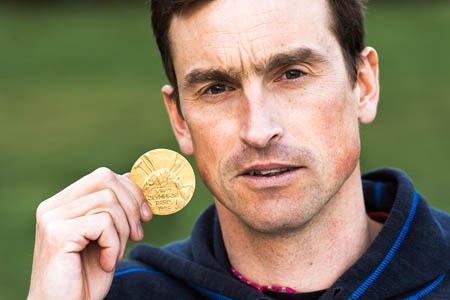
Kenton Cool holds Arthur Wakefield's gold medal. Photo: Vitty Robinson
The British climber who has stood on the world’s highest summit more times than any of his countrymen is setting off on an Everest attempt that will be one his most special ascents.
Kenton Cool will board a plane this morning forNepal, carrying with him a precious disc of gold that he hopes will be in his pocket when he stands on the summit of the 8,848m (29,029ft) peak.
If the 38-year-old Gloucestershire-based mountaineer makes it to the top of Everest, not only will it extend his record of ascents to 10, but will also fulfil an Olympic pledge made 88 years ago.
It will, he says, be an emotional moment.
The World Mountain Guide will take with him an Olympic medal awarded to Arthur Wakefield, a member of a 1922 expedition which got within a few hundred metres of the top of Everest before turning back.
We spoke to Kenton Cool as he prepared for the expedition, which he hopes will see the climbing team set off for the summit push some time in May.
“I’m busy frantically trying to pack as we speak,” he said. “I always leave things to the last minute; it seems to work.”
He explained he and his friend Richard Robinson have been planning this year’s project for two years, ever since Robinson, a childhood friend of Cool’s wife Jazz, came across the pledge made by Lieutenant Colonel Edward Lisle Strutt, deputy leader of the 1922 expedition, to Baron Pierre de Coubertin at the 1924 Winter Olympics in Chamonix.
De Coubertin was the founder of the modern Olympic Games and awarded gold medals to all the members of the 1922 expedition at the inaugural winter games.
Strutt pledged that he would return to Everest and take the medal to the summit – a promise he was unable to keep.
The gold medal that will be heading toNepalwas handed to Kenton Cool inCanadaby the grandson of Arthur Wakefield.
Richard Robinson told us this expedition probably means more to Cool than anything else he has accomplished.
Summitnumber nine came last year. Cool's tenth, if it comes, will be special
“I’d probably agree with that,” the climber said. “Obviously the first time I ever went up there, the last 20 or 30 steps were incredibly special.
“But we’ve been working on this story for two years. One of the things that got me climbing was reading about the climbers in the 1922 and 1924 Everest expeditions. What these guys did was amazing when you consider the gear they had, the boots the equipment – absolutely incredible.
“I remember being quite young and thinking wow, that’s so cool; I want to be an adventurer, a climber like that.
“So to have an expedition now that directly honours those guys of 1922 is really important to me – really, really important.”
The team, which includes a top cameraman, will use the traditional route up Everest.
Cool said: “I’m going up the standard South-East Ridge, the route that Hillary and Tenzing took in 1953.
“In the team I’ve got Keith Partridge, who’s the cameraman who did Touching the Void and The Beckoning Silence. He’s going to record it all, which is going to be incredibly exciting.
“We’ve got a very good friend of mine who’s raising money for St James’s Place Foundation. He’s trying to raise half a million quid.
“And then it’s just my tried and trusted Sherpa friends.
“There will probably be six of us in our summit push.”
He said he is grateful to his sponsor Samsung, who also provided support for last year’s Everest expedition, which saw him Tweeting from the summit using a 3G signal for the first time.
“Samsung have been incredible coming on board to finance the whole thing,” he said. “Everest expeditions are not cheap, but Samsung have done an amazing job of providing me with a platform to do what I want to do.”
He added: “This is so special, it really is – 2012, the Olympics come toLondon– that’s going to be amazing. Unfortunately, climbing’s not really represented any more but climbing and mountaineering encompassed everything Coubertin wanted in the Olympics.
“It’s going to be an emotional ride. Fingers crossed, if we do it, it’s going to be a very, very special summit.
“I think it will be the knowledge that I’ve got a medal in my pocket that was awarded to a very, very special man, Arthur Wakefield. He was a phenomenal person, the one who was perhaps overlooked in that 1922 expedition.
“If you read anything about Arthur Wakefield he was this amazing character. He was a medic; he did some amazing things on the Western Front in the First World War.
“To have this medal which was awarded for his efforts and everybody else’s efforts in the 1922 expedition is going to make it incredible.
“I’m a pretty emotional guy anyway. I’ve been known to burst into tears at the top; it’s all swirling round.
“Then to have this other story – in my mind, it’s such an important thing. We kind of forget what happened in the past sometimes and it’s going to be a very emotional moment and I can’t even begin to think what it will be like.”
Cool knows Everest's summit well. Photo: Sotti CC-BY-SA-3.0
As someone who has made it to the summit of Everest nine times, he is familiar with the elation of getting to the roof of the world.
He said: “When you come over that final little section, I can see it now: you come round a little limestone outcrop, go round it then you just go up a very gentle slope and it plateaus out and it’s then only about 200 yards to the summit and that’s when you know you are going to make it.
“I think getting there in May this year with medal burning a hole against my thigh, it’s just going to be something quite special.”
Richard Robinson, whose mountaineering exploits extend only as far as tackling the Three Peaks Challenge, said the team had already had a goodwill message from Michael Palin on behalf of the Royal Geographical Society and he said it is rumoured London Organising Committee for the Olympic Games boss Lord Coe would be quite pleased to receive a phone call from the summit.
The British Mountaineering Council also gave the Olympic Pledge expedition its thumbs-up, saying: “ In doing so we hope the venture will help foster the adventurous spirit in others and inspire them to similar enterprises on Everest and other mountains.”
It’s a wish Kenton Cool shares. He told us: “My big thing is trying to get people into the outdoors. I’m passionate about the outdoors; I’m a mountain guide and I’m hoping that by getting behind the pledge and participating, we can get the next generation of climbers, mountaineers, hillwalkers out there and climbing their own little hills to start with.
“Then there will be some new person smashing all my records.”
Kenton Cool: 'passionate about the outdoors'
He joked about his advancing years. “I’m getting quite old,” he said. But there are many mountaineers climbing at ages way beyond his.
He added: “A guy I’m always massively impressed with is Victor Saunders. He’s now 62 or 63. He guided Everest the year before last and I think he’s going again this year. He’s in his 60s and he’s still capable of going to the top – incredible.”
He hopes to involve as many people as possible in the effort. “What’s going to be great too is you can pretty much follow it all online. Samsung have done an amazing job and they’re trying to get everyone to participate in it.
“We’re going to be Tweeting all the way. The Tweets will be coming in thick and fast and there will be fairly regular blogs on the Samsung website and on my own personal website as well.”
One of the hardest things for him, he said in one of his most recent Tweets, is leaving behind his daughter Saffron.
Kenton Cool, Keith Partridge and the rest of the expedition members are expected to set off from Base Camp on 14 April and will attempt to supply photos, blogs and Tweets, which will be uploaded to the Samsung site and Cool’s own website.


National Geographic 2012 Winners: Sano Babu Sunuwar and Lakpa Tsheri Sherpa
Everest BC (Nepal).
The votes—nearly 72,000 of them—are in, and we're pleased to announce that Sano Babu Sunuwar and Lakpa Tsheri Sherpa are the 2012 People's Choice Adventurers of the Year. Their Ultimate Descent expedition to climb Everest, ...
The votes—nearly 72,000 of them—are in, and we're pleased to announce that Sano Babu Sunuwar and Lakpa Tsheri Sherpa are the 2012 People's Choice Adventurers of the Year. Their Ultimate Descent expedition to climb Everest, paraglide down, and paddle to the sea truly embodies the spirit of adventure. With borrowed gear and a bare-bones budget, there were no corporate sponsors nor social media campaigns, just the essentials for adventure—vision, creativity, and friendship.
The Ultimate Descent: Lakpa Tsheri Sherpa and Sano Babu Sunuwar
Two Nepalis complete a mission to launch a paraglider from Mount Everest’s summit and kayak the Ganges to the Indian Ocean.
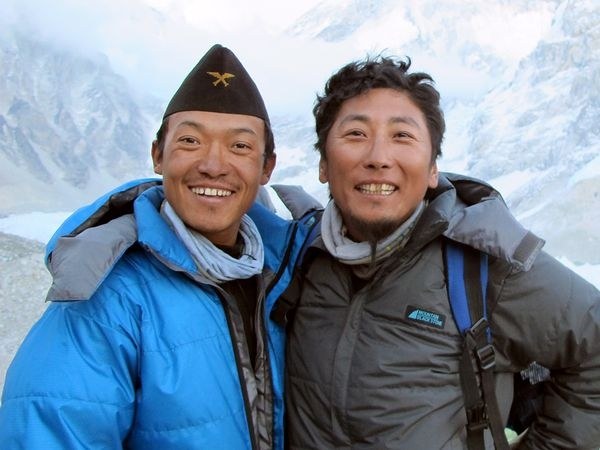
When Lakpa Tsheri Sherpa first saw paragliders arrive in the Himalaya, he dreamed of flying above the massive peaks of his home—the Khumbu region. After his third successful summit guiding trip on Everest, he viewed paragliding as a simpler, faster, and more graceful way of descending through the peak’s perilous slopes.
In October of 2010, Lakpa borrowed a paraglider, got a few pointers, and launched from a hillside above his home. He promptly crashed into a tree. With his paraglider wing badly damaged, Lakpa set out for the town of Pokhara, considered to be the gathering spot for paragliders, to seek repairs and find a mentor. He ran into Sano Babu Sunuwar, whom Lakpa had met years earlier on Island Peak. Babu repaired the glider and the two men hatched the plan for the Ultimate Descent.
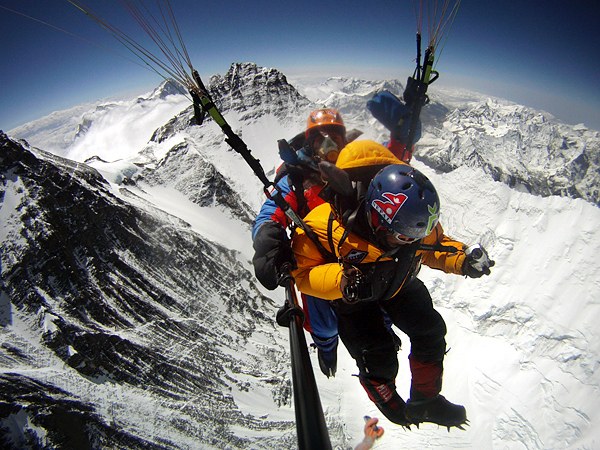
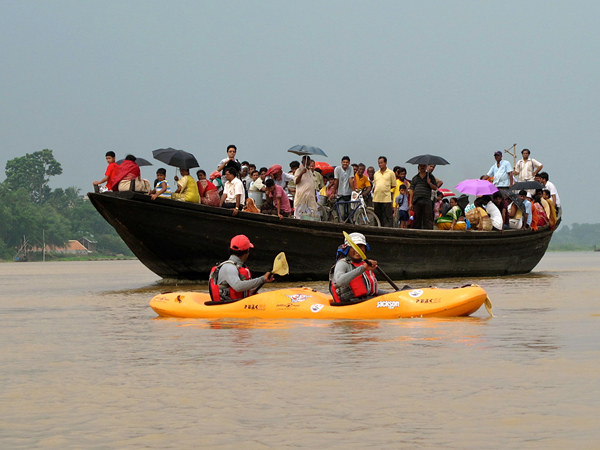
They would climb to the world’s highest point, launch a paraglider and fly for as long as possible, bicycle to a point where streams gathered into rivers, kayak across the Nepali border into India, and paddle the Ganges River all the way to the Indian Ocean. It would be an unprecedented first, but it was the overall combination of sports, audacity, and friendship that drew the duo to the idea. Babu, 28, had no climbing experience. Lakpa, 39, had never kayaked and didn’t even know how to swim.
In April of 2011, the duo had borrowed gear, slapped a basic plan together, and began their ascent of Everest. On May 21, they became the third party to launch a paraglider from the summit and set a new world record of 8,865 meters for free flight in the process. On the Kosi River’s Class V rapids, Babu got caught recirculating in a massive whirlpool in their two-man kayak, while Lakpa floated down river. Once they reached the Ganges, they paddled flatwater through unfamiliar country. They were robbed at knifepoint and had to live off fruit trees. After 850 kilometers, Lakpa and Babu reached the Bay of Bengal. On June 27, they became the first people to complete the descent from Everest’s summit to the Indian Ocean.
“When we arrived on the beach, we were frightened. We were surrounded by giant red scorpions,” says Babu. Later after showing pictures to friends, he would learn that these “scorpions” were in fact harmless crabs.
The Ultimate Descent team earned recognition from the international paragliding community, and the Nepali press hailed them as national heroes. Western adventurers admired their spunk, simplicity, and bare-bones budget. There were no social media campaigns, corporate sponsors, or expedition websites, just the essential ingredients for adventure—vision, creativity, and friendship.
—Fitz Cahall
THE INTERVIEW
Adventure: Babu, as a kayaker and paraglider, what was the most difficult part of the journey?
Sano Babu Sunuwar: On Everest I felt a great deal of discomfort. It was hard to breathe. Lakpa told me, “You are Sherpa. Be strong.” I am not a climber, but this was a great dream of mine to climb Mount Everest. Lakpa had done this many times. He helped me a great deal.
A: What was the most intimidating part of the journey?
Lakpa Tsheri Sherpa: The bugs. The ants. All animals—so active. Insects—so active. They are also busy. People so active. In the mountains, all creatures move slowly. In India, all the animals and the people move so fast. They are not still. I did not like the bugs. When we reached the ocean and took the kayaks to shore, the beach was covered in giant red scorpions. I was scared then, but we learned later that they were crabs and harmless. I also had a hard time breathing in the low elevation.
A: While the flight from Mount Everest might be the most eye-popping part of your adventure, it sounds like the Ganges and India were also difficult?
SBS: Sometimes whole villages would come down. We were robbed. They came with knives. We protected the camera, but gave them money. They left, but we paddled very fast. We could hear them coming with a motorboat. We found an island with tall grasses and hid. We slept in the kayaks the whole night.
LTS: We ate fruit from the trees, but the water was bad. We were not used to seeing dead bodies. In Nepal, we burn our dead. In India, they are put in the river. We would see two or three bodies a day.
A: For each of you, was there a favorite part of the journey?
SBS: Taking off from the highest point in the world. At first it was really windy, but the wind calmed. When we lifted off we were carried immediately upward.
LTS: The flight. I like to sing while I fly. We were very happy. We were both singing. This was a dream for both of us.
A: The "ultimate descent" earned you some attention both in Nepal and abroad. There was a short film made about your flight. What has it been like to be recognized for your achievement?
SBS: We love getting to share our dream. We came to Europe to show the film at a film festival. We feel a little like movie stars. People wanted to shake our hands. We were very happy to share our story.
LTS: When we got home, we were very excited to share our story not just with Nepal, but all over the world. It felt like a million people. There were a lot of foreigners who came to set records. We weren’t after a record, we just wanted to do all these things, climbing, paragliding, kayaking in one continuous trip

Everest is waiting for Prince Harry
Everest.
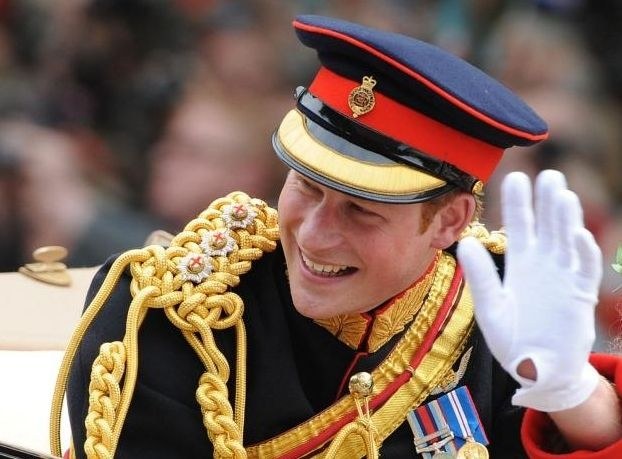
Prince, who is currently a military helicopter officer, is going to take part in an expedition to Everest.Thus, it will continue his cooperation with the Walking with the Wounded. They conduct various activities with the wounded soldiers of ...
Prince, who is currently a military helicopter officer, is going to take part in an expedition to Everest.Thus, it will continue his cooperation with the Walking with the Wounded. They conduct various activities with the wounded soldiers of Great Britain and raise funds for their treatment. This time the target will be set very high, above nowhere - to climb Everest by the team of disabilities. Prince Harry, who should appear at the base camp, will guarantee to collect the necessary interest (and funds) for the expedition.
Following the teams recent success in reaching the summit of Manaslu (8156m), Ed Parker and Expedition Leader Russell Brice have now selected the Walking with the Wounded Mt.Everest Summit and Support Team.
A team of 5 wounded soldiers will attempt to reach Mount Everest in May 2012. The Summit Team will consist of North Pole veterans Martin Hewitt and Jaco Van Gass along with Karl Hinnett, David Wiseman and Francis Atkinson.
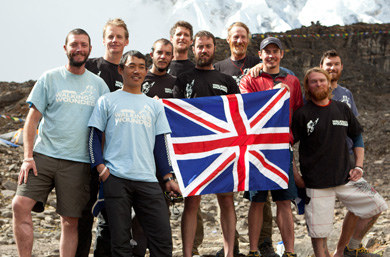
We are delighted to announce that we will be organising two expeditions to Base Camp to visit this incredible mountain and to give support to the Wounded summit team. There are limited places on these two-week treks to Base Camp and we would urge anyone who would like to stand up and be counted with a charity trek to Base Camp to let us know as soon as possible.
The provisional dates are April 15th to May 6th and May 2nd to 23rd.
The Base Camp Team will consist of Daniel Majid who will be Head of Expedition Communications, along with Andy Hawkins, Manindra Raiand Chris Gwilt who will each lead the Base Camp Expeditions.

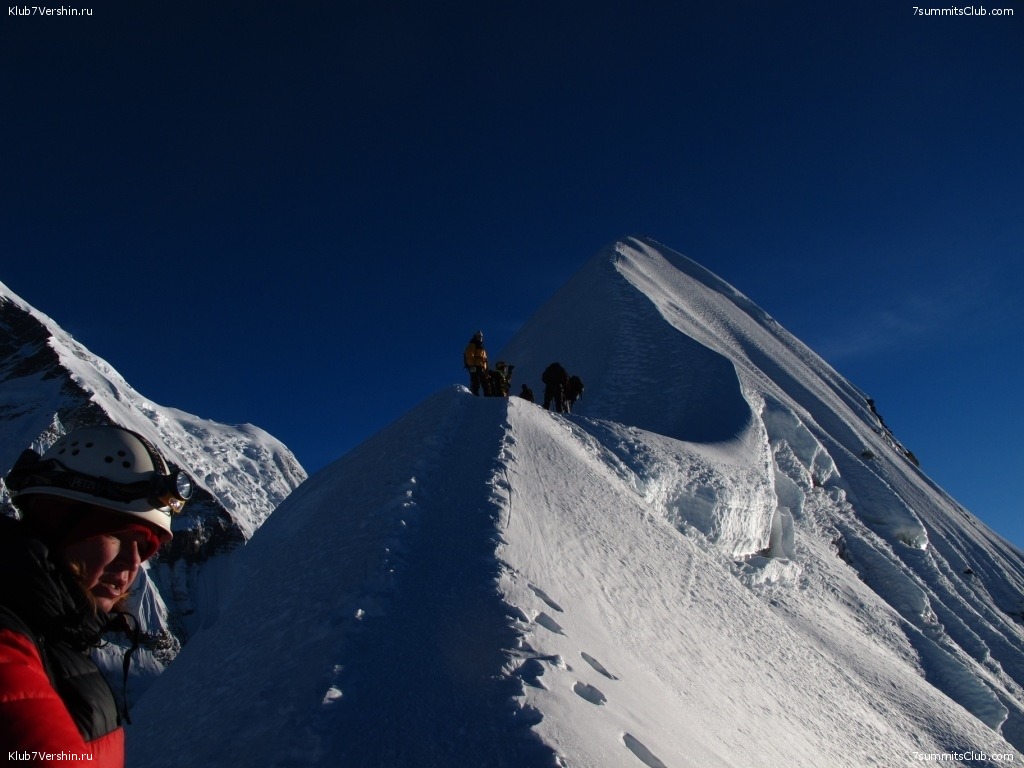
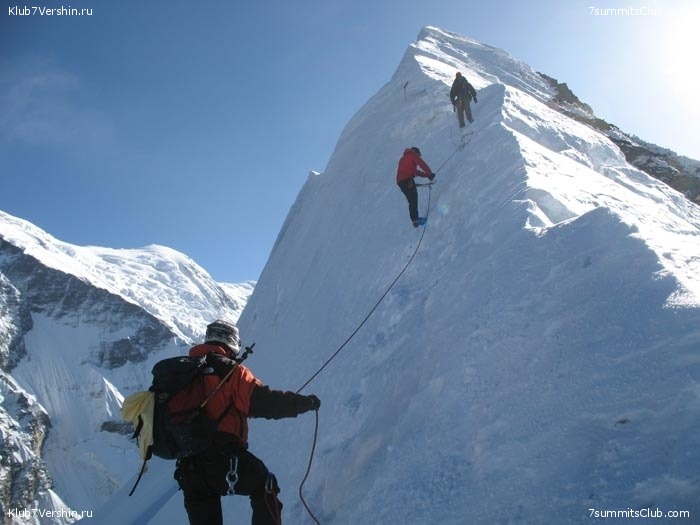
Today our team reached the summit of Island Peak
The beginning of a trip of our group had to travel in a period of a long bad weather. Airlift Kathmandu - Lukla was broken, hundreds of passengers were blocked at airports. The world's leading news agencies reported that. It seemed ...
The beginning of a trip of our group had to travel in a period of a long bad weather. Airlift Kathmandu - Lukla was broken, hundreds of passengers were blocked at airports. The world's leading news agencies reported that. It seemed that all the plans have failed and should concede defeat in the struggle against the Nature. But the climbers of the expedition 7 Summits Club decided to fight. They took the opportunity to fly by helicopter to the settlement situated below Lukla. This option assumes that the part will be walking on two longer. As a result, our guys are not only caught up with the schedule, but could reached the Everest base camp. They ended the program today, by a successful ascent of the Island Peak. Heroes season: Andrew Bykanov, Nikolai Kirilov, Andrei Mangushev and their Sherpa guide Lakpa Passang ...

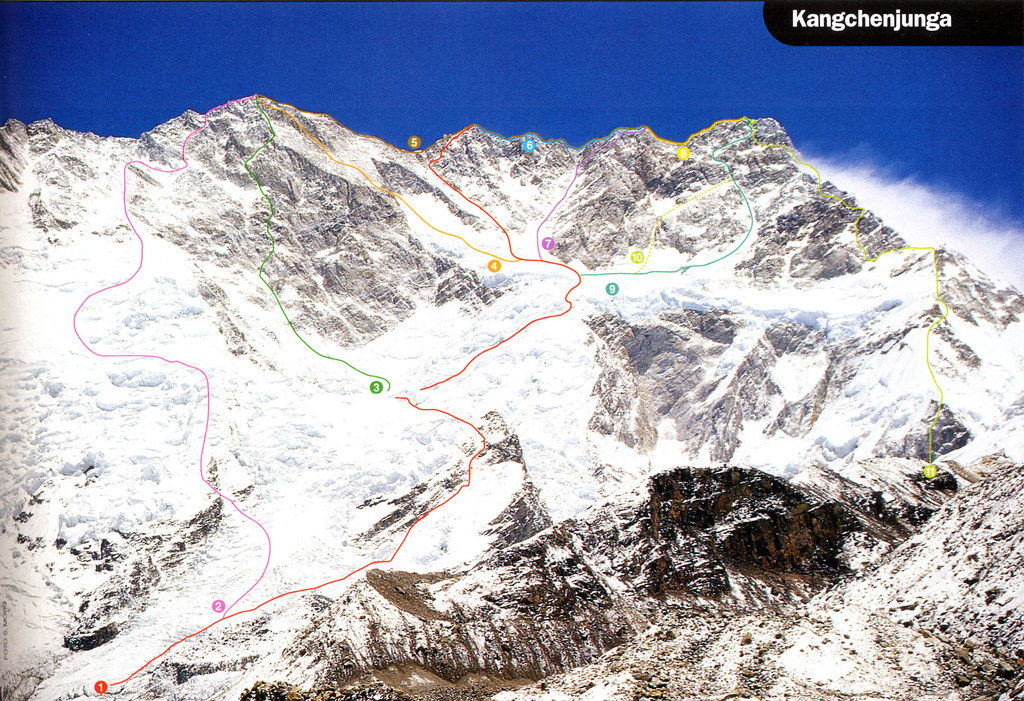
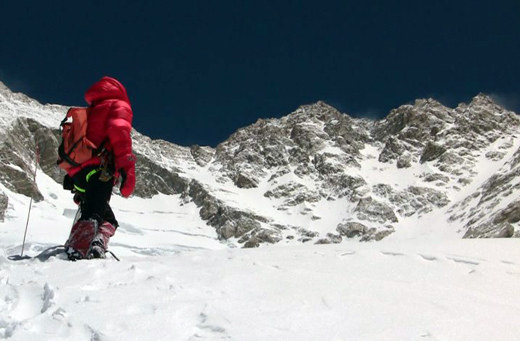
Successful Kangchenjunga summit push !
Anna Gatta reports: I just got a phone call from Philippe at camp 4, 7700m. Philippe Gatta, Ludovic Chaleat, Cédric Haelen and 3 Sherpas successfully made a camp 4-summit-camp 4 round trip this night/morning in 11 hours (timing to be ...
Anna Gatta reports: I just got a phone call from Philippe at camp 4, 7700m. Philippe Gatta, Ludovic Chaleat, Cédric Haelen and 3 Sherpas successfully made a camp 4-summit-camp 4 round trip this night/morning in 11 hours (timing to be confirmed, line was bad). Kangchenjunga, 8586m, is bagged!
Alexia and Ben turned around at 8200m and is now walking down towards camp 3 or even camp 2. The are both fine but I think they felt too tired to go on. Gorgan didn’t feel good enough to start the summit push and went down and might even be in base camp already. Conclusion – everyone are ok, that is what counts.
Christian Stangl and a Russian guy also made the summit.
Philippe will stay in camp 4 today to recover from the tough night and tomorrow everyone will be back in base camp.
Search on for Belarusion climbers!
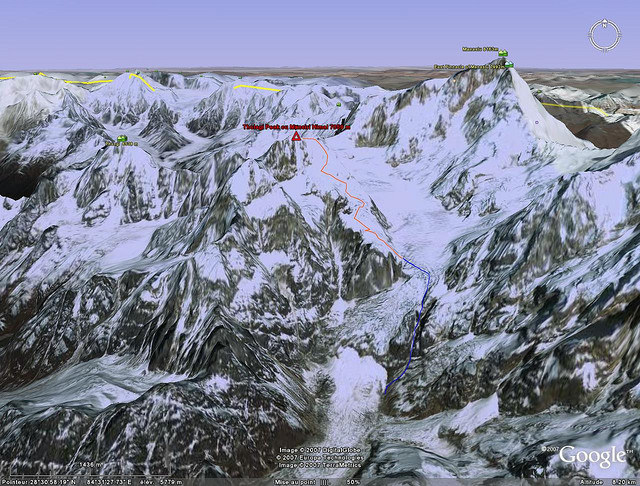
May 15th, 2011 by fishtailair. On the 14th and 15th May, we had done aerial search on Thulagi Peak 7057 m (which is also called Mansiri Himal). The mountain had been scouted in the entire altitude, from the top till the bottom in all ...
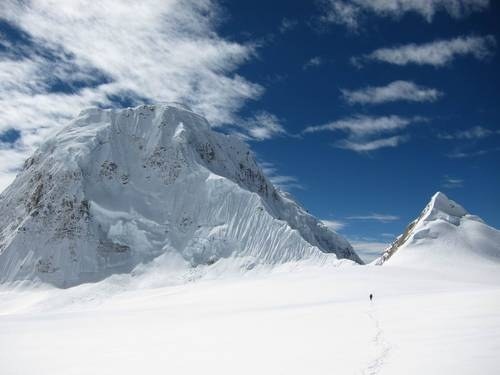
May 15th, 2011 by fishtailair. On the 14th and 15th May, we had done aerial search on Thulagi Peak 7057 m (which is also called Mansiri Himal). The mountain had been scouted in the entire altitude, from the top till the bottom in all the faces. No life could be seen and today 15th we saw a tent at around 6300 m. It was dark green in color, and it was located on the south face. We landed and one of our rescuers jumped out from the helicopter and went inside the tent. There were sleeping bags and some equipment but no human sign. Few pieces of equipment have been taken as a proof of our research to be recognized by the family. When we took off from that place (6300 m) and we found some footprints above the tent, ending in a sharp ridge. We searched a lot below that ridge and above. We also went to other directions starting from other potential climbing routes but nothing could be found. From my climbing experience I’m quite sure that they fell in a crevasse or from that ridge because that place was really dangerous.


Himalayan news from our team and from our friends
We are in Kathmandu, here is the heat ! Abramov checks member’s equipment, I am preparing the technical part of today's dinner, connecting and adjusting hardware. Tomorrow we are planning excursions and sightseeing in Kathmandu. ...
We are in Kathmandu, here is the heat ! Abramov checks member’s equipment, I am preparing the technical part of today's dinner, connecting and adjusting hardware. Tomorrow we are planning excursions and sightseeing in Kathmandu.
Greetings!
Yours faithfully, Dmitry Ermakov
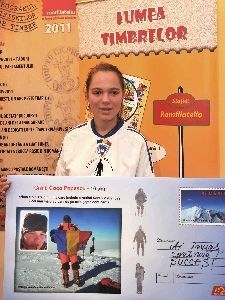
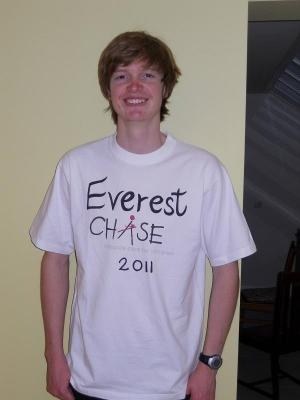
Alexander Abramov, is only awaiting the arrival of their first team. And many other expeditions are already begun acclimatization. Even those who will climb from the north. In particular, the British expedition company Adventure Peaks. They are on the southern slopes of Mount Everest now and saw the coveted summit. 16-year-old Englishman, George Atkinson is in this team. In case of success on Everest, he will be the youngest climber, ever climbed the Seven Summits. If only Coco Popescu did not surpass, and she will work in our 7 Summits Club expedition. Atkinson will celebrate 17 years on May 29 and he wants to complete the program before that date. Coco will be 17 years old only in December. Before departing on an expedition to Everest, she participated in the presentation of a series of stamps devoted to her achievement – climbs on the seven highest volcanoes of the seven continents.
Crina and George will meet in our base camp
Kanchenjunga
Message from Israfil Ashurly: "The team, led by Alexei Bolotov: Gleb Sokolov, Nikolay Totmyanin, Andrey Manuilov, Alexander Lutokhin, Dmitry Sinev (Russia), Alexander Frolov (Australia), Christian Stangl (Austria), Israfil Ashurly (Azerbaijan), after a 12 days of trekking, has reached on April 8 a base camp at 5,450 m.
We are here already for 3 days. Last night there was heavy snowfall. The bulk of our equipment has not yet been delivered to the base camp. So we can not begin to prepare a route. We are waiting for an arrival of two big expeditions. Greetings from the guys. "

Elizabeth Hawley registered us, we can go further ...
Everest.
Today, Nikolay Cherny, Sergei Larin, and Noel Hanna, along with a team of Sherpas went to the base camp at North side of Everest. A day before, there was a meeting with the legendary Miss Elizabeth Hawley. A journalist, in the past, ...
Today, Nikolay Cherny, Sergei Larin, and Noel Hanna, along with a team of Sherpas went to the base camp at North side of Everest. A day before, there was a meeting with the legendary Miss Elizabeth Hawley. A journalist, in the past, this 87 years old lady, is the main authority in the Himalayan mountaineering. Even she has not made any ascent itself. Hawley in her place, is both a chronicler number 1, directly receiving an information about Himalayan expeditions, and a referee deals in complicated situations. Unexpectedly for us, this remarkable woman personally paid a visit to the hotel where located Alexander Abramov and his team. It turned out a beautiful photo.

Meanwhile, a small ceremony held in the office of the 7 Summits Club. We farewelled our beloved comrades in Nepal. Victor Bobok and Dmitry Ermakov go to the Himalayas. Dmitry will lead an expedition to the foot of Mount Everest from the south, the main aim of a large group will be climbing Island Peak. Victor will join the team of Alexander Abramov, as a guide of Mount Everest. He wants to climb the summit already by his third route (2004 - North Face direct, 2009 - a classic from the south). We know that Eugene Vinogradsky reached the summit of Everest by three different routes. Or anyone else?
Yuri Koshelenko (left) and all the staff of the Club wished them good luck !
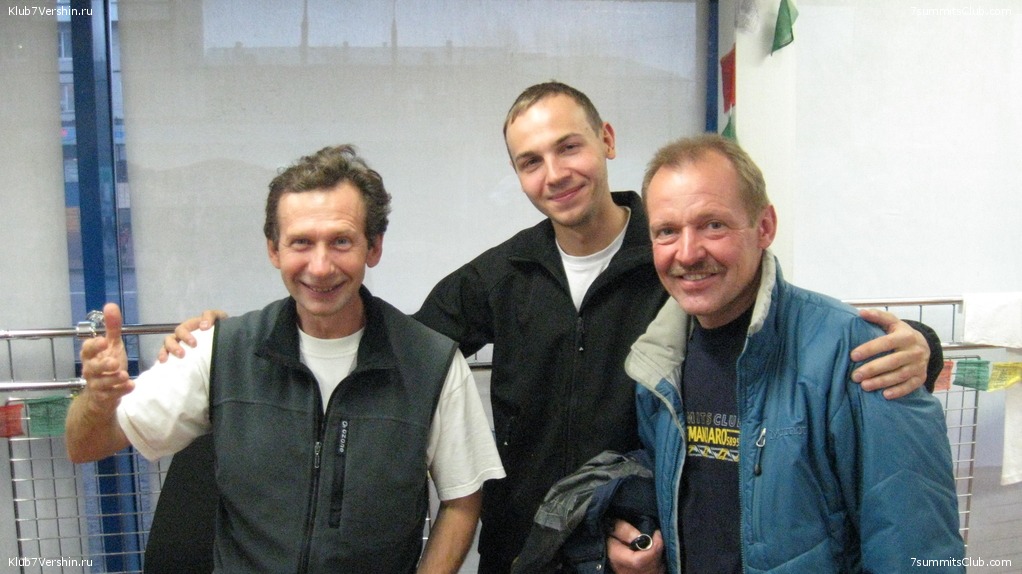
Our 2011 Expedition.
The main part of the expedition (with permit on Everest):
Karina Mezova (28 years) Nalchik
Andrew Podolyan (39) Moscow
Dmitry Sokov (43) Sakhalin
Igor Prinzyuk (33) Khabarovsk
Yuri Beloivan (44) Moscow
Roman Grezky (39) Moscow
Christopher Cannizzaro (25) U.S.A.
Crina Popescu (16) Romania
Group with special permits (without climbing Everest):
Valery Rozov (46) Moscow
Denis Provalov (42) Moscow
Sergey Krasko (49) Moscow
Anatoly Yezhov (64) Archangelsk
Ovidiu Popescu (47) Romania
Gennady Naykov (44) Moscow
Guides of the expedition:
Alexander Abramov (47) Moscow
Sergey Larin (51) Tver
Nikolay Cherny (72) Moscow
Noel Hanna (44) Ireland
Victor Bobok (50) Moscow
Spring season in the Himalayas, highlights...
Everest.
We look at the Himalayas from south to north. Kanchenjunga. The team collected by Alexey Bolotov will try to climb this giant mountain. It consists of two top Russian high altitude climbers - Nikolay Totmyanin and ...
We look at the Himalayas from south to north. Kanchenjunga. The team collected by Alexey Bolotov will try to climb this giant mountain. It consists of two top Russian high altitude climbers - Nikolay Totmyanin and Gleb Sokolov. As well as our close friend, president of Mountaineering Federation of Azerbaijan, the snow leopard and the climber at the Seven Peaks Israfil Ashurly. Together with them - Pole Paul Michalski, Romanian Alex Gavan and Italians Mario Panzeri and Antonello Martinez. And also a group of Nepalese climbers. If successful Sherpa Mingma will be the first in the country climbed 14 eight-thousanders ...
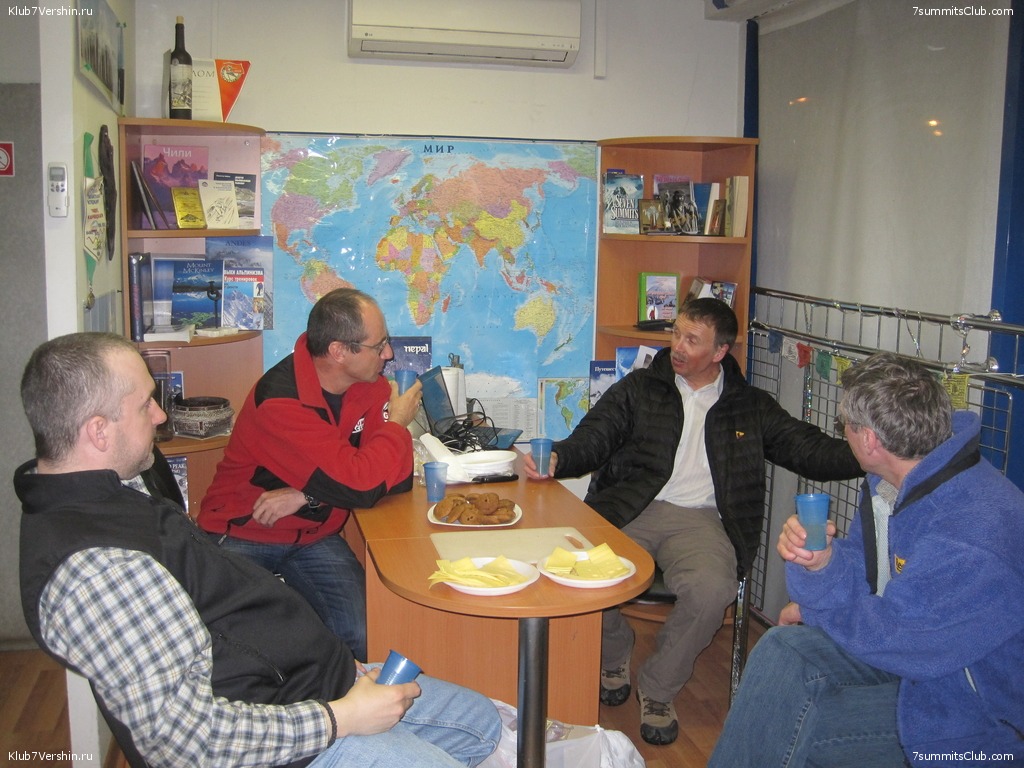
In our office: Mikhail Yarin, Alex Abramov, Gleb Sokolov and Pavel Shabalin
Makalu. Polish woman climber Kinga Baranovska, which goes to his eight eighеt-thousanders, will be there a major star ... Slovak Peter Hamor plans, high-speed solo climb without oxygen. For acclimatization he plans to climb Lobuche East and Pumori.
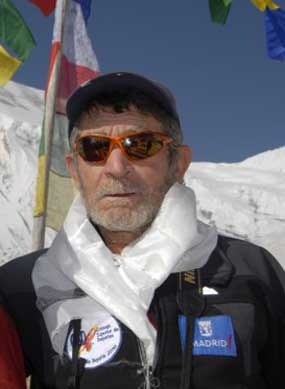
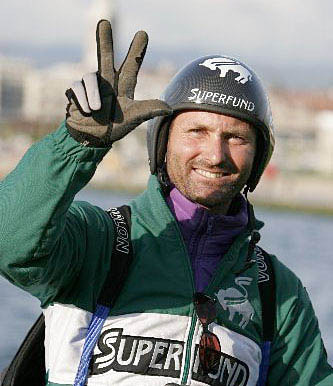
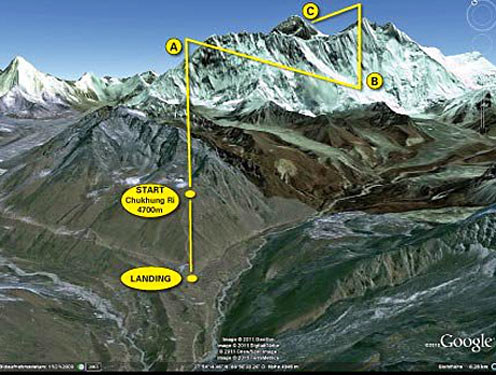
Lhotse. Carlos Soria, 72-year-old Spanish climber intends to climb its 10 th eight-.thousander. In the company with him will climb Carlos Pauner and Juan Oiarzabal, who has now 24 climbs on eight thousanders (overall record). Austrian paragliding Mike Kueng wants to flight over the summit ridge (8500 m), starting from the south. On account of this 42-year old athlete is a lot of records, including a flight at an altitude of 10,100 meters. But the goal is very difficult: from the bottom up in the Himalayas nobody could rise above 7300 m yet. Austrian already is flying in the vicinity of Namche Bazaar, as part of his great expedition "paratrekkers.
Soria (left), Kueng and below - the planned route record
On Everest should be lively as usual ...
In addition to numerous commercial expeditions, many people will try to speak own word on the slopes of tallest peak of the planet.
In the focus - Basque woman climber Edurne Pasaban, which tries to climb the highest peak without the aid of artificial oxygen. If successful, all 14 eight she would have "made" without oxygen. Also will try a clean, oxygen-free ascent a 35-year-old Australian climber Allie Pepper .. And men… once again going to climb without oxygen Englishman David Tait. Before that he planned to climb a new route on Lhotse. Mexican David Liano is back to his project climb Everest from both sides during the season. Without oxygen, and one day plans to go to the summit an Ecuadorian Ramiro Tesalema. Brazilian Rodrigo Raineri announced his intention to descend from the top of a glider.
Allie Pepper - after Cho Oyu climbs Everest without oxygen

Sherpas go for at least 3 record. Famous Apa go to the top once again.
Pemba Dorji plans for a day to visit both Everest and Lhotse. His brothers dragged to the top of the world's tent - they plan to stay at an altitude of 8848 meters over 24 hours.
On Cho-Oyu the most interesting fact is that refusal to participate in the expedition Japanese Hiro Takeuchi. In solidarity with the victims of the catastrophic earthquake compatriots. Takeuchi - the first real contender for the 14 eight-thousanders from the country which was a quarter-century was among the leaders of Himalayan mountaineering. He remained only two: Cho Oyu and Dhaulagiri

Sumo wrestler Kelly Gneiting finishes LA marathon and plan to climb Everest
Everest.
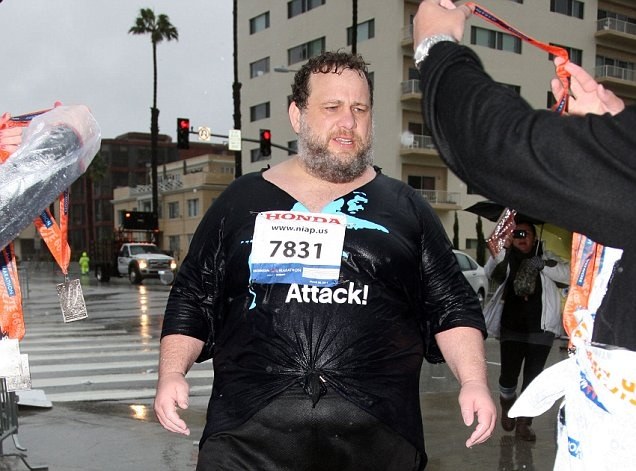
Gneiting, shown during a 2004 competition, beat his previous time by two hours A 400lb American sumo wrestler hopes to become certified as the heaviest man to finish a marathon after competing the Los Angeles race in nearly 10 hours. ...
Gneiting, shown during a 2004 competition, beat his previous time by two hours
A 400lb American sumo wrestler hopes to become certified as the heaviest man to finish a marathon after competing the Los Angeles race in nearly 10 hours.
Kelly Gneiting, who was the last of 11,891 men to cross the Los Angeles marathon finish line on Sunday, described the race as "pure hell".
Gneiting walked the last 18 miles, suffering through painful blisters, but beat his 2008 time by two hours.
He has won three US sumo titles beginning in 2005.
"I did it, but it was hell," Gneiting, 40, was quoted as saying by the Los Angeles Times. "Pure hell."
Gneiting of Arizona weighed in after the race at 396lb (179.6 kilos) - four less than when he started, local television reported.
By the time Gneiting finished the first half, the city had begun reopening streets along the route and he completed the race on the pavement, NBC television reported.
Gneiting hopes to have his time - nine hours and 48 minutes - certified by the Guinness Book of World Records.
To the new season on Everest
KATHMANDU: The Seven Summits Foundation in coordination with Nepal Tourism Year 2011 committee will organize a concert at the Mount Everest Base Camp at the height of 5,400 meters above the sea-level on March 23. According to the ...

KATHMANDU: The Seven Summits Foundation in coordination with Nepal Tourism Year 2011 committee will organize a concert at the Mount Everest Base Camp at the height of 5,400 meters above the sea-level on March 23.
According to the organizers, apart from Nepali artists and International artiste John McCune from USA will also perform at the Everest Base Camp for the programme. The initial festival is dedicated to raising awareness of the melting of the Himalayan Glaciers due to Global Warming, kicking off a series of five concerts with the final one in Kathmandu, said Thomas J Sexton, a member of the 7 Summits Foundation.
After two weeks of trekking and performing in the Himalayas, the ‘Save the Himalaya’ festival will conclude with a concert in Kathmandu on April 6.
Led by Ang Chhering Sherpa, who holds the record for climbing the world’s seven highest summit in just 42 days, and in association with the Nepal Tourism Year 2011 committee, the 7 Summits Foundation hopes to use the concert series to focus the attention of the international community on one of the highest destinations on earth, embodying the ‘Voice from the Top of the World’.
While rising sea-levels have been the central focus of the detrimental effects of Global Warming, the melting of our glaciers will have an impact on landlocked nations as well, he said, adding that the melting of the Himalayan glaciers will cause flooding and destruction, affecting the survival and livelihood of the people of the Himalayan region.
Meanwhile, AC Sherpa plans to continue to build awareness of the impact on the Himalayan glaciers by attempting to set a new mountaineering record by climbing Mt Everest three times in one climbing season this summer.

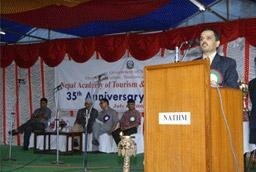
KATHMANDU: A team of civil servants led by Secretary at the Office of the Prime Minister and Council of Ministers, Lila Mani Poudel is all set to scale the Mount Everest, the highest peak in the world. They are setting off for mountaineering from the third week of Chaitra.
It was informed at a programme that the mountaineering campaign of the civil servants, as an important programme in connection with the Nepal Tourism Year 2011, will spread a new message in the international sector. The programme was organised at the Ministry of Tourism and Civil Aviation.
The government has allocated Rs 750 million for the campaign which will be of 75 days. Similarly, the Mountaineering Training Institute Development Committee has been providing training and will manage the expedition.
In course of the training, the expedition has successfully scaled the Yala peak of Lamtang.
At the programme, Chief Secretary Madhav Ghimire said the mountaineering will help devise a mechanism on sustainable environment conservation by acquiring information about the effects of climate change in the mountain region.
Similarly, Secretary at the Tourism Ministry, Kishor Thapa said the Ministry will arrange the management for the mountaineering team to reach atop the Everest and return it safely.
Team leader Secretary Poudel said they were all set to climb the Mt Everest to show that the civil servants were also capable to do adventurous job.
Nepal Tourism Year Coordinator Yogendra Shakya said the mountaineering zeal of the employee will add new spirit to the tourism sector.
The mountaineering team comprises Joint Secretary at the Foreign Ministry, Durga Prasad Bhattarai, Joint Secretary at the Tourism Ministry, Laxman Bhattarai, engineer at the same ministry Santa Kumar Maharjan, and Mukti Ram Rijal, Surath Pokhrel, Hari Prasad Guragain, Khim Lal Gautam, Gyanendra Kumar Shrestha, Tulsi Ram Bhandari, Padma Bahadur Bhandari, Bishnu Prasad Poudel, Subir Shrestha, Hari Dhakal and Kumar Giri.
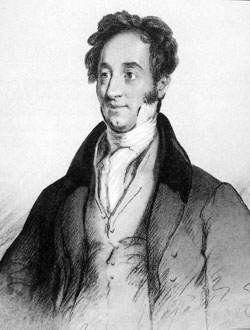
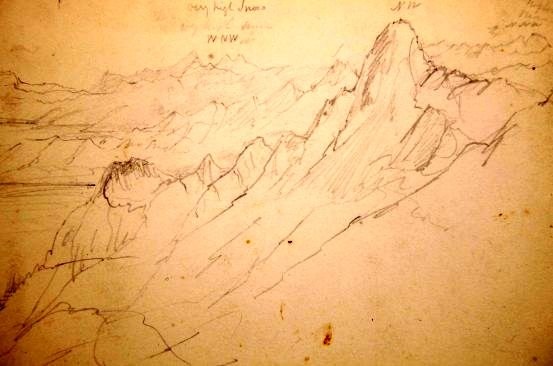
Joseph Dalton Hooker, renowned botanist, close friend of Charles Darwin and global explorer, also produced the earliest Western sketch of a little-known geologic feature called Mount Everest, it emerged this week.
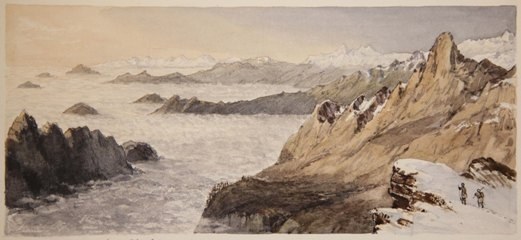
The Royal Botanic Gardens at Kew, where Hooker was director in the late 19th-century, has identified a rough sketch by Hooker of the Himalayan mountain, the highest point on Earth, as one of the first of its kind. A consultation with Hooker experts, including the Royal Geographical Society (RGS), suggests the drawing is the earliest known scientific Western drawing of what locals call Mount Chomolungma. The work dates from 1848, completed while Hooker, aged 30, was conducting a three-year-long research expedition of the Himalayan region. The RGS named Everest in 1856 after George Everest, a former British surveyor-general of India.
"It is always wonderful when we turn up a hidden gem of such historical importance," said Kew's director Stephen Hopper. "To our knowledge there are no other earlier representations of Everest by a European, in which case this discovery could be one of the most important findings in Kew's Archive."
While the RGS has a French map of the relevant Himalayan region dating from the 1730s, it has no pictorial representations of the mountain from this period.
Kew were first alerted to the sketch's importance by documentary filmmaker Peter Donaldson, who has spent several years researching Hooker's life. In 2008, he retraced Hooker's 1848 journey through eastern Nepal and the Tibetan border, which Mr Donaldson claims was the first recreation of its kind. "Hooker's various explorations around the world and on the spot drawings provide a very interesting reference point to see how parts of the eastern Himalayas and elsewhere have changed over the last 160 years," Mr Donaldson said in an email. "Hooker established much of the science underlying current understanding of how plants change with changing climate. This is of great importance in interpreting the past and future effects of climate change."
The garden's archives also contain a watercolour by Walter Hood Fitch, based on the Hooker sketch, which was created in about 1850. While the botanist does not refer directly to the drawing in his journals, he describes a spectacular sunset seen during his four-year expedition. "I have never before or since seen anything which for sublimity, beauty and marvellous effects, could compare with what I gazed on that evening." Everest is marked on Hooker's sketch "very high snows NNW ".
As well as being the first European to collect plants in the Himalayas, Hooker also worked with Darwin to classify plants he had collected in the Galapagos Islands.
Hooker's sketch is currently on display at Kew's Shirley Sherwood Gallery of Botanical Art until 1 June.
Azerbaijani alpinist Israfil Ashurly will climb Kanchenjunga
Our friend the president of the Federation of Mountaineering of Azerbaijan Israfil Ashurly continues to show incredible activity. Recently, he completed an international course judges of ice-climbing and going the entire season to do the ...
Our friend the president of the Federation of Mountaineering of Azerbaijan Israfil Ashurly continues to show incredible activity. Recently, he completed an international course judges of ice-climbing and going the entire season to do the judging at various competitions in different countries. In the winter he will take a course of ice climbing in Chamonix. And at the end of March, Israfil will go to the Himalayas, where he join an expedition led by Alexei Bolotov, that will climb Kanchenjunga. By the way, Alexei has already climbed 10 eightthousander, and puts the real aim of completion of the program of 14 eight-thousanders in the near future. Important, he's got K2 behind him..
Together with the 7 Summits Club Israfil Ashurly made climbing Mount McKinley, Aconcagua, Vinson, Everest, Carstensz, Cho-Oyu.
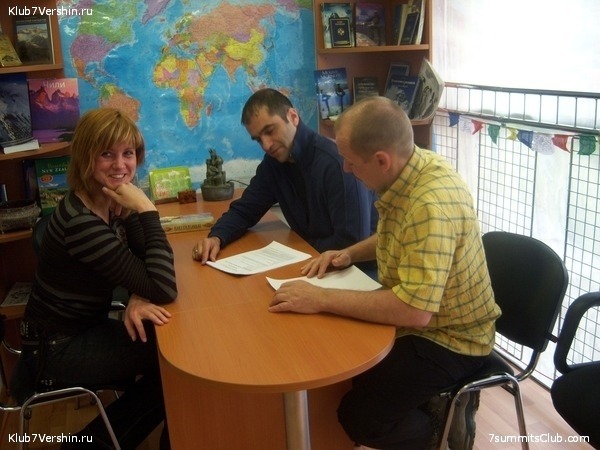
Israfil in our office
The Highest Art: 78-Year-Old Painter Ranan Lurie Plans Exhibition on Top of Mount Everest
Everest.
Associated Press. NEW YORK — True art can be an elevated pursuit — in this case an elevation of approximately 29,000 feet. Three small panels of a massive painting project that has been displayed at the United ...
Associated Press. NEW YORK — True art can be an elevated pursuit — in this case an elevation of approximately 29,000 feet. Three small panels of a massive painting project that has been displayed at the United Nations are set to be carried to the top of Mount Everest in March, artist and political cartoonist Ranan Lurie said Wednesday.
The three acrylic-on-canvas panels — together measuring about 2 feet by 3 feet — represent just a small fraction of the dozens of pieces making up the 600-foot-long "Uniting Painting" project.
The 78-year-old artist, who's been working on his "Uniting Painting" project since 1968, says it offers viewers a "common denominator."
By enjoying the different pieces of the artwork, he said, "we respect the same thing."
"Although we come from different cultures and different places," he said, "we have an artistic Esperanto that we can talk through and with. And unite."
Lurie says he hopes that displaying the paintings on the peak of the world's highest mountain will show the scope of the work's message.
The project's dozens of panels depict similar flowing shapes that continue from one panel to the next, though the colors and motifs change. The panels selected to be carried by professional Nepalese climbers are largely blue and white to reflect the colors of clouds, sky and snow found at their destination, Lurie said.
----------------------------------------------------------------------------------------------------------------------------

9-year-old to climb Mount Everest and more news
Everest.
(CNN) -- This year a 13-year-old from California stunned the world when he became the youngest person to summit Mount Everest. Now a 9-year-old Nepalese boy says he can do it, too. Or at least that's what the child's father is reportedly ...
(CNN) -- This year a 13-year-old from California stunned the world when he became the youngest person to summit Mount Everest. Now a 9-year-old Nepalese boy says he can do it, too. Or at least that's what the child's father is reportedly promising.
Sherpa Pemba Dorje, who holds the world record for the fastest Everest ascent (8 hours, 10 minutes), recently boasted that his grade-schooler will try to conquer the globe's tallest mountain in 2011.
To illustrate his seriousness, Dorje and his son Tseten last week climbed Mount Ramdung, a 19,440-foot peak in the Dolakha region of Nepal, according to the Himalayan Times daily and the Indo-Asian News Service. Dorje told reporters it was a practice run for Everest, which is more than 29,000 feet.

The notion of another baby-faced adventurer -- backed by an ambitious parent --sailing the widest seas or climbing the tallest mountain unearths a familiar question: Does inherently dangerous record-setting have an age limit?
"Little children do not belong on big mountains," said Jiban Ghimire, a Nepali renown for leading multiple expeditions on Everest. Ghimire's Shangri-La Treks & Expeditions, a go-to climbing assistance company, has employed Dorje as a guide. "I know Pemba Dorje, and I know he's said he wants his child to do this, that his son is capable of it.
"I would not want to discover, on that mountain, that the boy is not capable," Ghimire said. "I feel that you ask for something bad with this."
The obvious objections to allowing a child to climb Everest, or any major mountain, have to do with the physical toll it could take on his or her body. While there's no conclusive research that an adolescent is more susceptible to developing potentially fatal altitude sickness, anecdotes of mental and physical woe abound.
Past Everest climbers have experienced motor-skill dysfunction, sleep troubles, language disassociation and other problems that may be related to depriving the brain of oxygen while climbing, experts say.
Alan Arnette, a Colorado-based climber, has been on 20 expeditions from Tibet to Argentina. He most recently climbed 27,500 feet up Everest.
"Nobody doubts how talented Sherpa Pemba is," Arnette said. "Any Westerner would be smart to trust their life with him on the mountain. But that's any adult."
"When you get up there, it's not like you're gasping for air, you feel like you want to sit down and sleep forever -- that's altitude sickness," he said. "You have to be aware of what your body is doing and act accordingly. That's an adult's experience. Who knows what would happen to a developing child."
Besides, Arnette surmises that the odds of the boy making it past base camp are "just about zero."
The China Tibet Mountaineering Association, which regulates expeditions in Tibet, issued new climbing rules this year that ban anyone younger than 18 from climbing the Tibet side of Everest. A climber must be 16 to attempt Everest from the Nepali side. Penalties for breaking the rules are stiff, ranging from high fines to prison.
Arnette points out that every expedition must have a permit, which can cost tens of thousands of dollars. It's relatively easy for Everest authorities to catch someone trying to climb illegally, he said. Permits must be shown to officials when entering the park, and liaison officers from the Nepal Ministry of Tourism are assigned to each expedition group to help in case something goes wrong, and to ensure groups aren't leaving behind garbage.
In Dorje's case, everyone on the mountain knows who he is. He's clearly drumming up publicity for the climb. So why? Is it money? Arnette doesn't think so.
"No company or sponsor is going to get behind this. There's too much risk," he said. "My best guess is that he's motivated by national pride."
In May American Jordan Romero, 13, became the youngest person to summit Everest.
"I think all the Everest records should be held by Nepalese people," Dorje told London's Daily Mail.
Jordan received worldwide press for his feat, most of it glowing, and he encouraged younger kids to follow in his bootsteps. "Age is not a matter," Jordan told reporters in Kathmandu a day after he returned from his climb, which took 10 months and 10 days. "My body did cope with the altitude very well."
The teenager broke a record few thought possible.
"The American boy is famous. When many people think of Everest, they say his name," Ghimire said. "But a mountain doesn't care who you are."
*************************************************************************
Adventurer Chessell hangs up his boots
Adelaide adventurer Duncan Chessell, a three-time conqueror of the world's highest mountain, has hung up his climbing boots and is planning to go prospecting for gold and uranium.
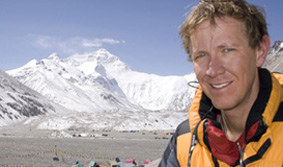
Chessell has joined newly formed company Endeavour Discoveries as its managing director and will take a break from leading expeditions to such places as the Himalayas or Antarctica for a few years.
"I have faced many challenges and overcome almost all of them by working with extraordinary teams of people on seven continents and have enjoyed almost every minute of it," Chessell said in an email to his clients and supporters on Monday.
"I have now reached a stage where I am over living from backpacks though.
"So thanks for coming along for the ride, sail, paddle, walk, climb - it has been simply awesome."
In May this year Chessell became the first Australian to reach the summit of Mt Everest three times in an expedition hampered in its final push by heavy snowfalls.
His triumph followed his two previous trips to the top of the world in 2001 and 2007.
Chessell has sold his Chessell Adventures company to friend and sales and office manager Katie Sarah. Sarah was part of the group that reached the Everest summit this year.
As the boss of Endeavour Discoveries Ltd, he plans to take the company to a public float in the next 12 to 18 months. "We are aiming to discover gold and uranium deposits in South Australia and the Northern Territory," he said.
**************************************************************************
Bad Weather Strands Thousands near Mt. Everest
Flights are still grounded at the air strip closest to Mt. Everest, stranding around 2,000 foreign tourists, including some Americans, in the small town of Lukla in eastern Nepal.
"Again the weather was very bad today," wrote Phurba Gyeljen Sherpa, proprietor The Irish Pub and Internet Caf?. "Very few airplanes were able to go out and the Americans here, and other nationalities, have grown weary and frustrated."
The military stepped in and posted flyers at the airport telling people not to pay more than $350 for private helicopter companies.
"Then they flew in large MI-17 military transport helicopters, cable of carrying 24 people each," continued Sherpa.
The military chose who would fly out first by who was stranded there the longest, instead of those willing to pay the most money.
Since there was only a brief period of good weather, the military quickly ferried the stranded people to a nearby airstrip in Ramechhap, where the weather was more stable.
When the weather destabilized, the military returned to Ramechhap and tourists to Kathmandu.
Slightly over 75 percent of westerners were evacuated.
******************************************************************
Will Wi-Fi ruin Mount Everest?
Broadband arrives on the world's tallest mountain. But having hiked it, I worry the magic will vanish
By Jeff Greenwald
When I began my career as a travel journalist in the 1980s, there was lots of talk about "remoteness." This was what many travelers were looking for: places so hard to get to, and so different from the world we knew, that their very existence seemed almost miraculous.
Today, the value has shifted. What we look for now is connectedness: the opportunity to check our e-mail, upload video clips and chat on Skype -- even if we happen to be on the Khumbu Icefall, 18,000 feet high in the Nepal Himalaya.
Last week, a network of eight 3G base stations began operating along the route to Mount Everest, in Sagarmatha National Park. They were installed by Ncell, a Nepali telecom firm. The news didn't surprise me. But I felt that, irreversibly, another blow had been struck against magic.

Access to the Internet is starting to seem like a human right, so let me offer a disclaimer. There is no rational downside to the arrival of broadband on the flanks of Everest. I'm not a Luddite, and would never suggest that developing nations should be denied, for any reason, the global access that technology can provide. This 3G network will undoubtedly save lives -- not only by providing weather information and support to Everest climbers and trekkers, but as an alert system for the nearby villages threatened by flash floods from Glacial Lake Overflow (GLOF), another peril caused by global warming.
It's a good thing. So why did the news make me feel like Robert Conway in "Lost Horizon," looking back on a land to which I can never return?
During my earliest visit to Nepal in 1979, phoning home even from Kathmandu was an adventure. I'd bike to the Telecommunications Office at 2 a.m. (mid-afternoon in New York), fill out a form, and wait hours for my trunk call to go through. The costly result was often a busy signal -- or a barely audible connection. The most reliable means of communication was "snail mail": a metaphor that, with three weeks of lag time between a letter and its response, seemed literally true.
Even this much contact was a marvel, compared to the situation in the mountains. When I first trekked the Everest route, in October 1983, it felt as though I'd entered a world completely detached from the familiar. After a harrowing flight to the tiny airstrip at Lukla, the 10-day hike to Base Camp (with an elevation gain of more than 8,000 vertical feet) began. Immersion in the Sherpa Buddhist lifestyle was inescapable, and transformative. Phone calls were impossible. Even writing a postcard was like putting a message in a bottle, and tossing it out to sea.
None of this seemed like an inconvenience. Though there were bouts of homesickness, and the occasional longing for new music and old friends, it was exhilarating to have entered such an isolated realm. This, actually, was the point. Travelers embarked on our journeys to Everest or the Annapurnas aware that it would be a full-body experience -- an equation that included our brains.
As a result, trekking in the Himalaya never felt like sightseeing. It was a commitment to the here and now, demanding full-time engagement with both Nepalis and fellow travelers. There were infinite opportunities to forge new friendships, experience Sherpa Buddhist culture, or enjoy exquisite solitude. By day, you could walk alone or with companions; at night, the lodges flickered with candles and butter lamps. Out came the maps, backgammon sets and tattered journals. Tales of avalanches and Yeti sightings were shared, along with cups of the dizzying local rakshi.
During my most recent trek to Everest region in 2008, it was clear that the area was changing. Though the mountains looked the same, they felt less like a world apart. For one thing, it was a lot more crowded; an estimated 15,000 trekkers shared the narrow trails. Cellphones were already in use between the main villages, and the isolating aspects of technology were taking hold. Sherpa guides and sinewy porters marched up the steep mountain grades with telltale white headphone cords snaking beneath their parka collars, lost in the private soundtracks of their MP3 files.
Getting online was a different story. There were only a handful of cybercafes along the trekking route -- the highest of which was at Everest Base Camp itself, at 17,500 feet -- with Internet access via satellite. Connections were sluggish; it often took Gmail more than five minutes to load. Sitting in a cozy inn, immersed in conversation, was far more seductive than surfing the Web.
The arrival of 3G will change all that -- and not just how quickly trekkers can upload their photos to Flickr, keep tabs on their investments, or stream the latest episode of "Mad Men." Wireless broadband, barely imaginable even 25 years ago, will change the way future travelers and locals interact in the world's highest mountains.
For the Sherpas of Sagarmatha, of course, it may well seem that one kind of magic has simply been traded for another. Broadband on Everest! What next? If the Yeti buys an iPad, he might even decide to "friend" Bigfoot on Facebook.
For the rest of us, this constant connectedness may have a bittersweet aftertaste. My recent trek into the Himalaya was a reminder of the pleasures of remoteness. It was a joy to escape from the hamster wheel of distractions, and immerse myself in the expanded moment of real time. Because being connected -- really connected, with the place you're in and the people you're with -- requires disconnecting, at least temporarily, from everywhere else.
We are far past the time when we can expect to a find a Shangri-la, anywhere, beyond the reach of the Internet. But as the world races toward connectivity, travelers might stop to consider why we travel in the first place, and which connections we really want to make.
303 photos from the fabulous Nepal
Everest BC (Nepal).
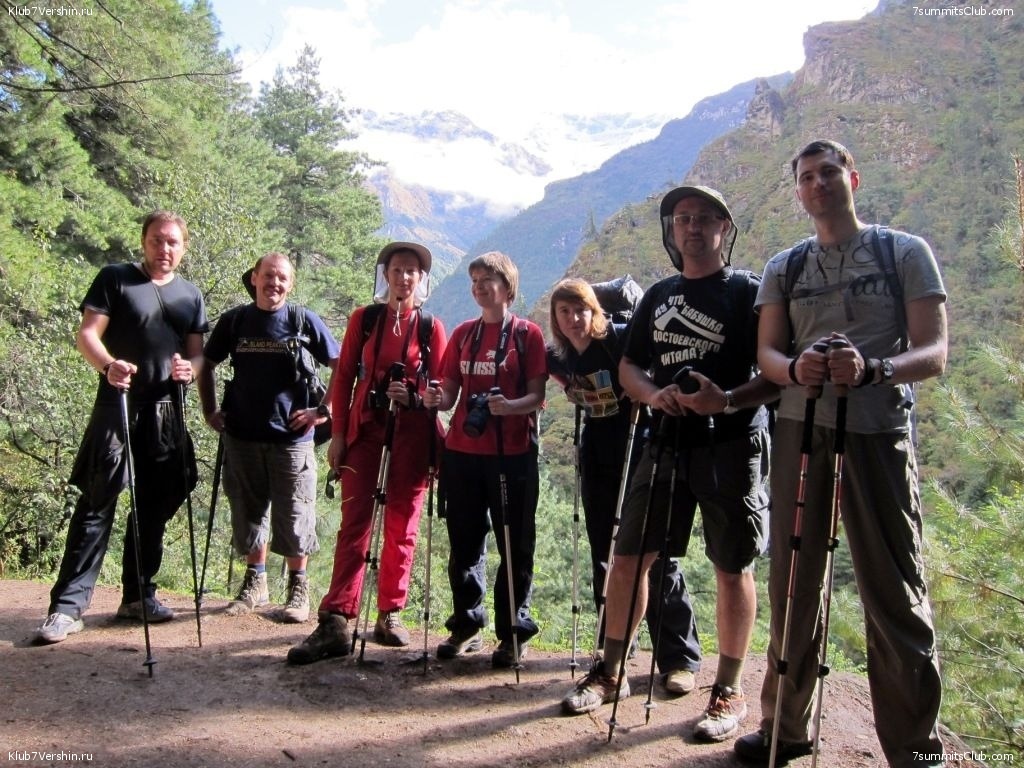
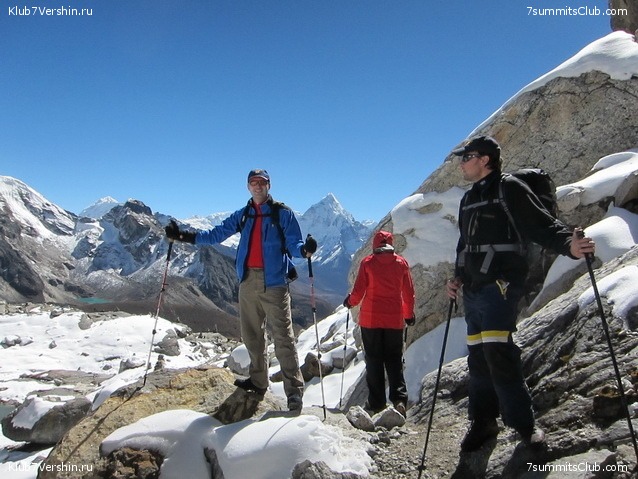
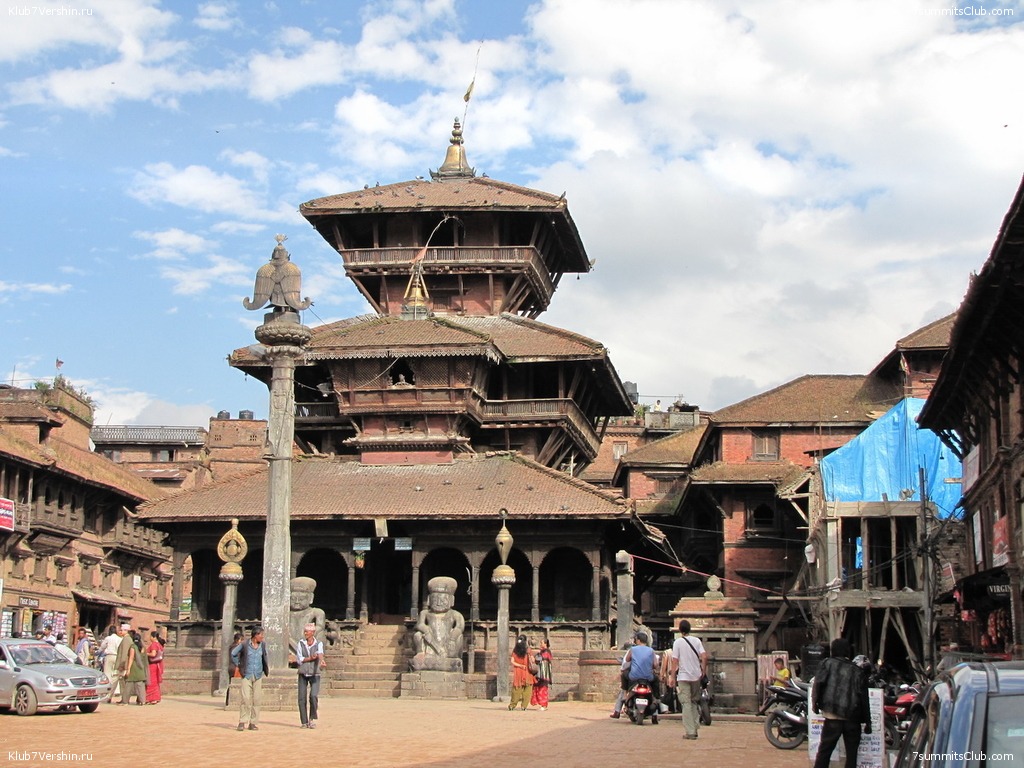
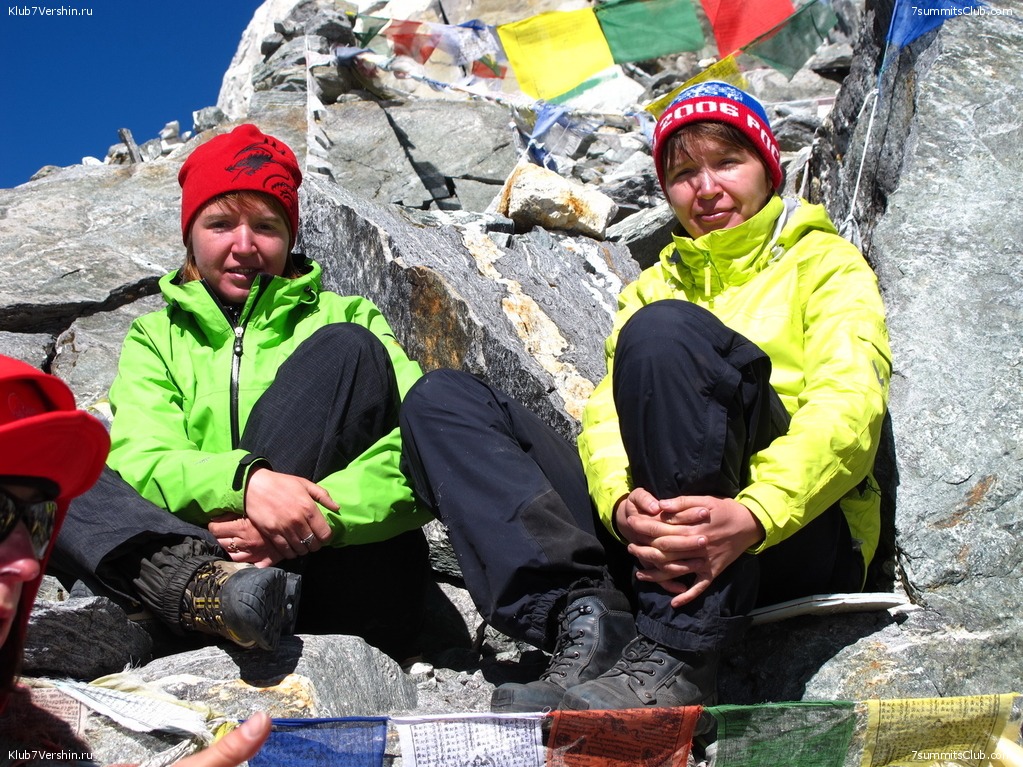
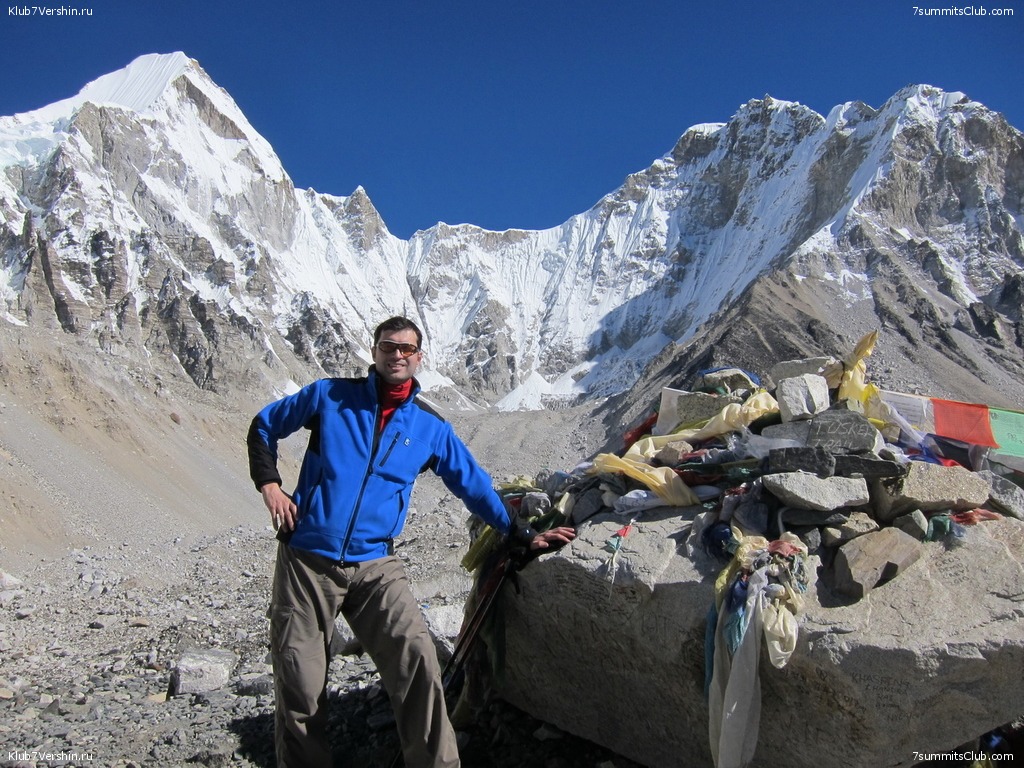
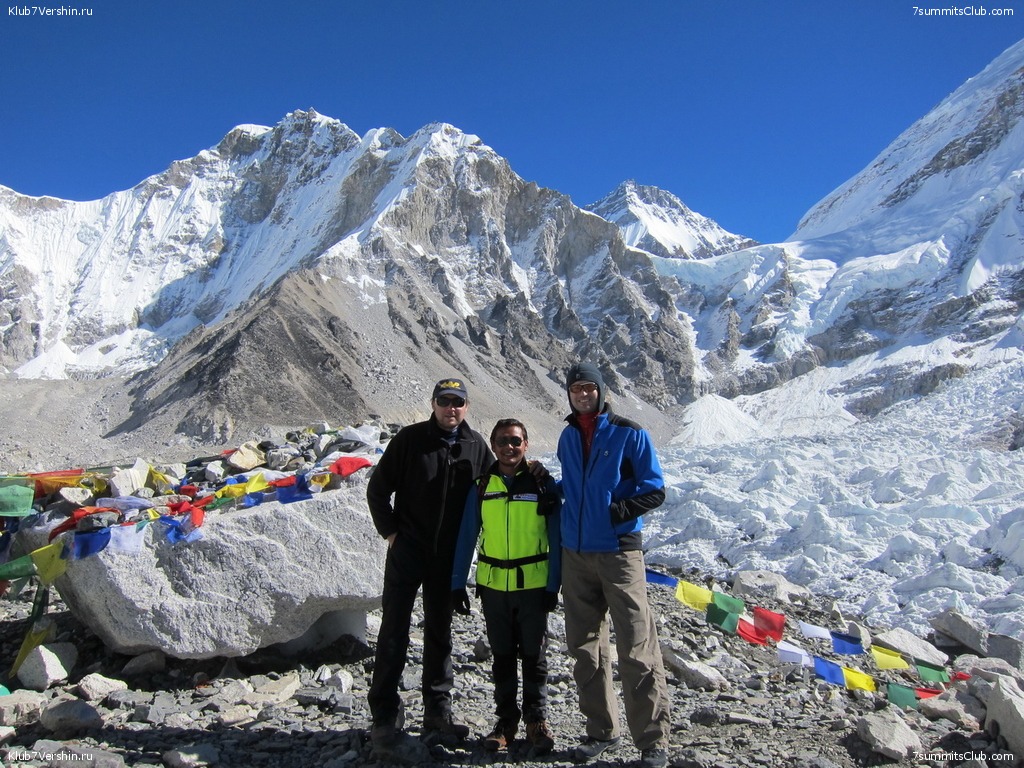
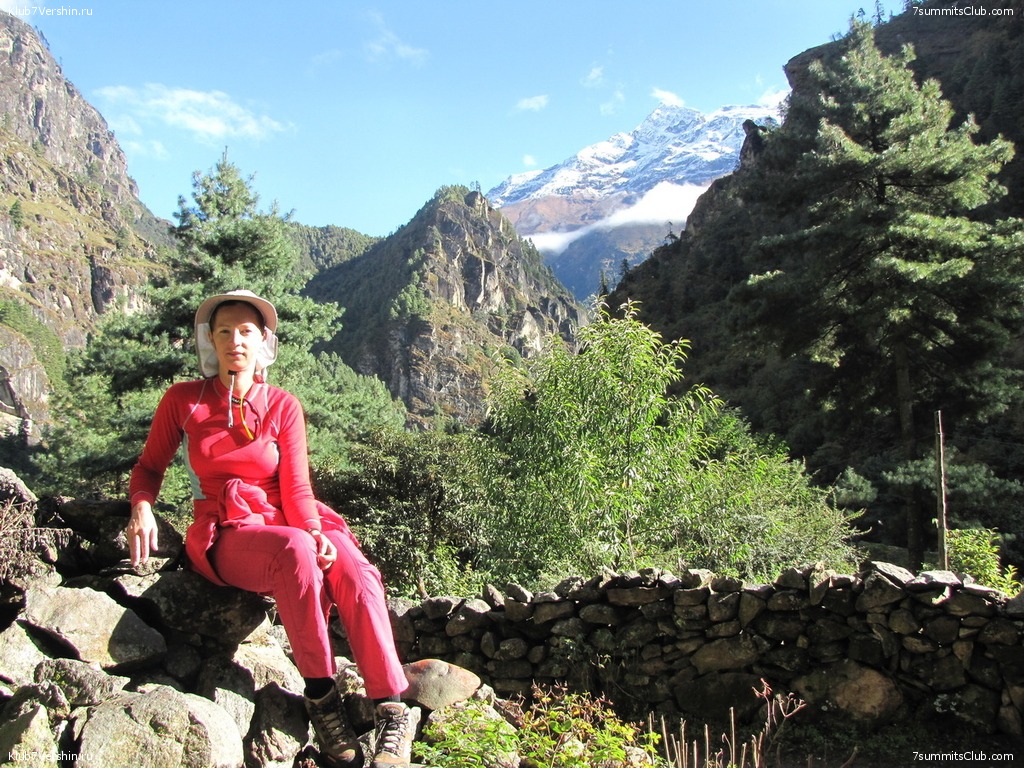
Group led by Viktor Bobok: Dmitri Alexeev, Konstantin Ananin, Maria Vanifatova, Andrew Galaev, Ksenia Smirnova and Julia Smirnova - went the route of the republic Nepal, visiting the valley of Khumbu, reached Everest base camp and ...
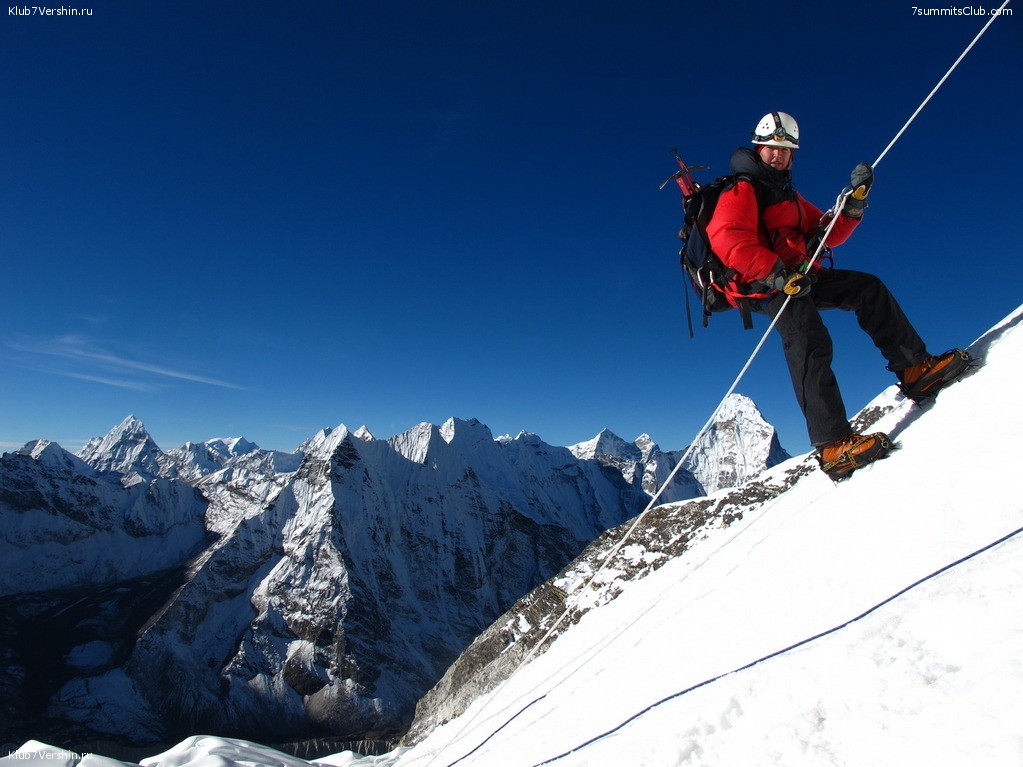
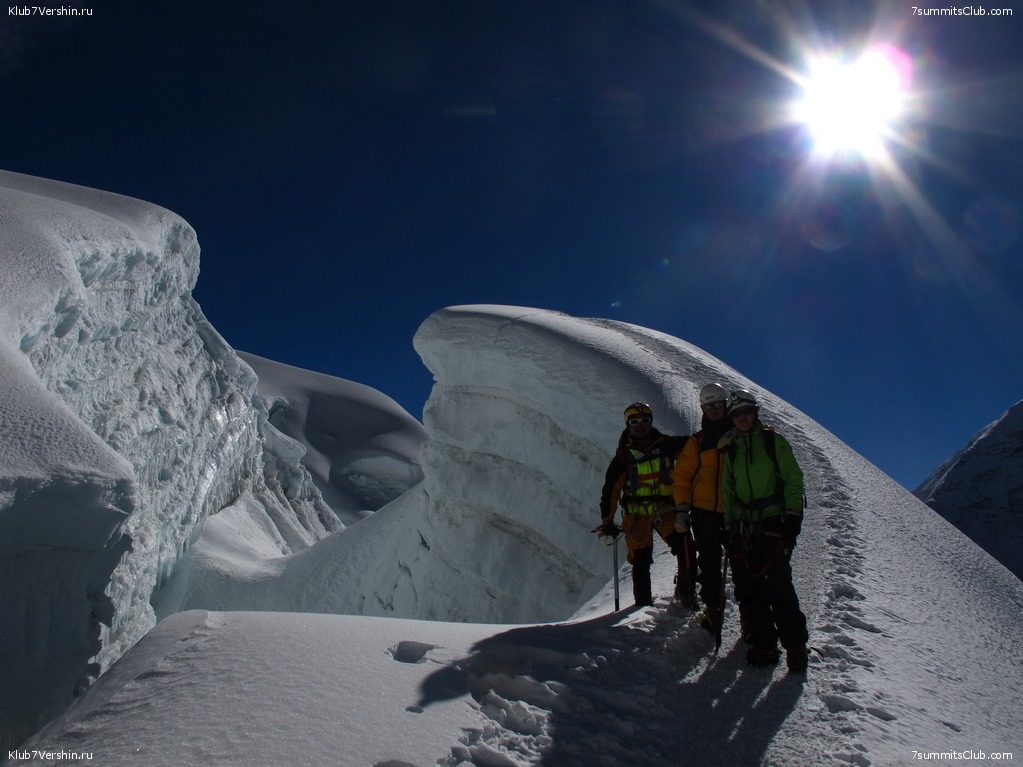
Group led by Viktor Bobok: Dmitri Alexeev, Konstantin Ananin, Maria Vanifatova, Andrew Galaev, Ksenia Smirnova and Julia Smirnova - went the route of the republic Nepal, visiting the valley of Khumbu, reached Everest base camp and Kalapatar, climbed Island Peak. They gathered together 10 gigabytes of photos. Some of them (303 pieces) can be viewed in our gallery.
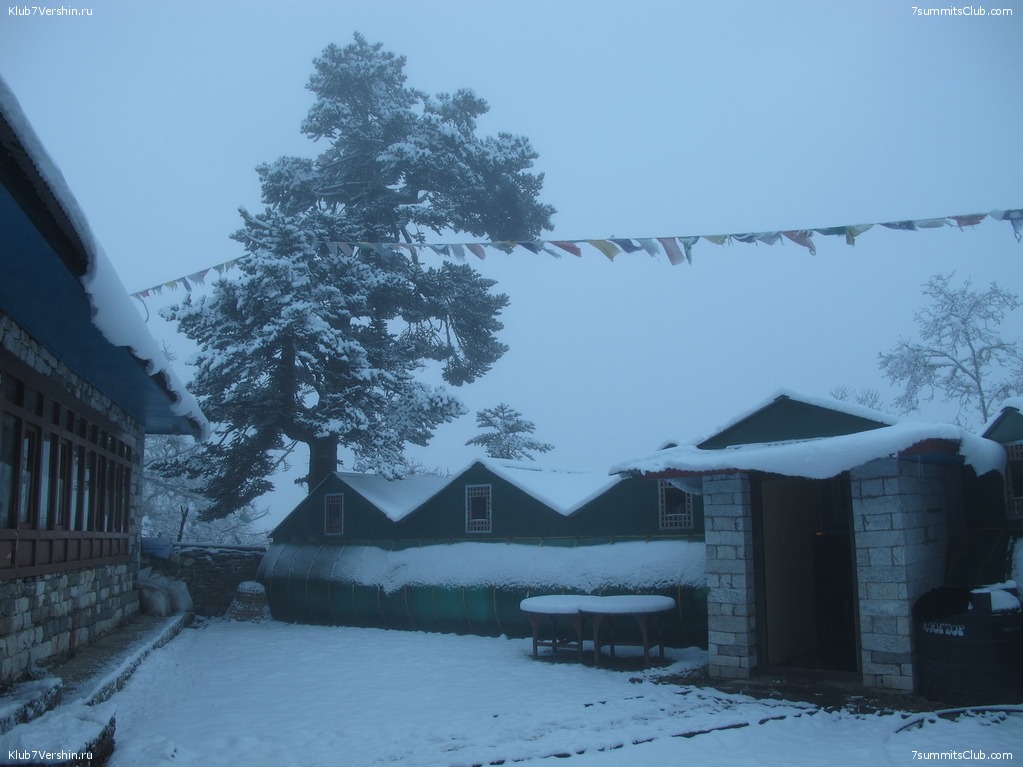
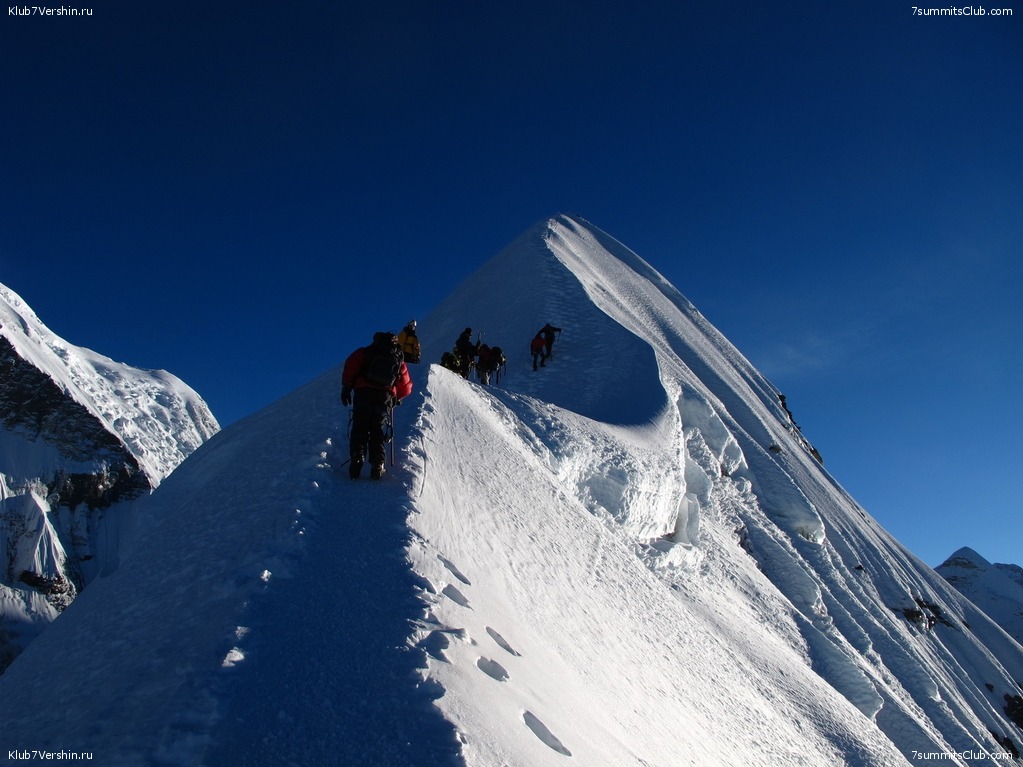
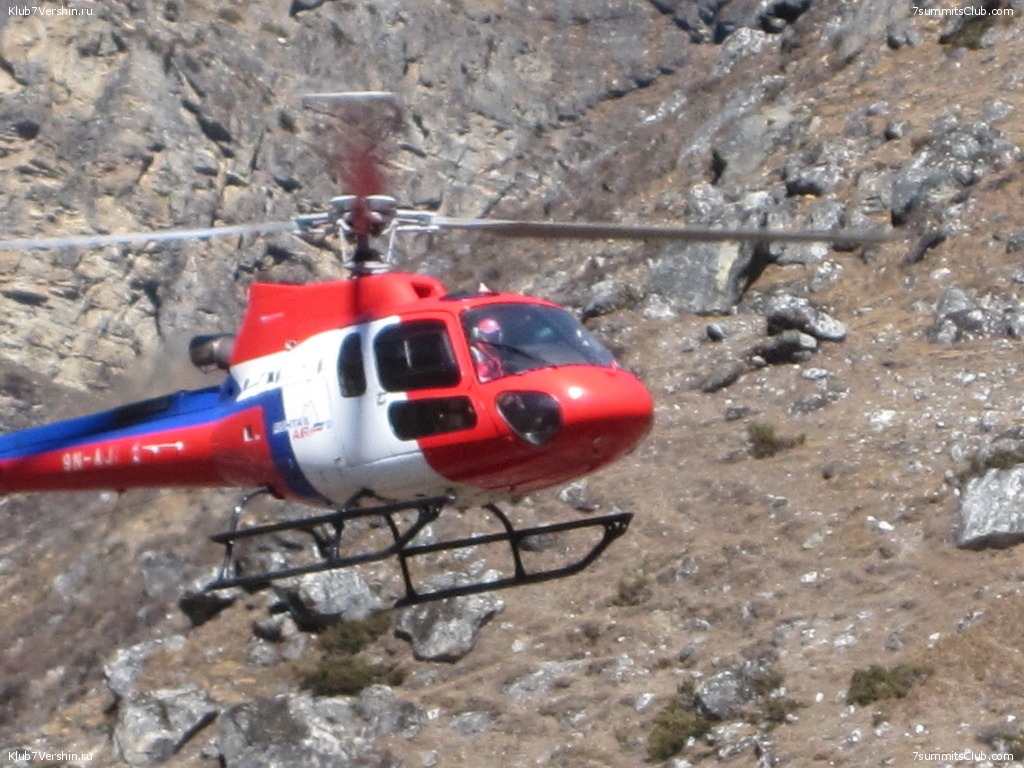
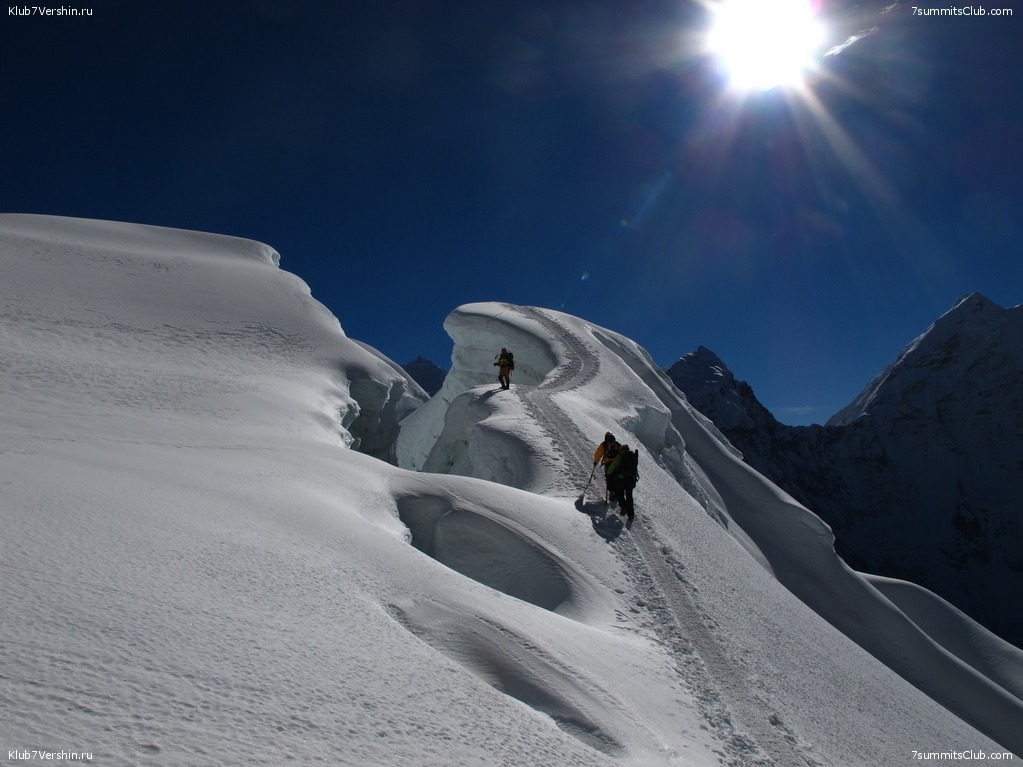
And some of them here:




Very sad news: the main rescuer of Nepal is dead
Everest BC (Nepal).
KATHMANDU: On a day of double celebration in Nepal -- Bhai Tika or Brother's Day, and the start of the Newari new year 1131 – tragedy struck in the Himalayan ranges in the north as a helicopter rescue operation for two Japanese ...
KATHMANDU: On a day of double celebration in Nepal -- Bhai Tika or Brother's Day, and the start of the Newari new year 1131 – tragedy struck in the Himalayan ranges in the north as a helicopter rescue operation for two Japanese climbers ended in a crash at 6000m above sea level, killing both the pilot and his companion.
While Nepal was celebrating its four-day Tihar holiday, Nepali pilot Sabin Basnet and technician Purna Awale were scouring the upper ranges of Mt Ama Dablam – meaning mother's necklace – a Himalayan range whose main peak juts up to 6812m above sea level. They had been sent by domestic airline Fishtail Air to airlift two Japanese climbers who had fallen ill.
After successfully rescuing the first climber, the two men went back for the second when high winds buffeted the aircraft and caused it to crash while trying to land. Two other helicopters sent to locate the missing chopper and its crew had to search the area for hours before they could locate the wreck and the bodies. Fishtail officials said they have now started the difficult operation of bringing the bodies down from the inaccessible mountain range.
This is the second air accident since August that resulted in casualties. In August, an aircraft crashed near Kathmandu valley, killing all 14 people on board, including a Japanese tourist. Last month, three Japanese climbers and their Nepali guide were swept away by an avalanche while climbing Mt Dhaulagiri, the seventh highest peak in the world.
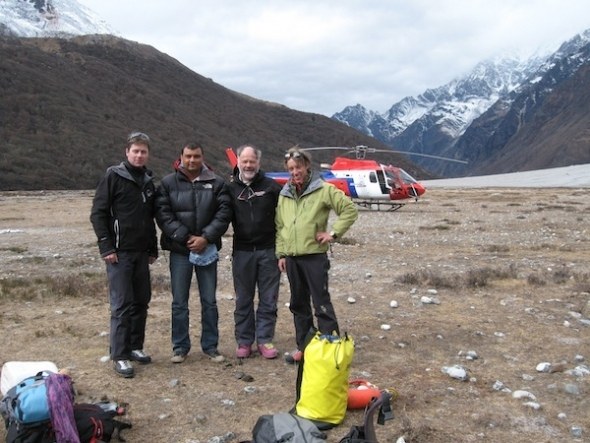
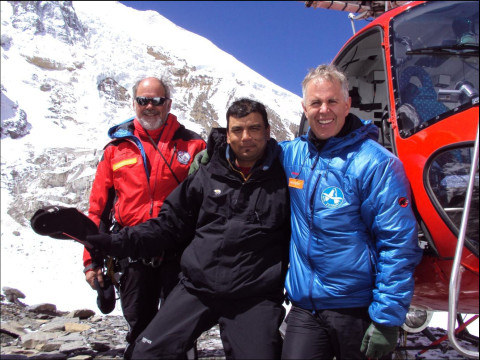
The best high-altitude pilot, a real pioneer of rescue above 7000 m - Sabin Basnet

With swiss team after Lantang flight to find Tomas Humar
After epic Dhaulagiri rescue withh his swiss teachers
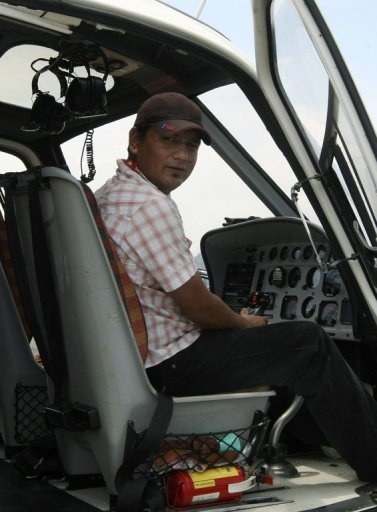
Victor Bobok was in Skype and sent wonderful photos
Everest BC (Nepal).
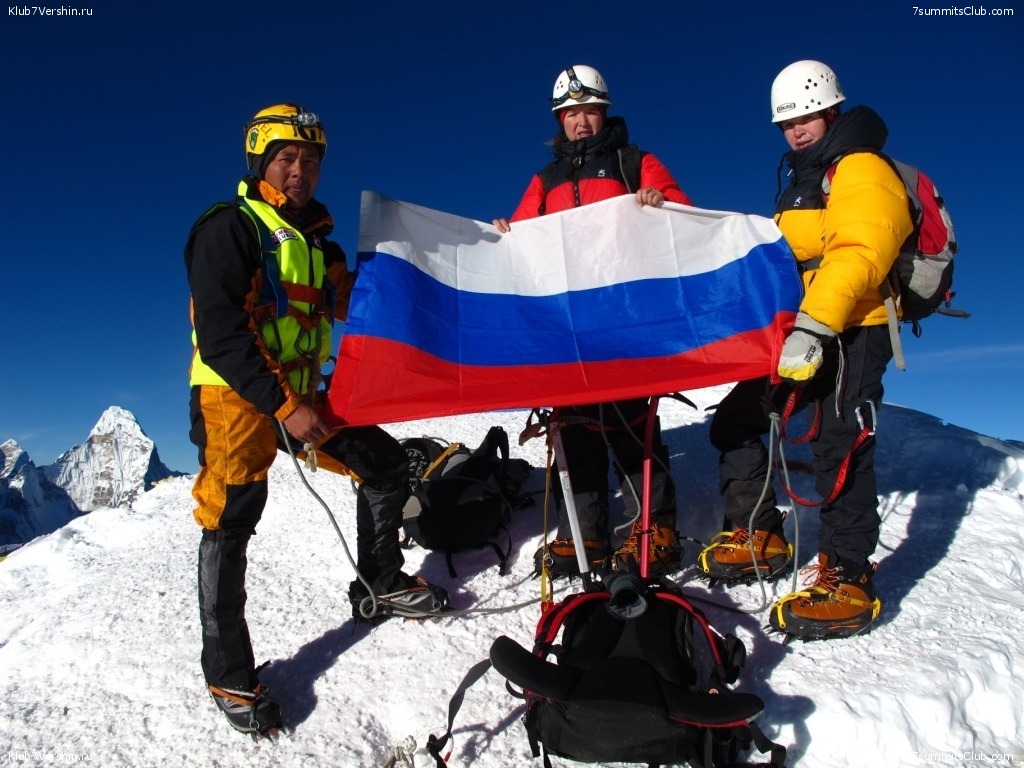
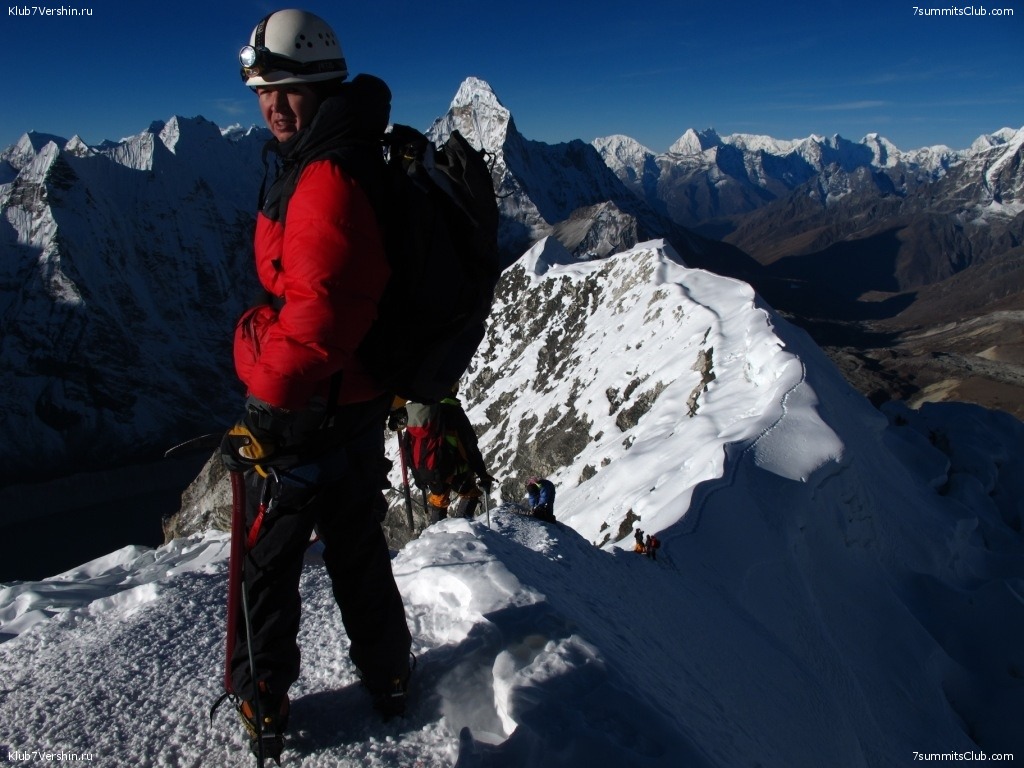
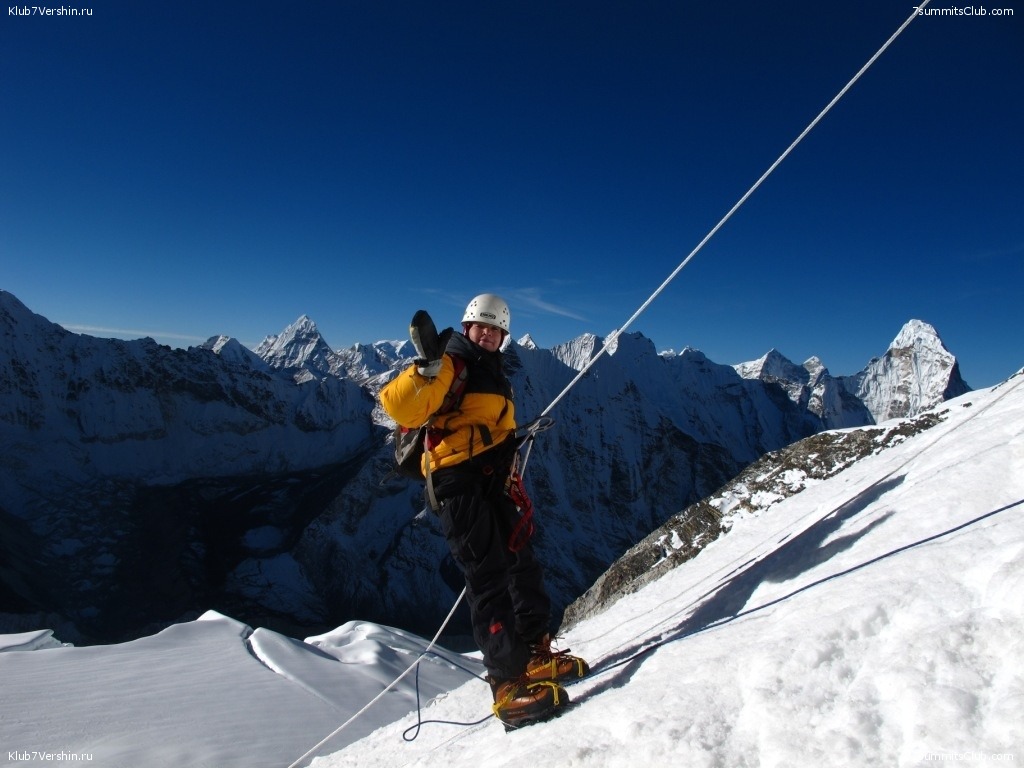
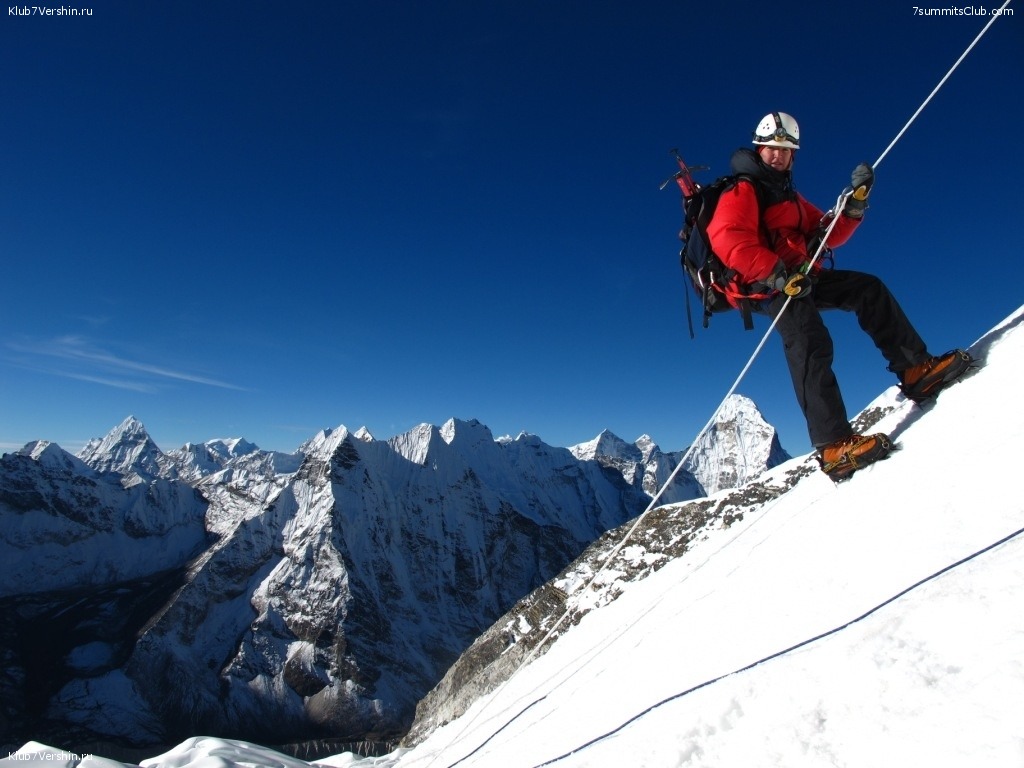
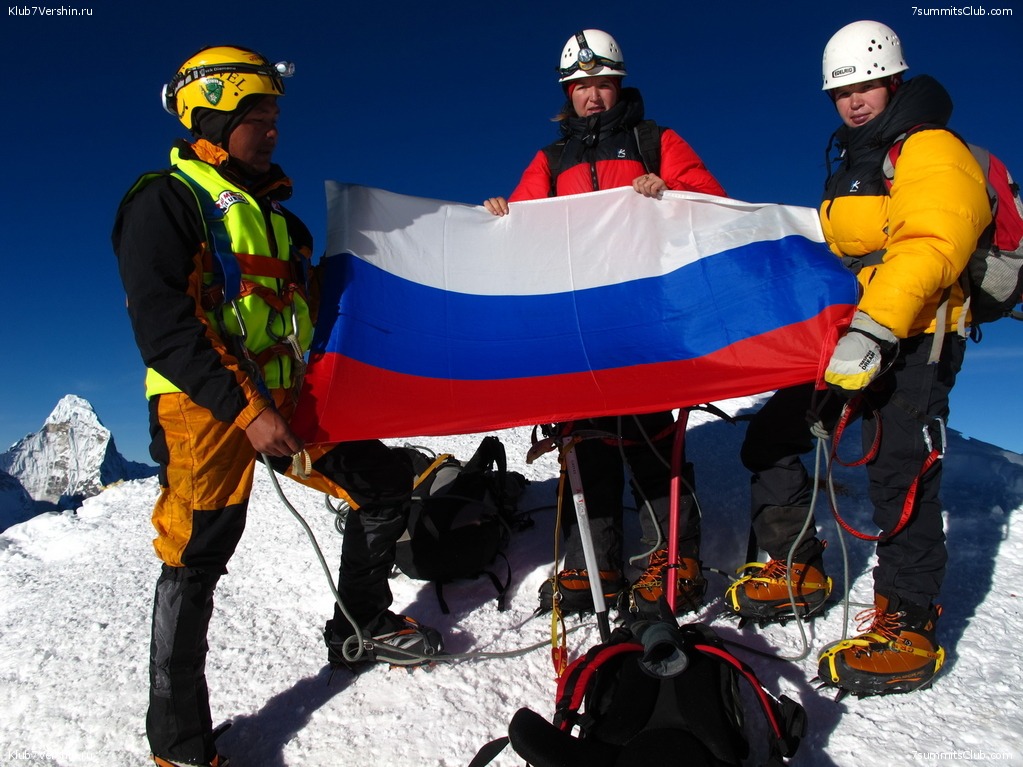
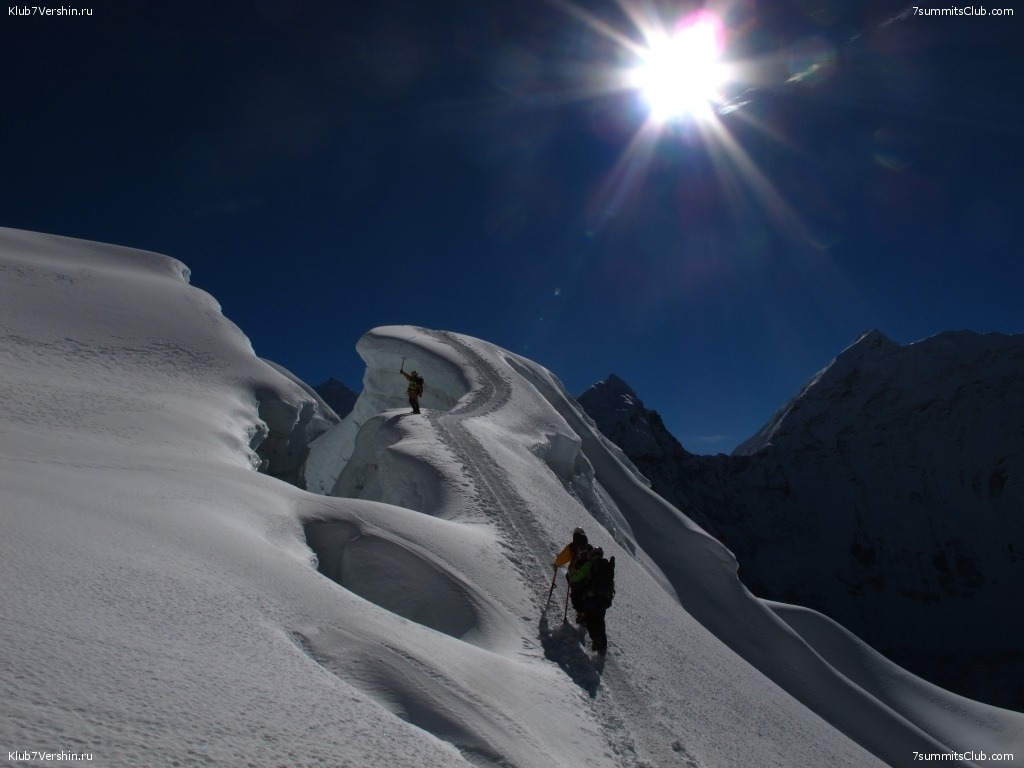
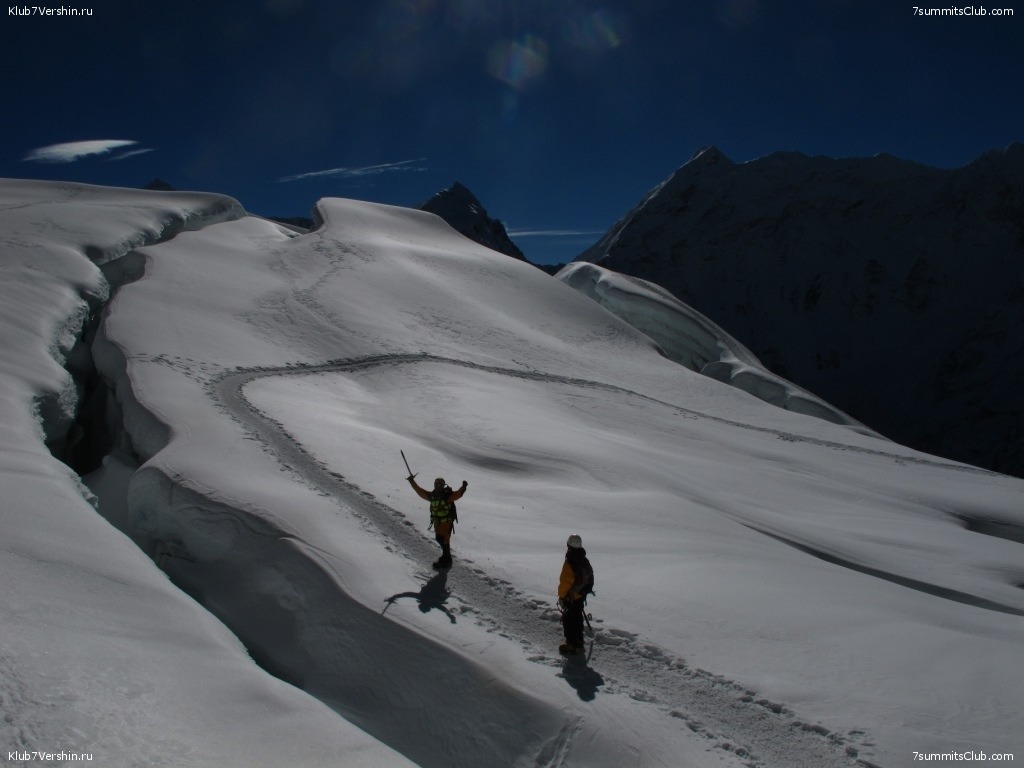
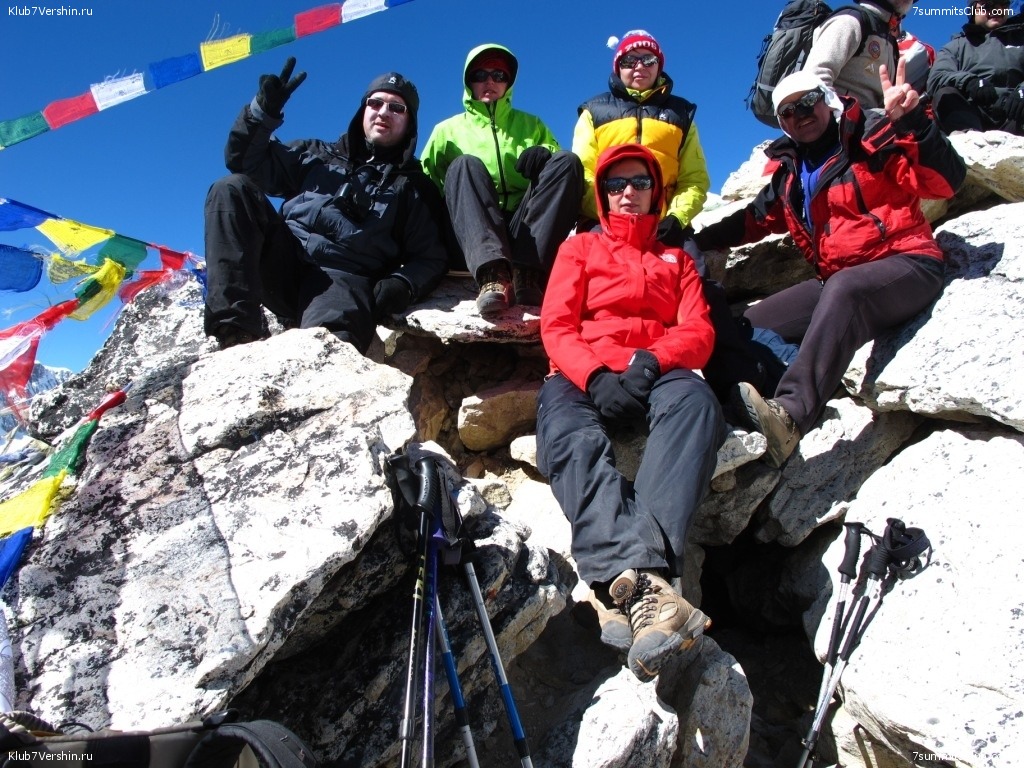
Victor Bobok, guide of 7 Summits Club, was today on Skype from Namche Bazaar. Short statement of the report reduced to the following facts. Ascent of Island Peak was made by a group of four people: Xenia and Julia Smirnova, Victor Bobok and ...
Victor Bobok, guide of 7 Summits Club, was today on Skype from Namche Bazaar. Short statement of the report reduced to the following facts. Ascent of Island Peak was made by a group of four people: Xenia and Julia Smirnova, Victor Bobok and Sirdar Tsering. This happened on October 30. Dmitri Alexeev decided did not go on this mountain. Earlier, Dmitry with Bobok and sisters climbed onthe top Kalapatar. While Ttsering together with Konstantin Ananin, Maria Vanifatova, Andrey Galaev went to the Everest base camp.
Now a group of three trekkers had already departed from Nepal. Quartet of climbers descended to Namche Bazaar and enjoys the benefits of civilization: the Internet, showers, a variety of drinks ....
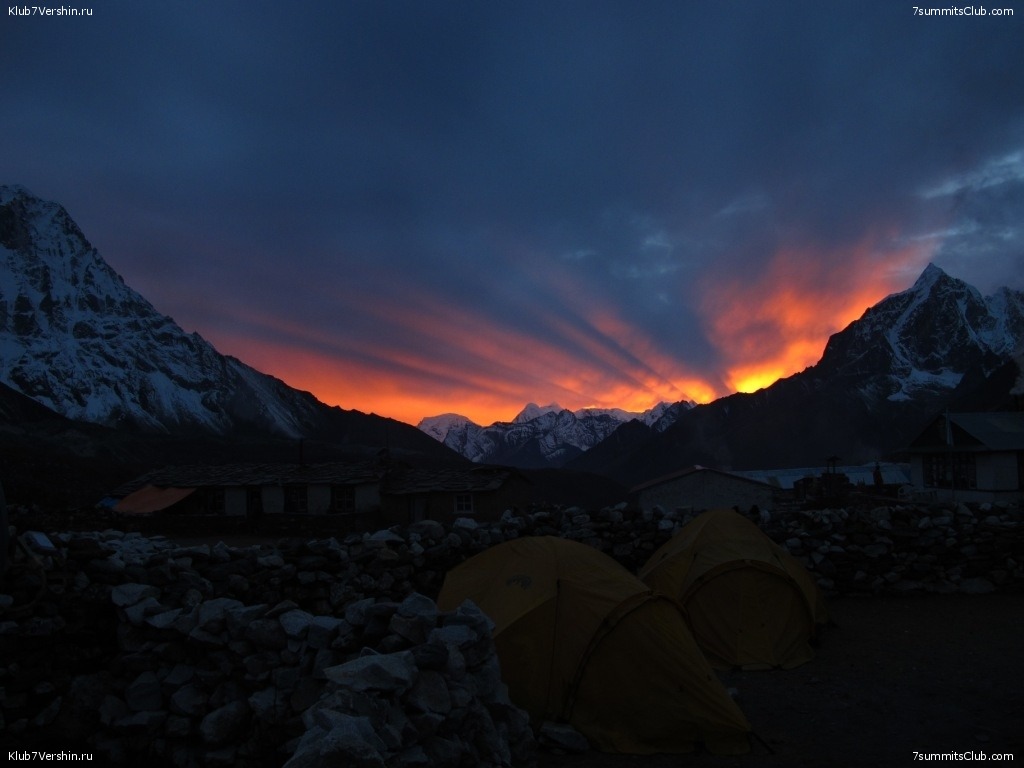
The weather has allowed the group to make a magnificent climb to the top of Island Peak. We got pictures that evoke a sense of great envy the lucky persons. We are waiting for them back home. A way to Lukla tomorrow, and the day after a plane to Kathmandu.