Everest(8848) - Page 36
The Highest Art: 78-Year-Old Painter Ranan Lurie Plans Exhibition on Top of Mount Everest
Everest.
Associated Press. NEW YORK — True art can be an elevated pursuit — in this case an elevation of approximately 29,000 feet. Three small panels of a massive painting project that has been displayed at the United ...
Associated Press. NEW YORK — True art can be an elevated pursuit — in this case an elevation of approximately 29,000 feet. Three small panels of a massive painting project that has been displayed at the United Nations are set to be carried to the top of Mount Everest in March, artist and political cartoonist Ranan Lurie said Wednesday.
The three acrylic-on-canvas panels — together measuring about 2 feet by 3 feet — represent just a small fraction of the dozens of pieces making up the 600-foot-long "Uniting Painting" project.
The 78-year-old artist, who's been working on his "Uniting Painting" project since 1968, says it offers viewers a "common denominator."
By enjoying the different pieces of the artwork, he said, "we respect the same thing."
"Although we come from different cultures and different places," he said, "we have an artistic Esperanto that we can talk through and with. And unite."
Lurie says he hopes that displaying the paintings on the peak of the world's highest mountain will show the scope of the work's message.
The project's dozens of panels depict similar flowing shapes that continue from one panel to the next, though the colors and motifs change. The panels selected to be carried by professional Nepalese climbers are largely blue and white to reflect the colors of clouds, sky and snow found at their destination, Lurie said.
----------------------------------------------------------------------------------------------------------------------------

Our congratulations: Quebecer Franсois Langlois conquers the Seven Summits
Elbrus.
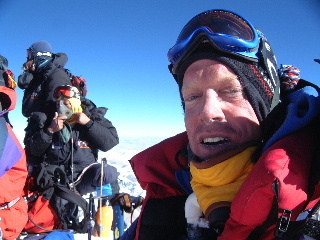
A member of 7 Summits Club François Langlois has reached the top of Antarctica's Vinson Massif, marking a decade challenge to climb the seven summits - the highest mountains of each of the seven continents: Mount Aconcagua, ...
A member of 7 Summits Club François Langlois has reached the top of Antarctica's Vinson Massif, marking a decade challenge to climb the seven summits - the highest mountains of each of the seven continents: Mount Aconcagua, Argentina, 2000; Mount Everest, Nepal, 2001, 2009; Mount Logan, Canada/Mount McKinley, U.S., 2003; Mount Elbrus, Russia, 2008; Carstensz Pyramid, Indonesia, 2008, Kilimanjaro, Tanzania, 2009; Vinson Massif, Antarctica, 2010. The glorious mountaineering quest was realised by Langlois with a noble purpose - to raise money for children's charities.
“I was born prematurely at 4 pounds, with underdeveloped lungs. I spent the first 5 weeks of my life in an incubator, dropped to 2 pounds and had multiple blood transfusions, jaundice, basically fighting off a whole slew of illnesses, fighting for my right to stay! 35 years have now gone by and with my fully developed lungs; I had the privilege to set foot a top of the world’s highest mountain; Everest. In those beautiful 15 minutes that I stood there, gazing at our amazing world, I made a promise; to help give back the gift I received. Recently, we found out that the pain in my chest was in fact a 2 pound benign tumour the size of a grapefruit on my left lung. It seems that I have carried this tumour with me since birth and climbed with it over the years. It was with me on Everest. As they removed the tumour, it burst, spilling a pint of fluid outside instead of in my lungs. I was spared from a pulmonary oedema that while on the Everest, would have been fatal. I enjoy with what eyes I see the world today!“ exclaims François Langlois.
Langlois supports, among other, Fondation Centre de cancerologie Charles-Bruneau, Child Haven International, The Montreal Children’s Hospital (McGill University Health Centre), The Make-A-Wish Foundation and World Vision.



Richard Parks ready to take on the world
South Pole.
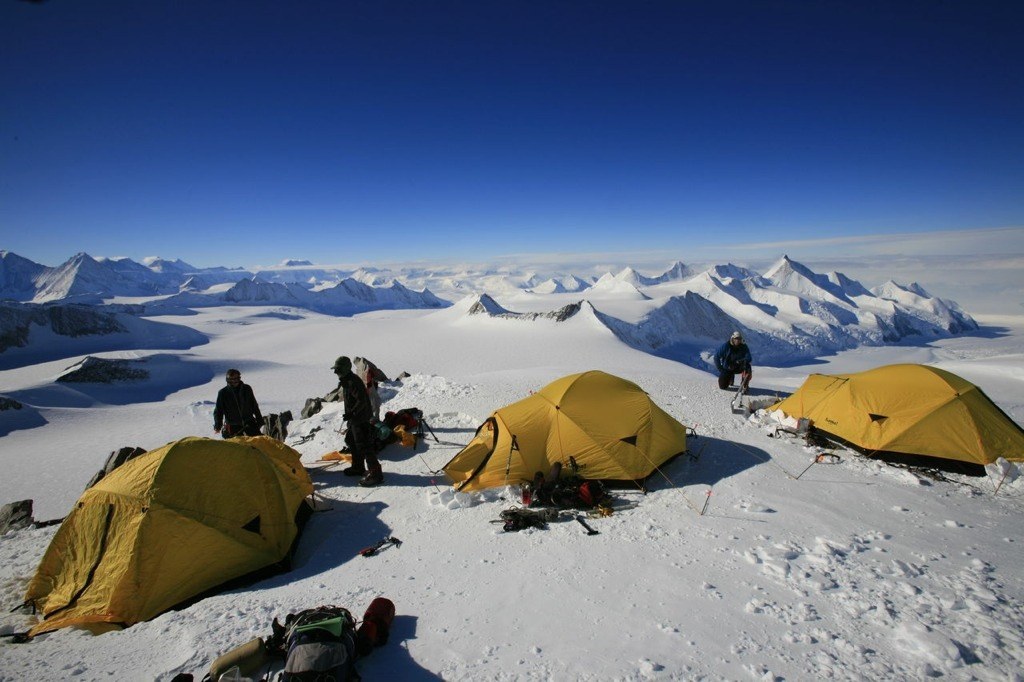
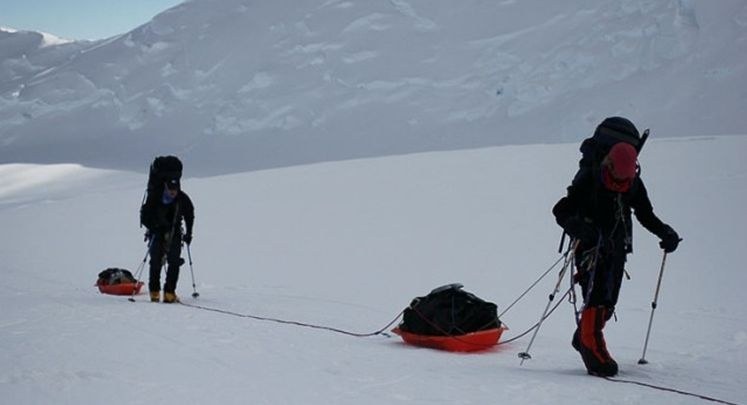
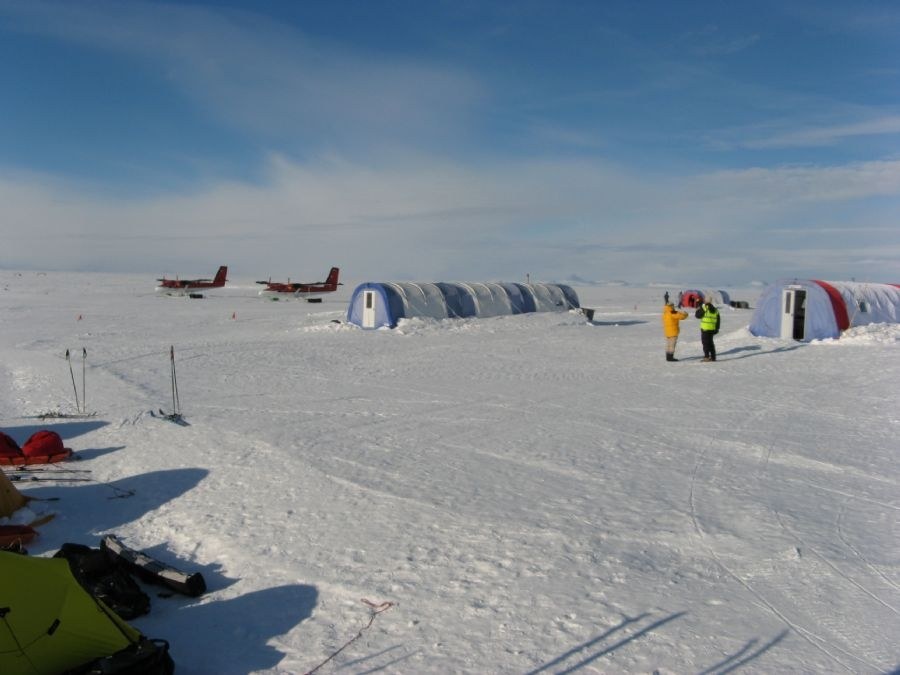
In the third of his BBC columns, Richard talks about his final preparations for his '737 Challenge' during which he aims to climb the highest mountain on each continent, plus reaching both the South Pole and the North Pole for charity - all ...
In the third of his BBC columns, Richard talks about his final preparations for his '737 Challenge' during which he aims to climb the highest mountain on each continent, plus reaching both the South Pole and the North Pole for charity - all within seven months in a bid to raise £1m.
The clock is now ticking towards 12 December when I fly to South America and then Antarctica on the way to the start of this most gruelling of challenges.
It's just mind-blowing to think how quickly the challenge has come round from conceiving it 15 months ago. I'm both scared and excited, but just want the whole thing to start.
I've done all the training now and I don't think I can do any more. I feel physically and mentally prepared for the challenge, which if successful will see me become the first person to stand on the continental summits and the poles in the same calendar year.
The challenge consists of the South Pole, Mount Vinson (4,897m), Aconcagia (6,962m), Mount Kilimanjaro (5895m), Carstensz Pyramid (4,884m), the North Pole, Mount Everest (8,850m), Mount Denali (6,194m) and Mount Elbrus (5,642m).
If all goes to plan I'll be at the South Pole on 1 January and finish up at the top of Mount Elbrus on 31 July.
Over the last few months, and especially my final training on Cho Oyu in the Himalayas, I have developed this toolbox of mountaineering skills that will give me the best chance of success. But ultimately we are in the hands of mother nature and she could put a spanner in the works!
Since coming back from the Himalayas in October there has been no let up in attempting to boost my aerobic capacity. I competed in the Cardiff half marathon and then took part in the Cardiff Burn - a 10k run, a 42k bike and a 3k kayak. That was hard, but great preparation.
Everest would seem to be the biggest challenge but we have highlighted Denali as the toughest leg because in it's a brutal mountain in its own right
But I did have a setback when I lost my training partner on a run on the Ogmore coastal trail. Unfortunately my dog Ben fell down a hole and broke his leg. He's feeling a bit sorry for himself but he'll be okay.
The last couple of weeks I have been trying to taper down the training and have given Kevin Morgan, the former Wales international full-back who is helping me train, something of a poser.
I told him I want to be fit and fat before I go! I want to maintain my fitness but also to go into the challenge carrying a bit of extra weight with a big intake of carbohydrates.
A lot of my energies have been put in to the packing and sorting my gear out. I have to pack bags now that will be air freighted on to Everest base camp. Packing for nine legs over seven months is pretty challenging to say the least.
And on the other hand is the charity. I recently visited the cancer day care centre which was a real humbling experience and gave me some real inspiration for my trip.
I have spent every penny I have and every waking hour of the last 15 months on this unique challenge because I am very serious about it and its integrity. I was very down after my rugby career was ended with a shoulder injury and this has given me something to focus on.
At half-time during the Wales v New Zealand international at the Millennium Stadium I was presented with a special badge by Carwyn Jones, Wales' first minister, and WRU chief Roger Lewis. To get the ovation I did from the 70,000-odd fans in the stadium was a real lift.
After leaving on 12 December I don't get much thinking time because I'll be in Antarctica on 14 or 15 December and straight into the challenge. The plan is we get to the South Pole on 28 December.
And that poses a problem because I will have to wait there until 1 January so it qualifies with the calendar year requirements of the challenge. That has been one of the logistical hurdles I've had to overcome and I will have to get a flight back on my own on a supply plane.
Then it's back to Mount Vinson on Antarctica and then on to Aconcagia in South America - the highest mountain outside the Himalayas.
The crux of the challenge is further down the line - the North Pole, followed by Mount Everest and then on to Mount Denali. The North Pole presents the highest risk of cold or frost injury, and every day we are battling the north pole we are missing a day acclimatising on Everest.
Everest would seem to be the biggest challenge but we have highlighted Denali as the toughest leg because in it's a brutal mountain in its own right. Extreme weather systems and I will be doing it at my weakest mentally and physically because I will be coming straight off Everest.
We are aiming to be on Everest in April and May. Statistically the highest summit success rate is early May and after that we are looking at four to six days to climb Denali.
The aim then is to reach the summit of Mount Elbris before 31 July.
Richard Parks was speaking to BBC Sport Wales' Richard Thomas
Source:
http://news.bbc.co.uk/sport2/hi/rugby_union/welsh/9239634.stm

Dan Mallory has one last mountain to climb
Vinson.
The local insurance broker has climbed the highest peak of just about every continent with family members. Two years ago, the Mallory family made headlines as the first family to reach the summit of Mount Everest. "The goal that was set 10 ...
The local insurance broker has climbed the highest peak of just about every continent with family members. Two years ago, the Mallory family made headlines as the first family to reach the summit of Mount Everest. "The goal that was set 10 years ago, was that I climb the highest mountain of every continent with at least one member of my immediate family," said Mallory, who lives in Utopia. The last mountain could well be the most challenging. But Mallory, 59, won't be going at it alone. He'll be joined by Laura, 23, and Adam, 28.
Laura, now a nurse working in Parry Sound, became the youngest Canadian woman to successfully climb Everest. Adam is an electrical engineer in Mississauga.
Second son, Alan, 25, won't be involved in this climb, but he'll be close by.
Newly married, the mechanical engineer took a job in Santiago, Chile. There could well be a family reunion when the climbing trio stops there en route to Antarctica's Mount Vinson.
Dan's wife, Barbara, won't be climbing, but she is making her own arrangements to support the climbing family, likely from a base in Chile.
The climbers are leaving Barrie Dec. 11 and hope to summit Mount Vinson sometime around Christmas.
For Laura, it's a trip of a lifetime that she agreed to go on only last week.
"I almost missed this opportunity," she said incredulously. "I was considering not going because of a job. I should have said yes right away, without thinking about it. It can change your life forever."
It all worked out in the end. She was offered to fill a maternity leave in February, a month or so after the family's return from the climb.
Antarctica is considered the bottom of the world circling the South Pole. It is almost entirely covered by ice, has no government and no permanent population, although it is something of a magnet for researchers, attracting up to 5,000 people to research stations scattered across the continent.
While Mount Vinson isn't considered the toughest of the highest peaks to climb, it is perhaps the least accessible.
"This one has a number of unique challenges," begins Mallory.
Because it is so remote, it will cost the Barrie-area family just about as much to get to as Everest did. The cost of the Everest climb for each Mallory family member was between $40,000 to $45,000, substantially less than the average $75,000 to $100,000 most people shell out to reach the top of the world.
So far, the plan is to fly to Santiago where the Mallorys will catch another flight to Punta Arenas, a city close to the size of Barrie. There the Mallorys will spend about five days getting supplies, organizing their gear and making final arrangements.
From there they will board a Russian propeller plane and land on a blue ice runway at the Patriot Hills encampment, run by an expedition support and touring company. It is a seasonal camp populated by tents during that continent's summer, from November to January.
From there, they board a smaller plane for a one-hour, 15- minute flight to Mount Vinson where they will begin their climb of the 16,200-foot mountain.
Flying from Punta Arenas costs $25,000 per person.
Oxygen isn't necessary for the climb, but there are challenges related to the air. The lower barometric pressure so close to the South Pole means the air is less dense and could feel like a mountain more than 5,000 feet taller than it actually is.
The Mallorys are preparing for the possible physiological impacts. While they each suffered from altitude sickness to some degree at Everest, none advanced to pulmonary or cerebral edema, so they're hoping their bodies will adjust on Mount Vinson as well.
The biggest challenge could well be the wind.
"I'm suspecting the winds are going to be the most unique thing we're going to be dealing with," said the senior Mallory. "But we might be lucky.
"I'm hoping for a clear day, without any wind and we'll get a magnificent view of the Ellsworth Mountains."
It's known to get as cold as -- 125 F, but it will likely be closer to -30 F during their venture.
Just the same, the Mallorys expect their experience at Everest to serve them well.
Certainly much of the gear and clothing they gathered for the Himalayan climb will, once again, be useful.
"I think we could probably live in a freezer with the gear we've got," he laughs.
The advantage is the 24 hours of sunlight.
Just the same, the weather has got to be optimal for the actual day of the climb.
Typically, the Mallorys don't use guides.
This approach served them well at Everest -- there is no better group on which to rely than family members who you trust, know and understand. Unlike solo climbers, who each have individual goals, the Mallorys know they can rely, implicitly, upon each member of their own group. No one Mallory triumphs over another.
The Mallorys have found reliance upon their own judgement to serve them well. But to get to the mountain at the bottom of the world the Mallorys have to use an outfitter and are obliged to take a guide. They will be joined by a climber from Japan. While climbing the Seven Summits was the original goal of the senior Mallory, the plan to include family members in all the climbs leaves the door open for the three children to follow in their dad's footsteps. Afterall, they've all conquered Everest.
"It's actually a feasible goal for me," said Laura, who will have four of the summits under her belt by the end of the year. "I just need someone to climb with for the others."
"I have to be the luckiest dad in the world to have all my family members interested in doing the activities I love so much," said Dan Mallory.
"We can illustrate to others that you can have this relationship with your kids and your family."
thebarrieexaminer.com
- - -
The Seven Summits
At the beginning of this year, 275 people had climbed the seven summits - the highest mountains on the seven continents. By the beginning of next, Dan Mallory expects to add his name to that list. His accomplishments will include:
2002-- Mt. Aconcagua (6,962 m/22,841 ft.), highest mountain in South America;
2004-- Mt. McKinley (6,193m /20,320 ft.), highest in North America 2005-- Mt. Kosciuszko (2,228 m/ 7,310 ft.), highest mountain inAustralia;
2006-- Mt. Elbrus (5,642 m/18,510 ft.) -highest European peak; 2006-- Mt. Kilimanjaro (5,895 m/ 19,342 ft.), highest mountain inAfrica; 2008 - Mt. Everest (8,848 m/29,029 ft.), highest mountain inAsia; 2010 - Mt. Vinson (4,892 m/ 16,050 ft.), highest mountain inAntarctica.
Sokolov and Gorelik plan a new route on Everest
Everest.
Gleb Sokolov announced his plans for 2011. He just ensured supports of sponsors: NPF Basc, Grivel, etc. and could now begin to detail plans of expeditions. Projects are, we must say, impressive. Gleb with his partner, Vitaly Gorelik (both ...
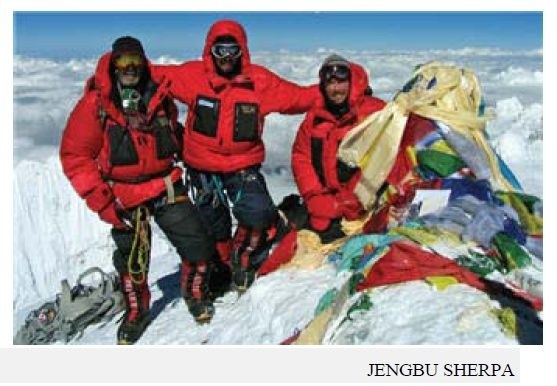
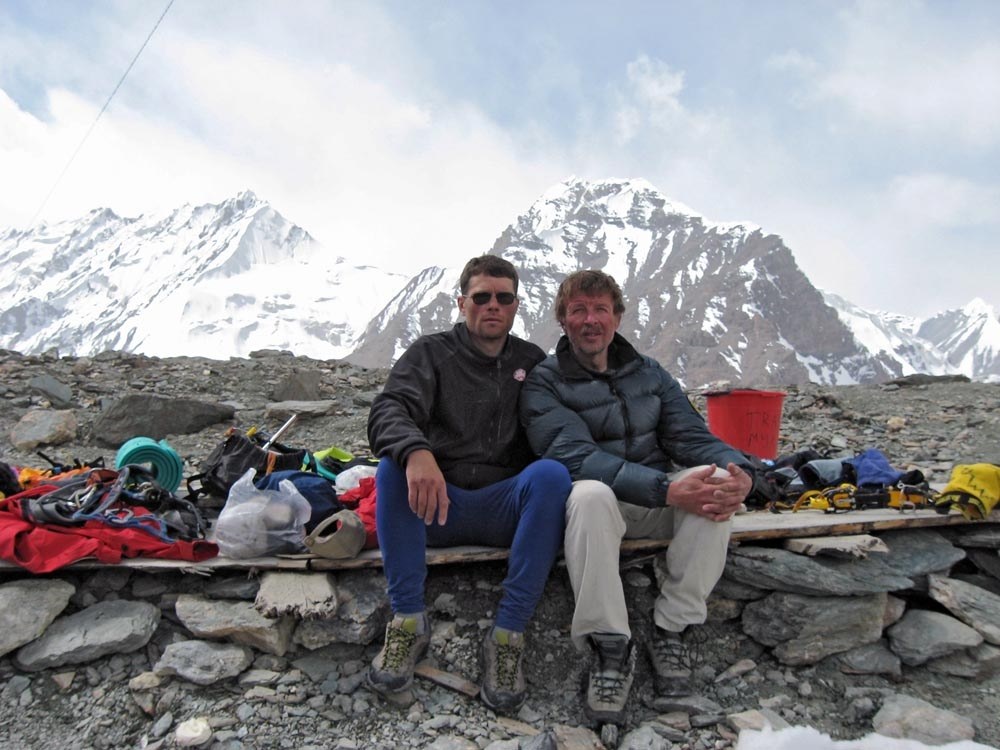
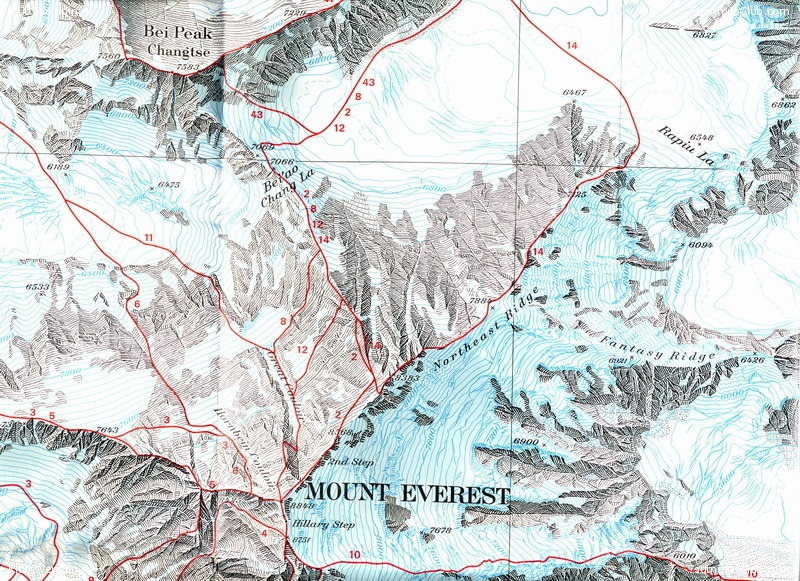
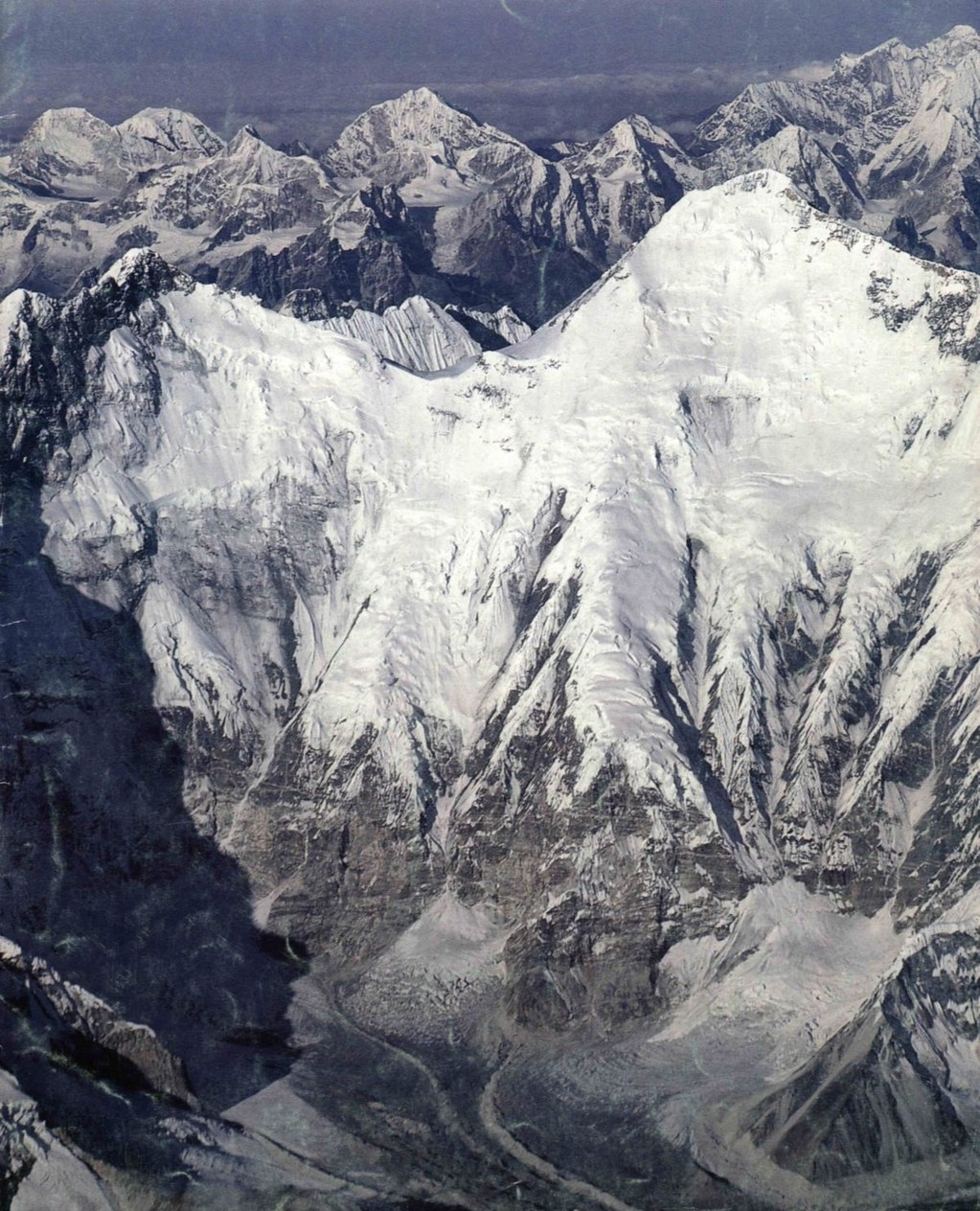
Gleb Sokolov announced his plans for 2011. He just ensured supports of sponsors: NPF Basc, Grivel, etc. and could now begin to detail plans of expeditions. Projects are, we must say, impressive. Gleb with his partner, Vitaly Gorelik (both from Novosibirsk), is going to climb a new route on Everest. Some experts believe that is impossible to find something new on the slopes of the highest mountain of the World. But look on the East Face, so-called Kanchung Face ! There are three unclimbed buttresses between the American route and the North-East ridge.
Scared even to look? Eyes do not believe, but the hands and feet are doing. That is what these guys have been doing on Pobeda Peak in 2009. Conditions on mountains can be different, you need to watch and think. According to the plan of expedition, acclimatization will be on the classic route from the north side. Probably, it will be in cooperation with a team of 7 Summits Club (leader Alex Abramov). And then, climbers are going to cross the pass ... to make a decision and implement it.
If everything succeeds, they were still alive, then for next summer, Gleb plans to climb a new route also for Pobeda Peak. For this purpose, Alexander Kirikov should join Sokolov and Gorelik. Last season, he participated in climbing a partly new route "Snake" on Khan-Tengri. Sokolov knows Pobeda Peak better than anyone, he climbed it by 4 different routes. Now he has a new idea for new routes.


Gorelik (left) and Sokolov
Aireal photo by Leo Dickinson

Gleb Sokolov born in 1953 (September, 5)
He began climb in 1972. His first high-altitude summit was Peak Lenin in 1979.
Master Sport, many time winner and prized of Russia Mountaineering Championship.
Snow Leopard (all seven-thousanders of the former USSR): Peak Lenin, Peak Communism, Peak Korzhenevskoy, Peak Pobeda, Khan Tengri – more than 50 climbs. Gleb have a speed climb record on Pobeda Peak – 20 hours.
Himalayan ascents:
Makalu 1996
Lhotse 1997 and 2000
Lhotse Shar 1998
Lhotse Middle (first climb) 2001.
Everest North Face (new route) 2004
K2 West Face (new route) 2007
Manaslu 2009/
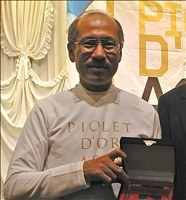
For a new route on Pobeda Peak Sokolov and Gorelik were nominated for Piolet d’Or in 2009 for
Married, 4 children, one grandson.
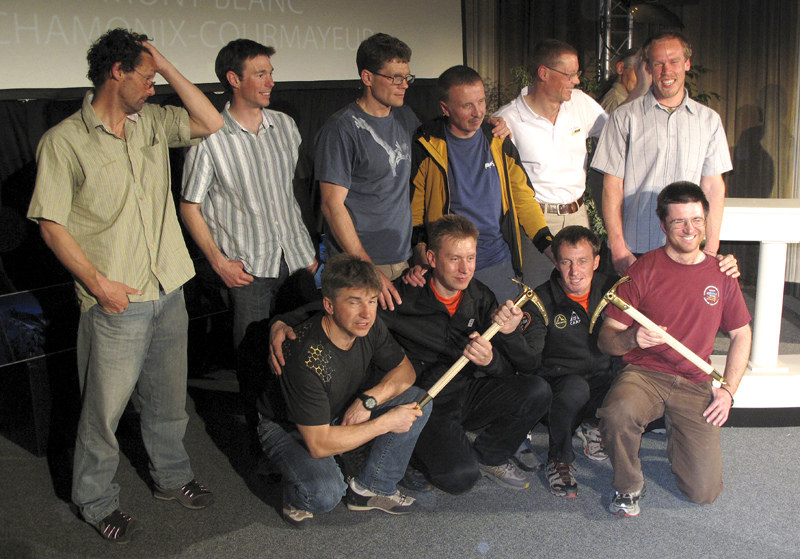
Piolet d'Or 2009. Vitaly and Gleb are staying in the middle

We have updated the registration system on our website, please check your dates
We finished the next stage of development of our Internet projects (our sites). We have made several important changes and improvements. And it is made for you, our friends. First of all, we changed the registration system. In this regard, ...
We finished the next stage of development of our Internet projects (our sites). We have made several important changes and improvements. And it is made for you, our friends. First of all, we changed the registration system. In this regard, we ask you to review your own data, which were transferred from the previous version of registration. Inform us if you have any problem with registration.
Also, now you can join not only the "7 Summits" project, but also you could register your achievements in other projects, namely:
3 Poles
A new is a total ranking of member - a summary from all these projects. We also added "additional" peaks and objects to these projects ...
And you can leave now your comments to news and articles. It is very important to us. On the one hand, we are happy just to hear from each of you. On the other hand, we look forward to use your comments to improve quality of our publications.
To register your achievements in projects use following links
Russian version http://7vershin.ru/enter/
English version http://7summits-club.com/enter/
9-year-old to climb Mount Everest and more news
Everest.
(CNN) -- This year a 13-year-old from California stunned the world when he became the youngest person to summit Mount Everest. Now a 9-year-old Nepalese boy says he can do it, too. Or at least that's what the child's father is reportedly ...
(CNN) -- This year a 13-year-old from California stunned the world when he became the youngest person to summit Mount Everest. Now a 9-year-old Nepalese boy says he can do it, too. Or at least that's what the child's father is reportedly promising.
Sherpa Pemba Dorje, who holds the world record for the fastest Everest ascent (8 hours, 10 minutes), recently boasted that his grade-schooler will try to conquer the globe's tallest mountain in 2011.
To illustrate his seriousness, Dorje and his son Tseten last week climbed Mount Ramdung, a 19,440-foot peak in the Dolakha region of Nepal, according to the Himalayan Times daily and the Indo-Asian News Service. Dorje told reporters it was a practice run for Everest, which is more than 29,000 feet.
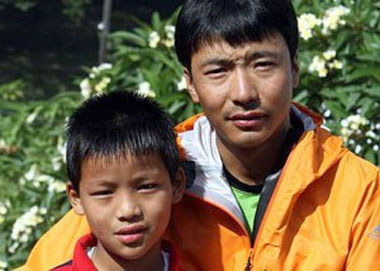
The notion of another baby-faced adventurer -- backed by an ambitious parent --sailing the widest seas or climbing the tallest mountain unearths a familiar question: Does inherently dangerous record-setting have an age limit?
"Little children do not belong on big mountains," said Jiban Ghimire, a Nepali renown for leading multiple expeditions on Everest. Ghimire's Shangri-La Treks & Expeditions, a go-to climbing assistance company, has employed Dorje as a guide. "I know Pemba Dorje, and I know he's said he wants his child to do this, that his son is capable of it.
"I would not want to discover, on that mountain, that the boy is not capable," Ghimire said. "I feel that you ask for something bad with this."
The obvious objections to allowing a child to climb Everest, or any major mountain, have to do with the physical toll it could take on his or her body. While there's no conclusive research that an adolescent is more susceptible to developing potentially fatal altitude sickness, anecdotes of mental and physical woe abound.
Past Everest climbers have experienced motor-skill dysfunction, sleep troubles, language disassociation and other problems that may be related to depriving the brain of oxygen while climbing, experts say.
Alan Arnette, a Colorado-based climber, has been on 20 expeditions from Tibet to Argentina. He most recently climbed 27,500 feet up Everest.
"Nobody doubts how talented Sherpa Pemba is," Arnette said. "Any Westerner would be smart to trust their life with him on the mountain. But that's any adult."
"When you get up there, it's not like you're gasping for air, you feel like you want to sit down and sleep forever -- that's altitude sickness," he said. "You have to be aware of what your body is doing and act accordingly. That's an adult's experience. Who knows what would happen to a developing child."
Besides, Arnette surmises that the odds of the boy making it past base camp are "just about zero."
The China Tibet Mountaineering Association, which regulates expeditions in Tibet, issued new climbing rules this year that ban anyone younger than 18 from climbing the Tibet side of Everest. A climber must be 16 to attempt Everest from the Nepali side. Penalties for breaking the rules are stiff, ranging from high fines to prison.
Arnette points out that every expedition must have a permit, which can cost tens of thousands of dollars. It's relatively easy for Everest authorities to catch someone trying to climb illegally, he said. Permits must be shown to officials when entering the park, and liaison officers from the Nepal Ministry of Tourism are assigned to each expedition group to help in case something goes wrong, and to ensure groups aren't leaving behind garbage.
In Dorje's case, everyone on the mountain knows who he is. He's clearly drumming up publicity for the climb. So why? Is it money? Arnette doesn't think so.
"No company or sponsor is going to get behind this. There's too much risk," he said. "My best guess is that he's motivated by national pride."
In May American Jordan Romero, 13, became the youngest person to summit Everest.
"I think all the Everest records should be held by Nepalese people," Dorje told London's Daily Mail.
Jordan received worldwide press for his feat, most of it glowing, and he encouraged younger kids to follow in his bootsteps. "Age is not a matter," Jordan told reporters in Kathmandu a day after he returned from his climb, which took 10 months and 10 days. "My body did cope with the altitude very well."
The teenager broke a record few thought possible.
"The American boy is famous. When many people think of Everest, they say his name," Ghimire said. "But a mountain doesn't care who you are."
*************************************************************************
Adventurer Chessell hangs up his boots
Adelaide adventurer Duncan Chessell, a three-time conqueror of the world's highest mountain, has hung up his climbing boots and is planning to go prospecting for gold and uranium.
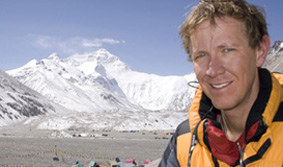
Chessell has joined newly formed company Endeavour Discoveries as its managing director and will take a break from leading expeditions to such places as the Himalayas or Antarctica for a few years.
"I have faced many challenges and overcome almost all of them by working with extraordinary teams of people on seven continents and have enjoyed almost every minute of it," Chessell said in an email to his clients and supporters on Monday.
"I have now reached a stage where I am over living from backpacks though.
"So thanks for coming along for the ride, sail, paddle, walk, climb - it has been simply awesome."
In May this year Chessell became the first Australian to reach the summit of Mt Everest three times in an expedition hampered in its final push by heavy snowfalls.
His triumph followed his two previous trips to the top of the world in 2001 and 2007.
Chessell has sold his Chessell Adventures company to friend and sales and office manager Katie Sarah. Sarah was part of the group that reached the Everest summit this year.
As the boss of Endeavour Discoveries Ltd, he plans to take the company to a public float in the next 12 to 18 months. "We are aiming to discover gold and uranium deposits in South Australia and the Northern Territory," he said.
**************************************************************************
Bad Weather Strands Thousands near Mt. Everest
Flights are still grounded at the air strip closest to Mt. Everest, stranding around 2,000 foreign tourists, including some Americans, in the small town of Lukla in eastern Nepal.
"Again the weather was very bad today," wrote Phurba Gyeljen Sherpa, proprietor The Irish Pub and Internet Caf?. "Very few airplanes were able to go out and the Americans here, and other nationalities, have grown weary and frustrated."
The military stepped in and posted flyers at the airport telling people not to pay more than $350 for private helicopter companies.
"Then they flew in large MI-17 military transport helicopters, cable of carrying 24 people each," continued Sherpa.
The military chose who would fly out first by who was stranded there the longest, instead of those willing to pay the most money.
Since there was only a brief period of good weather, the military quickly ferried the stranded people to a nearby airstrip in Ramechhap, where the weather was more stable.
When the weather destabilized, the military returned to Ramechhap and tourists to Kathmandu.
Slightly over 75 percent of westerners were evacuated.
******************************************************************
Will Wi-Fi ruin Mount Everest?
Broadband arrives on the world's tallest mountain. But having hiked it, I worry the magic will vanish
By Jeff Greenwald
When I began my career as a travel journalist in the 1980s, there was lots of talk about "remoteness." This was what many travelers were looking for: places so hard to get to, and so different from the world we knew, that their very existence seemed almost miraculous.
Today, the value has shifted. What we look for now is connectedness: the opportunity to check our e-mail, upload video clips and chat on Skype -- even if we happen to be on the Khumbu Icefall, 18,000 feet high in the Nepal Himalaya.
Last week, a network of eight 3G base stations began operating along the route to Mount Everest, in Sagarmatha National Park. They were installed by Ncell, a Nepali telecom firm. The news didn't surprise me. But I felt that, irreversibly, another blow had been struck against magic.

Access to the Internet is starting to seem like a human right, so let me offer a disclaimer. There is no rational downside to the arrival of broadband on the flanks of Everest. I'm not a Luddite, and would never suggest that developing nations should be denied, for any reason, the global access that technology can provide. This 3G network will undoubtedly save lives -- not only by providing weather information and support to Everest climbers and trekkers, but as an alert system for the nearby villages threatened by flash floods from Glacial Lake Overflow (GLOF), another peril caused by global warming.
It's a good thing. So why did the news make me feel like Robert Conway in "Lost Horizon," looking back on a land to which I can never return?
During my earliest visit to Nepal in 1979, phoning home even from Kathmandu was an adventure. I'd bike to the Telecommunications Office at 2 a.m. (mid-afternoon in New York), fill out a form, and wait hours for my trunk call to go through. The costly result was often a busy signal -- or a barely audible connection. The most reliable means of communication was "snail mail": a metaphor that, with three weeks of lag time between a letter and its response, seemed literally true.
Even this much contact was a marvel, compared to the situation in the mountains. When I first trekked the Everest route, in October 1983, it felt as though I'd entered a world completely detached from the familiar. After a harrowing flight to the tiny airstrip at Lukla, the 10-day hike to Base Camp (with an elevation gain of more than 8,000 vertical feet) began. Immersion in the Sherpa Buddhist lifestyle was inescapable, and transformative. Phone calls were impossible. Even writing a postcard was like putting a message in a bottle, and tossing it out to sea.
None of this seemed like an inconvenience. Though there were bouts of homesickness, and the occasional longing for new music and old friends, it was exhilarating to have entered such an isolated realm. This, actually, was the point. Travelers embarked on our journeys to Everest or the Annapurnas aware that it would be a full-body experience -- an equation that included our brains.
As a result, trekking in the Himalaya never felt like sightseeing. It was a commitment to the here and now, demanding full-time engagement with both Nepalis and fellow travelers. There were infinite opportunities to forge new friendships, experience Sherpa Buddhist culture, or enjoy exquisite solitude. By day, you could walk alone or with companions; at night, the lodges flickered with candles and butter lamps. Out came the maps, backgammon sets and tattered journals. Tales of avalanches and Yeti sightings were shared, along with cups of the dizzying local rakshi.
During my most recent trek to Everest region in 2008, it was clear that the area was changing. Though the mountains looked the same, they felt less like a world apart. For one thing, it was a lot more crowded; an estimated 15,000 trekkers shared the narrow trails. Cellphones were already in use between the main villages, and the isolating aspects of technology were taking hold. Sherpa guides and sinewy porters marched up the steep mountain grades with telltale white headphone cords snaking beneath their parka collars, lost in the private soundtracks of their MP3 files.
Getting online was a different story. There were only a handful of cybercafes along the trekking route -- the highest of which was at Everest Base Camp itself, at 17,500 feet -- with Internet access via satellite. Connections were sluggish; it often took Gmail more than five minutes to load. Sitting in a cozy inn, immersed in conversation, was far more seductive than surfing the Web.
The arrival of 3G will change all that -- and not just how quickly trekkers can upload their photos to Flickr, keep tabs on their investments, or stream the latest episode of "Mad Men." Wireless broadband, barely imaginable even 25 years ago, will change the way future travelers and locals interact in the world's highest mountains.
For the Sherpas of Sagarmatha, of course, it may well seem that one kind of magic has simply been traded for another. Broadband on Everest! What next? If the Yeti buys an iPad, he might even decide to "friend" Bigfoot on Facebook.
For the rest of us, this constant connectedness may have a bittersweet aftertaste. My recent trek into the Himalaya was a reminder of the pleasures of remoteness. It was a joy to escape from the hamster wheel of distractions, and immerse myself in the expanded moment of real time. Because being connected -- really connected, with the place you're in and the people you're with -- requires disconnecting, at least temporarily, from everywhere else.
We are far past the time when we can expect to a find a Shangri-la, anywhere, beyond the reach of the Internet. But as the world races toward connectivity, travelers might stop to consider why we travel in the first place, and which connections we really want to make.
Very sad news: the main rescuer of Nepal is dead
Everest BC (Nepal).
KATHMANDU: On a day of double celebration in Nepal -- Bhai Tika or Brother's Day, and the start of the Newari new year 1131 – tragedy struck in the Himalayan ranges in the north as a helicopter rescue operation for two Japanese ...
KATHMANDU: On a day of double celebration in Nepal -- Bhai Tika or Brother's Day, and the start of the Newari new year 1131 – tragedy struck in the Himalayan ranges in the north as a helicopter rescue operation for two Japanese climbers ended in a crash at 6000m above sea level, killing both the pilot and his companion.
While Nepal was celebrating its four-day Tihar holiday, Nepali pilot Sabin Basnet and technician Purna Awale were scouring the upper ranges of Mt Ama Dablam – meaning mother's necklace – a Himalayan range whose main peak juts up to 6812m above sea level. They had been sent by domestic airline Fishtail Air to airlift two Japanese climbers who had fallen ill.
After successfully rescuing the first climber, the two men went back for the second when high winds buffeted the aircraft and caused it to crash while trying to land. Two other helicopters sent to locate the missing chopper and its crew had to search the area for hours before they could locate the wreck and the bodies. Fishtail officials said they have now started the difficult operation of bringing the bodies down from the inaccessible mountain range.
This is the second air accident since August that resulted in casualties. In August, an aircraft crashed near Kathmandu valley, killing all 14 people on board, including a Japanese tourist. Last month, three Japanese climbers and their Nepali guide were swept away by an avalanche while climbing Mt Dhaulagiri, the seventh highest peak in the world.
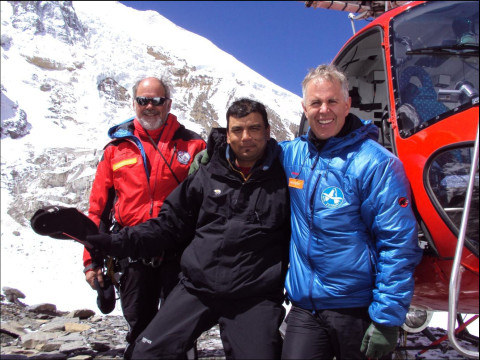
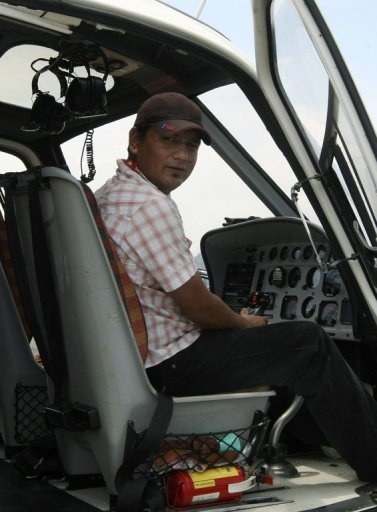
The best high-altitude pilot, a real pioneer of rescue above 7000 m - Sabin Basnet

With swiss team after Lantang flight to find Tomas Humar
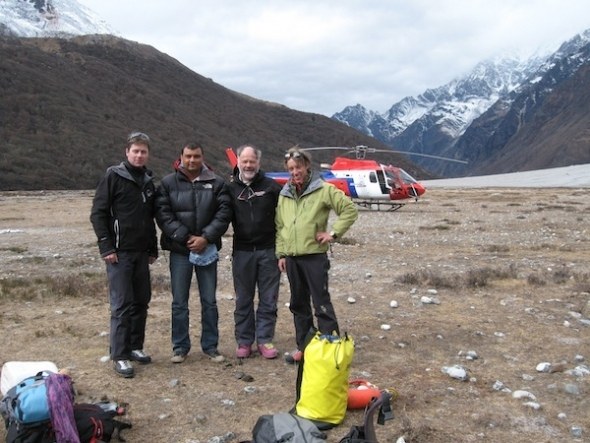
After epic Dhaulagiri rescue withh his swiss teachers
Seven Summits of the Moon: The Highest Point is found…
Everest.
Over the course of the Lunar Reconnaissance Orbiter mission, the LOLA team has diligently watched as the highest point on the Moon got higher and higher. No, the Moon is not expanding, but rather the LOLA profile coverage increases each ...
Over the course of the Lunar Reconnaissance Orbiter mission, the LOLA team has diligently watched as the highest point on the Moon got higher and higher. No, the Moon is not expanding, but rather the LOLA profile coverage increases each month so the chances increase that a ground track will pass directly over, or very near to the highest point. The highest point on the Earth is at the summit of Mount Everest, which is 8,848 meters (29,029 feet) above sea level. The lunar high point is 1938 meters higher than that of the Earth ! However there are several major differences between the two points. Mt Everest is a relatively new feature on the Earth.
It was formed as tectonic plates collided and pushed up to astonishing heights what was once seafloor, over the course of about 60 million years. The lunar high point is very ancient, and was possibly formed as ejecta from the enormous South Pole Aitken basin piled up during this cataclysmic event, in a matter of minutes, more than 4 billion years ago. Another key difference between the two highest points is slope. The flanks of Mt Everest are very steep, while on the Moon the approach to the summit has slopes of only about 3°, assuming you skirt around impact craters.
According to Mark Robinson, chief of the Lunar Reconnaissance Orbiter (LRO) camera team the lunar high point is 10786 meters high!


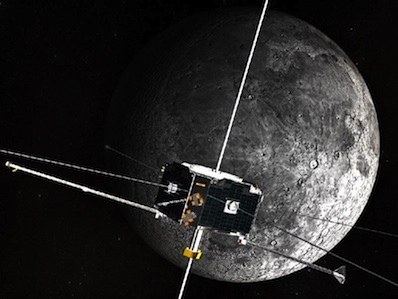
The selenean summit was identified using an instrument known as the Lunar Orbiter Laser Altimeter (LOLA) also mounted on the moon-circling LRO satellite. As the LRO sweeps along just 30 miles above the lunar surface (it can orbit so low due to the lack of any atmosphere) the LOLA laser generates a record of the peaks and troughs beneath.
Once the LOLA had identified the lunar highpoint's general vicinity, an allied team of boffins in charge of the spacecraft's camera took over for the final precision fix.
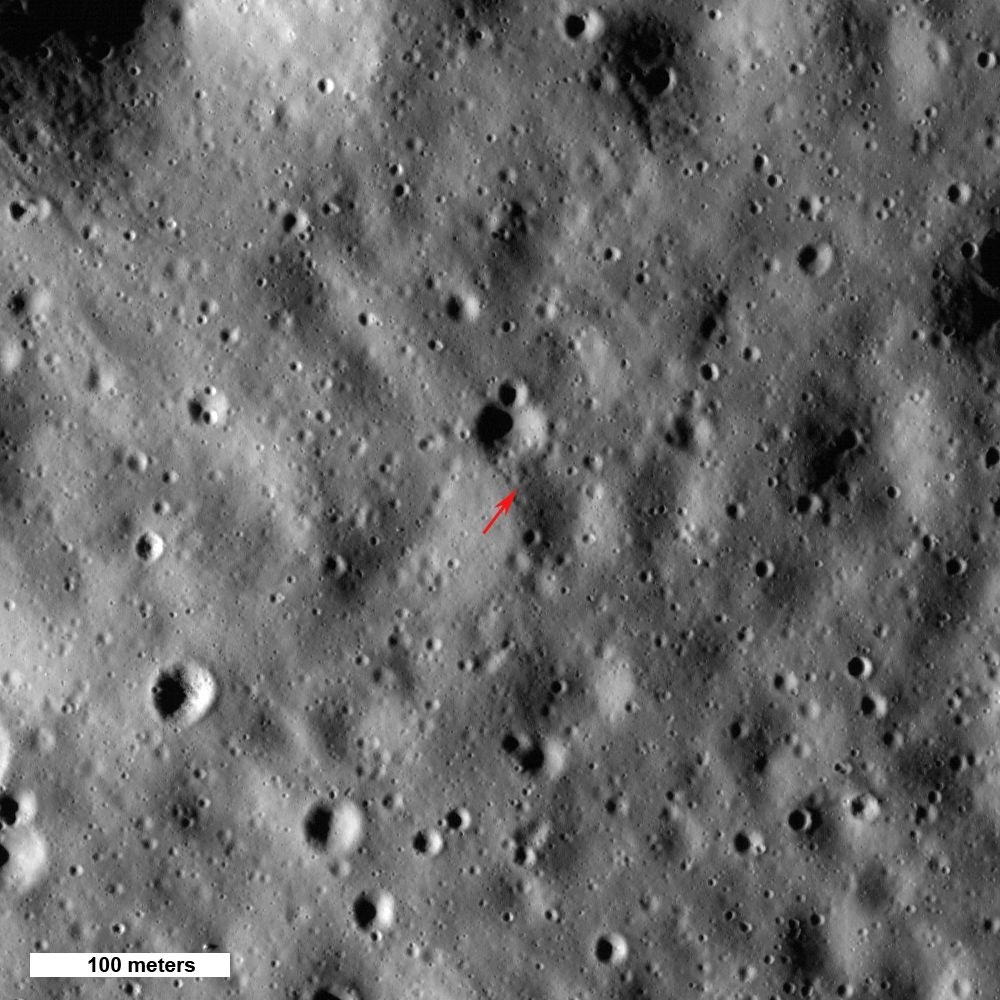
Once the LOLA team had the spot narrowed down to a small area, the LROC team commanded a NAC stereo pair (12 August 2010) to get an even higher resolution measurement of the elevation and coordinates of the highest point. Once the stereo pair was on the ground, the LROC team processed the images into a digital elevation model (DEM), or topographic map.
Though it is actually higher than the peak of Mount Everest, as the photo shows the moon's topmost spot is far less dramatic - more in the nature of a high plain or plateau, with the ground sloping away around it at no more than 3° according to Robinson (apart from impact craters). It lies near the Engel'gardt crater on the fringe of the Korolev plain, on the lunar far side. Robinson considers that it was probably formed by ejecta - molten rock - piled up during the cataclysmic South Pole-Aitken meteor impact over four billion years ago.
The LRO was launched back when NASA was still expecting to send humans back to the Moon in the near future, and perhaps to establish permanent inhabited bases there. Thus it was of the first importance to thoroughly map the surface, in order to avoid hairy landings into the unknown like those made by the early Apollo astronauts.
Though President Obama has now decreed that there will be no return to the Moon, the LRO has still made many interesting discoveries

Round table "Russian Mountain Guides – formation of professional community" ...
Everest.
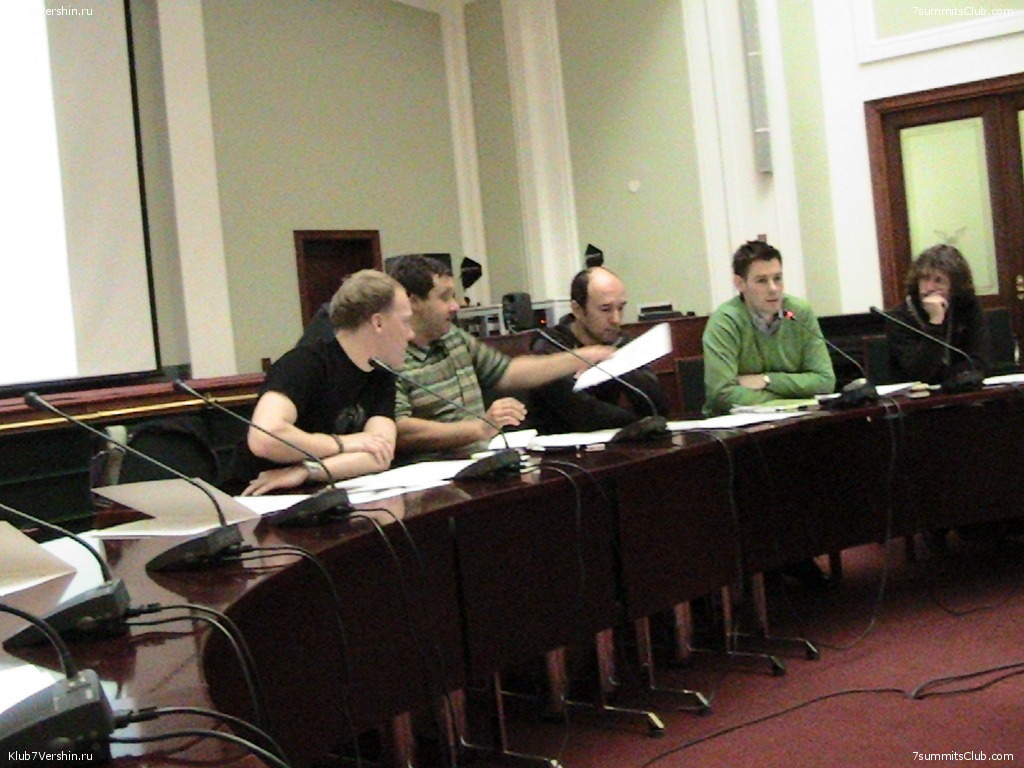
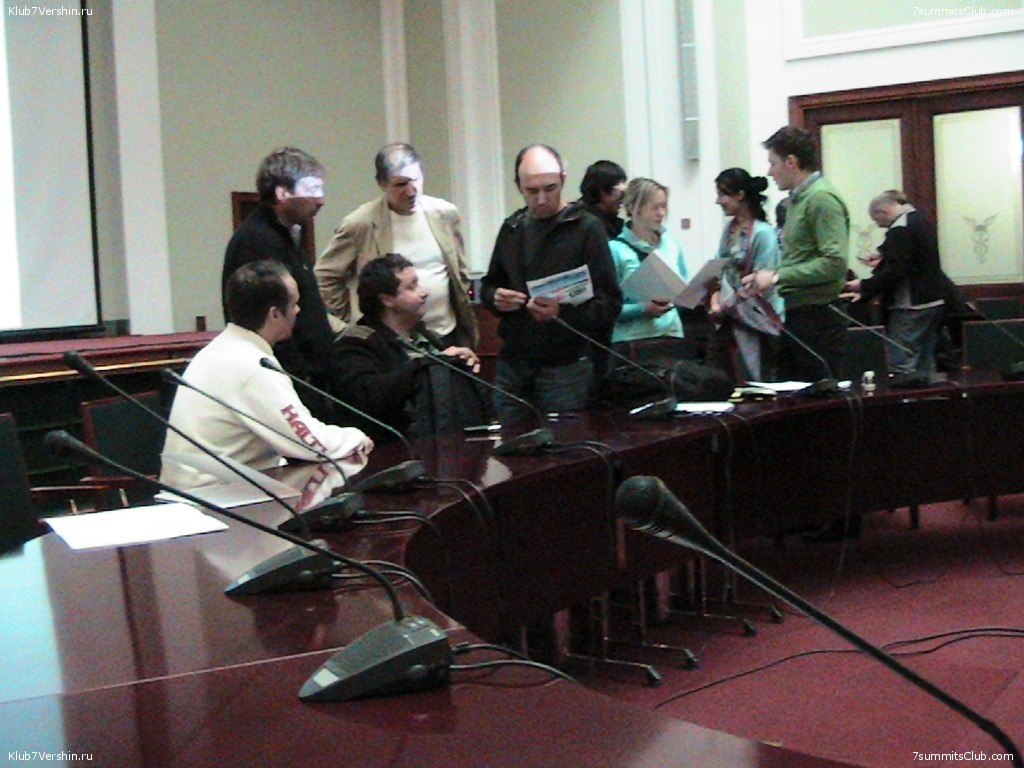
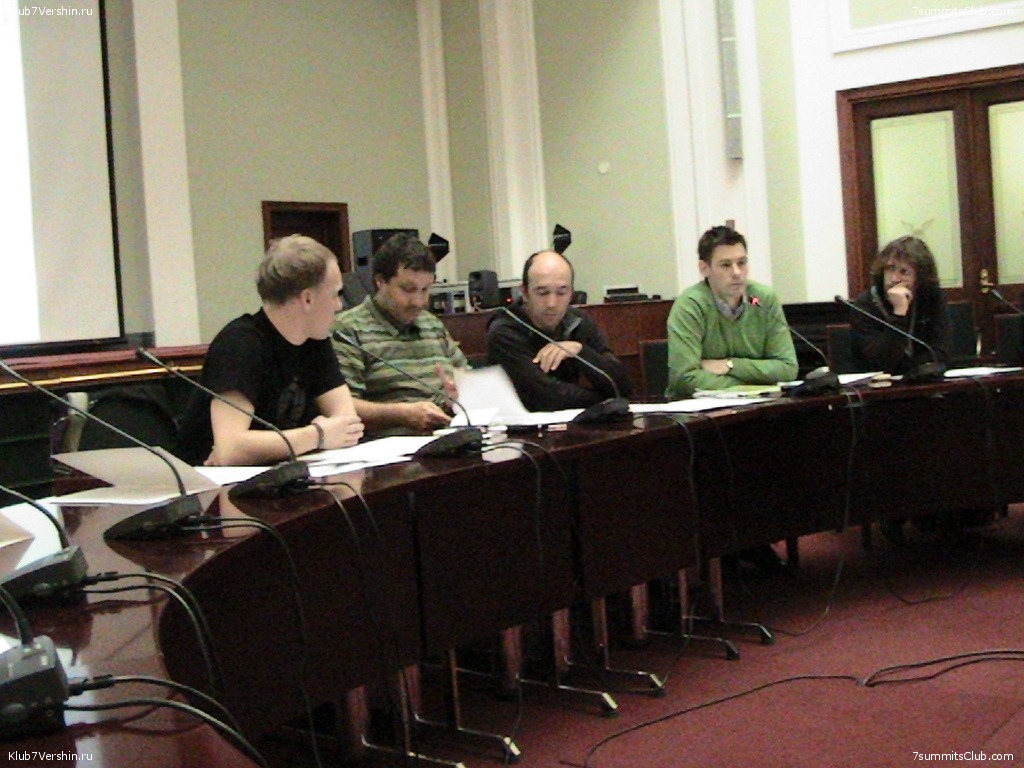
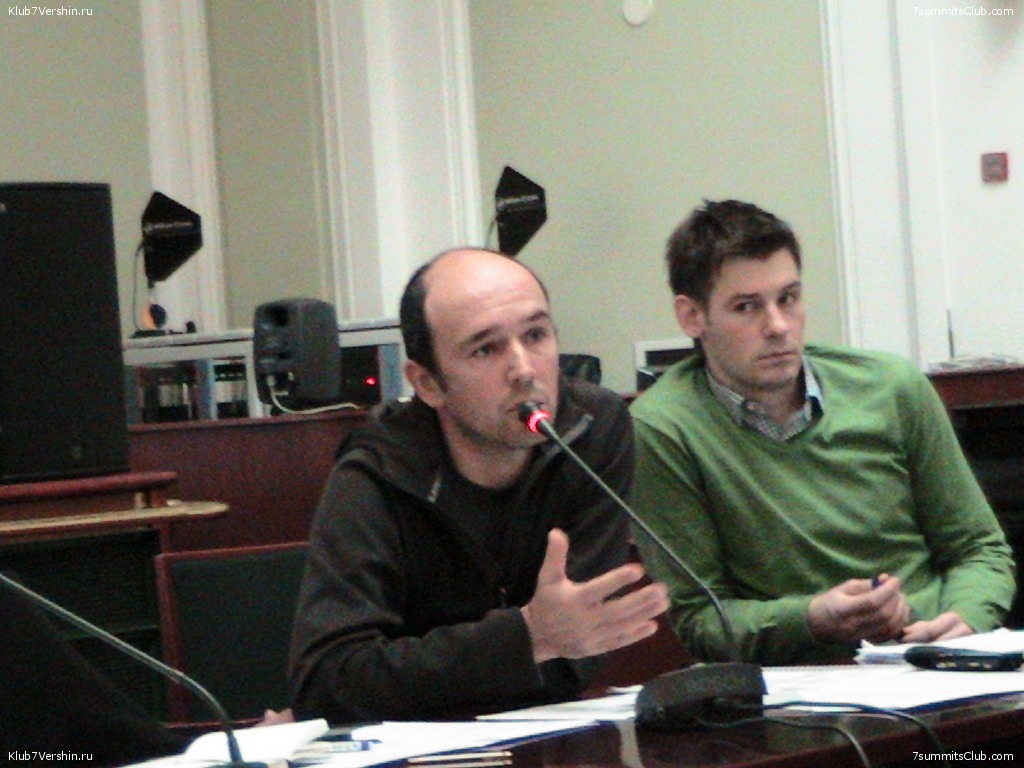
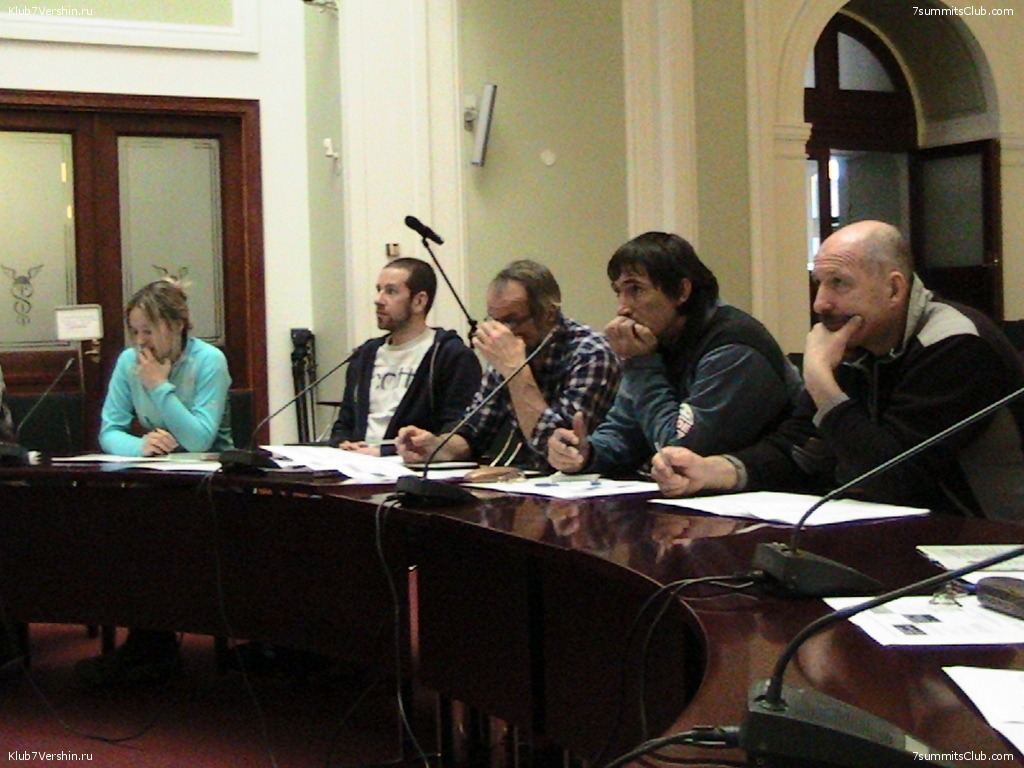
"Round Table. Russia mountain guides - becoming a professional community "was held on 29 October as part of the exhibition "International Ski Salon”. It was an informal meeting of members of the Association of Mountain Guides of ...
 "Round Table. Russia mountain guides - becoming a professional community "was held on 29 October as part of the exhibition "International Ski Salon”. It was an informal meeting of members of the Association of Mountain Guides of Russia, a report of committee and discussions of some details of its work. one of the chairmen of the organizing committee of the Association of Mountain Guides of Russia Sergei Zon-Zam introduced Russia Officer Russian Mountaineering Federation (RMF) Roman Bryk for a report.
Post Roman was quite brief. The Work is proceeding and is now in the stage of signing contracts with partner organizations. The choice is approved in favor of "Canadian" model, with separation of the ski and climbing blocks. Fedor Farberov is working on programming. Partners RMF for the School of guides to determine for 2011. In the near future site of the Association of guides should start working.
Maxim Balakhovsky made on submission of the draft Etique Code was made by a mountain guide. Actually, he just read it with little commentary. In developing the basis for the Code is taken code UIAGM. This part of the Round Table program caused the most lively discussion ..
The second chairman Nicholay Veselovsky, Director of "Vertical World Co made an announcement for 2011: Schematic diagram of the Russian national school of mountain guides, modules for 2011 and school partners. Next year, two units of the School will be held in June and one general unit will be held in December.
Partners: Gore-Tex, Red Fox, Pieps, Petzl,
Leading the seminar stressed that for the first issue of school guides, they are going to possibility to take part for future teachers of the school guides. The process of recognizing the future diploma by UIAGM structures will be very long and we have to start it, even if not completely ready.


Alan Arnette: Himalayan Successes of Different Types
Everest.
Climbing Himalayan mountains in the Fall can be risky at best. Each day is shorter, it is progressively colder and winter looms. So every summit, especially Everest, is highly valued by the climbers. This year, Fall 2010, we saw two summit ...
Climbing Himalayan mountains in the Fall can be risky at best. Each day is shorter, it is progressively colder and winter looms. So every summit, especially Everest, is highly valued by the climbers. This year, Fall 2010, we saw two summit successes of very different types.
First up is the only Fall Everest summit since the Fall of 2008. Eric Larsen and his small Sherpa team summited Everest at around 6:35 AM local time on October 15th. They broke trail and fixed their own ropes on the way to the top. Eric reported in an emotional audio post from the summit that they summited . He later reported they threaded the needle of a tiny weather window descending in white-out conditions to the South Col. He promised more details upon return to Base Camp.
His outfitter, Himalayan Trailbalzer listed the Sherpa team as: Mr. Tshering Sherpa, Pasang Temba Sherpa, Mr. Nima Dorje Tamang, Nima Dorje Tamang, Dawa Gelzen Sherpa, Pasang Dawa Sherpa and Da Tenji Sherpa.
There had been other teams on both the north and south but all abandoned plans throughout the season. Dangerous snow conditions were the culprit on the north side and running out of time was cited on the south. But Eric, wanting to complete a year long goal to ski to both poles and summit Everest on behalf of his "Save the Poles" mission persevered. Eric's stated goal:
"This expedition will tell the story of these remote places so we can better understand how our actions affect the poles and ultimately the planet," Larsen says. "We all need to be reminded that we must act now to stop global warming."
Please visit his website for more details. Congratulations Eric!
Another impressive summit was the Soldiers to the Summit team lead by Everest summiter and blind climber Eric Weihenmayer. They put 8 soldiers on the summit of Lobuche, 20,075′, which is often used for acclimatization for Everest climbs. From their site, Soldiers to the Summit: The goal of the Expedition and World TEAM Sports is to demonstrate to everyone that great things can be achieved no matter how high the obstacles.
From the team website:
We did it! On October 13th, eight of our injured soldiers reached the 20,075-foot summit of Lobuche. These men and women overcame their injuries, gave it their all, and achieved a great victory—not only for themselves but for other veterans, disabled people, and all of our sponsors.
We set out from high camp at 17,000 feet in two teams. The first team—consisting of Brad Bull, Steve Baskis, Sherman Bull, myself, Jeff Evans, Kami Tenzing, Ashley Crandall, Michael Brown, Rex Pemberton, and Didrik Johnck—left at 1:15 AM; Ashley felt the altitude and turned back. The second team—Charley Mace, Matt Nyman, Matt Murray Luis Benitez, Ike Isaacson, Dan Sidles, Kevin Cherilla, Chris Morris, Nico Moroulis, Chad Jukes, Chad Butrick, Brian Mockenhaupt—left camp at 3 AM. Catherine Raggazino (Rizzo) also felt the altitude and stayed at camp and Cody Miranda elected to stay with her.
Congratulations to all these climbers. See the previous report on their expedition.
The fall season is not over with climbs on Pumori, Ama Dablam and a few other Himalayas mountains underway.
Climb On!
Alan
Arnette is a speaker, mountaineer and Alzheimer's Advocate. He is climbing the 7 Summits starting with Mt. Vinson in November 2010 to raise $1 million for Alzheimer's research. You can read more on his site.

Mount Everest is singing for joy. Everyone else is worried
The Economist Magazine “MOUNT EVEREST is singing for joy and the Brahmaputra River swirling with happiness”. Or so says an official Chinese newspaper (using the Tibetan names, Qomolangma and the Yarlung Tsangpo). After much ...
The Economist Magazine
“MOUNT EVEREST is singing for joy and the Brahmaputra River swirling with happiness”. Or so says an official Chinese newspaper (using the Tibetan names, Qomolangma and the Yarlung Tsangpo). After much delay, China has started to extend its controversial railway line in Tibet that will draw more tourists to the mountain and boost trade with South Asia. How happy the outcome will be is not so clear.
Planning for the 253km (157-mile) line from the Tibetan capital, Lhasa, to the region’s second city, Shigatse, began in 2002, four years before Lhasa itself was connected to China’s railway network. The authorities appear not have been deterred by the problems that the railway brought to Lhasa. A tourism boom and a flood of immigrants from China’s interior contributed to an explosion of unrest among embittered Tibetans in March 2008. The launch ceremony in Lhasa of the $2 billion extension on September 26th was celebrated by dancing children in elaborate Tibetan costumes. Chinese television said the line would be of “great significance for the strengthening of ethnic unity”.
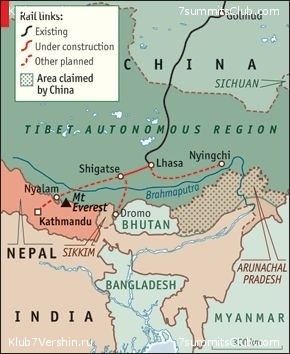
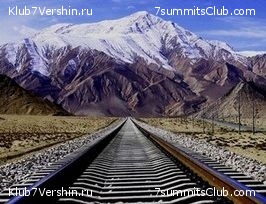
Like the route to Lhasa, which crossed the highest terrain of any railway in the world, the single-track extension will involve considerable technical difficulties. Nearly half of it will go through tunnels or over bridges (96 of them). It will cross areas prone to earthquakes, landslides and sand storms. Whereas the line to Lhasa had to traverse unstable permafrost, the new one will be challenged by geothermal fields with hot springs. All this at an oxygen-starved altitude of 3,550-4,000 metres.
The railway will make it easier to reach Mount Everest, which can expect to see a lot more tourists eager to be photographed in front of the world’s highest peak (Shigatse is also due to open an airport soon, Tibet’s fifth for civilian use). In 2007 the Chinese side of the mountain recorded 27,476 visits by Chinese tourists, almost twice as many as in 2006, after the new rail service to Lhasa had opened. Environmentalists are worried.
Shadows over Qomolangma
So are the Indians. The government in Delhi has been nervously watching China’s build-up of infrastructure in Tibet. The extension to Shigatse, besides facilitating military movements near China’s border with India, is likely to boost trade with Nepal, where the two giants are vying for influence in a power struggle that is still going on. China has long-term plans for more extensions of the line, to Nyalam on the border with Nepal and to Dromo near Bhutan and the Indian state of Sikkim. Nepal wants the railway extended to Kathmandu, which India fears would give China more clout in a country India sees as part of its sphere of influence. Another proposed line, from Lhasa east to Nyingchi, would bring the network close to the Indian state of Arunachal Pradesh, most of which China claims.
Tibetans might have mixed feelings too. The rail link to Lhasa brought disproportionate benefits to ethnic Han Chinese whose language and culture enabled them to take quicker advantage of the Han tourist influx. Tibet Business News said the majority of traders in Shigatse were migrants from beyond Tibet. It quoted a woman from neighbouring Sichuan Province saying that the railway would cut her costs of doing business in Shigatse by half. Expect more like her to come.
Correction: An earlier version of this article had it that “most of China” claims the Indian state of Arunachal Pradesh. Rather, (all of) China claims most of Arunachal Pradesh. This article was corrected on October 8th, 2010.
The Economist. Full text >>>>>>>
------------------------------------------------------------------------------
China official information
LHASA, Sept. 26 (Xinhua) -- China began work on Sunday to build an extension to the world's highest rail link, the Qinghai-Tibet Railway, linking Xigaze, the second largest city in the southwestern Tibet Autonomous Region.
The 253-km line from Tibet's capital Lhasa to Xigaze will pass through five counties as well as over the 90-km long Yarlung Zangbo Grand Canyon.
The work will take about four years.
This is the first extension of the Qinghai-Tibet Railway that opened in July 2006.
The Lhasa-Xigaze railway, with a budget of 13.3 billion yuan (1.95 billion U.S. dollars), is capable of transporting 8.3 million tonnes of cargo per year. The local authorities did not provide a projected annual passenger number.
Zhang Qingli, Communist Party chief of Tibet, said the rail line would make train services available in southwestern Tibetan regions which currently rely solely on roads for transport.
The railway will detour around nature reserves and drinking water sources and more measures will be taken during construction to better protect the fragile plateau environment, Zhang said.
Minister of Railways Liu Zhijun said the extension is a key project in China's long and medium-term railway network expansion and will speed up Tibet's social and economic development.
It will also play a vital role in boosting tourism and promoting the rational use of resources along the line, he said.
Further, Tibet is planning to build another railway to link Lhasa with Nyingchi to boost tourism and the economy in Tibet.
During its four-year operation, the Qinghai-Tibet Railway has reduced transportation costs and greatly boosted economic growth in Tibet, especially through developing tourism and other local special resources, Liu said.
Xigaze, with a history of more than 600 years, is Tibet's second largest city and the traditional seat of the Panchen Lamas.
Xigaze City is the administrative center of the Tibetan prefecture of the same name, a 182,000 square km area that borders India, Nepal and Bhutan. It is also famous for Qomolangma (known as Mount Everest in the West), which rises up from within it.
Our Cho Oyu Expedition continuie work and other news from the Himalayas ...
Everest.
At the beginning of last week there were doubts about the fact that someone even be able to climb Cho-Oyu. A significant part of expeditions turned their work. The head of our expedition (Ukraine - Himalaya 2010 + 7 Summits Club) Igor ...
At the beginning of last week there were doubts about the fact that someone even be able to climb Cho-Oyu. A significant part of expeditions turned their work. The head of our expedition (Ukraine - Himalaya 2010 + 7 Summits Club) Igor Svergun and Sirdar Mingma Gelu (7summits Adventure) also inclined to the idea of shutting down. However, after getting fairly good prognosis, as well as reports of the successful ascent of some German climber, they decided to continue the expedition. Tickets from Kathmandu were taken on October 16, so that you can still compete.
Manaslu
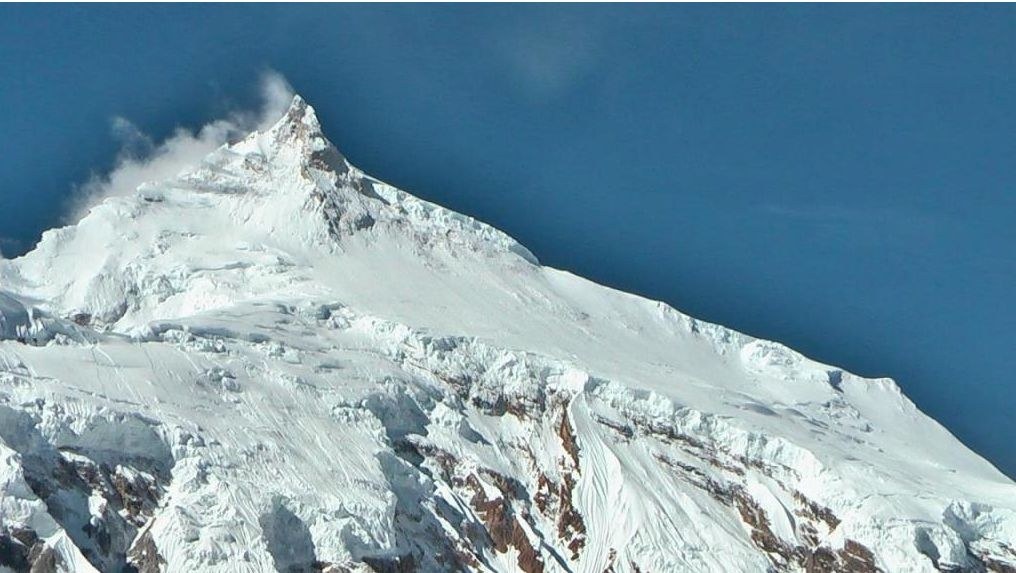
Hard season: the Himalayas against the climbers ... first autumn climbing and loss of ...
September 28 Japanese climbers from the team of the Association of Mountain Guides have got in an avalanche on the way from base camp to Camp 1 on the slope of Dhaulagiri. Mountain Guides Osamu Tanabe (49 years), Toshio Yamamoto (1936), Daisuke Honda (32) and Sherpa Pasang Gyelu Sherpa are died. Tanabe was the leader of Himalayan mountaineering in the country of the Rising Sun ". He has had 9 eight-thousanders, including Mount Everest in winter by south-west face, K2 and Makalu by a new routes.
Osamu Tanabe
Season on Manaslu is more successful. Although not without sacrifice. A Japanese mountaineer has died at the base camp.
Success of the Spaniards is in a focus. Carlos Pauner reached his 10th eight-thousander. And Carlos Soria, who turns 71 years old, went on the 9 th. This year veteran of the Spanish mountaineering completed the program of "Seven Summits", and plans "to make" 14X8000 before 2014
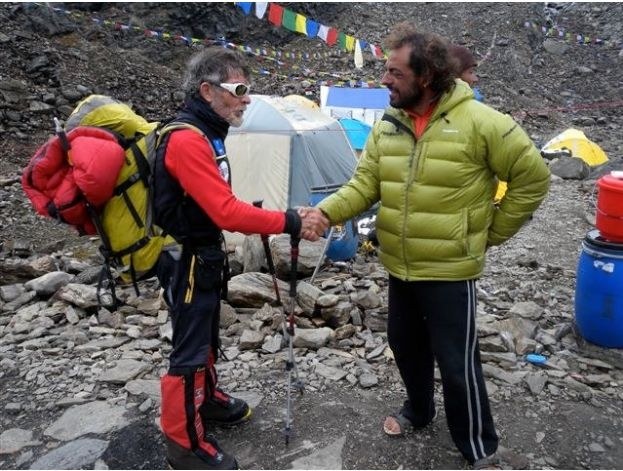
Soria and Pauner in the base camp
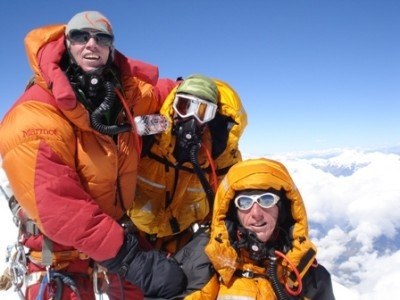
In the team of Himex a large group of climbers reached the summit of Manaslu on October 1. Russell Brice CEO (58 years) for the fourteenth time climbed peaks above 8,000 meters. True, 9 times it was Cho-Oyu. For Sirdar Phurba it was, by the way, 23th 8000 m peak (15 times Everest) and he became the leader among the Sherpas in this field.
Guides of Himex on the summit: Adrian, Russel and Marc
And the first of the season on top Manaslu was a leader of the expedition Dream Guides Kenton Cool. He led the team of three members and three sherpas. According to Kenton, tireless Dorjee Sherpa make almost all the way to the summit as first. From the summit of Manaslu Cool and one of the clients Andrew Eggleston went to the camp 4 on skis. It was September, 30th.
According to information from an expedition leader Fabrizio Zangrilli, 1th October, some German climber managed to reach the summit of Cho Oyu. This immediately restored power to several companies, they have resumed the upward movement in the camps.
Later it turned out that they were two experienced climbers 42-year-old Austrian Rupert Hauer and guide of the expedition 39-year-old Alix von Melle, known as a girlfriend of Luis Stitzinger. Ascent from Camp 3 to the top took 6,5 hours. There was a very strong wind, but good visibility.
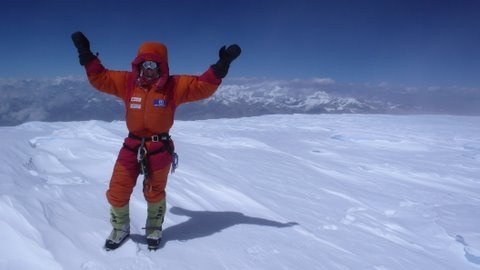
If a forecast will be justified, we could expeat another climbs on Cho Oyu. We hope that among the lucky winners will be the names of our climbers.
Chao, Walter ...
Italian Walter Nones was found dead under the SW face of Cho Oyu, he was 39 years old. During a reconnaissance of a new route for south-western face, he climbed to an altitude of 6,800 meters with the Sherpas. Later he came out already in the solo assault. Misfortune.

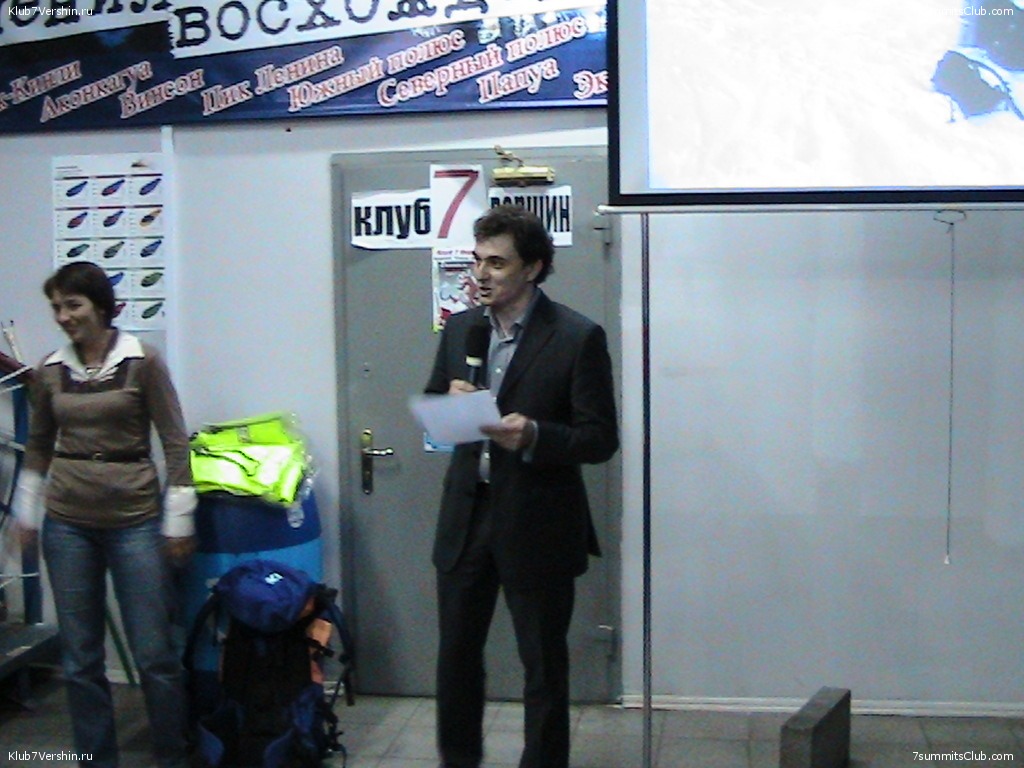
Evening party of 7 Summits Club was a great success
September, 30 we had a traditional evening meeting friends of 7 Summits Club. At this time, a record number of people came to hear reports on our expeditions. The famous mountain climber, winner of the Piolet d'Or Jury Koshelenko was the ...
September, 30 we had a traditional evening meeting friends of 7 Summits Club. At this time, a record number of people came to hear reports on our expeditions. The famous mountain climber, winner of the Piolet d'Or Jury Koshelenko was the chief guest. He spoke about his expeditions to Peru and the Pamirs. Then our guides were made with tales of his expeditions, we have shown films and pictures. Victor Bobok and Oleg Banar sang songs, we gave prizes for the best slogan for the club, played the lottery etc…
Photos from the party – full gallery is here >>>>>>>




American Charlie Wittmack attempts ultimate triathlon
Everest BC (Nepal).
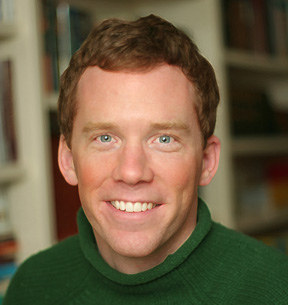
Charlie Wittmack plans a new slant on climbing Everest, by completing a triathlon that is being publicized as the possibly the toughest human endurance event yet conceived. The 33-year-old practising lawyer from Iowa, who is also involved ...
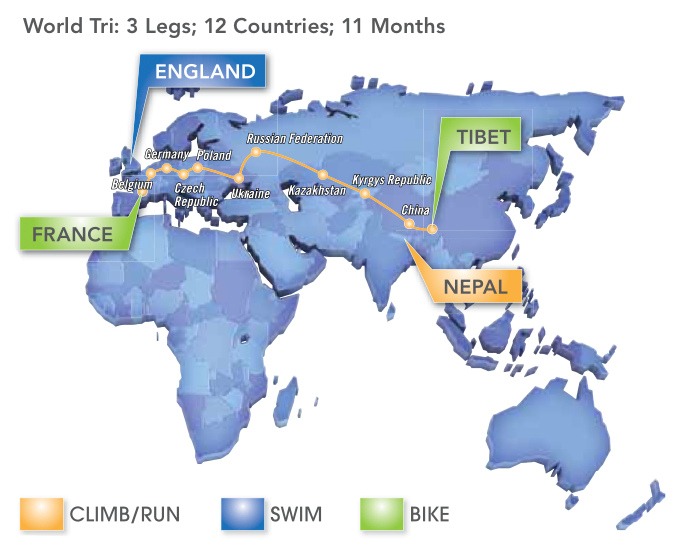
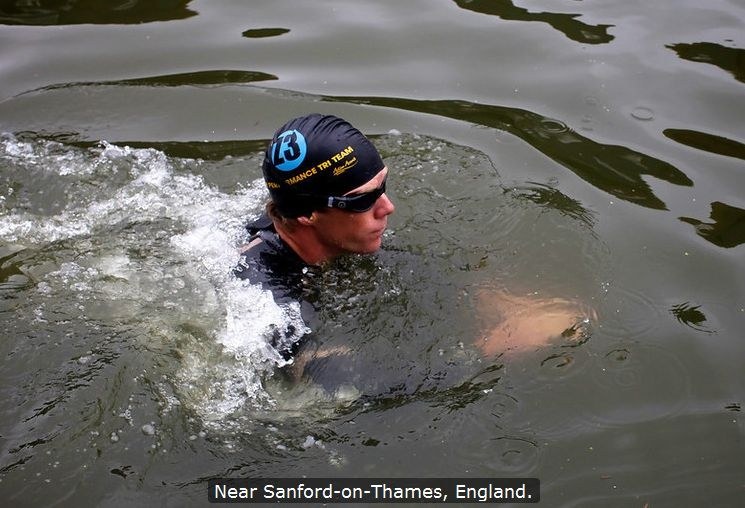
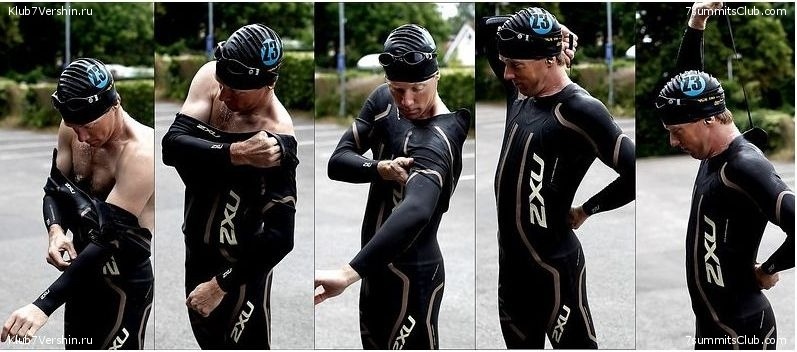
Charlie Wittmack plans a new slant on climbing Everest, by completing a triathlon that is being publicized as the possibly the toughest human endurance event yet conceived.

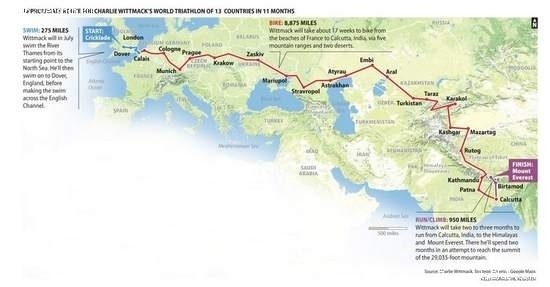
The 33-year-old practising lawyer from Iowa, who is also involved with the Department of Global Health at Des Moines University, starts in the UK with a 275-mile swim down the Thames to the sea and then across the English Channel to France.
From there he is planning to cycle 9,000 miles across Europe and Asia to reach the Bay of Bengal, his projected route taking in Ukraine, Russia, Kazakhstan, Kyrghyzstan and China.
He will then run c950 miles from sea level up to the Nepalese Himalaya, where he hopes to finish his odyssey on the summit of Everest.
Wittmack’s journey through 12 countries is planned to take 11 months, and is, inevitably, being documented by a film crew.
This is no hair-brained project from an inexperienced adventurer. For a start, Wittmack has already climbed Everest. In 2003 he reached the summit with a Sherpa companion in arduous conditions on their third attempt. His success on the world's highest peak came after seven years of ascents on well-known major summits around the globe.
He's also trekked across East Africa, sailed the Indian Ocean in a handmade boat, and made a c5,000-mile cycle ride across the United States.

The English Channel remains his bête noire. In early 2008 he was placed first in the 32nd Annual Swim around Key West, a notoriously difficult marathon ocean race. However, during August that year, 15 miles into his attempt on the Channel, he was pulled out hypothermic and unconscious.
The World Tri, as the project is billed, is also attempting to raise money for education and global health. But not for the Triathlon itself, which is being totally financed by Wittmack and his wife Cate, who is a writer focused on maternal health and childhood education.
Keeping to schedule is important. It's difficult to get permission to swim the Channel and his pre-booked launch date is the 2nd August.
Wittmack also needs to reach China's border with Kyrghyzstan by the end of October, in order to allow enough time to cross the Tibetan Plateau to India before winter sets in.
But if all goes to plan he should be at Everest Base Camp before May 2011, in order to make an attempt on the summit.
Already, Wittmack has had to deal with a minor setback. Eight days into his swim down the Thames, he inadvertently took a small sip of water, spent that night being violently ill, and ended up having his first experience of the National Health System in a Maidenhead hospital.
He recovered swiftly and is currently around half way through the swim.
By Lindsay Griffin


I want to climb Kilimanjaro before I die: Bill Clinton
Everest.
VIENNA (AFP) – At the age of 63, former US president says he has one more mountain to climb before he dies -- and that's Kilimanjaro, the highest peak in Africa. Clinton revealed the secret goal -- along with his dream of running a ...
VIENNA (AFP) – At the age of 63, former US president says he has one more mountain to climb before he dies -- and that's Kilimanjaro, the highest peak in Africa.
Clinton revealed the secret goal -- along with his dream of running a marathon -- while in reflective mood at the 18th International AIDS Conference, where he made the keynote speech on Monday.

He explained that one of his favourite movies was "The Bucket List," a 2007 film in which two terminally ill men, played by Morgan Freeman and Jack Nicholson, draw up a list of things they wish to do before they die, and then travel around the world to do just that.
"I'll soon be 64, so I think I'm old enough to join Jack and Morgan in making a bucket list, but I have an A list and a B list, and the B list would be fun to do but doesn't amount to a hill of beans whether I get to do it or not," said Clinton.
"I'd like to climb Kilimanjaro before the snows melt, I'd like to run a marathon before I give out, there's lots of things I'd like to do but it doesn't really matter whether I do them."
Clinton said his "A" list was far more important than his "B" list..
"What I'd really like to do if I could have my wishes, I would like to live to see my own grandchildren.
"And I'd like to live to know that all the grandchildren of the world will have the chance in the not too distant future to live their own dreams and not die before their time."
Located in northern Tanzania, Mount Kilimanjaro, 5,963 metres (19,563 feet) high, draws thousands of hikers a year to its long but relatively gentle slopes. Walkers stay in camps at several phases on the climb before ascending the final stage at night to enjoy the view of the African plains at dawn from the peak.
In 2009 a US study warned that the snows capping Kilimanjaro could vanish altogether in 20 years, most likely due to global warming.
A veteran campaigner who has attended every International AIDS Conference since 2002 -- this is the fifth since then -- Clinton quipped that he relished the ability to speak freely since leaving office, despite the downside of being an ex-president.
"That's the great thing about not being president anymore, I can say whatever I want," he said.
He then added to a swell of laughter from the audience: "Of course, nobody cares what I say anymore, but I can say it!"

Seven summits to fly from. Project of South African climbers
Elbrus.
A team of three intrepid athletes is preparing to climb the seven highest mountains on all seven continents, and then paraglide down, to raise funds for charity. THE paraglider slowly drifted down from the ...
A team of three intrepid athletes is preparing to climb the seven highest mountains on all seven continents, and then paraglide down, to raise funds for charity.
THE paraglider slowly drifted down from the blue sky, moving in broad circles as he lined up to land alongside a banner reading "Seven summits, 7 flights".
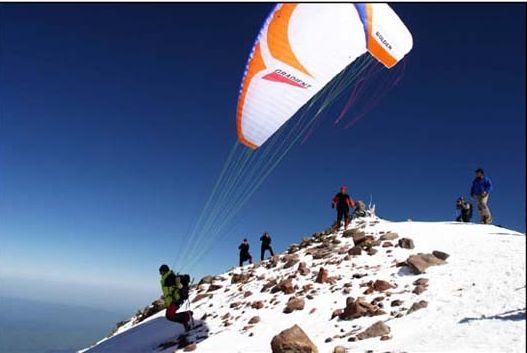
Pierre Carter paraglides in to the press briefing at Delta Park Pierre Carter's aim was perfect - he landed softy and gently ran up to the crowd gathered in Delta Park in northern Joburg, his rectangular orange and white parachute billowing behind him.
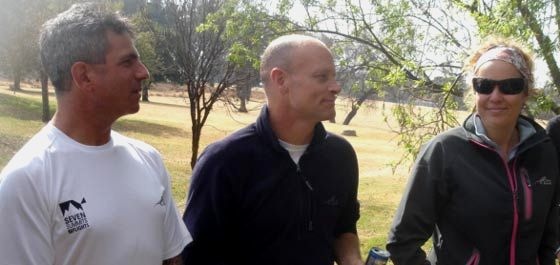
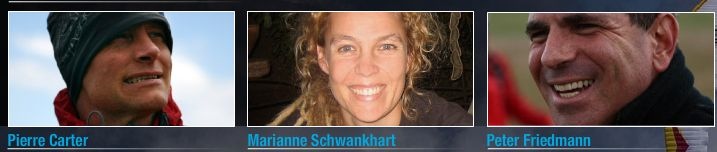
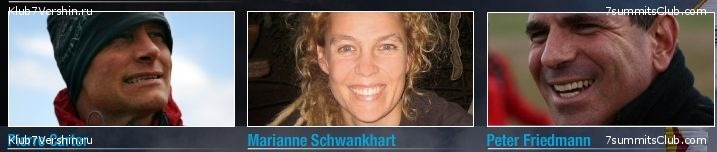
Carter is one of three athletes to tackle this "journey of a life time", in which they will be the first team in the world to summit the highest mountain on each of the seven continents, and once on the summits, paraglide down to their starting points. The other members of the team are 33-year-old Marianne Schwankhart and Peter Friedman. Carter and Friedman are both 43.
They will set off on Sunday, 11 July and begin by tackling Mount Elbrus in Russia, at 5 642 metres. The other summits on which they will be leaving their footprints are: Carstensz Pyramid in West Papua, Indonesia (4 884m), Mount Vinson in Antarctica (4 897m), Kilimanjaro in Tanzania (5 895m), Denali in Alaska (6 194m), Aconcagua in Argentina (6 959m), and the tallest of them all, Everest in Nepal (8 850m).
They admit that Carstensz Pyramid is the one that makes them the most nervous; despite the fact that it is the lowest, it is the most dangerous, and no one has ever tried to paraglide off it before.
"Walking back down a mountain is the most dangerous part of climbing, so paragliding down will reduce the risks," says Carter. All three members of the expedition recognise that there are great risks involved.
Problems for paragliders at these heights include strong winds and temperatures dropping to -30°C, or -50°C with the wind chill element. If the winds are too strong they will have to wait until they drop, for up to eight hours, if necessary.
The three have had special lightweight gliders made, weighing 10 kilograms. A standard glider weighs 40kgs.
Carter and Schwankhart will do a tandem paraglide off the summits, so that Schwankhart can photograph the summits on the way down, while Friedman will attempt the flights as a single glider. They will be taking along two cameramen, Guy Habbard and Kyle O'Donaghue, to capture the three of them climbing and flying. Both are climbers as well.
Everest
The idea originates with Carter, who has had this dream since 1991. The team expects to finish the challenge in around two years, largely driven by financial constraints and weather and seasons. For instance, Mount Everest can only be climbed between March and May.
The idea of climbing the seven summits originated with Dick Bass in 1985. Since then more than 200 people have climbed all seven. Climbing and paragliding off them has been attempted before, by a French couple, but they never completed the task.
Carter has been paragliding since 1988, and represented South Africa in the world paragliding championships for five consecutive years between 1991 and 1995. He has been climbing for almost 30 years and has summited and paraglided off two of the seven mountains - Elbrus and Aconcagua. He is considered to be one of the 15 greatest paragliders in the world, and will be the team leader of the expedition.
Mountaineer
Schwankhart, an award-winning photo journalist with The Times newspaper, has been a climber since 1995. She was the first woman to climb the sheer east face of the central tower of the Torres del Paine in Chile in 2003, and returned in 2008 and climbed all three of the peaks, again setting the record for a woman.
Paragliding off Mt Elbrus in Russia In 2005, she climbed the Trango Tower in Pakistan - 900m of vertical rock face - to a height of 6 500m. The same year she climbed Cerro Torre in Patagonia, Argentina. Climbing a sheer cliff face requires the climber to sleep for several nights on the mountain, sleeping in a suspended hammock-like contraption, hanging from the mountainside.
In 2006, she filmed No Need for Parking - an Africa Rock Adventure, a record of her climbs in southern Africa. Remarkably, Schwankhart doesn't see the climbing or the sub-zero temperatures as her greatest challenge in the venture; she wants to be able to take good photographs.
"The purpose of my trip is to take amazing photographs, so I hope I can do this. My main worry is whether my camera batteries are charged," she explains. The climbing is of secondary concern. "Mount Elbrus is an easy mountain, I am not too worried. I can rely on muscle memory for the climb."
She is not a paraglider though, and is a little concerned about being air sick.
Friedman has been paragliding for eight years and has fixed-wing and helicopter licences. He has a black belt in karate and has represented South Africa in Japan at the world karate championships. He has also represented South Africa in the world surf skiing championships in the United States.
He has been the driving force behind putting the expedition together, raising the all-important funding and sponsors.
Flight from Elbrus by Carter
Funds
The expedition will be raising funds for The Trust, an organisation that raises funds for 100 charities, with causes ranging from crime survivors, abused animals, HIV and Aids sufferers, to protecting the environment. This year's particular cause is fighting human trafficking, in partnership with Cintron Africa, says Tracey-Lee Cohen, the managing trustee.
The Trust will run a series of TV and radio adverts by R&B singer Akon to assist in raising awareness of human trafficking. "The anti-human trafficking case is just one example of a social cause that will benefit from the bravery and initiative shown by the 7 Summits 7 Flights team," says Cohen.
The expedition will also be raising funds for The Smile Foundation, a charity involved in assisting children with facial anomalies get surgery.
"We admire the dedicated work of charitable organisations such as The Smile Foundation and hope to help provide them with the resources and funds they need to do their work and overcome their own challenges," says Carter.
The three estimate they will need about R7-million to complete the whole venture. All the gear has been sponsored, but funding is still needed. Donations can be made through their website.
The team can be followed on a range of social media: they will be updating their website, Twitter and Facebook pages every few days, and articles will appear in The Times newspaper. DSTV will provide R2-million in airtime to the expedition.
Read more: http://www.joburg.org.za/content/view/5430/266/#ixzz0tBukqMMj
*********************************************************************

THE MISSION
7 Summits 7 Flights is an initiative pioneered by Pierre Carter, Marianne Schwankhart and Peter Friedmann with the aim of raising funds for Smile Foundation and The Trust, an umbrella charity providing a safe and transparent conduit to various charities, by climbing to the summits of the highest mountains of each of the seven continents and paraglide from their summits. All contributions will benefit both charities as well as the Seven Summit Seven Flights project.
The notion of climbing the seven summits was first conceptualized by Dick Bass, an American businessman and amateur climber, who completed all seven summits in 1985. Since then, more than 200 climbers have completed the challenge, with the youngest being eighteen year-old Samantha Larson and the oldest seventy three year-old Ram—n Blanco. What makes this initiative remarkable, apart from the sheer challenge that the seven summits pose, is that the three climbers will paraglide their descent, a feat that has never been achieved, although attempted. To share the experience as closely as possible, award-winning photographer Marianne will fly in tandem with acclaimed paragliding adventurer, Pierre, to photograph and document the journey and the mountains, thus providing a unique view of the adventure from a new perspective where no one else has gone before. Two experienced film crew will compile the video footage into a documentary that will be screened worldwide.
Apart from the thrill of paragliding off all seven summits, the hope of the South African team, is that the time and effort invested in this endeavor will help South Africans in need; that the obstacles they overcome in their struggles against nature will eliminate the obstacles that many face back at home. For the team, the risk that this challenge poses is a chance of a lifetime to realize the limits of the human body in dire situations “it’s not the mountain we conquer but ourselves”. Sir Edmund Hillary. In addition to enriching their own lives, their motivation for this endeavor is to translate their life changing experience into changing the lives of thousands of less fortunate South Africans and at the same time bringing climate awareness, something highly necessary in light of our current climate change crisis.
The project launches in June, with our first trip to Denali Ð we hope to complete all seven summits within fourteen months. By teaming up with The Trust as the beneficiary of this project, 7Summits7Flights is truly an example of climbing for humanity.
It’s the ultimate adventure!
Three explorers will climb to the summits of the 7 highest mountains on the 7 continents and paraglide off them. No-one as yet has flown from the top of all seven summits and this will raise the bar in extreme adventure and exploration in 2010. They will share their experience via photographs, video and blogs from the most remote and fragile corners of the earth. This will allow others to realise their potential for our planet and will raise money for “The Trust”, a charity aimed at assisting the underprivileged in reaching for their own dreams.
We invite you to the traditional meeting, party of the 7 Summits Club
Elbrus.
June 24, we invite you to the traditional meeting, party of the 7 Summits Club. The results of our main expedition of year - Everest, as well as many other travel (Ama Dablam, Island Peak, Kilimanjaro, Morocco, Mount Elbrus, the North Pole, ...
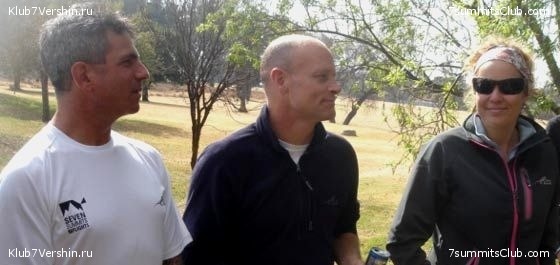
June 24, we invite you to the traditional meeting, party of the 7 Summits Club. The results of our main expedition of year - Everest, as well as many other travel (Ama Dablam, Island Peak, Kilimanjaro, Morocco, Mount Elbrus, the North Pole, Kailash and other) ... Interesting and unexpected guests. Do not miss out, it will be interesting!
June 24, 2010, on Thursday, we invite all friends, acquaintances and strangers while on the traditional party evening 7 Summits Club! We invite everyone! Admission is free!
Videos, photos, stories of climbers, questions and answers, plans for the near and distant future. Dinner buffet , of course.
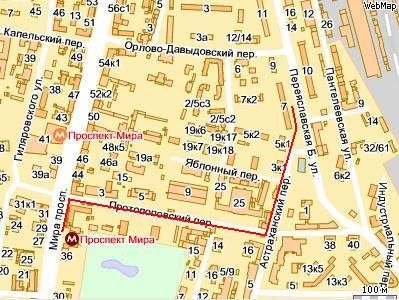
Thus, on 24 June at 20.00 in the shop "Activny Otdych" (Bask) to: Metro Prospekt Mira Str., Bolsh. Pereyaslavskaya, 7.




Ang Tshering: Namaste and warm greetings from Nepal
Everest.
Namaste and warm greetings from Nepal The 2010 Spring Mountaineering season from Nepal side has been very successful. My son, Dawa Steven Sherpa, Leader of Eco Everest Expedition 2010 and his team members returned to Kathmandu at the end of ...
Namaste and warm greetings from Nepal
The 2010 Spring Mountaineering season from Nepal side has been very successful. My son, Dawa Steven Sherpa, Leader of Eco Everest Expedition 2010 and his team members returned to Kathmandu at the end of May safely and in good health.
Total Number of Climbers on Mt. Everest
This Spring 2010 season we saw a slightly lower number of expeditions attempting Mt. Everest. On the Nepal side 157 foreign climbers and 190 High Altitude Sherpa climbed Mt. Everest. Though CTMA has not been able to provide us exact numbers, during this same season I predict the total number of climbers on the Tibet side to be around 165.
The latest information from the office of Ms. Elizabeth Hawley, chronicler of all Expeditions in Nepal, gives some very interesting facts. Between 1953 and 2009, the total number of ascents was 4557 by 3163 individuals (some having summited more than once).
Adding this year’s spring total of 513 ascents, of which 268 are new summiteers and the rest are repeat summiteers. In summary, the total number of ascent until today is 5070. Whereas, the actual number of persons having summited Mt. Everest is 3431 till date.
Eco Everest Expedition 2010
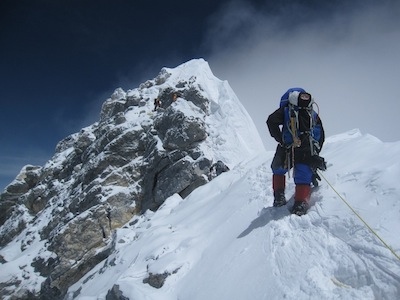
In 2008, Eco Everest Expedition team brought down 965 kilos of garbage, including 75 kilos of human waste from above base camp. Similarly in 2009 Eco Everest Expedition brought down 6000 kilos of garbage under the “Cash for Trash” program which excluded 115 kilos of human waste produced during the expedition. The same year wreckage of an Italian Army helicopter was also recovered from the edge of the Khumbu Icefall (5486m). The helicopter had crashed between Camp I and Camp II (approx. 6200m) on Mt. Everest during the Italian Everest Expedition in 1973. The Eco Everest Expedition team brought down 700 kilos of wreckage of the helicopter. Since 2008 until today Eco Everest Expedition brought down more than 12,000 kilos of old garbage and more than 300 kilos of human waste produced by Eco Everest Expedition from Mt. Everest for proper disposal. The main sponsor of the garbage collection for 2008 and 2009 was Asian Trekking and for 2010 were Asian Trekking, Reinhold Messner, The North Face and The Alpine Convention.
At the same function Honorable Minister for Tourism and Civil Aviation Mr. Sarat Singh Bhandari presented the Tenzing-Hillary Award to Ms. Junko Tabei (the first woman to summit Mt. Everest) for her support in developing mountain tourism. Similarly the national and international summiteers of Mt. Everest in 2010 were honored with medals regarding them as Goodwill Ambassador for Nepal Tourism Year 2011.
The 16th SAARC summit recently held in Thimpu, Bhutan has endorsed Nepals’ proposal to appoint Apa Sherpa as SAARC Goodwill Ambassador for Climate Change for two consecutive years. On a program organized on 31st May 2010 he was handed over the certificate of SAARC Goodwill Ambassador by the Deputy Prime Minister of Nepal, Sujata Koirala.
Free Entry Visa for Nepal to Mt. Everest Summiteers:
On the eventful day of Sagarmatha (Mt. Everest), Minister of Tourism and Civil Aviation Mr. Sarat Singh Bhandari declared to provide free visas for Nepal to Mt. Everest Summiteers. He also said that the Mt. Everest Day will be celebrated in all of the Nepalese Embassies abroad from 2011.
The event was organized by Government of Nepal, Nepal Mountain Association (NMA), Nepal Toursm Board, Civic Society of Kaski , Myagdi,Baglung and Parbat District. The Honorable Minister for Tourism and Civil Aviation, Mr. Sarat Singh Bhandari was Chief Guest. The Guest of Honour was the renowned Austrian mountaineer Kurt Diemberger, the first summiteer of Mt. Dhaulagiri and the only remaining person alive to make first ascents on two 8,000 meter peaks.
Also present at the event were representatives from various organizations and many veteran mountaineers like renowned Climber Ang Rita Sherpa, Serap Jangbu Sherpa, Kuniko Yagihara- climbing leader of two successful Dhaulagiri Expedition on 1978 and 1982, and leader of Yeti Research Expedition around Dhaulagiri.
Groups and individuals from Pokhara as well as from outside Pokhara performed presented cultural performances. During the programme, the Government of Nepal and the Civic Society felicitated Kurt Diemberger and other mountaineers who were present. At the function, Kurt Diemberger shared his climbing experiences and his visits to Nepal.
Similarly, Golden Jubilee of the first ascent of Mt. Dhaulagiri was celebrated with much enthusiasm at Beni (Myagdi District), Baglung (Baglung District), and Kushma (Parbat District) on the 14th of May 2010. The events at Pokhara, Beni, Baglung, Kushma were a tremendous success in showing the concern towards the mountains and promotion of mountain tourism in Nepal.
50% Reduction on Mt. Dhaulagiri Royalty Fee:
On the occasion of Mt. Dhaulagiri Golden Jubilee, the Government of Nepal has decided to reduce the royalty of Mt. Dhaulagiri by 50% as well as to provide free entry visa to Nepal for Mt. Everest and Mt. Dhaulagiri summiteers for 2010 and 2011.
Beat the GLOF Action Run and Save the Khumbu Festival 2010:
On 4 June 2010, Beat the GLOF Action Run and Save the Himalayas-Khumbu Festival was organized for the second consecutive year in Khumjung Village in the Khumbu region. The one day event started off at 7 am with Beat the GLOF Action Run.
112 runners, out of which 79 were males and 33 were females, participated in the Action Run. The run route started from Khumjung (3790m) and passed through Kyangjuma (3550) –Namche (3440m)-Phurte (3390m) -Thamo (3842m) - back to Phurte (3820m) – Syangboche (3720m) – Khunde (3840m) and ended back in Khumjung (3790).
The first male runner Karma Sarki Sherpa completed the run route (16 kilometers) in 1 hr 59 minutes and 10 seconds whereas the first female runner Ang Phuti Sherpa completed this distance in 2 hrs 34 minutes and 45 seconds. Ten first male and female runners were awarded cash prizes at the Khumbu Festival.
Locals from Khumjung, Khunde, Phortse, Pangboche, Thame and Namche had participated in the festival which showcased traditional Sherpa culture. The various villages partook in the Sherpa dance exhibition. Students from Khumjung School presented a Drama highlighting the issues of climate change. The drama was titled “Message from the Doctor.” Youth groups performed songs and dances and entertained the audience. National and international dignitaries, media and press trekked up to participate and cover the event.
The event was organized by iDEAS in collaboration with Sherwi Yondhen Tshokpa (Sherpa Students Network). The event was sponsored by The North Face, Asian Trekking and Nepal Mountaineering Association. Agni Air and Tara Air provided complimentary air tickets to the participants and media personnel flying from Kathmandu. Himalayan Eco Resorts, Paradise Lodge and Hotel Camp de base provided complimentary lodging and meals to the dignitaries and members of the media and press. The event was supported by Sagarmatha National Park Buffer Zone Management Committee, Department of National Parks and Wildlife Conservation, Nepal Tourism Board, Nepal Tourism Year 2011, WWF Nepal and Khunde Hospital.
This Event which will take place annually in the month of June aims to draw the attention towards the risks of potential GLOFs in the area. I welcome all our friends to come and support us by participating in this event.


Tibet Expedition Spring 2010 Summary:
The 2010 Spring Mountaineering season has been very eventful as well as filled with tragedy and sorrow.
I am saddened to report that there were four fatalities [3 who were on 'expeditions'] on North side of Mt. Everest this season. Among them was our Hungarian friend Laszlo Varkony climbing with Hungarian Everest Expedition 2010.
Please join me in praying for eternal peace for the departed and for strength to the bereaved families.
New Regulation on Tibet Expedition from Autumn 2010:
“In order to promote the organization of expedition, improve team quality and avoid waster of resources, China Tibet Mountaineering Association has implemented some additional provisions for future permit applications, size and reception.
Now the expedition must apply the climbing permits in one month before. If the climbers required applying visas in their own country, they must mention in one month before. As per this new regulation the size of the team for three major peaks (Mt. Qomolangma, Cho-oyu and Shishapangma) must be above 5 pax (can contain Nepalese staff) and the ratio for clients with Nepalese staff should be 6:4. The age bar for the climbers has been limited between 18 – 60 years and if the climbers’ age is not within this provision, must provide proof of special health-related applications.”
Lastly, it is my pleasure to keep you all up to date as to our activities here in the Himalaya. If you have any questions please let me know. I thank you for your support in the past and look forward to our cooperation in the future.
Best Wishes,
Ang Tshering Sherpa
Chairman
Asian Trekking