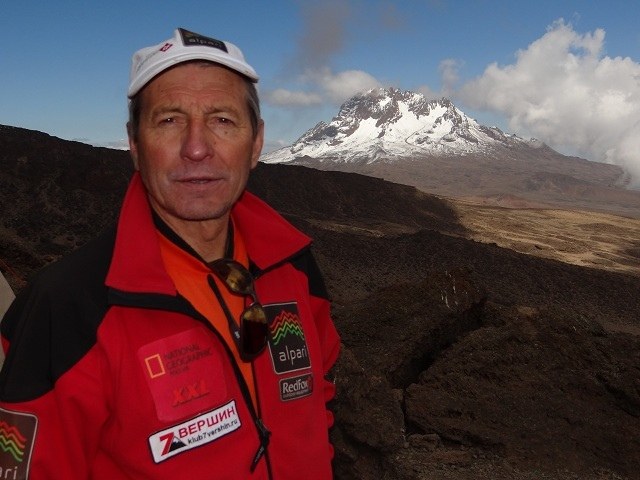
Elbrus(5642) - Page 55
Alanian way was presented by series of beautiful photos and movies
Elbrus.
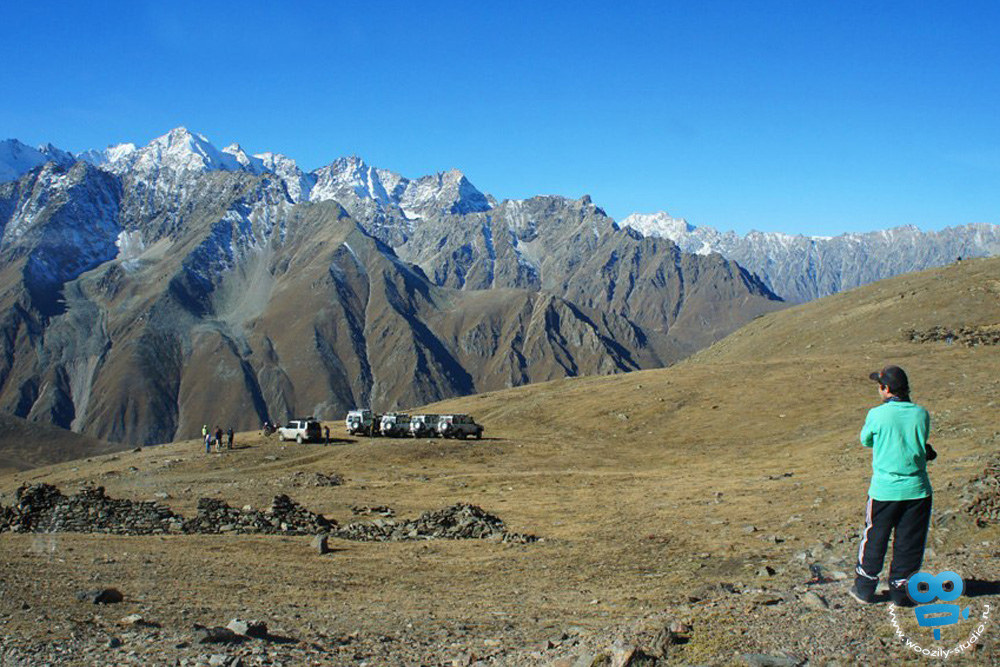
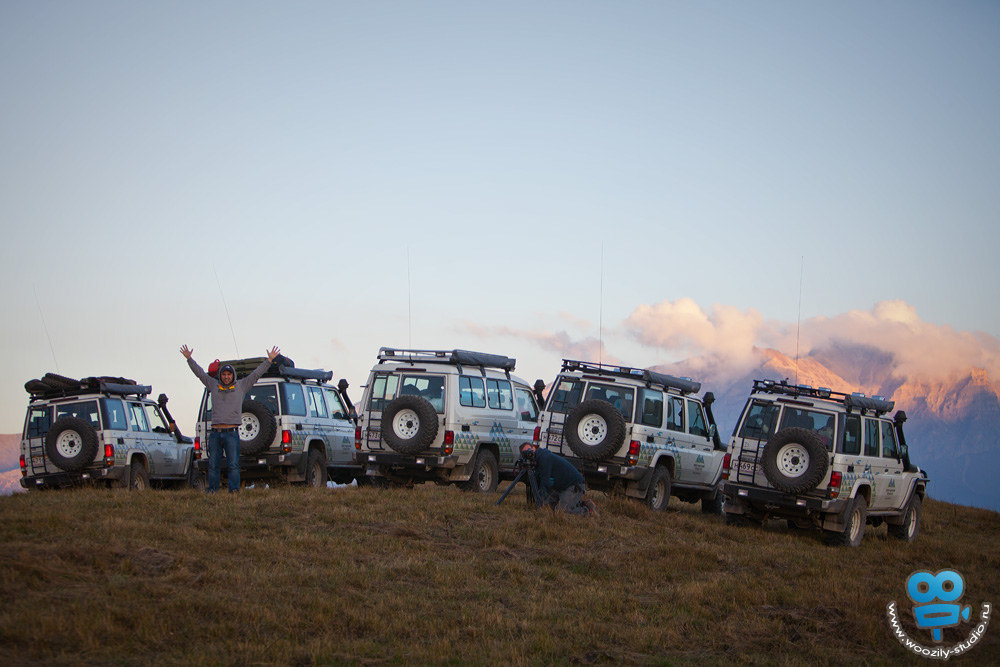
The North Caucasian Mountain Club - is one of the organizations created by the North Caucasus Development Corporation. Its staff has organized the past autumn research and promotional jeep tours along so-called Alanian way. Alanian way - ...
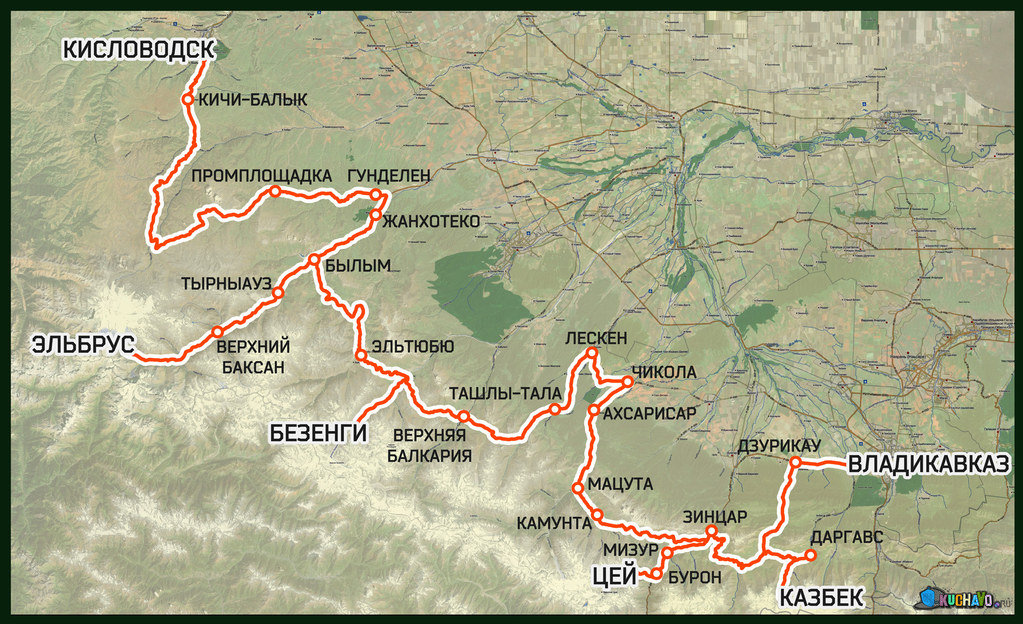
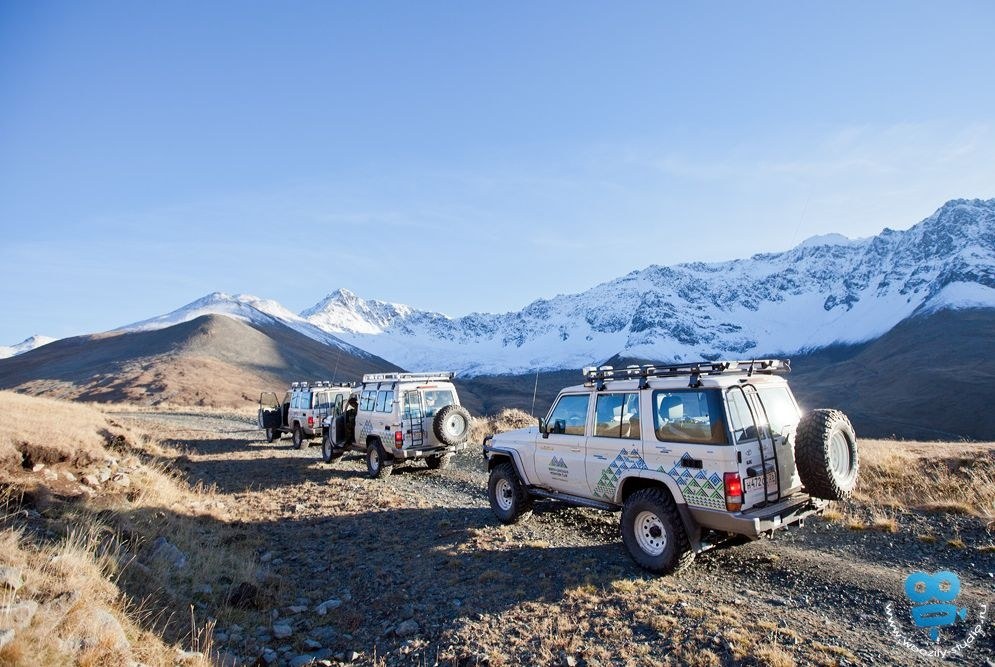
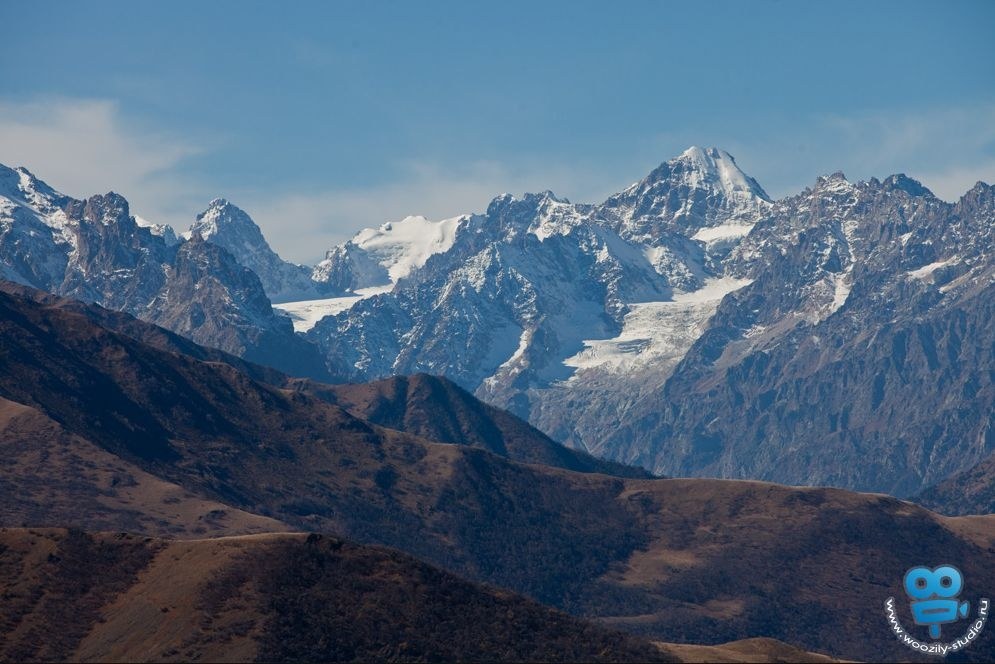
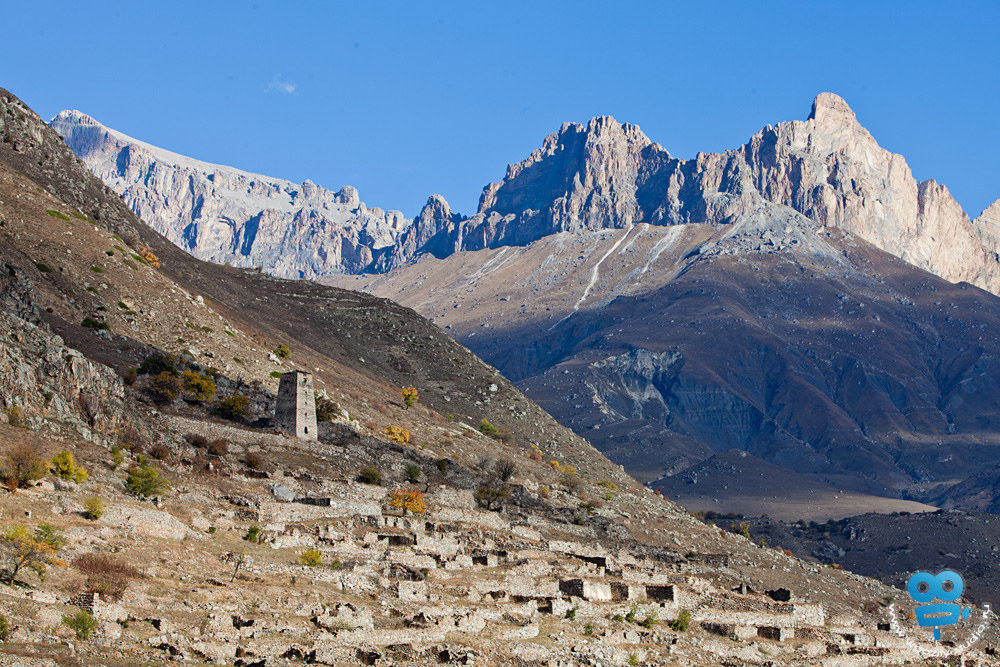
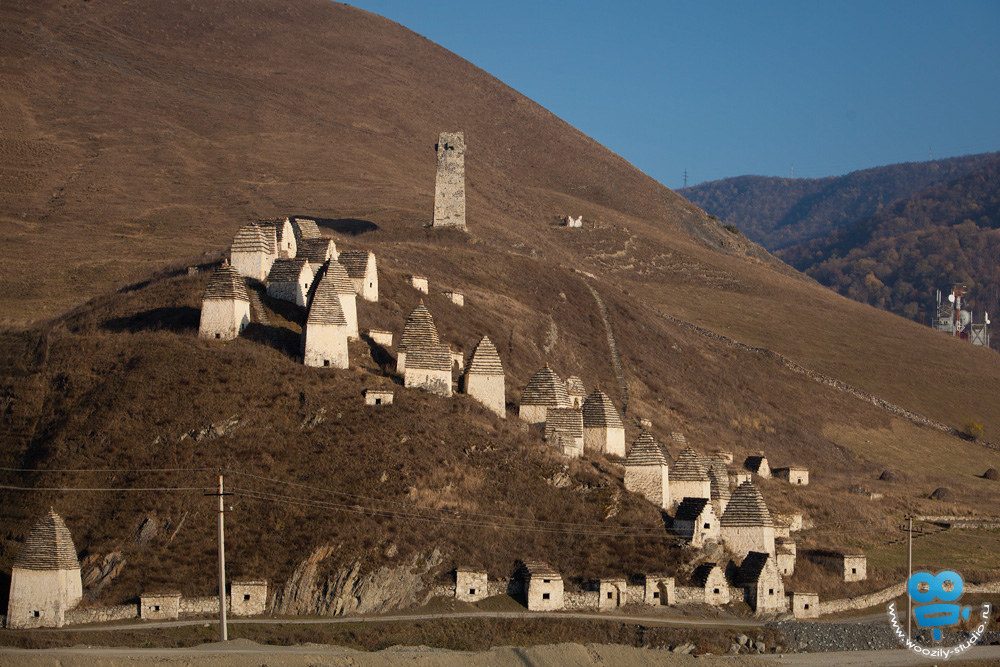
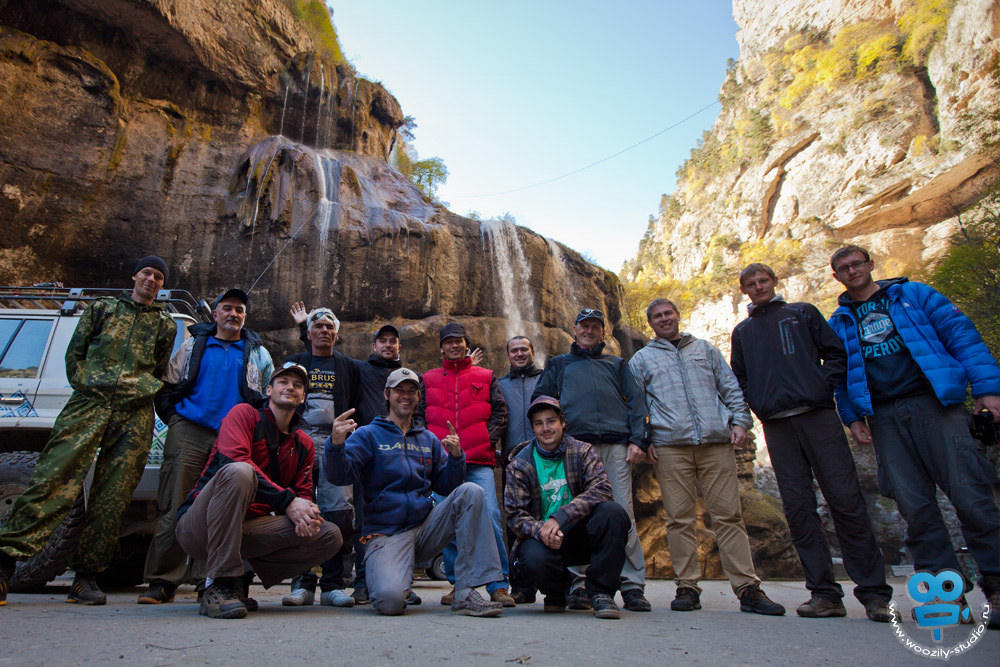
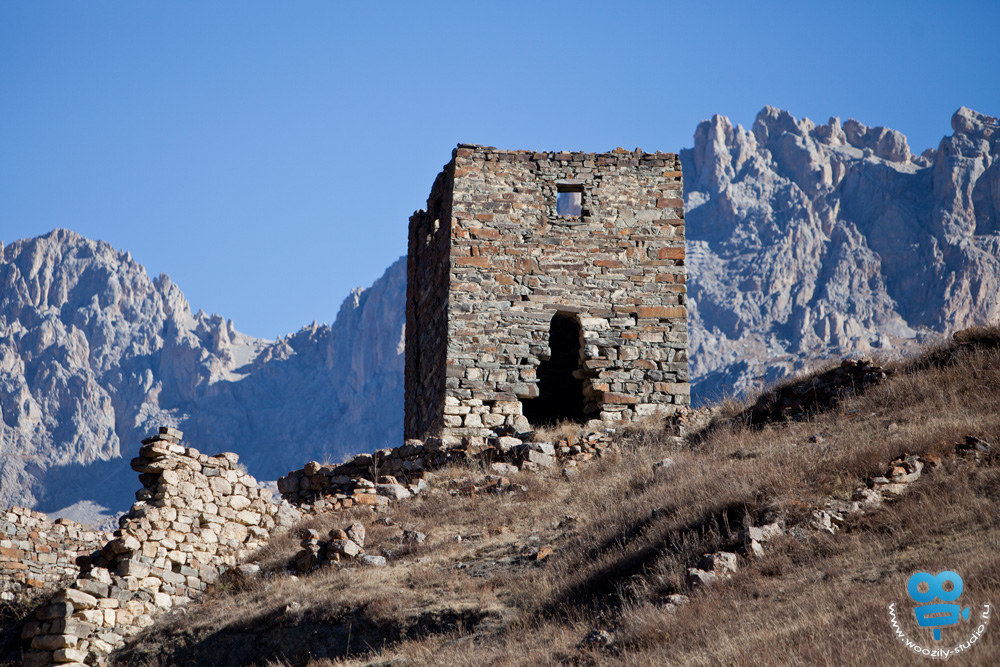
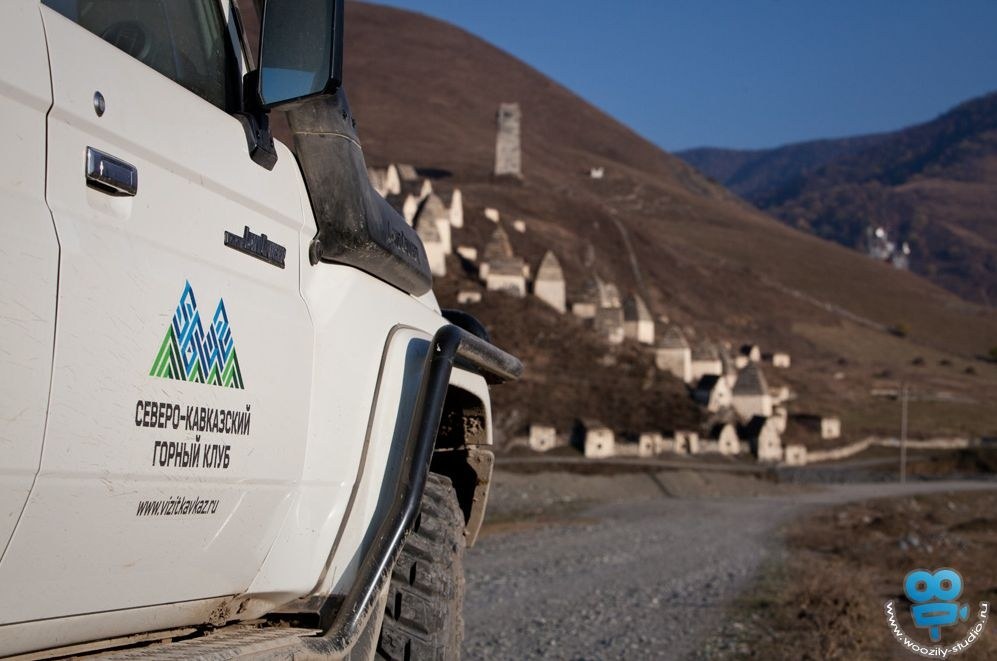
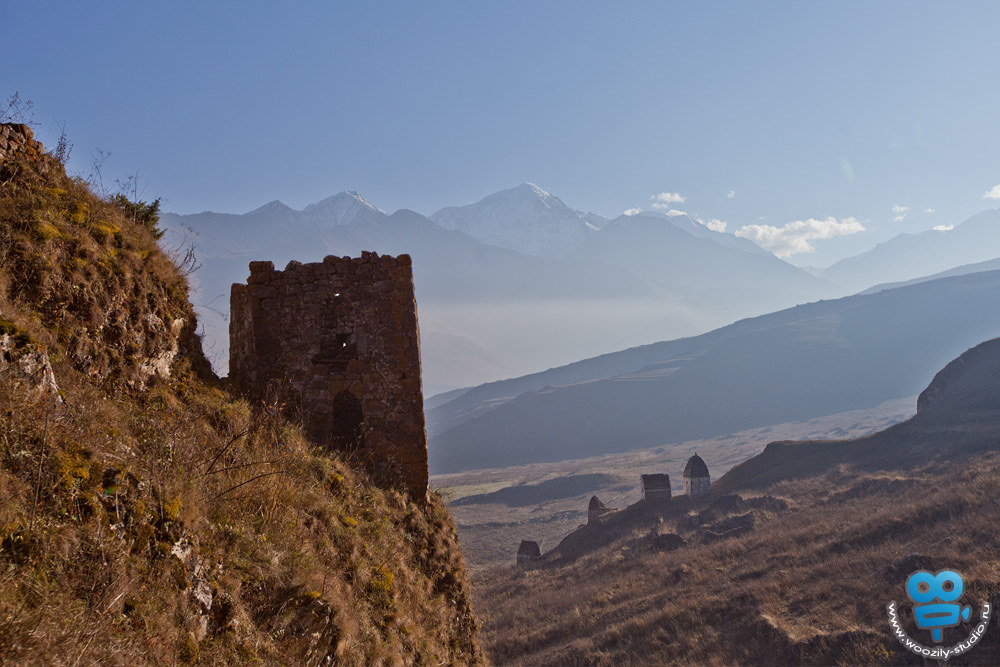
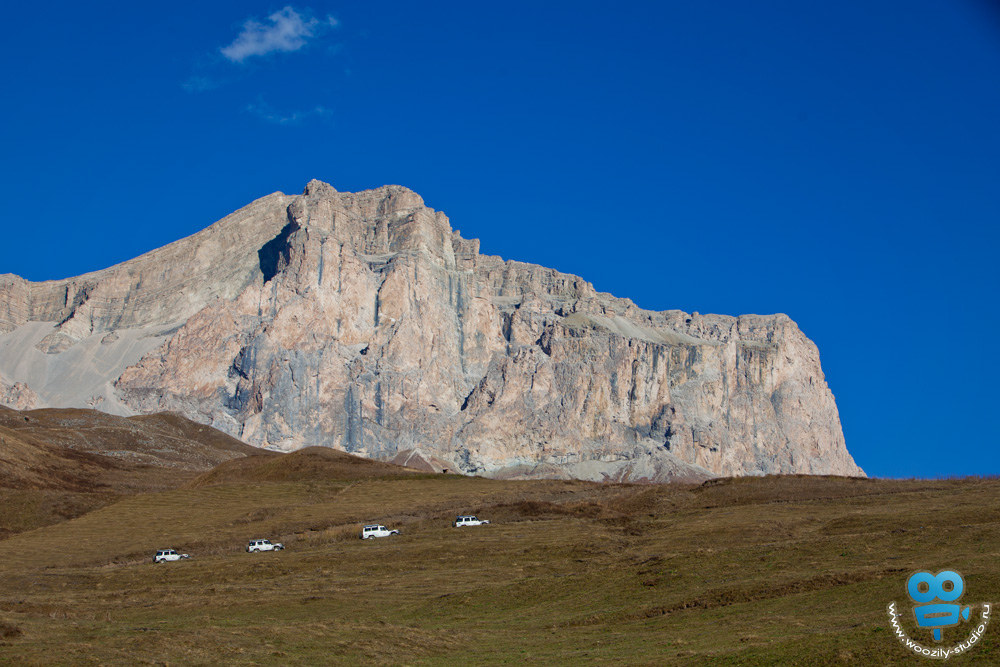
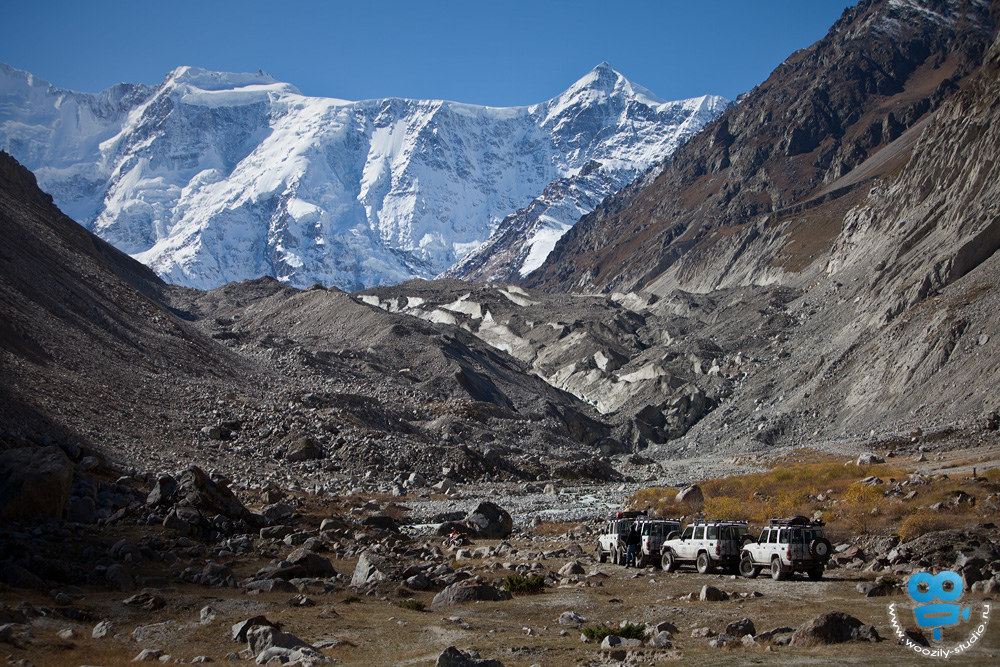
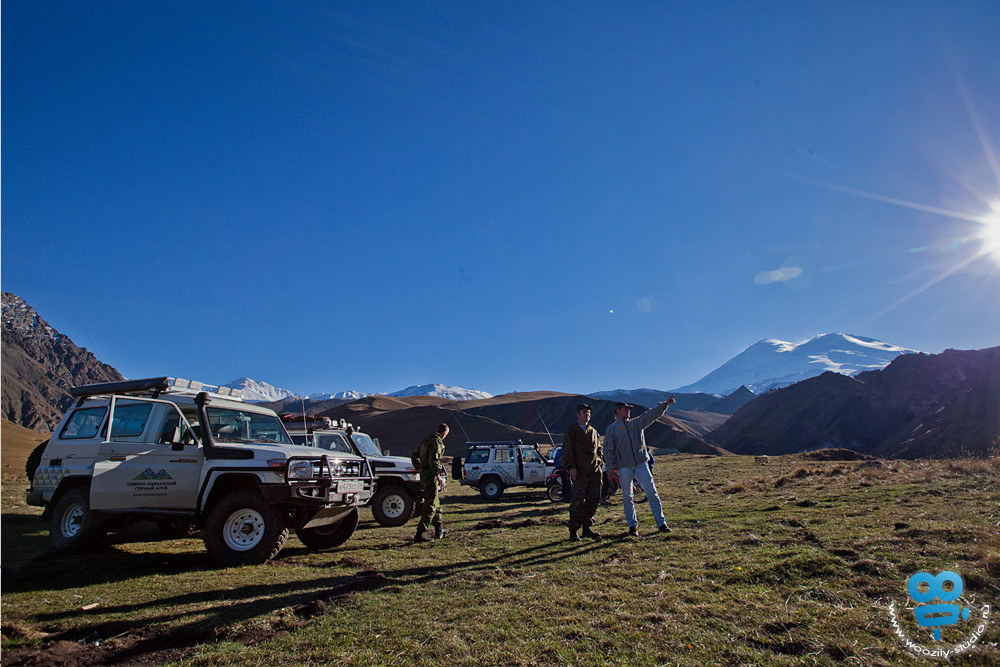
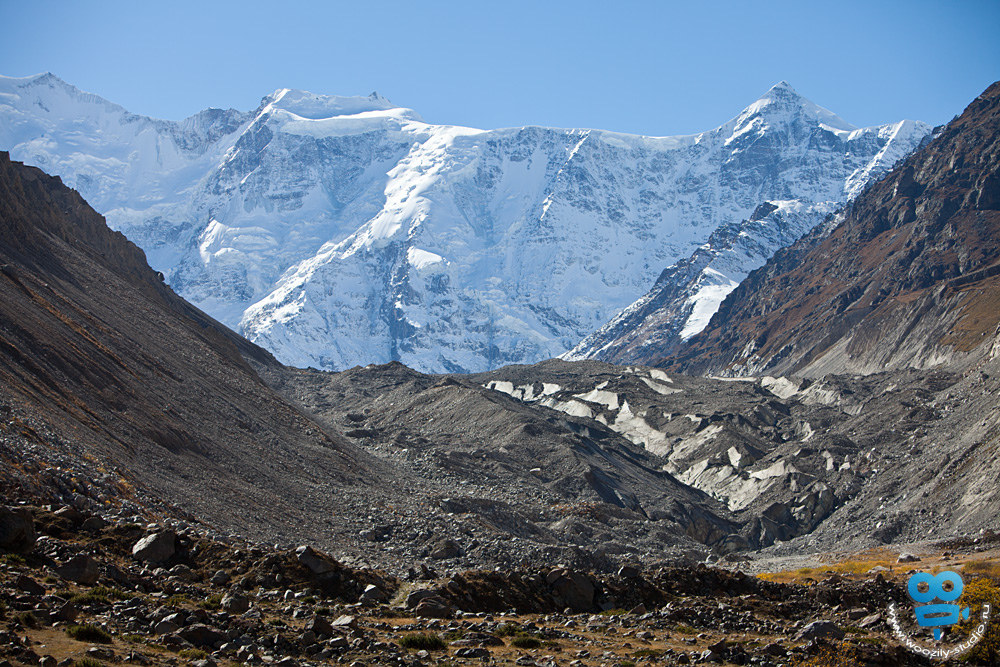
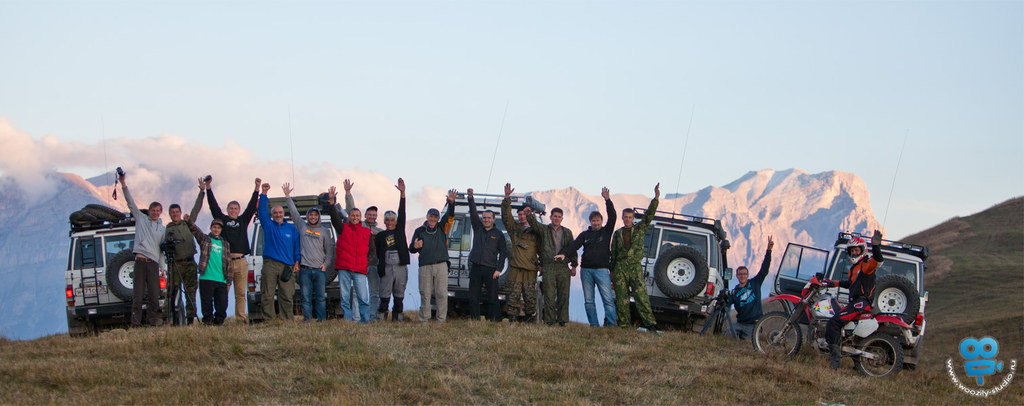
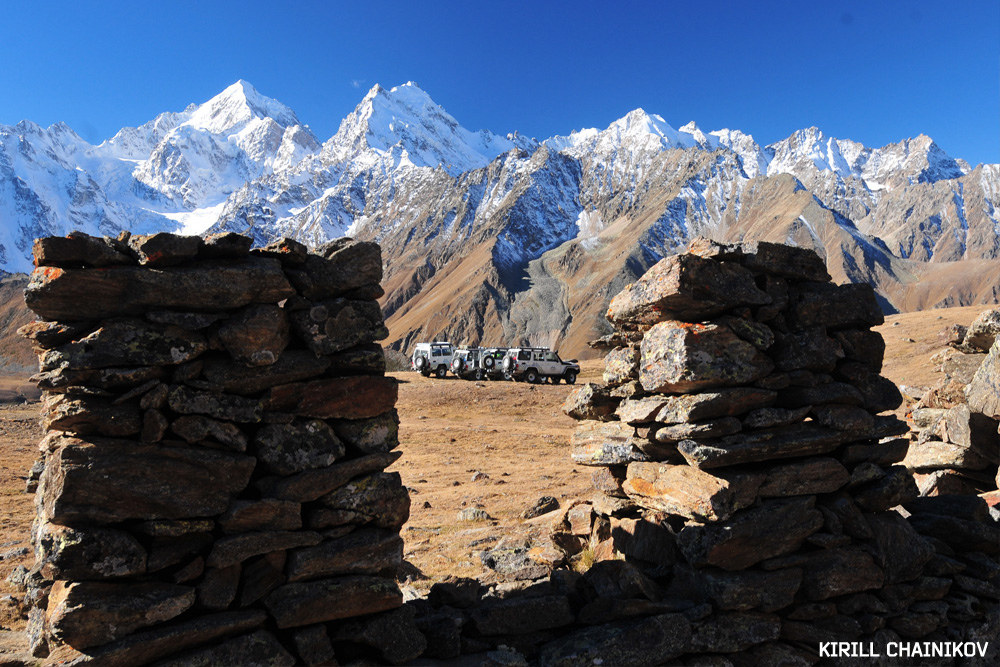
The North Caucasian Mountain Club - is one of the organizations created by the North Caucasus Development Corporation. Its staff has organized the past autumn research and promotional jeep tours along so-called Alanian way. Alanian way - is, roughly speaking, a system of roads in a depression between the Lateral and Rocky ridges of the Caucasus Mountains. At different times, this communication system had known periods of revival and oblivion. If the project of system of mountain resorts in theNorth Caucasuswill become a reality, there must be laid normal roads. In the meantime, you can enjoy the pleasures of jeep adventure tourism. Route, by and large, can be maid from somewhere Gunib (Dagestan) to Adler (Black Sea), but now it is about standardizing of the way from Elbrus to Kazbek (central part). This year, journalists and representatives of tourism companies were invited in the tour.
For a short report on the trip from Alexei Orlov, please visit a site of Action Studio «WOOZILY» (un Russian)
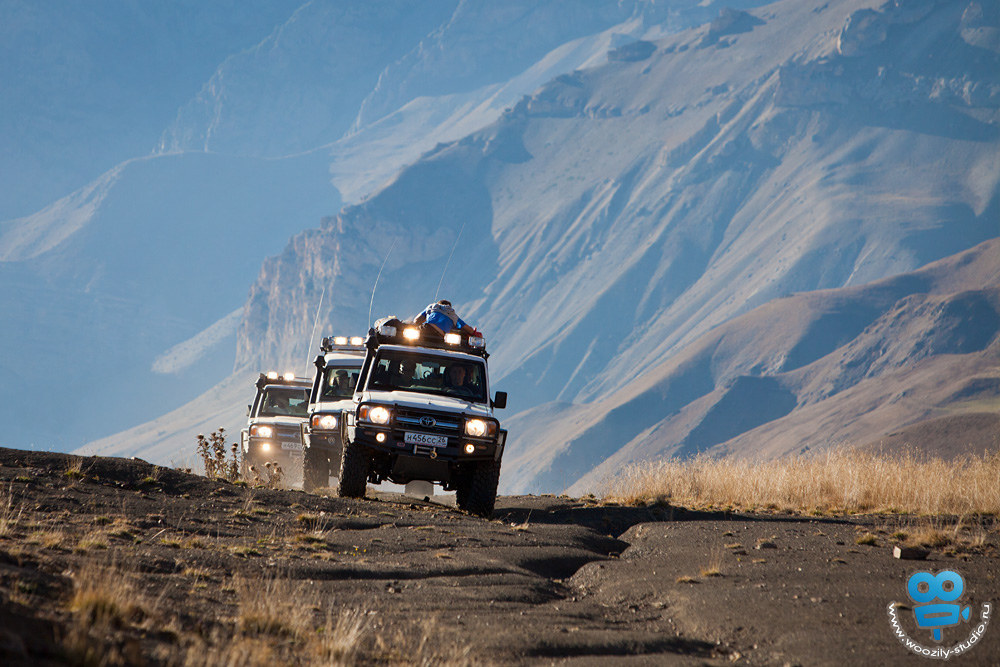
During this trip some outstanding images of the Caucasus were made. Photos here:
http://www.flickr.com/photos/woozily/

Studio «WOOZILY» promises for the New Year full version of a film aboutAlanian Way. While you can watch a trailer:
More about development of theNorth Caucasus. Construction of a multipurpose center near theairportofMineralny Vody. You could see the Director General of the North Caucasus Development Corporation Anton Pak.
Anton Pak’s Interview to TV ChannelRussia24
Site of the North Caucasus Development Corporation
Missionand objectives
The North Caucasus Development Corporation (NCDC) was established in 2010 to develop the investment environment in the North Caucasus Federal District (NCFD) by attracting investors and participating in investment projects in the district.
Our mission is to create a successful investment business to stimulate the economic development of theNorth Caucasusregion.
Our top priorities are to support the implementation of the government development program for the NCFD, raise investment for the district and create new jobs.
The economic potential of the district, which is based on its geographic location, its favorable climate and its natural and human resources – along with the government’s long-term strategic regional interests – create a platform for social and economic development as well as growing investment opportunities.
The Corporation has the following objectives for 2011-2015:
- support at least 120 investment projects in the NCFD
- build its own investment portfolio consisting of 30-40 projects
- raise at least RUB70bn in private investment (both debt and equity), which will create up to 35,000 new jobs
To achieve these objectives we are developing our investment and advisory business.
The Corporation is a brand-new structure for theNorth Caucasusdistrict that combines the interests of domestic and international investors on the one hand, and government authorities on the other hand, in order to guarantee efficient project implementation and increase return on investments in the district.


Washington Post: Russia backs resorts to stem terrorism
Elbrus.
ARKHYZ,Russia— After years of trying to suppress religious and ethnic tensions in its southwestern mountains with guns and troops, Russia is offering new incentives to combat unrest and terrorism: ski slopes and sandy beaches. The ...
ARKHYZ,Russia— After years of trying to suppress religious and ethnic tensions in its southwestern mountains with guns and troops, Russia is offering new incentives to combat unrest and terrorism: ski slopes and sandy beaches.
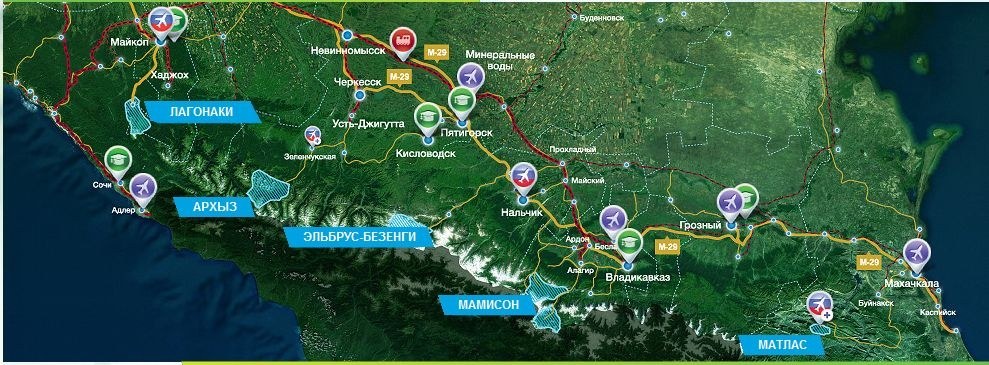
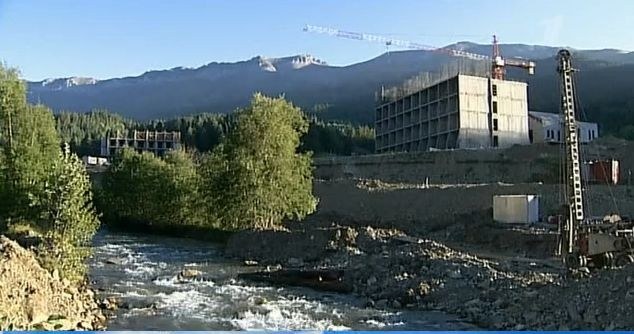
The idea is to bring jobs and prospects to the people of the North Caucasus, where Islamic fundamentalism and separatist aspirations have resulted in death and violence in the region’s mountains and a thousand miles away inMoscow, the target of suicide bomber attacks. The vehicle is an $18 billion plan for seven ski resorts scattered through the mountains and three beach developments costing $4.6 billion on the Caspian Sea.
The landscape here is awe-inspiringly beautiful, nearly everyone agrees, and economic development is vital to long-term peace. Then skepticism sets in. Will tourists feel safe? So far this year, 574 violent deaths have been reported in the North Caucasus. Last year, terrorists killed three Russian tourists near Mount Elbrus, at 18,510 feet Europe’s tallest mountain, where a small ski area has operated for years.
Much of the answer probably depends on the success of the 2014 Winter Olympics, which Russiais hosting in Sochi, on the Black Sea to the west. Islamists and grievance-bearing ethnic groups could attempt disruptions. Circassians, for one, want Russia to acknowledge czarist -era genocide against them in Sochi. Officials are counting on a well-run Games to stir up interest in Russian skiing and reassure vacationers.
The beach resorts would lie in the predominantly Muslim region of Dagestan, where police and militants regularly exchange gunfire. In July, a bomb was found on the beach in Makhachkala, the region’s capital, but was defused before it exploded. The attack came two years after another bomb maimed a woman on the same beach.
Russian leaders, from Vladimir Putin on down, support increased tourism and have allotted the government-sponsored Northern Caucasus Resorts $2 billion to begin development and seek investors. Foreign experts have been brought in to help, including Gernot Leitner, an energetic Austrian architect, skier and sports professional who played on the Austrian national volleyball team and spent eight years on the beach volleyball circuit.
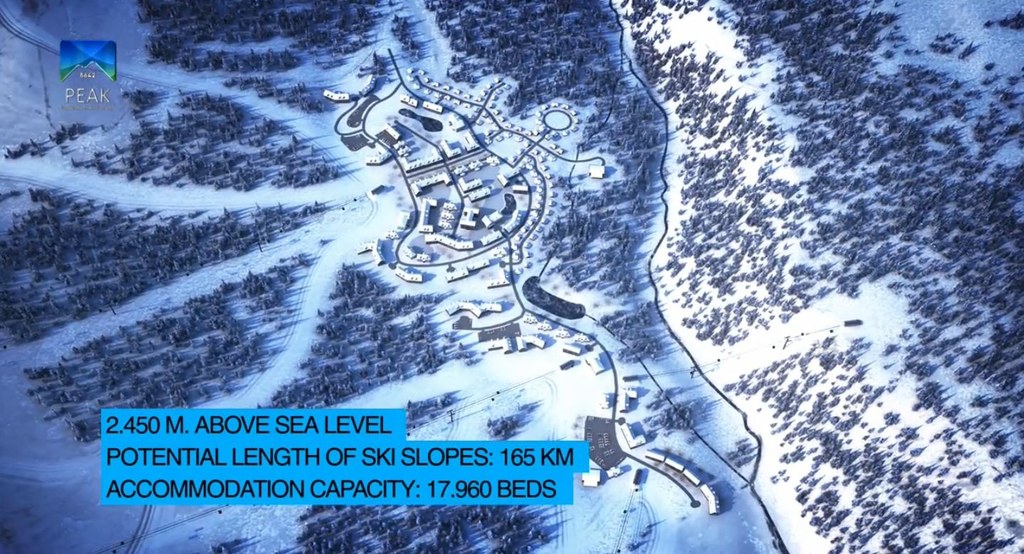
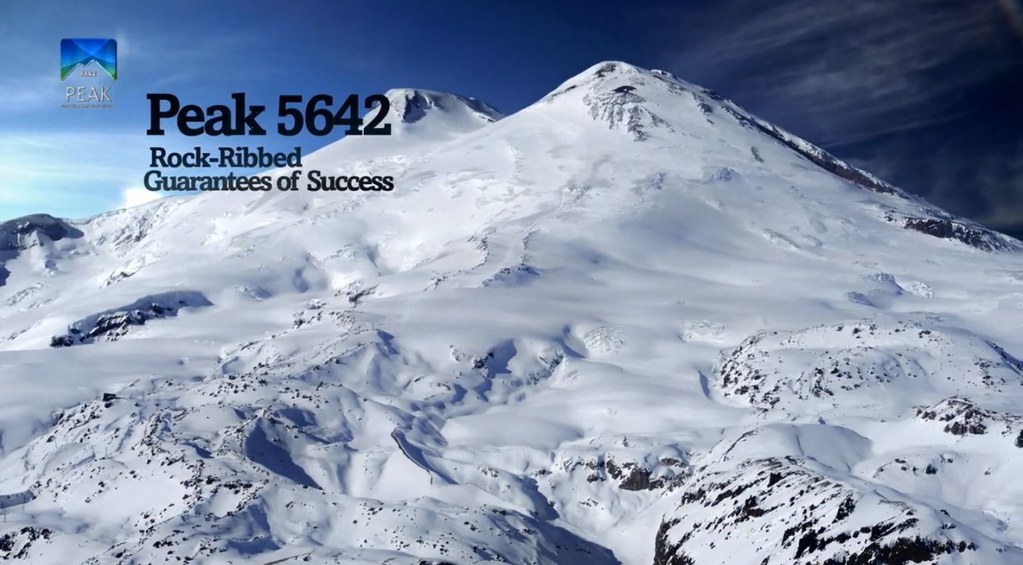
“Only the Rocky Mountains are comparable with the North Caucasus,” said Leitner, who has skied for days on end in the region to select trails and sites for hotels and chalets. He was referring to the geography, not the infrastructure. Roads are narrow and rutted, hotels few. “It’s going to be nice. I believe in it.”
The resorts will take several years to build — roads, power grids and sewers have to be put in, airports constructed or expanded, and workers trained in the tourist business. Supply chains are non existent. But Leitner, chief executive of Master concept Consultants, said Russia will be 20 percent middle class by 2020.
“That means 30 million people with money to spend on vacations,” he said.
Farmland to ski country?
The nearest airport to Arkhyz is Mineralnye Vody, about 125 miles away on roads that wind through mostly Muslim villages and some Christian, where cows or herds of horses stop traffic in the evening as they return from grazing. In the last days of fall, elderly women sit outside the low brick or stone walls that surround their houses, soaking the last of the sun’s warm rays into their bones. The wood is chopped, the hay gathered as winter approaches. Along the roadside, people sell pumpkins, jars of honey, canned berries and pickled mushrooms and a thick mint-and-pine-infused syrup said to ward off the flu.
Leitner foresees many miles of slopes and trails, thousands of beds in hotels and cottages, supported by a newly created supply chain of thriving small businesses. And skiing, fabulous skiing, with golf in the summer.
“The good spots will be better than the best spots in theAlps,” he said. “It’s hard to say that as an Austrian, but it’s true.”
“All the resorts are in special economic zones, with special rights, so maybe it’s easier to control the flows of money,” he said. “We’re talking about a national project. When all the big guys are on board, things usually work in Russia.”
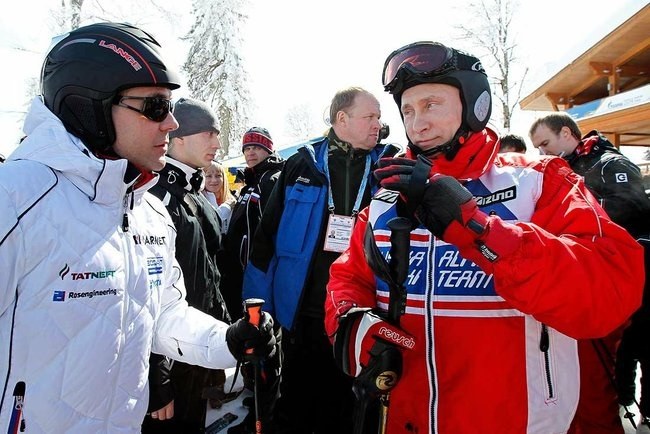
As the resorts develop, the lives of people here will improve, said Akhmed Bilalov, chairman of the board of the Northern Caucasus Resorts and for the last year a senator inRussia’s upper house of parliament. He predicts that as many as 300,000 jobs will be created eventually, directly and indirectly.
“That’s what provides security,” he said.
Alexei Malashenko, an expert on the North Caucasus at theCarnegieMoscowCenter, is dubious.
“If I wanted to go to skiing,” he said, “I would go toAustria.”
Malashenko said Arkhyz, in Karachay-Cherkessia, is quieter than much of the region. But his friends go abroad because vacations are less expensive than inRussiaand service is better. Corruption, he predicted, would raise prices here. And it will be a huge challenge to train historic traders as workers in a new service industry.
Big plans, uncertain reality
Security has been improving —Russia’s National Anti-Terrorism Committee said in October that the rate of crime classified as terrorism has been declining, from 1,030 incidents in 2009 to 365 last year.
Acknowledging that progress, the International Crisis Group, an independent organization dedicated to conflict resolution, said in a major report in October that the region still needs a concerted strategy — improvement of rule of law and governance, along with the necessary economic development.
Malashenko agrees, but is pessimistic that Moscowcan provide that.
“It’s a piece of Russia,” he said. “I can’t imagine doing that in the Caucasus without doing it in all of Russia. Eliminating corruption is impossible because corruption comes from Moscow, and there is certain mutual understanding between corrupt officials in Moscowand their brothers in the Caucasus.”
Although Arkhyz appears bucolic and unthreatening, journalists touring the building site recently were unsettled by a heavy show of security. Men wearing uniforms of the Ministry of Emergency Situations went up the ski lift first and waited at the top until reporters were safely on the ground. Several other burly men in camouflage fanned out, scanning the perimeter, as the visitors walked the grounds. A police escort led the journalists’ buses back to the airport.
“Come, don’t be afraid,” said Rashid Temrezov, head of the Karachay-Cherkessia region. “I’ll guide you myself. Many people come here and no one bothers them.”
The Caucasus are well-known for extraordinary hospitality. Temrezov and a resaturant owner had a sheep killed for the reporters’ lunch. “It was alive just a few hours ago,” the restaurateur said cheerfully as the carcass turned on a spit.
Maybe, Malashenko said, he’s too pessimistic. But Russiahas had many big plans for the Caucasus.
“And what is the result? The same corruption, the same unemployment, the same resistance,” he said. “It’s a problem. It’s a problem forever.”
By Kathy Lally, Published: November 5
Mountain guides of Russia gathered at Ski Salon
Everest.
Board meeting of the Russian Association of Mountain Guides took place Nov. 2 in the Gostiny Dvor, in the Ski Salon. It still was rather a monologue of the Board with the elements of discussion with community guides. Noisy area of Ski Salon ...
Board meeting of the Russian Association of Mountain Guides took place Nov. 2 in the Gostiny Dvor, in the Ski Salon. It still was rather a monologue of the Board with the elements of discussion with community guides. Noisy area of Ski Salon did not promote long conversation, they were put off for another time.
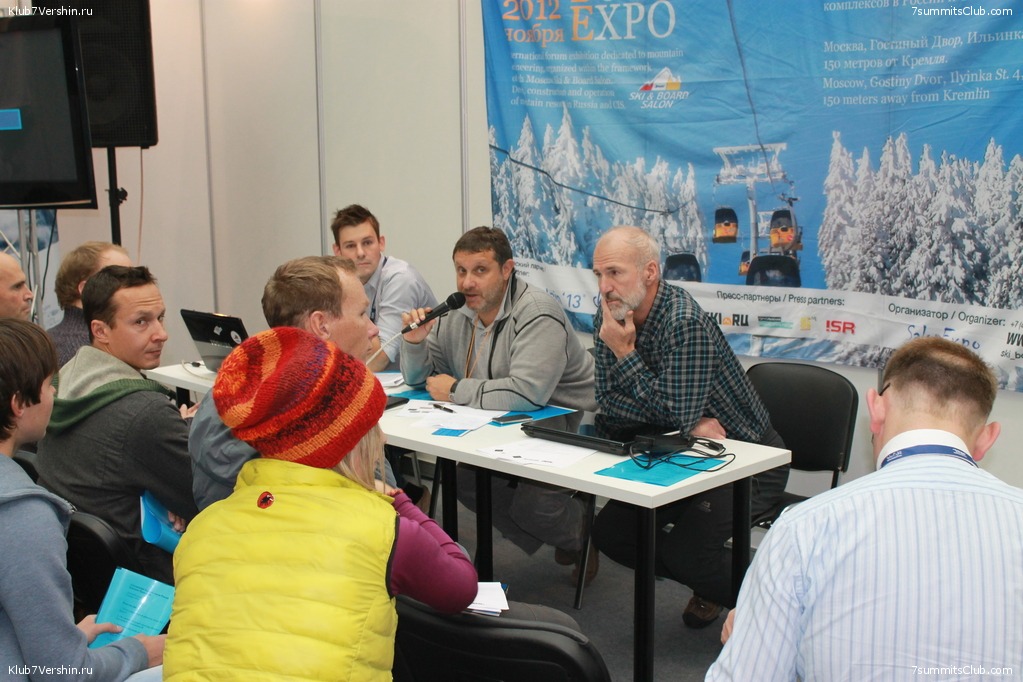
Declared program was generally fulfilled:
1. Report on the results of 2012. Zon-Zam S. Bryk R.
2. Discussion on the future structure of the educational modules of School. Shustrov A., M. Balakhovsky
3. Training programs for ages guides. Shustrov A.
4. Financial report on the follow-up in 2012. Bryk R.
5. Information about membership fees. Bryk R.
6. School plans for 2013.
7. Partnership performance: RED FOX, GRT, Petzl.
Roman Bryk - executive manager of the Russian Association of Mountain Guides
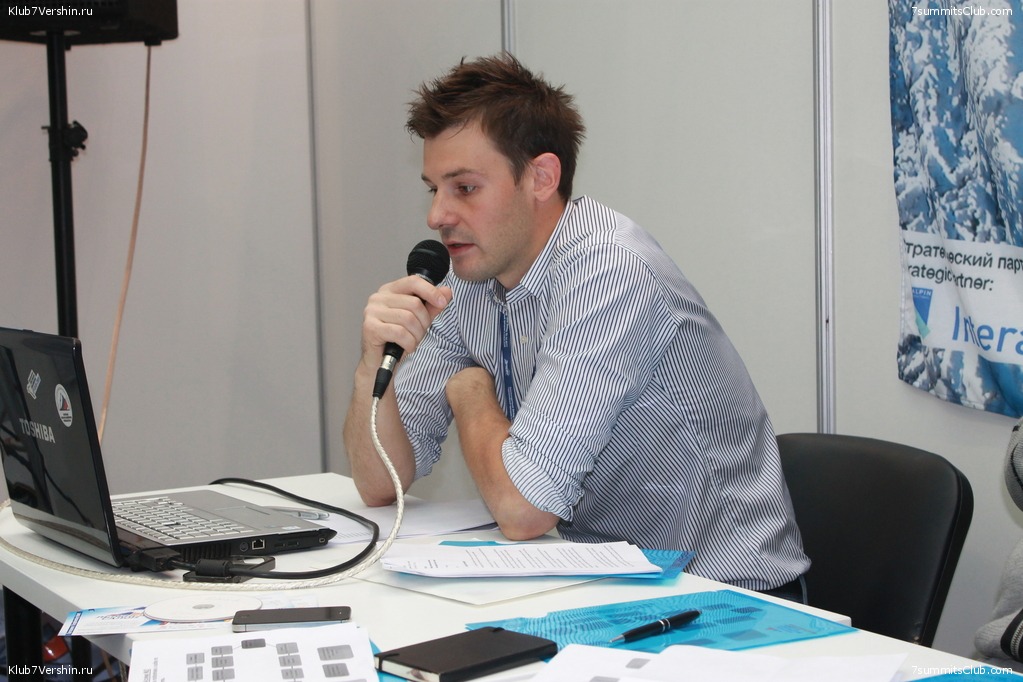
The 7 Summits Club is one of the initiators and sponsors of the Russian Association of Mountain Guides. At the meeting of our organization was represented by Denis Savelyev.
President of the Association Sergei Zon-Zam led the meeting. He spoke specifically and clearly, joking, and during the conversation led jokes in a serious direction. It became clear that Roman Bryk as a manager does not receive money from the Association. And his work is sponsored by FAR.
Budget of the Association is formed mainly thanks of sponsors of Gortex and Red Fox. The main item of expenditure - is payment of Canadians Lecturers. The first period of the Association can be called a "golden age", because we made a lot in spite of the predictions of the pessimists.
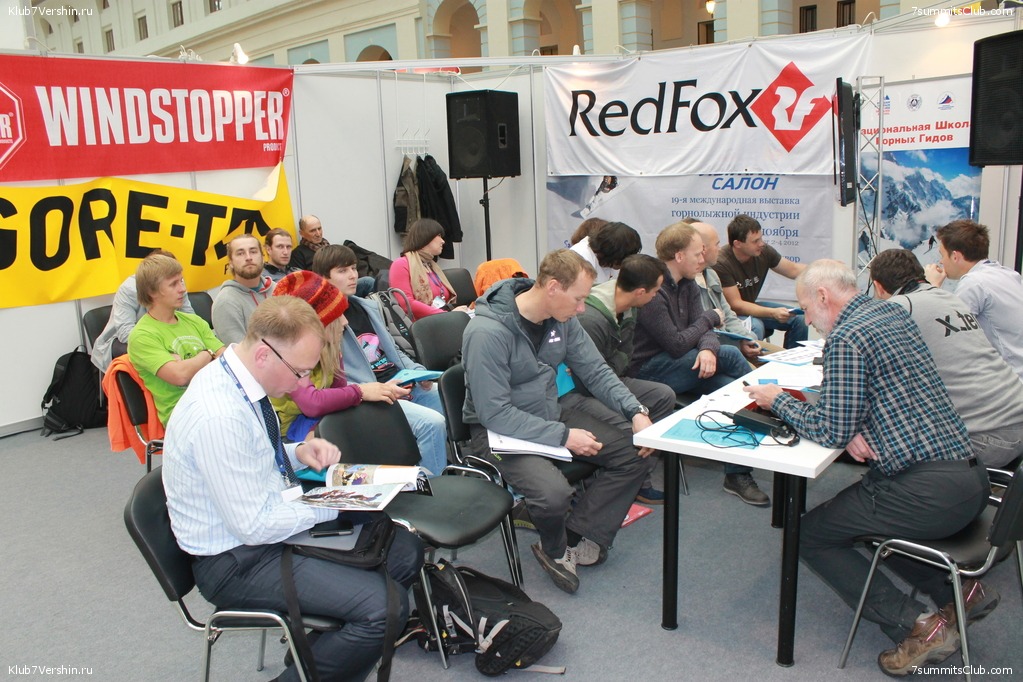
At the meeting of the Association of Mountain Guides Russia gathered as members of the first set, which included Kirill Anisimov (Elbrus), Maxim Balakhovsky (Kamchatka), Nikolai Polyakov (Krasnaya Polyana), Vitaly Ilyinykh (Moscow), Vladimir Gonchar (Elbrus), and members of the School the second set of names are also well known to all, it's best riders and guides of Russia, such as Victor Zakharin (Kamchatka), Anna Khankevich (Moscow), Peter Yastrebkov (Moscow), Vitaly Stegno (Stavropol Territory).
At the meeting the guides discussed the structure of educational modules and plans for the future of the School Guides for 2013
We congratulate Andrey Podolyan with finishing of the program Seven Summits
Vinson.
Member of the 7 Summits Club, our good friend Andrey Podolyan climbed Mount Kosciuszko almost simultaneously with the team of "Alpari on top of the world." This was his crowning ascent program 7 Summits. 7 Summits Club congratulates Andrey ...
Member of the 7 Summits Club, our good friend Andrey Podolyan climbed Mount Kosciuszko almost simultaneously with the team of "Alpari on top of the world." This was his crowning ascent program 7 Summits. 7 Summits Club congratulates Andrey and wishes new heights! Bravo!
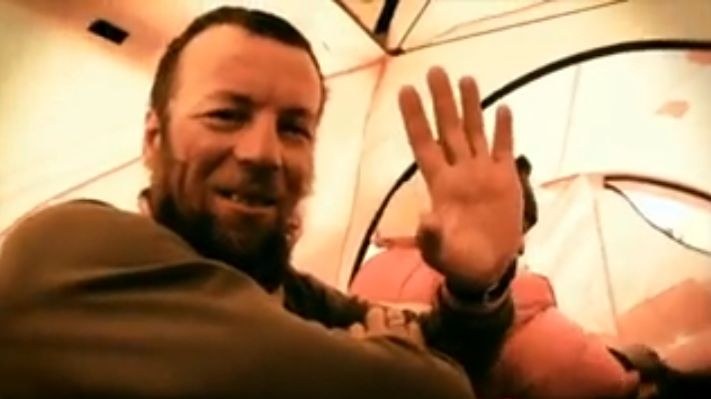
Seven Summits of Andrey Podolyan:
Kilimanjaro, September 5, 2009
Aconcagua, February 11, 2010
Elbrus, August 1, 2010
Vinson, 23 December 2010
Everest, May 20, 2011
McKinley, July 5, 2012
Kosciuszko, 05 November 2012.
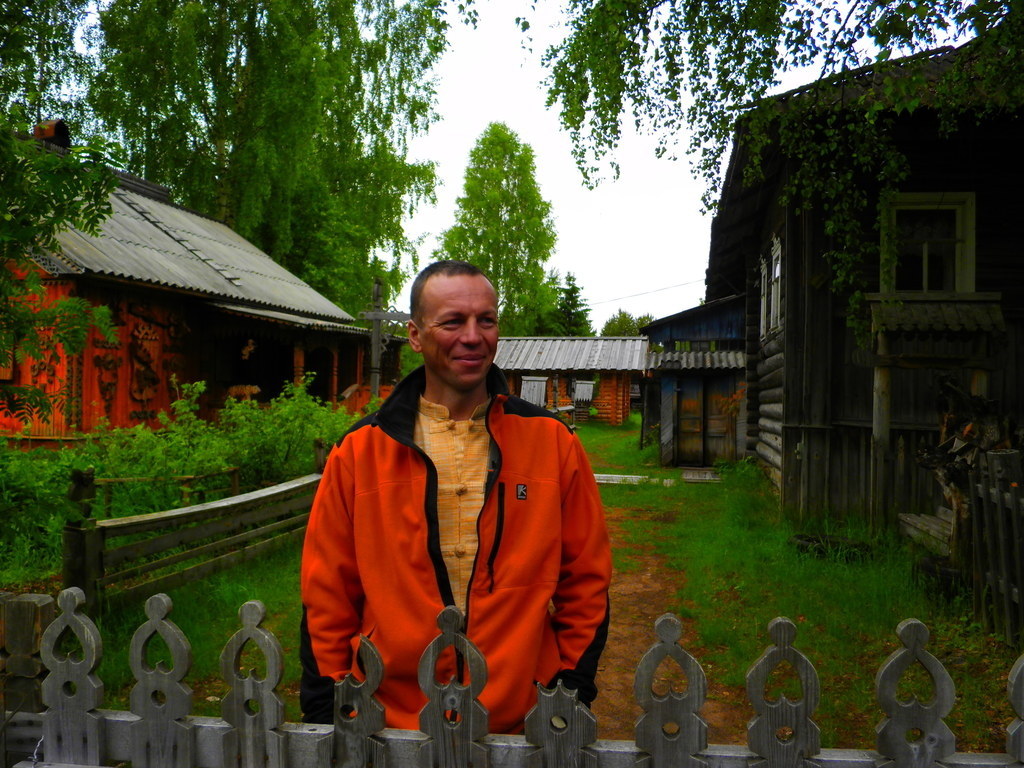
Everest 2011 www.vidgeversa.ru
And also:
Communism Peak, August 18, 2012
KorjenevskayaPeak, August 10, 2012
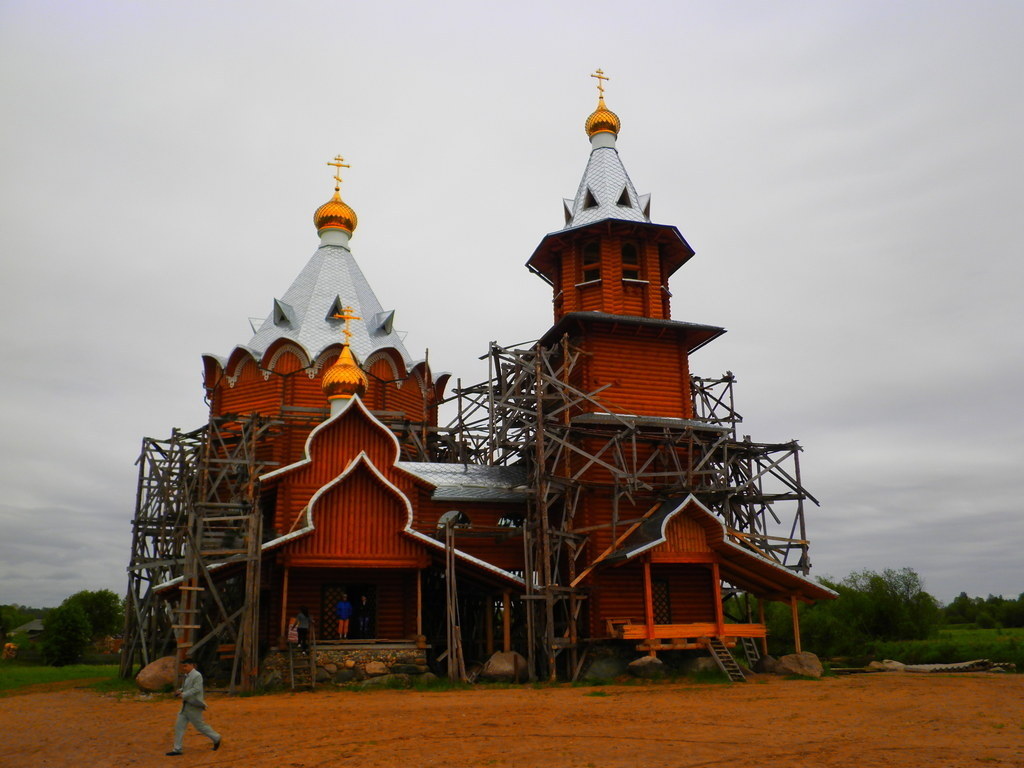
Andrey Podolyanu 40. He lives in Velsk,Arkhangels kregion. He was born and grew up in this area in the north of Russia. Andrey is one of the most successful businessmen in the area. He paid much attention to charity, built a church, built sport hill and did a lot of other good things. Andrey was a paratrooper in the Army, he is fond of hot-air balloons. Andrey now has the biggest balloon in Russia.
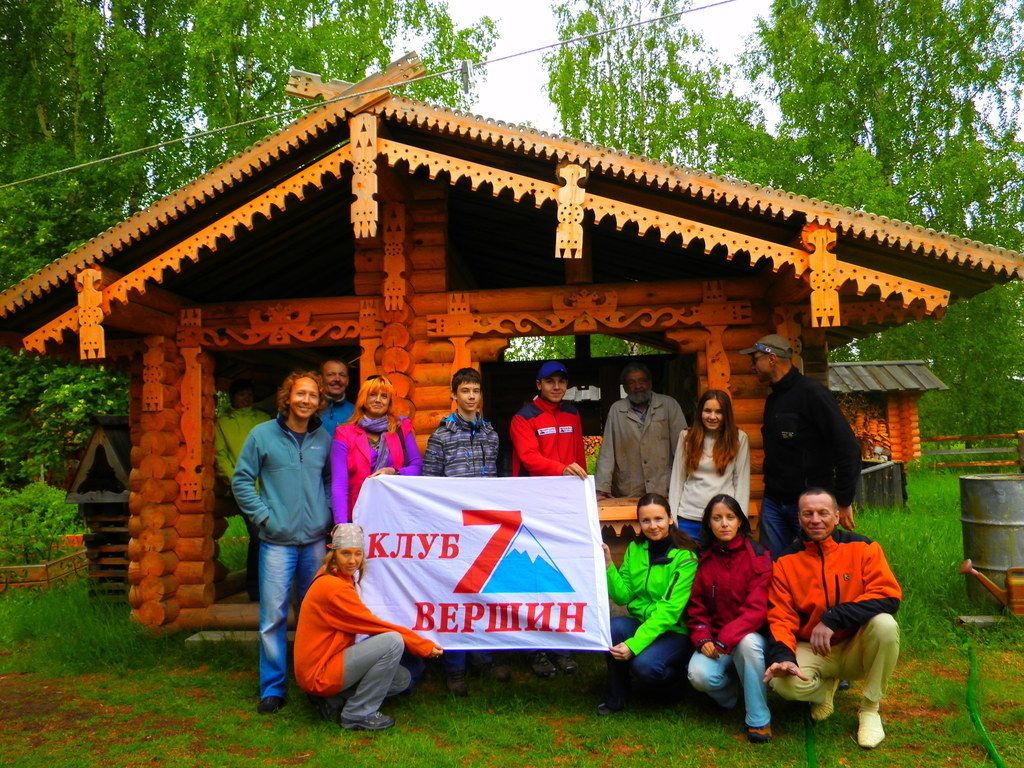
Employees trip of 7 Summits Club in Velsk, to visit Andrey Podolyanu. Photography.
https://7vershin.ru/news/all/item_2438/
Climbing the Seven Summits: Up and down the world's highest peaks
McKinley.
By Terry Wood. Special to The SeattleTimes About. Mike Hamill is a professional mountain guide, writer, and photographer. He regularly leads expeditions to the mountains of the Seven Summits, among others, and has climbed all ...
By Terry Wood. Special to The SeattleTimes
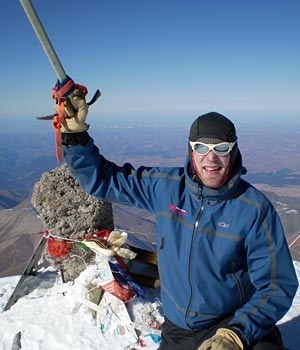
About. Mike Hamill is a professional mountain guide, writer, and photographer. He regularly leads expeditions to the mountains of the Seven Summits, among others, and has climbed all of the original Seven Summits at least four times, some as many as twenty. He has climbed them all in the course of one year several times, finishing them in 2008 in 220 days, the tenth fastest time to date. Mike was featured in the Discovery Channel’s television production entitled Everest: Beyond the Limits.
Mike has been guiding for more than a decade and callsSeattlehome when not on the road. He began his climbing career on the steep rock and ice of New England andNew YorkStatewhile obtaining a bachelor of science from St. Lawrence University inCanton,New York. He hails originally fromHanover,New Hampshire, andBridgton,Maine.
http://climbingthesevensummits.com/
Mike Hamill is part of an exclusive club, one of about 350 people who have climbed the highest peaks on all seven continents.
Hamill, 35 — a Maine native now with a West Seattle home address — has stood on top of each summit at least four times: four ascents of Mount Everest (29,035 feet), nine of Alaska's Denali (20,320 feet) and 19 ascents of Argentina's Mount Aconcagua (22,841 feet).
Figuring he knows the territory, Hamill has written "Climbing the Seven Summits" (The Mountaineers Books, 352 pp., $29.95), which outlines the details involved in reaching each continental high point, from Australia's Mount Kosciuszko (7,313 feet) to Antarctica's icy 16,050-foot Vinson Massif.
Hamill actually describes eight peaks, since some argue thatIndonesia's 16,024-foot Carstensz Pyramid, 60-plus miles off Australia's north coast (but part of the same continental shelf), is a preferred alternative to Kosciuszko. His book devotes a chapter to that debate alone.
A guide for International Mountain Guides inAshford,Wash., Hamill fielded a few questions in advance of his Sunday appearance at Wallingford's Wide World Books & Maps:
Q: Which summits stand out to you?
A: The two climbs I enjoy the most are Vinson Massif andDenali. Vinson is a truly unique experience. The remoteness and vastness of the continent are like nowhere else on Earth. The Alaska Range is an incredibly beautiful place, andDenaliis my excuse for getting back there each summer. The people are amazing, and there's such an energy in the summer from the sun never setting.
Of course, there's no feeling like walking down theKhumbuValleyinNepalafter a successfulMount Everestclimb.
Q: Can you pinpoint a common trait among people drawn to this goal?
A: They're goal-oriented, motivated people. They climb for a variety of different reasons, but the common thread is that they all enjoy working hard and attaining a goal that takes a lot of work and tenacity to reach.
Some are serious climbers, while others are people who began pursuing climbing to see the world and experience unique cultures. I've climbed with people from all walks of life and have had the pleasure of sharing these mountains with some of the most unique people on Earth.
Q: The hardest?
A: Mount Everest, followed by Denali,Aconcagua, Vinson, Carstensz, Elbrus, Kilimanjaro and Kosciuszko, in my opinion.
Q: How about Rainier?
A: I've summited Rainier 43 times and turned back high on the mountain another handful of times due to weather. Climbing Rainieris just about as hard physically as any mountain in the world. There are of course exceptions, like summit day on Mount Everest, butRainieris a huge climb and very strenuous even for fit guides.
The big difference is that climbs like Denali, Vinson, Aconcagua and Carstensz are much longer and so the effort is sustained over weeks, not two or three days.
Q: Your best tip for anyone contemplating the quest?
A: Start small and work your way up. It's important to get the basics down first. Safety is a big concern, so enrolling in some of the basic snow schools before attempting some of these big peaks is important. Being fit takes you a long way, even if you don't know the skills at first. You can pick those up. Toss a pack on and run upMountSia bunch of times. Fitness is the base to everything in climbing.
Climb Mount Baker,Rainierand other accessible peaks. Then work up to the higher, more technical peaks such as Denali and Mount Everest by climbing the easier of the Seven Summits as well as intermediate mountains such as the Mexican volcanos, in the European Alps and inSouth America.
----------------------------------------------------------------------------------------------
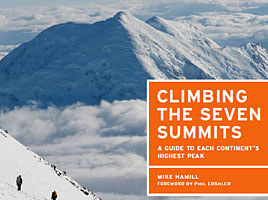
The Book
Mike Hamill’s consummate coverage of the Seven Summits is far more studied and detailed than anything I could have ever written. I feel deeply indebted to him for enabling me to vividly recall, roughly three decades later, each climb and to relive the insightful incidents and many magical moments which Frank Wells and I experienced and shared. Mike’s extraordinary guide will definitely encourage more left-brained, objective realists than usual to participate in the Seven Summits along with the many right-brained, dreamer adventurers who are naturally attracted to taking such giant leaps into the unknown.
— Dick Bass, First Person to Complete the Seven Summits
Watch for the book Climbing The Seven Summits by Mike Hamill to be out in May of 2012, published by The Mountaineers Books.
The Mountaineers Books: www.mountaineersbooks.org
Amazon Books: www.amazon.com
CLIMBING THE SEVEN SUMMITS: A Guide to Each Continents’ Highest Peak
Author: Mike Hamill
Mountaineers Books
352 pages, 8.5″ X 10″, 978-1-59485-648-8
First and only guidebook to climbing all Seven Summits
Full color with 125 photographs and 24 maps including a map for each summit route
Essential information on primary climbing routes and travel logistics for mountaineers, with historical and cultural anecdotes for armchair readers.Aconcagua.Denali. Elbrus. Everest. Kilimanjaro. Kosciuszko. Vinson. To a climber, these mountains are known as the “Seven Summits”* — the highest peaks on each continent. And from Antarctica toAlaska,NepaltoTanzania, each year thousands of climbers from all over the world attempt at least one of them, while a growing number have plans to climb each and every mountain. Drawing on years of experience, veteran Seven Summit mountain guide Mike Hamill describes overall considerations for expedition planning and high-altitude trips, gear recommendations, tips on international travel and logistics, and estimates of financial costs.
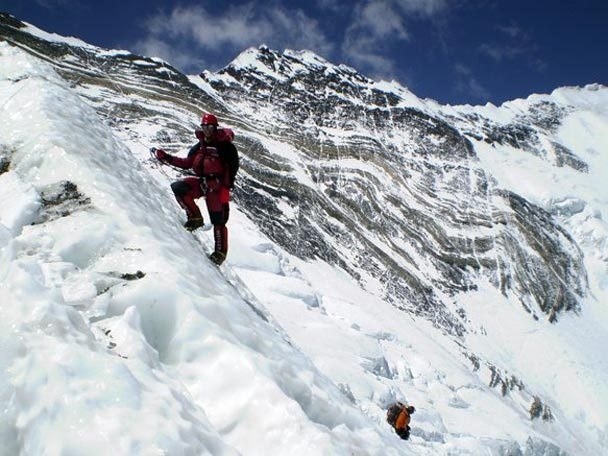
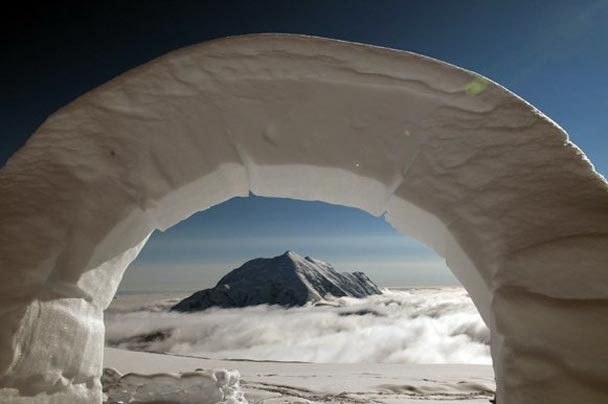
In-depth descriptions of each of the Seven Summits includes a regional map, a map of the primary climbing route, a route overlay on a photo, and a sample climbing itinerary that covers peak-specific technical climbing tips and what to expect on summit day. Throughout Hamill’s descriptions, renowned alpinists offer their own advice: Eric Simonson on Everest, Vern Tejas onDenali, and Melissa Arnot on Kilimanjaro. Hamill also includes the “other” Seven Summit, the Carstensz Pyramid inNew Guinea; climbing facts and figures for each peak; a history of the Seven Summits challenge; and a unique “compare and contrast” chart that reveals how the peaks stack up against each other. From the first steps of trip dreaming, to figuring out gear and plane tickets, to kicking those final, sublime steps up to the snowy top of Denali or Aconcagua — this is the one-and-only authoritative book to guide readers to all of the world’s Seven Summits.
*Within mountaineering circles there is debate over which peaks are considered the official Seven Summits. For the purposes of this guidebook, the Seven Summits are based on the continental model used in Western Europe, theUnited States, andAustralia, also referred to as the ‘Bass list.’
“If you have your sights set on the Seven Summits – the highest point on each continent – you can do no better in print than a copy of Climbing the Seven Summits by Mike hamill (the Mountaineers Books).
Peppered with tips on gear and technique, maps for the major routes and quotes from mountaineer- ing’s greats, it is an excellent reference for those serious about an undertaking that has been achieved by only 350 people.” - Action Asia Magazine

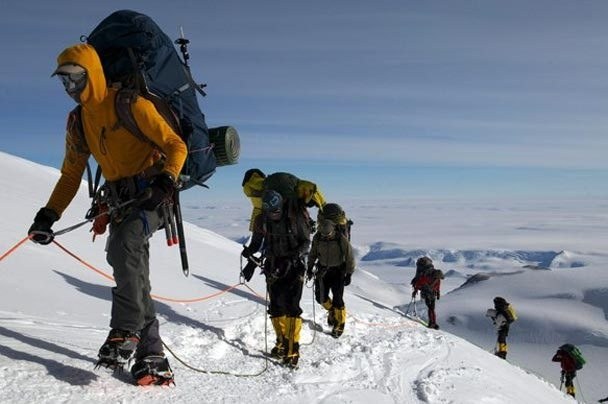
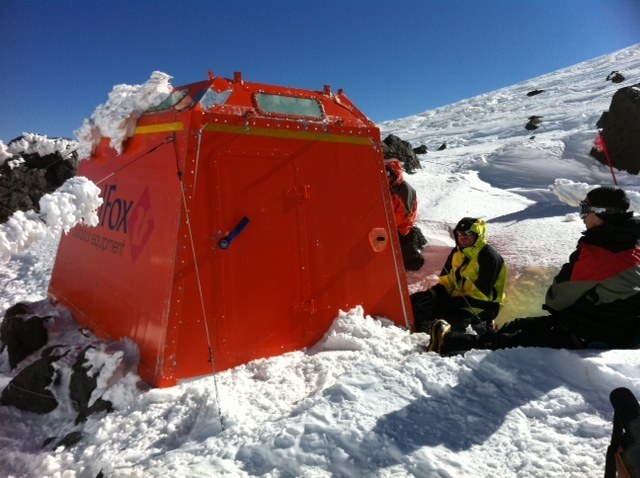
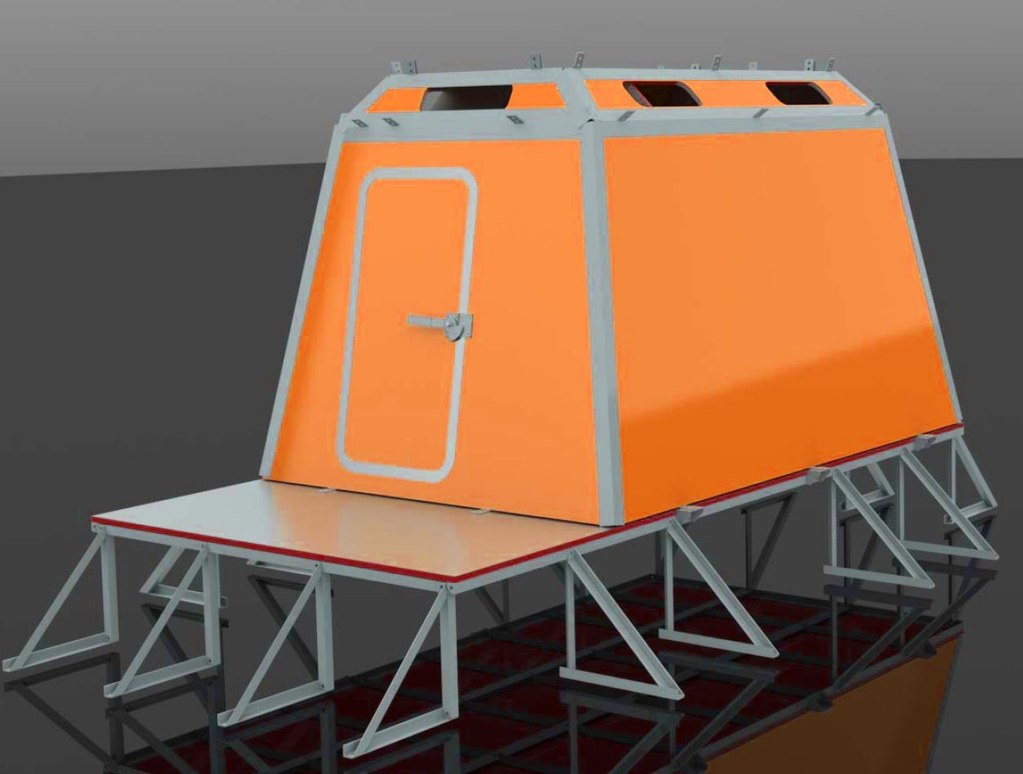
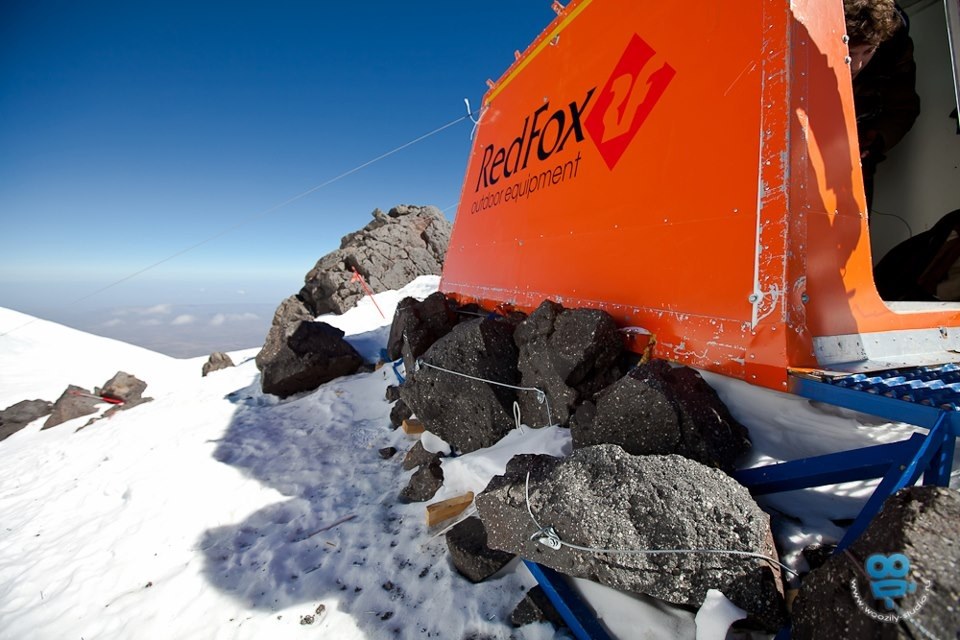
Opening of the rescue shelter "Station 5300 Red Fox" on the saddle of Elbrus
Elbrus.
Mountaineering Federation of Russia together with its partners have successfully completed a unique project for the rescue shelter. Installation of structures was completed in early August, and at the end of September, after months of ...
Mountaineering Federation of Russia together with its partners have successfully completed a unique project for the rescue shelter. Installation of structures was completed in early August, and at the end of September, after months of testing, there was the opening of the station Red Fox 5300. This is the highest mountain refuge inEuropeand the second highest in the world.
The history of the construction of the shelter has been a long and dramatic. In 2007, at the initiative of the Moscow climber Dmitry Guryanov, FAR established a working group to create a rescue shelter. The cause was the tragic death in May 2006 eleven climbers that have fallen into bad weather and cold for a few hours in the region of the saddle of Elbrus.
The first shelter was erected in 2010 but was destroyed in winter by wind.
Only in June 2012, a team of volunteers and rescuers from Elbrus and Ural rescue teams started installation of a new shelter.
This time all the necessary materials and construction were delivered right to the saddle with a helicopter company «Heliaction» (Helicopter (PRO) motion) "pilot Arseniy Boldyrev, and the beginning of August a shelter was erected.
Rescue shelter station «Red Fox 5300" is a non-profit rescue facilities serving volunteers and rescuers.
Shelter is open to all climbers and fans of sports and outdoor activities in the mountains.
The coordinates of the hut, set at the beginning of the rocky ridge that descends from the east to the saddle of Elbrus - right on the trail to the top of the eastern and north and south.
N 43 ° 21 '05.0 "
E 042 ° 26 '53.0 "
Rescue shelter «Red Fox 5300" is only for emergencies. Spending the night in a shelter without the necessary acclimatization can be dangerous.
Builders «Red Fox 5300" Mountaineering Federation of Russia and company Red Fox appeals to all climbers on Mount Elbrus, which have to take shelter:
• Carefully close the two doors (internal and external), it will save us from sweeping snow.
• Clean up after themselves and take away the garbage.
• Use caution when using kerosene stoves and burners: possible poisoning combustion.


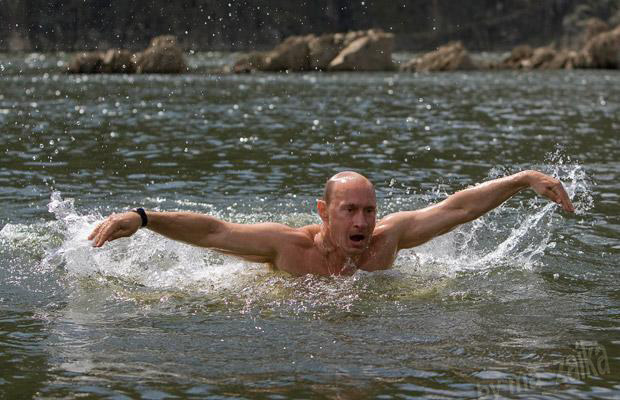
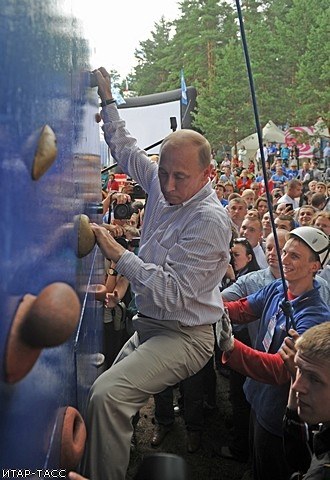
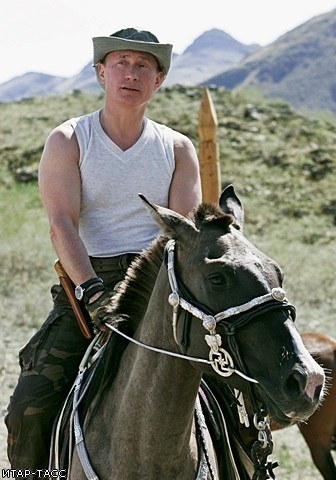
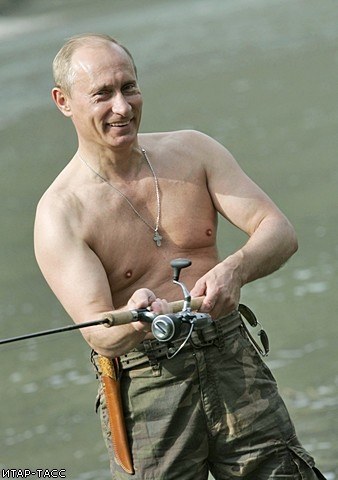
Putin is 60 years old! We are still waiting for his ascent on Elbrus
Everest.
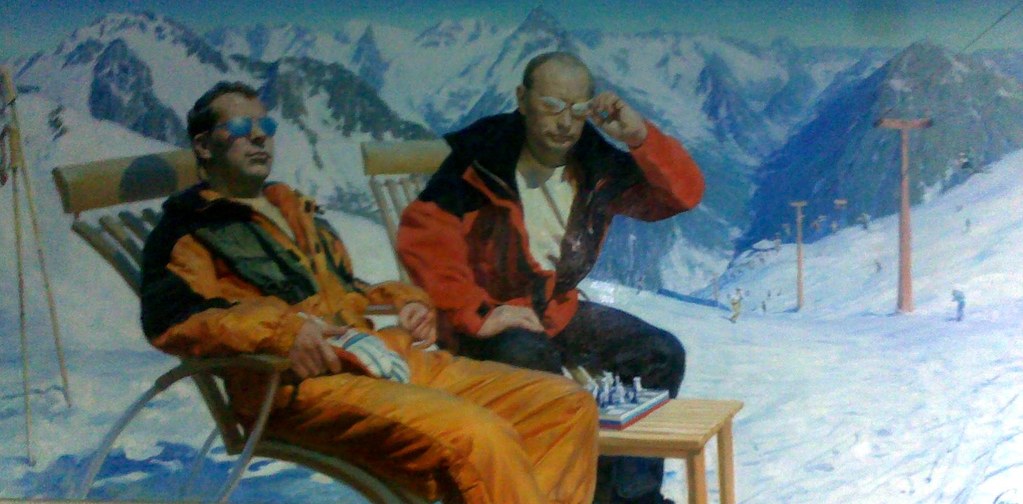
Happy Birthday! We invite Vladimir Putin to climb Elbrus! We have been waiting long time for this event. Climbing the highest peak of the country by the President. Thus, he would have started the program Seven Summits, a vacation by ...
Happy Birthday! We invite Vladimir Putin to climb Elbrus! We have been waiting long time for this event. Climbing the highest peak of the country by the President. Thus, he would have started the program Seven Summits, a vacation by a summit – this is a program for 5 years. Well, seventh, Everest – will be after entering on the well-deserved rest.
By that time, we expect that in the Caucasus there will be built 10 new mountain resort, Sochi Olympics will be a success, the border withGeorgiawill be fully open, we will travel to Europe without visas, we will fly to Kamchatka cheaper than to Turkey.
October 6.
A group of climbers fromNorth Ossetiaclimbed up to one of the unnamed peaks of the Greater Caucasus Range in the region of Digoria. Mountaineers set a portrait of Russian President Vladimir Putin near the top. On this Sunday the chairman Mountaineering Federation of Republic Kazbek Khamitsaev said:
"On the rock wall near the summit we set a portrait of Putin fixed - size four to six meters, made of high quality plastic," .
Khamitsaev also noted that they will prepare a request to give a name "Peak Putin" to this peak … "Interfax".


Party meeting of the 7 Summits Club, dedicated to the birthday of the company
Elbrus.
As usual at the end of September, the 7 Summits Club celebrates the birthday of the company. On this occasion, we invite guests and cover the tables. Alexander Abramov made a short report on the summer season. Lyudmila Korobeshko described ...
As usual at the end of September, the 7 Summits Club celebrates the birthday of the company. On this occasion, we invite guests and cover the tables.
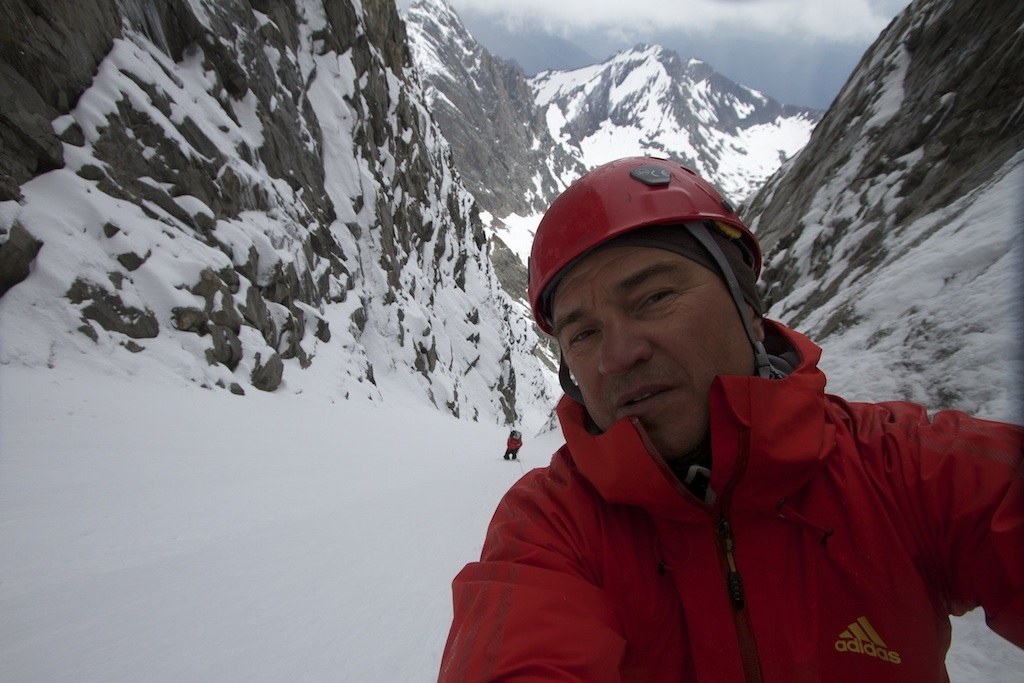
Alexander Abramov made a short report on the summer season. Lyudmila Korobeshko described the course of the program "Alpari on top of the world." The main guest of the evening, Alexander Ruchkin twice went to the scene to show the most exciting footage of his legendary climbs. Alexey Kabanov told about the ascent of theMatterhornwith Denis Savelyev and Roman Gretzky. Arthur Gladyshev with guitar suited song interludes. And of course, of particular interest to the audience called the first report of the climbing team ofMoscow. They climbed a new route on one and the most beautiful and remote mountains of the world -MuztaghTower.
Vladimir Shataev was presented to a guide of the 7 Summits Club Dmitry Ermakov an icon Snow Leopard. And also gave a rare book, published minimum circulation – about the first oxygen-free ascent of Everest.
Alexander Ruchkin, Heroes of Muztag Tower and 7 Summits Club invite all your friends for an evening meeting
Elbrus.
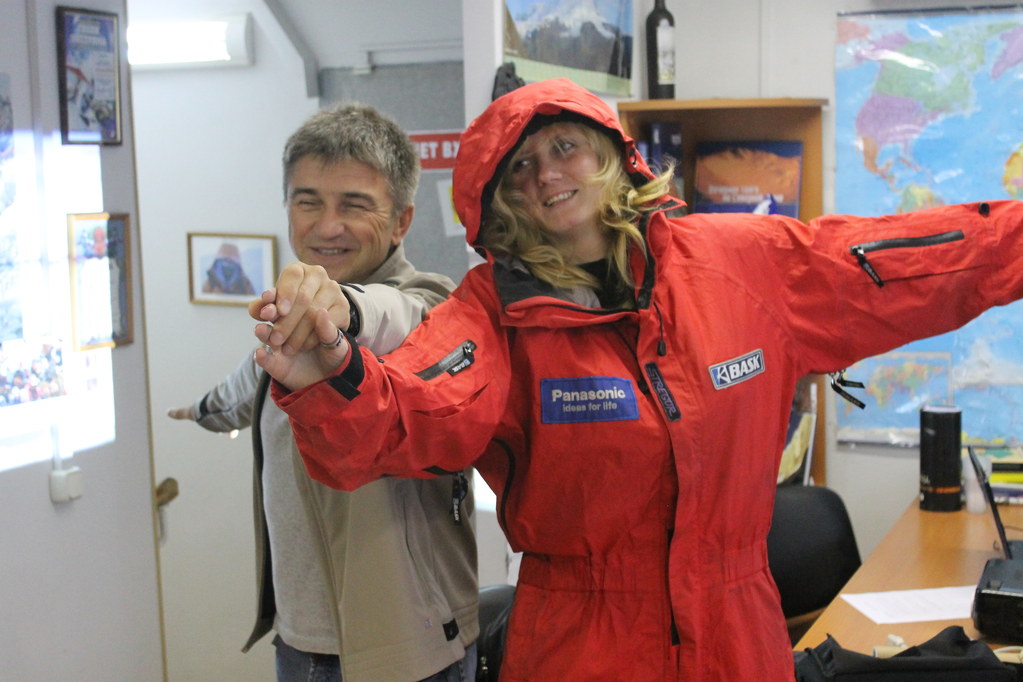
Traditional evening meetings of friends 7 Summits Club will be on 27th of September. It will be focused on the end of the summer season and our birthday. The legendary Russian climber Alexander Ruchkin will act as the chief guest. And for ...
Traditional evening meetings of friends 7 Summits Club will be on 27th of September. It will be focused on the end of the summer season and our birthday. The legendary Russian climber Alexander Ruchkin will act as the chief guest. And for the first time, theMoscow team members will present a new route to the summit of Muztagh Tower. Guides of our Club spent the summer on the mountain routes of the world and they have stories to tell. We will also present our future plans.
As usual in September the 7 Summits Club celebrates another birthday. So we will lay the table and, as usual, you will be a raffle prizes and gifts.
September 27, next Thursday, at 20.00 in the store "Aktivny Otdykh" (Bask) at m.Prospekt World ul.B.Pereyaslavskaya, 7
Alexander Ruchkin
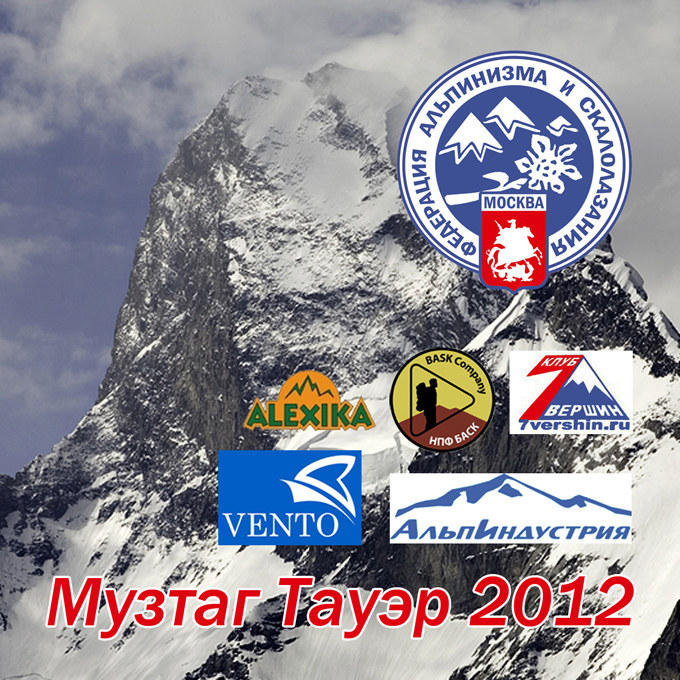
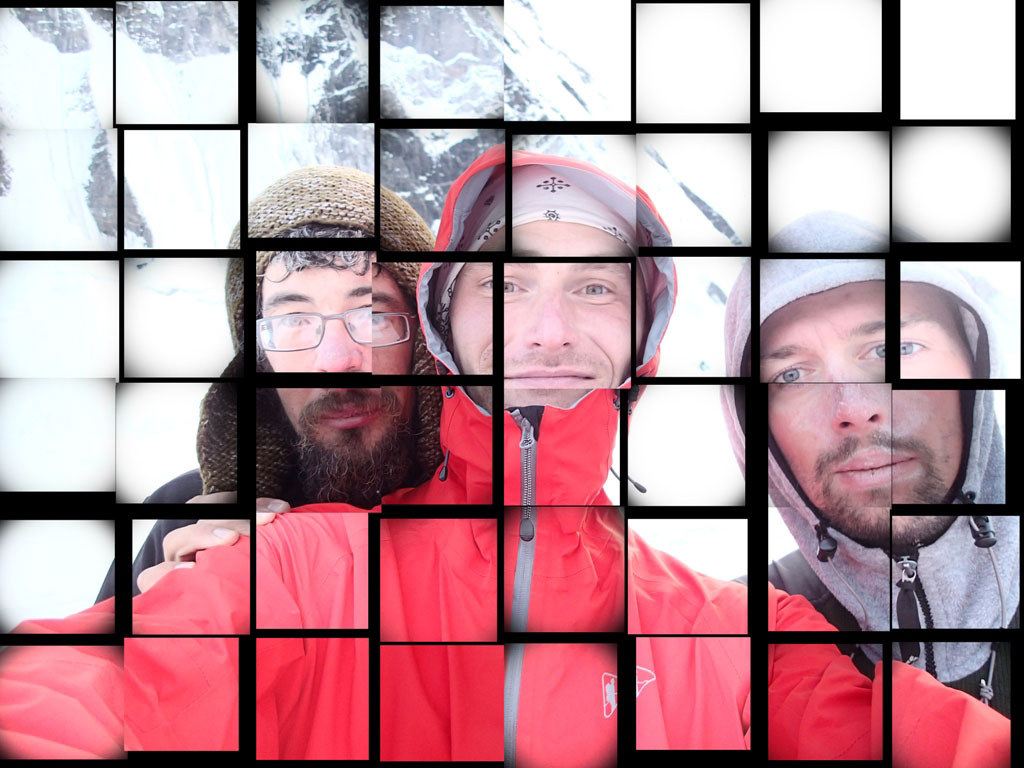
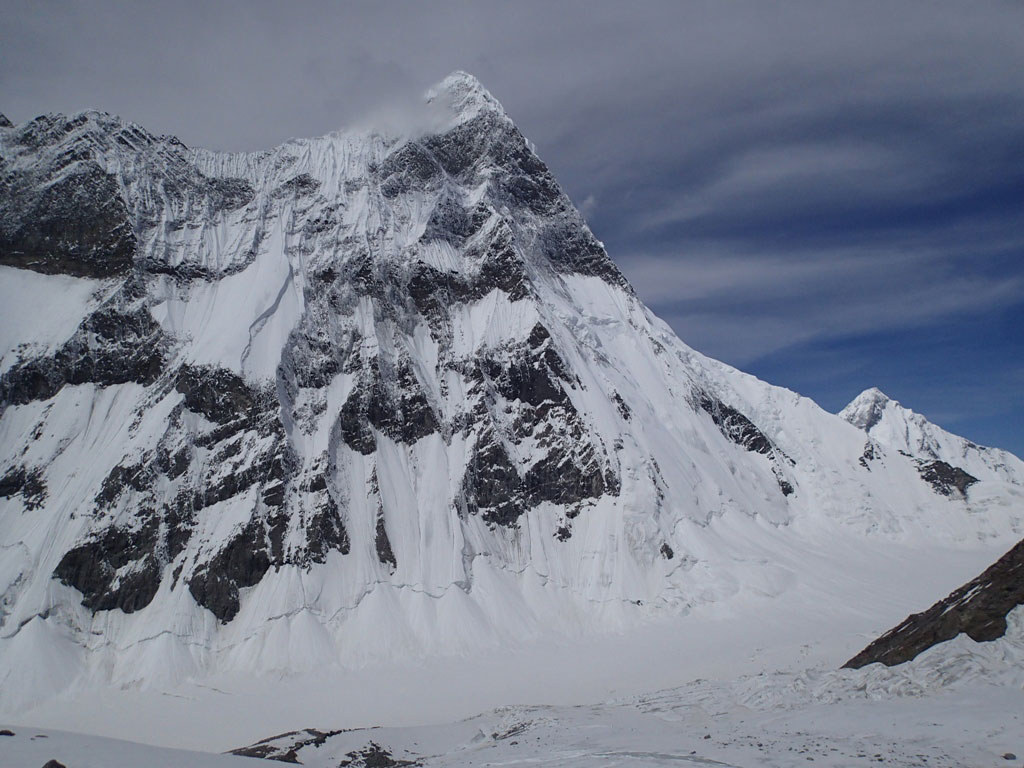
Muztagh Tower and the Moscow Team



Elevated shelter: Mount Elbrus becomes safer place
Elbrus.
Published on Russia Today: 22 September, 2012. Europe’s highest peak, Mount Elbrus, is now a slightly more attractive proposition for climbers as a new rescue cabin has been built in order to help stranded mountaineers.Some would ...
Published on Russia Today: 22 September, 2012. Europe’s highest peak, Mount Elbrus, is now a slightly more attractive proposition for climbers as a new rescue cabin has been built in order to help stranded mountaineers.
Some would argue that it’s technically not in Europe, but at 5642 meters, Russia’s Mount Elbrus is considered by many to be Europe’s highest mountain.
With such a backyard, it’s no wonder Russians have always been avid mountain climbers.
During Soviet times, mountain climbing was actively encouraged and Mount Elbrus was the prize attraction.
But there’s a reason why mountain climbing is considered an extreme sport. Hundreds of people freeze or plummet to their deaths every year, mainly because they are ill-prepared or ill-advised on how to tackle the climb.
Mount Elbrus is no exception, with up to 10 climbers dying annually, which is why a consorted effort was made to install a cabin shelter at the mountain’s summit.
“We constantly have to rescue people from Mount Elbrus,” Aleksey Ovchinnikov, CEO of Russian Mountaineering Federation, told RT. “Around 100,000 mountain climbers from all over visit it every year, and every year people die from bad weather, losing their way, so to have a rescue cabin on hand is really important.”
The process of the entire project was a lengthy one, because it was a voluntary effort, i.e. no sponsors or government grants were used.
“It’s also an enormously difficult task from an engineering point of view,” Ovchinnikov stressed. “There are almost no analogs. It’s the highest construction in Europe and the second highest in the world and to build something like this is always a huge ordeal.”
In 2010, the group managed to complete a different shelter, which was technically the first, but it was blown away by a particularly bad blizzard.
So when two mountain climbers perished in April 2012, with one of the bodies never recovered, Russia’s Mountain Climbing Federation made the construction of another, more durable, shelter cabin one of its top priorities.
Indeed, the interior of the cabin doesn’t leave much to the imagination, with only two horizontal planks for beds and a small table in-between; But when your life is on the line, surely luxury amenities would be the last thing on your mind.
“The cabin was built for emergencies only, not for a full overnight stay,” alpinist Pavel Terekhov explained. “But it allows rescuers to come to a specific point, rather than having to search large areas, and in turn it helps the mountain climbers to, well, survive.”
The new cabin has already come to the rescue of two German mountain climbers and hopefully will assist many others in the future...
Source:
http://rt.com/sport/elbrus-rescue-cabin-ovchinnikov-713/

Alpari-life.ru: ANDREY KHARCHENKO: BECOMING A CLIMBER
Elbrus.
My reasons for making the trip out to Elbrus were fairly simple: to experience something new (climbing), to have the chance to speak with my coworkers in a less formal environment and to enjoy my time off. Looking back, I’d say I did ...
My reasons for making the trip out to Elbrus were fairly simple: to experience something new (climbing), to have the chance to speak with my coworkers in a less formal environment and to enjoy my time off. Looking back, I’d say I did pretty well.
Climbing. Before the trip, I did a ton of research: about Elbrus, about the area, about climbing for professionals and novices. I came to the conclusion that climbing Elbrus would be somewhat analogous to a trip to the store – pretty simple. The travel information I was reading made it sound like it would be a brisk hike; that it wouldn’t require any special physical training.
Things turned out to be completely different from what I had imagined. This was obvious as soon as we began our acclimatization climb to Cheget Peak. At 3,000 meters, breathing is noticeably more difficult and physical burdens become even more difficult to overcome. Even getting to sleep at 2,200 meters during the first couple of nights proved to be a challenge. At 3,800 meters (“The Barrels”), I only managed to get in one night of sound sleep in the three nights we stayed there.
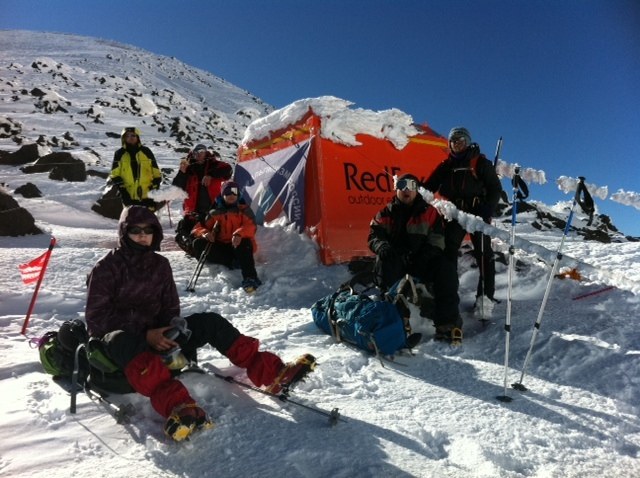
After that, we made an acclimatization climb to the Pastukhova Rocks from camp at The Barrels. The living conditions at the “hotel” there are truly spartan, but it was nice that we had our food prepared for us. A huge “Thank You” goes out to the chefs up there. The acclimatization climb really showed me that our mission would not be easy. Two climbers ended up having to turn back due to health issues.
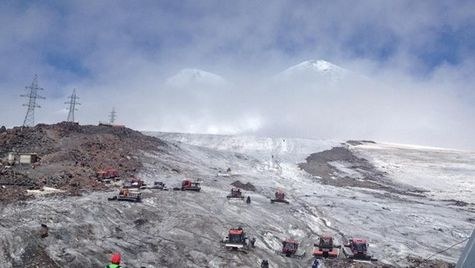
The Big Day. It was tough, even though we had a snowcat take us all the way up to 4,800 meters. We only had 840 meters left to clear vertically to make the summit, but not everyone there managed to reach the highest point in Europe.
I made it to the saddle, or to 5,300 meters. It took me 5 hours to gain 500 meters in elevation. To get a sense of how tough this is, imagine wearing 5 layers of clothing (yeah, you have to do this). After you put on the outer coat, you’ve puffed up to about one and a half times your normal size. Then you have to put on your backpack (about 3 kilograms) and climbing shoes. Then pretend you’re wearing a gas mask, because it’s a lot more difficult to breathe. Now, spend about 5 hours climbing the stairs in a tall building. And this crude simulation doesn’t even include the frost and the gale-force winds, but you should get the picture.
Now you can ask yourself, “Would I have made the summit or not?” You might have. But for me, the saddle was my summit and I turned around after I reached it.
I really have to give it up for the guys who did manage to reach the summit. It wasn’t easy for any of them. You can see that in the pictures. That they managed to do that – we are all really proud of them!
After the climb, I gained a lot of respect for mountain climbers, especially for high-altitude climbers. These are really strong people. I bet they could overcome virtually any obstacle.
The Good Times. The chance to talk to my coworkers in a less formal setting was really great. They all have a good attitude and are real go-getters. It was nice to find that we all pretty much spoke a common language outside of the workplace. I guess that’s because we bump into each other all the time at work. Now I can say with confidence that we are a real team. I’m sure the trust we built in the mountains will carry over into the workplace.
It was a great trip. I’d like to thank Alpari for giving me the chance to test myself and to experience something new.
Andrey Kharchenko, Team Alpari-Office
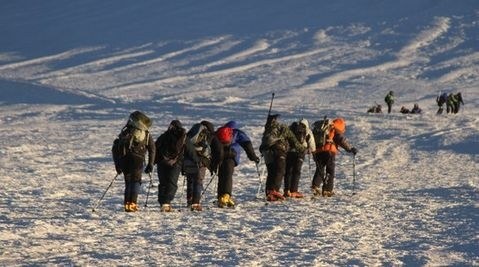
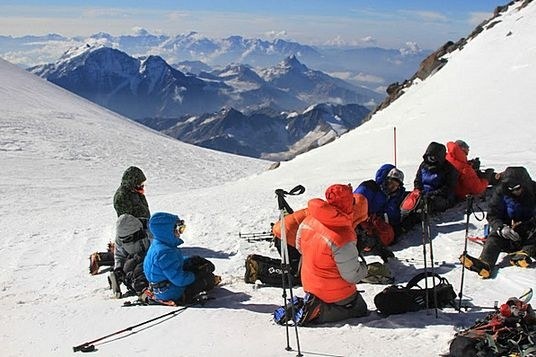
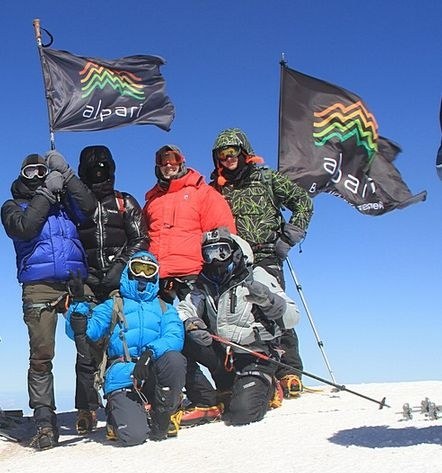
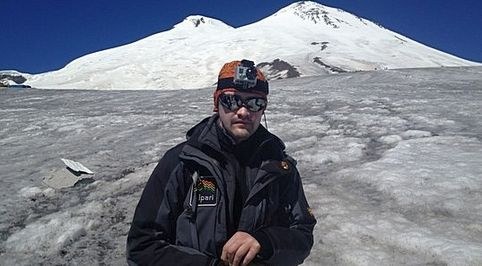

The Team of Alpari climded Mount Elbrus
Elbrus.
They were on the top at 12 a.m. It was windy, but clear. 5 members (Andrey Dashin, Ivan Kosilov, Sergey Belchikov, Yaroslav and Sviatoslav Yefremov), 3 guides (Alex Abramov, Dima Ermakov, Denis Saveliev) and photograph Andrey ...
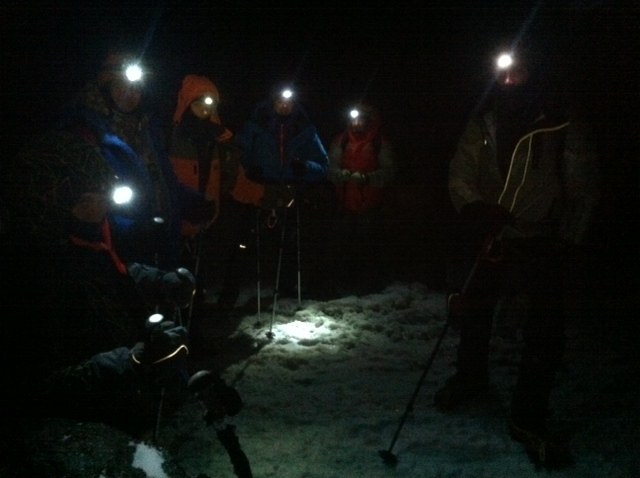
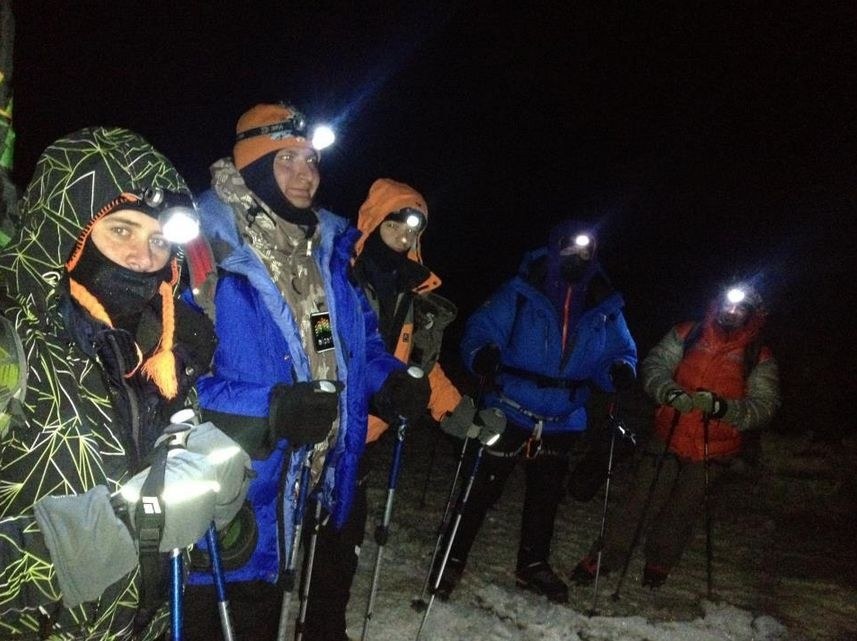
They were on the top at 12 a.m. It was windy, but clear. 5 members (Andrey Dashin, Ivan Kosilov, Sergey Belchikov, Yaroslav and Sviatoslav Yefremov), 3 guides (Alex Abramov, Dima Ermakov, Denis Saveliev) and photograph Andrey Saveyko reached the highest point. All descended without big problem to 6.30 p.m. to the refuge Bochki.
Start at night...


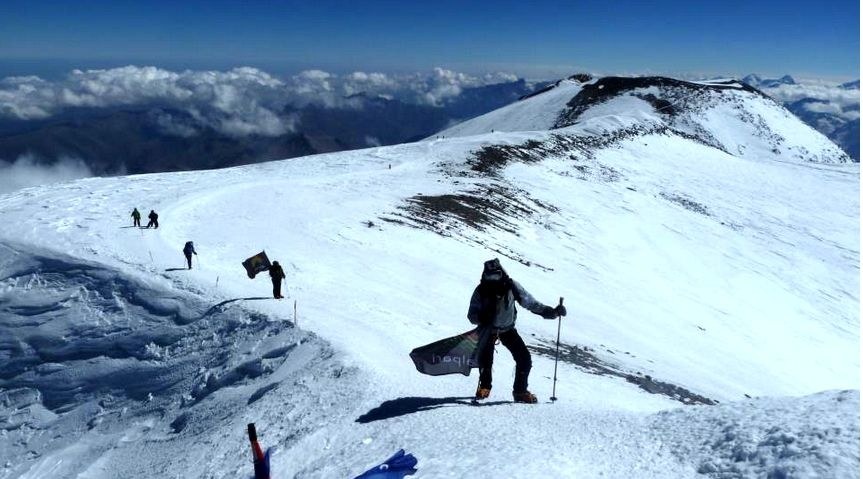

Summit !!!!!!
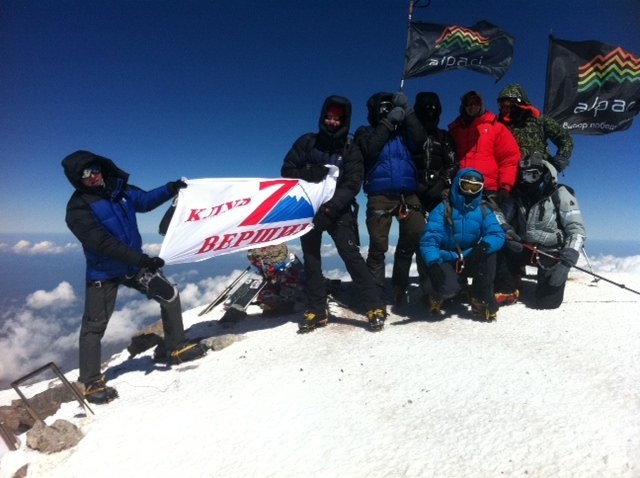

The team Alpari - 7 Summits for 300 days on Elbrus
Elbrus.
The team of Alpari Luda Korobeshko - Ivan Dusharin - Maxim Shakirov climbed Western Summit of Elbrus. During the descent Max injured his leg, so they cancelled a climb Eastern Peak. They descendded to the refuge only in darkness. That ia ...
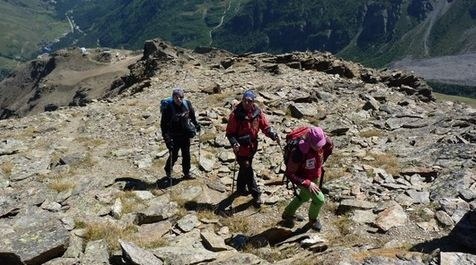
The team of Alpari Luda Korobeshko - Ivan Dusharin - Maxim Shakirov climbed Western Summit of Elbrus. During the descent Max injured his leg, so they cancelled a climb Eastern Peak. They descendded to the refuge only in darkness. That ia fifth summit of the prokect. Next Kosciuszko and Vinson ....

North Caucasian resorts should provide good services - Putin
Elbrus.
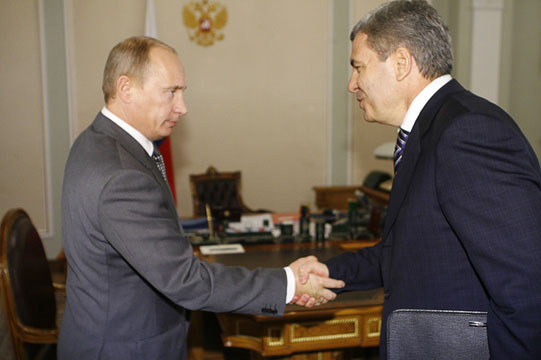
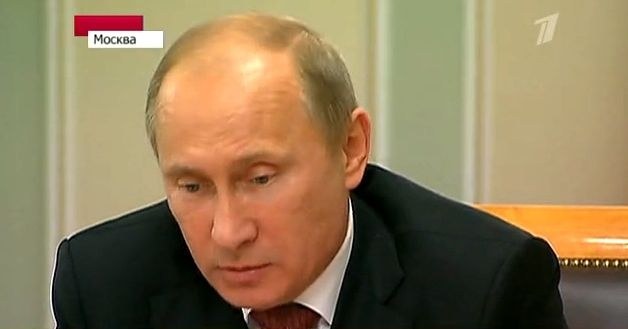
North Caucasian resorts should provide tourists with good services, Russian President Vladimir Putin said today at a meeting with the head of Karachay-Cherkessia, Rashid Temrezov, RIA Novosti reports. "Good services and trained personnel ...
North Caucasian resorts should provide tourists with good services, Russian President Vladimir Putin said today at a meeting with the head of Karachay-Cherkessia, Rashid Temrezov, RIA Novosti reports.
"Good services and trained personnel are the most important things," Putin said.
"It is necessary to provide tourists with better services than European competitors. I believe that is a possible aim to achieve," Putin added.
ELBRUS: ONE MOUNTAIN, TWO TEAMS
Elbrus.
The upcoming phase of “Alpari: On Top of the World” will take our team to Russia’s Mount Elbrus, a “five-thousander” in the western Caucasus range. Each of the members of Team Alpari has climbed the twin-peaked ...
The upcoming phase of “Alpari: On Top of the World” will take our team to Russia’s Mount Elbrus, a “five-thousander” in the western Caucasus range. Each of the members of Team Alpari has climbed the twin-peaked dormant volcano several times. However, this time around, our trio is going to have some company. We’re sending some of our employees out to climb Elbrus with them.
Representing our company will be a group including some of our up-and-coming young managers and some of the head honchos at Alpari. For many of them, this expedition will be their first real taste of mountain climbing. They’re going to need to overcome their fears and push their bodies to the limit. At the same time, they will have to learn the basics of mountain climbing as they go: how to move across ice and snow, how to belay themselves and how to overcome the effects of the high altitude.
We asked our fellow Alpari employees: “Why are you going to Elbrus?” Here’s how they answered.
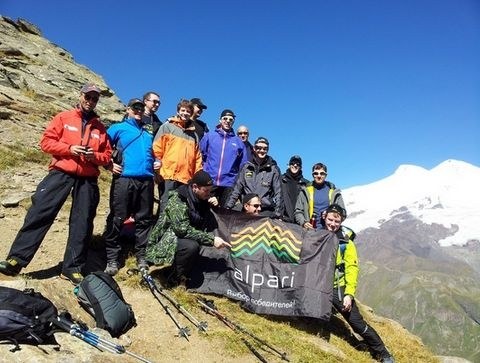
The Team
Andrey Dashin, Chairman of the Alpari Supervisory Board:
“The mountains are a passion of mine. It’s an emotional reprieve for the body and soul. In the mountains, everything is simpler. First you issue a challenge to the stony goliath. Then, at the summit, you get this incredible feeling: ‘Yeah. I’ve done it. I made it. I’ve overcome the obstacles and my personal weaknesses.’ There’s just the mountain and you. There’s nothing else. Up there, you experience a different type of awareness. In the mountains, something special takes place: I’m always coming up with new ideas and finding solutions to different problems.” Favorite Sports: Running, swimming, mountain climbing, boxing, skiing.
Andrey Vedikhin, CEO of Alpari UK, Alpari Founder: “I’ve never been to the mountains. I’m looking at the upcoming Elbrus climb as a warm-up for the December expedition to Vinson (Antarctica).”
Favorite Sports: Running (Andrey’s goal at the moment is to compete in a 2014 Iron Man triathlon: 3.86 km swimming, 180 km on a bike, 42 km running)
Ivan Kosilov, Investments. Ivan is an active snowboarder and paintballer. He loves go-carting, mountain climbing and rafting. He likely has as much experience in the mountains as any Alpari employee, having taken part in Alpari company trips to the Swiss Alps, the Altay region and Kamchatka.
He says Elbrus is “the next step towards conquering the world’s highest peaks.”
Andrey Kharchenko, IT Support. Andrey is an avid snowboarder and has visited several mountainous regions including Dombai, Khibiny, the Austrian Alps and Gornaya Shoria.
“I’m looking to conquer Elbrus so I can experience the mountains from a different perspective – climbing up instead of going down. The opportunity to climb the highest mountain in Europe isn’t something that comes around all that often. And the chance to do this with my co-workers makes it twice as nice.”
Sergey Belchikov, Consulting. Favorite Sports: Snowboarding, paintballing, go-carting, diving
“I thought it would be interesting to try something new with a group of friends. This definitely isn’t something I would do alone, but I simply couldn’t pass on the chance to make this trip with such a great group of people.”
Aleksey Redko, Broadcasting. Favorite Sports: Bike riding
The highest climb Aleksey has made is Mount Livadiyskaya (1,332 m) in Russia’s Primorskiy Krai.
“Conquering this mountain is on my list of things I want to accomplish in life. It’s great to have the chance to do this with such a great group of people.”
Aleksey Zayakin, Technical Support. Favorite Sports: Paintball, swimming, table tennis. When he was younger he used to travel to the Köpetdag Nature Reserve in Turkmenistan.
“Since I was a kid, I’ve always found the mountains to be beautiful. For me, Elbrus is a really interesting challenge. Not only that – I love traveling with friends.”
Ivan Koshkarev, Site Support. Favorite Sports: Snowboarding, fitness, motorcycle riding
Ivan has been to the Altay Mountains a number of times. Says Ivan, “I love all types of adventure travel including road trips and snowboarding.”
“Why am I going to Elbrus? I really want to add a mountain expedition to my memory bank.”
Yaroslav Efremov, Development. Favorite Sports: Diving, rafting
Yaroslav has taken part in a number of Alpari company expeditions: climbing the Swiss Alps, rafting in the Altay Mountains and hiking through the fog of the Kamchatka volcanoes.
“The mountains are one of my passions. I was born in the foothills of the Pamir range, so the love has always been there. What can you say when you are given the chance to climb Elbrus with your friends and co-workers? Of course I will!”
Stanislav Efremov, Software Developer, London. Favorite Sports: Volleyball, diving
“I was born 5 minutes before Yaroslav. I lived in Tajikistan until the age of 15. In that time, I managed to climb most of the surrounding foothills. I love the mountains.”
Maxim Andrianov, Legal. Favorite Sports: Paragliding, bike riding. Maxim has climbed Beshtau (1,401 m, Russia) and has ridden halfway up Elbrus on a gondola.
“A number of the people I fly with are also mountain climbers. They convinced me that the enjoyment you get climbing towards the sky is pretty much the same as when you’re flying through it. I’m not sure if I believe them, so I thought I’d give it a try to see if they’re right. It’s always better reaching your goals with a good group of people.”
Andrey Rybin, Legal. Favorite Sports: Downhill skiing, bike riding
“Elbrus? I don’t even know where to begin.”
We would like to wish both teams luck. We can’t wait to hear from you guys!
Elbrus: the fifth stage of the project “Alpari on top of the world”
Elbrus.
Tomorrow the fifth stage of the "Alpari on top of the world" project will start. A trio of experienced climbers aims to complete the world famous program "7 summits" in record time - 300 days. To climb the highest point of all continents ...
Tomorrow the fifth stage of the "Alpari on top of the world" project will start. A trio of experienced climbers aims to complete the world famous program "7 summits" in record time - 300 days. To climb the highest point of all continents for a record time forRussia, world record for teams of three…. etc. The team captain Lyudmila Korobeshko already set one record, becoming the first Russian climbed twice on the top ofMount Everest. The initial plan to go 7 summits by non-standard routes had to be changed because of the terrible weather conditions on Everest. But we hope that Lyudmila will set a world speed 7 Summits record for women.
The team of Lyudmila Korobeshko, Ivan Dusharin and Maxim Shakirov plans to climb both peaks ofMount Elbrus. Each member of the expedition visited the tallest mountain ofEuropemany times. But this time it will be a special case. A group of Alpari managers join them to try climb Elbrus. Among them Andrey Dashin – the leader of the company, active sportsmen and climber.
News, photos, videos and reports from the expedition are available at the project website: www.alpari-life.ru
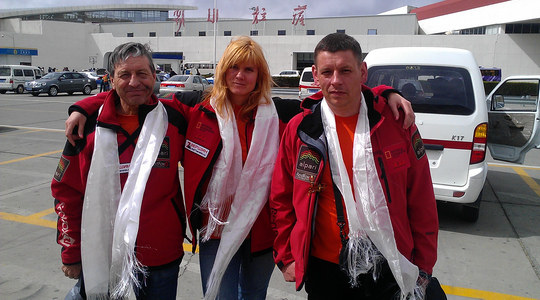
Blitz-climbing of Elbrus. PHOTO ALBUM
Elbrus.
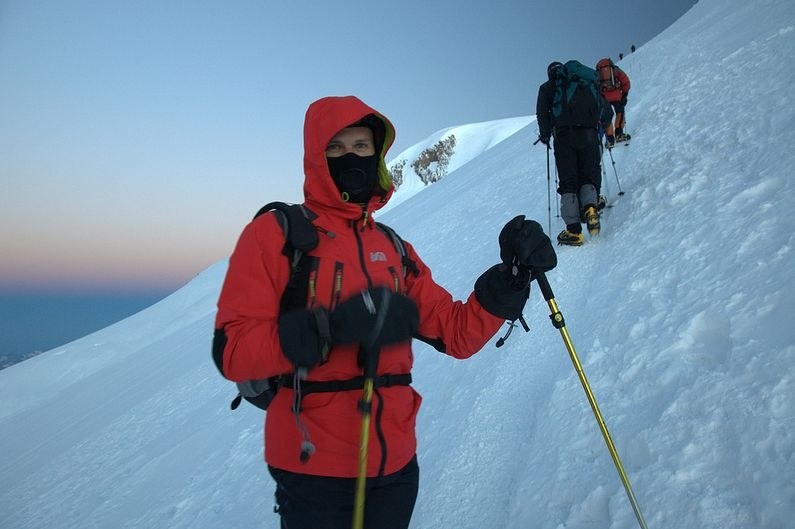
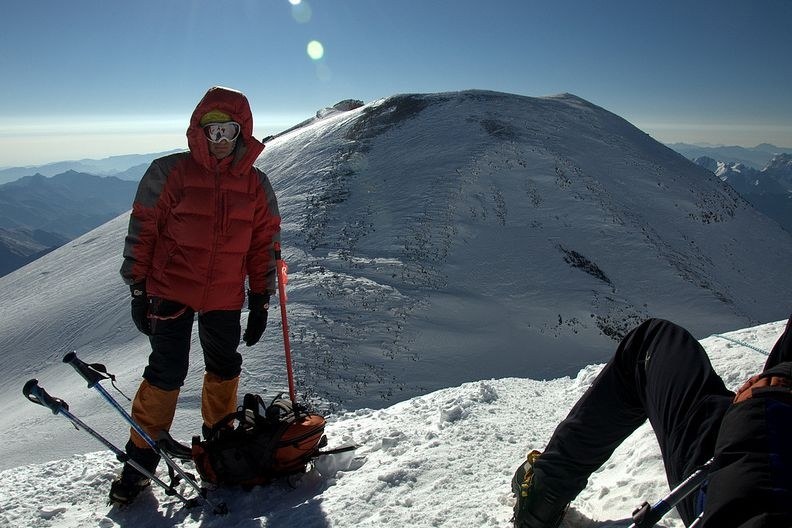
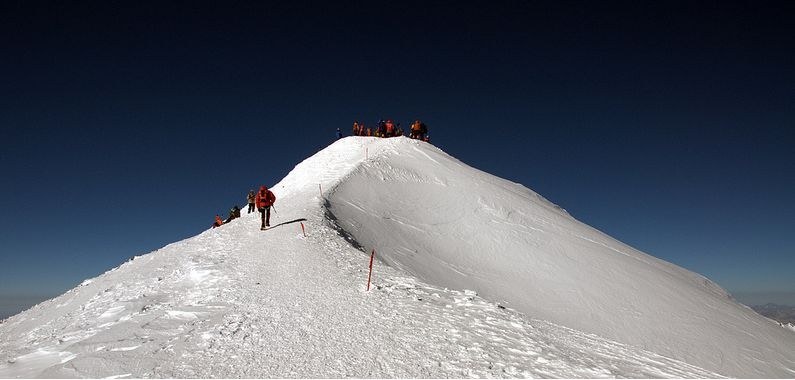
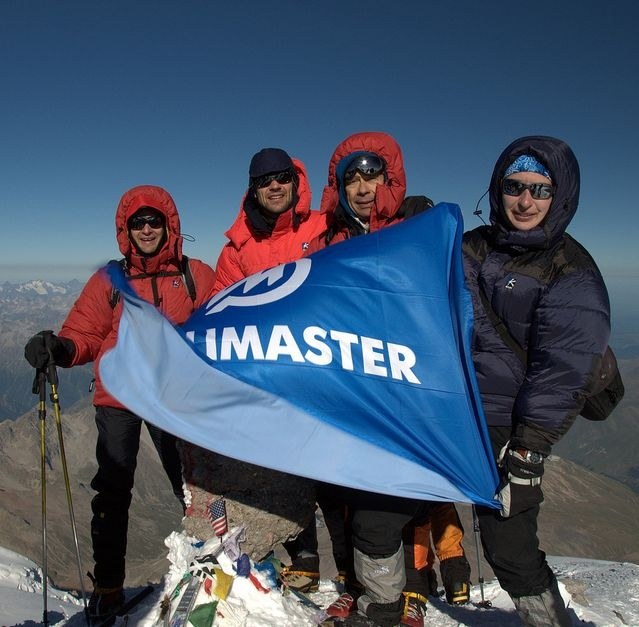
August, 25 a blitz-climbing program was realized on the highest peak in Europe andRussia–Mount Elbrus. The participants had only half a day, for one acclimatization outing. But they were quite experienced climbers who are in good ...
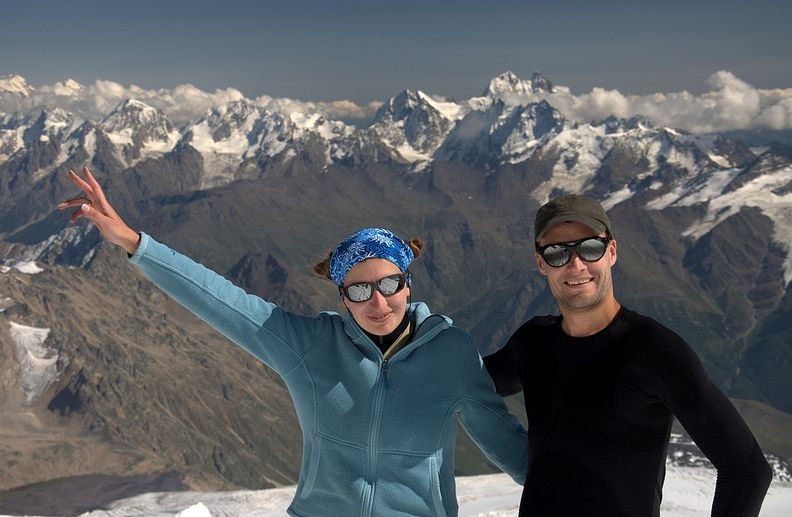
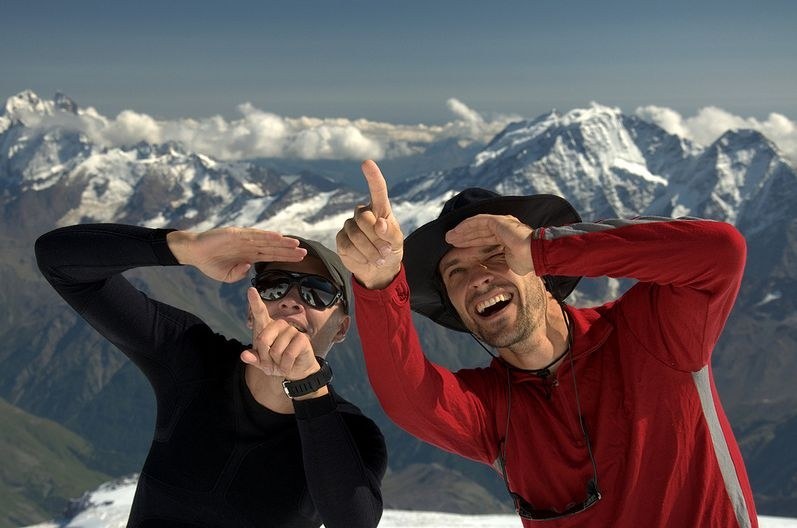
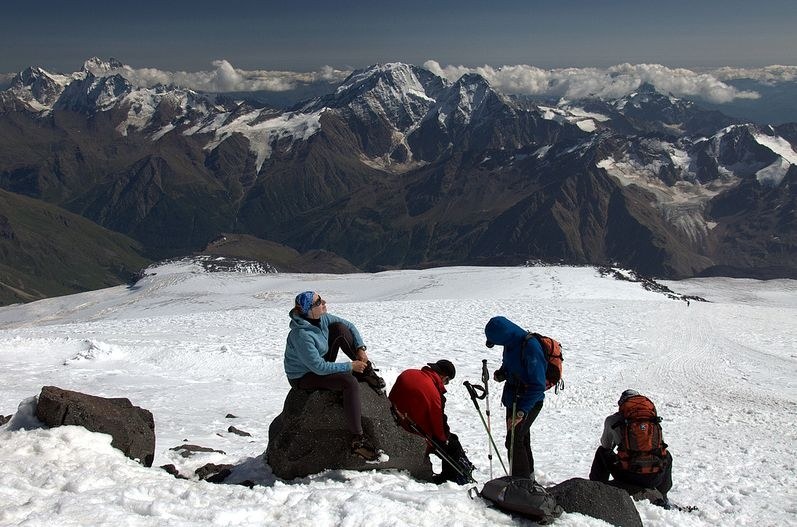
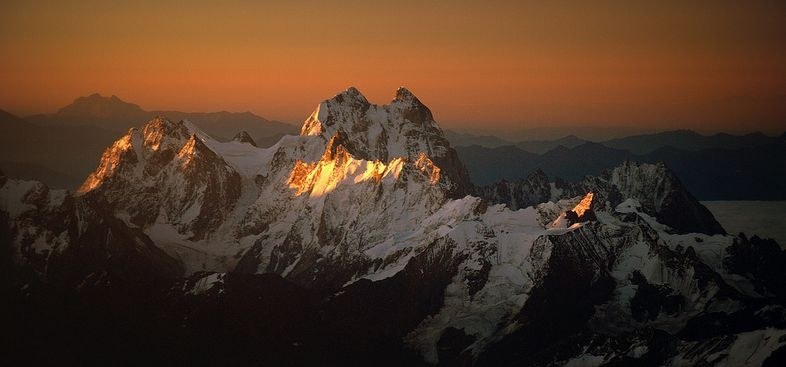
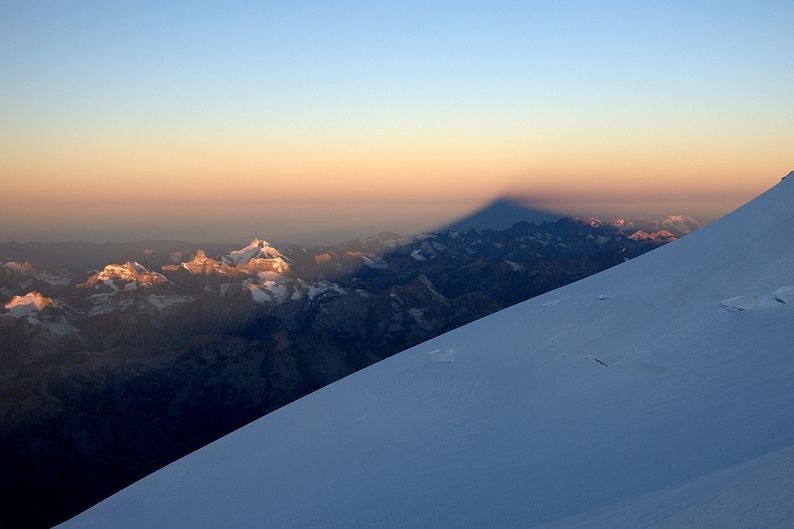
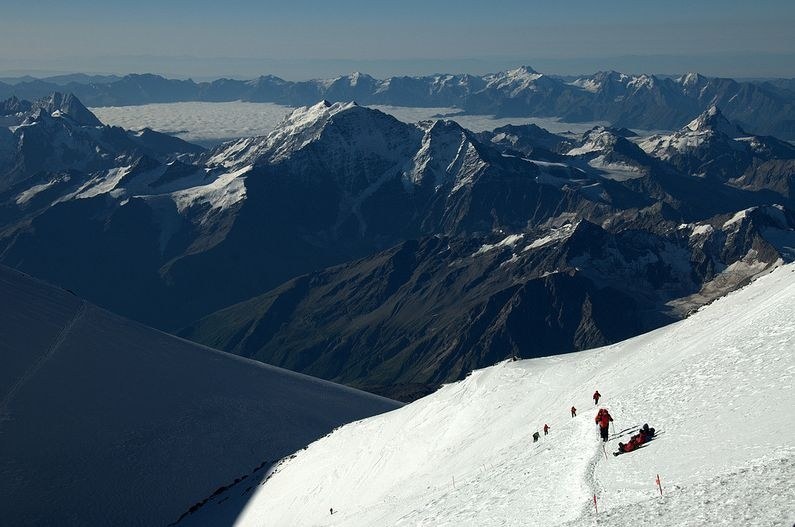
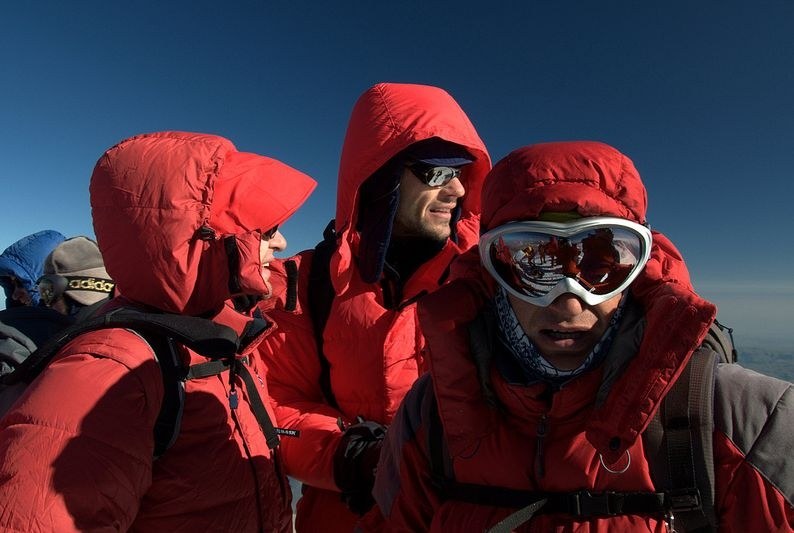
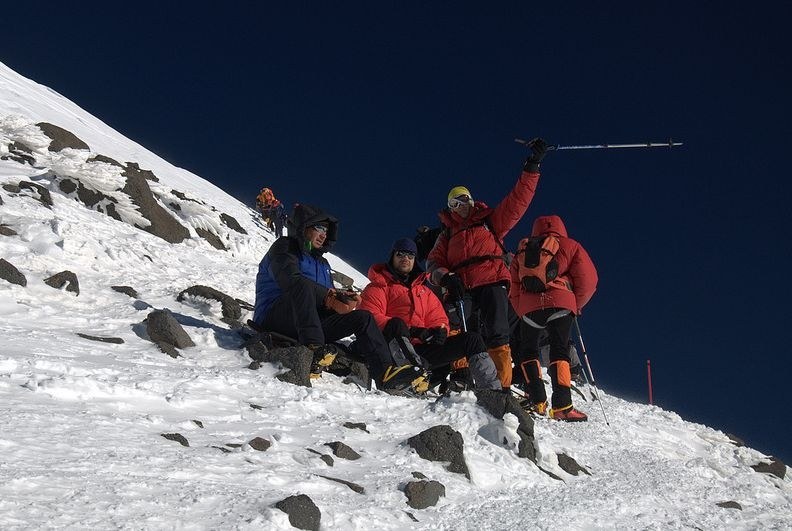
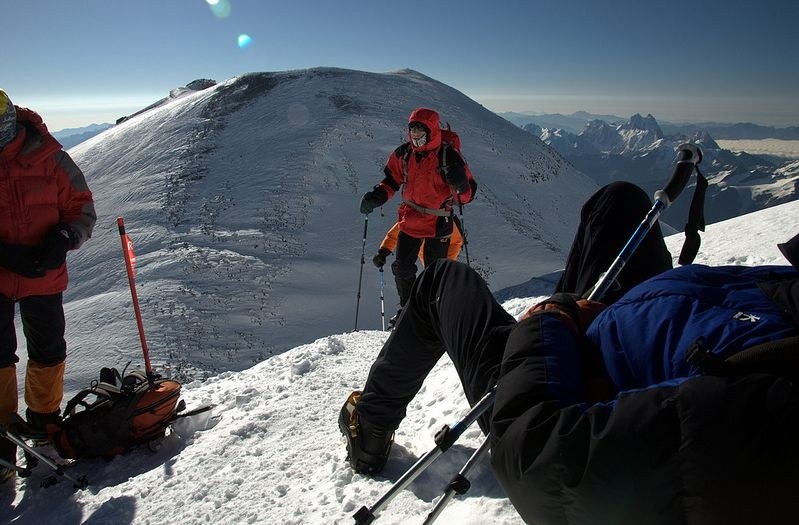
August, 25 a blitz-climbing program was realized on the highest peak in Europe andRussia–Mount Elbrus. The participants had only half a day, for one acclimatization outing. But they were quite experienced climbers who are in good shape. This is what contributed to the success of this risky climb. As well as the excellent work of guides of 7 Summits Club - Sergei Onufrienko and Andrei Afrin. Climbers reached the top: Lyudmila Antonovskaya (Belarus), Konstantin Korotkov (Belarus), Dmitry Sokov, Roman Smirnov, Alexander Stolyarov, Sadik Hafizovich (Switzerland).
Our Belarusian friends shared photos of Elbrus on flickr.com
Full album is posted here >>>>>>>


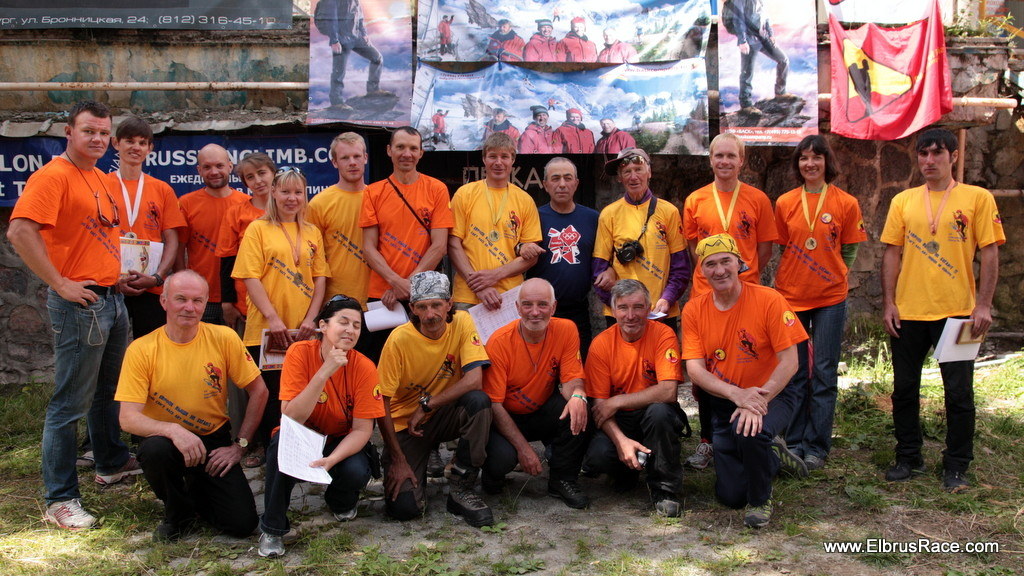
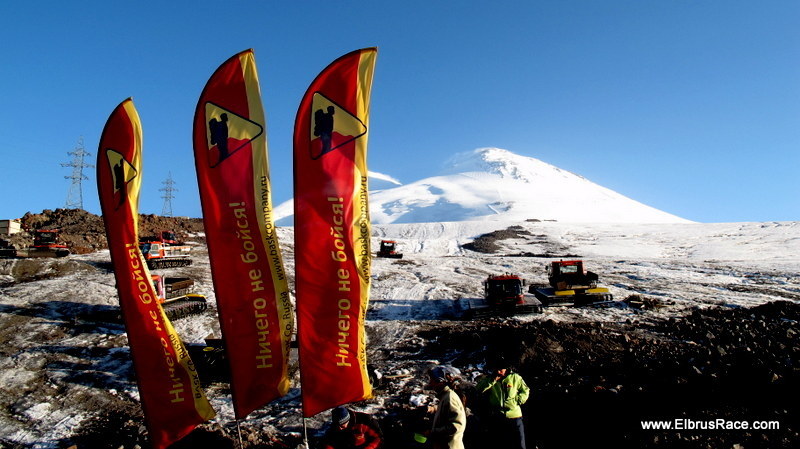
International Elbrus Race: Competition Results
Elbrus.
Seventh International Elbrus Race competitions were held from August 26 to September 2. Weather these days was unstable, the main start was held on August 31. Strong wind in the summit forced organizers to limit the height of rise ...
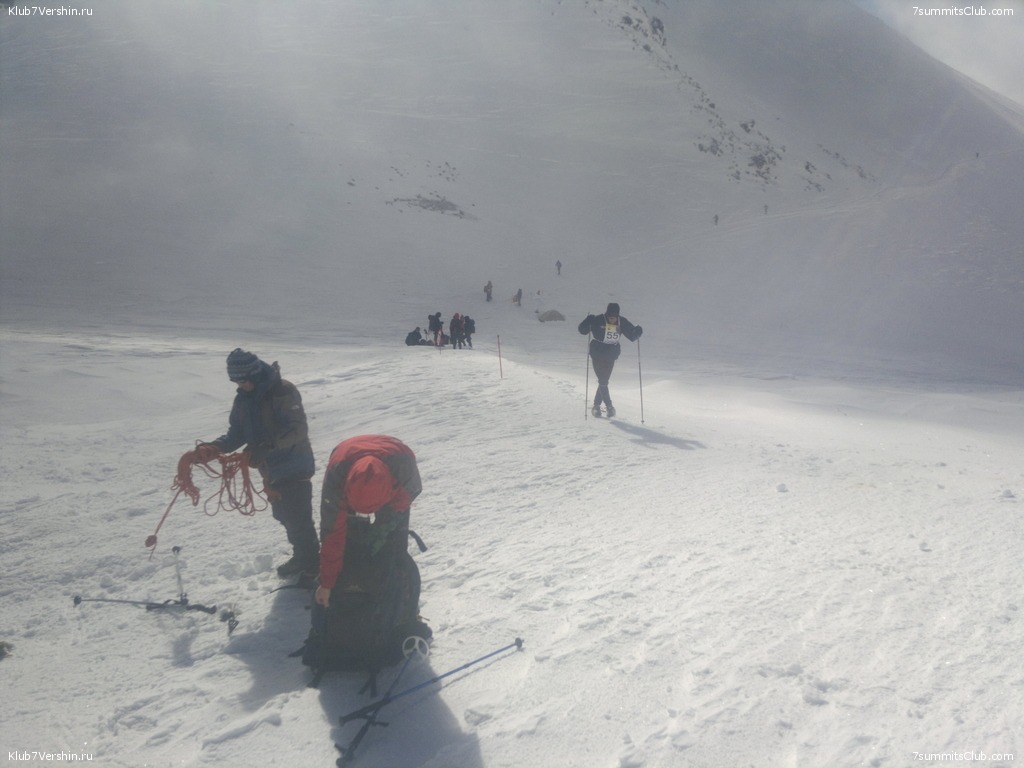
Seventh International Elbrus Race competitions were held from August 26 to September 2. Weather these days was unstable, the main start was held on August 31. Strong wind in the summit forced organizers to limit the height of rise for most participants. Only four athletes have reached the top of Elbrus.
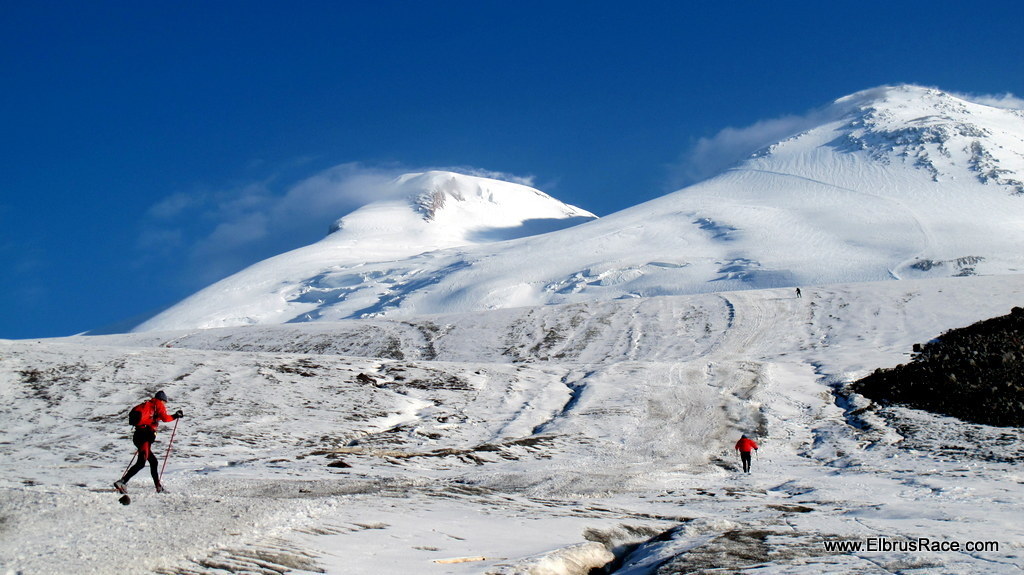
The competition was held in two categories. Classic: start at 3710 m finish at 5642 m. Extreme: start at 2400 m and finish at 5642 m.
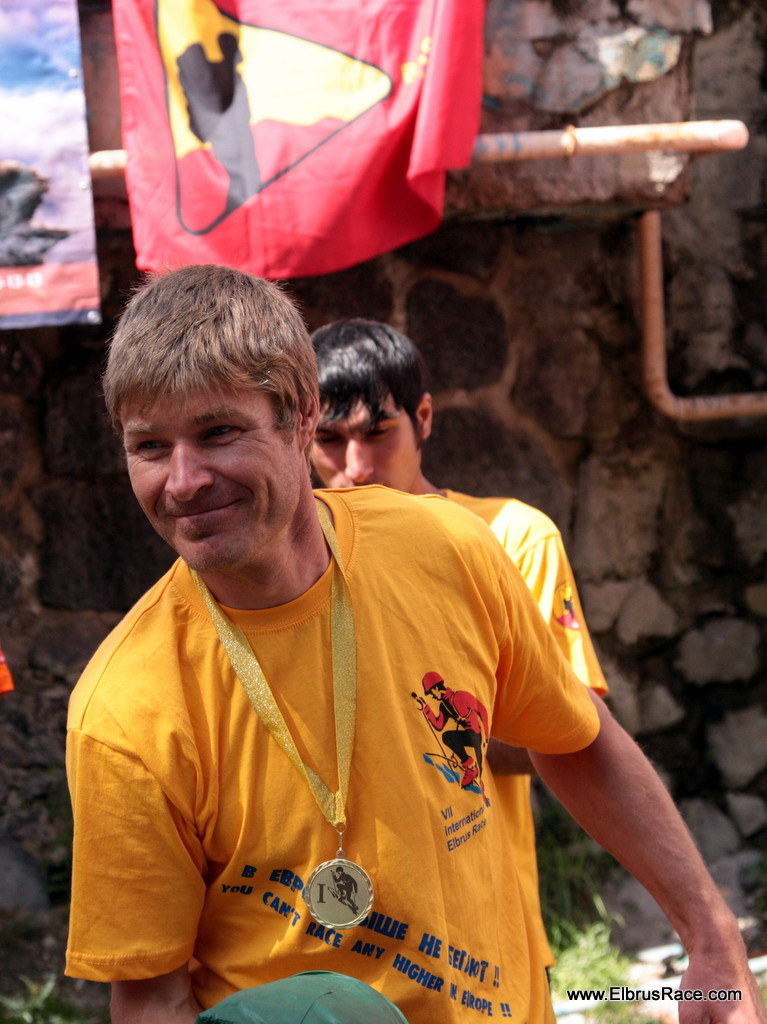
Anton Proshchenko fromOmskwas the first on the track Classic. His time was 2 hours 28 minutes 2 seconds. He became the new recordsman of the competition International Elbrus Race on track Classic. The previous record belonged to Andrey Puchinin from Almaty - 2 h 34 min 33 sec. Just behind Anton, the second climber reached the top. It was Aggai Skopin (Kazakhstan, Almaty) – his time is 2 hr 31 min 35 sec. Rafael Ramazanov from Ossetia, has a third time, 3 hours 31 minutes.
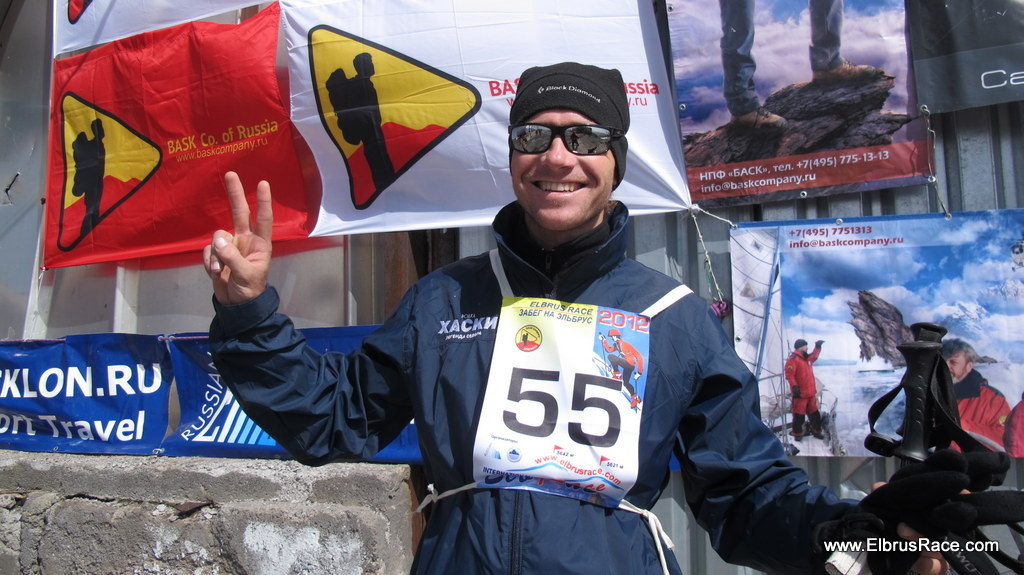
Well-known guide Roman Gubanov won on the track Extreme. Roman, a permanent member of races, improved his previous result on this route - his time of 4 hours 31 minutes 11 seconds.
Then the weather turned bad on the summit of Elbrus, the wind increased. The judges, who were on duty on top, found to be impossible to finish on top. Other participants finished near the Saddle.
Olga Mikheenko was the winner of the women.
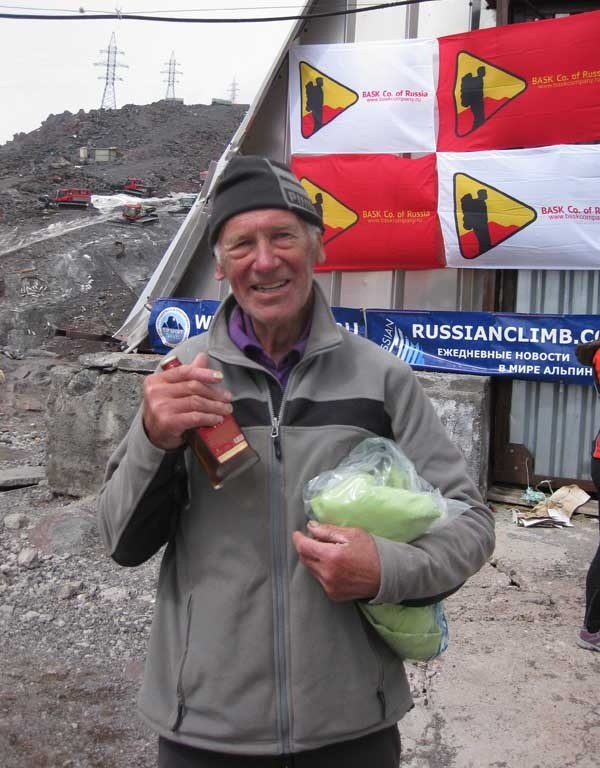
One of the participants of starts was an old friend of 7 Summits Club Boris Korshunov. He just in the day of start turned 77. On this day, our veteran, world record on the number of ascents on peaks above 7000 meters, in the 77th time climbed to the top ofMount Elbrus. According to him, he's going to be back to theHimalayas next spring.



Anna Dymova: good news from Elbrus
Elbrus.
August, 30 in the evening, the group ate dumplings. So that in the morning they were all cheerful and well-fed. August 31, our multinational team reached the highest point of Europe -Mount Elbrus. 10 members and 4 guides. And Vladislav ...
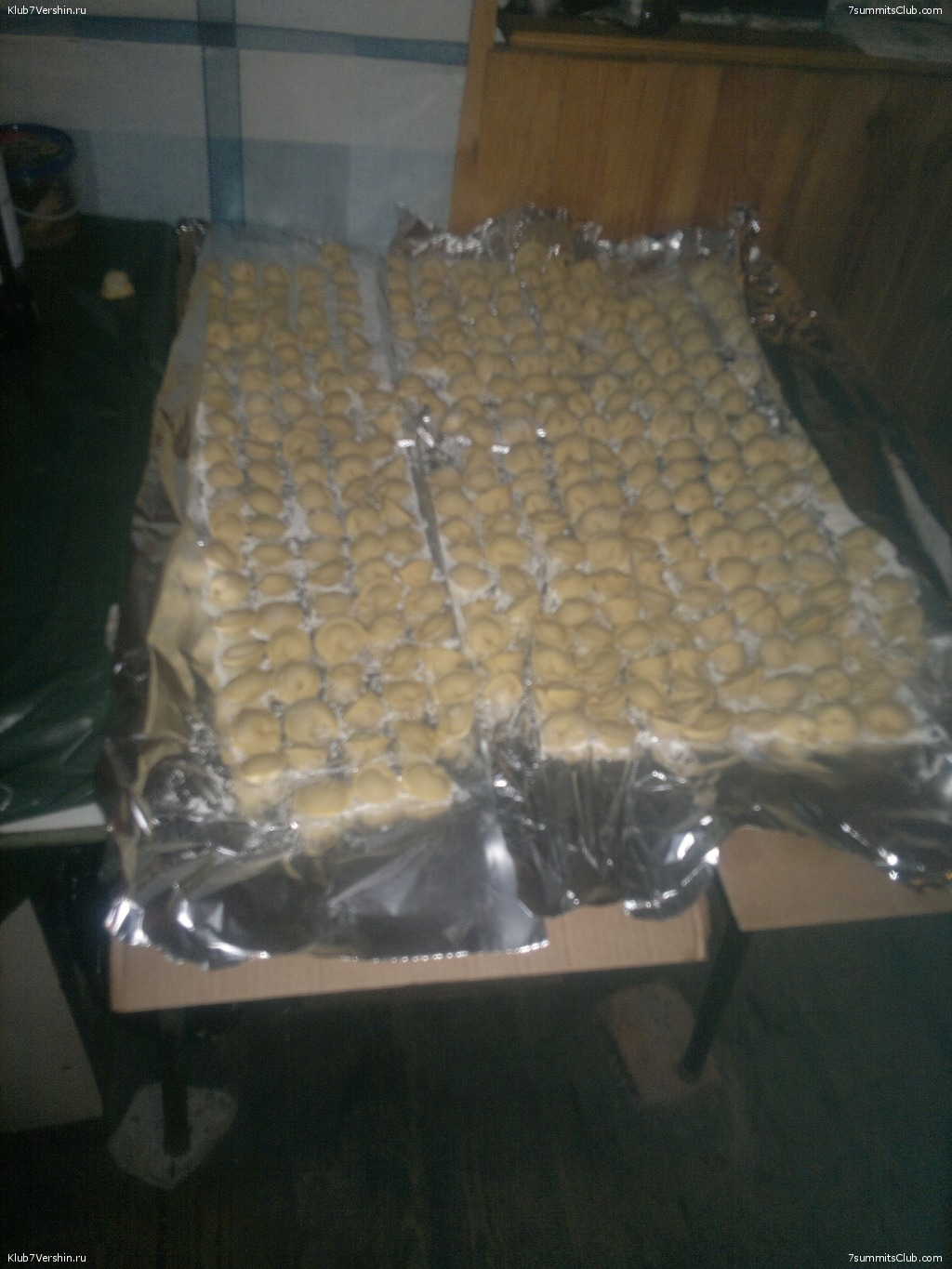
August, 30 in the evening, the group ate dumplings. So that in the morning they were all cheerful and well-fed.
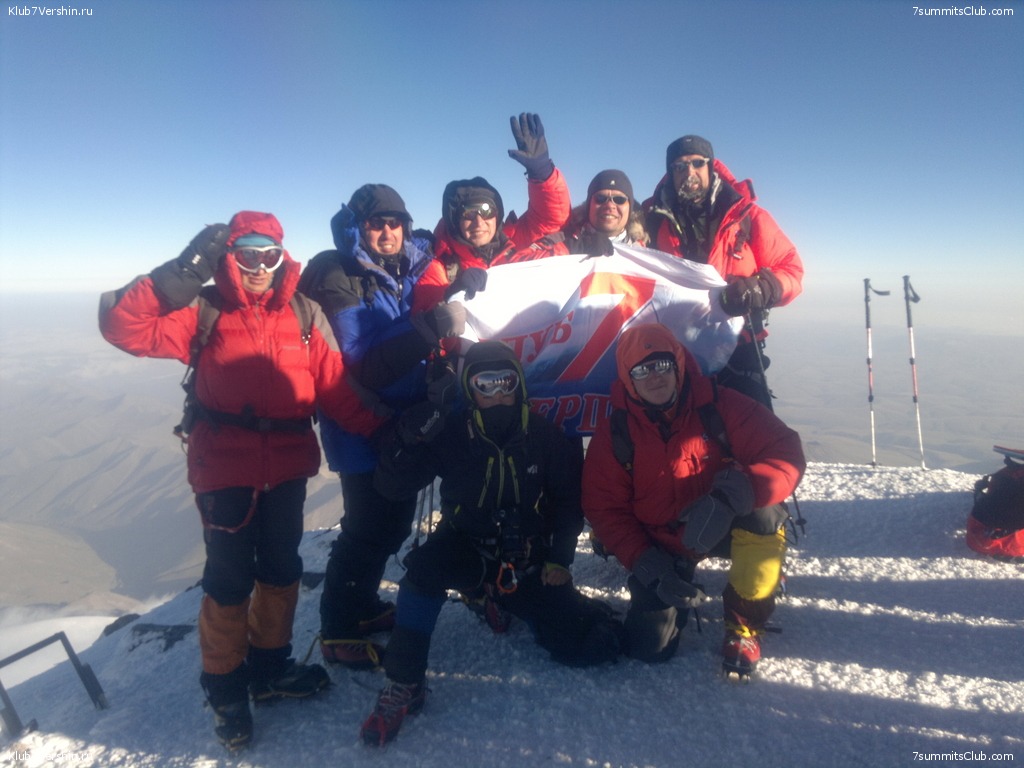
August 31, our multinational team reached the highest point of Europe -Mount Elbrus. 10 members and 4 guides. And Vladislav Lachkarev attended two summits of West and East - that is, made the "Cross of Elbrus."
Tired but happy, all the band members the same day went down to the hotel "Povorot".
And today we are all waiting for a party at the end of the season in the Elbrus! Georgian menu, disco and delicious cocktails for all guests of the fest ! Come on!
List of groups:
Kuzmin George
Lachkarev Vladislav
Nechaev Michael
Kileinikov Sergei
Valishev Rustam
Murtazin Marseille
Mehran Imami,
Nrinder Singh,
Dawn Matthey,
Ricardo Maalihan.








Ivan Dusharin: ‘Kabardakiada’ on Elbrus
Elbrus.
My first time on Elbrus was in 1967. It was part of a climb to commemorate the 50-year anniversary of the Soviet Union where 2,500 people would attempt the summit en masse in a grand spectacle called “Kabardikiada”. At the time, ...
My first time on Elbrus was in 1967. It was part of a climb to commemorate the 50-year anniversary of the Soviet Union where 2,500 people would attempt the summit en masse in a grand spectacle called “Kabardikiada”. At the time, I was studying to be a climbing instructor. The instructors-in-training at my school had been assigned a total of around 600 climbers – about 20 each. They were from all over the Caucasus region; from a number of different schools, clubs and organizations. As an aspiring climbing instructor, I was entrusted with a group of young climbers from Kabardino-Balkaria (a republic in southwestern Russia, just north of the Greater Caucasus Mountains), many of whom already had a few climbs under their belt. They arrived motivated and relatively well-prepared, but they were still very young. In the briefing I was given, it said that they were all at least 16 years of age (at the time, you had to be 16 to climb Elbrus), but just looking at their faces I could tell they were younger.
We put them through some training, but it was fairly minimal. It was raining most of the time.
The forecasts we were getting kept saying that July 29 would be the ideal day for the climb, so we began planning everything around this date. The day before the climb, we made our way to “Ice Base”. Our team was led by Honored Master of Sports (a title bestowed to esteemed athletes in the USSR) Aleksey Ugarov, one of the greatest climbers of that era and leader of the first expedition to conquer Peak Korzhenevskaya (7,105 m, Tajikistan).
I remember seeing Aleksey once in 1953. He was running around in nothing but leather shorts barking commands into a megaphone, trying to drive his team of young climbers onwards. It was quite a spectacle to behold, especially since the team hadn’t managed to get in the acclimatization it needed (due to bad weather) and most of us could barely move our legs.
Ice Base deserves a whole other story of its own. More than 2,000 people had been crammed into camp there. There were hundreds of tents, kitchens filled with provisions, a movie theater, a photo studio and a number of other buildings. We had initially been promised catering, but were instead treated to dry rations due to the heavy snowfall (the firewood was soaked). To us at the time, the food seemed fit for a king: chocolate, sour cream, fruits and other delicacies we had never even seen before in our lives.
On the morning of July 28, we all took part in a movie that was being shot about the expedition before setting out on an acclimatization climb. Amidst a backdrop of rockets being fired and shouts of “Hooray!” we began our ascent, only to get caught up in the deep snow within the first 10-15 meters. Many of us fell face-first in the snow while the cameras were rolling. A helicopter circled overhead, filming us from above as we waved our flags and banners. One small group of people arranged themselves to spell out “50 лет СССР” (50 years of the USSR). We all got tired pretty quick, and then came a strong snowstorm. We descended back down to our tents without getting in the proper acclimitization.
We began our attempt at the summit on July 29 at 2 AM. Our long “centipede” worked its way up to the “Refuge of the Eleven” where we were met by a crowd of climbers who had been camping out there. Most of our team made it to the refuge, but afterwards, our ranks started to dwindle. People were beginning to collapse; their legs just giving out on them. Many of the climbers who were falling were athletes: fighters and weightlifters that were not used to giving up. A volunteer rescue team was there to bring them back to their senses or to simply carry them back down the mountain. There were others who simply sat down in the snow, looked at their instructors and said that they couldn’t go any further. Many of the people we were forced to leave behind asked those of us left standing to take their “tokens” to the summit.
Before the climb, each of us had been given a token: a small aluminum disc inscribed with our name, hometown and date of birth.
At the summit, we were to drop this token into a metal box. We were told that this box would be reopened in the Year 2017 – the 100-year anniversary of Soviet power – and that each of the climbers who was still alive would be invited to a huge gathering to commemorate the climb. So it wasn’t really a matter of honor or pride; they just wanted us to drop their token in the metal box so they would be invited to the 100-year anniversary party and maybe receive some sort of award.
We ascended the mountain slowly but surely, losing some of our comrades along the way. Most of my young climbers from Kabardino-Balkaria had been forced to throw in the towel. As we approached the Pastukhova Rocks, only 4 remained from my original group of 20: a father and his son who was studying at the Nalchikskiy Institute and two young girls who simply refused to give up. At one of our stops along the way, one of the girls passed out, toppling over like a felled tree. I barely managed to catch her. I squeezed lemon juice into her mouth to revive her and sent both of the girls back down to the gathering point below, essentially passing them on to another instructor. The three of us still remaining pressed onward, gathering tokens along the way. I made it to the top along with the father-and-son duo. We dumped a handful of tokens into the metal box and had our pictures taken. We also had the chance to see a motorcycle that Mikhail Kakhiani and some of his friends had hauled up to the peak earlier. On the summit, rallies were held, speeches were given, shouts were heard and flags were waved. Everyone was having the time of their lives. All of my fellow instructors made it to the summit as well. We chatted for a while before leading what was left of our teams back down. The weathermen had been right on the mark. That was pretty much the only day we could have made an attempt at the summit. When we got back to the stadium at the Itkol Hotel below, we were given a hero’s welcome, as if we had achieved something incredible. There were flowers, fruits and drinks (only of the non-alcoholic variety for the climbers). I’ll remember everything that happened that day for a long time to come. My young climbers thanked me for teaching them and for helping them along. A few of us exchanged addresses and stayed in contact for a number of years following our climb.
So that’s how it all went down. My first climb on Elbrus was truly a once-in-a-lifetime experience.