McKinley(6194) - Page 7
The Seven Summits news
McKinley.
Mc-Kinley rename. Murkowski Urges Colleagues to Alaskanize Mount McKinley, Talkeetna Ranger Station. Senator Lisa Murkowski today pushed for support of her bill that would officially restore the nation’s tallest peak, ...
Mc-Kinley rename. Murkowski Urges Colleagues to Alaskanize Mount McKinley, Talkeetna Ranger Station.
Senator Lisa Murkowski today pushed for support of her bill that would officially restore the nation’s tallest peak, MountMcKinley, to its traditional Interior Alaska Athabascan name: Denali. In a hearing of the Senate Energy and Natural Resources National Parks Subcommittee, she also advocated for her legislation that would rename the Talkeetna Ranger Station after the first man to summitDenali: Walter Harper. More read >>>>>>>
Oi maamme, Suomi, synnyinmaa, soi, sana kultainen!
The first Finn on the Seven Summits is Atte Miettinen . who climbedMt.Mc-Kinley 12.06.1012
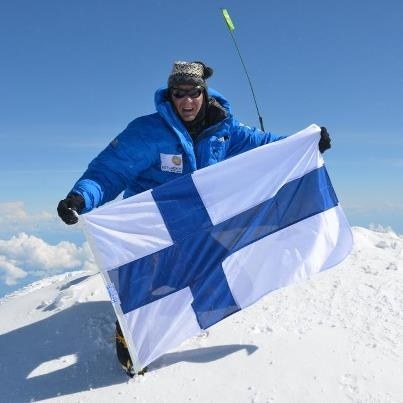
http://www.facebook.com/AtteSevenSummits
Premlata misses Mt McKinley....
Not all climbers make wise decisions when they are 700ft from the summit. A 46-year-old homemaker from Jamshedpur did and one Australian, Krish, knows that it saved his life.
Premlata Agarwal, the oldest Indian woman to ever conquer the Everest, fell agonisingly short of scaling Alaska’s Mt McKinley, popularly known as Denali, on June 3 when she was forced to abort her attempt, just an hour from the peak, to help bring down a fellow climber.
British climbers Andy Houseman and Nick Bullock have repeated the huge Slovak Direct on Denali, Alaska.
Houseman has just tweeted:
"Slovak Direct DONE! 4 days of nearly constant snow, a 27hr push, 16hr unplanned.. What an amazing route! WOW!"
The route is a huge 3000m (ish) climb on the steep South Face of Denali, and retreat is near impossible after the first 1000m have been climbed.
http://www.ukclimbing.com/news/item.php?id=67229
American climb 2010
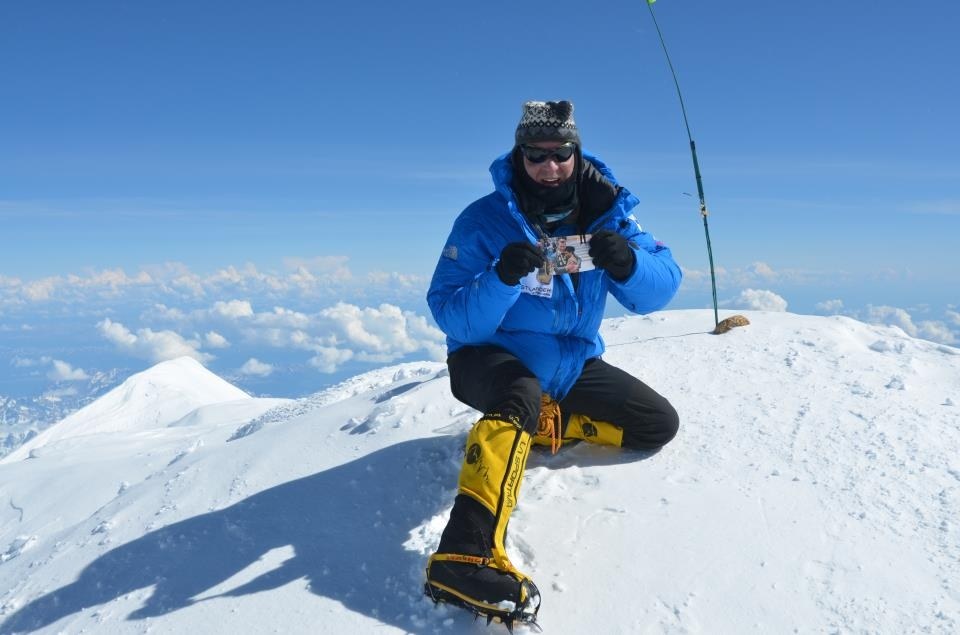
A Call from almost the top of Mount McKinley
McKinley.
Hello ! This is Ludmila Korobeshko from the expedition on Mount McKinley. Literally 20 minutes ago we were still standing at the top. At 5:00 local time, on time in Alaska, we climbed the highest peak in North America - McKinley, 6194 ...
Hello !
This is Ludmila Korobeshko from the expedition on Mount McKinley. Literally 20 minutes ago we were still standing at the top. At 5:00 local time, on time in Alaska, we climbed the highest peak in North America - McKinley, 6194 meters. In principle, the weather was relatively good, but there was snow and wind, and it was very cold. But we made it, we're happy ! We still have a fairly long and difficult descent. But we hope that all goes well. Best regards!
Later we received a message that the climbers successfully descended to the high camp.

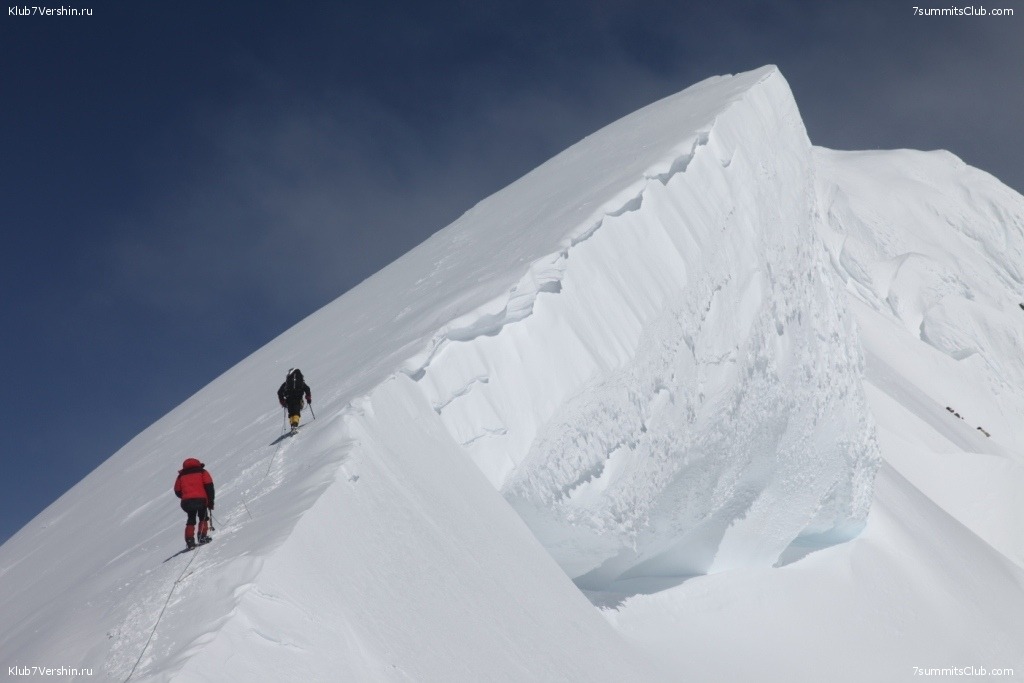
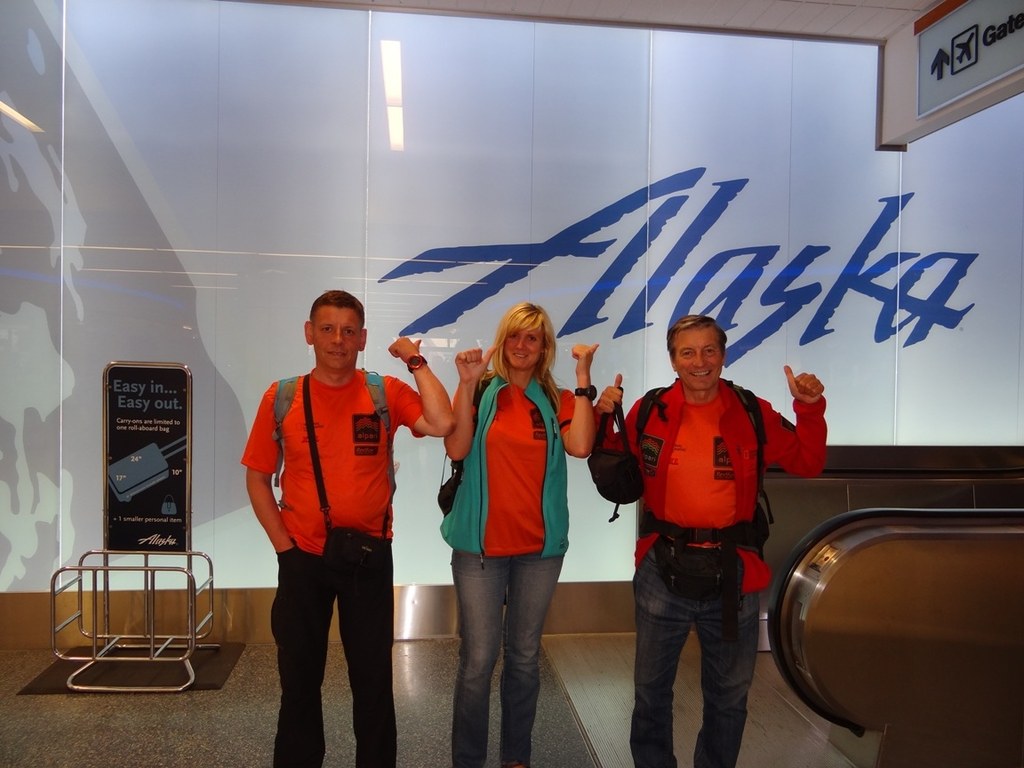
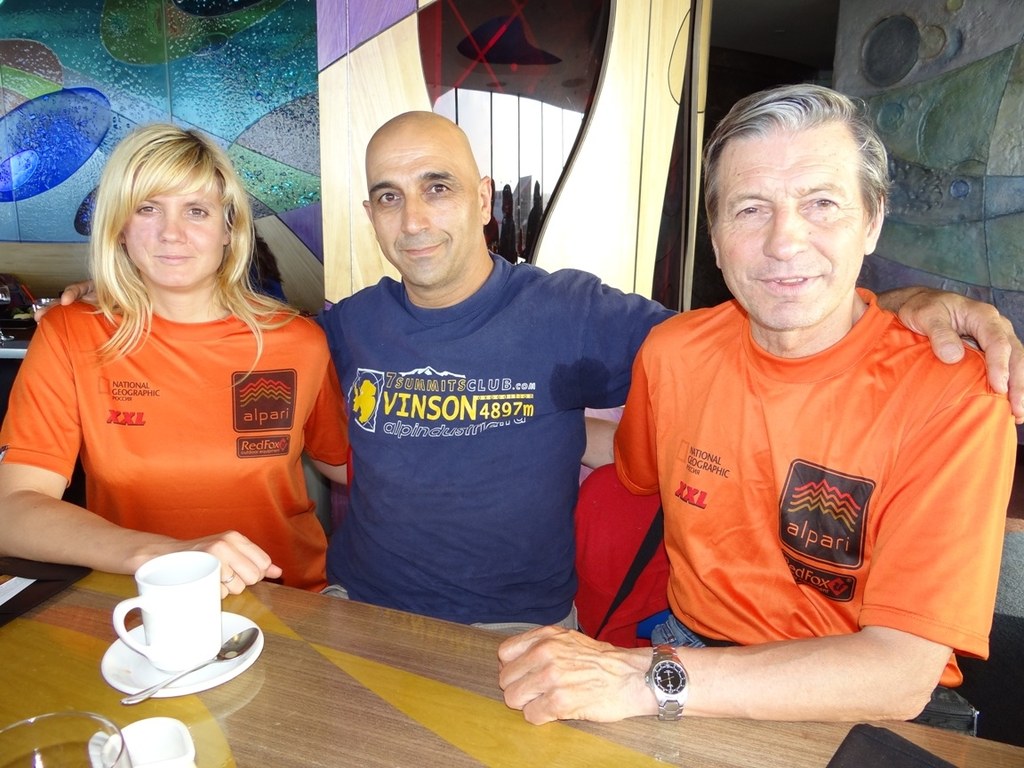
Alpari team on the eve of the assault
McKinley.
Hello, this is Max. Still, we got to the height of the assault camp - 5300 meters, and tomorrow we plan to summit. Because we can expect for good weather to the next season. Visibility on the route is about a hundred meters. Normally, you ...
Hello, this is Max.
Still, we got to the height of the assault camp - 5300 meters, and tomorrow we plan to summit. Because we can expect for good weather to the next season. Visibility on the route is about a hundred meters. Normally, you can go. A bit snowing, sometimes, but rarely the sun looks. Later, however, the sun goes away quickly. From the latest adventure - we forgot a gas cylinder. There is a burner that runs on gasoline, but it barely heats the water. Such are our adventures.
In general, I want beer now….
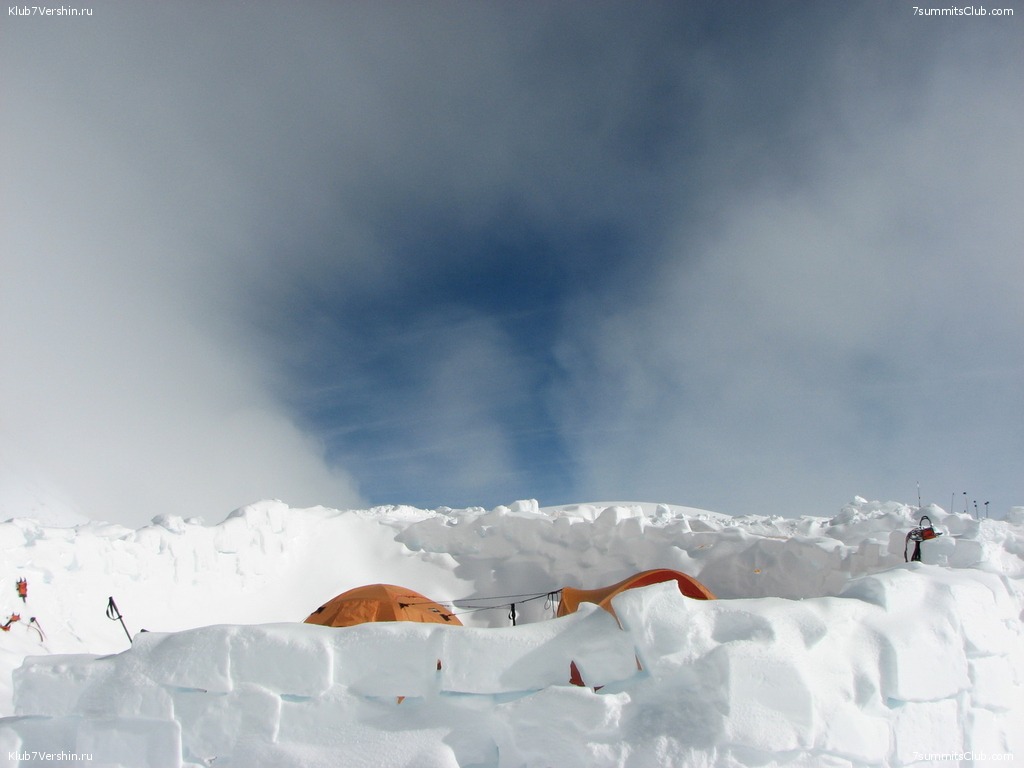
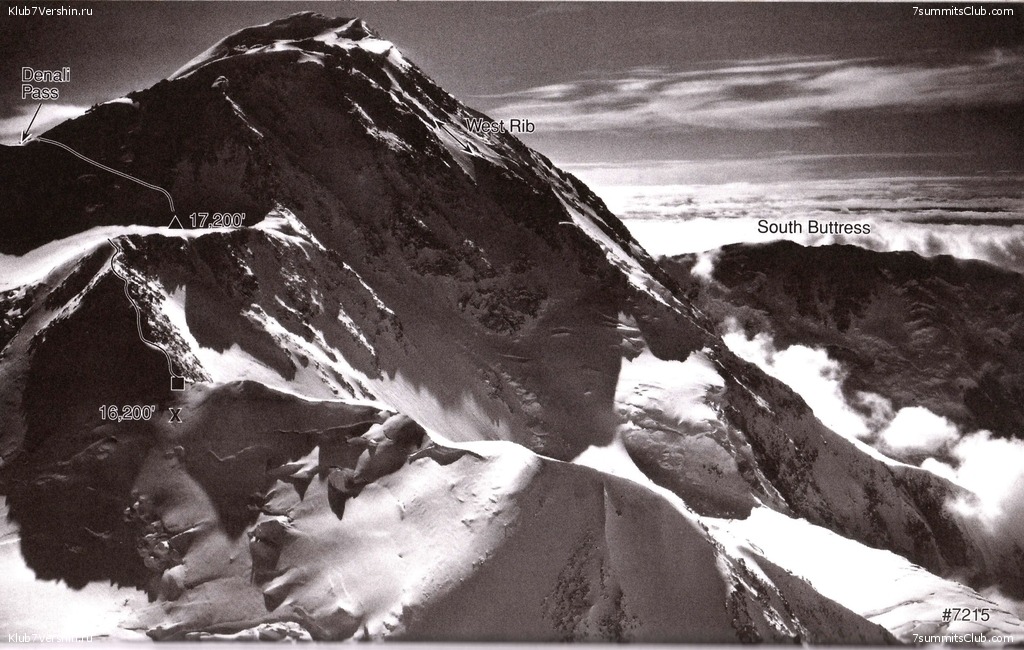

Camp “Eleven” – The Snow Just Isn’t Letting Up
McKinley.
Alpari-life.ru Hey everyone! It’s Lyudmila Korobeshko with “Alpari: On Top of the World”, reporting from Mount McKinley. It’s the 25th of June. The weather this morning was as bad as yesterday, maybe even worse. When ...
Alpari-life.ru
Hey everyone!
It’s Lyudmila Korobeshko with “Alpari: On Top of the World”, reporting from Mount McKinley. It’s the 25th of June. The weather this morning was as bad as yesterday, maybe even worse.
When we woke up, our tents were almost completely covered with snow. We had to dig ourselves out. When we sat down to have some breakfast, we heard voices outside the tent. Even in this weather, there were some people brave enough to get some climbing in. We thought we might be able to get a little climbing done ourselves. We packed up our things and headed upwards.
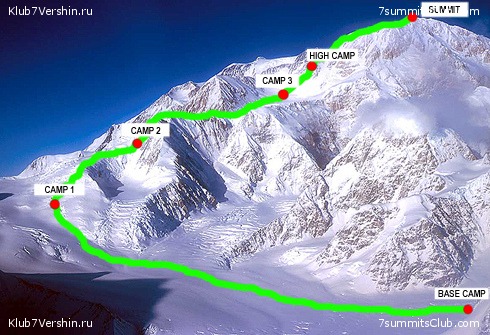
Well… We made it into “Camp Eleven” at 11,000 feet (about 3,600 meters). We’re sitting in camp now, trying to decide what we should do tomorrow. Outside, it looks like the snow isn’t going to let up any time soon.


ALASKA – IT’S ONLY 24 HOURS AWAY!
McKinley.
Hey everyone!Today we’re writing to you from Anchorage. That’s right. We’re already in Alaska! We landed just a couple of hours ago. Ivan and I have already had the chance to experience Alaska’s breathtaking ...
Hey everyone!
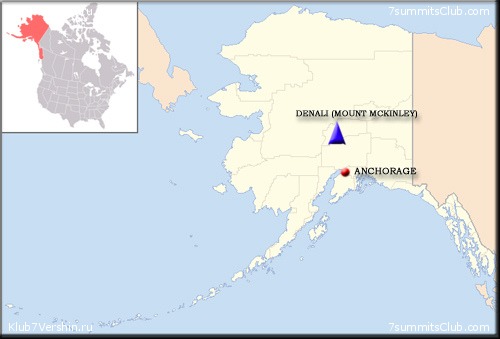
Today we’re writing to you from Anchorage. That’s right. We’re already in Alaska! We landed just a couple of hours ago. Ivan and I have already had the chance to experience Alaska’s breathtaking beauty a number of times, but this will be Maxim’s first time.
Even though we landed at 1 AM local time (it’s the middle of the day back home in Moscow, 11 time zones away), we were still able to see Alaska’s majestic fjords, snow-capped mountains and pristine lakes as our plane descended. We’re at about the 62nd parallel here, so the sun is out around the clock these days.
We’ve already settled into our hotel. We really need to get some sleep after nearly 24 hours in the air. It will take some time for our bodies to adjust. It’s still the middle of the day in Moscow.
Tomorrow (or maybe it’s more accurate to say today, as it’s already 3 AM) we’re going to stock up on groceries and equipment. In the evening, we’ll fly out to Talkeetna, our last stop before the Kahiltna Glacier.
Everything’s been going great so far!
Lyudmila Korobeshko, Team Alpari
alpari-life.ru
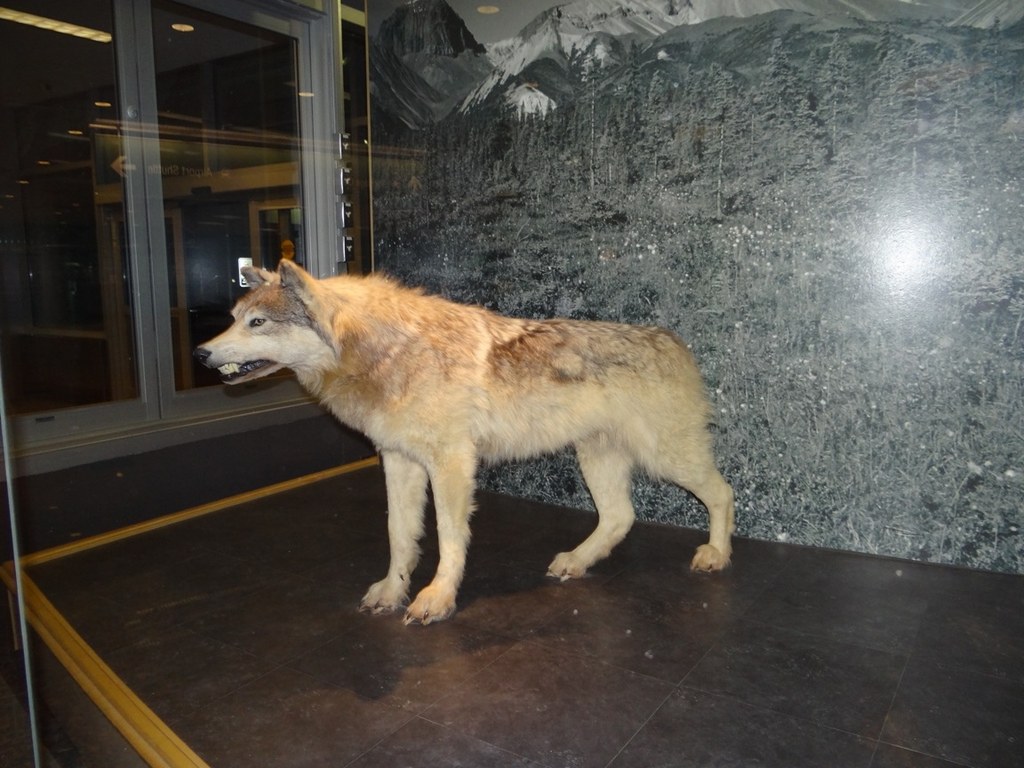
Photos from Los-Angeles

Search called off for 4 climbers believed killed on McKinley
McKinley.
Japanese climbers believed to have died on McKinley glacier. By KYLE HOPKINS. Anchorage Daily News. Published: June 17th, 2012 06:52 PM Update: The search for four climbers presumed dead in an avalanche on MountMcKinley has ...
Japanese climbers believed to have died on McKinley glacier.
By KYLE HOPKINS. Anchorage Daily News. Published: June 17th, 2012 06:52 PM
Update: The search for four climbers presumed dead in an avalanche on MountMcKinley has been suspended, the National Park Service said Sunday.
"A two-day ground search of the debris path from afatal avalanche onMt.McKinleyhas been suspended after clues were found confirming the likely location of four deceased climbers," the Park Service said in a written statement.
"An aerial hasty search took place on June 14 followed by an initial four-member NPS ground search the following day. On Saturday, June 16, an expanded 10-person ground crew consisting of NPS rangers, volunteer patrol members, a dog handler, and a trained search and rescue dog probed and further investigated the debris zone.

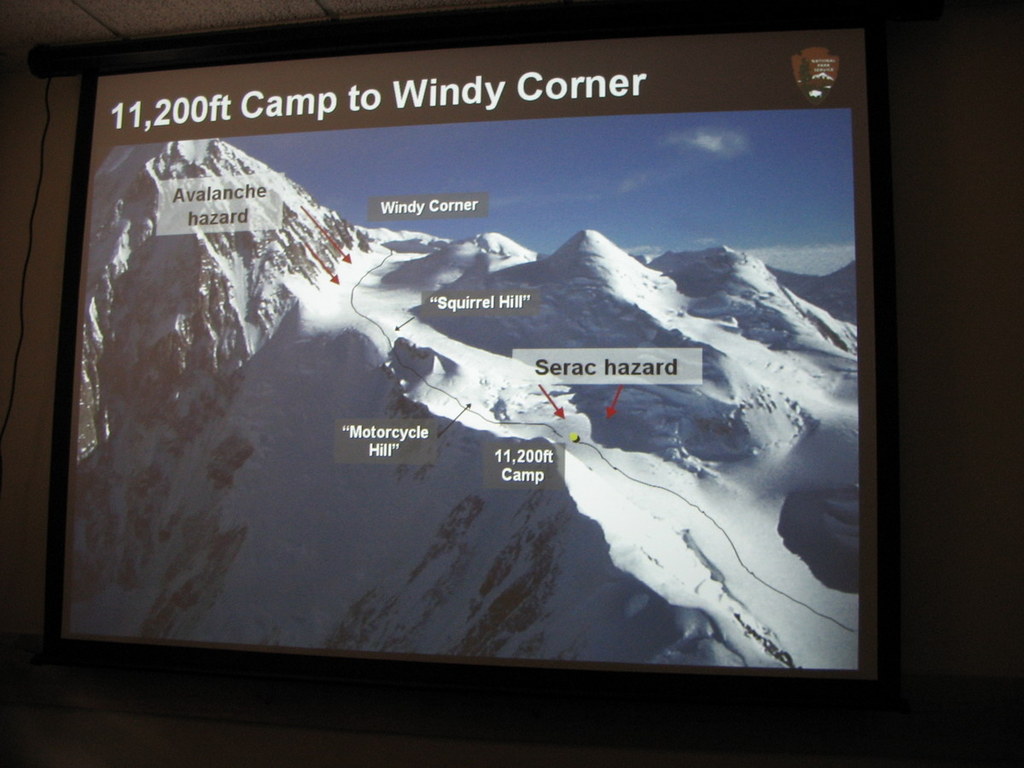
"During the search, NPS mountaineering ranger Tucker Chenoweth descended into the same crevasse that the survivor Hitoshi Ogi had fallen into during the avalanche. While probing through the debris roughly 30 meters below the glacier surface, Chenoweth found a broken rope end that matched the MWAF team's rope. He began to dig further, but encountered heavily compacted ice and snow debris. Due to the danger of ice fall within the crevasse, it was decided to permanently suspend the recovery efforts."
Earlier story: Four Japanese mountain climbers are believed dead following an avalanche early Thursday morning onNorth America's tallest peak.
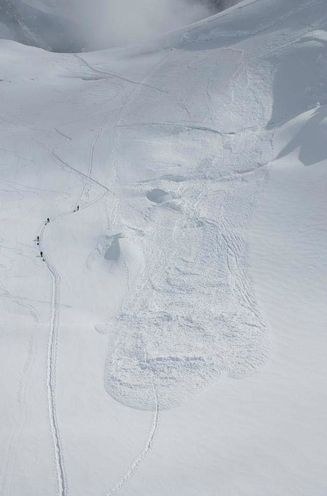
The 800-foot slide came at about 2 a.m. as the five-person team was roped together, descending a popular route down Mount McKinley, according to the National Park Service. Four of the climbers, all in their 50s and 60s, disappeared in the snow.
The lone survivor is a 69-year-old man who fell about 60 feet down a crevasse -- a deep crack in the ice -- but scrambled to safety with no significant injuries.
"The rope had broken so he was separated from the rest of his team members," said Maureen McLaughlin, a Park Service spokeswoman in Talkeetna.
The slide appears to be the most deadly single accident on the mountain since four Canadian climbers were killed in a 1992 fall high on the mountain, according to Park Service records.
The avalanche began at about 11,800 feet, according to the Park Service. It was about 200 feet wide, piling roughly three to four feet of snow and debris on the glacier, McLaughlin said.
The survivor, Hitoshi Ogi, was the last climber on the rope line and the highest on the mountain when his friends vanished. He walked and climbed to the surface of the crevasse following the fall, McLaughlin said. When he found no sign of his companions he spent much of the day making his way another 4,600 feet down the mountain reporting the accident at the Kahiltna base camp shortly after 4 p.m.
"I don't know if he had a radio. He lost quite a bit of his gear in the crevasse," McLaughlin said.
"His hand was wrapped up and I'm not sure if that was frostbite or injury," she said.
A subsequent aerial search by Park Service rangers that evening found no sign of the missing climbers or their gear.
A team of about 10 searchers, including an avalanche rescue dog named Sisu, was on the mountain Saturday looking for the remains of the other four climbers, McLaughlin said. They are presumed dead because of the time that has passed since the slide.
The missing climbers, two men and two women, were identified as:
• Yoshiaki Kato, 64
• Masako Suda, 50
• Michiko Suzuki, 56
• Tamao Suzuki, 63
All are from Miyagi Prefecture,Japan, and members of a Japanese alpine club called Miyagi Workers Alpine Federation. McLaughlin said she did not know if Michiko Suzuki and Tamao Suzuki were husband and wife.
The Consular Office of Japan inAnchorageworked to provide information to the climbers' families following the accident, an official with the office said Saturday.
All five mountaineers appeared to be making their first attempt to climb the 20,320-foot peak, according to the Park Service. Some of the group listed prior experience on peaks such as Kilimanjaro andMount Fuji, McLaughlin said.
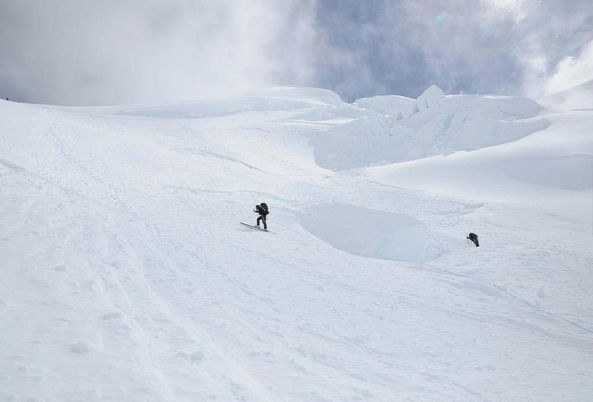
The climbers were descending an area known as Motorcycle Hill on the main route ofMountMcKinley's West Buttress
"It's about a 35-degree slope, just a gradual climb. Generally snow and ice fields," McLaughlin said.
While not a particularly treacherous portion of the climb, the area is "prone to some avalanche activity," she said. McLaughlin was not aware of any previous avalanche deaths in the area.
Another slide was reported earlier in the week higher on Denali, at about 15,500 feet, she said. That avalanche resulted in injuries but no deaths.
On McKinley, falls kill climbers far more often than snow slides, according to Park Service records. Descents high on the mountain are particularly deadly, said Daryl Miller, a retired mountaineering ranger who worked in the area for 17 years.
So far this season, 234 people have reported reaching the 20,320-foot summit. The weather recently turned against mountaineers, however, and Park Service officials assume the Japanese expedition did not summit.
Winds of 25 to 45 mph and cumulative snowfall of about two feet over the past week or two has thwarted climbers' attempts to reach the mountaintop, McLaughlin said.
"The same rough weather conditions led to the avalanche conditions," she said. Overall, the weather was not unusually bad for Denali and began to clear up on Thursday, McLaughlin said.
Including the Japanese climbers, six people have died on Denali this season.
A Finnish mountaineer skiing down a 40- to 45-degree slope called The Orient Express died May 23 after tumbling 2,000 feet. The 36-year-old landed in a crevasse at 15,850 feet, according to the Park Service.
On May 18, a climber fell more than 1,000 feet to his death after trying to grab a sliding backpack at about 16,200 feet.
The Japanese expedition began its climb on or about May 26, according to the Park Service. The average expedition takes about 17 or 18 days, she said.
The climbing season on Mount McKinley peaks in late May and early June, she said. As of Saturday, there were 395 climbers on the mountain. Most are on the West Buttress route.



Member of the 7 Summits Club Mikhail Turovsky completed the program "7 Summits"!
McKinley.
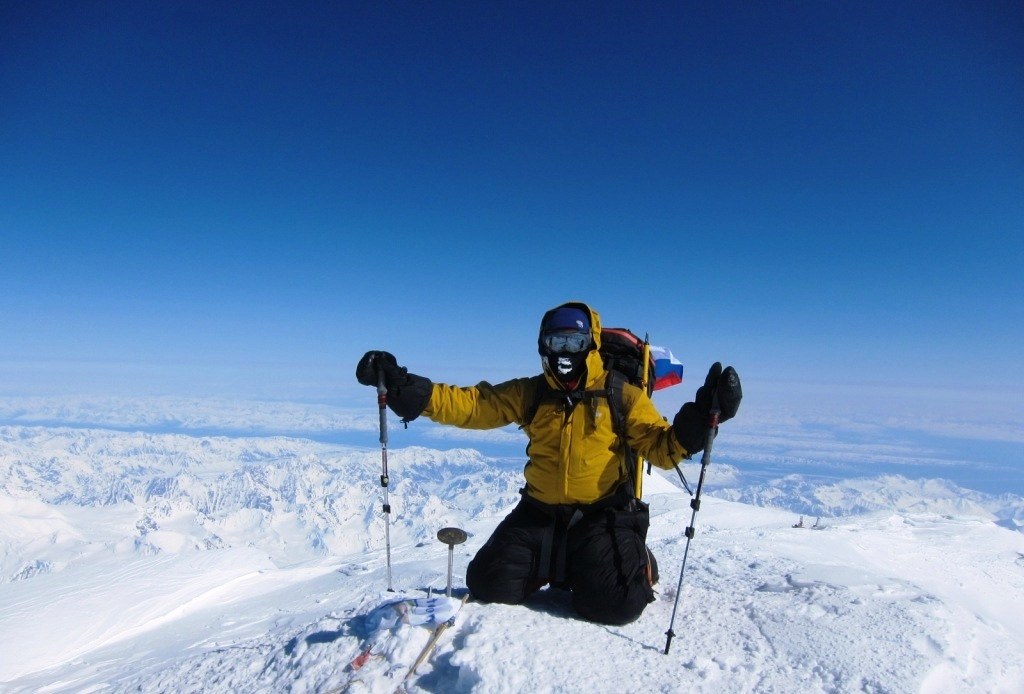
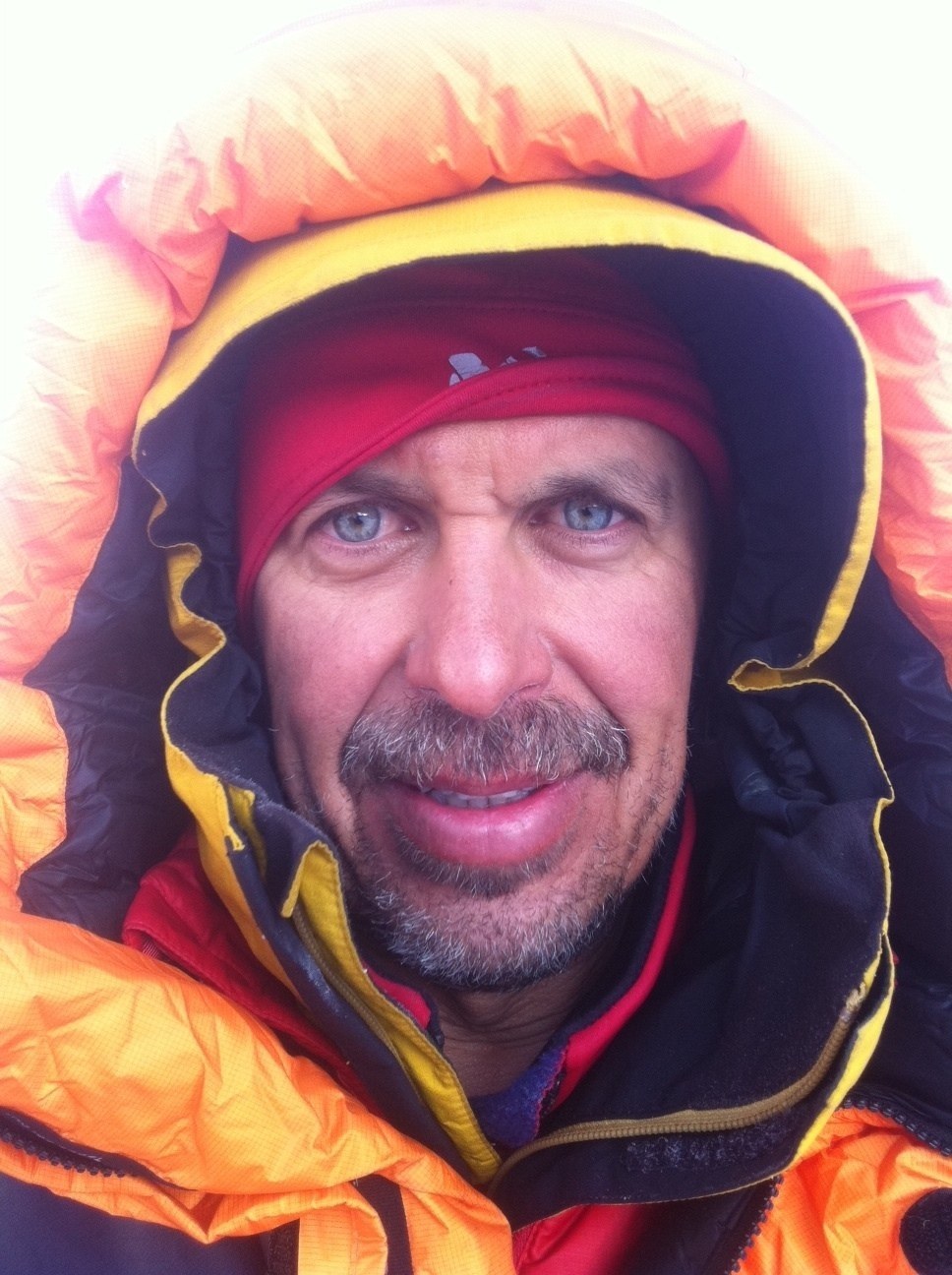
May 17, 2012 Mikhail Turovsky climbed the summit of MountMcKinley . This was his final climb in the program 7 summits . Our congratulations to Michail, who was in our team last year, climbing Everest and Vinson. It should be noted that ...
May 17, 2012 Mikhail Turovsky climbed the summit of MountMcKinley . This was his final climb in the program 7 summits . Our congratulations to Michail, who was in our team last year, climbing Everest and Vinson. It should be noted that Michail climbed solo and in a rather difficult weather conditions. It was only the fifth ascent of the season on Mount McKinley.
Summit photo
McKinley climber retreats, ending 2nd try at winter ascent (AND)
McKinley.
Minnesotan spends week hunkered down before quitting. For the second straight winter, Minnesota adventurer Lonnie Dupre is calling it quits on Mount McKinley after spending a week in a tiny snow cave while waiting for a break in the weather ...
Minnesotan spends week hunkered down before quitting.
For the second straight winter, Minnesota adventurer Lonnie Dupre is calling it quits on Mount McKinley after spending a week in a tiny snow cave while waiting for a break in the weather that never materialized.
Dupre, 50, spent seven days and six nights at 14,200 feet in his second effort to become the first person to make a solo January ascent of the 20,320-foot mountain.
Battling wind gusts that nearly reached 100 mph, according to his website, Dupre began his descent Friday, leaving behind the snow cave in which he spent a week hoping for the wind to subside and visibility to clear enough for him to continue moving up.
"I was forced to make the decision to descend after receiving word that there was another week of the daunting weather around the corner. You just can't climb being blown off your feet," Dupre said in a report from project coordinator Stevie Anna Plummer.
Last January, Dupre made it to 17,200 feet before visibility became an issue and forced him to hunker down for seven days. By the time he got a break in the weather, his body was so weak from spending so much time at high altitude that instead of resuming his ascent, he headed down the mountain.
This time, he holed up at a lower altitude and remained strong and healthy throughout a wind-swept week, Plummer said.
Dupre's climb began Dec. 22 when he was dropped off at the 7,200-foot Kahiltna Glacier base camp -- which is deserted during the winter -- with enough food and fuel to last a month.
On Friday, Dupre endured a long day during which he descended from 14,200 feet to 11,200 amid howling winds. The wind became ferocious on Thursday, with gusts of 97 mph reported by NOAA Aviation, according to Plummer.
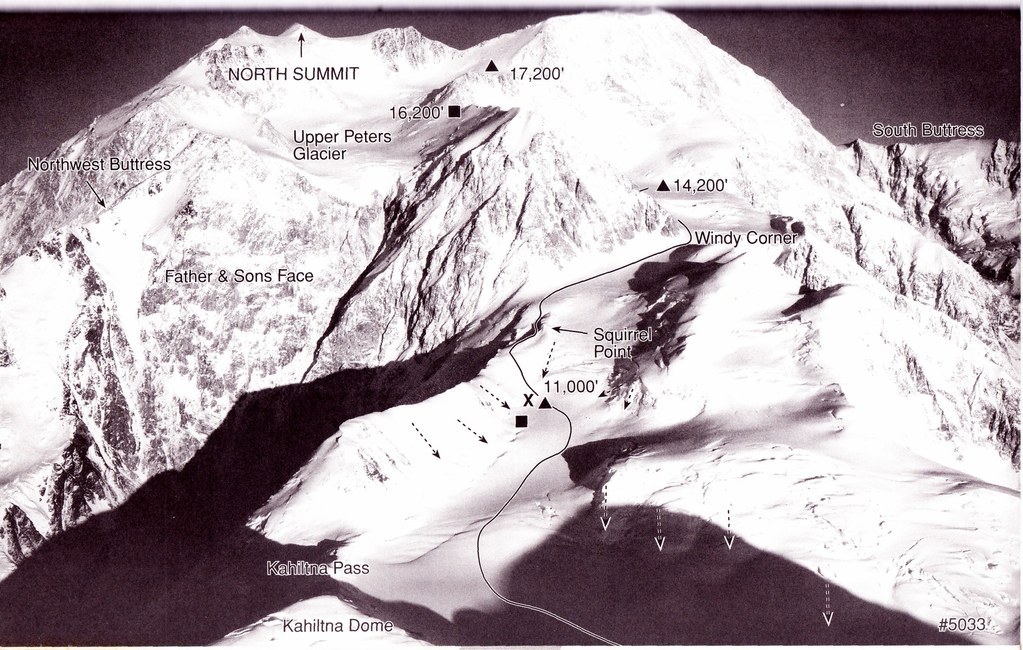
"On his descent (Friday), Lonnie managed to get around Windy Corner without being blown off his feet by using both ice axes and crampons to dig in as the gusts would hit him," Plummer reported. "He then proceeded down Squirrel Hill, an icy slope at 12,000 feet, in the dark. The gusts were up to 80 mph and blew Lonnie off his feet, but was able to self arrest.
"He then had to down-climb the remaining three-quarters of Squirrel Hill backwards daggering with both ice axes and using crampons to prevent being blown off his feet again."
Before making the decision to descend, Dupre's time at 14,200 feet was spent mostly inside the snow cave he built, which Plummer said measured four feet by four feet, with occasional ventures outside to secure gear and check on the exterior of the snow cave.
"At about 1:30 a.m. (Friday), Lonnie spent an entire hour in the heavy winds outside securing gear and making sure the snow cave was not being effected by the extreme winds. The winds were so strong that the snow was literally being picked up and thrown into Lonnie's face, almost suffocating him," Plummer reported.
Few people have succeeded summiting Denali during the winter -- alone or in groups -- and only once has the mountain been climbed in the dead of winter in January, when daylight is scarce and weather is sometimes lethally brutal.
A team of two Russians made a January ascent in 1998 and only 14 others have stood atop North America's highest peak in the winter, a stretch defined by the National Park Service as running from the Dec. 21 winter solstice to the March 21 spring equinox.
By BETH BRAGG
Anchorage Daily News
Published: January 8th, 2012 07:43 PM
News from the Seven Summits
Everest.
Carstensz Pyramid FORMER Gwent rugby star Richard Parks told of an “adventurous and mysterious” trek as he climbed the highest mountain in Australasia and completed the first half of his global expedition ...
Carstensz Pyramid
FORMER Gwent rugby star Richard Parks told of an “adventurous and mysterious” trek as he climbed the highest mountain in Australasia and completed the first half of his global expedition challenge. The ex-Dragons and Wales player reached the summit of the 4,884 metre high Carstenz Pyramid in West Papua, Indonesia on Wednesday, local time.
This followed a seven-day trek and climb and represents the completion of the fifth of nine legs.
It means Parks is still on track to become the first person to climb the highest summit on each of the world's seven continents and venture to the north and south poles in seven months.
He described the climb, starting from dense tropical jungle, as "the most elusive, mysterious and adventurous of the seven summits." While it has the lowest summit altitude, it is the most technically challenging as it involves difficult scrambling, rock climbing and abseiling.
Parks also trekked through jungle to base camp, which involved walking through rivers, mud and torrential rain in extreme humidity. There were also concerns that the Japanese Tsunami might hit West Papua and cause delays, however, the island remained unaffected.
Parks has now successfully completed The South Pole, Mount Vinson in Antarctica, Aconcagua in South America, Africa’s Kilimanjaro and now Australasia’s Carstensz Pyramid. Next up is the North Pole.
He is hoping to raise £1 million for Marie Curie Cancer. Follow him at 737challenge.com.


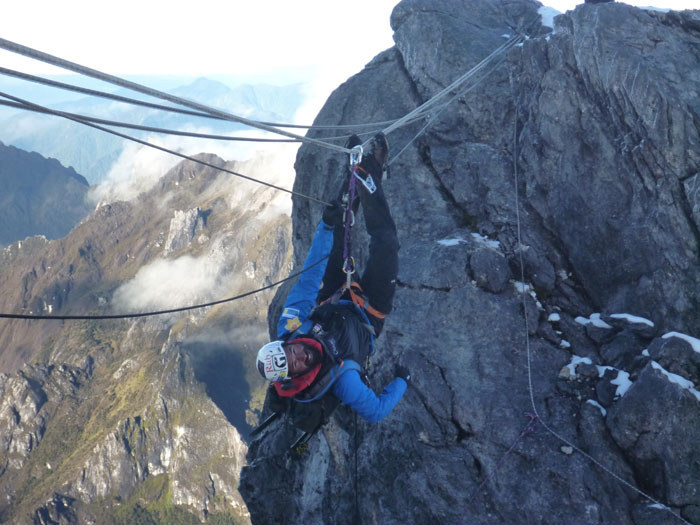
Mount Everest
The Guinness World Record holder as the oldest Mount Everest climber, is currently in Brunei Darussalam as the Ambassador of Visit Nepal Year 2011 to promote Nepal tourism in Brunei Darussalam.
Mr Min Bahadur Sherchan broke the world record by reaching the summit of Mount Everest in 2008 at the age of 77 years.
He has been in Brunei since March 18 and has visited Kuala Lumpur and his next destination is Singapore.
While in Brunei, the now 80-yearold Mr Min Bahadru Sherchan, has participated in various activities carried out by Gurkha members at the British Army Camp in Seria and had special sessions to promote Nepal tourism.
In an interview with the Borneo Bulletin, Mr Min Bahadur Sherchan said he has been appointed as Ambassador of Visit Nepal 2011 by the Nepal Tourism Secretariat.
It is to lure travellers from South and North Asia like Hong Kong, Malaysia, Singapore, It is to lure travellers from South and North Asia like Hong Kong, Malaysia, Singapore, Brunei, Japan, India and other European countries such as United Kingdom and United States to Nepal.
Mr Min Bahadur Sherchan (right) with his family members while visiting the Gurkha Army Camp in Seria.
The oldest Mount Everest climber said despite his age, he plans to ascend Mount Everest next year to break his own record as the oldest climber.
He extend an invitation to Bruneians to travel to Nepal as both countries have good relations and to mark the Visit Nepal Year 2011, adventurous activities will be organised such as track events, mount climbing and visit to remote areas.
He said Nepal has natural beauty and the Nepalese are warm and friendly. Nepal is also renowned for its culinary treats and affordable shopping as well as rich in culture and tradition.
During the sharing session, he said that he had to wait until the age of 77 to climb Mount Everest due to financial limitations. He added that he had to spend over US$25,000 to achieve his dream and as a Nepali, he aimed to compete with other world record holders who are mostly foreigners.
Recollecting his achievements, he said, he has climbed three mountains in Nepal. When he was 72, he walked a distance of 1,028 kilometres from the North to West of Nepal in 20 days and at the age of 73 he walked for seven days from East to South Nepal while enduring the blistering heat and snowy weather.
He said age is no barrier and his secret to staying fit is practising healthy eating
. He does not consume rice and eats a little portion of meat but large quantities of vegetables and traditional Nepalese food `Kodo'. He also complements his healthy diet with a 30-minute morning exercise and yoga every day.

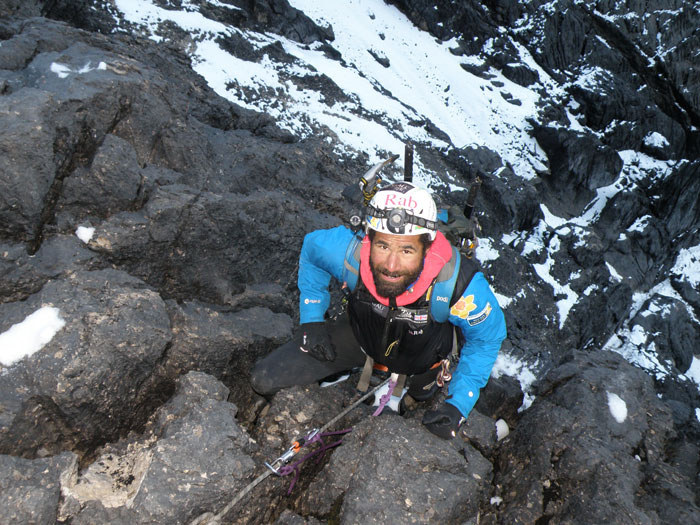
Seven summits of Steve Giesecke
Vinson.
There are few things on earth as rare as a truly perfect silence. Steve Giesecke would know. Having summitted the highest peak on each of the world's seven continents - each on the first attempt - Giesecke has been everywhere from the ...
There are few things on earth as rare as a truly perfect silence. Steve Giesecke would know.
Having summitted the highest peak on each of the world's seven continents - each on the first attempt - Giesecke has been everywhere from the equatorial jungles of Indonesia, and most recently, to the ice sheets of Antarctica.
The retired Air Force colonel returned from his final climb there only a few weeks ago. It was at Mount Vinson, on the world's most remote continent, where he experienced the most enveloping stillness he's ever known.
"When there's no wind - often there's wind - but when there's no wind, it's the quietest place on Earth," Giesecke said.
He found himself on a continent without a shred of development - no roads, cars, or people outside his group. The ice and snow absorbed any ambient noise around them. Even the voice of the nearest person couldn't travel far.
"You can hear your eyes blink," he said.
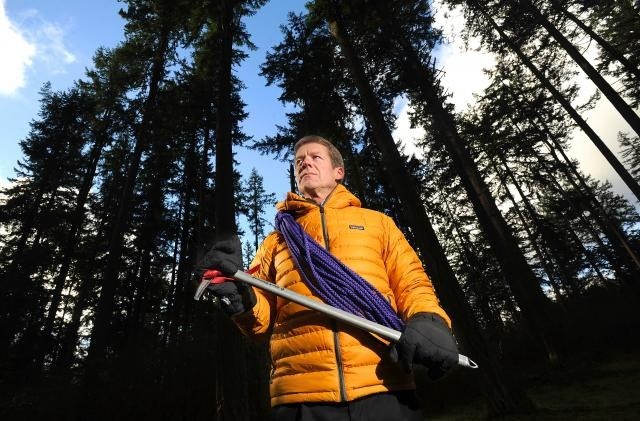
Like a lot of contractors at Joint Base Lewis-McChord, Giesecke spends most of his days at a desk. He works for the National Center for Telehealth and Technology, a Department of Defense office working to meet the psychological health and traumatic brain injury needs of the military community by developing and implementing technology solutions.
"I'm working on one of our initiatives that will bring the mental health programs of the DoD and VA closer together through collaboration on new technology assessment and development, in the areas of Web-based resources, social media and mobile applications," Giesecke said.
But in spite of the hours he spends in front of a computer, Giesecke's passion is pushing himself to the limit in some of the world's most inspiring locations. The result is a spectacular list of experiences - and more than a few examples of sheer determination.
Giesecke grew up in the Northwest, where hiking in the region's mountain ranges was almost a given. After college he climbed the Jungfrau in the Swiss Alps, which sparked an interest in climbing. When he joined the Air Force, he made a point of climbing mountains in the western U.S. between assignments.
Then in 1989, while stationed in Alaska, he climbed Denali, also known as Mount McKinley.
At 20,320 feet tall, Denali is the highest peak in North America and experiences some of the most severe weather in the world. In 1989 only 51 percent of climbers summitted the mountain, according to the National Parks Service. Today that number is 55 percent.
Giesecke had what he called "the usual experiences" on Denali. The weather was bad and only three of the people in his party made it to the top. At one point another group's tent was blown loose from the ridge above. Only one of the climbers made it out in time.
"It was very difficult back then," Giesecke said. "It still is very difficult, but back then things were a little bit heavier. You needed to take more time on the mountain to move the heavier equipment up."
About the same time, he read the book "Seven Summits" by Dick Bass, Frank Wells and Rick Ridgeway. Though at the time Giesecke thought the task out of reach for himself, the story of Bass and Wells, the first two men to successfully summit all seven peaks, would stick with him for years.
SETTING THE GOAL
When he retired from the Air Force a decade ago, Giesecke moved back to the Pacific Northwest, joined The Mountaineers club and started taking climbing classes. He continued climbing in the area, including summitting Mount Rainier multiple times. But Giesecke wanted a challenge that was bigger than he was. He wanted to know exactly how far he could go.
"I was in peak condition. I knew that if I was ever even going to have a shot at climbing the seven summits, any more of the seven summits, I knew it was then," Giesecke said.
In 2007 he signed up for a trip to Aconcagua on the Argentinean-Chilean border. The 22,841-foot peak is the highest outside of Asia. Giesecke told himself that if he made it to the top without any significant problems he would go straight to Nepal to climb Mount Everest. And in March of 2007 - after a U.S. pit stop just long enough to renew his passport - that's exactly what he did.
According to friend and fellow climber Gary Talcott, who grew up with Giesecke in Olympia, this level of resolve isn't out of the norm.
"He is very ambitious, goal oriented and determined to summit," Talcott said via e-mail, recalling a time when Giesecke helped him lead a group of climbers down from Mount Hood in whiteout conditions.
"It's fun to hear about his latest plans or last adventure," Talcott said. "I can just see the wheels turning."
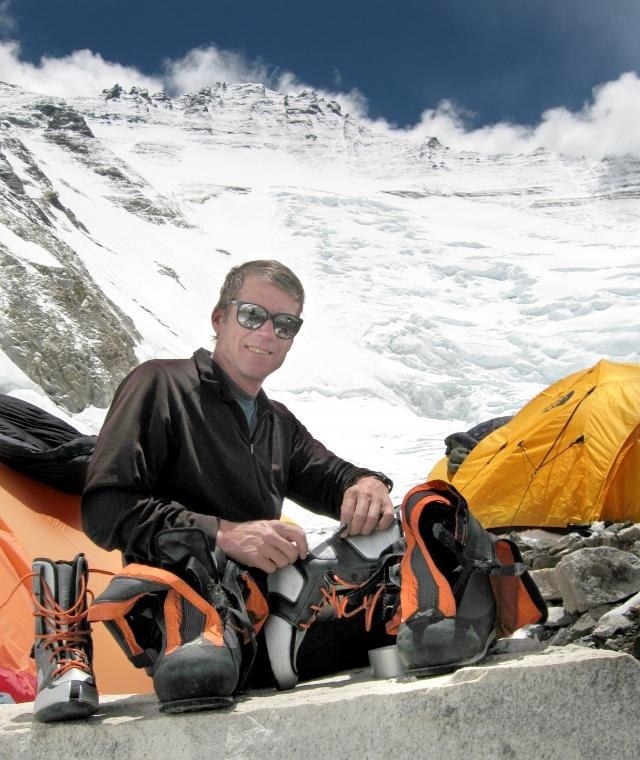
The Everest trip took him two months.
Mount Everest is the tallest mountain above sea level in the world. A 1999 survey sponsored by the National Geographic Society puts the mountain at 29,035 feet tall, so high that its peak reaches into the lower limits of the jet stream. Sustained winds at the top can exceed 100 miles per hour. In July, the warmest month on the mountain, the average daytime temperature at the summit is -2 F. In January, the coldest month, the average is -33 F but can drop as low as -76 F.
Conditions are, in a word, extreme. Giesecke's experience was nothing less.
Among the final hurdles before reaching Everest's summit is the Cornice Traverse, a 400-foot knife-edged ridge leading to the Hillary Step. Teetering too far to the left would send a climber down 8,000 feet along the Southwest Face. A misstep to the right would result in plummeting 10,000 feet down the Kangshung Face.
It was here that the snow beneath Giesecke broke through, sending him sliding downward.
"I only fell about 20 feet, but the air beneath my boots was endless," he said.
Fortunately the anchors held, and he continued toward the top. After tackling the final obstacle, the 40-foot climb up the Hillary Step, Giesecke summited the mountain.
"I went up Everest on May 20, 2007, and that was a fantastic day," he said, "to be on top of the world."
DOWNHILL FROM EVEREST
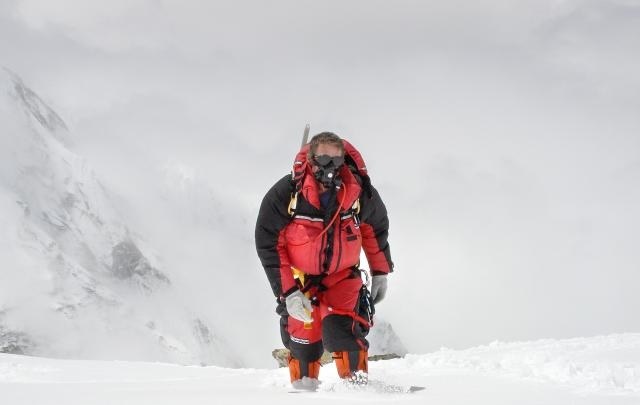
The following year he took on Mount Elbrus (18,510 feet tall) on the border between Russia and Georgia. After that he went straight to Mount Kilimanjaro (19,340 feet tall) in Tanzania, leaving the area only two days before Russia's invasion of Georgia in the summer of 2008.
His next challenge was Carstensz Pyramid in Indonesia. Because the highest point on the continent of Australia is little more than a hike, some climbers take on the 16,500-foot peak to check Oceania off their lists.
While the climb itself includes a 2,000 foot wall climb topped by a Tyrolean traverse-a gap of air climbers cross on a rope suspended between two high points-getting there is a challenge all its own. Even reaching base camp requires a two-week trek through the jungle, days away from civilization.
According to Giesecke, it's the toughest trail he's ever been on.
"The face climb itself was actually fun," he said. "The jungle approach was a once in a lifetime thing. I wouldn't do that again."
And so, there was only one left. Mount Vinson, Antarctica's tallest peak, stands at 16,050 feet tall. But to get to it, Giesecke would have to wait.
In January he traveled to Punta Arenas, Chile. From there he planned to fly to Antarctica - but things were not as simple as he had hoped. A strike over rising fuel prices shut down the area, leaving Giesecke cut off from the last of the seven summits.
"It's challenging to accept things beyond my control," he said.
For him, waiting is the hardest part about mountain climbing - knowing that the goal is out there ahead of you, but not being able to reach out and grab it.
Giesecke was stranded in Patagonia for two weeks waiting for the strike to end. Not everyone in the group was as patient or invested. Some went home before so much as setting foot on Antarctica.
Not Giesecke.
"I'd gone all the way down to the end of South America to complete this trip," he said. "That's what I intended to do and that's what I did."
On Jan. 27, he made it to the top, finishing a journey he started in 1989.
"It's still sinking in," Giesecke said. "When I finished I came back home and I got out the book 'Seven Summits' and looked at it again."
Like explorers before him, Giesecke has been asked time and again why he does it. And really, there are countless reasons - the camaraderie of accomplishing great things with other people, the physical challenge, George Mallory's classic "Because it's there."
But for Giesecke, perhaps what it really comes down to the liberating challenge.
"I think when you're climbing it's one of the ultimate expressions of freedom," he said.
There aren't many places left with so few restraints, he said. But when he's pushing himself toward the summit of some impossibly high mountain, the only thing holding him back is how high he can climb.
By Marisa Petrich (Northwest Guardian)

Expedition of friends of our Club, around the world
McKinley.
Krasnoyarsk climbers led by Nikolai Zakharov begin tomorrow their route on Aconcagua. A Siberian region team consists of experienced athletes, and that ascent will be their training before the championship of Russia in high-altitude ...
Krasnoyarsk climbers led by Nikolai Zakharov begin tomorrow their route on Aconcagua. A Siberian region team consists of experienced athletes, and that ascent will be their training before the championship of Russia in high-altitude climbing. Contact with the incoming Argentine company was organized by our club. A little bit earlier there, under the slopes of the highest mountain in South America, another expedition came from Siberia. It is a team from the city of Surgut, Siberian region Yugra led by the initiator of the movement "Mountaineers of 60-th parallel" Constantine Gruzdev. He is also our old friend, we hope that in the future we will cooperate with his team. After Aconcagua, next aims of Siberians must be Vinson and Everest.
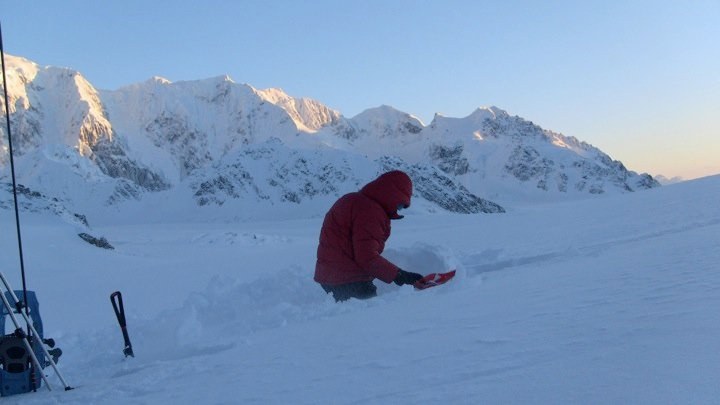
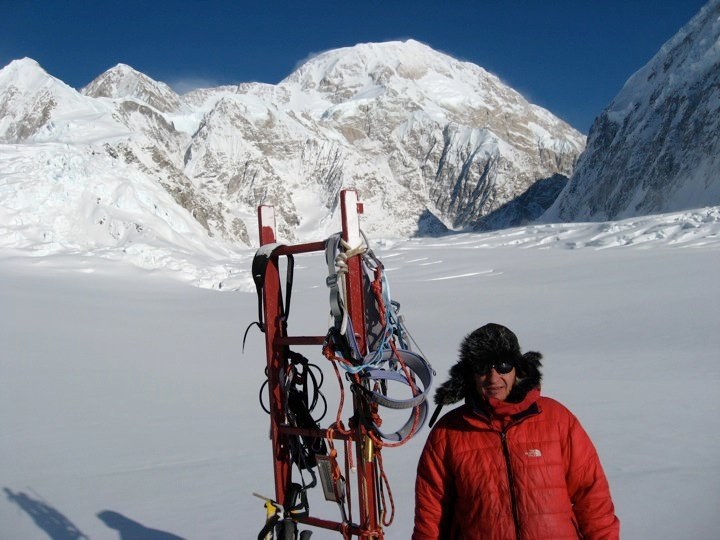
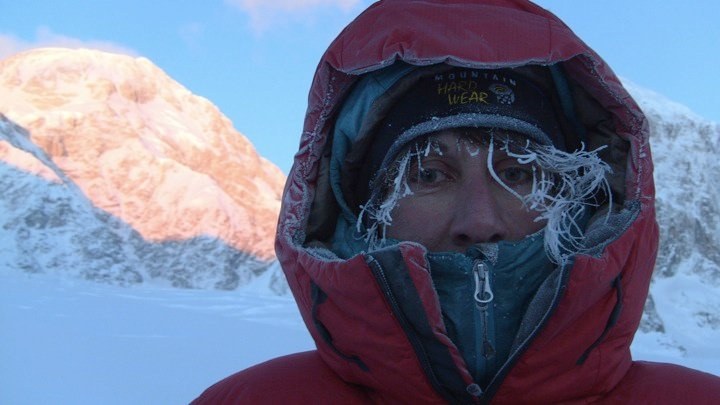
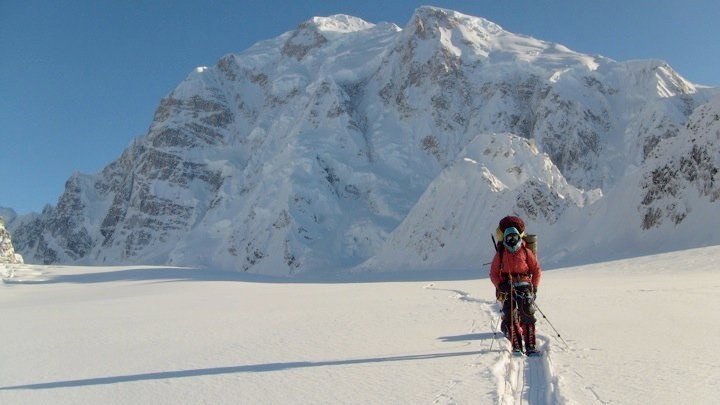
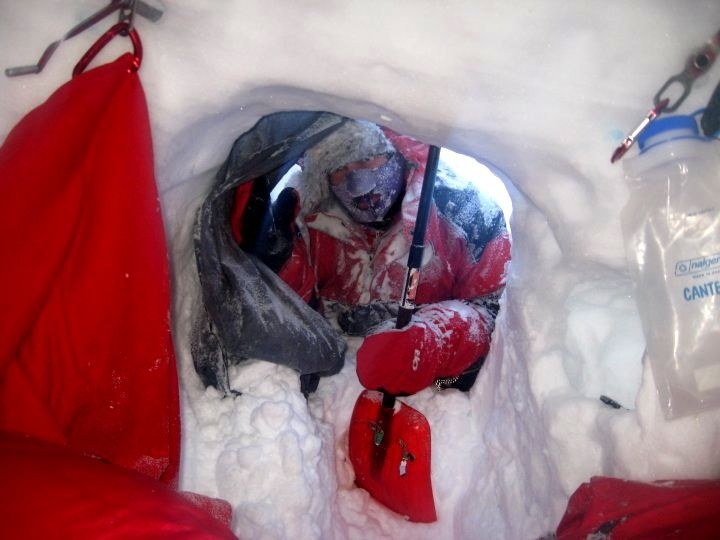
Arthur Testov and Christine Ferre flew to the base camp at Mount McKinley on Friday, February 4, after several days of waiting the weather. Fresh snow hampered the first days of their work. They went on Ski Hill, where it was found that it is difficult to make a convenient cave. Too close to the surface is a layer of ice. How they came out of the situation, we learn later.
Last year picture from Arthur
Gleb Sokolov informed us about his cancellation of expedition on Everest this year. Unfortunately, his partner Vitaly Gorelik broke his leg and could not be recovered to April. Gleb has changed plans and now joins an expedition to Kanchenjunga, which is organized by Alexey Bolotov. There he will work with another big friend of our Club Israfil Ashurly. President of Mountaineering Federation of Azerbaijan is now organized participation of Azeri mountaineers in a winter ascent of Mount Ararat. February, 12 Turkish and Azeri mountaineers will start their joint climb to the summit Agrydag, as they names Ararat. There will be 53 mountaineers from Turkey and 10 climbers from Azerbaijan in the expedition
Dupre abandons solo winter attempt on Mt McKinley, Testov and Ferre are on start
McKinley.
Seven days and six nights at 17,200 feet, spent almost exclusively inside a 3x3x6-foot snow trench, sapped Dupre of his strength and fitness, an update on the website said. "He has made the decision to continue down to base camp," it said. ...
Seven days and six nights at 17,200 feet, spent almost exclusively inside a 3x3x6-foot snow trench, sapped Dupre of his strength and fitness, an update on the website said. "He has made the decision to continue down to base camp," it said. "... Lonnie was set for a summit attempt, but mother nature decided that it would 'test' him for 7 days, with winds up to 100 mph, temperatures reaching -50 and a 5.4 magnitude earthquake. ... There is an old saying that you don't (mess) with mother nature, and I think Lonnie knows and respects that power more than ever!"
Dupre, 49, is from Grand Marais, Minn. He has been on numerous polar adventures, including some in Alaska. Had he succeeded in his attempt to scale the 20,320-foot Denali, he would have become the first person to make it to the top alone in January and the fifth to make it to the top alone during the winter.

The first successful winter climb of McKinley came in 1967, when Ray Genet, Dave Johnston and Art Davidson reached the summit on Feb. 28.
In February 1984, Japan's Naomi Uemura became the first person to reach the summit alone in the winter, but his climb is not considered a successful ascent because he was killed on the way down. His body remains somewhere on the mountain.
In March 1988, Alaska's Vern Tejas made a successful solo winter ascent. Other successful solo winter attempts were made by Alaska's Dave Staeheli in March 1989 (his was the first solo ascent up the West Rib route; Uemura and Tejas climbed the more popular West Buttress route, which is also the route Dupre chose) and by Japan's Masatoshi Kuriaki in March 1998.
Also in 1998, Artur Testov and Vladimir Ananich of Russia made what remains the only successful ascent in January, when daylight is at its scarcest.
Artur Testov and Christine Ferre
“Hi, This is Christine and Artur. We will be leaving home this Sunday, YEAHHH!. I just read this from Antoine de Saint-Exupery: " Fais de ta vie un rêve et d'un rêve une réalité " "Make a dream of your life and a reality of the dream"
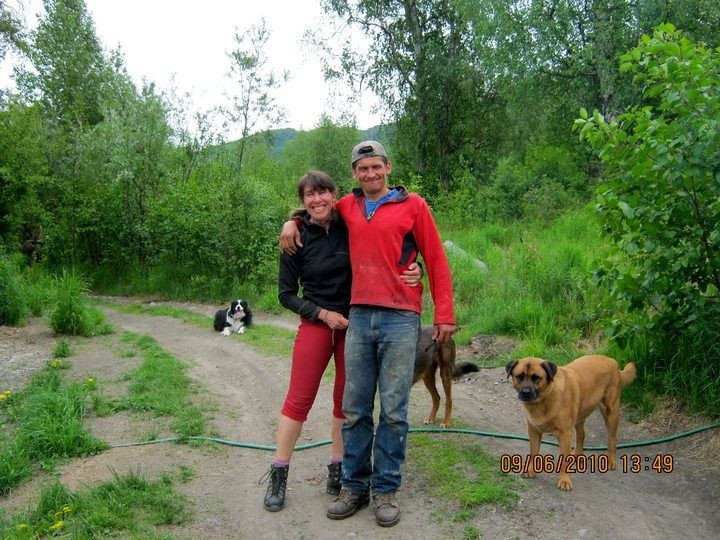
Our big Dream - 1st Woman to Climb McKinley in the Winter - 1st Couple too!
Feb 1st, 2011 departure from Talkeetna with Talkeetna Air Taxi
We are training hard and getting hyped...
Let's hope the mountain shows us her gentler side this time and lets us go up all the way... and of course back down!
Follow us on our Expedition Facebook page Winter McKinley - See you there!
http://www.facebook.com/pages/Winter-McKinley/130263643662260
This is our new page, come and join us. This page has updates on our training, our life in Alaska, and will have live audio updates while we are on the mountain.
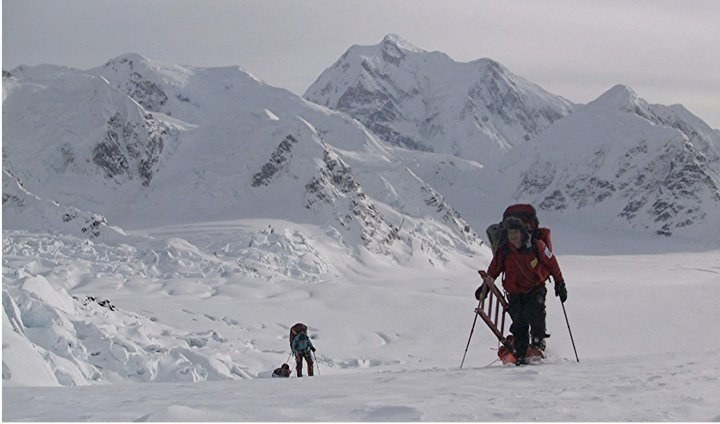
Last year photos
*******
Additional
(Reuters) - A climber who was trying to become the first person to scale North America's tallest peak alone in winter has abandoned the effort after spending a week in a frigid and cramped snow trench near the upper reaches of the mountain.
Lonnie Dupre announced in a blog post on Wednesday that he has decided to end his expedition after being pinned down by bad weather on 20,320-foot Mount McKinley.
Dupre said the long stay at the 17,200-foot level weakened him.
"The weather stayed quite awful. It was well below zero and blowing much of the time between 40 and 80 miles an hour," he said in an audio report called in by satellite phone and posted on his blog.
"After seven days, supplies started getting critically low and my body very weak from lying and sitting in a snow cave at that level," Dupre said.
Dupre said he descended on Tuesday to 14,200 feet when there was a break in the weather and on Wednesday made the "very, I guess, nervous decision" to keep descending to the mountain's base camp and quit the effort.
An accomplished and celebrated polar explorer from Minnesota, Dupre was attempting to scale the mountain without a tent, using a strategy of building snow caves along the route.
Only a handful of people have attempted to climb McKinley in winter, when daylight is scarce and the weather is fierce.
There has never been a solo climber who has reached the summit in January, although a Russian team was able to complete the feat in 1998.
"The simple reason why people don't come up here in the winter is it's not a whole lot of fun for most," said John Leonard, south district ranger for Denali National Park, where McKinley is located.
Temperatures that typically dip to minus-40 degrees, winds that blow at 50 miles an hour and more and lack of daylight at the mountain's near-Arctic latitude "don't make for a pleasant experience for most," said Leonard.
The conditions that Dupre encountered were normal for winter on the mountain, which is also known as Denali, and at times better than average for this time of year, Leonard said.
Each year about 1,200 to 1,300 people climb the mountain, almost all during a brief season from April to July.
Records show that only 16 people have tried winter ascents, and six have died in their efforts, he said.

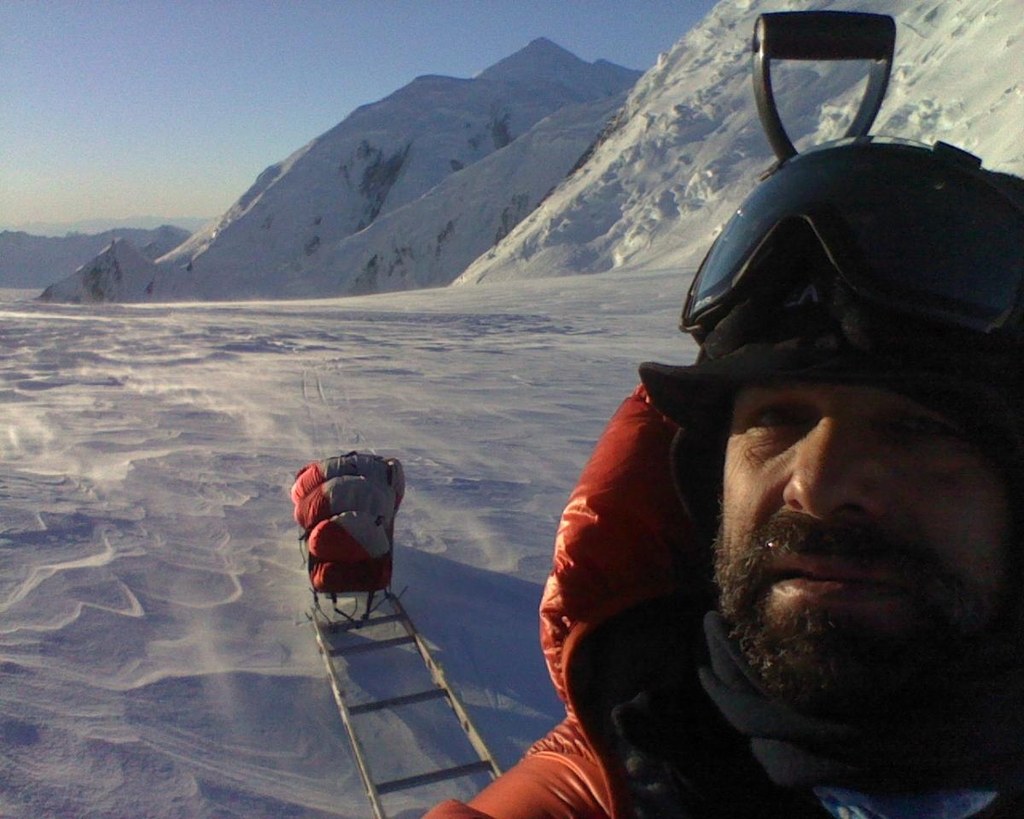
Explorer will attempt first solo January ascent of McKinley
McKinley.
HIGH RISK: Lonnie Dupre cites historic climbers as inspiration. January 7th, 2011-- Polar explorer Lonnie Dupre departed today for the Kahiltna Glacier located at the base of Denali, aka Mount McKinley, in Alaska. Dupre is attempting the ...
HIGH RISK: Lonnie Dupre cites historic climbers as inspiration. January 7th, 2011-- Polar explorer Lonnie Dupre departed today for the Kahiltna Glacier located at the base of Denali, aka Mount McKinley, in Alaska. Dupre is attempting the first solo January ascent of Denali.
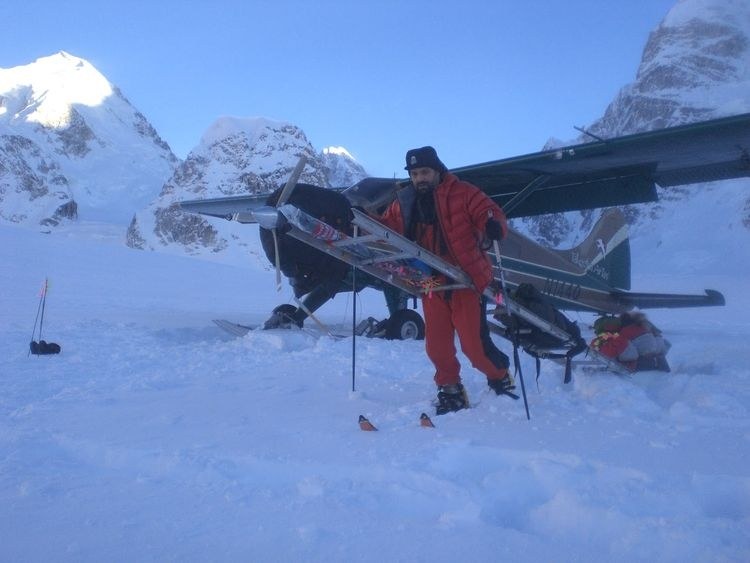
By adn.com. A Minnesota man known for his polar adventures got an extra day Wednesday to think about -- and fatten up for -- his quest to become the first person to make a solo ascent of Mount McKinley in the dead of winter.
 A storm delayed Lonnie Dupre's plans to leave Talkeetna for the mountain. He said in a telephone interview that he'd use the time to shovel in more calories to fuel his body for a trek that is likely to last three or four weeks.
If the delay also fueled his anxiety over the high-risk climb, he wasn't letting on.
"It's good to have a little bit of nervousness going into it, because you always have that going into a project that's on the edge," Dupre, 49, said. "But once you get there and kind of get in tune with your environment, then you begin relaxing.
"... I'm not even thinking about the summit, actually. I'm just thinking about getting out there and doing some winter camping and moving my little legs in the right direction."
Dupre hopes to go where few men and no women have gone before: to the top of 20,320-foot McKinley in the winter.
To make things more interesting, he plans to go alone and in January -- something that only a few others have tried, none of them successfully.
Of the 16 people who have stood atop McKinley between the winter solstice and the spring equinox, only four made the trip alone, and the body of the first -- Japan's Naomi Uemura, who died on his descent -- remains somewhere on the mountain.
Only one team has reached the summit in January, when 5 1/2 hours is it for daylight -- Russians Artur Testov and Vladimir Ananich on Jan. 16, 1998. On March 8 of that same year, Japan's Masatoshi Kuriaki reached the summit to become the fourth man to make a solo winter ascent.
No one has successfully climbed North America's tallest peak in the winter since then, though there have been several attempts.
"We always seem to have anywhere from one to four or five people each winter," said Missy Smothers of the Denali Park Service. "It's exciting, but we always hold our breath."
And for good reason.
There are no rangers and no base camp operations on McKinley during the winter, when whiteouts, howling winds and deep snow make travel more treacherous than usual. Of the 16 who have summited in the winter, two died on their way down. Another four died on their way up, including a member of the expedition that put Dave Johnston, Art Davidson and Ray Genet on the summit in March 1967, marking the first winter ascent of the mountain.
Dupre, who lives in Grand Marais, Minn., knew about some of Denali's winter history when he decided this summer, shortly after his first McKinley climb, to make a solo winter attempt.
"Actually, Naomi Uemura was an inspiration to me years ago because he was first a polar explorer," Dupre said. "I knew about his death on Mount McKinley back in 1984, and it's always been on mind -- Naomi and that mountain -- since 1984."
Dupre worked as a commercial fisherman in Bristol Bay from 1983 to 1986, a period during which he spent the winter of 1985 by himself in the Brooks Range.
"That started everything rolling," he said. "I've been running around the Arctic and polar regions now for 25 years."
Dupre's resume is an impressive one. In 2006, he and Eric Larsen of Grand Marais traveled 600 miles from Canada to the North Pole, pulling and paddling canoes over shifting sea ice. In 2001 he and John Hoelscher of Australia became the first people to circumnavigate Greenland, dogsledding and kayaking the 6,517 miles in three stages. In the winter of 1991-92, he and Malcolm Vance of Shishmaref mushed 3,000 miles from Prudhoe Bay to Churchill, Manitoba. And in 1989, he was a member of the Bering Bridge Expedition that mushed and skied 1,000 miles along the Siberian and Alaska coasts.
"I love winter," Dupre said.
He knows how to travel, camp and survive in temperatures that plummet well below zero.
But he isn't a mountain climber.
"I did a little training prior to June and then came to Denali," Dupre said. "We had some basics of mountaineering, and we just decided to be cautious and take our time and we were successful. We made it to the summit in 13 days.
"... As I was traveling up the mountain, I started thinking maybe I should make an attempt to do Denali in the winter."
Along the way, Dupre met Vern Tejas, who in March 1988 became the first person to make a successful solo winter ascent of McKinley. Uemura made it to the top of Denali on his solo trip in February 1984, but because he died on his way down, his is not considered a "successful" ascent.
"I visited with Vern quite a bit on Denali last spring," Dupre said. "I picked his brain a little about snow caves and about the route."
Back in Minnesota after his climb, Dupre started planning a return trip to McKinley. He contacted Tejas and Testov, who may be Denali's most experienced winter climber, having made four attempts and succeeding once. Last March, Testov and partner Christine Feret spent 12 days trapped in a snow cave at 10,000 feet before turning back.
"We threw a bunch of information back and forth, and I think I've got a good game plan," Dupre said.
Dupre said he chose to climb in January not so much because he could make history with the first solo ascent in the dead of winter but because he thinks he might get better weather than if he waited until February or March, when there is more daylight.
"I've done a lot of travel in the winter, and the dark part doesn't bother me," he said. "When I did a little research, I learned there's a little less precipitation in January, which means less snow, which means better visibility."
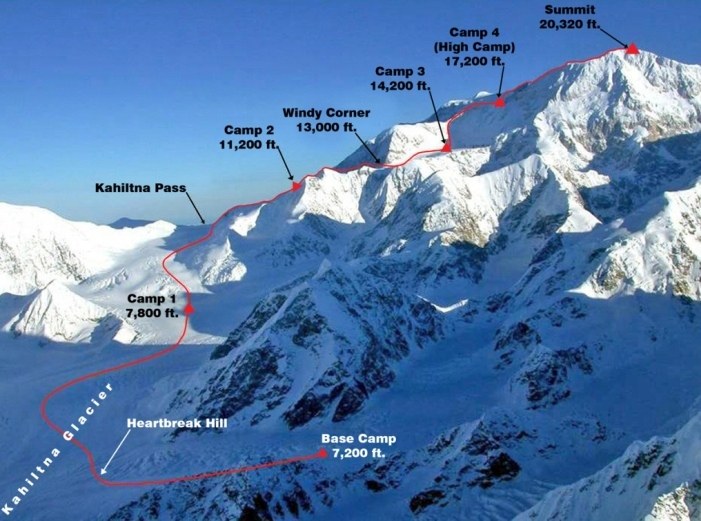
He'll pull a sled packed with 175 pounds of gear and supplies up the popular West Buttress route. He said he has enough food and fuel to last 38 days, though he's hopeful he won't be on the mountain that long.
"My first goal is the 7,800 (foot) mark, which is before you start climbing up the glacier," Dupre said.
After that, his plan includes stops at 9,700 feet, 11,200 feet, 13,500 feet, 14,200 feet, 17,200 feet, "and then the summit," he said.
Mount McKinley winter ascents
A climb is considered a winter ascent if the summit day falls between the Dec. 21 winter solstice and the March 21 spring equinox. Though numerous winter attempts have been made, only 16 climbers have made it to the summit. Six have died in the attempt, including three Japanese climbers who died on the West Buttress somewhere between 16,000 and 18,200 feet on Feb. 22, 1989.
Nine expeditions have put men atop McKinley in the winter:
• Feb. 28, 1967 -- Americans Dave Johnston, Art Davidson and Ray Genet, West Buttress route. Team member Jacques Batkin of France died on the ascent.
• March 7, 1982 -- England's Roger Mear and American Mike Young, Cassin Ridge.
• March 11, 1983 -- American Charlie Sassara and Robert Frank, West Rib. Frank died on the descent.
• Feb. 12, 1984 -- Japan's Naomi Uemura, West Buttress. Uemura vanished on the descent between 16,000 and 18,200 feet. First solo ascent.
• March 7, 1988 -- American Vern Tejas, West Buttress. First successful solo ascent.
• Feb. 20, 1989 -- Austrians Steinmassle Helmut, Helmut Mittermyer and Laserer Walder, West Buttress.
• March 11, 1989 -- American Dave Staeheli, West Rib.
• Jan. 16, 1998 -- Russians Artur Testov and Vladimir Ananich, West Buttress. First ascent in dead of winter.
• March 8, 1998 -- Japan's Masatoshi Kuriaki, West Buttress.
Source: Denali National Park

Our congratulations: Quebecer Franсois Langlois conquers the Seven Summits
Elbrus.
A member of 7 Summits Club François Langlois has reached the top of Antarctica's Vinson Massif, marking a decade challenge to climb the seven summits - the highest mountains of each of the seven continents: Mount Aconcagua, ...
A member of 7 Summits Club François Langlois has reached the top of Antarctica's Vinson Massif, marking a decade challenge to climb the seven summits - the highest mountains of each of the seven continents: Mount Aconcagua, Argentina, 2000; Mount Everest, Nepal, 2001, 2009; Mount Logan, Canada/Mount McKinley, U.S., 2003; Mount Elbrus, Russia, 2008; Carstensz Pyramid, Indonesia, 2008, Kilimanjaro, Tanzania, 2009; Vinson Massif, Antarctica, 2010. The glorious mountaineering quest was realised by Langlois with a noble purpose - to raise money for children's charities.
“I was born prematurely at 4 pounds, with underdeveloped lungs. I spent the first 5 weeks of my life in an incubator, dropped to 2 pounds and had multiple blood transfusions, jaundice, basically fighting off a whole slew of illnesses, fighting for my right to stay! 35 years have now gone by and with my fully developed lungs; I had the privilege to set foot a top of the world’s highest mountain; Everest. In those beautiful 15 minutes that I stood there, gazing at our amazing world, I made a promise; to help give back the gift I received. Recently, we found out that the pain in my chest was in fact a 2 pound benign tumour the size of a grapefruit on my left lung. It seems that I have carried this tumour with me since birth and climbed with it over the years. It was with me on Everest. As they removed the tumour, it burst, spilling a pint of fluid outside instead of in my lungs. I was spared from a pulmonary oedema that while on the Everest, would have been fatal. I enjoy with what eyes I see the world today!“ exclaims François Langlois.
Langlois supports, among other, Fondation Centre de cancerologie Charles-Bruneau, Child Haven International, The Montreal Children’s Hospital (McGill University Health Centre), The Make-A-Wish Foundation and World Vision.



We have updated the registration system on our website, please check your dates
We finished the next stage of development of our Internet projects (our sites). We have made several important changes and improvements. And it is made for you, our friends. First of all, we changed the registration system. In this regard, ...
We finished the next stage of development of our Internet projects (our sites). We have made several important changes and improvements. And it is made for you, our friends. First of all, we changed the registration system. In this regard, we ask you to review your own data, which were transferred from the previous version of registration. Inform us if you have any problem with registration.
Also, now you can join not only the "7 Summits" project, but also you could register your achievements in other projects, namely:
3 Poles
A new is a total ranking of member - a summary from all these projects. We also added "additional" peaks and objects to these projects ...
And you can leave now your comments to news and articles. It is very important to us. On the one hand, we are happy just to hear from each of you. On the other hand, we look forward to use your comments to improve quality of our publications.
To register your achievements in projects use following links
Russian version http://7vershin.ru/enter/
English version http://7summits-club.com/enter/
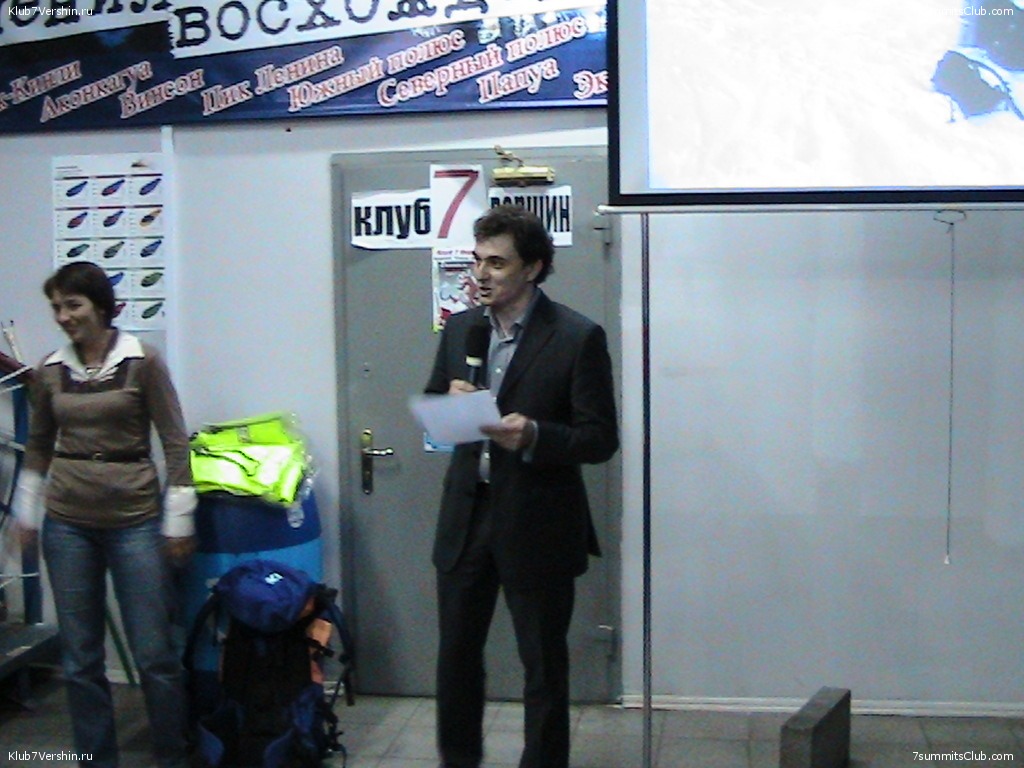
Evening party of 7 Summits Club was a great success
September, 30 we had a traditional evening meeting friends of 7 Summits Club. At this time, a record number of people came to hear reports on our expeditions. The famous mountain climber, winner of the Piolet d'Or Jury Koshelenko was the ...
September, 30 we had a traditional evening meeting friends of 7 Summits Club. At this time, a record number of people came to hear reports on our expeditions. The famous mountain climber, winner of the Piolet d'Or Jury Koshelenko was the chief guest. He spoke about his expeditions to Peru and the Pamirs. Then our guides were made with tales of his expeditions, we have shown films and pictures. Victor Bobok and Oleg Banar sang songs, we gave prizes for the best slogan for the club, played the lottery etc…
Photos from the party – full gallery is here >>>>>>>




12-year-old Matt Moniz, dad break speed record for states' high points
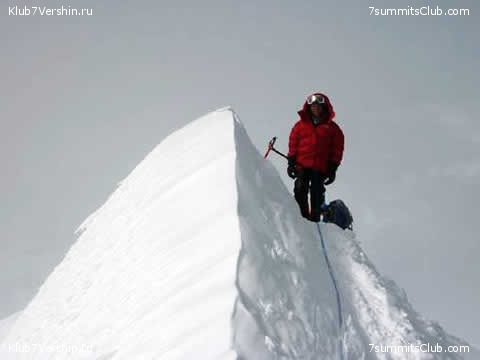
Matt Moniz, 12, and his father, Mike, stand atop the 13,804-foot Gannett Peak, Wyoming's tallest mountain. The two recently climbed the highest points of all 50 states in 43 days. Though he's only 12 years old, Boulder alpinist Matt Moniz ...
Matt Moniz, 12, and his father, Mike, stand atop the 13,804-foot Gannett Peak, Wyoming's tallest mountain. The two recently climbed the highest points of all 50 states in 43 days. Though he's only 12 years old, Boulder alpinist Matt Moniz has climbed through plenty of steep rock, snow and ice on his way to the summits of a couple of 20,000-foot peaks. But on his most recent adventure, he had to watch out for cows, too.
While trying to climb to the highest point in each state in 50 days, Matt flew in a borrowed Cessna to a rough landing strip near the Illinois high point.
"We had to fly by the runway to make sure there were no cows" before landing, he said.
He and his father, Mike Moniz, rode bikes from there to the high point, Charles Mound.
The pair stood atop their 50th high point, Hawaii's Mauna Kea, on July 16, stopping the clock at 43 days, 3 hours, 51 minutes and 9 seconds. It appears to be a new speed record for high points -- which are generally self-reported to the Highpointers Club but not verified by them, according to highpointers.org.
The Monizes started the journey when they reached the summit of Alaska's Denali, the most difficult of the 50 high points. If they couldn't get up it in a timely fashion, the goal of 50 in 50 would be impossible.
 "It would be hard to put aside three weeks for Denali for the speed record," Matt said.
For Matt, the 50 in 50 goal was another adventure that helped raise awareness and money for Pulmonary Arterial Hypertension. Matt has taken up the cause because his best friend, Ian Hess, has PAH. Last summer, the Monizes climbed 14 Colorado fourteeners in eight days for the same purpose.
"After we did 14 fourteeners, we wanted to do something bigger to raise awareness," Matt said. "And not just in Colorado, in the whole United States."
Mike said this experience was different than the 14 fourteeners.
"With the 50 in 50, as much as anything, it was a cultural experience for us," he said. "We heard everything from local politics to environmental issues. It was great."
In addition to flying, Mike and Matt made a 12,000-mile loop by van -- nearly half the driving distance covered by the last group to attempt this, Mike said. Volunteers from the University of Colorado, Colorado State University, and Joel Gratz, a Boulder meteorologist who became the trip's weather man, drove them state-to-state, nearly around the clock.
In the northeast, they did six high points in one day. Mike said they often snoozed in between in the van.
Mike started climbing when he was a student at CU in the 1980s. Matt's enthusiasm for climbing -- sparked by a trek to Everest Base Camp -- has rekindled his, he said.
"Matt got me re-energized in mountaineering, in the alpinist world."
Matt also serves as an ambassador for Outdoor Nation, which focuses on getting kids outdoors. Mike said he likes for the family to include community service in their climbing.
Matt wasn't sure what they'll do next summer.
"We're thinking about next year taking a little bit of a break, slowing it down a little bit, maybe doing some individual rock and ice climbs," he said.
"Maybe not do any big expeditions for a while."
By Jenn Fields fields@coloradodaily.com

I want to climb Kilimanjaro before I die: Bill Clinton
Everest.
VIENNA (AFP) – At the age of 63, former US president says he has one more mountain to climb before he dies -- and that's Kilimanjaro, the highest peak in Africa. Clinton revealed the secret goal -- along with his dream of running a ...
VIENNA (AFP) – At the age of 63, former US president says he has one more mountain to climb before he dies -- and that's Kilimanjaro, the highest peak in Africa.
Clinton revealed the secret goal -- along with his dream of running a marathon -- while in reflective mood at the 18th International AIDS Conference, where he made the keynote speech on Monday.

He explained that one of his favourite movies was "The Bucket List," a 2007 film in which two terminally ill men, played by Morgan Freeman and Jack Nicholson, draw up a list of things they wish to do before they die, and then travel around the world to do just that.
"I'll soon be 64, so I think I'm old enough to join Jack and Morgan in making a bucket list, but I have an A list and a B list, and the B list would be fun to do but doesn't amount to a hill of beans whether I get to do it or not," said Clinton.
"I'd like to climb Kilimanjaro before the snows melt, I'd like to run a marathon before I give out, there's lots of things I'd like to do but it doesn't really matter whether I do them."
Clinton said his "A" list was far more important than his "B" list..
"What I'd really like to do if I could have my wishes, I would like to live to see my own grandchildren.
"And I'd like to live to know that all the grandchildren of the world will have the chance in the not too distant future to live their own dreams and not die before their time."
Located in northern Tanzania, Mount Kilimanjaro, 5,963 metres (19,563 feet) high, draws thousands of hikers a year to its long but relatively gentle slopes. Walkers stay in camps at several phases on the climb before ascending the final stage at night to enjoy the view of the African plains at dawn from the peak.
In 2009 a US study warned that the snows capping Kilimanjaro could vanish altogether in 20 years, most likely due to global warming.
A veteran campaigner who has attended every International AIDS Conference since 2002 -- this is the fifth since then -- Clinton quipped that he relished the ability to speak freely since leaving office, despite the downside of being an ex-president.
"That's the great thing about not being president anymore, I can say whatever I want," he said.
He then added to a swell of laughter from the audience: "Of course, nobody cares what I say anymore, but I can say it!"

The group starts to return from Alaska
McKinley.
The expedition of 7 Summits Club at McKinley led by Maxim Bogatyriova began returning from distant Alaska. After descending from the summit and travel to Talkeetna, the group made several trips to the nearest surroundings, examined in ...
The expedition of 7 Summits Club at McKinley led by Maxim Bogatyriova began returning from distant Alaska. After descending from the summit and travel to Talkeetna, the group made several trips to the nearest surroundings, examined in detail all the sights of Anchorage. Everyone really wants to go home, so as far as possible, began to change flights, with dates of departure at an earlier date.
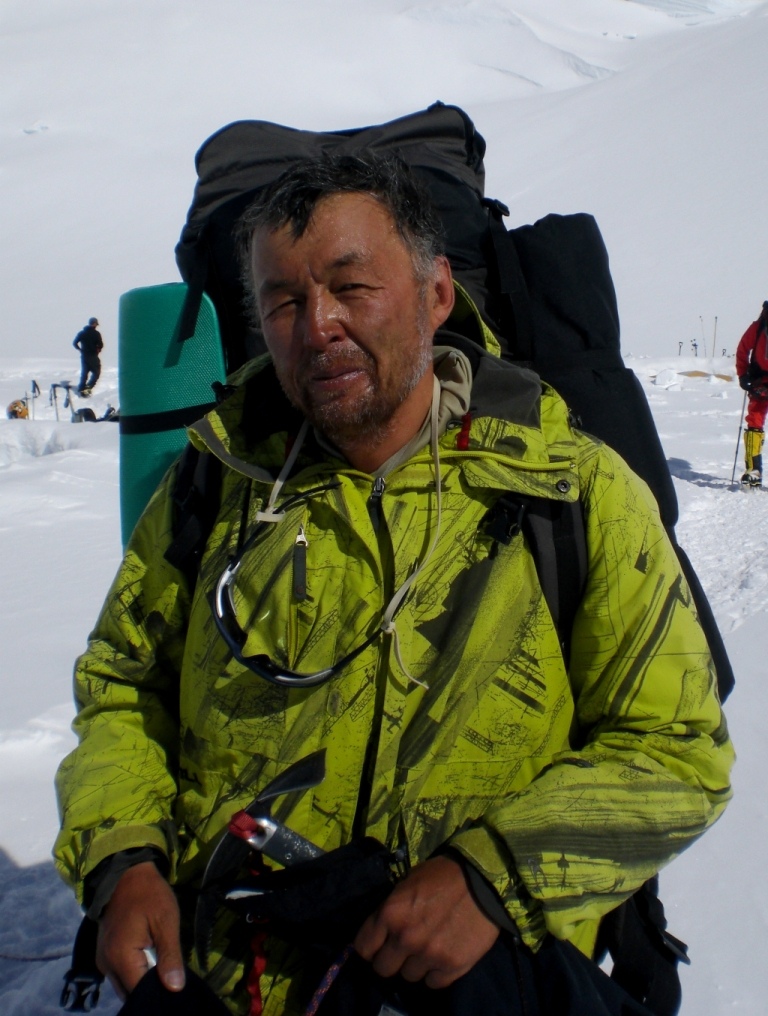
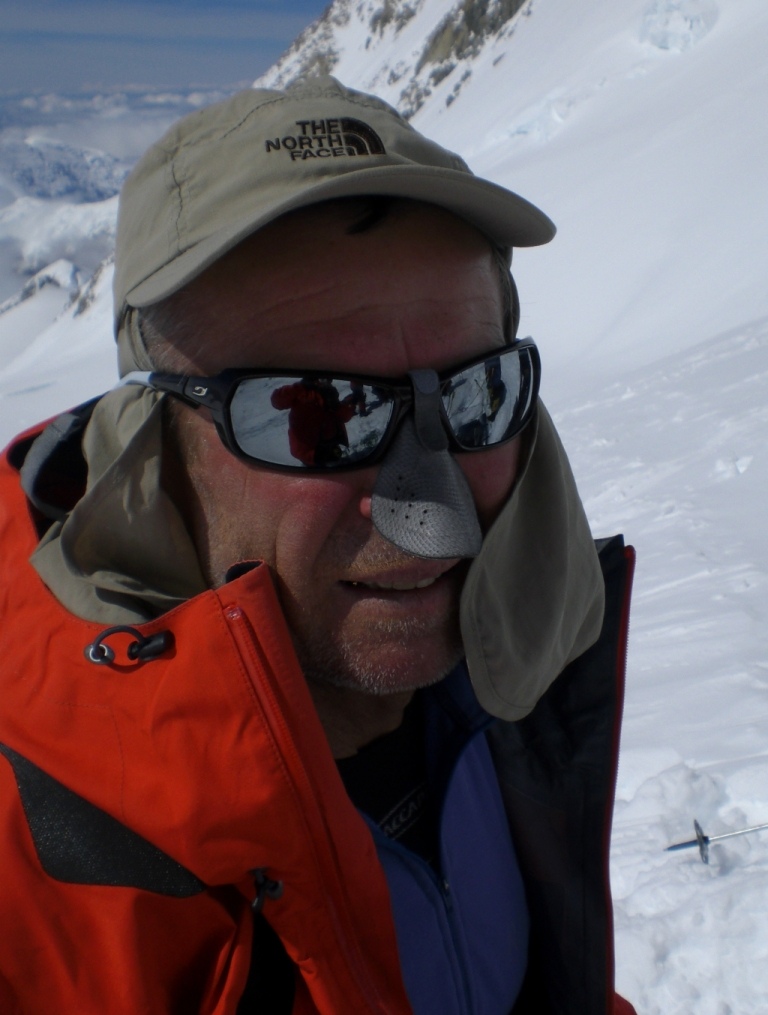
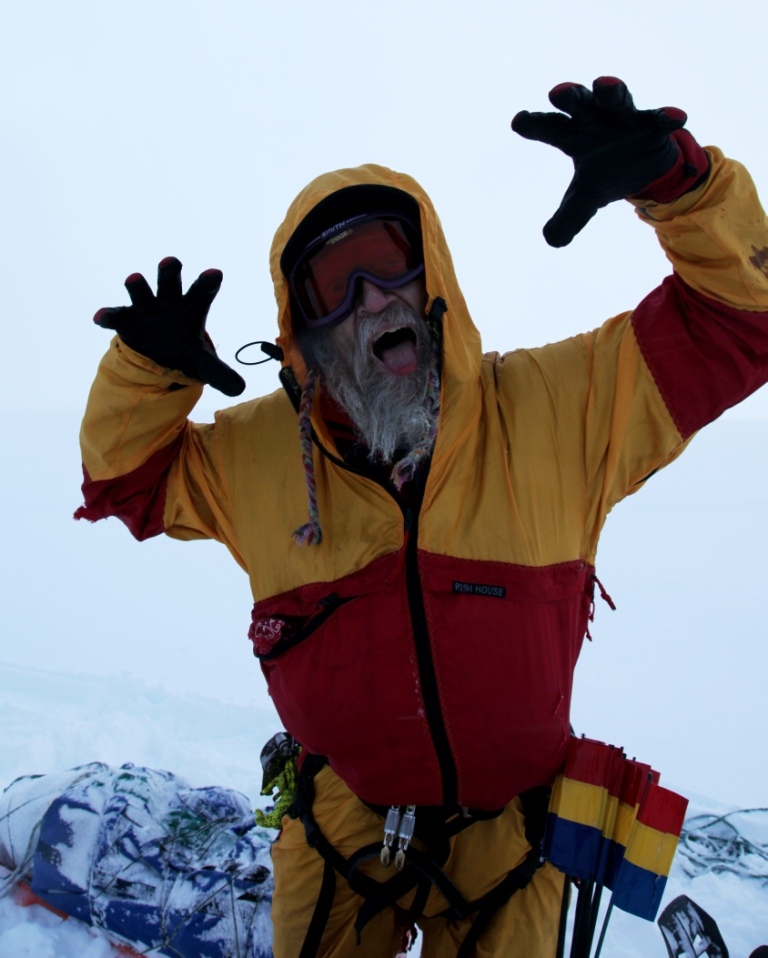
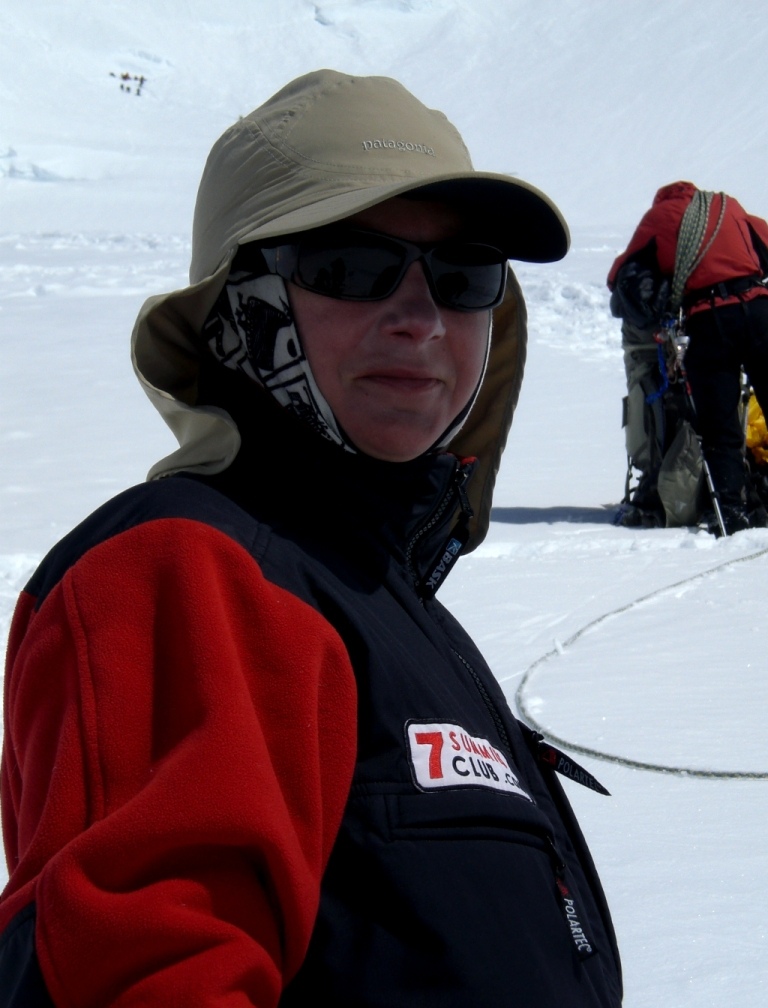
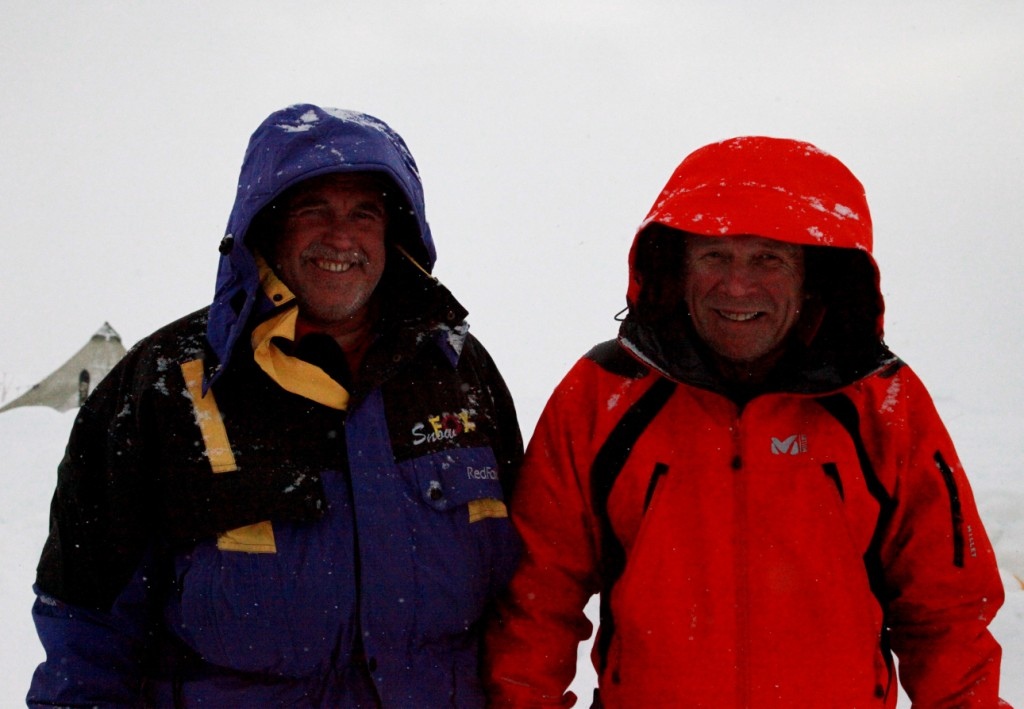
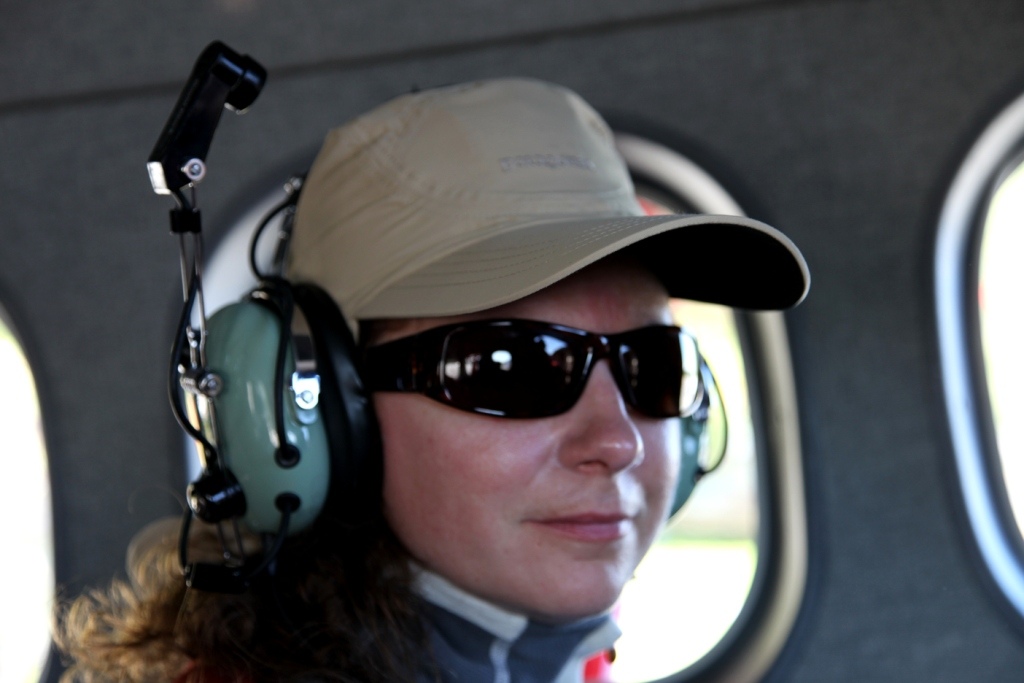
Portrait Gallery


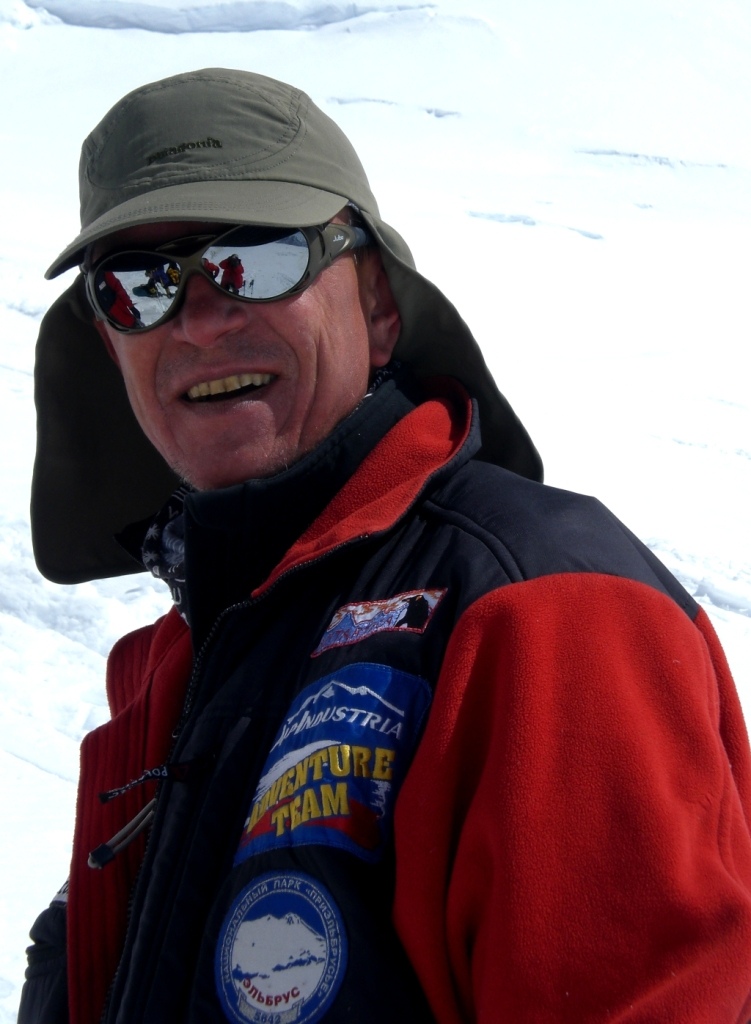
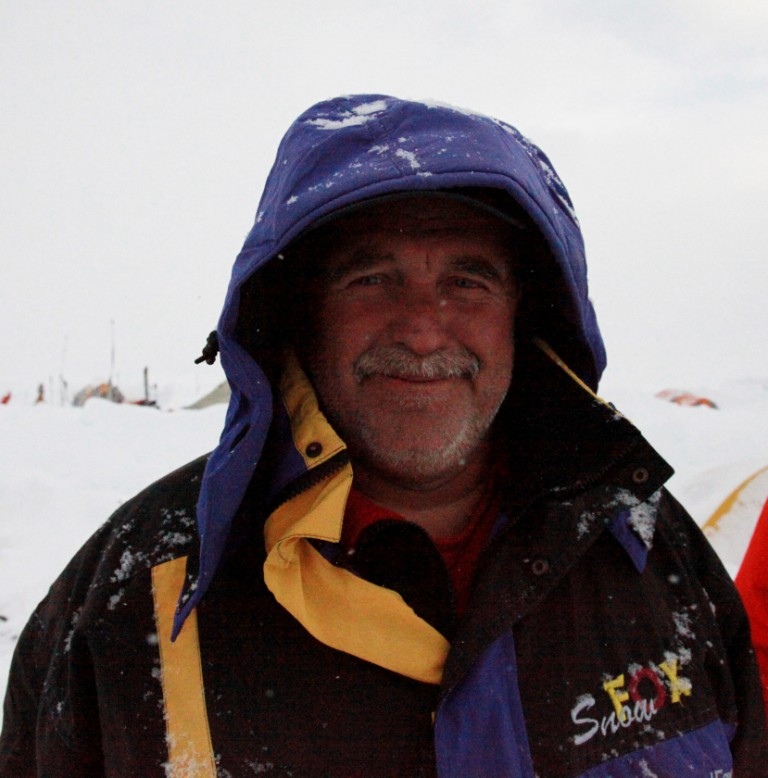

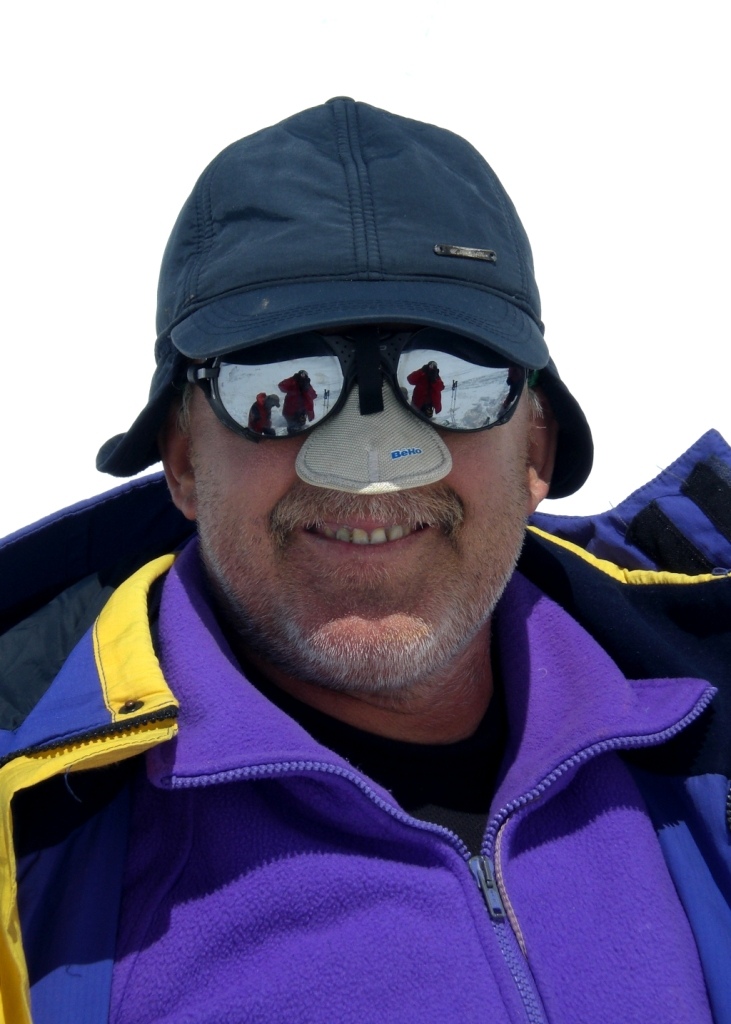
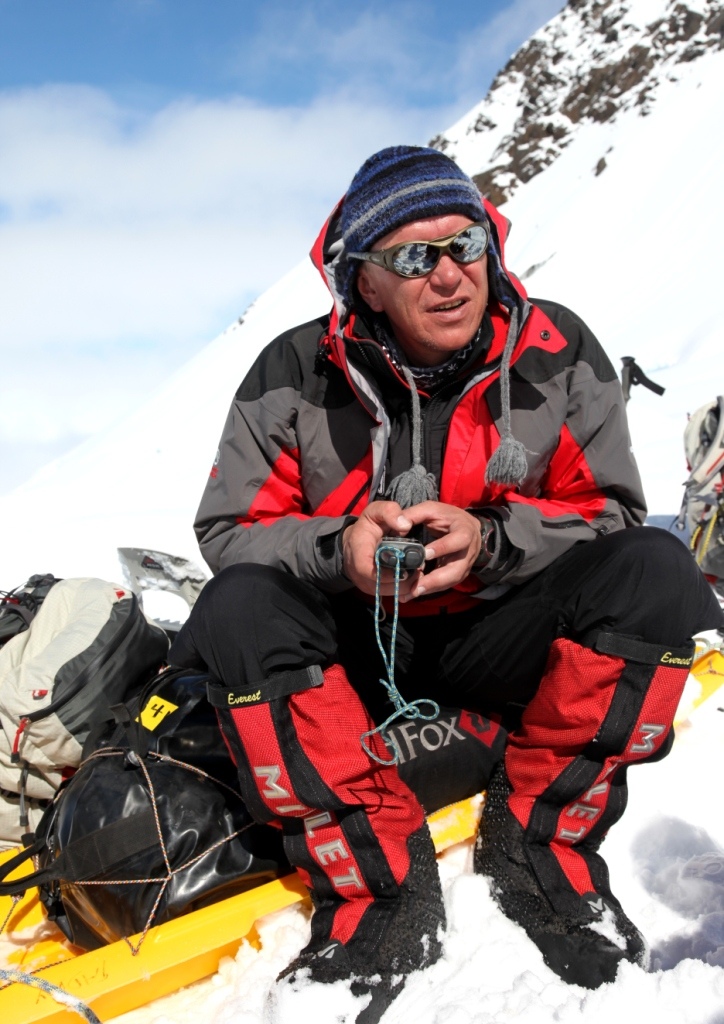

Seven summits to fly from. Project of South African climbers
Elbrus.
A team of three intrepid athletes is preparing to climb the seven highest mountains on all seven continents, and then paraglide down, to raise funds for charity. THE paraglider slowly drifted down from the ...
A team of three intrepid athletes is preparing to climb the seven highest mountains on all seven continents, and then paraglide down, to raise funds for charity.
THE paraglider slowly drifted down from the blue sky, moving in broad circles as he lined up to land alongside a banner reading "Seven summits, 7 flights".
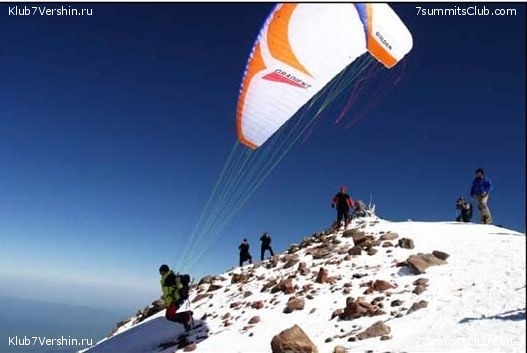
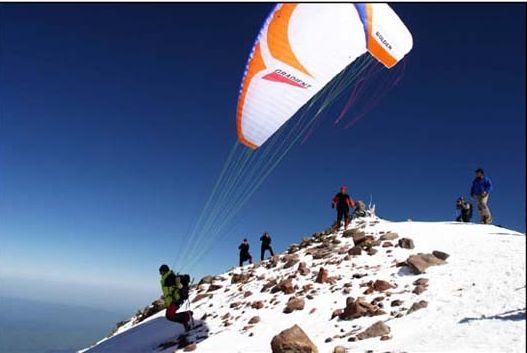
Pierre Carter paraglides in to the press briefing at Delta Park Pierre Carter's aim was perfect - he landed softy and gently ran up to the crowd gathered in Delta Park in northern Joburg, his rectangular orange and white parachute billowing behind him.
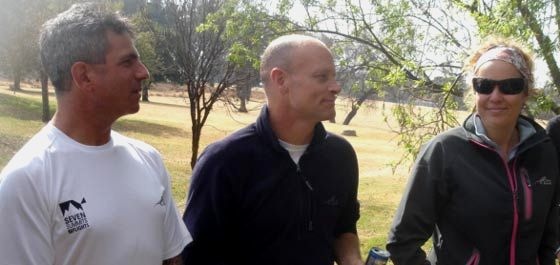
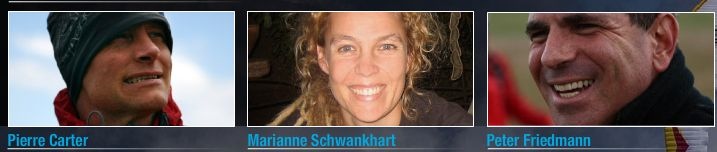
Carter is one of three athletes to tackle this "journey of a life time", in which they will be the first team in the world to summit the highest mountain on each of the seven continents, and once on the summits, paraglide down to their starting points. The other members of the team are 33-year-old Marianne Schwankhart and Peter Friedman. Carter and Friedman are both 43.
They will set off on Sunday, 11 July and begin by tackling Mount Elbrus in Russia, at 5 642 metres. The other summits on which they will be leaving their footprints are: Carstensz Pyramid in West Papua, Indonesia (4 884m), Mount Vinson in Antarctica (4 897m), Kilimanjaro in Tanzania (5 895m), Denali in Alaska (6 194m), Aconcagua in Argentina (6 959m), and the tallest of them all, Everest in Nepal (8 850m).
They admit that Carstensz Pyramid is the one that makes them the most nervous; despite the fact that it is the lowest, it is the most dangerous, and no one has ever tried to paraglide off it before.
"Walking back down a mountain is the most dangerous part of climbing, so paragliding down will reduce the risks," says Carter. All three members of the expedition recognise that there are great risks involved.
Problems for paragliders at these heights include strong winds and temperatures dropping to -30°C, or -50°C with the wind chill element. If the winds are too strong they will have to wait until they drop, for up to eight hours, if necessary.
The three have had special lightweight gliders made, weighing 10 kilograms. A standard glider weighs 40kgs.
Carter and Schwankhart will do a tandem paraglide off the summits, so that Schwankhart can photograph the summits on the way down, while Friedman will attempt the flights as a single glider. They will be taking along two cameramen, Guy Habbard and Kyle O'Donaghue, to capture the three of them climbing and flying. Both are climbers as well.
Everest
The idea originates with Carter, who has had this dream since 1991. The team expects to finish the challenge in around two years, largely driven by financial constraints and weather and seasons. For instance, Mount Everest can only be climbed between March and May.
The idea of climbing the seven summits originated with Dick Bass in 1985. Since then more than 200 people have climbed all seven. Climbing and paragliding off them has been attempted before, by a French couple, but they never completed the task.
Carter has been paragliding since 1988, and represented South Africa in the world paragliding championships for five consecutive years between 1991 and 1995. He has been climbing for almost 30 years and has summited and paraglided off two of the seven mountains - Elbrus and Aconcagua. He is considered to be one of the 15 greatest paragliders in the world, and will be the team leader of the expedition.
Mountaineer
Schwankhart, an award-winning photo journalist with The Times newspaper, has been a climber since 1995. She was the first woman to climb the sheer east face of the central tower of the Torres del Paine in Chile in 2003, and returned in 2008 and climbed all three of the peaks, again setting the record for a woman.
Paragliding off Mt Elbrus in Russia In 2005, she climbed the Trango Tower in Pakistan - 900m of vertical rock face - to a height of 6 500m. The same year she climbed Cerro Torre in Patagonia, Argentina. Climbing a sheer cliff face requires the climber to sleep for several nights on the mountain, sleeping in a suspended hammock-like contraption, hanging from the mountainside.
In 2006, she filmed No Need for Parking - an Africa Rock Adventure, a record of her climbs in southern Africa. Remarkably, Schwankhart doesn't see the climbing or the sub-zero temperatures as her greatest challenge in the venture; she wants to be able to take good photographs.
"The purpose of my trip is to take amazing photographs, so I hope I can do this. My main worry is whether my camera batteries are charged," she explains. The climbing is of secondary concern. "Mount Elbrus is an easy mountain, I am not too worried. I can rely on muscle memory for the climb."
She is not a paraglider though, and is a little concerned about being air sick.
Friedman has been paragliding for eight years and has fixed-wing and helicopter licences. He has a black belt in karate and has represented South Africa in Japan at the world karate championships. He has also represented South Africa in the world surf skiing championships in the United States.
He has been the driving force behind putting the expedition together, raising the all-important funding and sponsors.
Flight from Elbrus by Carter
Funds
The expedition will be raising funds for The Trust, an organisation that raises funds for 100 charities, with causes ranging from crime survivors, abused animals, HIV and Aids sufferers, to protecting the environment. This year's particular cause is fighting human trafficking, in partnership with Cintron Africa, says Tracey-Lee Cohen, the managing trustee.
The Trust will run a series of TV and radio adverts by R&B singer Akon to assist in raising awareness of human trafficking. "The anti-human trafficking case is just one example of a social cause that will benefit from the bravery and initiative shown by the 7 Summits 7 Flights team," says Cohen.
The expedition will also be raising funds for The Smile Foundation, a charity involved in assisting children with facial anomalies get surgery.
"We admire the dedicated work of charitable organisations such as The Smile Foundation and hope to help provide them with the resources and funds they need to do their work and overcome their own challenges," says Carter.
The three estimate they will need about R7-million to complete the whole venture. All the gear has been sponsored, but funding is still needed. Donations can be made through their website.
The team can be followed on a range of social media: they will be updating their website, Twitter and Facebook pages every few days, and articles will appear in The Times newspaper. DSTV will provide R2-million in airtime to the expedition.
Read more: http://www.joburg.org.za/content/view/5430/266/#ixzz0tBukqMMj
*********************************************************************


THE MISSION
7 Summits 7 Flights is an initiative pioneered by Pierre Carter, Marianne Schwankhart and Peter Friedmann with the aim of raising funds for Smile Foundation and The Trust, an umbrella charity providing a safe and transparent conduit to various charities, by climbing to the summits of the highest mountains of each of the seven continents and paraglide from their summits. All contributions will benefit both charities as well as the Seven Summit Seven Flights project.
The notion of climbing the seven summits was first conceptualized by Dick Bass, an American businessman and amateur climber, who completed all seven summits in 1985. Since then, more than 200 climbers have completed the challenge, with the youngest being eighteen year-old Samantha Larson and the oldest seventy three year-old Ram—n Blanco. What makes this initiative remarkable, apart from the sheer challenge that the seven summits pose, is that the three climbers will paraglide their descent, a feat that has never been achieved, although attempted. To share the experience as closely as possible, award-winning photographer Marianne will fly in tandem with acclaimed paragliding adventurer, Pierre, to photograph and document the journey and the mountains, thus providing a unique view of the adventure from a new perspective where no one else has gone before. Two experienced film crew will compile the video footage into a documentary that will be screened worldwide.
Apart from the thrill of paragliding off all seven summits, the hope of the South African team, is that the time and effort invested in this endeavor will help South Africans in need; that the obstacles they overcome in their struggles against nature will eliminate the obstacles that many face back at home. For the team, the risk that this challenge poses is a chance of a lifetime to realize the limits of the human body in dire situations “it’s not the mountain we conquer but ourselves”. Sir Edmund Hillary. In addition to enriching their own lives, their motivation for this endeavor is to translate their life changing experience into changing the lives of thousands of less fortunate South Africans and at the same time bringing climate awareness, something highly necessary in light of our current climate change crisis.
The project launches in June, with our first trip to Denali Ð we hope to complete all seven summits within fourteen months. By teaming up with The Trust as the beneficiary of this project, 7Summits7Flights is truly an example of climbing for humanity.
It’s the ultimate adventure!
Three explorers will climb to the summits of the 7 highest mountains on the 7 continents and paraglide off them. No-one as yet has flown from the top of all seven summits and this will raise the bar in extreme adventure and exploration in 2010. They will share their experience via photographs, video and blogs from the most remote and fragile corners of the earth. This will allow others to realise their potential for our planet and will raise money for “The Trust”, a charity aimed at assisting the underprivileged in reaching for their own dreams.