Australia & Oceania - Page 10
Collectors of Mountains: Seven Summits and more….
Carstensz Pyramid.
UAE-based adventurer scales Carstensz Pyramid in Oceania. DUBAI: The UAE-based adventurer Suzanne Al Houby, a Palestinian, has returned from her latest expedition with another world record as the first Arab woman to scale Carstensz Pyramid ...

UAE-based adventurer scales Carstensz Pyramid in Oceania.
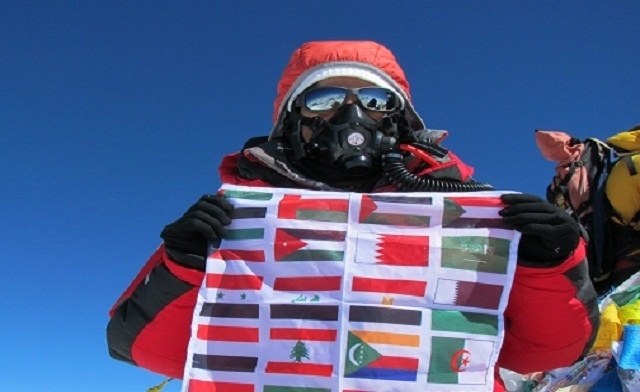
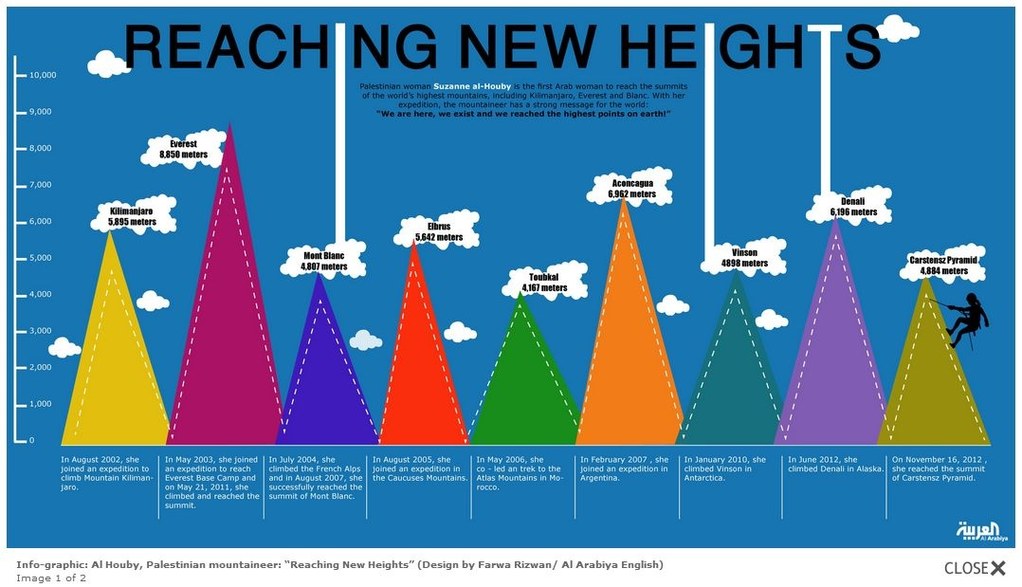
DUBAI: The UAE-based adventurer Suzanne Al Houby, a Palestinian, has returned from her latest expedition with another world record as the first Arab woman to scale Carstensz Pyramid (Puncak Jaya), the highest mountain in Oceania, peaking at 4,884 metres.
Al Houby is famous for becoming the first Arab woman to climb Mount Everest last year and with this latest climb she has now officially conquered six of the Seven Summits — the highest mountain on each of the seven continents. Compared to previous expeditions, Al Houby has embarked on a pursuit of her goal, Carstensz Pyramid, located inPapua,Indonesia, which offers its own set of unique challenges.
The approach for this climb is known as the most difficult in the world.
The area is extremely inaccessible, with the journey beginning in a multi-hour flight acrossIndonesia, with as many as six stops, before landing on theislandofPapua, where the mountain is located.
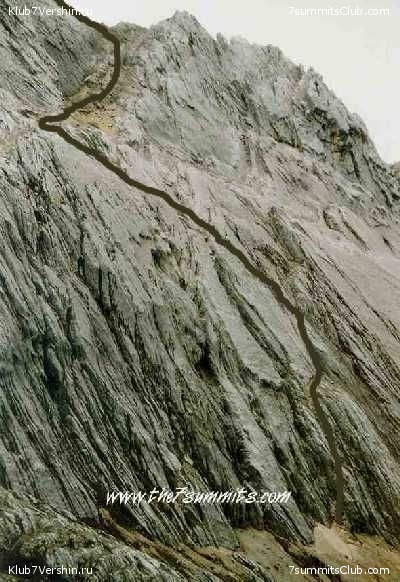
From there, Al Houby and the rest of her expedition made a gruelling six-day trek across steep terrain through rainforests, swamps, mud slides and rock walls just to get to the base camp.
The expedition was supported by tribal porters from the Dani tribe, a people who live outside of modern civilisation and who have practised cannibalism well into the 20th century.
During the trek, the expedition had to pay sums of money to tiny villages as they passed through for fear of animosity towards them.
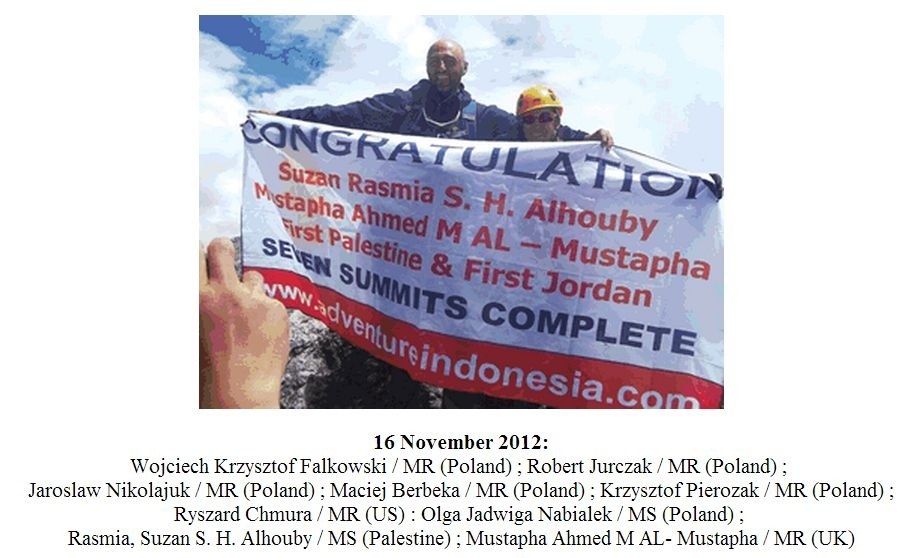
“The weather conditions were really bad because of continuous heavy rains,” says Al Houby.
“We were wet all the time and the rain made steep sections difficult to cross.”
“The continuous deterioration in weather affected the health of some of the climbers.
“This made me develop a nasty lung infection that began to make me weaker each day until we reached the base camp,” she said.
After reaching the base camp and taking a day’s rest, Al Houby pushed through on her attempt to the summit.
“I climbed the vertical rock walls until we were high up on the summit ridge. There we stood in front of one of the highest mountain obstacles in the world: a 12-metre gap between two rock pinnacles with hundreds of metres drop in between.
Along with Al Houby on the expedition was another Arab climber, the Jordanian Mostafa Salameh.
“This was the first time I’ve ever had another Arab climber in the team with me and the camaraderie was just amazing.
“We had a great time and we crossed the most challenging section higher up together,” she said.
Besides being the first and only Arab woman to ever climb Mount Everest, the highest mountain on earth at 8,850 metres, Al Houby was also the first Arab woman to climb Mont Blanc, Elbrus, Aconcagua, Vinson (the highest mountains in Western Europe, Europe, South America and Antarctica), in addition to Kilimanjaro and Toubkal, the highest mountains in Africa and North Africa respectively, amongst others.
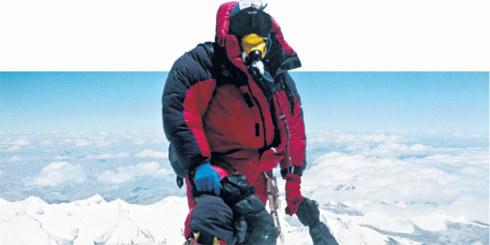
The summit of Mt. Everest
----------------------------------------------------------------------------------------
Everest hero Mostafa turns attention to charity and poles hikes
Mostafa Mahmoud
By David O’Leary
A FORMER city hotel worker who quit his job to climbMount Everesthas become the first Jordanian to scale the highest peaks on each of the world’s continents.
Mostafa Mahmoud Salameh, from Bruntsfield, resigned from his job as food and beverages manager at the Sheraton in 2004 to embark on the life-altering challenge of scaling the world’s highest mountain.
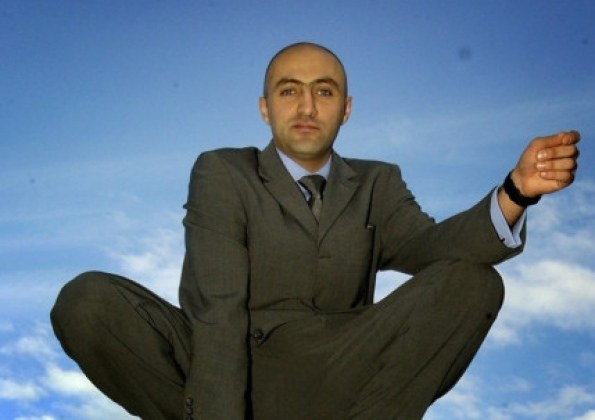
Not content with just reaching the 8850m summit, however, the 42-year old has gone on to complete the Seven Summits challenge and become a Jordanian national hero into the bargain – he has been knighted by the Middle Eastern state.
Last Friday, the Queen Margaret University graduate reached the summit of the Carstenz Pyramid in Indonesia, finishing an eight-year odyssey which has seen him scale Everest along the border of Nepal and Tibet/China; Mount McKinley in Alaska; the Vinson Massif in Antarctica; Aconcagua in Argentina; Kilimanjaro in Tanzania and Mount Elbrus in Russia.
He said: “It’s a relief to finally complete them all. I head toJordannext week to hand the flag back to the king ofJordan. It was easily the toughest trek I’ve ever done, just getting to the mountain through dense Indonesian jungle was an ordeal.
“It would take us a whole day just to complete 200 metres, there are also about 50 different tribes living in the area and we would have to stop and trade with each one.
“Everest base camp was a walk in the park in comparison.”
He added: “After weeks with no shower, eating rice for breakfast lunch and dinner, I finally made it to the top of a giant, jagged rock, raising the Jordanian flag on the last of my Seven Summits.”
The intrepid explorer still callsEdinburghhome, though, and regularly returns to the city.
He said: “Edinburghis my base and I return every couple of weeks. The next time I’m back I will go to a few schools and give some talks. My wife is pregnant at the moment and we are going to have a second child in four weeks time so this will be my next summit.”
Following the birth of his child, Mostafa will begin training for his next adventure in January and is planning a 60-day hike to the South Pole before flying toNorwayto begin a journey to the North Pole.
He added: “If successful I will become one of only 25 people in the world to complete both the Seven Summits and both poles. My plan is to complete the South Pole in November 2013 and finish the North Pole in April 2014.”
Next April, Mostafa will also lead 20 Jordanian celebrities to Everest base camp to raise more than a million dollars (?625,000) for the King Hussein Cancer Foundation.
---------------------------------------------------------------------------------------------
Blind climber receives Hillary grant for Seven Summits
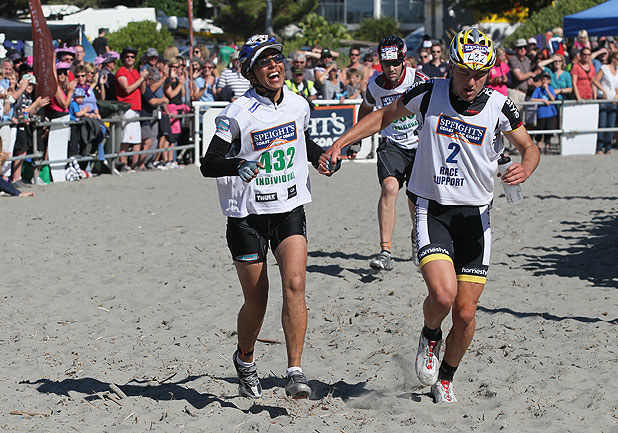
Blind runner Neelusha Memon and helper Olly Marshall finish the Coast to Coast race at Sumner
News Pursuit leads to Hutt drugs, weapon bust Auction decides fate of family's farms Licence suspension rescheduled around tournament Kapiti killing accused appears in court Rare whisky remedy memorable, says doctor Post mortem for burnt-out car death Officers' actions played role in prisoner's death Wellington Santa Run raises cash for kids DOC hikes Kapiti Island fees to increase returns.
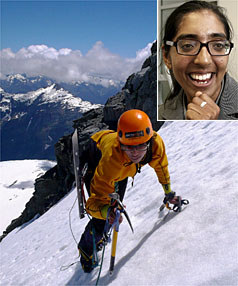
Legally blind adventurer Neelusha Memon’s dream of conqueringSouth America’s highest peak is one step closer thanks to a Hillary Expedition Grant.
Today it was announced she was one of seven teams to receive a Hillary grant, which provides funding from Sport New Zealand for Kiwis to undertake outdoor challenges.
The 28-year-old Wellingtonian has set out to summit the seven highest mountains across the seven continents, starting with the 6960m-high Mt Aconcagua.
Ms Memon said she was thrilled to receive the grant, which would help to fund her ascent of the Argentinian mountain with support guide Gavin Lang.
‘‘I didn’t think it would ever really go ahead, based on the fact we couldn’t get funding, so to get this grant is a massive thing for me.’’
The worldwide expedition was a personal challenge for Ms Memon, the ‘‘ultimate test’’ of her physical and mental endurance.
But she was also hoping to set an example for others to follow.
‘‘I’ve got impairments but I’m still able to complete my dreams, with the right support.
‘‘Once they realise it, pretty much everyone is limitless in what they can do.’’
When she was 16, Ms Memon lost 70 per cent of her vision after a post-viral autoimmune response caused her to fall into a four-month coma.
She also lost her sense of balance, and had to learn how to walk, talk and swallow again.
A lifelong fan of the outdoors, Ms Memon has been setting herself adventure challenges since 2010, when she climbed Mt Aspiring in the South Island.
In February this year, she became the first legally blind runner to complete the Coast-to-Coast race.
She hopes people will track her fitness, balance and altitude training as well as the November 2013 ascension of the peak on the Hillary Expedition website, and will be inspired themselves.‘‘I wantNew Zealandto come along on the journey with me, and be part of this – to encourage people to get out in the outdoors.’’
After reaching the summit of Aconcagua, Ms Memon planned to climb Mt Kilimanjaro, Elbrus, Carstensz Pyramid,Denali, Vinson and Everest, over the next five years.
THRILL-SEEKERS
- Sarah Wilson will complete a Cook to Cook multi-sport expedition, climbing Mt Cook, cycling to Picton, then kayaking acrossCook Straitin January 2013.
- Brothers Nathan and Nigel Watson will climb 21New Zealandmountains over 2000m in 21 days in February, in theNelsonLakesNational Park.
- In April, Rob Frost, Ben Dare, Andrei van Dusschoten, and Scott Blackford Scheele will attempt to be the first Kiwi team to summit Himalayan peak Anidesha Chuli, also known as the White Wave.
- Kayaking team Jordan Searle, Barny Young and Shannon Mast will make a record-breaking attempt in April for the first kayak descent of the Grand Canyons of theChimbuRiverinPapua New Guinea.
- In May, Mayan Smith-Gobat will free-climb ‘‘The Nose’’ wall inCalifornia’sYosemite Valley, and will try to break the current speed record of 2 hours 26 minutes.
- Christine Burke will attempt to become the firstNew Zealandwoman to reach the summit of both the Gasherbrum1 and 2 mountains on the Pakistan-China border, in June.
--------------------------------------------------------------------------------------------
To be the first sevensummiter in Colombia

Colombian climber Manolo Barrios prepares himself for one of the biggest challenges of his storied career: climbing the tallest mountain inAntarcticaby himself, reported local media on Tuesday.
In 2001, Barrios became one of only four Colombians to ever reach the top ofMount Everest. Such a feat would usually be the peak for any adventurer, but for Barrios it was not enough.
"What now?" Barrios asked after scaling the world's tallest mountain.
The idea of 'The Seven Summits' originated after Barrios and others scaledMount Everest. The idea is simple -- reach the highest point on every continent.
"We climbed Kilimanjaro in Africa, Mount McKinley in Alaska, Aconcagua in Chile and Elbrus in Russia. But in my case," said the 55-year-old Barrios, "I need only this mountain [Antarctica's MountVinson] and one in New Guinea."
Located on the Ronne Ice Bank 1,200 miles from the South Pole,MountVinsonis 15,256 feet above sea level.
Barrios plans to climb the ominous peak in December, when the weather can be even more unforgiving than normal. Sunlight shines 24 hours a day and winds can reach speeds of up to 180 miles per hour. In addition to the hurricane winds and the unyielding brightness, Barrios will have to deal with the cold and the solitude.
"It is one thing to talk about it, it is another to live it," as Barrios put it.
If all goes according to plan, Barrios will make it to the top of Mount Vinson, the sixth of his 'Seven Summits', by the end of December and will plant the first Colombian flag onAntarctica.
But as Barrios himself admitted, summiting the mountain is dependent on one thing.
"The mountain will decide when I turn back."
On Everest
---------------------------------------------------------------------------------------------
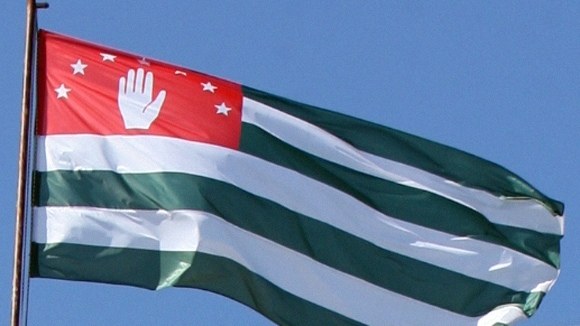
Abkhazia declared a climbing war to Georgia
Mount Aconcagua (6962 m altitude) in Argentina become a theater of a climbing war between Georgians and Abkhazians. December, 20 four Abkhaz mountaineers (led by specially invited to this project famous Swedish explorer Johan Ernst Nilson) starts an expedition to conquer the tallest summit of America. Abkhazians want to plant on the top a flag of their country, Georgia's breakaway autonomy. Before the first trip to the Andes, the Abkhaz climbers have already set flags on Elbrus (5642 m) and Mount Kilimanjaro (5,895 m).

Abkhaz Foreign Ministry has decided to support the project with public funds and businessmen of the republic.
In January 2012, the well-known Georgian climber and politician George (Gia) Tortladze planted on a top Akonkagua not only Georgian flag but a banners with the words "Georgiawithout occupation." Later, in April, he climbed Mount Everest (8,848 m), setting on the highest peak in the world similar exposition with an extension, which added the words "Russiaget out from Georgia!".
- Due a weather conditions any flag or banner do not stay long on the tops, the main thing - to capture it all on film - George Tortladze told to the newspaper "Izvestia". - Then show it on different channels - this is a great response.
Tortladze criticized Swedish climber for taking part in the Abkhaz ascent.
Influential politician - George (Gia) Tortladze. Two times Everest Summiter
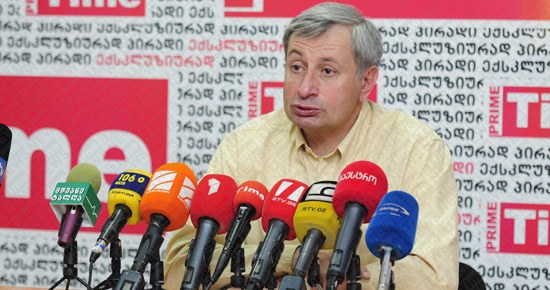
- I think he will get big money for this expedition. And if he did take part in the promotion of separatism, I put this in the world of travelers. Nielson will regret - said Tortladze.
Tortladze also continues his sports-political exploits. With the Georgia flag and an anti-Russian banner, 52-year Georgian plan to climb the fifth summit of planet - Makalu (8485 m) in the Himalayas. This will be in spring with an international team of 10 climbers.
A lot of warm words about Australia. Project Alpari On Top of the World
Our team climbed Mt. Kosciuszko 5th of November. This was the sixth summit from seven. Please find below short narratives from the team members. The Team: Lyudmila Korobeshko is the captain of the team and the only Russian woman to have ...
Our team climbed Mt. Kosciuszko 5th of November. This was the sixth summit from seven. Please find below short narratives from the team members.
The Team: Lyudmila Korobeshko is the captain of the team and the only Russian woman to have both summited Mount Everest and been to the North and South Poles. Ivan Dusharin, the “patriarch of Russian alpinism” is an internationally recognized climber with the supremely challenging K2, among many other impressive climbs, under his belt. Maksim Shakirov, author of “New Year on the Peaks”, planted the flag of the 2014 Olympic Games atop Mount Everest and Mount Olympus.

FROM THE JOURNAL OF IVAN DUSHARIN: AUSTRALIA
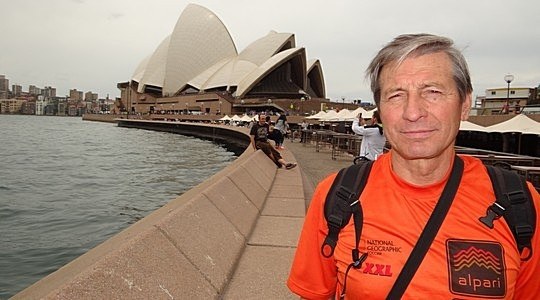
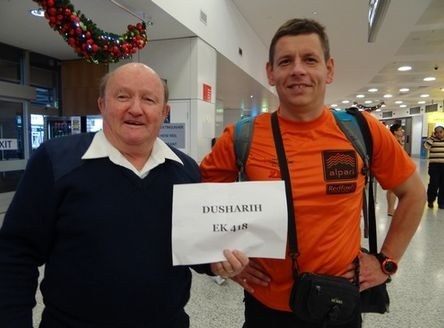
3.11.2012. It’s morning here in Sydney. We’re 7 hours ahead of Moscow. The flight was tough. We almost feel like we’re drunk. It took us more than a day to fly out here – I guess that’s just something you have to deal with. After getting off the plane, we made it through immigration and across the border relatively easily, but nobody was there to pick us up. Lyudmila called a couple of numbers that only she had. They told her to wait. We waited. Suddenly a man passed in front of us holding a sheet of paper. For some reason, something written on that sheet of paper felt familiar to me. “Lyudmila, I think that’s the guy who’s coming to pick us up,” I said, pointing out the man. Lyudmila caught up to him. On the sheet of paper he was carrying, I spotted the words “Mr. Dusharih”. So that’s what felt so familiar – my name.
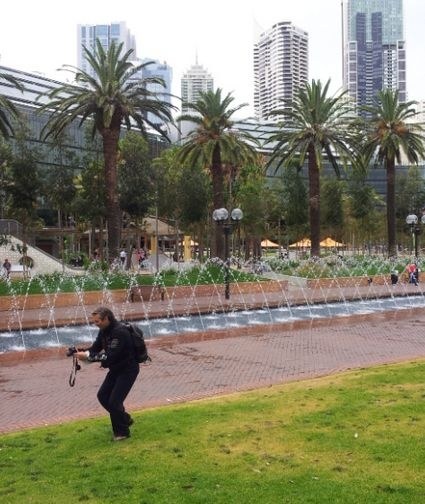
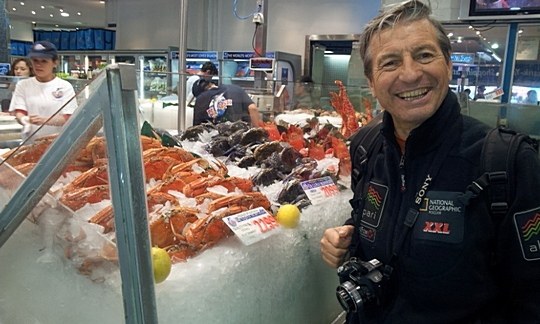
We checked into the hotel, but we would have to wait until 14:00 before we could get settled into our rooms. We left our stuff at the hotel and went for a walk around the city. It’s a nice looking city, with a lot of plants, water, fountains and interesting architecture – both old and new. The sea (or the ocean to be more precise) really adds to the atmosphere. We began to look for the fish market. We could smell the place from more than a half kilometer away. It was quite impressive. There were giant lobsters, crabs, all kinds of shrimp, octopuses, squid and dozens of varieties of fish and shellfish. We decided we should go somewhere to order some seafood.
We went for a nice walk before returning to the hotel to unpack our stuff and rest for a couple of hours. If we didn’t have the chance to rest, we would have been completely miserable. Flights like that can really take their toll on you.
At 17:00 we headed for down town Sydney. We decided to have dinner in an exotic place – in a restaurant in the Sydney Tower, 225 meters above the city. The elevator was fast. Our ears popped on the way up, like in an airplane. We spent about an hour and a half in the rotating restaurant. We sampled some of the local delicacies and enjoyed an amazing panoramic view of the city and surrounding area. It was fantastic! From that height, you can really see how downtown Sydney is laid out. After dinner, we paid a visit to the world-famous Sydney Opera House.
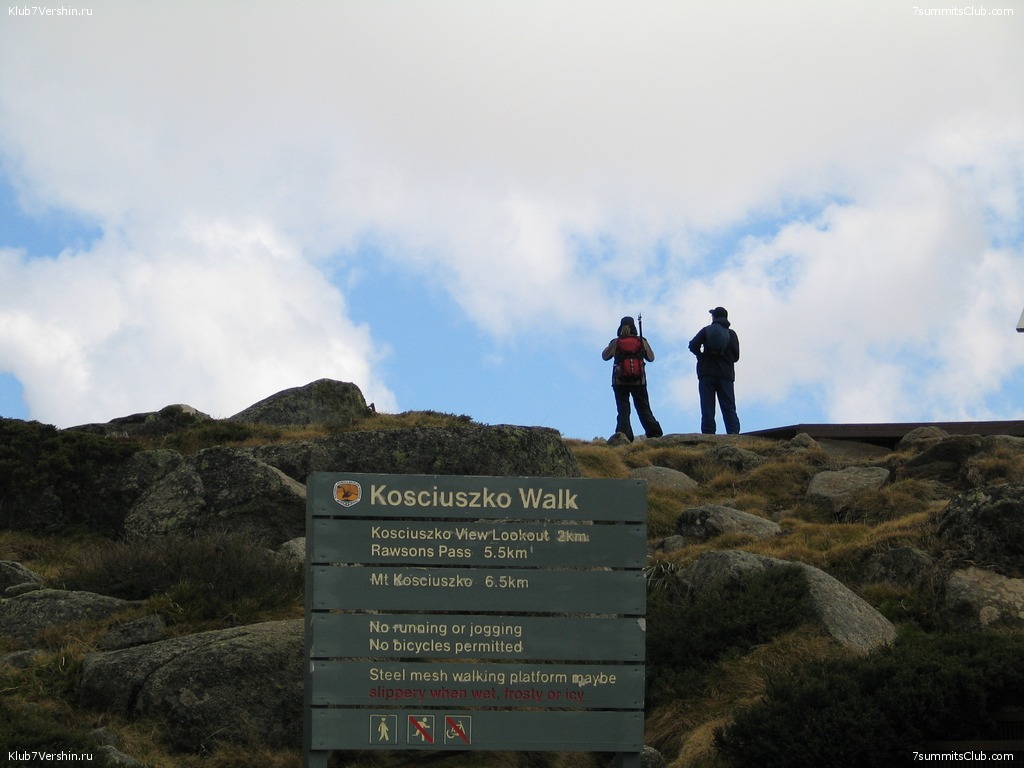
4.11.2012. It took us a long time to sort out the rental car. We ended up with a family car that seated nine. It was like a small bus. Max took the wheel. Lyudmila was the navigator. I was just a passenger. As we stepped out of the car near the hotel, we heard a guy speaking in Russian. It turned out he was fromKiev. He had already been living in Sydney for 23 years. He explained to us how to get out of the city and onto the road leading to Canberra. We got lost anyways. It took us 8 hours to make it there. After we settled into our hotel, we worked on figuring out where we would start our climb from. We chose a route starting from Dead Horse Gap, longer and more difficult than the standard route to the summit of Kosciuszko. I think tomorrow’s climb should be interesting.
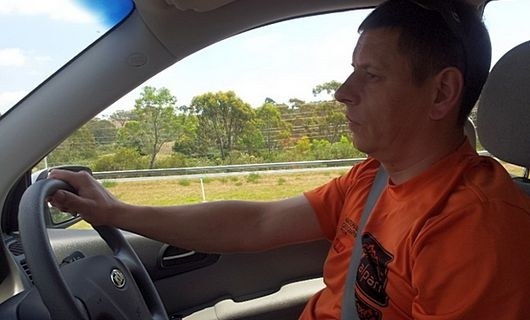
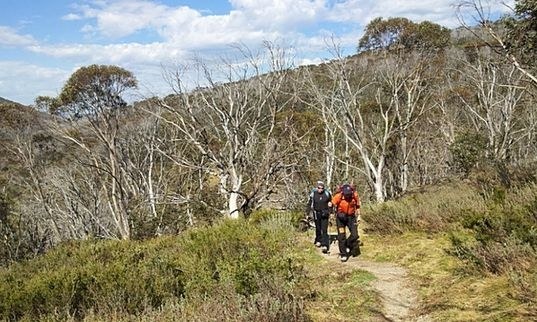
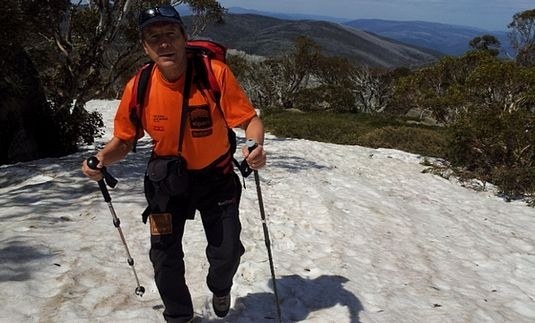
5.11.2012. The climb. We arrived at our starting point around 9 in the morning. It took me a while to pick out my shoes. In the end I selected a pair of hiking boots. The first part of the climb was steep and took us through a forest of dead eucalyptus trees. Seeing the large mass of dead plants, we felt a sense of pity for the local flora, which, as we were told, was burnt in a fire. The ashy foothills looked aged – truly a sad sight to see. After about an hour on the trails, the path flattened out a bit and we began to notice patches of snow. Things got a bit easier. Tourists rarely take this route, so there aren’t any markers or railings to help you find your way if the trails have been covered by snow. You just have to keep heading in one direction to keep from getting lost. We put on some extra clothing. We passed a guy descending the mountain with a pair of alpine skis tied on to his backpack. We said “Hi”. He warned us that it was really windy at the top.
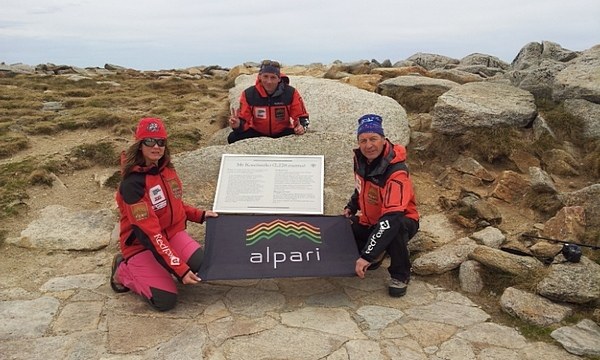
After traversing a slope covered in snow, we merged onto the main trail. The trail was paved in stones and guarded by a railing coming about 30 cm off the ground. We had about 6.5 kilometers to go to the summit. By this point, we were hiking across an open area and the wind was really starting to blow. We were worried we might get blown off the path. I started to understand why not everyone is able to reach the summit. Here, it’s Mother Nature that’s calling all the shots.
We moved along at a brisk pace in spite of the wind. We came across stretches of the trail that were buried under snow. The entire summit was covered in snow too. Along the trails we noticed tracks from skis. Even in the offseason, it appeared that enthusiasts still carried their skis with them, even if they couldn’t go skiing.
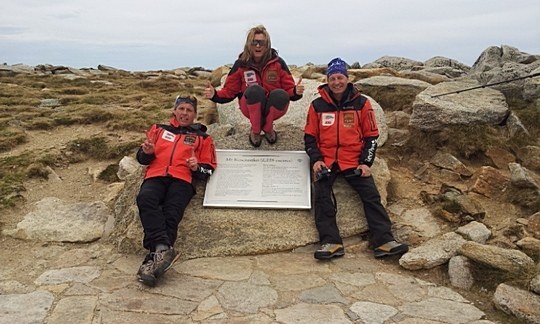
A spiral path led us the summit of Kosciuszko, 2,228 meters above sea level. At the very top of the mountain, the winds were near gale-force, tearing away at our flags. A young man and woman made it to the summit shortly after we did. It turned out they were our compatriots – from Ekaterinburg. Even here in Australia, on the summit of Kosciuszko, halfway across the globe, we ran into Russians. It was nice.
We descended pretty quickly. We had the wind at our backs on the way down, which made things considerably easier. The entire climb took us about 8 hours.
6.11.2012. Back to Sydney. Lyudmila took the wheel on the way back. She’s a fast driver and confident behind the wheel. She remembered the way. Lydumila and Maxim switched places a couple of times, but I remained in the passenger’s seat. Our navigator led us to a beach in Sydney. It wasn’t particularly warm out, but hey – the ocean’s the ocean. The water couldn’t have been more than 18 C, but we jumped right in. The giant waves crashed into the shore, then drew back into the ocean, leaving behind a blanket of foam. There were hardly any people in the water. Most of the people at the beach were sunbathing.
Max was really intent on unwinding. He spent nearly 40 minutes splashing around in the water. Lyudmila and I walked back to the sand to warm up a bit before throwing ourselves into the water again. We had certainly felt the lure of the ocean on the trip. Its undulating waves had beckoned us in. What can I say? It was pure joy. We might never have left if not for how cold the water was. We would have liked to spend more than 2 hours there, but what could we do? We were running on a really tight schedule.
We dumped our stuff off at the hotel before heading back to eat at the tower restaurant again and check out the view of Sydneyat night. It was impressive. We could see the bright lights, the ads and the signs covering the skyscrapers. They were beautiful and original.
7.11.2012. Today was the Day of the Great October Socialist Revolution of 1917. Back in the Soviet Union, this was a significant holiday. We forgot all about it. I guess that’s just human memory. We had breakfast in the hotel. We had to hurry. It was our last day in Sydney and we still had lots left to see.
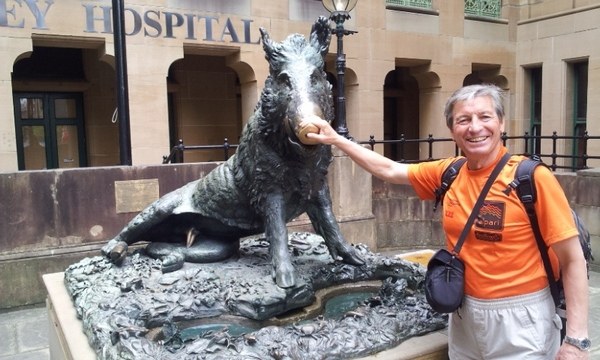
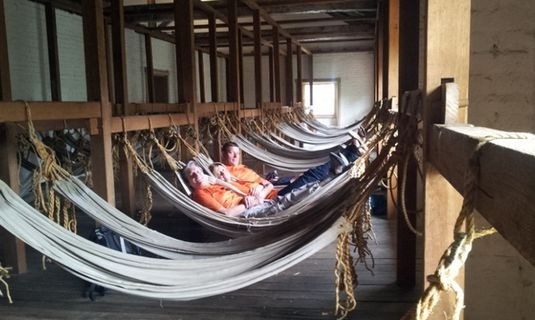
By chance, we ended up in a prison museum in downtown Sydney. An elderly gentleman there offered to take us on a tour. By local standards, the prison was ancient – more than 200 years old. As it turned out, this was a place where prisoners were sent not only from England, but from America and other countries in Europeas well. It was intended for those serving life sentences. Most of the prisoners who served their time there remained on the island rather than heading back forEurope. Someone would need to break in the island after all. It was the first prisoners themselves that had built the prison. There were no beds or cots at all – only hammocks.
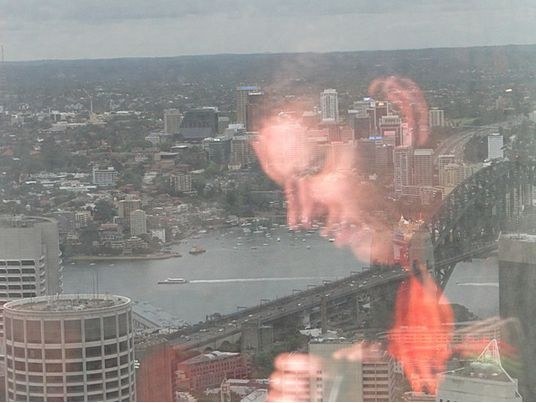
We headed back to the ocean through the botanical gardens. The gardens were really well kept up. We visited the gift shop. Then we decided to take a water taxi to the aquarium. The view of Sydney from the water is spectacular. The water taxis can get you anywhere you need to go in just 15 minutes. We didn’t make it into the aquarium. We didn’t have enough time. Too bad.
We made it back to the hotel at 16:30, gathered our stuff, and then left for the airport. We’re flying back through the same airports: from Sydney to Bangkok to Dubai to Moscow.
Источник: http://www.alpari-life.ru/en/zdorovo-no-slishkom-bystro-otryvok-iz-dnevnika-ivana-dusharina/
LYUDMILA KOROBESHKO:AUSTRALIA
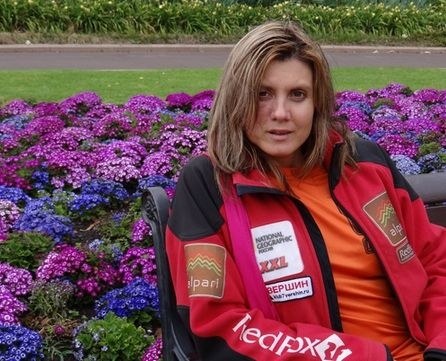
The first thing I would like mention about the trip to Australia was our tight deadline. Just 5 days? That seemed too fast. It took us two days to fly out there. After you arrive, it takes you a while to gather your bearings. However things weren’t as bad as usual this time. We’ve flown so many times in the past year that it appears that our bodies are beginning to adapt to flying out ofMoscow.
When we got toSydney, we really tried to keep from falling asleep right away. It was late back home in Moscow, but it was early in the morning for us. So how do you avoid dozing off? Healthy food and fresh air, of course. Having decided to avoid taxis and public transport, we armed ourselves with a map of the area and set out for the fish market on foot.
On our walk, I was struck by the contrasting styles of architecture in Sydney. We were in downtown Sydney, surrounded by skyscrapers and towers, but we kept on coming across parks, gardens, ponds and all kinds of fountains. One of the things that really left an impression on us was the ibises – large exotic birds with long curved beaks. We came across them virtually every step of the way, especially in areas with restaurants and cafes.
Naturally we ran into a large throng of ibises and pelicans near the fish market. As soon as a new shipment of seafood would arrive, the birds would flock to scavenge some of the scraps. The employees at the market did all they could to shoo away the birds.
We treated ourselves to a bit of fish and returned to the hotel. We found our rooms, unpacked our stuff, then worked on figuring out where we could rent a car and where we could connect to the internet to send out our first photos and messages.
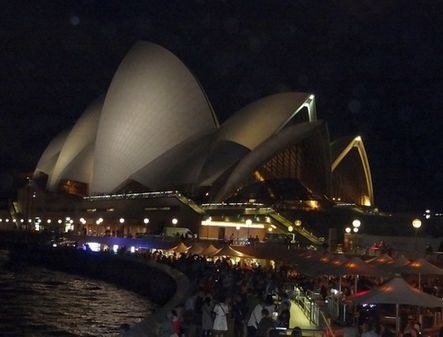
In an attempt to take in as much of Sydney in the little time we had, we decided to ascend to the top of the Sydney Tower. From there you can see everything in Sydney: the Pacific Ocean, the Sydney Opera House, the Harbour Bridge, the Botanical Gardens and much more. It was well worth it.
We didn’t get much sleep that night, even though we hadn’t slept much at all the past two nights on the airplane. We all woke up early – around 5 or 6 in the morning. I somehow mustered up the strength to go for a morning jog throughSydney.
After breakfast, we set out to pick up our rental car. I have to say that this may have been one of the most interesting experiences of the whole trip toAustralia: our first time driving on the left side of the road. Max nobly volunteered to take the wheel. Everybody chipped in with advice – including the GPS system and its sexy female Australian voice. It didn’t come as a surprise to anyone that it took us three tries and 40 minutes to find our way out of downtownSydney.
We stopped just outside of the city and I encouraged Max to take a quick smoke break to help cope with the stress of his job as chauffeur. The trip toCanberrawas quite memorable, both for the beautiful landscape and for the numerous signs warning about the danger of kangaroos and wombats. By chance, we happened upon a street music festival in the town ofCooma. We had a good time there.
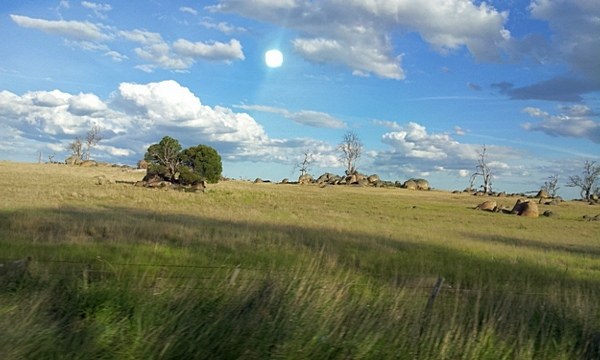
AfterCanberra, the landscape really started to change. We began to see real mountains and forests of eucalyptus trees. Near the entrance to theSnowyMountains, a whole group of kangaroos crossed the road in front of us. Fortunately none of them were hurt (a lot of animals get run over in the Australian wilderness, especially at night).
We made it to theSnowyMountainsduring the evening and found thevillageofThredbo(home to a ski resort), where we would be spending the night. Before dinner, we decided to drive out to our starting point so we wouldn’t get lost the next morning.
In the morning, we headed out for “Dead Horse Gap”. We weren’t terribly thrilled with the weather. The wind was pretty strong. Our path took us through a burnt eucalyptus forest and alpine meadows. When we made it out of the forest, the wind nearly knocked us off our feet. There was even snow in some areas.
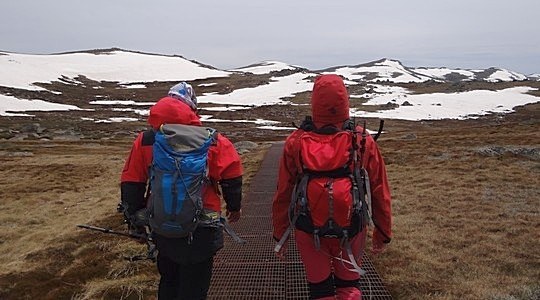
We made it to the summit around lunchtime. There we had an interesting encounter with two climbers from Ekaterinburg (Russia). They were working on the 7 Summits program too. Kosciuszko was number 4 for them.
It turned out, they had read about our expedition online and tried to time their climb to coincide with ours. It was nice running into them. We began our descent from the summit during the evening. The next morning, we had to wake up early again in order to make it back to Sydney, 500 kilometers away. We were hoping to get back early so we could dip our feet in thePacific Ocean. Fortunately, we made it back in time. Dreams do come true.
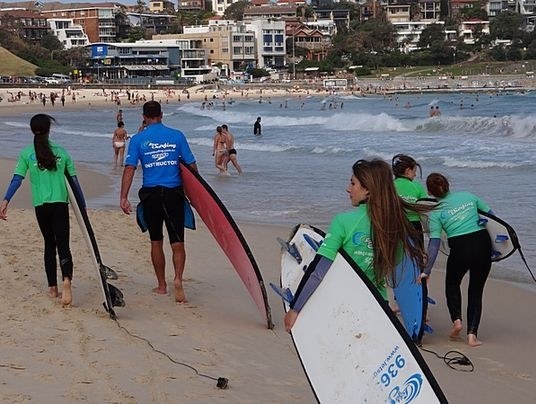
It’s been nice to warm up a bit. Next up is Antarctica.
Источник: http://www.alpari-life.ru/en/lyudmila-korobeshko-avstraliya-poslevkusie/
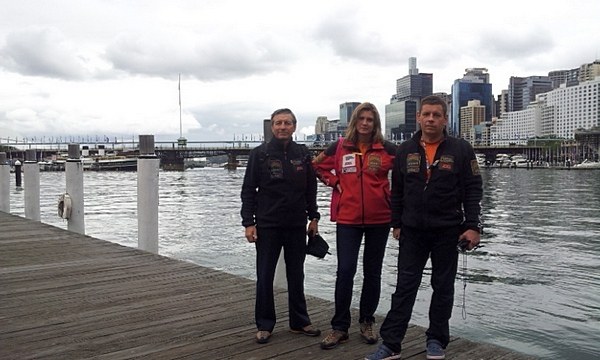
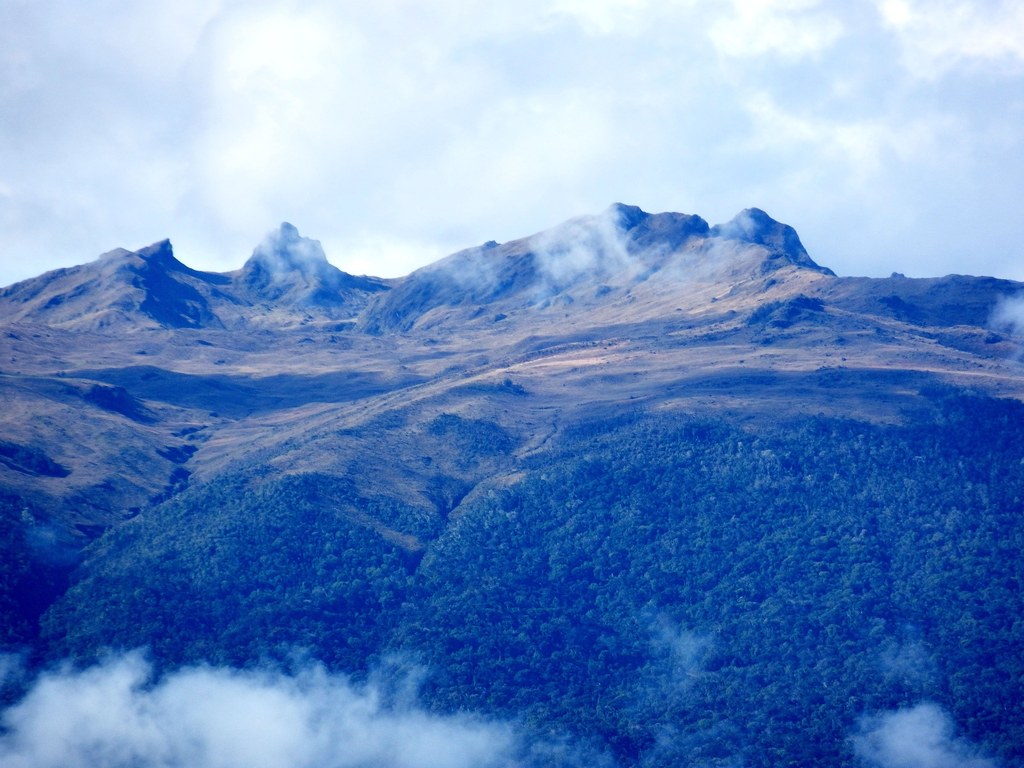
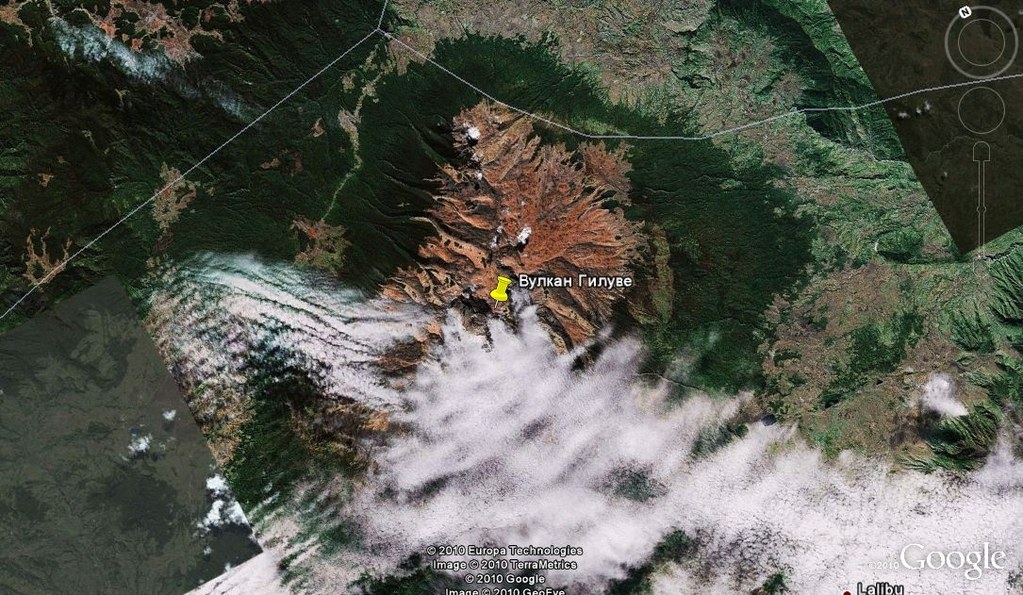
Slava Adrov - the first Russian on the top of volcano Giluwe
Giluwe.
Yesterday at 11 am (local time), Vyacheslav (Slava) Adrov climbed the top of Mount Giluwe (4368 meters). It is the highest volcano of the continent of Australia, located on the territory of Papua-New Guinea. A local guide, the Papuan Ryuk ...
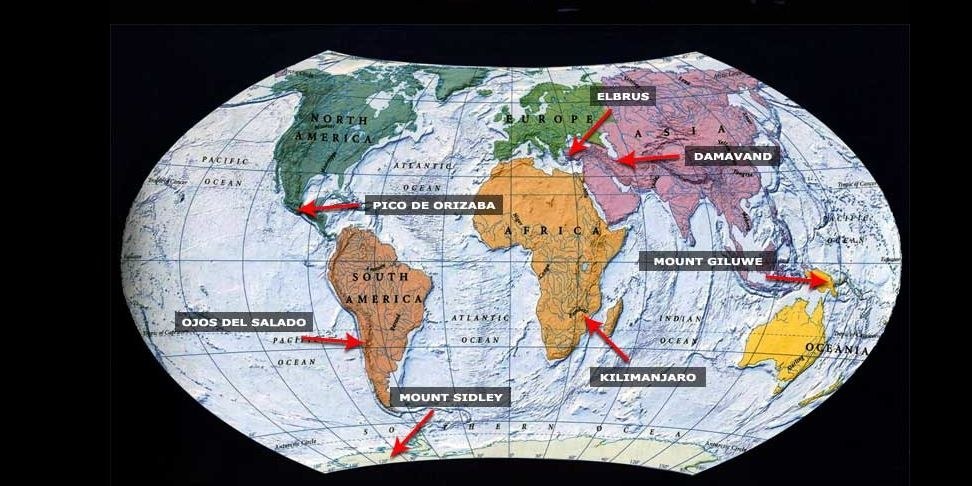
Yesterday at 11 am (local time), Vyacheslav (Slava) Adrov climbed the top of Mount Giluwe (4368 meters). It is the highest volcano of the continent of Australia, located on the territory of Papua-New Guinea. A local guide, the Papuan Ryuk Raima accompanied Slava’s climbing. Thus, Adrov have six volcanoes from the program "7 Volcanoes", he need to climb only Mount Sidley in Antarctica to finish this program. Before him, the program Seven Volcanoes was completed by Italian Mario Trimeri and Romanian Crina Popescu.
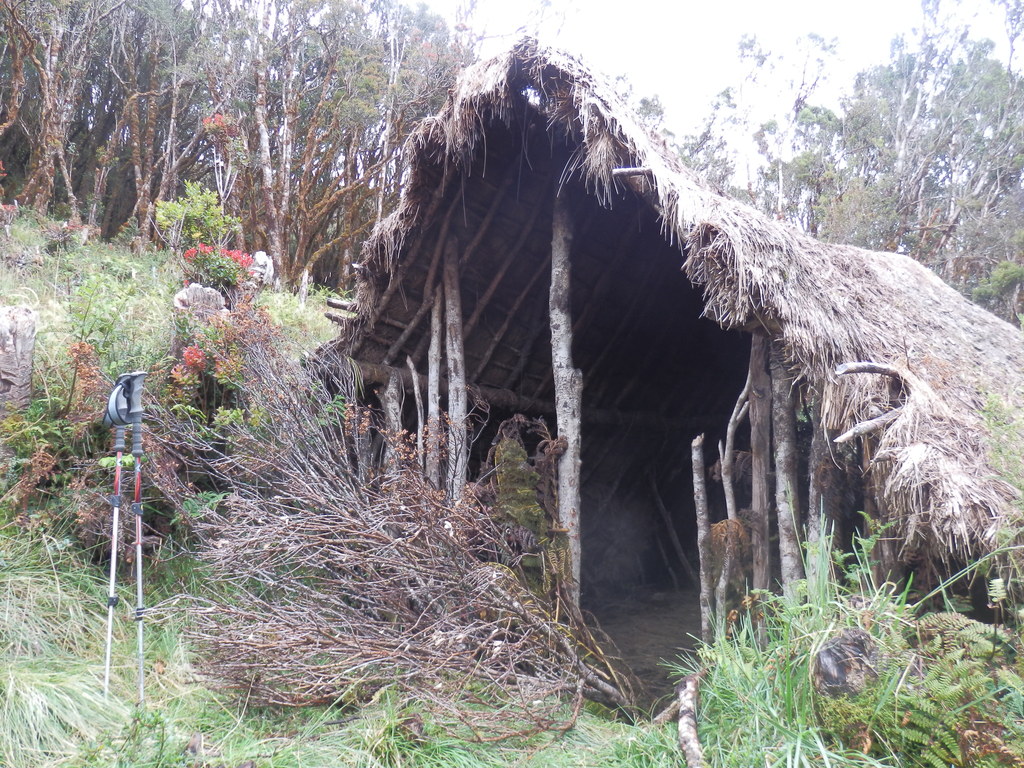
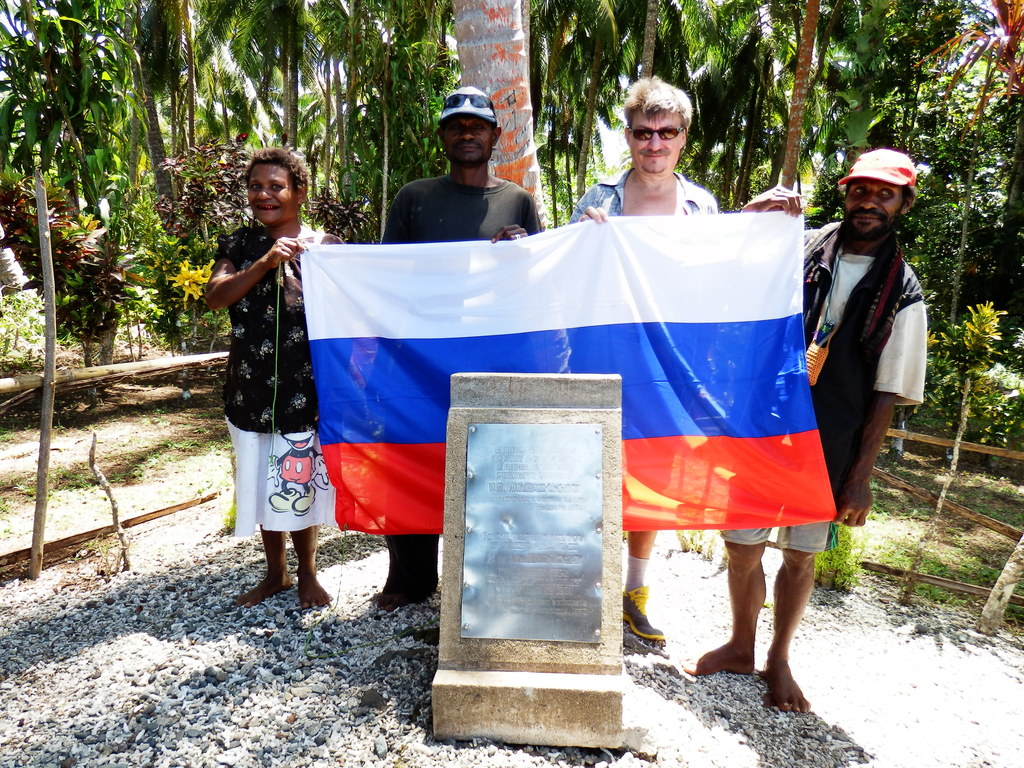
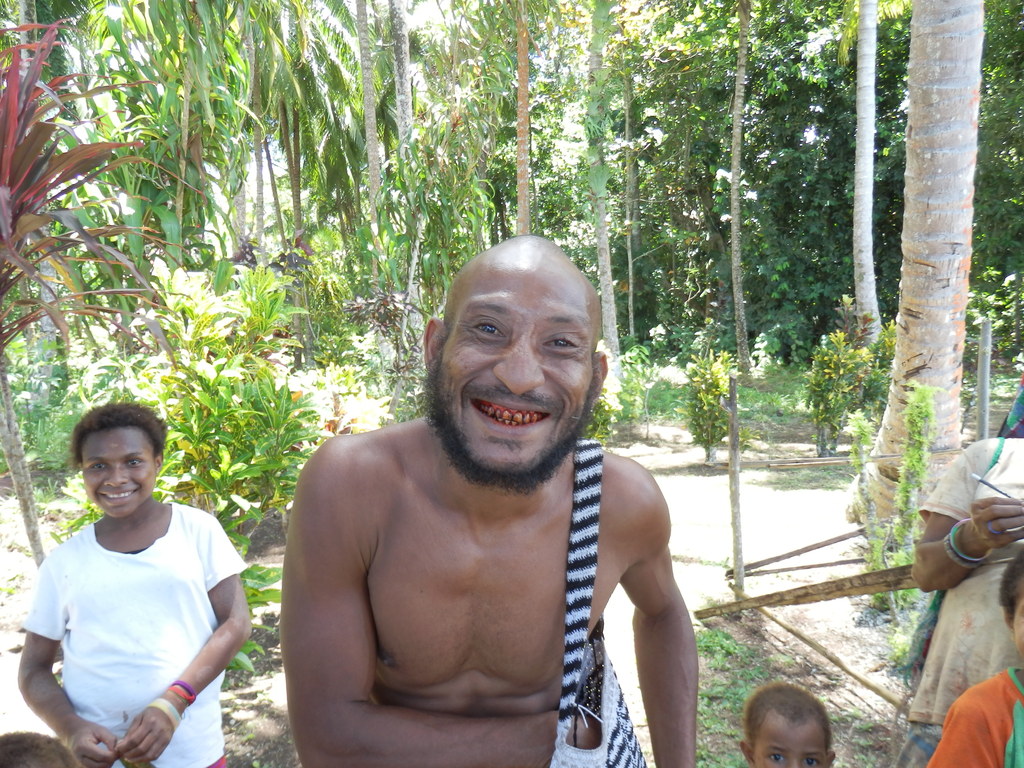
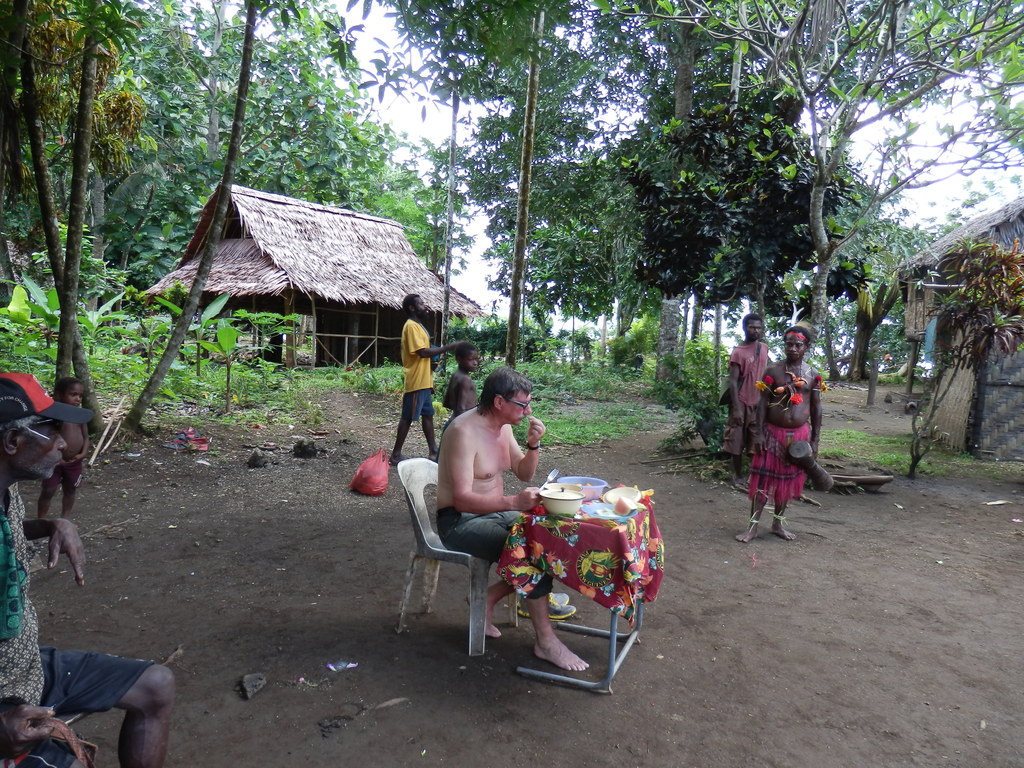
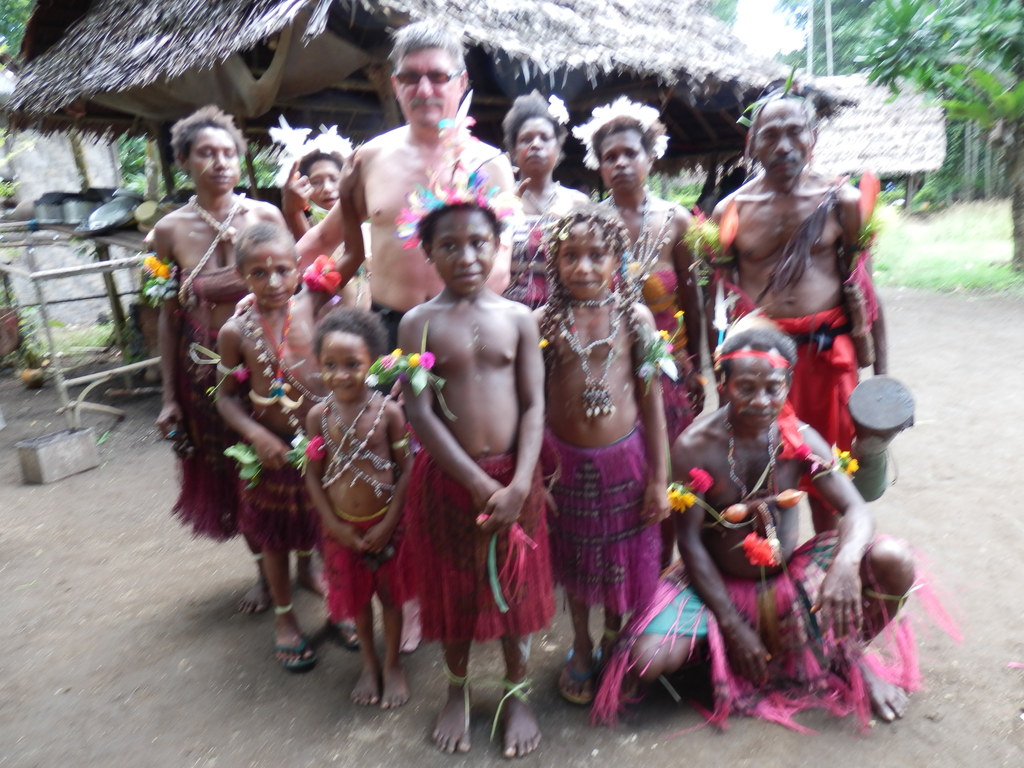
Before the ascent, Slava traveled to jungles and rivers of Papua. He visited the Maclay Coast, where there is a monument to Russian scientist and researcher Nikolai Miklukho-Maclay.
Team Alpari Sent to Prison
Everything started out okay. We decided to go for a walk aroundSydneybefore we leftAustraliaand pick up a couple of souvenirs. However, Max and Ivan got a little bit carried away inside one of the stores. They picked up a didgeridoo (an ...
Everything started out okay. We decided to go for a walk aroundSydneybefore we leftAustraliaand pick up a couple of souvenirs. However, Max and Ivan got a little bit carried away inside one of the stores. They picked up a didgeridoo (an Aboriginal instrument) and started playing very loudly – to the point that the other shoppers had to cover their ears. They then decided to give a boomerang a toss to see if it would fly back.
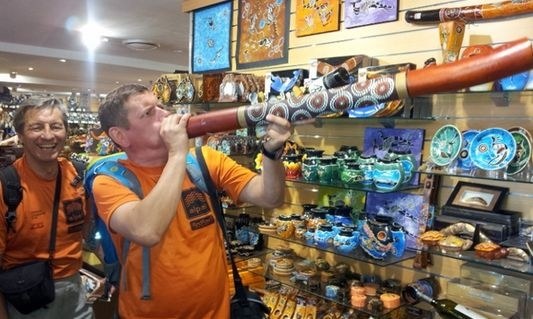

The officers of the peace would not tolerate this type of behavior and they sent us off – to prison! Of course, this was done as more of a precautionary measure than anything else. We were sent to a rather unusual historic prison named the “Barracks of Sydney”. This was actually one of the placesEnglandbuilt to house some of the first convicts they sent toAustraliain 1819. We spent a bit of time there, lying on our bunks (actually they were probably more like hammocks) and thinking about what we had done.
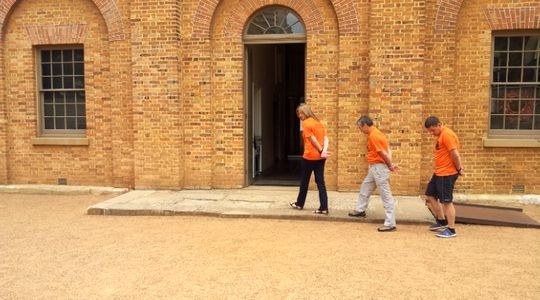
We didn’t have much time left before our flight. After we told the lawmen there about the purpose of our visit toAustraliaand “Alpari: On Top of the World”, they took pity on us and decided to let us go (after getting our autographs). I guess they can take our prints next time we’re in town. We hopped into a water taxi and sped off to the airport.
So, it looks like we may make it back in time for our Everest celebration after all…
-Lyudmila Korobeshko, writing from a water taxi

The Everest celebration Lyudmila mentioned is to commemorate the 30-year anniversary of the first Soviet expedition to Everest. It will take place on November 8 at theMoscowPolytechnicMuseum. All of the climbers from the formerSoviet Unionwho made the summit of Everest have been invited. Team Alpari has also been invited… as guests of honor.
Источник: http://www.alpari-life.ru/en/zakon-i-poryadok-po-avstralijski-alpinisty-v-sidnejskoj-tyurme/


Team Alpari - 7 summits in 300 days at the top of Kosciuszko
Today at 6:30 Moscow time (at 13-30 local) team deployed Alpari flag on the top of Mount Kosciuszko, the highest summit in Australia. Lyudmila Korobeshko Ivan Dusharin and Maxim Shakirov climbed six of the seven summits. Their project ...
Today at 6:30 Moscow time (at 13-30 local) team deployed Alpari flag on the top of Mount Kosciuszko, the highest summit in Australia. Lyudmila Korobeshko Ivan Dusharin and Maxim Shakirov climbed six of the seven summits. Their project will be completed by the ascent of Mount Vinson in Antarctica in early December.
Lyudmila Korobeshko: Route was interesting, quite a lot of snow, strong wind. The corpse of a dead horse was not found. But on the track we saw a lot of horse manure. This led me to think that the rumors of the death of the horse are somewhat exaggerated. Hello! (They climbed via Dead Horse Gap)….
Source: http://www.alpari-life.ru/komanda-na-vershine-avstralijskogo-kontinenta/

Seven Summits collectors’ stories
Vinson.
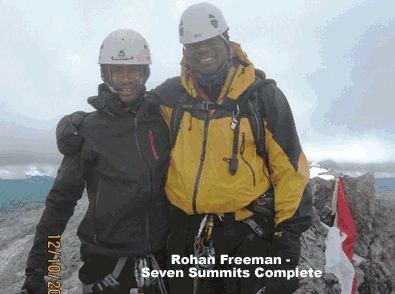
Rohan Freeman – the first Afro-American and Jamaican on the Seven Summits. In April 2009, Rohan Freeman embarked on an incredible journey to accomplish his dream of summitingMount Everest. In May 2009, he reached the ...
Rohan Freeman – the first Afro-American and Jamaican on the Seven Summits.
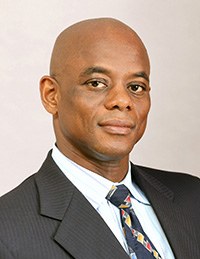
In April 2009, Rohan Freeman embarked on an incredible journey to accomplish his dream of summitingMount Everest. In May 2009, he reached the world’s highest peak. In June 2009, he returned home with his sights set on establishing his own engineering consulting firm.
Mr. Freeman was born and raised in Jamaica, and came to the University of Connecticut to explore his interests in the field of civil engineering. He went on to become a dually licensed Professional Engineer and Land Surveyor. His innate leadership talents and project management abilities have been enriched by his 25 year career in the industry working for nationally recognized firms, as well as the City ofHartford’s Public Works Department.
He is a man that is characterized by his passions, pride and drive. He embodies the spirit, culture and values of his firm. The establishment of Freeman Companies has been a challenging and exciting accomplishment, and Mr. Freeman is excited about the future success and the endless possibilities that lie ahead. Failure is not an option.
Rohan’s summit ofMount Everestis part of his larger initiative to summit the highest peak on each of the world’s seven continents. His conquest ofMount Everestmarked the fifth of his seven summits. He climbed in support of the Boys & Girls Clubs of Hartford, and has served as an active member of the organization’s Board of Directors since 2008.
A former track star at the University of Connecticut, Freeman said he first wanted to climb mountains in 1998, when he booked his first vacation to a winter resort. One winter sport led to another, he said, and in June 2002, Freeman and several friends climbed Tanzania's Mount Kilimanjaro, Africa's highest mountain. He then scaled three of the other "Seven Summits" -MountMcKinleyinAlaskain June 2004, Mount Elbrus inRussiain June 2006 and Aconcagua inArgentinain December 2006 - before he attempted to climbMount Everest.
"Just the idea that he's done outreach and work with the youth of Hartfordand has shown them a much broader world ... that was very important [to us]," said fund President Kirk Sykes.
After Everest Freeman climbed the last two of the "Seven Summits": Vinson Massif in Antarctica and Mount Kosciuszko in Australia- in 2010. And finished this story climbed Pyramid Carstensz in fall 2012.
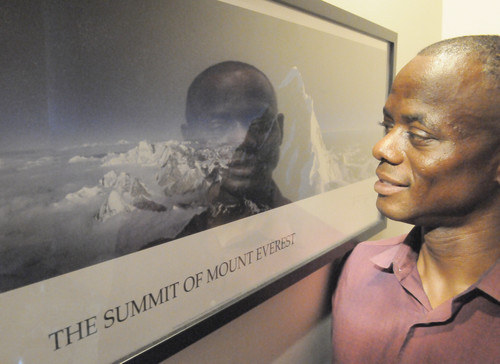
"When I returned from Everest, I stared my own engineering company," Freeman said. "I'm trying to see if I can make that a success."
Premlata Agarwal
Premlata Agarwal has added yet another mountain to her kitty! The oldest Indian woman mountaineer to have scaled Mt Everest has now also become the only Indian woman to climb Carstensz Pyramid, the highest peak of the Australia/Oceania continent, which is deemed one of the most difficult to climb.
Talking to mediapersons on her return, Agrawal (48) said she reached the 16,024-feet steep Carstensz summit ofIndonesiaon October 23, after seven days of trekking. She has now scaled five of the seven highest summits of all continents.
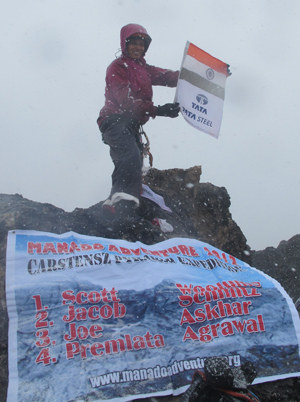
She took a tumble innumerable times during the expedition, braved consistent rainfall and slipped on slushy tracks to the base camp. “It was a very difficult and challenging climb. Several elements came across our trek but we did not lose heart. But I’m very happy to have come back successful,” she said.
It rained throughout the journey, in which she had threeUSmen climbers as part of the team. “We flew into Timika fromBalion October 15. Then we took a hour-long flight to Sugada village, which is one of the openings to the base camp,” Premlata recalled.
This resident ofJamshedpurwill go to Mt Vinson Massif (Antarctica) in December and re-tryMountMcKinley(North America) in May-June next year to complete her seven-summit campaign. She was forced to return without climbing McKinley last June due to inclement weather.
Agrawal has set sight on completing the mountaineering challenge of climbing the Seven Summits and Tata Steel is the proud sponsor of her expedition, and is supporting her with a sponsorship of Rs 80 lakh. Conquering all seven summits makes one a member of the Hall of Fame for mountaineers.
If Premlata achieves this remarkable feat — she is targeting 2013 for it — she will become the first Indian woman, and one the oldest in the world, to do so.
Antarctica's Tallest Peak
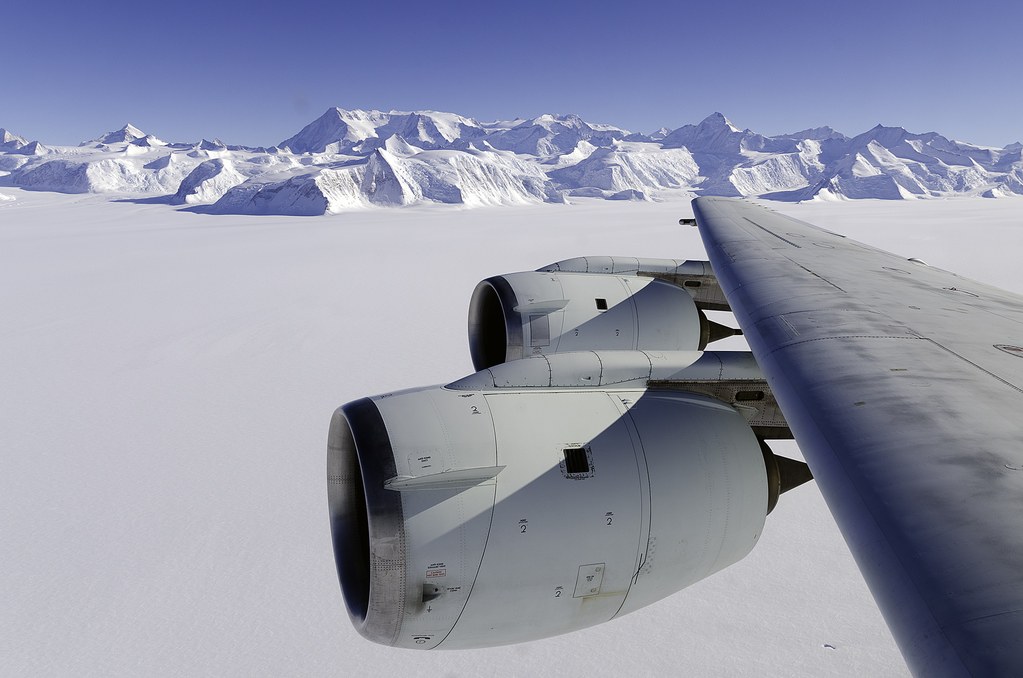
NASA’s DC-8 flying laboratory passes Antarctica’s tallest peak,MountVinson, on Oct. 22, 2012, during a flight over the continent to measure changes in the massive ice sheet and sea ice. The flight is part of NASA’s Operation IceBridge, a multi-year airborne campaign to monitor changes in Earth’s polar ice caps in both the Antarctic and Arctic. Ice Bridge science flights from Punta Arenas, Chile, began on Oct. 12 and continue through early November. Mount Vinsonis located in the Sentinel Range of the Ellsworth Mountains in Antarctica.

Dr. Clare O'Leary
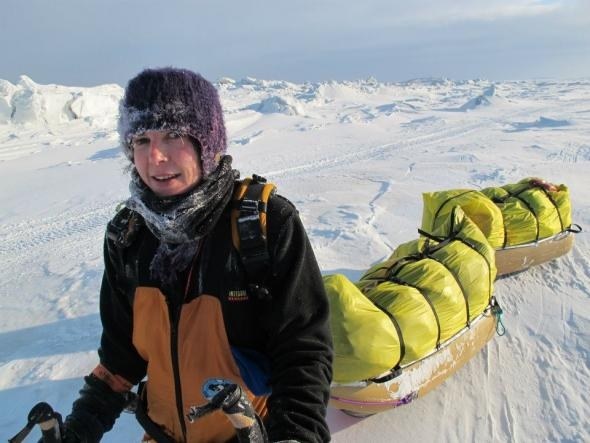
She's already conquered Everest, completed the world's Seven Summits and become the first Irish woman to reach the South Pole.
But now Dr. Clare O'Leary is aiming to make history once again as part of the first Irish team to cross the perilous, but little-known North Patagonian Icecap.
The pint-sized adventurer, from Bandon, Co.Cork, is part of a five-strong team that also includes Kerry explorer Mike O'Shea, which is attempting to cross the treacherous 120km distance.
The team, which set off from their base inChilelast weekend, is expected to spend the whole of this month hauling their sledges across the remote cap, which has only ever been crossed by a handful of people.
Even preparing for the challenge and packing the correct clothing was a logistical nightmare, as temperatures, on altitudes ranging from 1200m to 1500m, can range from -30C to 30C on the same day.
Both Clare and Mike have spent months training for the gruelling adventure, which is deemed particularly challenging because of the difficulty in accessing the icecap.
The team will have to climb a towering glacier before setting foot on the cap, while the journey will also include boat trips, camping and horse riding with South American gauchos and crossing a rainforest.
Earlier this year both Clare and Mike were forced to abandon their bid to become the first expedition to make it to the North Pole.
They were forced to pull the plug on the challenge to reach the remote Arctic point, because their plan to share chartered logistics with other teams fell apart.
Clare is the first Irish female toclimbMt.Everest and also the first Irish woman to complete the Seven Summits, which includesMt.Vinsonin the Antarcticand Mt. McKinley inAlaska.
Keep track of their progress at irishnorthpole2013.com.
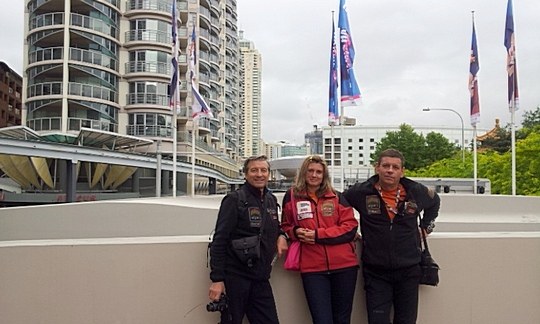
The Alpari team arrived in Sydney
Flight to Sydney was very tedious. The route was changed by airline and our team a long time was sitting inThailand, not knowing when will be allowed to fly further. Only after whole day on the road, Lyudmila Korobeshko, Ivan Dusharin and ...
Flight to Sydney was very tedious. The route was changed by airline and our team a long time was sitting inThailand, not knowing when will be allowed to fly further. Only after whole day on the road, Lyudmila Korobeshko, Ivan Dusharin and Maxim Shakirov arrived in Sydney. The first day was devoted to a sightseeing tour of this wonderful city.
Forecast Kosciuszko ...
Spring in theMountainsBlueMountainturned leisurely. Therefore, on the slopes longer than normal to save snow. Actually, all paths lead to the top, covered with snow. It, however, melts quite intensively. Moist, moderately warm weather contributes to this process. Each day will be at least a little rain, sometimes with the wind. In general, the picnic was not supposed to be.


http://www.thredbo.com.au/mountain/live-cams/
---------------------------------------------------------------------------------------------
Project “7 Summits for 300 days”
8th of September the team of Alpari Lyuda (Lyudmila) Korobeshko - Ivan Dusharin - Maxim Shakirov climbed theWestern Summit of Elbrus. It was their fifth mountain from the “big seven”. The most difficult ones – Mt Everest andMt.Denali were climbed in May and June 2012.Mt.Kosciuszko - the highest Australian hill is the next goal. It could not be difficult to climb it in November. The last one –MountVinson is waiting at the beginning of December. In recent years, the vast majority of those who arrive to climb theMountVinson, reach the top. So we have confidence that our target will be achieved.
“Alpari On Top of the World” project
It all started with a friendship with the leaders of the company of Alpari. Sometimes we go to the mountains together. In 2008, the leader of Alpari Andrey Dashin went with the 7 Summits Club inEcuador. It was his first trip to the mountains. Andrey felt interest in mountaineering and introduced it to his employees. Then there were Kilimanjaro, Alps,Tibet, Altai,Kamchatka. “It’s a good tradition. We all climb together, overcoming obstacles, cold weather, difficult conditions. But we make it,” commented Andrey Dashin.
During this visits it was burn an idea to raise the banner of Alpari the highest peaks of world.
The project’s goal is simple: climb the Seven Summits in just 300 days!
A bit more about Alpari:
Alpari is the world’s leading MetaTrader 4 broker, and, according to a recent report from “Forex Magnates”, one of the world’s three largest Forex brokers. In addition to online trading, Alpari offers a variety of other services including free analytical tools and partnership programs. Alpari has been providing online brokerage services for over 13 years, now with more than 540,000 accounts belonging to clients from 150 countries around the world. It is represented in more than 20 countries and more than 30 cities in Russia. It has earned the trust of clients and partners everywhere. Over the years, Alpari has racked up a number of prestigious financial awards, including one for being named the “Company of the Year in Forex” at the 2011 Financial Elite of Russia Awards.
The Team for Several Records
A team of experienced climbers will have to implement this idea. At the same time, managers of Alpari have to take part in several expeditions. The persons for the team of climbers was offered by the Mountaineering Federation of Russia after discussions with the 7 Summits Club.
Lyudmila Korobeshko is the captain of the team. She is the only Russian woman climbed Seven Summits and been to the North and South Poles (Last Degree).
Ivan Dusharin, 65 years old “patriarch of Russian alpinism”, is an internationally recognized climber with the supremely challengingK2, among many other impressive climbs, under his belt. He is a vice-president of the Mountaineering Federation of Russia.
Maksim Shakirov, author of “New Year on the Peaks” project, photograph and video operator, he is a well-known as “media-climber” who planted the flag of the 2014 Olympic Games atop Mount Everest and Mount Olympus.
Several records are planned to be broken if the team is successful:
- all-world speed record for women (Lyudmila Korobeshko);
- speed record for a team of three and more;
- age record for climbing 7 Summits in one year (Dusharin);
- first ever team to climb all Seven by non-standard route (not fulfilled yet, because the weather on Everest was unfavorable)
- several national records.
Ivan Dusharin anniversary coincided with the departure of the group
On the night of November 2, the team "Alpari on top of the world" has gone from Domodedovo airport inAustraliato climb the continent's highest peakMountKosciuszko. The mood was festive, because everyone continued to celebrate the ...
On the night of November 2, the team "Alpari on top of the world" has gone from Domodedovo airport inAustraliato climb the continent's highest peakMountKosciuszko. The mood was festive, because everyone continued to celebrate the anniversary (65 years) of Ivan Dusharin. And we jokingly remarked that one of the gifts was a birthdays "trip for three" inAustralia...
Our congratulations !
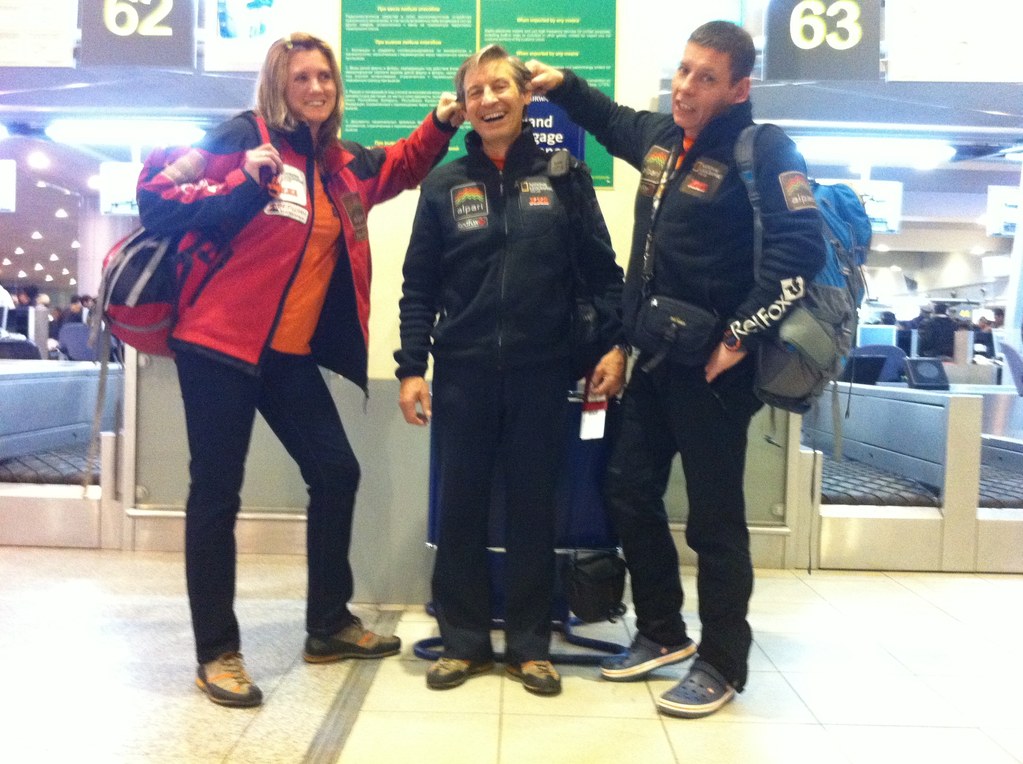
Ivan Dusharin. His official sporting status is master of sports of international class, “snow leopard”. He has been climbing mountains since 1964; 19 times summited 7,000m peaks of former USSR, also conquered Mont Blanc (1985), Aconcagua (1991, 2012), Everest (1992, 2005, 2012), McKinley (1995, 2012), Changabeng (1998), Nanga Parbat (1997), Cho Oyu (2002). While being younger Dusharin served in air-landed force, has a large number of parachute jumps. He is an engineer-designer by profession. Long time Ivan Dusharin was the head of the robot design bureau at AvtoVAZ plant. Now he lives inMoscowand work as a vice-president of the Russian Mountaineering Federation.
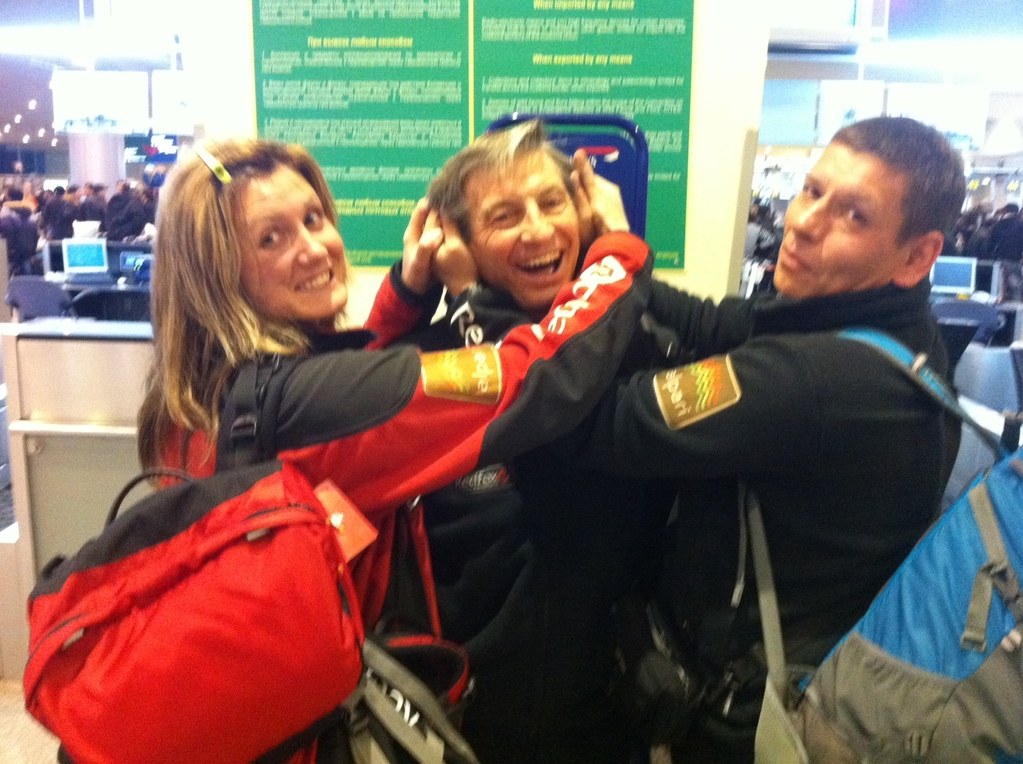
Ivan Dusharin
http://www.ageofhappiness.com/blog/ivan_dusharin_eng/234/
Sixty-five year-old Ivan is a mountain climber. Ivan Dusharin has decided to vanquish all of the tallest peaks in the world within one year. Over the past six months, Dusharin has already surmounted Kilimanjaro, Everest and Aconcagua. And during the next half year, he intends to climb another four of the world’s peaks. The idea is to climb to the highest points in each of the seven continents. At the end of May, Ivan descended from Everest and on the next day, following the photo shoot for The Age of Happiness project, he took off to triumph over McKinley, the highest point inNorth America.
No one inEuropehas ever climbed seven peaks in one year. For world mountain climbing, this is a significant project, considering that Dusharin and two colleagues on his team, Lyudmila Korobeshko and Maksim Shakirov, are deliberately avoiding the classical routes and choosing complicated paths for the climb.
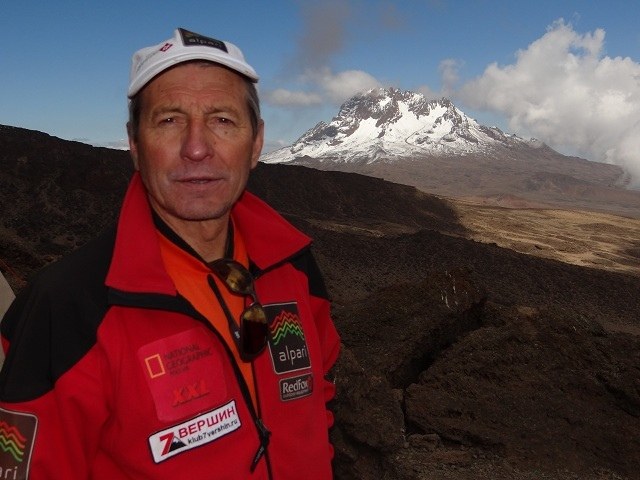
That climb on Everest was Ivan Dusharin’s third. It took 59 days. «The temperature this time was good,» says Dusharin, only −45 c." And he recalls that the time before, he was less lucky. Then it was −54 c." True, this time the «good» temperature bestowed upon him lightly frostbitten fingers, as he had to take off his gloves in order to take pictures at the peak.
When Dusharin was 50, he climbed Changabang, the Indian peak, in such a way that no one had ever managed to do it previously—on the sheer face. The climb up the vertical wall lasted 16 days without a break, spending the nights on the face, as well, three of them hanging in a tiny piece of stretched tarpaulin.
How can you stand it? Ivan avers that the secret lies in relaxing. When you are able to relax your body properly, you can manage to rest even if you are hanging by one hand. Dusharin eagerly demonstrates how, exactly.
During hard climbs of many days, Ivan loses a lot of weight. On his last Everest ascent, he lost nearly 10 kilos. «Ordinary athletes have a body build,» he jokes. «But we mountain climbers have a body demolition.»
Dusharin’s method of weight loss is, of course, one of the most effective, but is also inhumanly arduous. Actually, with regard to mountain climbing, Ivan himself doesn’t value the ability to demonstrate physical endurance as much as the need to contemplate and make a decision. «This is a genuinely intellectual sport,» he says. «You have to think a lot.»
--------------------------------------------------------------------------------------
Ivan’s Early Years

I was born in 1947 in Pokhvistnevo, a small town in the south ofRussiawhose name was borrowed from the nearbyvillageofOld Pokhvistnevo. As a child, I was interested in the origins of the name of my hometown. As it turned out, Lieutenant Pokhvistnev served under one ofRussia’s most celebrated military heroes, Field Marshal Mikhail Kutuzov. For his bravery and valor during the French invasion ofRussiain 1812, Pokhvistnev was awarded an estate in the Simbirkskiy province. The estate no longer remains, but the lieutenant’s name lives on as the name of two towns.
Life after WWII, especially outside of the big city, was difficult and humbling. Just getting hold of a loaf of bread meant standing in huge lines. The horror of fighting over bread crumbs is something that will be forever ingrained in my memory. I was probably 6 years old when I was trampled in a bread line. I was holding onto my mother as we slowly moved into the store. I remember the legs and feet around me, the bodies, the stuffy air, the cries I heard as we scrambled to get our share of bread. I was getting squeezed harder and harder, then darkness… I woke up, lying in the snow. Some woman wiped snow off of my face. “Thank God! He’s awake,” she said to me as she stood me on my feet. “Stand and wait for your mother,” said my savior as she disappeared into the crowd. I sat down in the snow. I could not stand. Everything hurt. It was difficult to breathe. I stared at the crowd of people squeezing into the store, not understanding what was going on and what had just happened to me. I don’t remember how much time had passed by the time my mother emerged from the crowd, her hair undone, her shawl in her hands, her face bright red. She looked horrible, yet satisfied. She was holding two small loaves of dark bread to her chest. She ran to me and said, “Thank God! And they gave you bread too. They took pity seeing how close you made it to the counter.” She wasn’t as interested as I was? I was alive and moving, so everything was okay to her. What about me losing consciousness? I guess I was not the only one. That was a pretty common thing in the bread line.
My mother fixed her clothing and we headed home. I still felt terrible, but I remained silent, trailing behind my mother. I was indifferent to the world around me, but I could see my mother was happy. We managed to bring home 2 loaves of bread for the family. Just knowing that I helped was enough to bring me back to full strength. This was how I spent my childhood: fighting for bread crumbs, gathering sorrels to make pies, picking berries and mushrooms, collecting hay for the goat. The children of the post-war period lived through difficult conditions, but the struggle to survive made us tougher. We grew up to be unpretentious, adaptable and resilient. We didn’t think of ourselves as unlucky or as having been dealt a bad hand by Fate. School.. I remember my school days, being around people much like myself; friends and comrades. I remember true friendship, training to be a pinko communist, speaking with wise and caring people – my teachers. Many of them taught us not only their subject matter, but important life lessons as well. Thank you to all of them!
I studied at a mechanical engineering school in Samara. It was a different atmosphere, a different type of school. I found myself mixed in with teenagers from the big city, from more advantaged families. My peers from the countryside were looked down on as outsiders, like people with a lower social status. The boys and girls who weren’t from Samara quickly began to understand how things worked and started to band together. In life, like attracts like. We were dressed more modestly. We ate poorly. We wouldn’t allow ourselves extra. We didn’t quite feel at home in the big city. But our persistence, our sense of fairness, our hard work and physical conditioning forced them to respect us and consider our opinion. In our studies, especially in practical subjects, we quickly overtook our fellow students from the big city. It was during this time, a period of self-affirmation and soul-searching, that I discovered parachuting, and more importantly, I was introduced to the mountains.
In January of 1964, I had my first taste of mountain climbing. By 1967, I was already enrolled in a school for future mountain climbing instructors. The mountains are a truly remarkable part of nature, a place where the bonds of friendship are formed. They are a place for personal struggle and maturation, where you learn about the world, yourself and everything that surrounds you. Everything was unusual, but it was amazing. I found myself surrounded by great people. Some of my teachers were: Svetopar and Kamille Koroleva, Vitaliy Abalakov, Vladimir Kizel, Yakov Arkin, Grigoriy Maslov, Ilya Martinov and many other terrific people, who helped us appreciate the beauty and the grandeur of the mountains. These were people of the highest intellect, who looked to share their personal knowledge and experience with us, who taught us to see and to love beauty, nature and life. Mountain climbing during that time, and with those people, was a world-class learning ground and I was fortunate to be a part of it. It had a powerful impact on my life.
Serving in the army is a special period in life, one that every man remembers. I was fortunate. My time in the army was difficult, but interesting as well. I served as a paratrooper in the Baltics, starting out in a heavy paratrooper equipment battalion. My technical education and my physical training came in handy. I graduated from my training unit with honors. Unexpectedly, I was sent to courses to become a Komsomolskiy paratrooper instructor. I had a lot of work, but it was interesting. The knowledge and skills I picked up from mountain climbing lessons came in handy. It was not a fool that said, “Never stop learning. Anything you learn might turn out to be useful.” After 11 months of service, I was made first sergeant, the highest possible rank for compulsory service. With some difficulty, I managed to get out of the army, although my commanding officers told me I should stay, that I had a great career ahead of me. But the mountains were calling me. In May of 1970, I returned to Samara, found some work, and left for the mountains. I came back from the mountains just in time to register for night classes. Life suddenly became more rigorous: work, school, sports.
Источник: http://www.alpari-life.ru/en/ivan_dusharin/
Ivan Dusharin
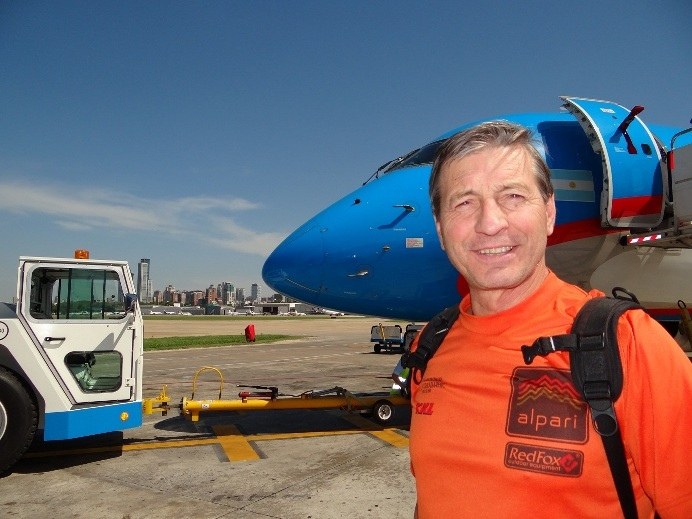

We congratulate our Polish friends with a record of the Seven Summits!
Małgorzata Pierz-Pękala and her son Daniel Misera became the first pair of “mother + son” successfully completed Seven Summits. December 27 they reached the summit Kosciuszko, as is well known named after the national ...
Małgorzata Pierz-Pękala and her son Daniel Misera became the first pair of “mother + son” successfully completed Seven Summits. December 27 they reached the summit Kosciuszko, as is well known named after the national hero of Poland. In 2010, they climbed Mount Everest in the expedition 7 Summits Club. And early last year as members of our team, they went to the highest point in Antarctica. Their permanent place of residence - the main Polish mountain resort of Zakopane. Here Malgorzata and Daniel often climbed and went to the mountains, and then their favorite guide Peter Konopka suggested to go to Mont Blanc. Thus began their epic Seven Summits.
Seven Summits our Polish friends:
June 2002 - Mont Blanc (4810 m)
June 2005 - Kilimandżaro (5895 m)
January 2006 - Aconcagua (6960 m)
August 2008 - Elbrus (5642 m)
June 2009 - McKinley (6195 m)
May 2010 - Mount Everest (8850 m)
January 2011 - Mt. Vinson (4892 m)
December 2011 - Piramida Carstensza (4884 m)
December 2011 - Góra Kościuszki (2230 m)
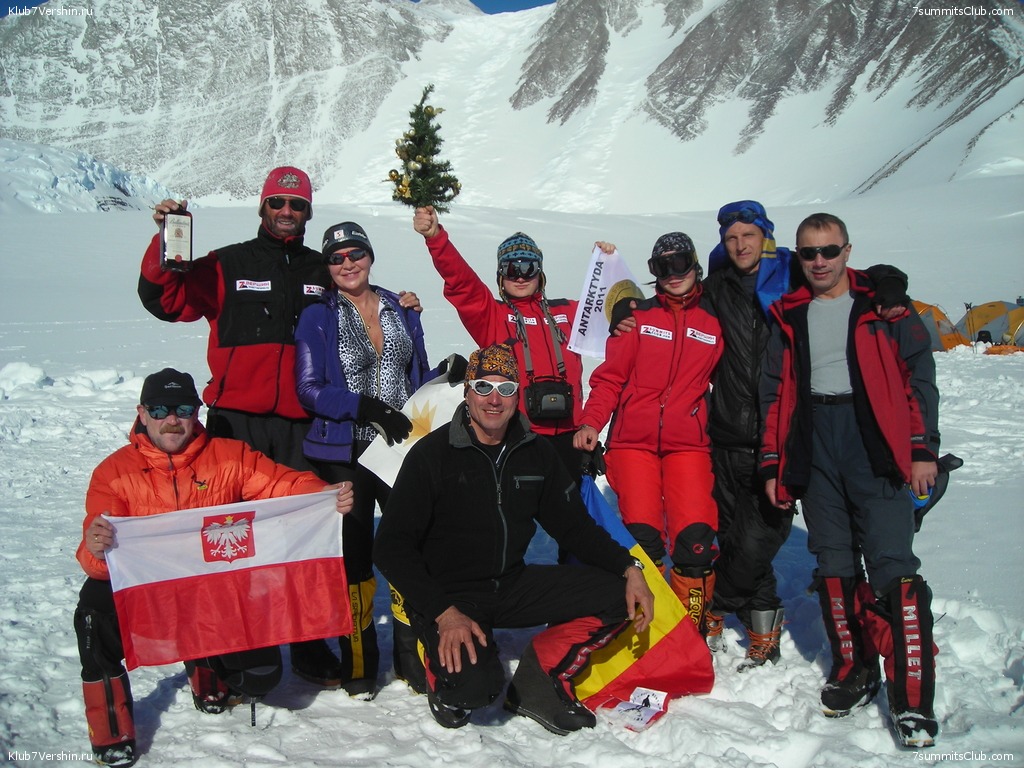
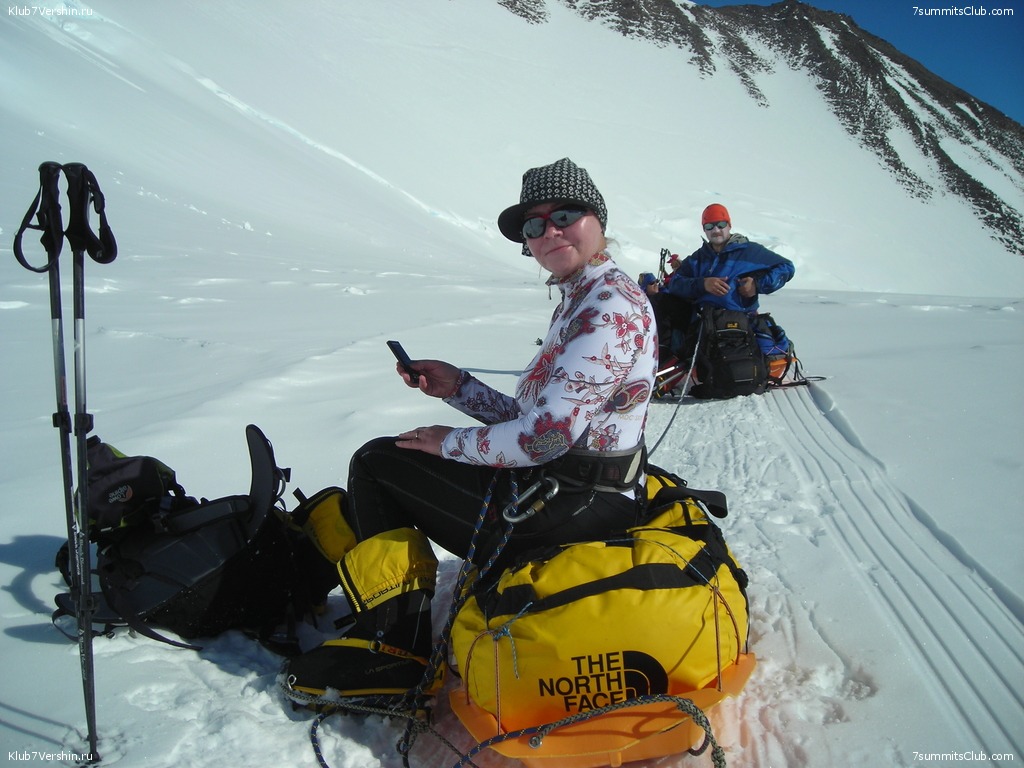

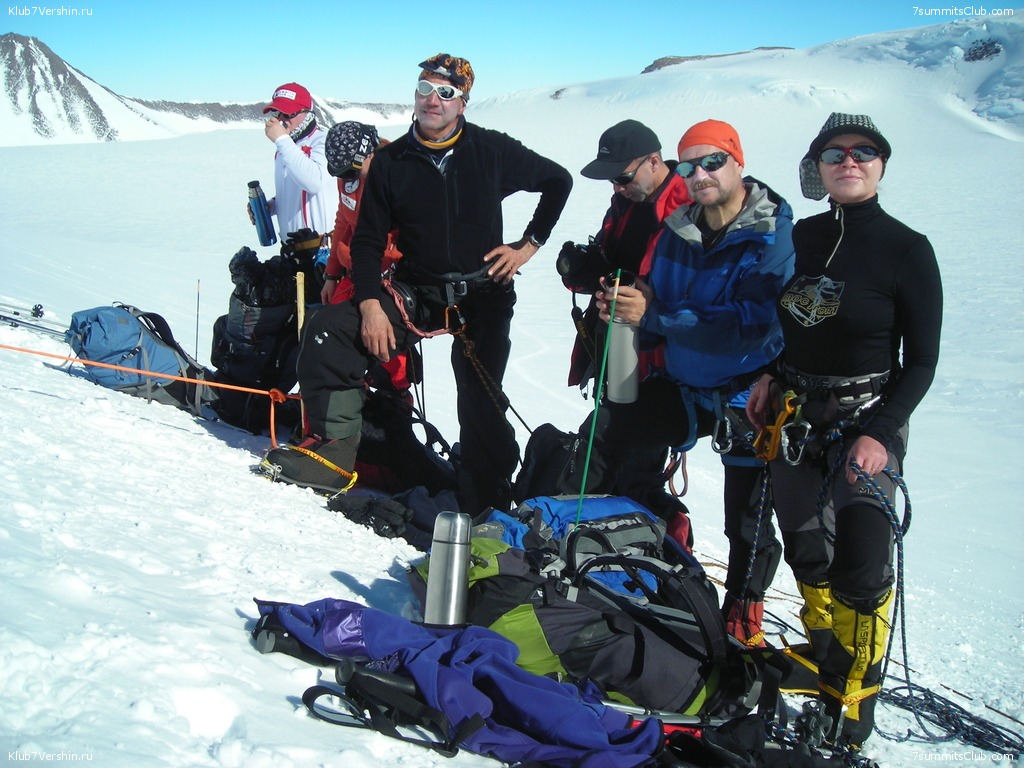
Our team climbed the Mount of Kosciuszko
Hello from sunny Australia! Today our team had climbed the summit of Mount Kosciuszko. We descended safely and now we are celebrating our achievement. Several people in our team, by this climb, came close to the finish of Seven Summits ...
Hello from sunny Australia! Today our team had climbed the summit of Mount Kosciuszko. We descended safely and now we are celebrating our achievement. Several people in our team, by this climb, came close to the finish of Seven Summits program, because now they have six summits. Volodya Stepashko lacks only Everest. Mikhail Turovsky and Vadim Nadvodnyuk - has yet to climb Mount McKinley. The mood of team is very good. We left Sydney behind us. We have already met with all kangaroos and wombats.. Everything is OK.
Congratulations for the New Year! We kiss and hug ! Sergei Kofanov. 7 Summits team. From Australia.
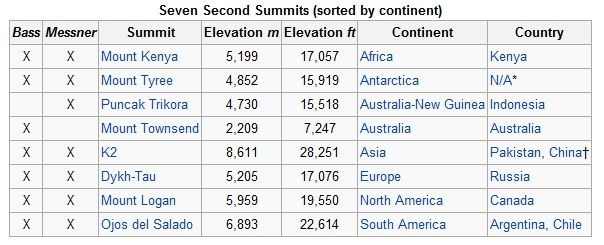
The seven second summits from Kammerlander
Carstensz Pyramid.
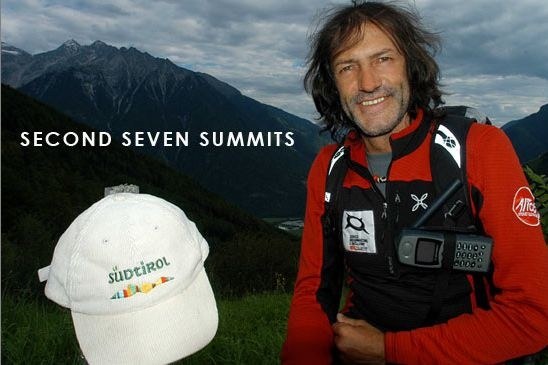
Well-known climber from the Southern Tirol, a guide and the head of climbing school Hans Kammerlander (born 1956) finishes a series of trips on cities of Austria and Germany. Public lectures and performances come to an end usually with ...
Well-known climber from the Southern Tirol, a guide and the head of climbing school Hans Kammerlander (born 1956) finishes a series of trips on cities of Austria and Germany. Public lectures and performances come to an end usually with conversations with journalists. On a traditional question on plans, the traditional answer follows: I am going to Antarctica to finish the program of "Seven Second Summits” . To made it, Kammerlander should climb only one, but really hard mount of Tyree. The second summit of Antarctica has only two successful expeditions and seven climbers on the top ….


Several of our expeditions started in afew days
The team of climbers Tuva visited our office. This time they fly to a distant Australia for climbing Mount Kosciuszko (2228 m). Famous Tuvan writer and climber Maadyr Khovalyg is the team leader. The team: Marianne Surunchap and scientist ...
The team of climbers Tuva visited our office. This time they fly to a distant Australia for climbing Mount Kosciuszko (2228 m). Famous Tuvan writer and climber Maadyr Khovalyg is the team leader. The team: Marianne Surunchap and scientist from Kyzyl Vyacheslav Sevek. They plans to climb the summit on February 23, the Day of Defender of the Fatherland. International project "7 summits of the world - Tuva" was launched in 2008. Trip to Australia - the fifth expedition. Athletes have already conquered Mount Elbrus, Kilimanjaro, Aconcagua and McKinley. After Kosciusko climbers, according to plan, will conquer Everest.
Andrey Selivanov, well known in this country went to the doctor-climber on Kilimanjaro as a guide of 7 Summits Club. Andrew is the head of the center of sports and mass work TSOGU Andrey Selivanov, so on top of it plans to set the flag of the university. On the eve of departure, Andrey Selivanov shared his thoughts with reporters:. "I do not set myself the goal of conquering all the highest in the world. I was very fascinated climbing, I'm doing things I love "
Another strong climber, our new guide and manager Dmitry Ermakov went to Africa.
Dima spent several years guiding in seventhousanders of Tien Shan and Pamir. Now he awaits debut on Kilimanjaro. It will be a large group, comprising 11 people, that departs tomorrow. President of the 7 Summits Club Alexander Abramov will go to Kilimanjaro with them.
And Lyudmila Korobeshko, meanwhile, along with a group of Olmi and Tina Taovo came to Marangu Route on Kilimanjaro.

Letter from the expedition leader Kazbek Khamitsaev from New Zealand
A team of climbers of the project "Russia at the top of the world" under leadership of Kazbek Khamitsaev is already in New Zealand. Yesterday we came to the National Park Mount Cook, settled on the shores of Lake Pukaki. At 9 a.m., New ...
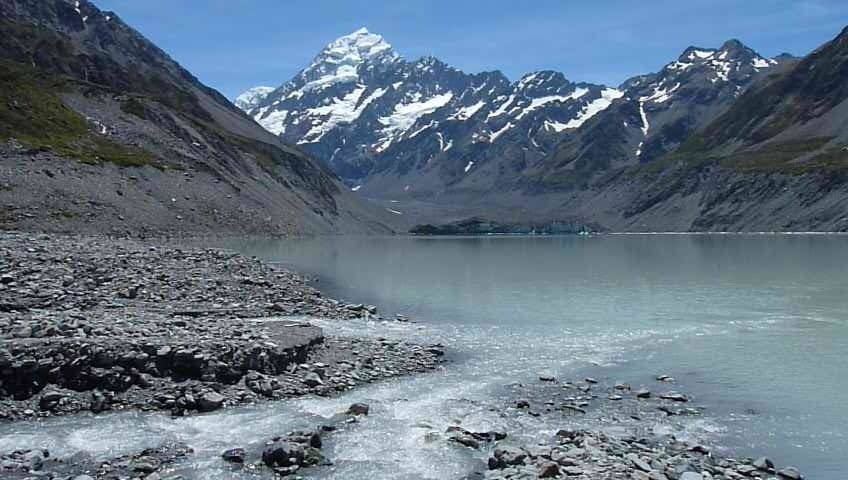
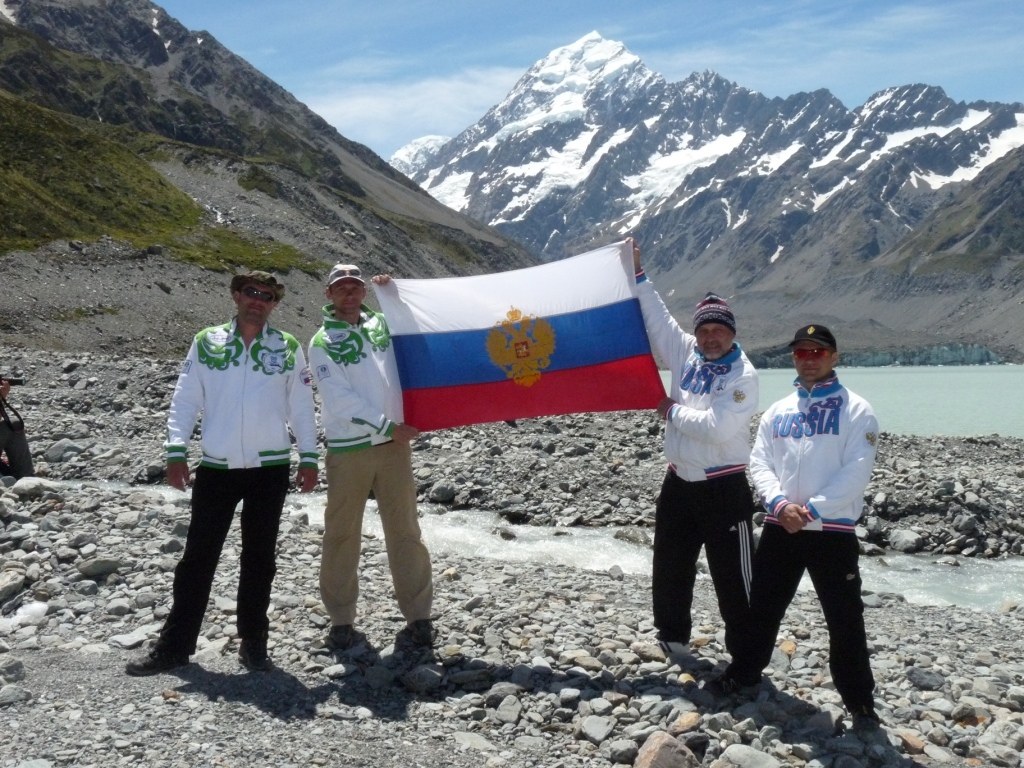
A team of climbers of the project "Russia at the top of the world" under leadership of Kazbek Khamitsaev is already in New Zealand. Yesterday we came to the National Park Mount Cook, settled on the shores of Lake Pukaki. At 9 a.m., New Zealand time, we made an official visit to the Center of Edmund Hillary, legend of world mountaineering. We are happy that we managed to meet him in Kathmandu in 1997, he left an autograph with his best wishes to command photography. Therefore, this is very important for us visiting the center and museum of Sir Edmund Hillary.
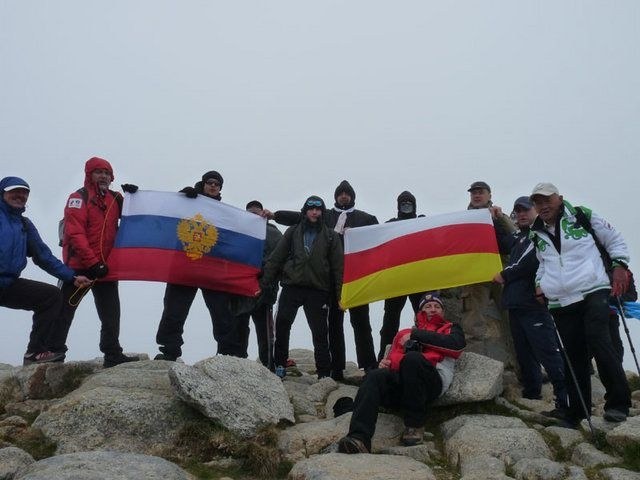
Next, we reached the area the highest local peak Mount Cook, in the center of New Zealand Alps. And we picked up on the shore of a mountain lake Hooker flags of Russia, North Ossetia-Alania, Sochi 2014, as well as a flag of our general partner of the project's, largest mobile operator MegaFon.
The expedition continues.
Mount Kosciuszko
New Zealand
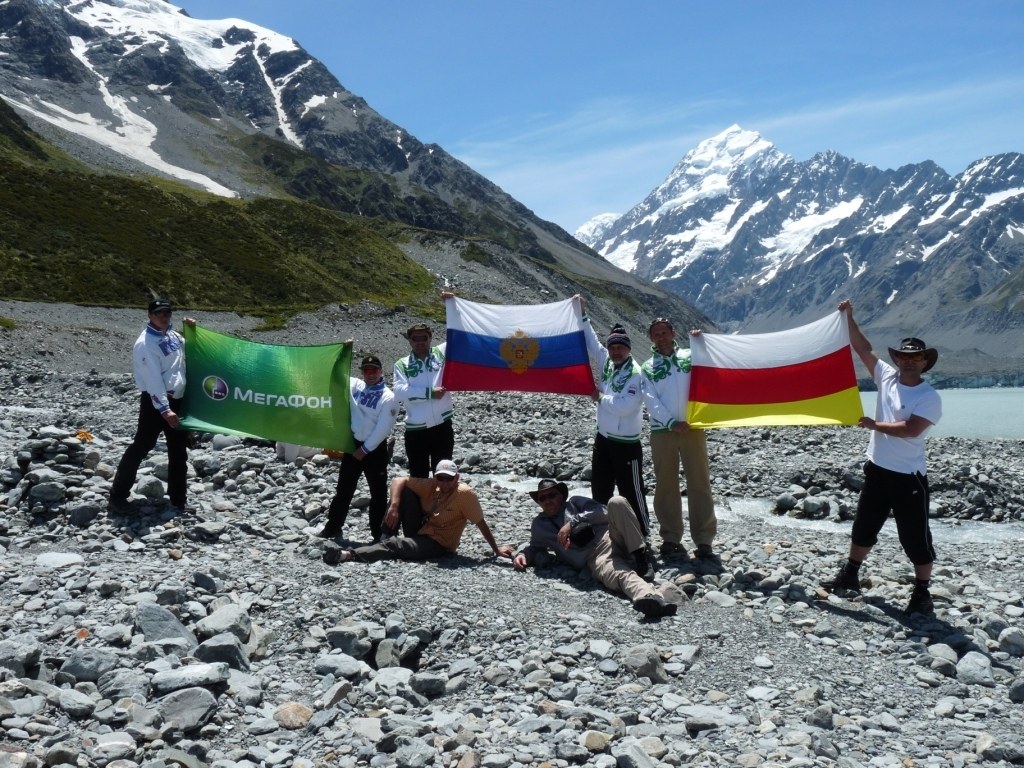

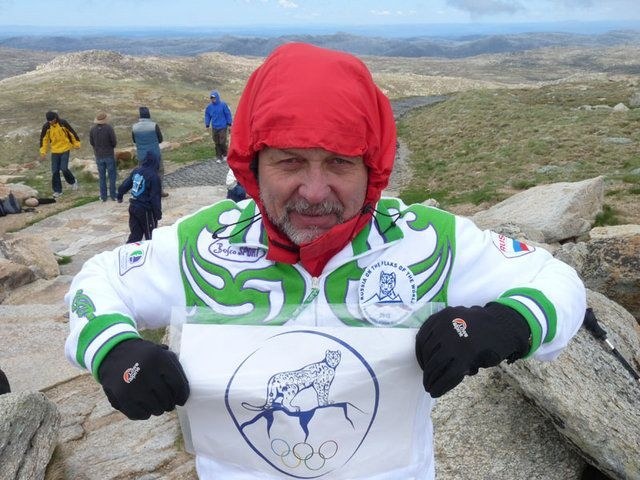
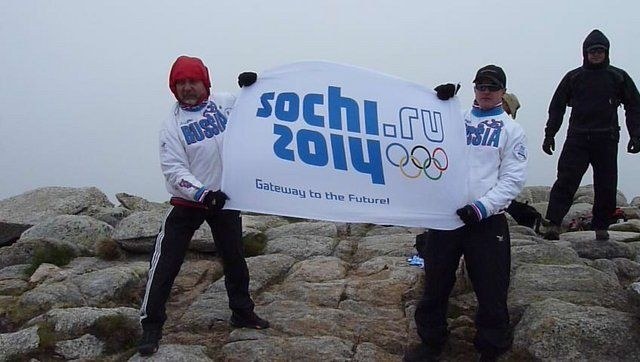
Good news from Australia, our expedition climbed Mount Kosciuszko
According to information received, 11 December 2010 a team of climbers of the project "Russia at the top of the world" under leadership of Kazbek Khamitsaev in 12 a.m. on Australian time summited Mount Kosciuszko. We hope that all members ...
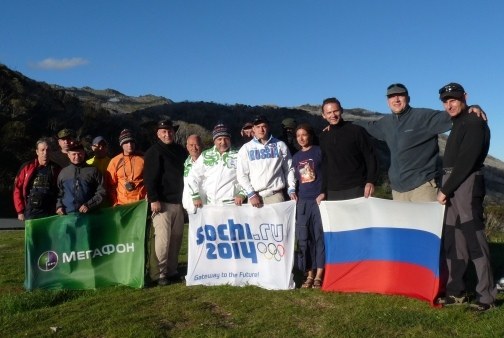
According to information received, 11 December 2010 a team of climbers of the project "Russia at the top of the world" under leadership of Kazbek Khamitsaev in 12 a.m. on Australian time summited Mount Kosciuszko. We hope that all members of the team have reached the top of the Green continent, including guides 7 Summits Club of Victor Bobok and Olga Rumyantseva. We will wait for the information from them.
Agency Osinform:
"Despite the fact that this summit is three times smaller than our last mountain - Aconcagua (6962 m) the ascent was not easy. A strong wind blew against. However, we should remember that our climb is dedicated to a very important event in our country - the Winter Olympic Games in Sochi in 2014, after us watch our fellow citizens, and it gave us strength. As a result, in 12 hours 14 minutes, we stood at the top of Kosciuszko, "- said by telephone Kazbek Khamitsaev.
Mount Kosciuszko is the third mountain climbers conquered in the project. Successful expeditions have already made to the highest peak in Africa, Mount Kilimanjaro (5895 m, 2008) and the highest point in South America Mount Aconcagua (6962 m, 2010). In 2011 we plan to climb was Mount McKinley (6,138 m, Alaska), 2012 - Vinson Massif (4,892 m, Antarctica), in 2013 - Mr. Everest (8848 m, Nepal), and the day of the Olympics in 2014 . - to climb Mount Elbrus (5642 m, Caucasus), with the Olympic flame.
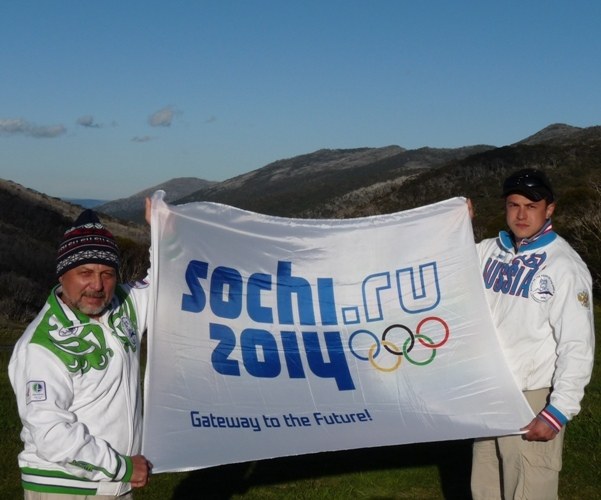
The team of “Russia at the tops of the world" starts to Australia
Today, on the night, a new 7 Summits Club expedition to Australia and New Zealand started. Two main guides of the Club Olga Rumyantsev and Victor Bobok gone in the direction of Australia. Now we are sitting in Dubai. Before boarding a plane ...
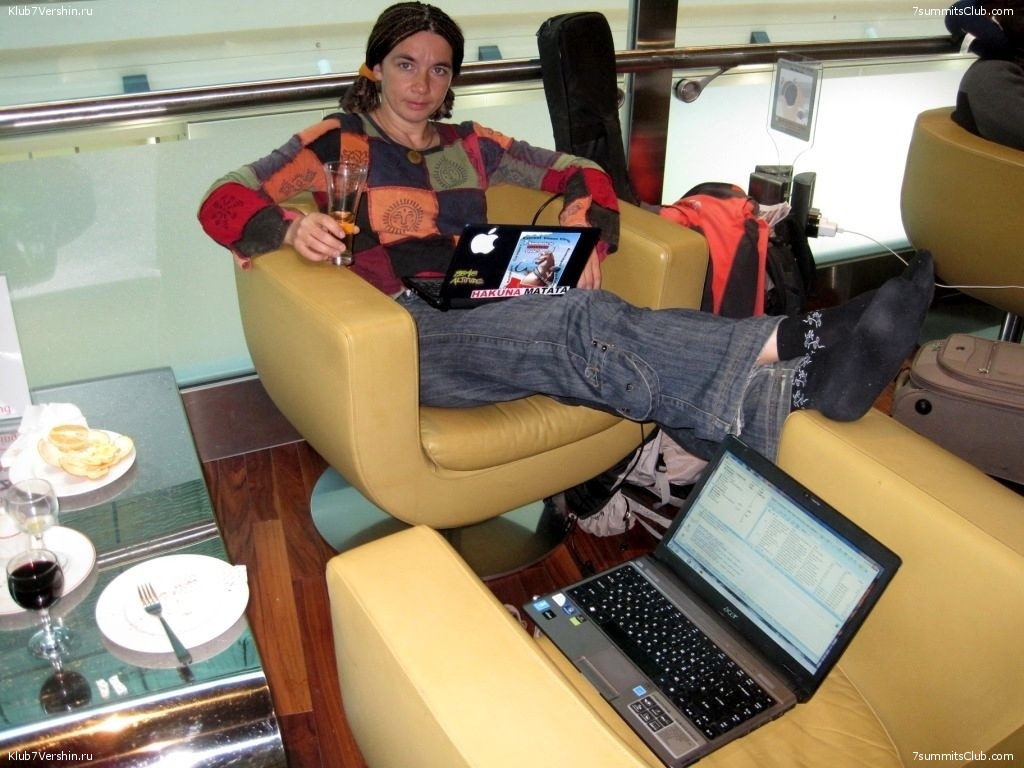
Today, on the night, a new 7 Summits Club expedition to Australia and New Zealand started. Two main guides of the Club Olga Rumyantsev and Victor Bobok gone in the direction of Australia. Now we are sitting in Dubai. Before boarding a plane to Sydney we have a few hours left and we are not to lose time, organizing a small mobile office. No difference from our native office in Moscow, the usual attributes - laptops, guitars etc...
Best regards!
Victor Bobok, Olga Rumyantsev.
The main part of the expedition (15) flies to Australia tonight.
“Russia at the tops of the world" expedition team consists of 15 climbers from North Ossetia plus two guides of 7 Summits Club.
The idea of this campaign was born almost two years ago, its initiator famous Russia climber, chairman of the Federation of North Ossetia, Kazbek Khamitsaev. In 2008, the project began, first summit to climb was Mount Kilimanjaro. The next goal was South American highest peak – Aconcagua (February 2010). The 2010 is also scheduled to climb the summit of Mount Kosciuszko - the highest point of Australia. In 2011 Russia climbers going up on Mount McKinley in North America, in 2012 - on Mount Vinson in Antarctica. Next year Khamitsaev will climb North Face Mount Everest by a new route.
Finally, during the 2014 Olympics the team plans to climb Mount Elbrus with Olympic flame. From this climb it will be organized a teleconference with the Sochi.
The project is supported by the Government of the Republic of North Ossetia-Alania, Mountaineering Federation of Russia, Mountaineering Federation of the Republic of North Ossetia-Alania, the Alpine Club of the Republic of North Ossetia-Alania "Kazbek".
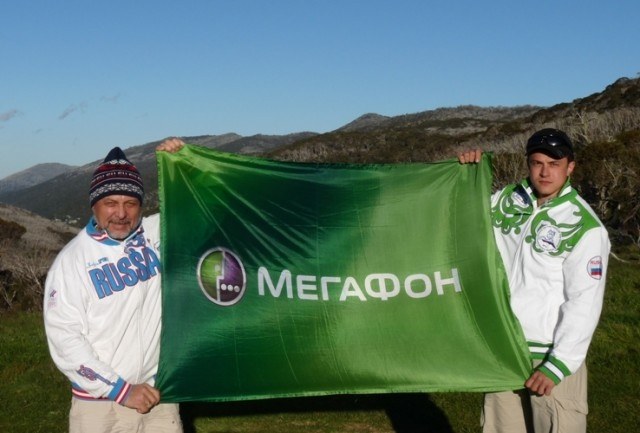
Project Partner - OAO MegaFon
Group of Ludmila Korobeshko emerged from the jungle ....
Carstensz Pyramid.
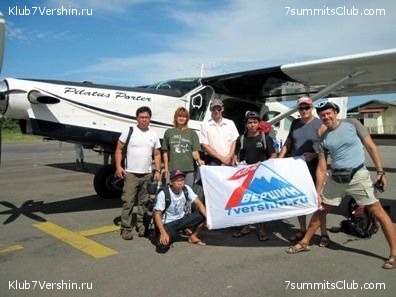
Hi ! Finally we got out of the jungle ! Hooray ! It was not easy. Thus, 16 October, we ran into (less than 5 hours) to the top of Carstensz Pyramid (4884m) from the base camp. The weather favored us up to the summit. At 11 a.m. local time, ...
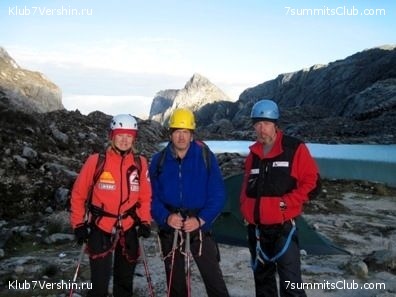
Hi ! Finally we got out of the jungle ! Hooray ! It was not easy. Thus, 16 October, we ran into (less than 5 hours) to the top of Carstensz Pyramid (4884m) from the base camp. The weather favored us up to the summit. At 11 a.m. local time, we stood at the top, the members of the 7 Summits Club - Igor Kosarev, Yuri Beloyvan, Ludmila Korobeshko.
During descent the weather turned bad and we went down along wet ropes.
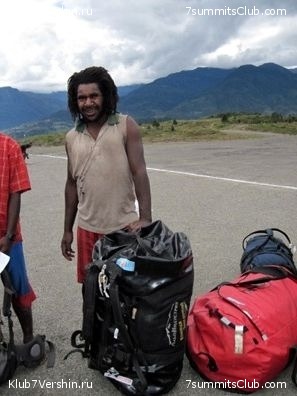
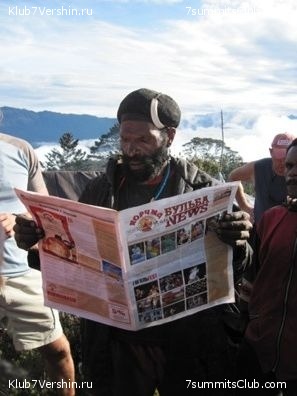
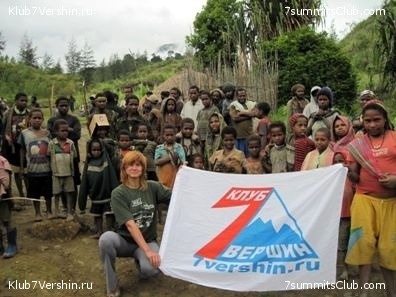
The next day, porters did not come. We are agitated. The day was lost. A day later they came and we all ran together down in the snow (first) and rain. Until Pinapa (a village near Ilaga), we went for 4 days. On the last day we made almost 2,5 day distance, and last 4 hours went in complete darkness in the jungle and swamps. At 10 p.m., our team came to the village. Local residents greeted us with shouts and laughter. They carried us in the guest house to Mr. Luther and his wife, Nani.
We are planning to fly to Vamena, on a visit to this ritualistic cannibals.

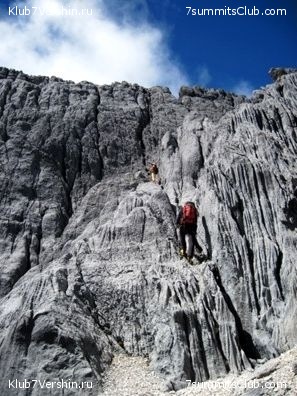
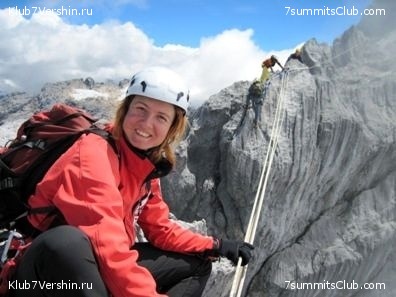
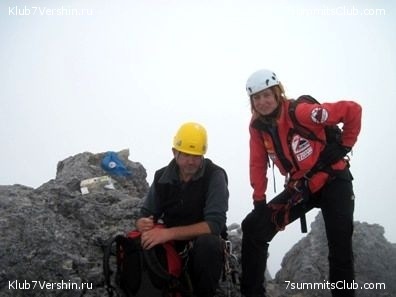
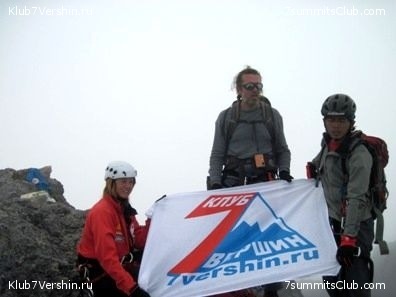

Success on Carstensz Pyramid: our congratulations !
Carstensz Pyramid.
Today, 16 October, the team of " Seven Summits Club ", Ludmila Korobeshko, Yuri Beloyvan and Igor Kosarev climbed the summit of Carstensz Pyramid, considered the highest in the Australian continent. Details are not known to us yet. The ...
Today, 16 October, the team of " Seven Summits Club ", Ludmila Korobeshko, Yuri Beloyvan and Igor Kosarev climbed the summit of Carstensz Pyramid, considered the highest in the Australian continent. Details are not known to us yet. The group descended to the base camp and getting ready to go back through jungles to Ilaga Village and then by planes home. Ludmila Korobeshko became the first Russian woman completed the "Seven Summits" according to 7 + 1 version.
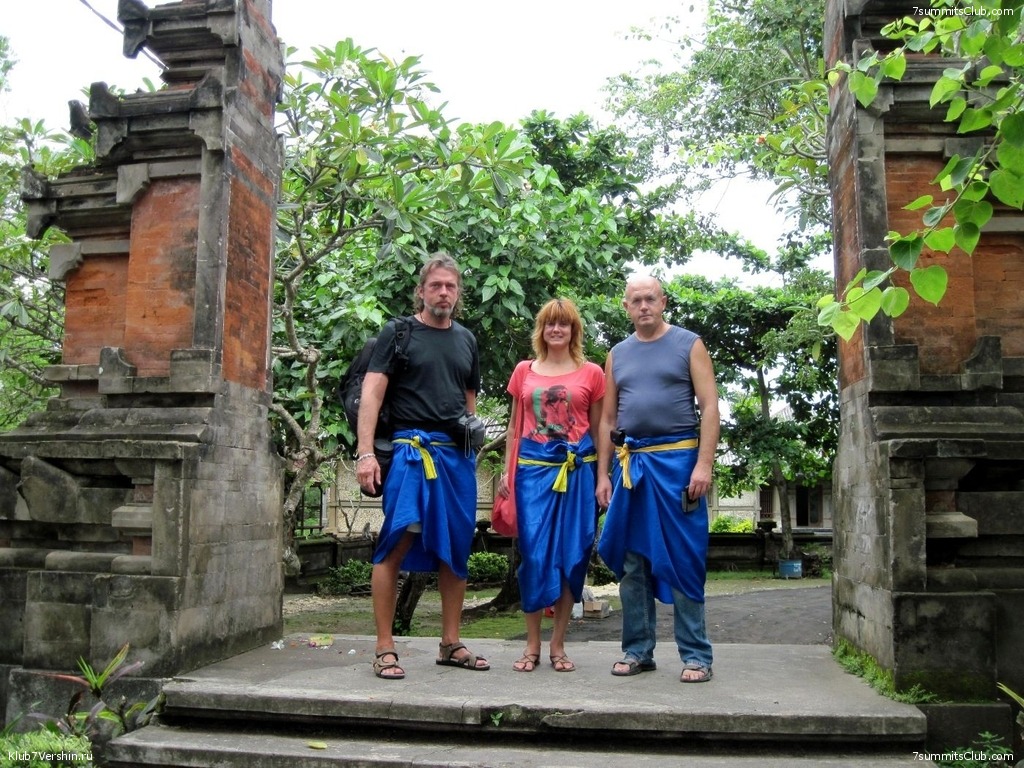
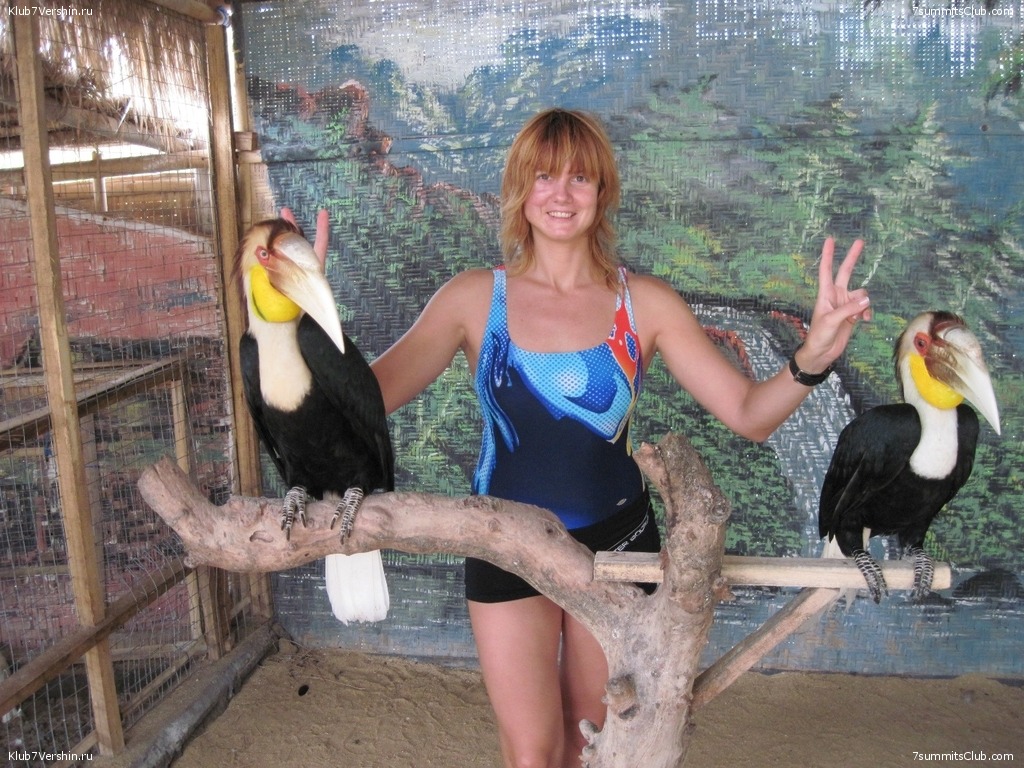
Tomorrow Group of Ludmila Korobeshko goes into jungles of Papua
Carstensz Pyramid.
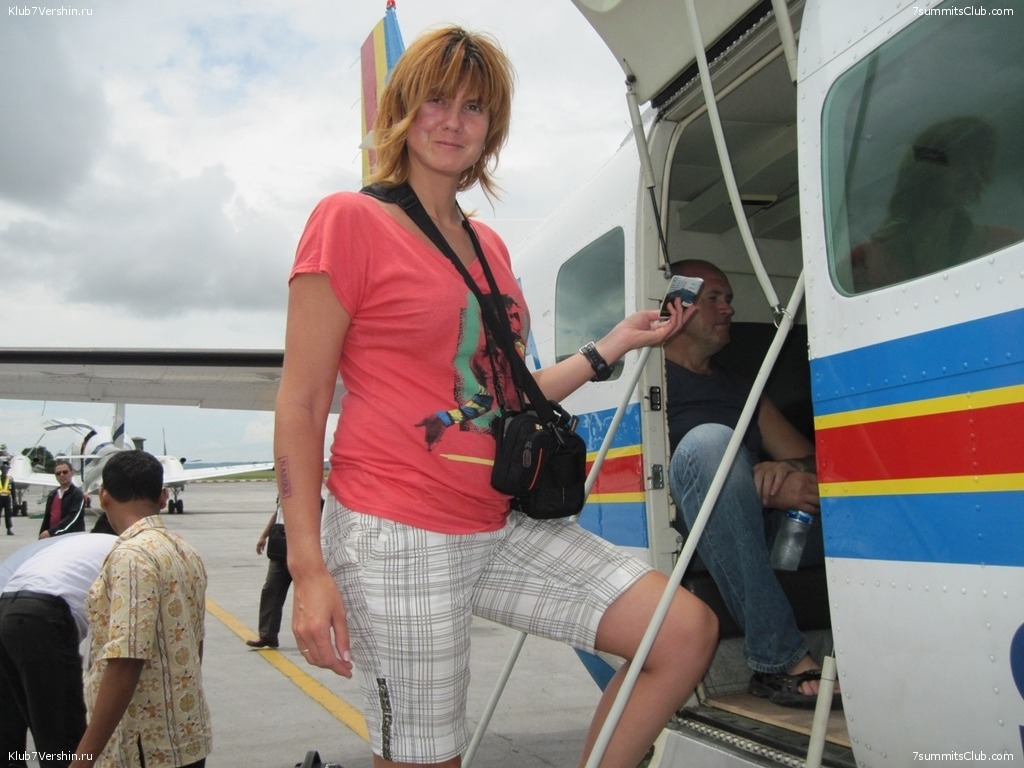
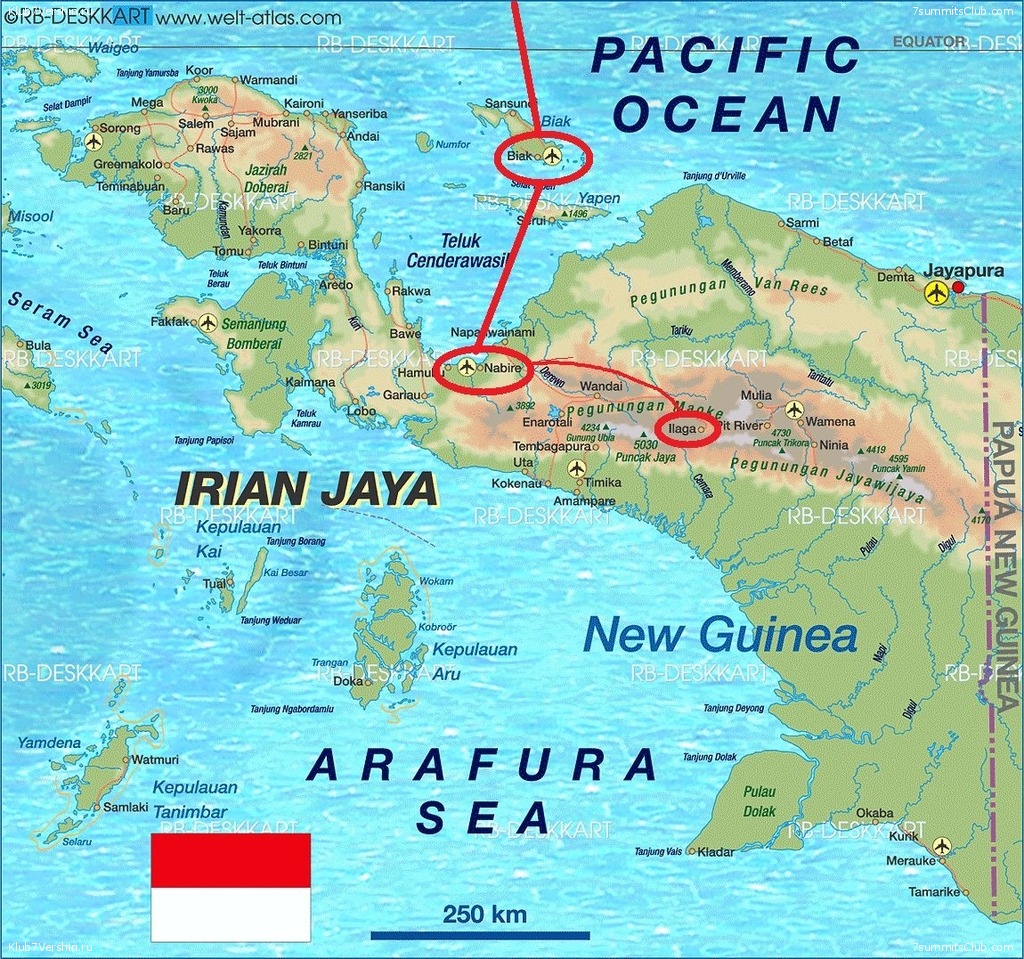
It's even hard to count how many flights it took to get to the starting point of the route village Ilaga. Six or seven. The total route of Ludmila Korobeshko was following: Moscow - Dubai - Jakarta - Bali - Sulawesi - Biak - Nabire - Ilaga. ...
It's even hard to count how many flights it took to get to the starting point of the route village Ilaga. Six or seven. The total route of Ludmila Korobeshko was following: Moscow - Dubai - Jakarta - Bali - Sulawesi - Biak - Nabire - Ilaga. Her partners on the journey Yuri Beloyvan and Igor Kosarev flew directly to Bali, they have one less flight.
Everything goes according to the plan. Tomorrow, their caravan has to start the route via Jungles to the foot of Carstensz Pyramid. In case of success Ludmila Korobeshko become the first Russian woman on the top of this mountain and the first one who completes the program “7 + 1 summits”.


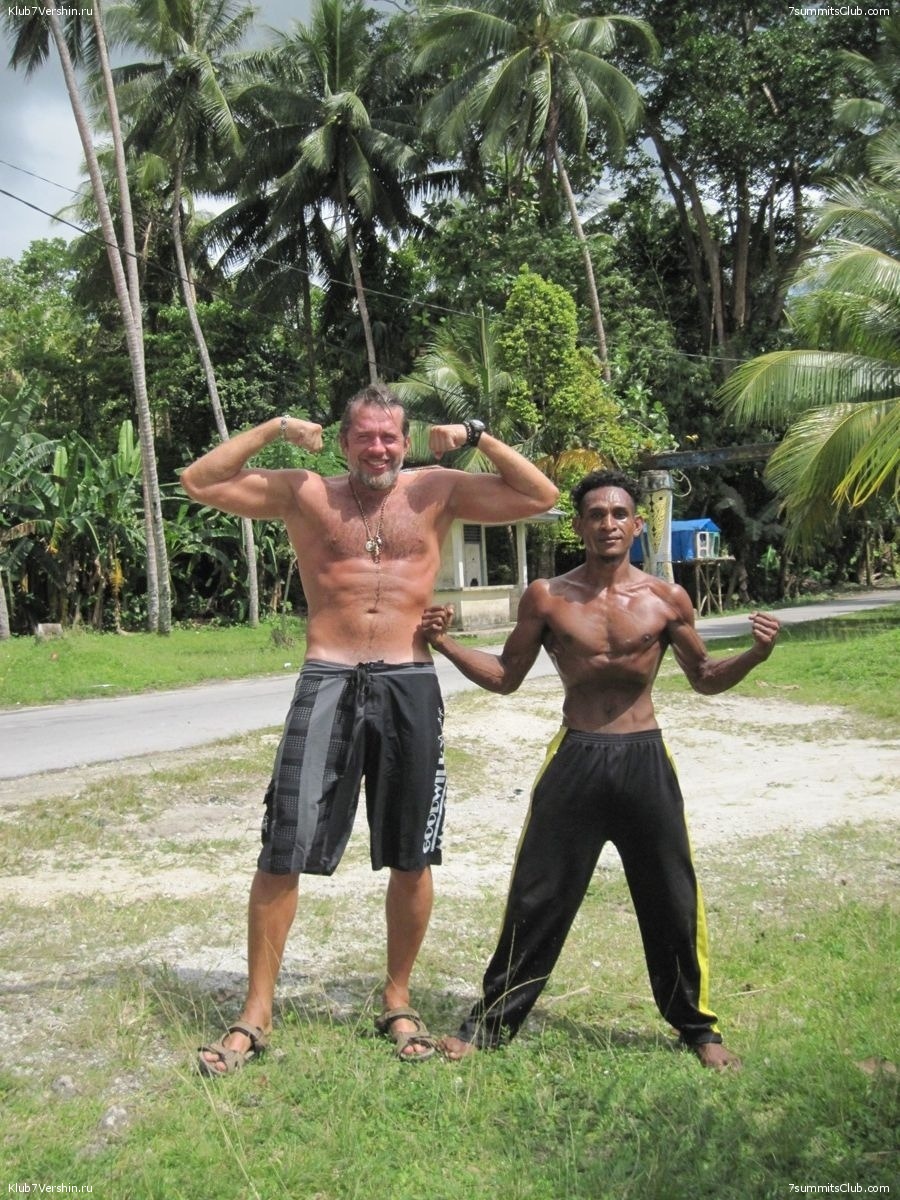
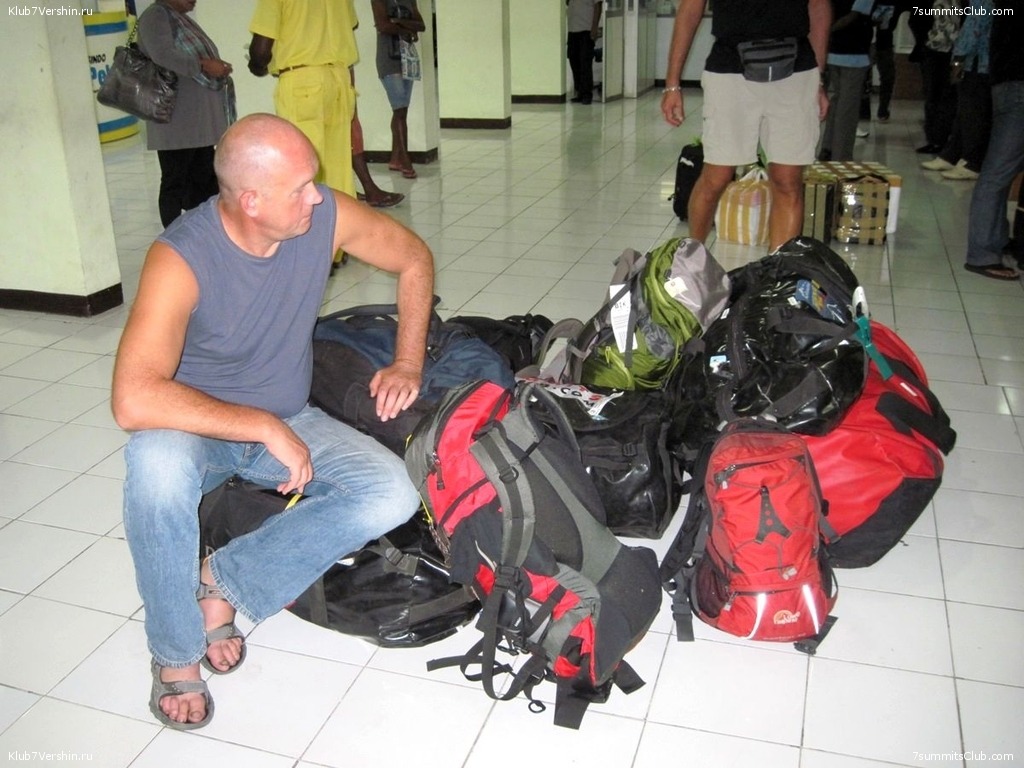
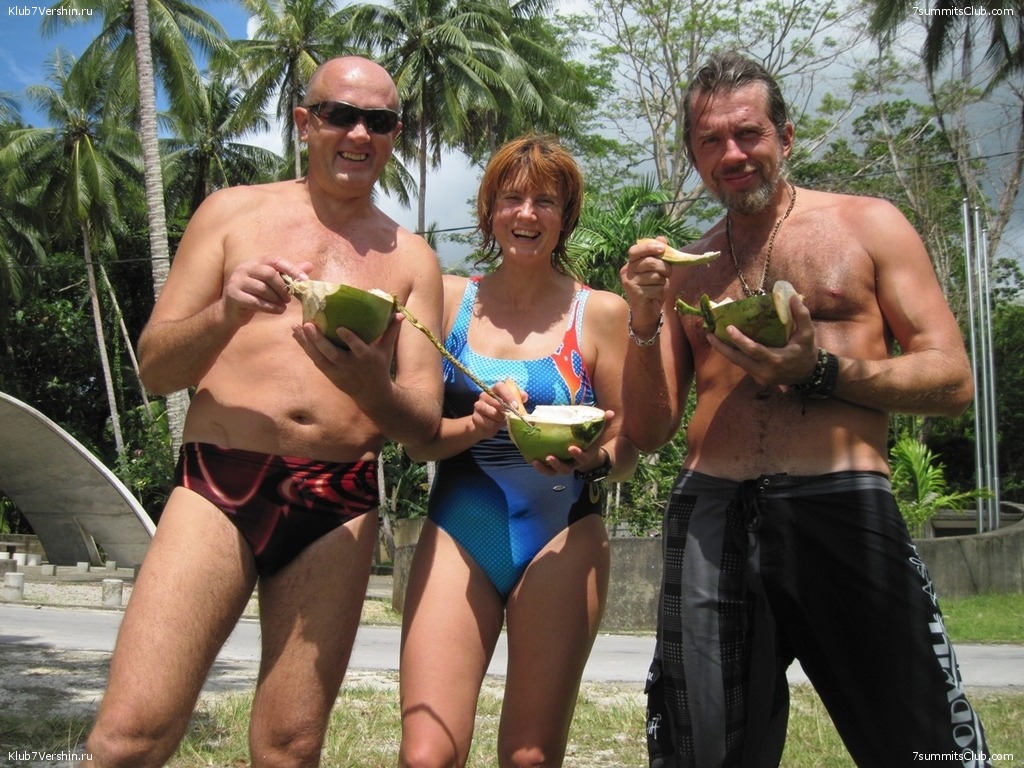

Ludmila Korobeshko departed today on an expedition to Carstensz Pyramid
Carstensz Pyramid.
Director of our Club, a mountain guide Lyudmila Korobeshko went today on an expedition in Irian Jaya, for climbing Mount Carstensz Pyramid. Yet no woman from Russia was on the top of that mountain, the highest point of Oceania. Experienced ...
Director of our Club, a mountain guide Lyudmila Korobeshko went today on an expedition in Irian Jaya, for climbing Mount Carstensz Pyramid. Yet no woman from Russia was on the top of that mountain, the highest point of Oceania. Experienced climbers, our loyal customers Yuri Beloyvan and Igor Kosarev left with Lyudmila. They will have a long flight, a march through the jungle and challenging rock climbing. Good luck!
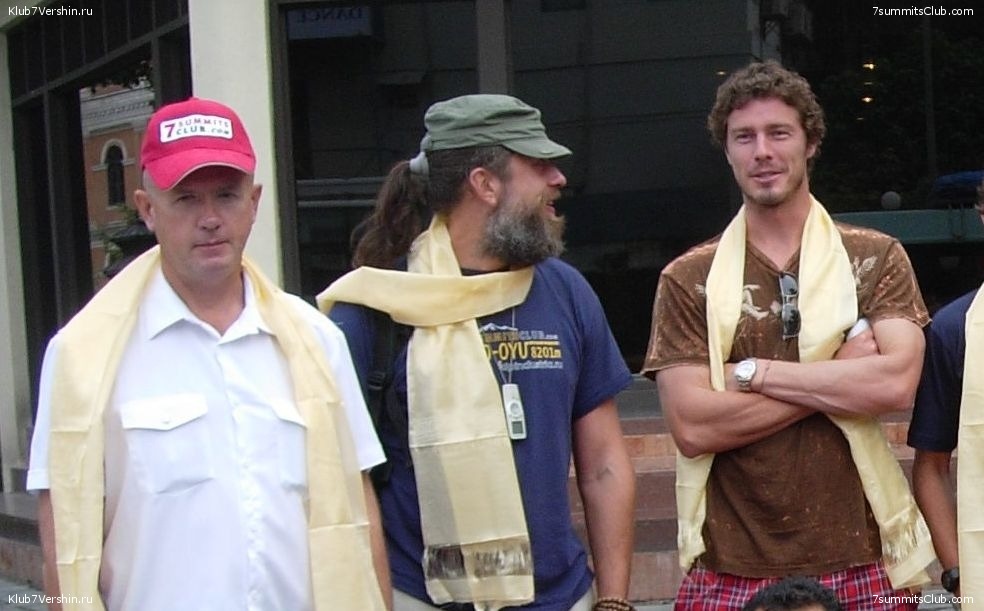
From left: Igor Kosarev, Yury Beloyvan and Marat Safin (Cho-Oyu expedition)
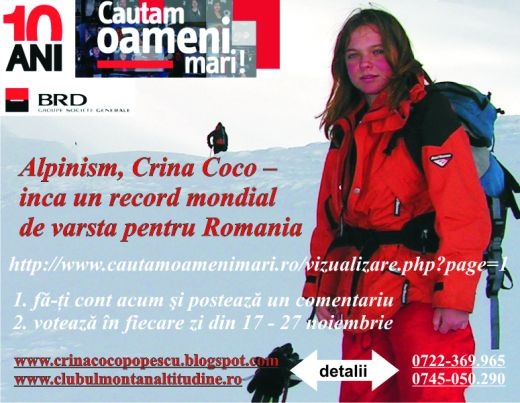
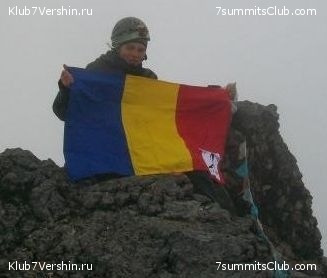
Romanian teenager Popescu conquers Oceania’s highest summit
Carstensz Pyramid.
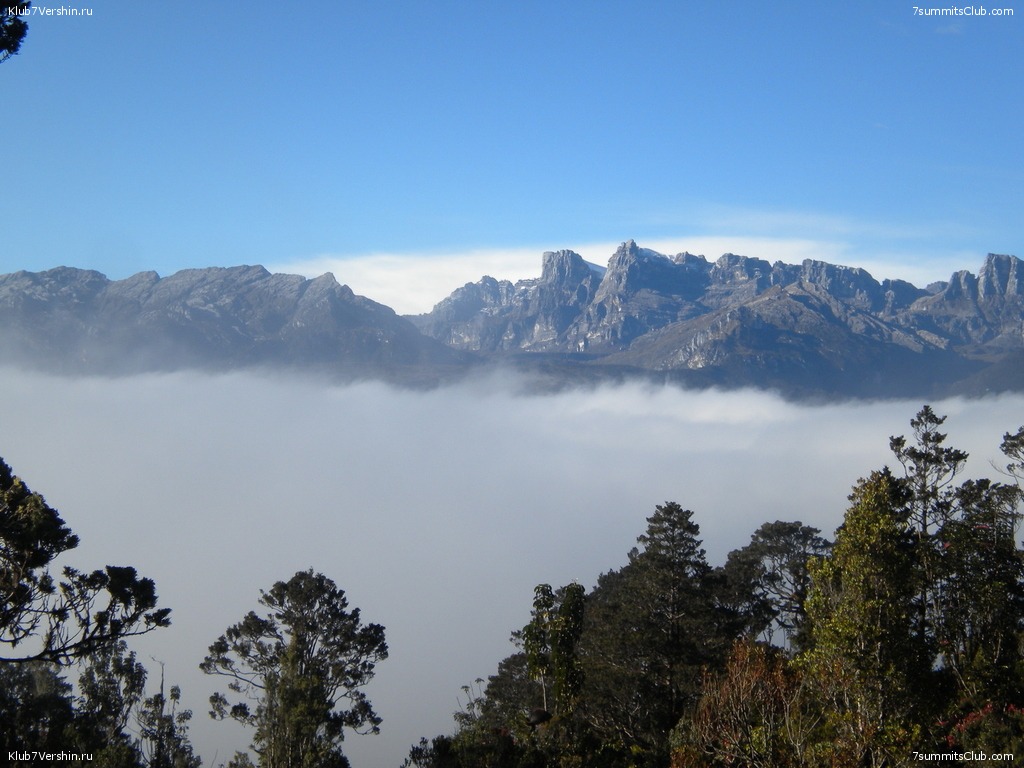
Romanian 15-year-old Crina Popescu, a member of the Altitudine Sports Club of Rasnov, on January 24 climbed the Carstensz Pyramid, at 4,884 m Oceania’s highest mountain summit located in Indonesa, becoming the world’s ...
Romanian 15-year-old Crina Popescu, a member of the Altitudine Sports Club of Rasnov, on January 24 climbed the Carstensz Pyramid, at 4,884 m Oceania’s highest mountain summit located in Indonesa, becoming the world’s youngest alpinist to climb this mountain.
The previous record was held by US Samatha Larson, who ascended the peak in 2007, at 18. Cristina Popescu is also the first Romanian ever to climb this peak.
The Australia-Oceania 2010 five-week expedition mounted by the Altitudine Sport Club set off to conquer three summits: Kosciuszka, Australia’s highest; Giluwe, at 4,368 the highest volcano of Oceania, and Oceania’s highest summit Carstensz Pyramid. Popescu managed to climb all the three peaks during the expedition.
Popescu has over the past three years conquered four of the world’s Seven Summits – Aconcagua, Kilimanjaro, Elbrus and Carstensz Pyramid and five of the world’s Seven Volcanoes – Elbrus, Ojos Del Salado, Damavand, Kilimanjaro and Giluwe.
The success of her feats has brought the young mountain climber one step closer to achieving her dream of becoming the world’s youngest climber ever to successfully walk this route.
Popescu will continue her expeditions in the second part of the year, when she sets to conquer two important peaks of the two routes: Pico de Orizaba of Mexico, at 5,636m the highest volcano in North America, and Denali, at 6,194 m the highest peak of Alaska, Altitudine reports in a press release ahead of their return home....