Argentina - Page 22
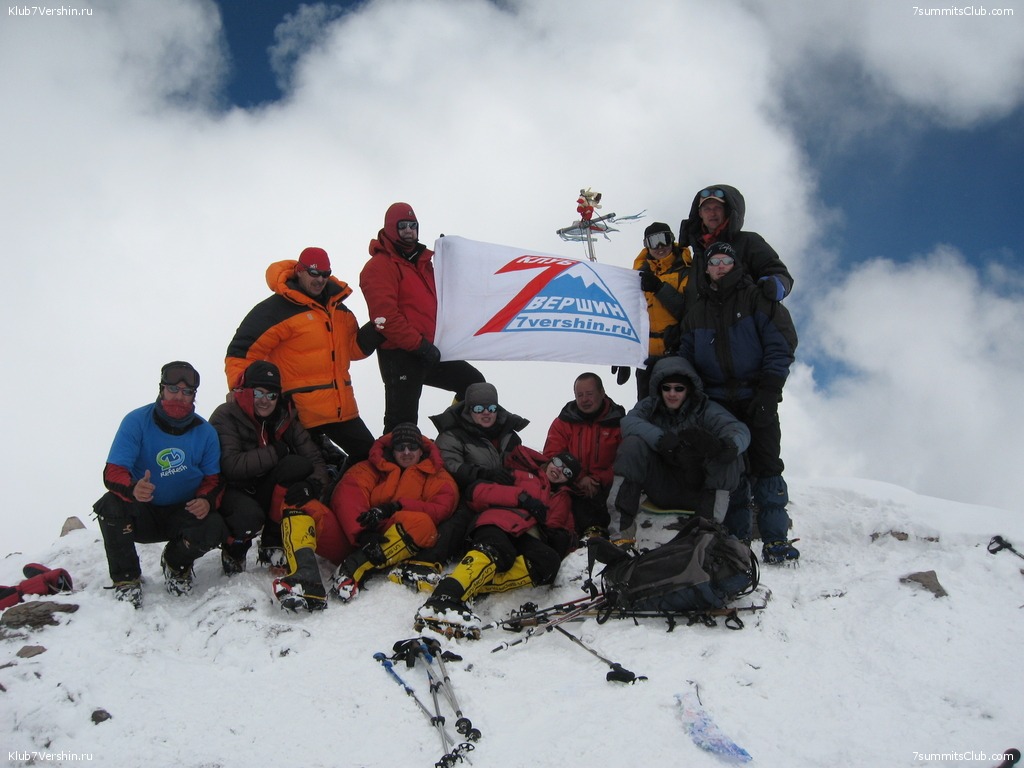
A Call from the summit of Aconcagua ! 10 climbers of 7 Summits Club on the highest point of America !
Aconcagua.
Call. Short information from Victor Bobok, directly from the summit of Aconcagua. Eight members of the expedition reached the summit: Denis Abuev, Igor Barabeshkin, Alexey Boutin, Alexander Viktorov, Igor Kadochin Pavel Laktyushkin, Boris ...
Call. Short information from Victor Bobok, directly from the summit of Aconcagua. Eight members of the expedition reached the summit: Denis Abuev, Igor Barabeshkin, Alexey Boutin, Alexander Viktorov, Igor Kadochin Pavel Laktyushkin, Boris Pavlov, Igor Cherkashin. As well as our guides: Victor Bobock and Olga Rumyantseva. Plus one local guide, thanks to him ! Weather conditions are very heavy, strong winds, fog and cold. But it was the same all season. The average success rate on Aconcagua at this moment is around 20%. We have - 70% ! We wish to our team a successful descent and waiting forward messages already from lower camps.
Other members of Alexei Vaulin, Nadezhda Goncharuk, Alexander Smirnov and Alexander Savotkina refused to climb for different reasons, but they are okay.
News Aconcagua: A Prime Minister from Europe on the way to the summit !
Aconcagua.
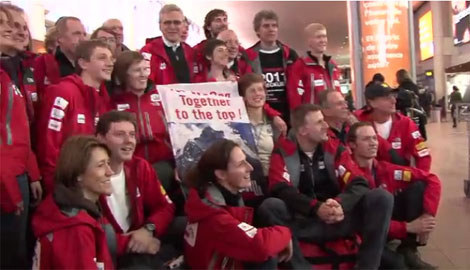
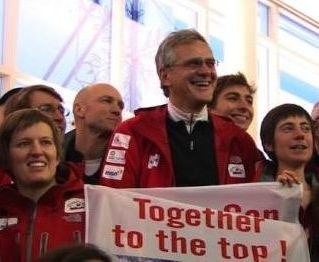
Tomorrow a representative delegation leaves Mendoza in the direction of Aconcagua. It is a team from Belgium, consisting of about 30 people. Among them, the most senior official person of the country for this moment. It is the Prime ...
Tomorrow a representative delegation leaves Mendoza in the direction of Aconcagua. It is a team from Belgium, consisting of about 30 people. Among them, the most senior official person of the country for this moment. It is the Prime Minister of Flanders, 48-year old Kris Peeters.
The expedition set the task to climb Aconcagua. 15 members of the team in one or another way are affected by asthma. Actually, the main goal -it is not even the climbing. This is a demonstration to all the people whose lives are complicated by the different diseases that an active lifestyle, sports - it's not just possible, they need it.
In airport
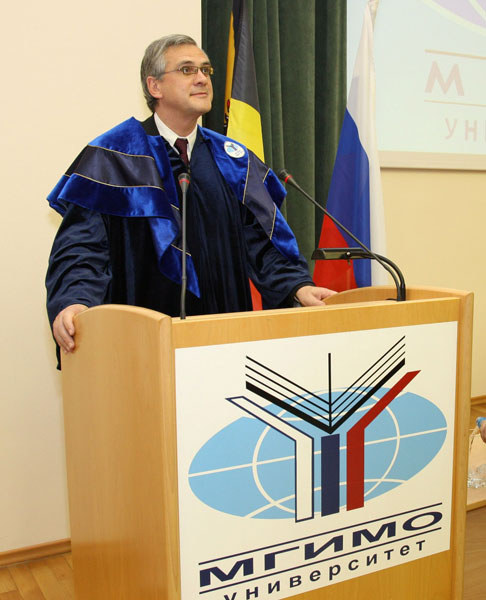
By the way, Mr Peeters is a great friend of Russia. He was elected an honorary doctor of MGIMO University of Russia, often visiting in our country. The last time in October, Mr. Peeters held talks in St. Petersburg with the local authorities. As always, he came with a mass of concrete and constructive proposals.
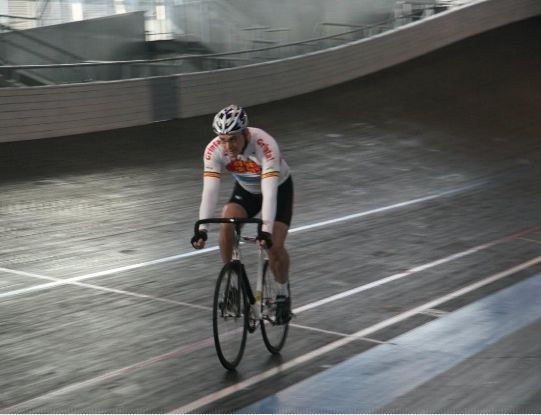
Kris Peeters is not particularly fond of climbing, to his credit is only an ascent of Mont Blanc. He is known as the past athlete and a big fan of cycling. Until 2004 Peuters with his economic and philosophical education, worked in various business communities, including at European level. In 2004 he became minister of the environment in Flanders, and quickly became famous due his courage, radicalism and consistency. Proclaiming the highest standards in Europe, environmental protection, he did not leave it in words. Therefore, Mr. Peeters became in 2007 the prime minister of Flanders.
Among asthmatics participating in the expedition, only three have climbing experience. Others, primarily engaged in cyclic sports. Undoubtedly, the most important part of the team are physicians, as well as video operator. In short, it is a solid event and, as usual, they use money collected for charitable purposes.
We wish you success, my friends!
Moscow: An honorary doctor of MGIMO University of Russia, in international relations
How Element3 became Element4 for Swiss climbers of Aconcagua
Aconcagua.
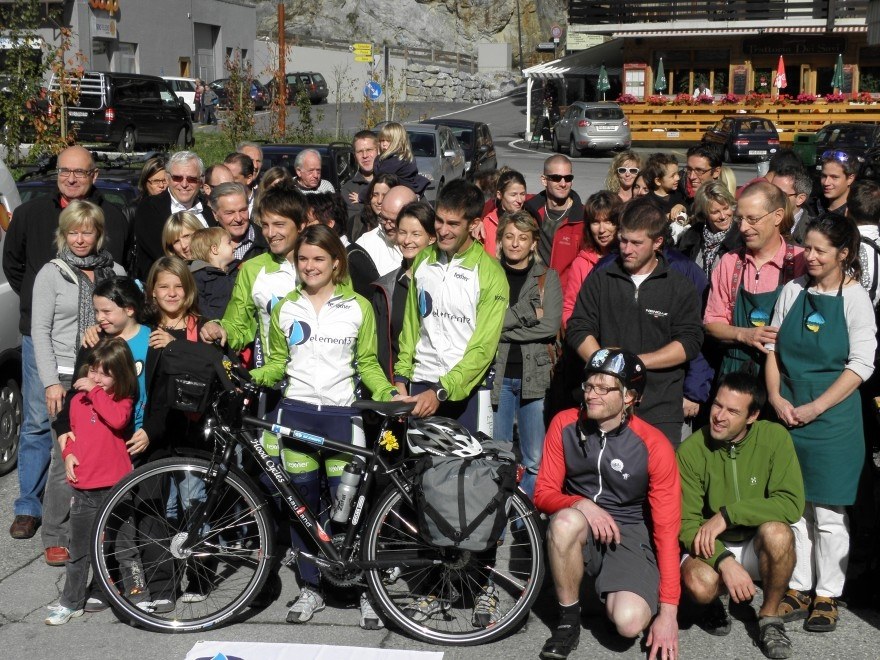
Three young persons from Swiss invented a rather original program for their trip. Three elements, three ways to travel, and all without motorized means, without hotels and restaurants, without guides or porters. From the doors of their ...
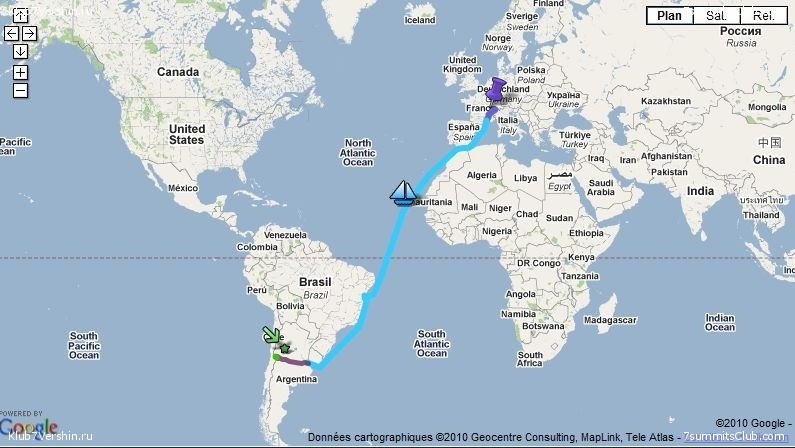
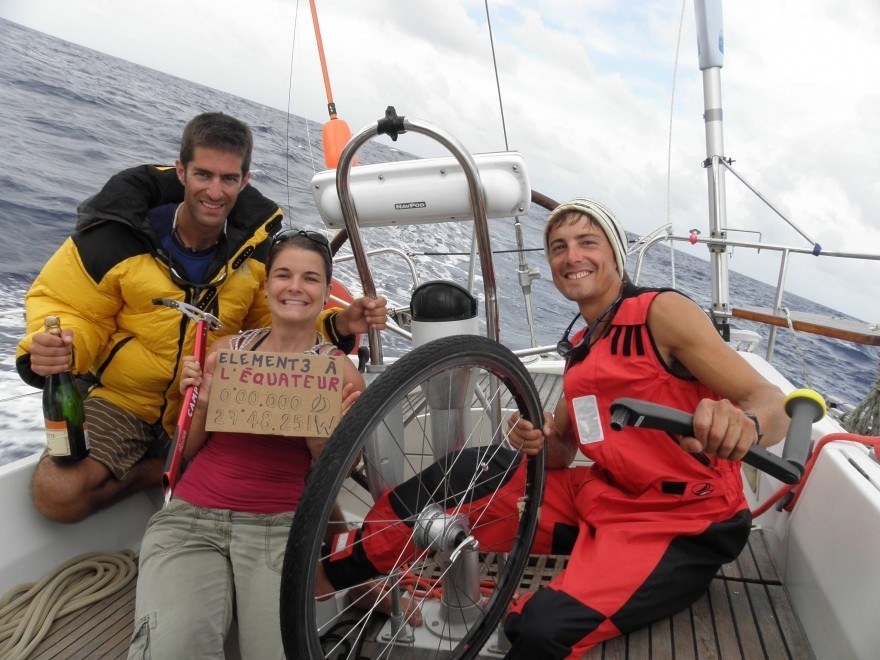
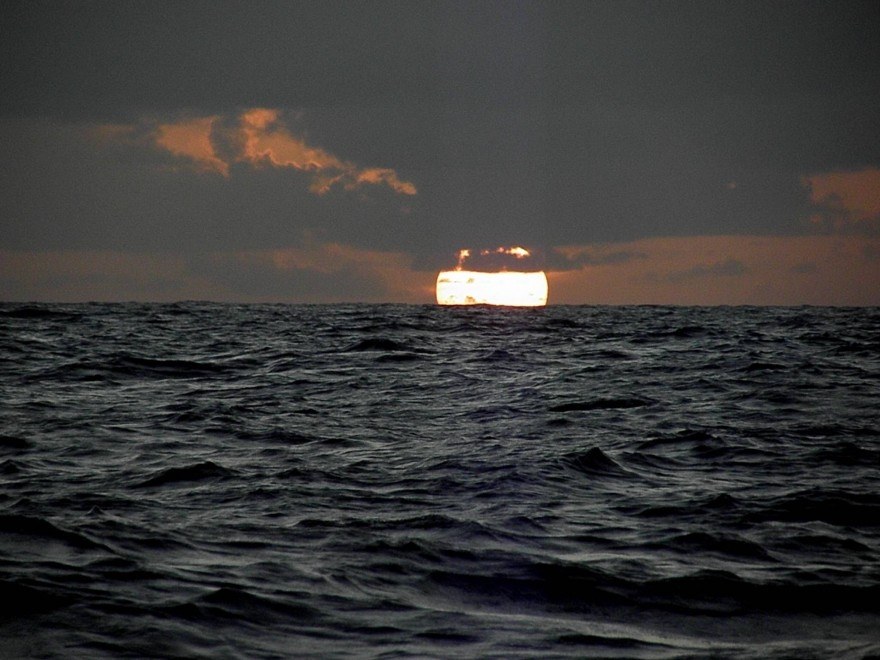
Three young persons from Swiss invented a rather original program for their trip. Three elements, three ways to travel, and all without motorized means, without hotels and restaurants, without guides or porters. From the doors of their homes - to the summit of Aconcagua. This means: from the resort of Nendaz in Pennine Alps, first to the French port of Camargue by bikes (600 kms), then across the Atlantic Ocean on a simple boat (up to Buenos Aires - more than 11 thousand kilometers), then again by bicycle to the gates of the Aconcagua National Park (about 1000 kms). And further, a start of a climbing program, high-altitude climbing to the highest summit of South America. They called their project elenent3 and site - elenent3.ch.
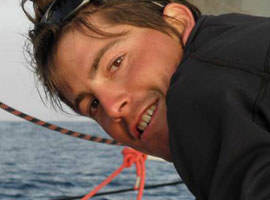
All three adventurers are medicine workers, and age mates, they are 29 years. Jessica Mermoud was born in Montreux, was educated in Lausanne and then moved to the mountains to work. Guenole Addor (center) was born in Lausanne, however, spent much time in the homeland of his ancestors in Britton, on the archipelago of Glenanes. There he was accustomed from childhood to seamanship, was engaged in yachting, what, in fact, has become a key point in creating a new project elenent3. Pierre Metrailler also studied medicine in Lausanne, but later mastered another profession. In 2007 he became a professional mountain guide.


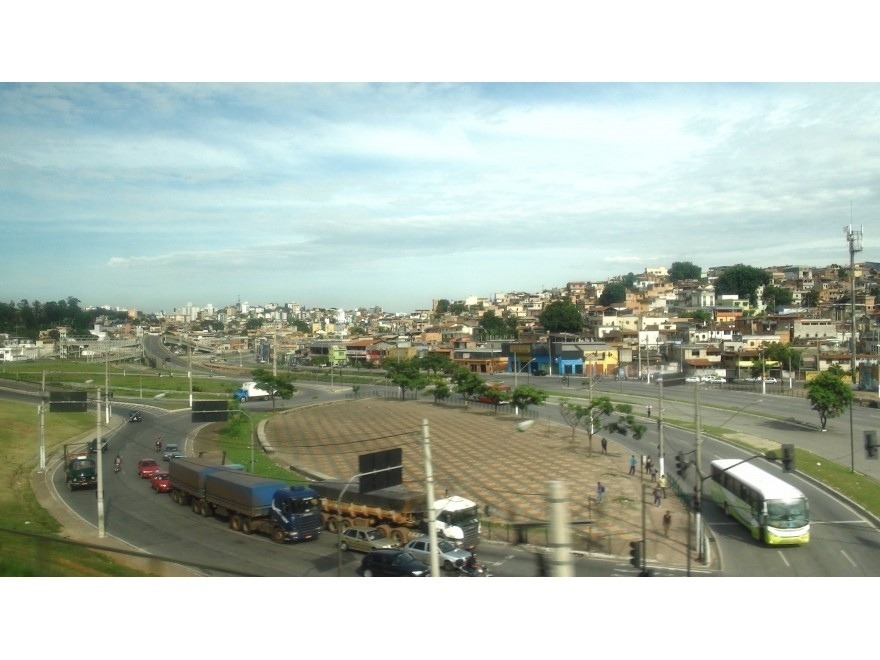
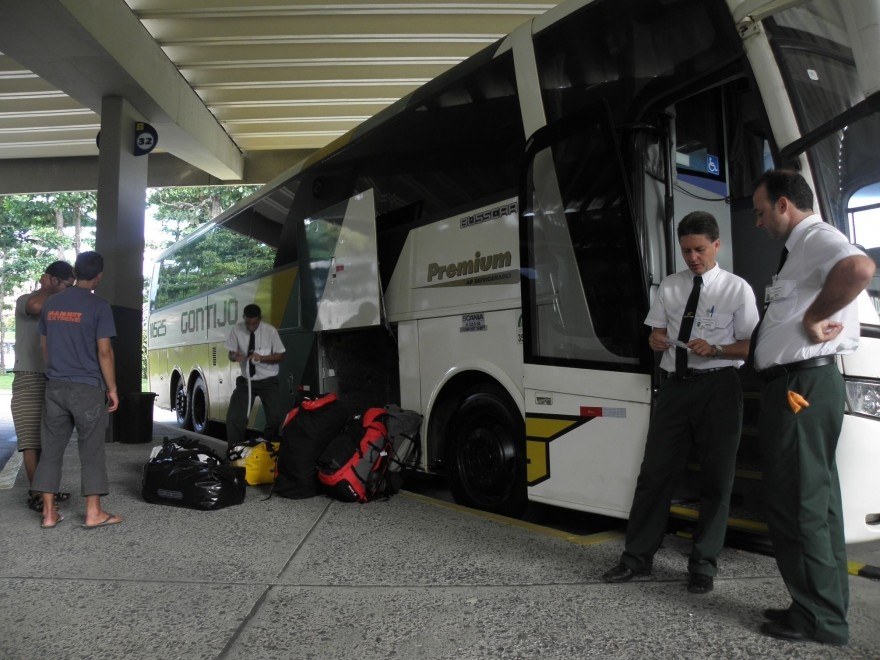
It so happened, that in their journey "the fourth" element was involved. Damage of boat and bad weather delayed travel on the islands of Cape Verde. The delay was three weeks long. They had to change travel plans. So there appeared a "fourth element" - a South American bus. This simple popular form of transportion has been chosen as a compromise, the main thing - do not go by plane. Friends crossed Atlantic Ocean and landed in the Brazilian port of Salvador. From there they reached a sity of Mendoza by different buses travelling about 5,000 kms
In itself, this is an amazing adventure.
A route according a plan
As a result, the team saved a few days, which were used for acclimatization ascent to the top of Cerro Valesitos (5400m). After that, they were joined by Guenole’s girlfriend Sylvia. And at four, they went in the direction of Aconcagua, highest peak in South America ...


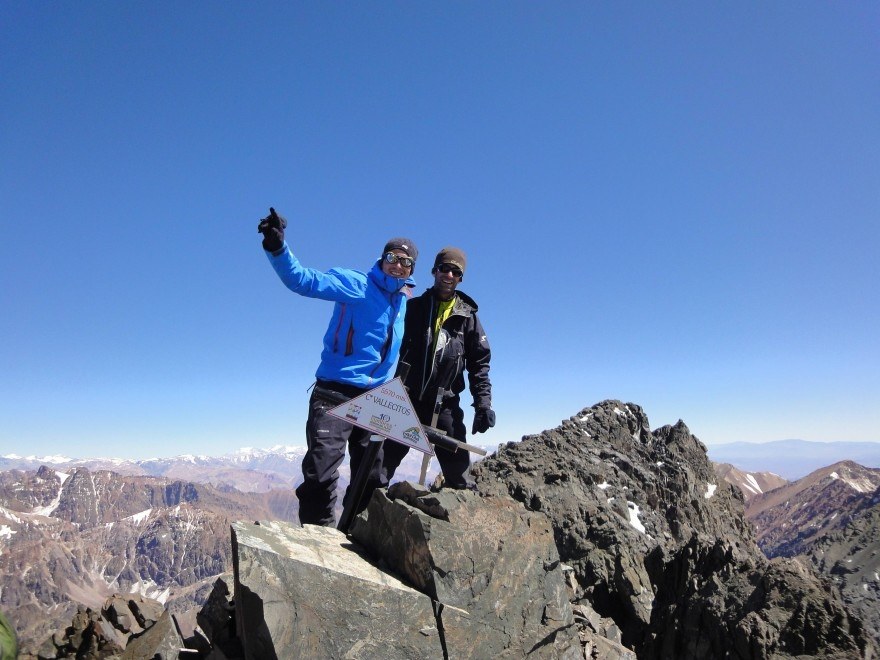
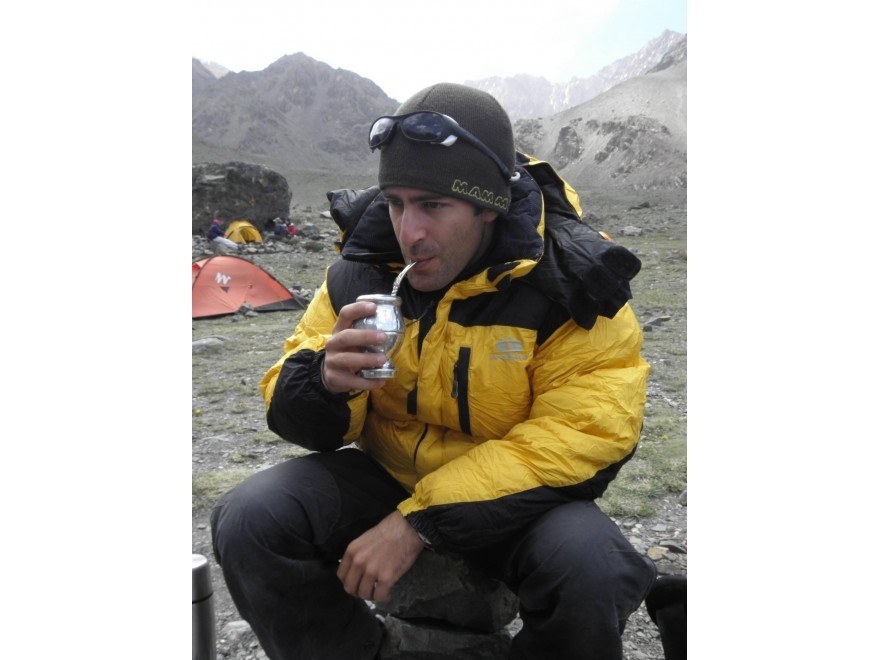
Josu Feijoo climbed Aconcagua controlling their diabetes and finished his 7 summits challenge
Aconcagua.
The mountaineer form Vitoria (Basque, Spain) Josu Feijoo and teammate Jon Goikoetxea from a team of athletes with diabetes have managed to climb Mount Aconcagua - the highest mountain in South America. Josu has been climbed all times ...
- The mountaineer form Vitoria (Basque, Spain) Josu Feijoo and teammate Jon Goikoetxea from a team of athletes with diabetes have managed to climb Mount Aconcagua - the highest mountain in South America. Josu has been climbed all times controlling disease through 'Emminens Connect', a telemedicine system created by Roche 'Emminens Connect', which sent the message levels for mobile physicians in Spain. Josu became the third of diabetics to climb the highest peaks on all continents.
- Completion of this program a long time was postponed due of Fejoo's participation in the space program by Richard Branson. Last year he passed all tests in the U.S. astronaut training centers, but the flight is delayed. In April 2009, Josu chose the time and went to the "green continent", made an ascent of Mount Kosciuszko and Carstensz. On Aconcagua, he took with him another two diabetic climbers from other parts of Spain …
High on the Carstensz
- In 2006, Josu Feijoo climbed on the north side Everest and was on the summit on May 18, as the first diabetic in history. Two others famous diabetic Austrian Geri Winkler and American Will Cross climbed from the south. The Austrian, who came to the foot of the mountain on bike from the level of the Dead Sea (the lowest point of land on Earth) was on the top on May 20, and an American (father of six children), climbed Mount Everest on May 22. With this ascent Cross completed a program of "Seven Summits", Winkler did it two years later.
- Become the first astronaut among people living with diabetes - this is now the main objective of Josu. Basque is going to fly within a team of Virgin Galactic, the private space tourism project, which implements the famous billionaire Richard Branson. During the flight, he intends to use insulin, a new generation, which has a longer effect.
- With his spaceship

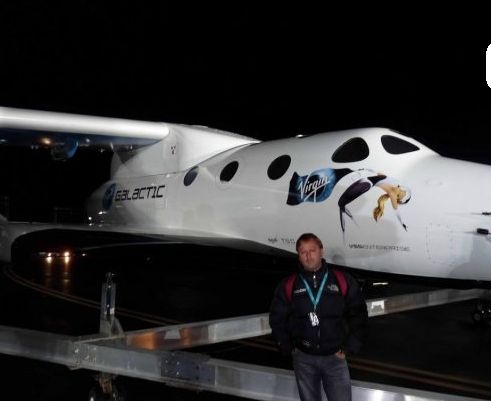
- Now Feyo is 43 and 19 years ago he was diagnosed with diabetes type-1. He never stops mountain climbing, but only in recent years, he managed to reach a new level. He managed to establish permanent cooperation with sponsors and become almost a professional traveler. In addition to the "seven summits" on account Fahey dozens difficult climb at home and in the Alps, independent trips to the North and South Poles, and much more. Josu married, wife's name is Tanya and their daughter grows up.

- "I have learnt how to exploit it, but not just for Josu Feijoo, more than anything I’ve done it for the whole group"
- www.irrika.net
- Published in : Enthusiast Written by Lorea Arakistain on 2009-04-06
- “Where there’s a will, there’s a way”. And as far as this mountaineer is concerned, there’s no doubt that there is. He will shortly be packing away his mountaineering boots and, wrapped up in an astronaut’s suit, will be heading into Space. If everything goes according to plan, he will be the very first diabetic astronaut. So far, he is the first diabetic to have reached the two Poles and Mount Everest.
- You’re going into space!
- When I was five and used to write to the Three Kings of the Orient, I used to put: “I want to be an astronaut”. And yes, I can say that Melchior, Caspar and Balthasar, and Santa Claus or Olentzero do exist. Because in a few months’ time my dream is going to come true and I’m going to be so proud to be able to take my country’s flag, the ikurriña [the red, white and green Basque flag], into space.
- Aren’t the eight thousand metre peaks close enough to the sky?
- Mountaineering is a way of life, I’m going to be a mountaineer all my life. Life goes on, you meet that challenge, you do the North and South Poles, you scale 8,000 metre peaks, Mount Everest... But age, the social commitments you have with respect to research… cause you to close some circles and open up others. And if you combine the fact of closing certain circles with your dream of becoming an astronaut, you get the right chemical combination to make this little reality come true.
- How did this proposal come about?
- 5 years ago when I was surfing the Internet, I saw that an American company was designing a spacecraft. I started sending e-mails to support the venture. And then to my surprise they sent me an e-mail thanking me for my encouragement and asking what they could do for me. I replied immediately saying: “I want to be an astronaut.” And they said: “You could try, only you’ll have to pay for the fuel.” And that was it.
- And who is going to pay for the fuel?
- A trip into space is terribly expensive, it costs thousands of millions. I spoke to the laboratories, to the companies that had been sponsoring my climbing projects. I have the support of some Basque companies that would love to see the ikurriña in Space, thanks to a few Basque politicians who spoke to them. These companies are not after the marketing, but are doing it to support the chronically ill. The impact that my trip is going to make as a chronically ill person is considerable. Nothing is going to be impossible any more. It will be complicated, but not impossible.
You’re going to conduct an experiment, and it won’t be the first one, will it?- We’re going to experiment with a new kind of insulin in which the hormone has been slowed down to a maximum. It isn’t about the hope of a cure but about improving quality of life. We’re also going to try out a new device for measuring glucose in the blood; it’s more modern and has a telemedicine system.
- An adventurer, How and since when?
- In the Basque Country being a mountaineer is easier than unwrapping a lollipop. But I don’t regard myself as an adventurer, although I do get itchy feet. I would never have thought that because I scale mountains that there would be companies that would want to acquire my image rights and that I could live off that. Although I’m in no doubt that this will soon be coming to an end.
- A diabetic can’t be a fire fighter but can be a mountaineer or go into space.
- There are people who have climbed with me and who cannot be forest rangers. It’s today’s Spanish legislation that imposes these barriers on us. I know that when many school kids find out I’ve reached the summit of Mount Everest, they say: “Why not?… I can do the same sport”.
- How has diabetes changed your life?
- It has transformed it. It started when I was 23. With your first wages you like having a night out, but all of a sudden an endocrinology specialist appears and tells you to forget everything you used to do and that you have to change all your habits. I was depressed for nine months; I had a really bad time. But then I realised that I didn’t want to live for diabetes.
- You say you are finding out how to exploit your diabetes.
- I can’t hide the fact that there are companies out there. I think I have learnt how to exploit it, but not just for Josu Feijoo, more than anything I’ve done it for the whole group.



Campanini Foundation saves lives
Aconcagua.
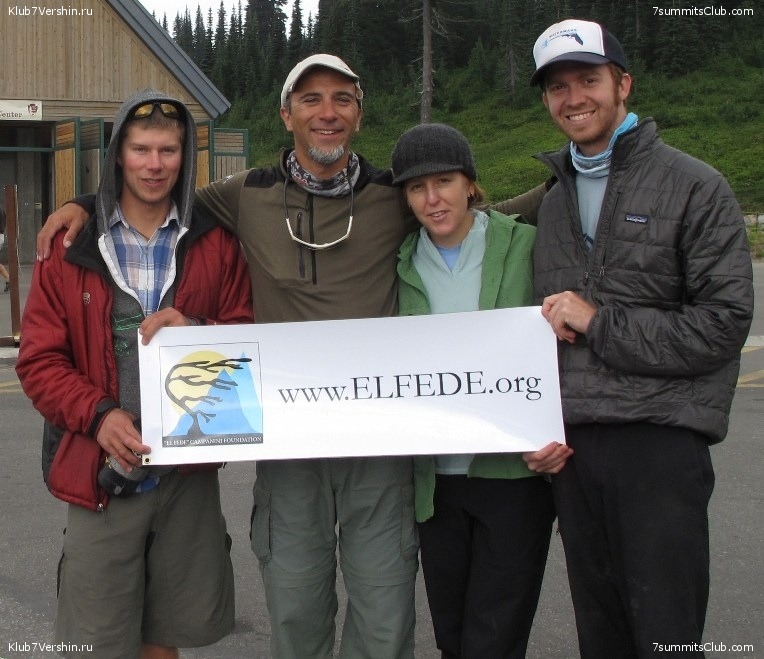
Federico Campanini lost his life on Aconcagua in January 2009. Created in memory of Federico, The “El Fede” Campanini Foundation is dedicated to providing information, guidance, training and financial assistance to support ...
Federico Campanini lost his life on Aconcagua in January 2009. Created in memory of Federico, The “El Fede” Campanini Foundation is dedicated to providing information, guidance, training and financial assistance to support ongoing efforts to improve mountain rescue on Aconcagua and in other commercial climbing areas.
- elfede.org
- Federico, or as he was fondly known, “El Fede,” Campanini was an Argentine climber and mountain guide whose passion for the mountains and for life was contagious. Federico found solace and purpose in the mountains and he loved sharing his knowledge and love of them with everyone who knew him; the lives of his family, friends, clients, and many others were changed forever by his presence.
- Mission Statement:
- The endeavor will not be easy, but it is possible through the support from those who share Federico’s love for the mountains.
-
Text by Amber Christiansen, widow of Federico
-
- Off to move mountains…it moved me
- I left for Aconcagua on Jan. 13 with the head park ranger of Aconcagua. On January 15 we arrived at Plaza de Mulas base camp (14,000 ft) and we stayed there for 4 days in order to acclimatize. It was quite an amazing time in which I talked to many people who participated in the rescue efforts of Fede and the Italians (more than 60 in total participated in some form, whether by melting snow or trying to save Fede's life). All were very moved and affected by the loss of Fede's life and I think my presence was a positive one, a reminder that something positive can come from a tragedy. We talked a lot and discussed ideas for the future and everyone learned how to use the equipment. Many, both locals and foreigners expressed interests to support rescue efforts. In addition, National Geographic was doing a documentary on Aconcagua and its search and rescue system. They interviewed me; hopefully this will also generate international interest, we shall see...
- In four days time, there were four separate rescue efforts. In each one, the equipment that the foundation donated was used.
- On January 19 we installed the first rescue cache at Nido de Condores (17,700 ft). That night, a Czech climber suffered from pulmonary edema and we used the oxygen from the cache.
- On January 20 we left at 7a.m. from Nido de Condores to Independencia (21,000ft.) Another group went to La Canaleta (22,000ft). After we installed the cache at Independencia we spent an hour and a half resting and talking about life. One hour later we received news that a woman collapsed at the summit of Aconcagua. The same group of individuals that had installed the rescue cache at La Canaleta helped the woman by using a litter and oxygen that they had put in the cache just one hour before. We had already started descending when we heard the call for help. We waited at Camp Berlin (about 19,000ft) for three hours to help them with the descent of the woman in the litter. By the time they arrived it was dark and ten of us (me being the only woman) took turns carrying the sled. It was a crazy time, and I kept focusing on the woman's eyes, to make sure she didn't close them. She was French and didn't speak any Spanish and very little English. She was scared and I tried to soothe her fears. When we got to Nido she was put on oxygen and then they descended her to Plaza de Mulas in a litter where she was evacuated the following day in a helicopter.
- My goal was to save one person's life with the rescue equipment and this occurred just one hour after they were installed.
- The next day a woman fell while descending and broke her leg. Again the litter was used as well as a trauma kit for stabilizing the break. The first aid kits that were stored at Nido de Condores were never stored, they were used every day, one incident after another.
- I cannot explain life, or the events that occur, or why, when Fede was struggling for his life this equipment wasn't there, but it is there now, it is there now.
- After this experience, and being there, and seeing the summit, I decided I needed to summit, to see what happened.
- On January 23 at 12:00p.m. I summited Aconcagua. It was a struggle, I felt nauseas, but I understood the efforts of so many individuals who tried to save Fede.
- Aconcagua is a community of people that share a love for the mountains, they take care of each other. Unfortunately they don't have the support of a government which should provide more resources.
- So, on January 25 I began my return to the entrance to Aconcagua Provincial park. I decided I wanted to walk, even though I was offered a ride in the helicopter. It was difficult to leave, this community that works together and saw me as a hero. I am not a hero, but I did love Fede and I do also, love the mountains. I have learned more about the accident, and it continues to break my heart, but life must continue, it must.
- T o understand death is to understand life.
- There is still a lot of work to do but something is moving.
- Please help support our cause to improve rescue efforts by sharing your thoughts and ideas in the forum or donating to our funds for rescue and training efforts.
- Please contact amber@elfede.org for more information or questions on how to donate.



Chad Kellogg: Solo New Route on Aconcagua South Face…
Aconcagua.
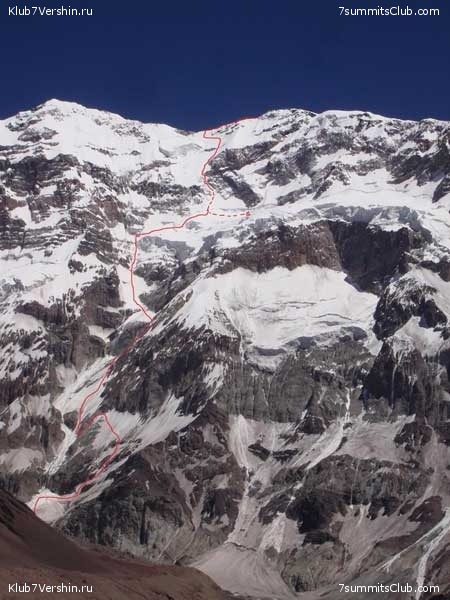
The line of Medicine Buddha (VI WI4 M4, 6,500'/1,980m of new ground) on the 3,000-meter south face of Aconcagua. Chad Kellogg joined the Messner Route and then the upper Argentinean Variation above the enormous serac band. American ...
The line of Medicine Buddha (VI WI4 M4, 6,500'/1,980m of new ground) on the 3,000-meter south face of Aconcagua. Chad Kellogg joined the Messner Route and then the upper Argentinean Variation above the enormous serac band.
American Chad Kellogg has soloed a dangerous new line on the famed south face of Aconcagua (6,962 m).
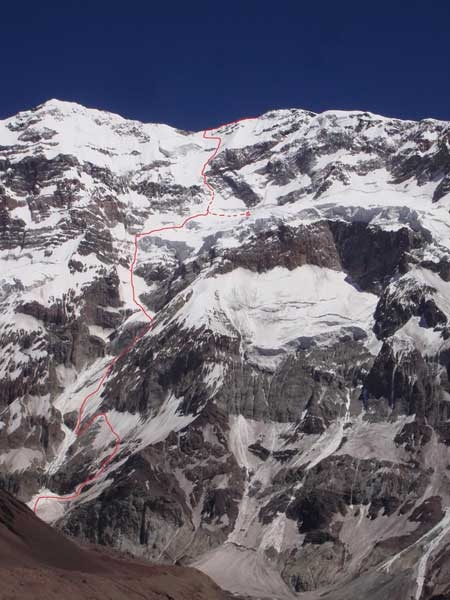
Red line - route of Kellog, blue - exit variant of Messner
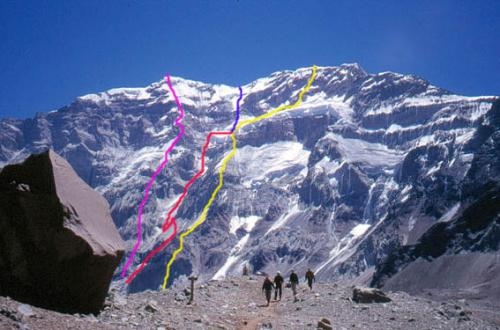
Kellogg traveled to Argentina with Rory Stark, aiming to acclimatize on the normal route on Aconcagua's north side and then attempt a line on the south face. Kellogg also wanted to try a one-day round trip on the normal route.
As planned, Kellogg summited via the normal route on December 17, but Stark was stricken with pneumonia high on the mountain. With the help of some fellow Americans, they descended all the way to base camp that day, but Stark remained severely ill and had to be helicoptered to town for treatment; he eventually returned to his home in Alaska and recovered.
On December 21, after repacking their gear and laying plans for a solo attempt on the south face, Kellogg hiked in to the base. A snowy winter and recent poor weather had plastered the face with ice and filled in crevasses, leaving it primed for a solo attempt. Kellogg scoped an unclimbed, avalanche-threatened line between the 1982 Slovenian Route to the left and the 1954 French Route (the original line on the face) on the right.
That afternoon, he hiked up to the foot of the face to check conditions. In an account of the climb that he wrote after returning, Kellogg said, “I was able to determine that the initial bergschrund was crossable and that the initial WI5+ pitch was flowing heavily with water and was best avoided. It seemed as though the majority of the climb was 65°-70° snow and ice, punctuated with vertical ice steps. The real difficulty lay in surviving the ice avalanches from the frequent serac falls. It was the summer solstice, after all, and the temps had really heated up. I walked away from the base, and minutes later a huge avalanche swept the route and avalanche cone where I had just been standing. I tried to steel my nerves against the possibility that I could be swept into that debris at the base from any point on the route within the next 6,500 vertical feet. I told myself that this was my route and in eight hours I would be on it.”
Kellogg hoped to complete the route in one long day, and he took minimal gear: a 30-meter, 8.1mm rope, about a dozen pieces of protection, and a stove and one fuel cartridge. He brought a few extra clothes and double boots for warmth, but no tent or sleeping bag. “I managed to rest for a few hours before I got up at 1:30 a.m.,” Kellogg wrote. “I centered myself with a meditation session before preparing for my departure.”
Leaving his camp at 4 a.m., Kellogg approached the face, crossing two large crevasses and the bergschrund. After climbing some snow slopes to bypass the steep, wet ice pitch at the base, he traversed left and then downclimbed and rappelled a couple of hundred feet to reach the central gully, where snow and ice patches allowed faster progress-a good thing because of the enormous serac bands that loomed thousands of feet overhead.
Several avalanches fell down the route as he climbed, but Kellogg escaped harm. Above a rock step and ice pitch, he reached a snow basin below the biggest serac band at ca. 6,000 meters. A very steep, short pitch of ice on the left side of the seracs gained the upper glacier. At this point Kellogg had climbed about 2,000 meters in 12 and a half hours and was on pace for a one-day ascent.
After a rest stop to brew a couple of liters of water, he traversed right to join the Messner Route (Reinhold Messner's 1974 solo direct variation to the French Route), still hoping to finish the climb that night. However, he soon encountered unconsolidated sugar snow and began wallowing. At 11 p.m., realizing he'd never make it to the top that night in such conditions, he downclimbed to the glacier and prepared for an open bivy.
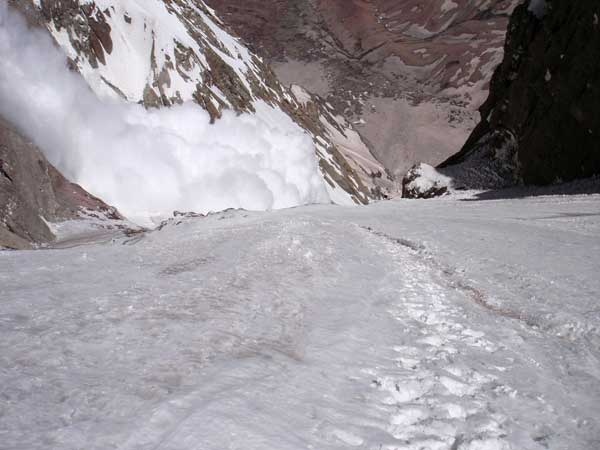
Serac avalanche sweeps the lower gully where Kellogg had ascended. Photo by Chad Kellogg
Kellogg shivered for seven hours in temperatures he estimated at 10°F (-12°C). When the sun hit him in the morning, he continued upward, finding some better snow along with vertical ice and mixed passages on the upper Messner Route. By early afternoon he was within 400 meters of the summit ridge, but the snow conditions were very poor again. He had run out of water in midmorning, and he had no more fuel to melt snow As he continued upward, Kellogg's hands got soaked in the wet snow, and by evening he realized he had frostbite on his right thumb. He radioed rangers and told them he was near the ridge, and they encouraged him to keep moving and said they'd meet him at the Nido de Cóndores ranger station (at 5,300 meters) as he descended.
At 10 p.m., Kellogg reached the high ridgeline between Aconcagua's two summits. He had been on the face for 42 hours. In high winds, he struggled down the rocky ridge crest until he reached the Canaleta scree gully and joined the normal route. At 1:30 a.m., he made it down to the ranger station, where he finally could relax and get some hot drinks.
Kellogg called his new line Medicine Buddha (VI WI4 M4).
A few days later, on December 29, after recovering from his effort and getting treatment for his frostbitten thumb, Kellogg began an attempt on a one-day climb: a 50-mile round trip with 14,000 feet (4,275m) of elevation gain. He ran and climbed as far as Berlin Camp at 5,950 meters in 9 hours 15 minutes, but there he discovered that someone had broken into his gear cache and stolen the boots and equipment he needed for the summit. The speed attempt was over.
Dates of New Route Ascent: December 22-24, 2009
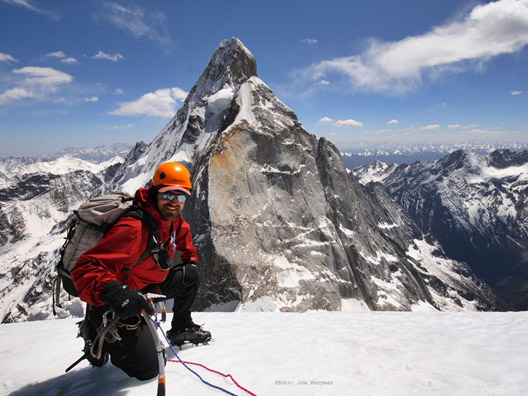
Sources: Chad Kellogg, American Alpine Journal
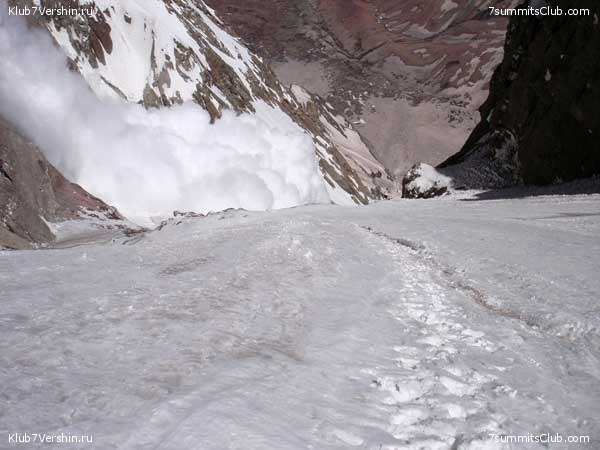
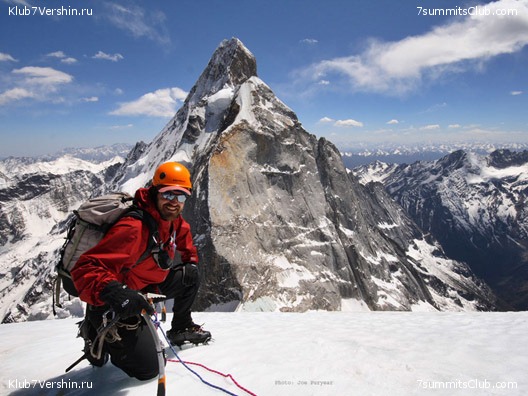
Our team has climbed Aconcagua.
Aconcagua.
February, 2. This evening we had a call by satphone from 7 Summit Club guide Max Bogatyrev. He reported that yesterday all members of the 7 Summit Club expedition to Aconcagua successfully reached the summit. On the top of Aconcagua ...
February, 2. This evening we had a call by satphone from 7 Summit Club guide Max Bogatyrev. He reported that yesterday all members of the 7 Summit Club expedition to Aconcagua successfully reached the summit. On the top of Aconcagua (February 1) were:
Klopack Joseph
Arefiev Andrey
Arefiev Sergey
Zogrobyan Arman
Sadikov Vadim
Sadikov Grigory
Shapovalov Igor
Bogatyrev Maxim - 7 Summits Club Guide
We warmly congratulate them!!!
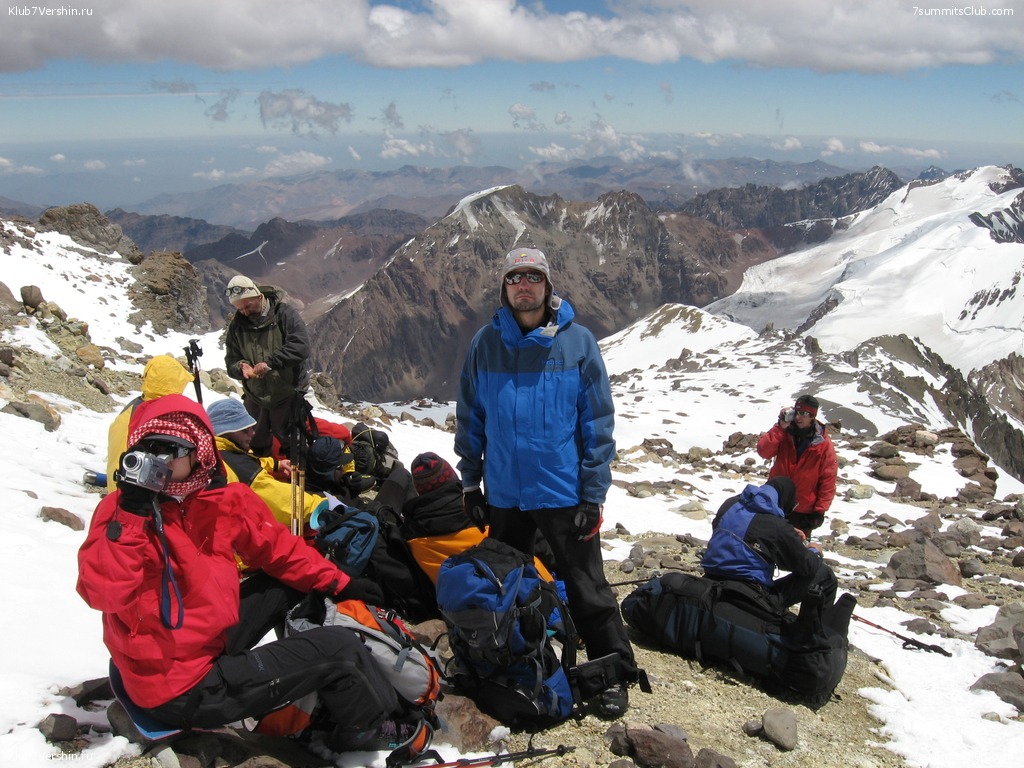
Our group at the top of Aconcagua
Aconcagua.
Yesterday, the group of 7 Summits Club under the leadership of our guide, Maxim Bogatyrev went to Mendoza. Maxim has sent details of the ascent and a picture from the summit. Acclimatization was held by the scheme ...
Yesterday, the group of 7 Summits Club under the leadership of our guide, Maxim Bogatyrev went to Mendoza. Maxim has sent details of the ascent and a picture from the summit.
Acclimatization was held by the scheme BC - Camp 4900 (Canada). The second night was at the Condor 5600. Then we went to rest in the base camp. And after two nights we went into the assault. The weather was variable. One day, an incredible for these places amount of snow has fallen. The level of snow was - on his knee. The team started out at 4 a.m. One hour later, our hands - feet began to freeze. I was forced to give trental to my comrades. But we keep up a temp. At 1 p.m., the group in dense column reached the top. Without of Ilya Petrunichev, who heroically came to the 6000. That he was very surprised all. After all, he was ill in the base camp . Local guides say that they never had such a strong team. All at 6000m!
Ilya was waiting for us in 6000 for two nights. January 16, 2010 on the birthday of the Club Captain Alexander Abramov 7 Summits, we were at the top.
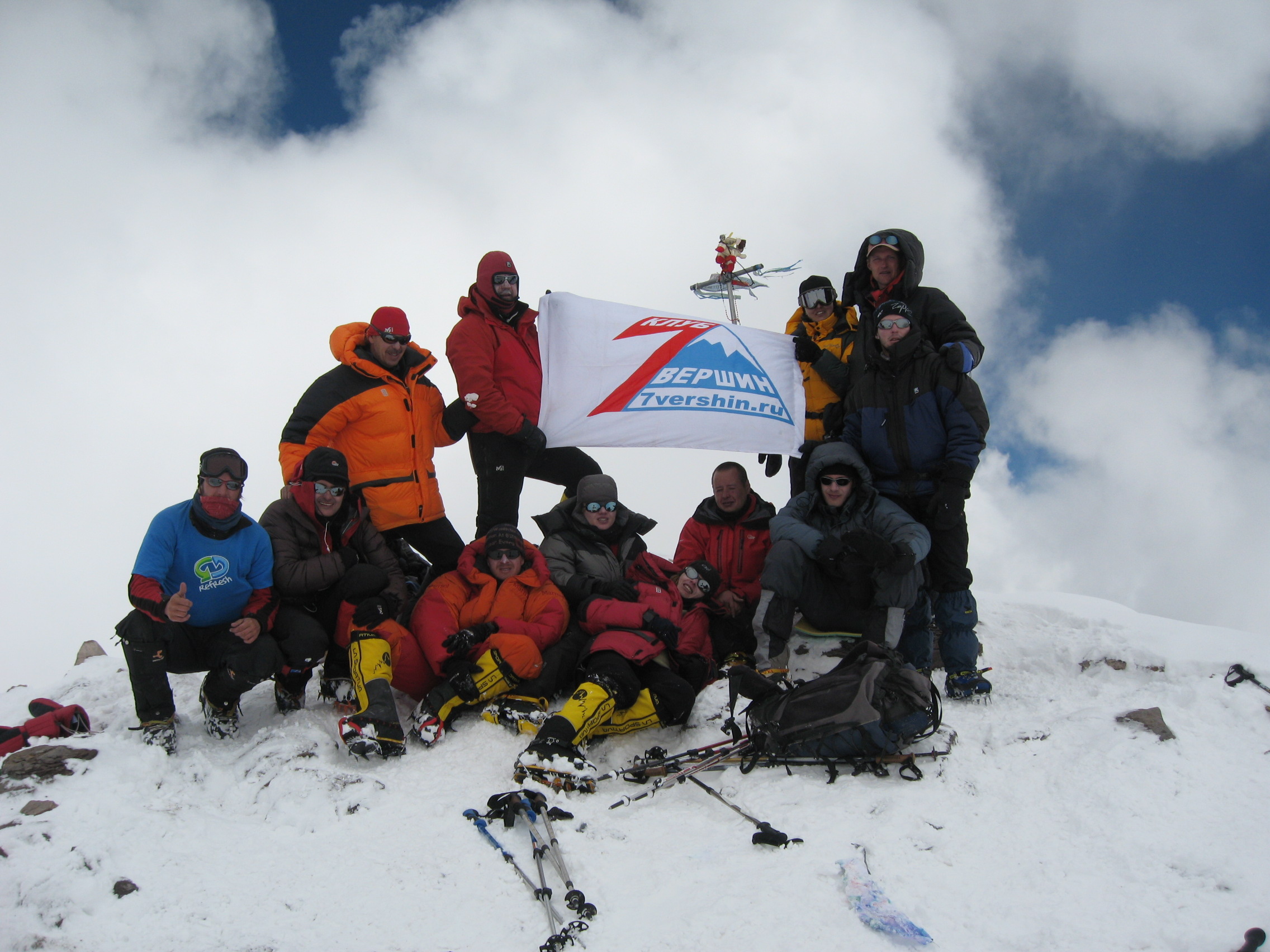

Here are the names of those who that day stood at the top:
Borodkin Peter
Vol'per Vladimir
Zagorskaya Anna
Zamalaev Paul
Kornev Mihail
Kornienko Konstantin
Kornienko Svetlana
Nadvodnyuk Vadim
Turovsky Mikhail
Chmel Catherine
and guide Bogatyrev Maxim