Aconcagua(6962) - Page 22
The new group came to climb Aconcagua
Aconcagua.
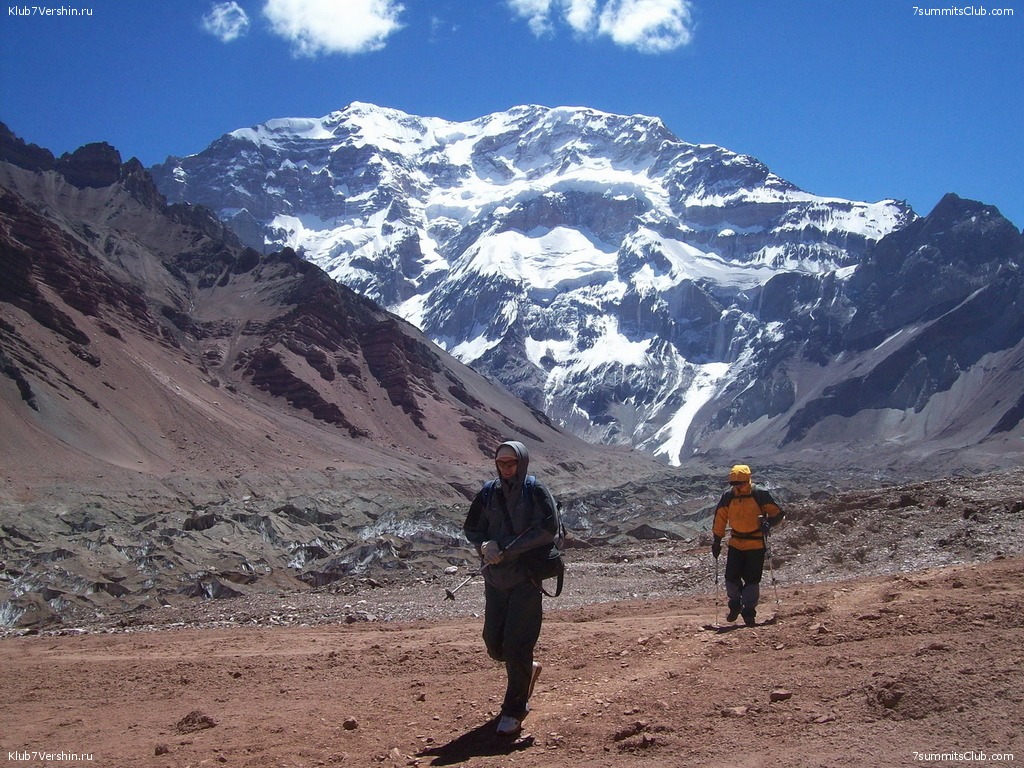
Victor Bobok went from Mendoza to Aconcagua with a new group. Due to cancelation of several participants, the team arrived in Argentina only partly - 3 persons: Alexander Markelov, Igor Pchelyakov and Sergey Chernyshev. Bad weather is a ...
Victor Bobok went from Mendoza to Aconcagua with a new group. Due to cancelation of several participants, the team arrived in Argentina only partly - 3 persons: Alexander Markelov, Igor Pchelyakov and Sergey Chernyshev. Bad weather is a sure sign of a good one. We wish to make this sign worked and the ascent of our team will be with shining sun, with no wind at all. Old-timers under Aconcagua can not remember such a bad season. Occasional gaps between storms need just be caught. According to the National Park information, 117 people have received assistance from the rescuers, they were helped down from the slopes of Aconcagua.
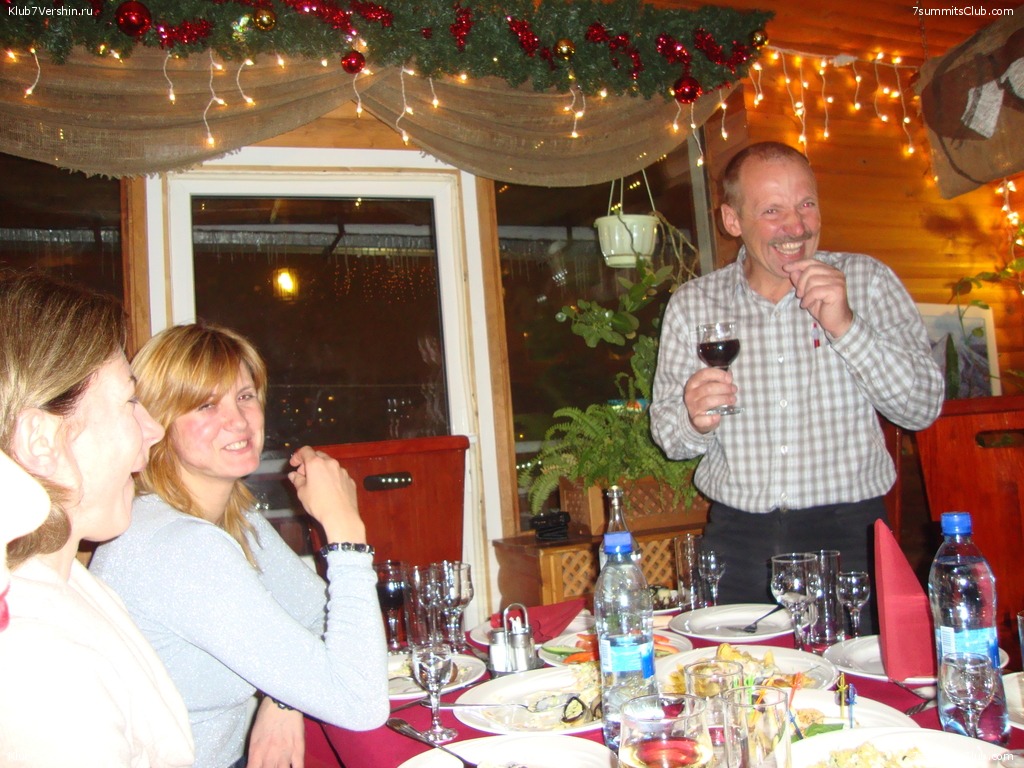
Today Victor Bobok celebrates his Birthdays with the group, already in Mendoza
Aconcagua.
The whole group went down to Mendoza, after a hard climb of Aconcagua. Strong winds brought a lot of trouble to our climbers. Six of our climbers were forced to go down faster than expected. They benefited from a rescue helicopter, as they ...
The whole group went down to Mendoza, after a hard climb of Aconcagua. Strong winds brought a lot of trouble to our climbers. Six of our climbers were forced to go down faster than expected. They benefited from a rescue helicopter, as they had frostbite. No serious injuries, but for any risk elimination. The group is now preparing to celebrate the birthday of our best, beloved guide Viktor Bobkov. He is 50 years old. We wish him health and new summits !
Reached the summit: Denis Abuev, Igor Barabeshkin, Alexey Boutin, Alexander Viktorov, Igor Kadochin Pavel Laktyushkin, Boris Pavlov, Igor Cherkashin. As well as our guides: Victor Bobock and Olga Rumyantseva, and local woman-guide Mara Bareibo.
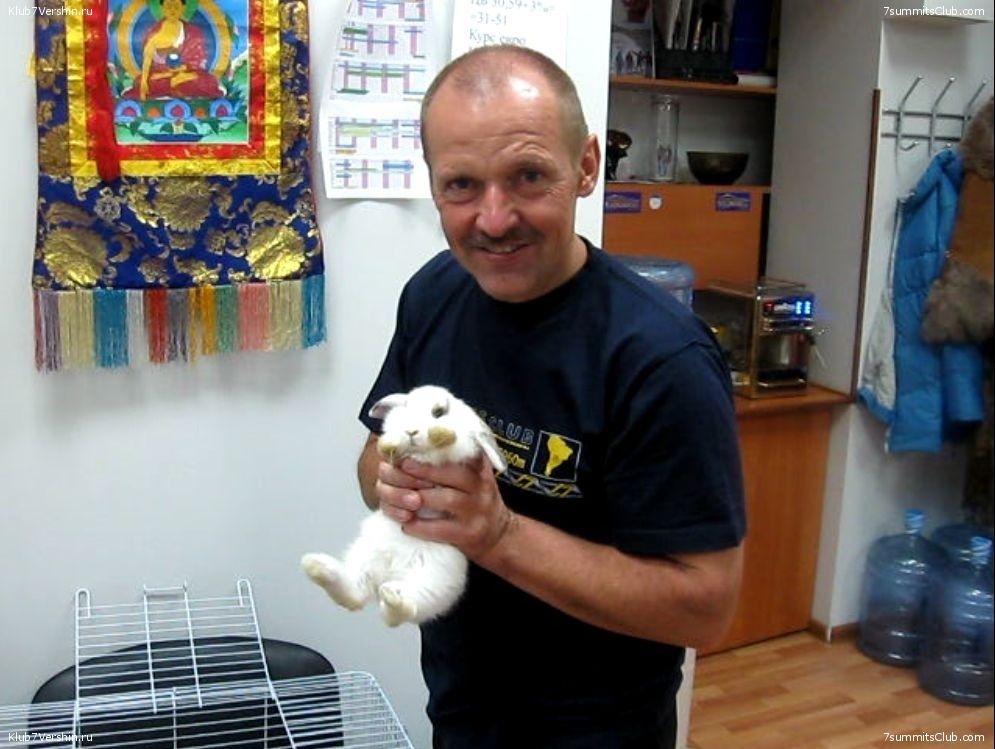
Victor Bobok was born in Ukraine in 1961. He has a degree in economics. Victor began mountain climbing in 1978. Master of Sports in mountaineering. In the national team of Russia he has climbed a record route on Everest on the north face in 2004. In 2009, Victor climbed Everest from the south. The first Ukrainian ascended the Seven Summits in 2006. He lives in Moscow and has 6 children.
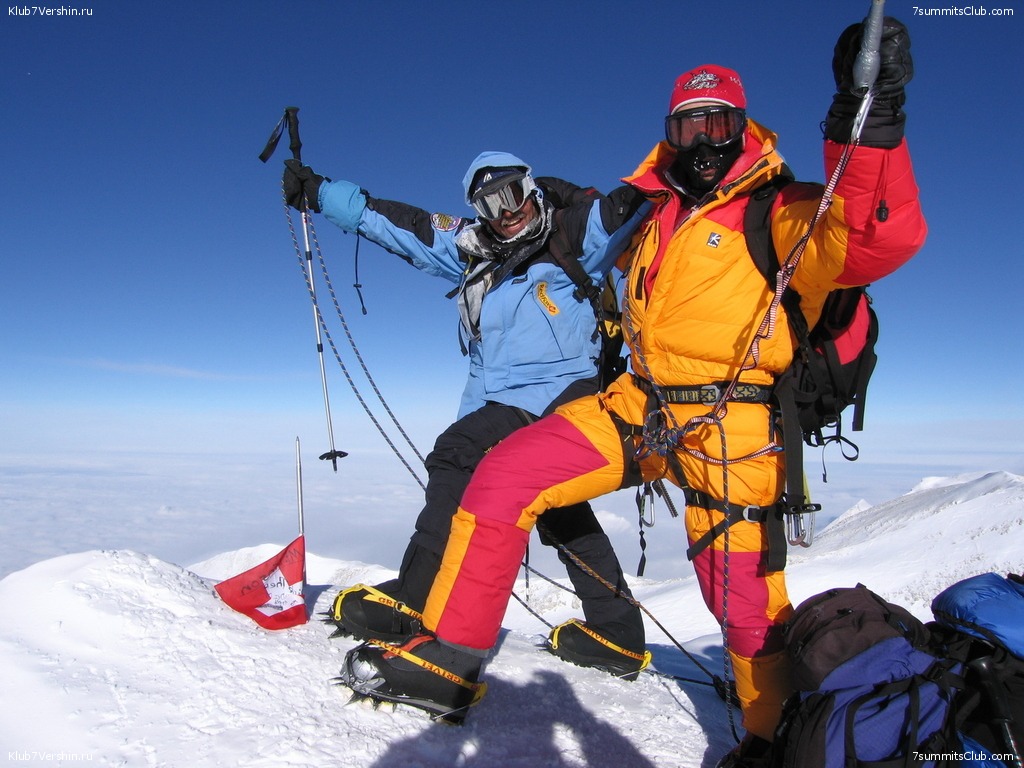
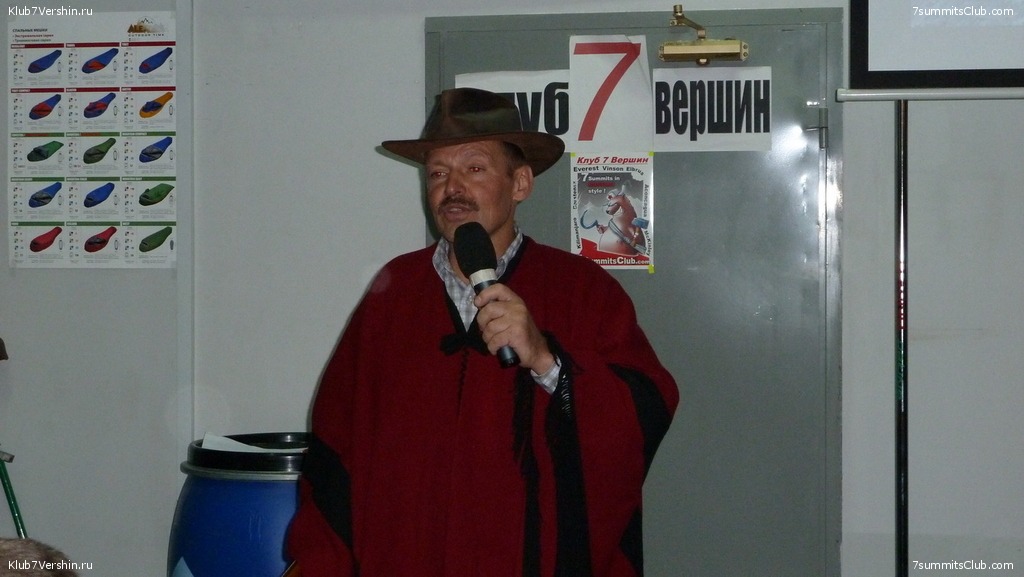
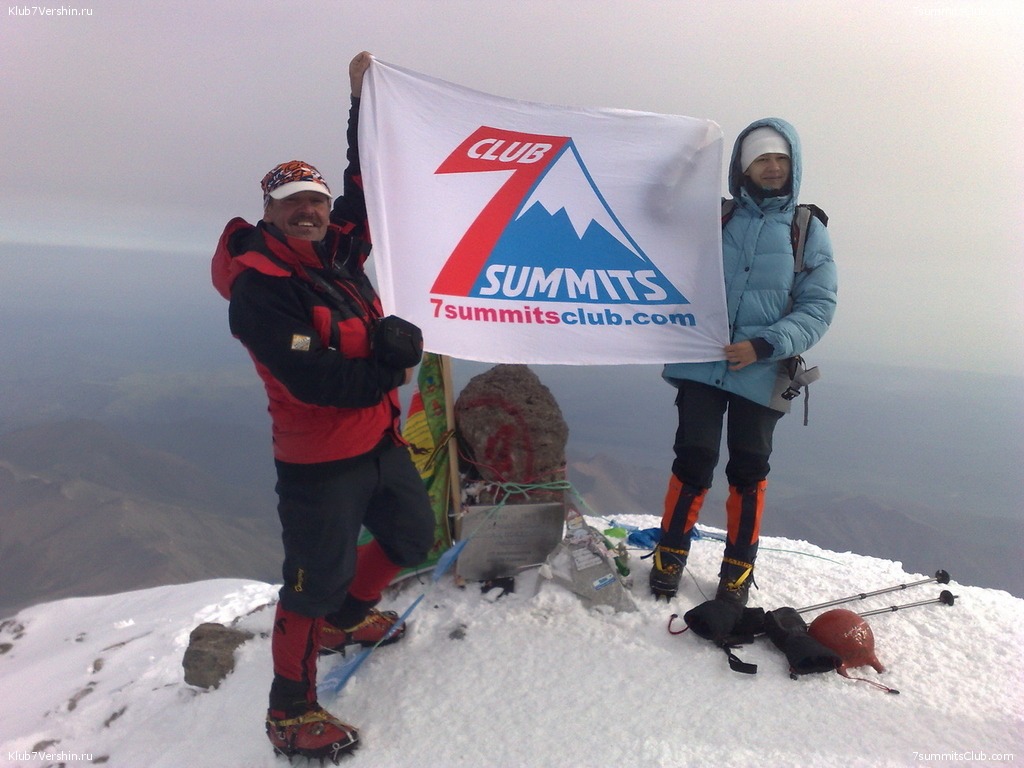
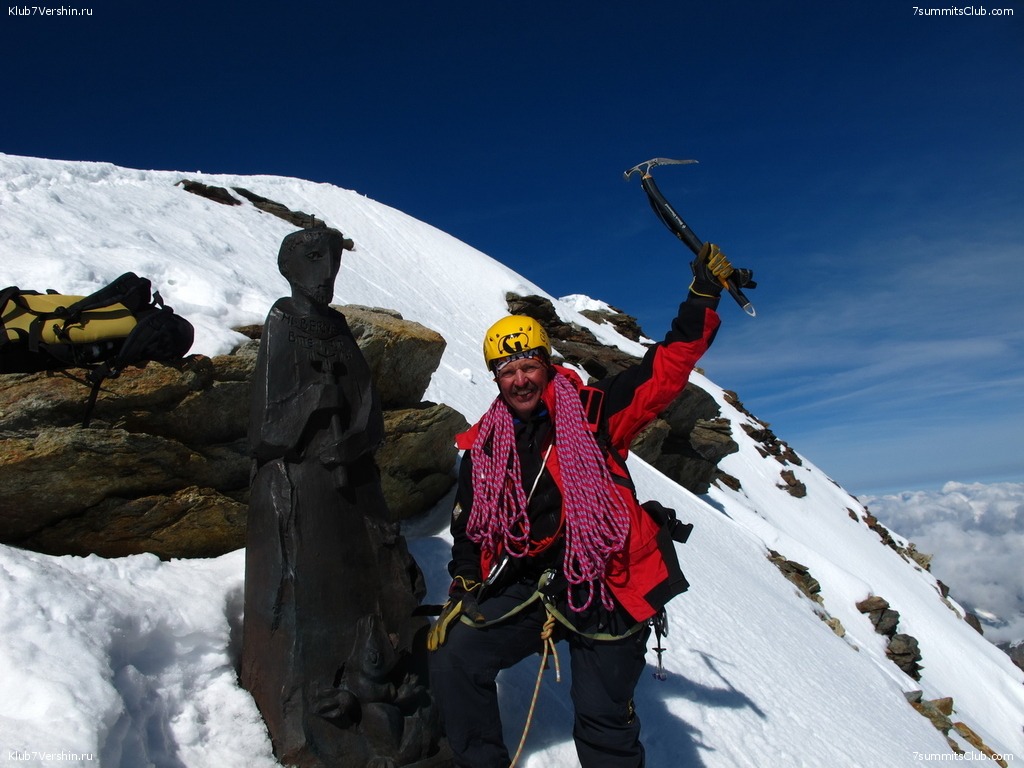


A Call from the summit of Aconcagua ! 10 climbers of 7 Summits Club on the highest point of America !
Aconcagua.
Call. Short information from Victor Bobok, directly from the summit of Aconcagua. Eight members of the expedition reached the summit: Denis Abuev, Igor Barabeshkin, Alexey Boutin, Alexander Viktorov, Igor Kadochin Pavel Laktyushkin, Boris ...
Call. Short information from Victor Bobok, directly from the summit of Aconcagua. Eight members of the expedition reached the summit: Denis Abuev, Igor Barabeshkin, Alexey Boutin, Alexander Viktorov, Igor Kadochin Pavel Laktyushkin, Boris Pavlov, Igor Cherkashin. As well as our guides: Victor Bobock and Olga Rumyantseva. Plus one local guide, thanks to him ! Weather conditions are very heavy, strong winds, fog and cold. But it was the same all season. The average success rate on Aconcagua at this moment is around 20%. We have - 70% ! We wish to our team a successful descent and waiting forward messages already from lower camps.
Other members of Alexei Vaulin, Nadezhda Goncharuk, Alexander Smirnov and Alexander Savotkina refused to climb for different reasons, but they are okay.
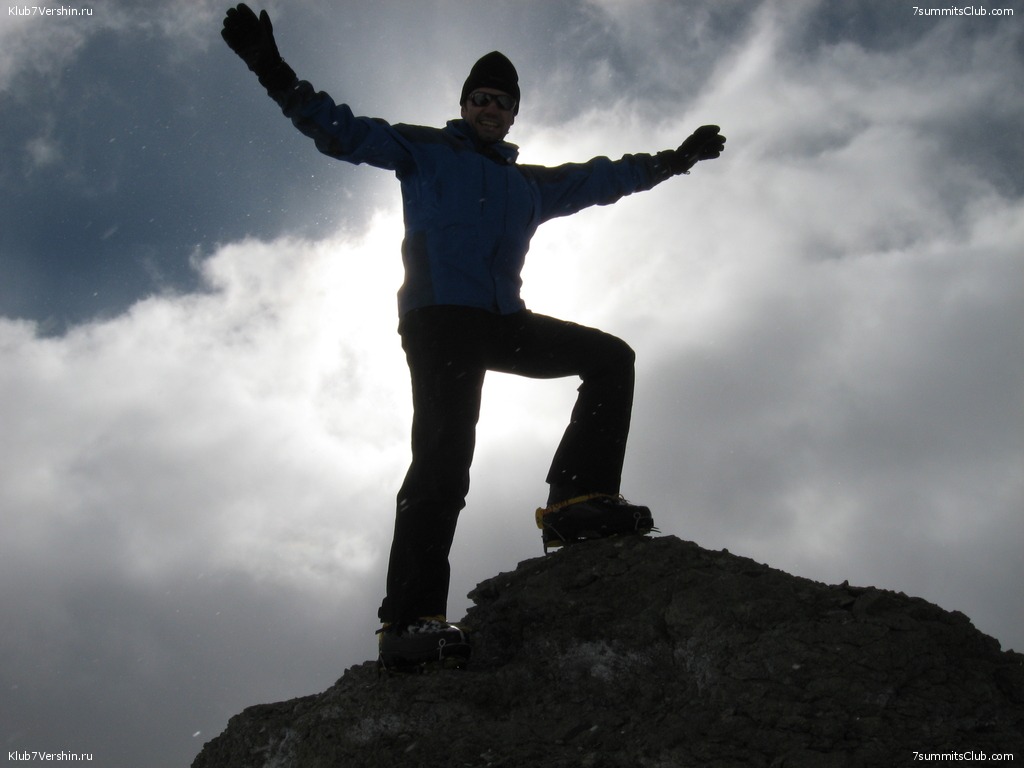
News Aconcagua: A Prime Minister from Europe on the way to the summit !
Aconcagua.
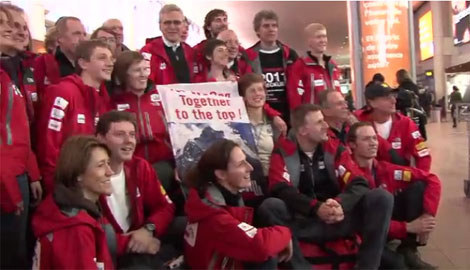
Tomorrow a representative delegation leaves Mendoza in the direction of Aconcagua. It is a team from Belgium, consisting of about 30 people. Among them, the most senior official person of the country for this moment. It is the Prime ...
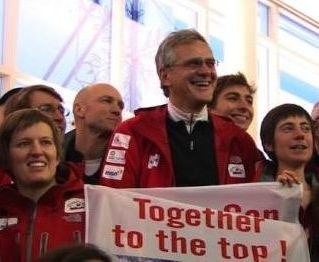
Tomorrow a representative delegation leaves Mendoza in the direction of Aconcagua. It is a team from Belgium, consisting of about 30 people. Among them, the most senior official person of the country for this moment. It is the Prime Minister of Flanders, 48-year old Kris Peeters.
The expedition set the task to climb Aconcagua. 15 members of the team in one or another way are affected by asthma. Actually, the main goal -it is not even the climbing. This is a demonstration to all the people whose lives are complicated by the different diseases that an active lifestyle, sports - it's not just possible, they need it.
In airport
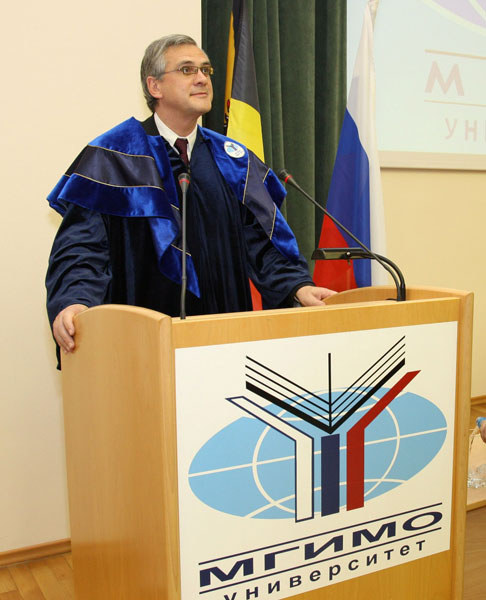
By the way, Mr Peeters is a great friend of Russia. He was elected an honorary doctor of MGIMO University of Russia, often visiting in our country. The last time in October, Mr. Peeters held talks in St. Petersburg with the local authorities. As always, he came with a mass of concrete and constructive proposals.
Kris Peeters is not particularly fond of climbing, to his credit is only an ascent of Mont Blanc. He is known as the past athlete and a big fan of cycling. Until 2004 Peuters with his economic and philosophical education, worked in various business communities, including at European level. In 2004 he became minister of the environment in Flanders, and quickly became famous due his courage, radicalism and consistency. Proclaiming the highest standards in Europe, environmental protection, he did not leave it in words. Therefore, Mr. Peeters became in 2007 the prime minister of Flanders.
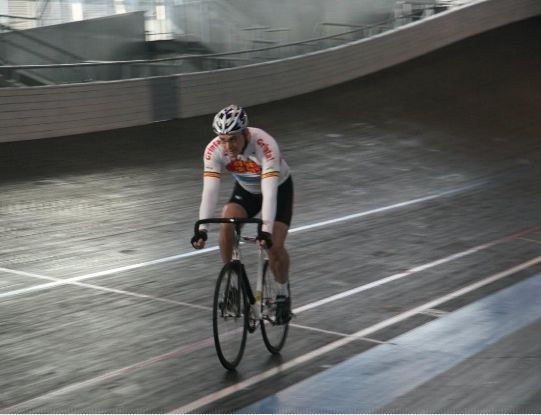
Among asthmatics participating in the expedition, only three have climbing experience. Others, primarily engaged in cyclic sports. Undoubtedly, the most important part of the team are physicians, as well as video operator. In short, it is a solid event and, as usual, they use money collected for charitable purposes.
We wish you success, my friends!
Moscow: An honorary doctor of MGIMO University of Russia, in international relations
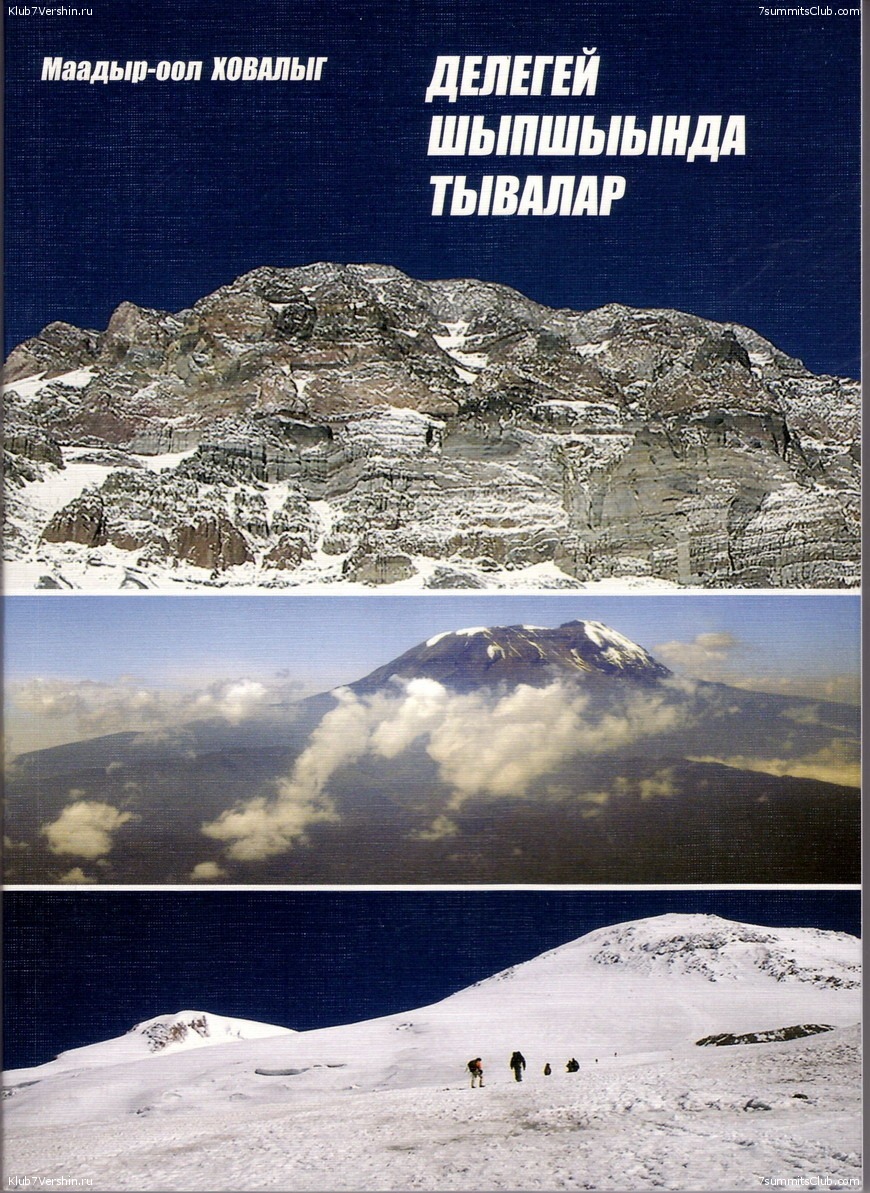
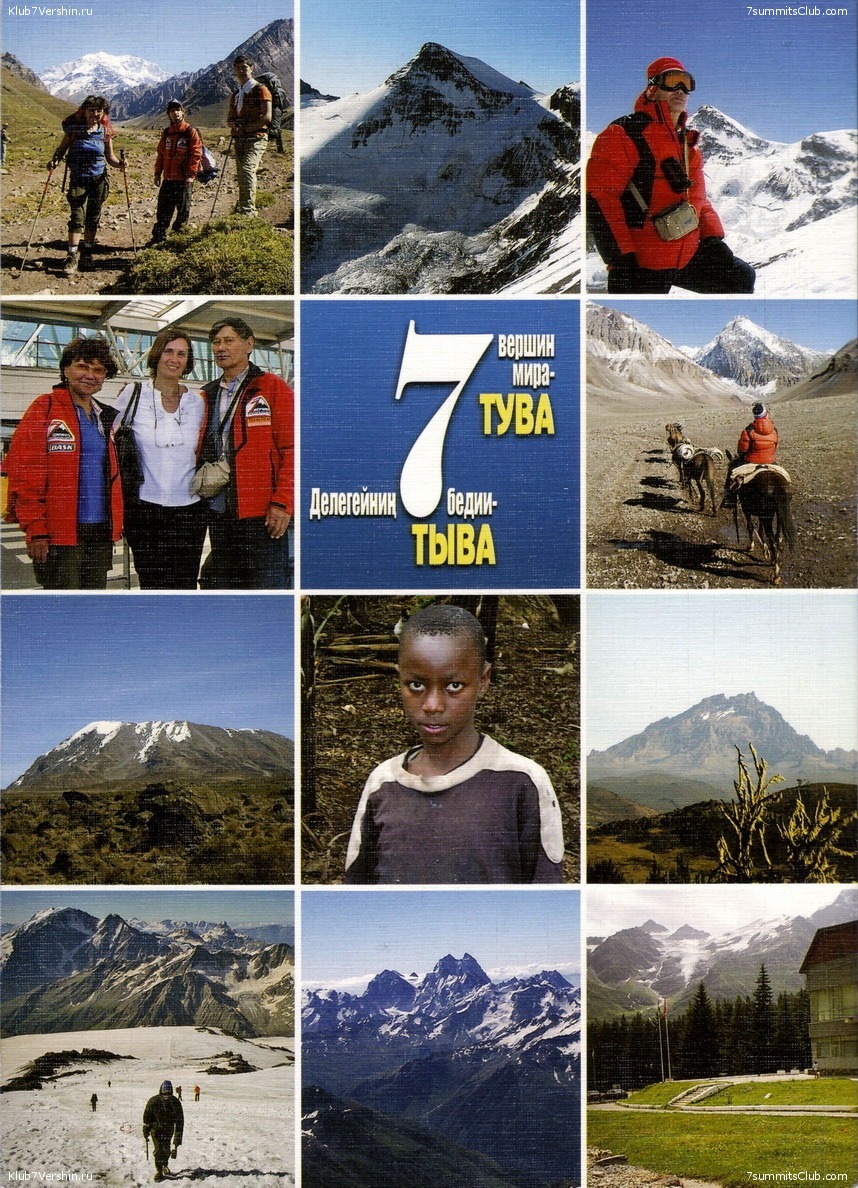
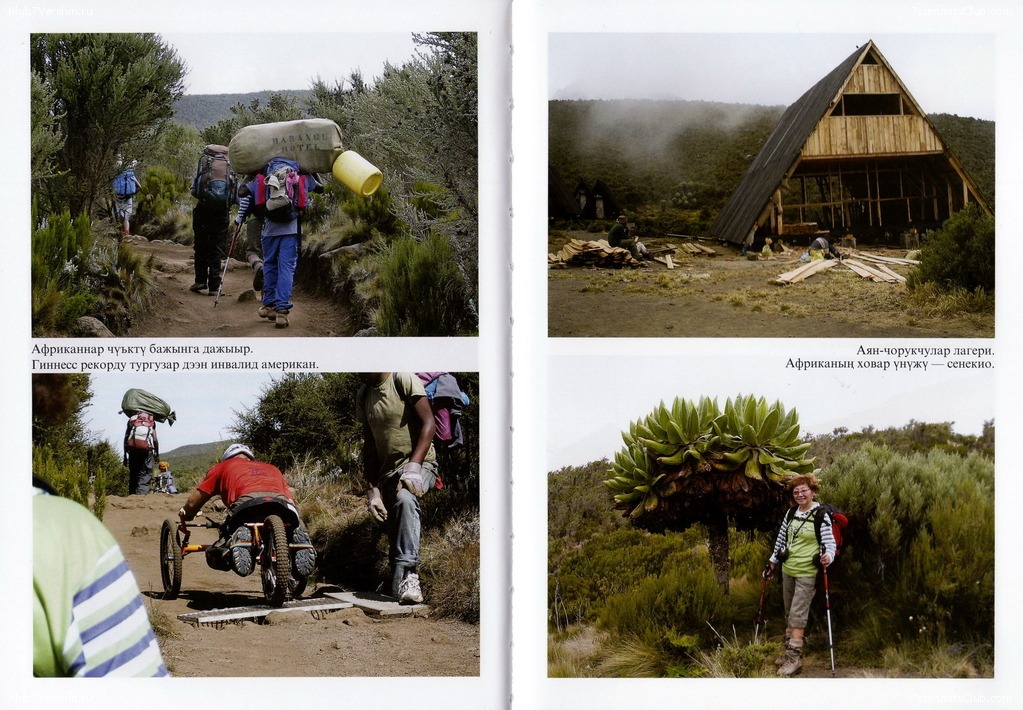
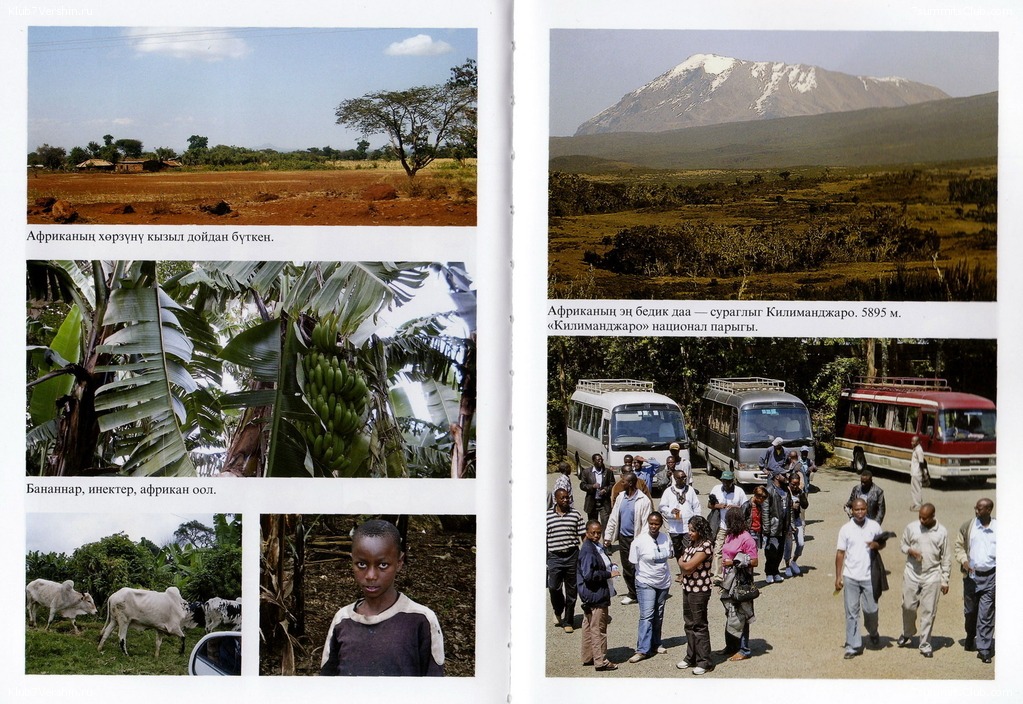
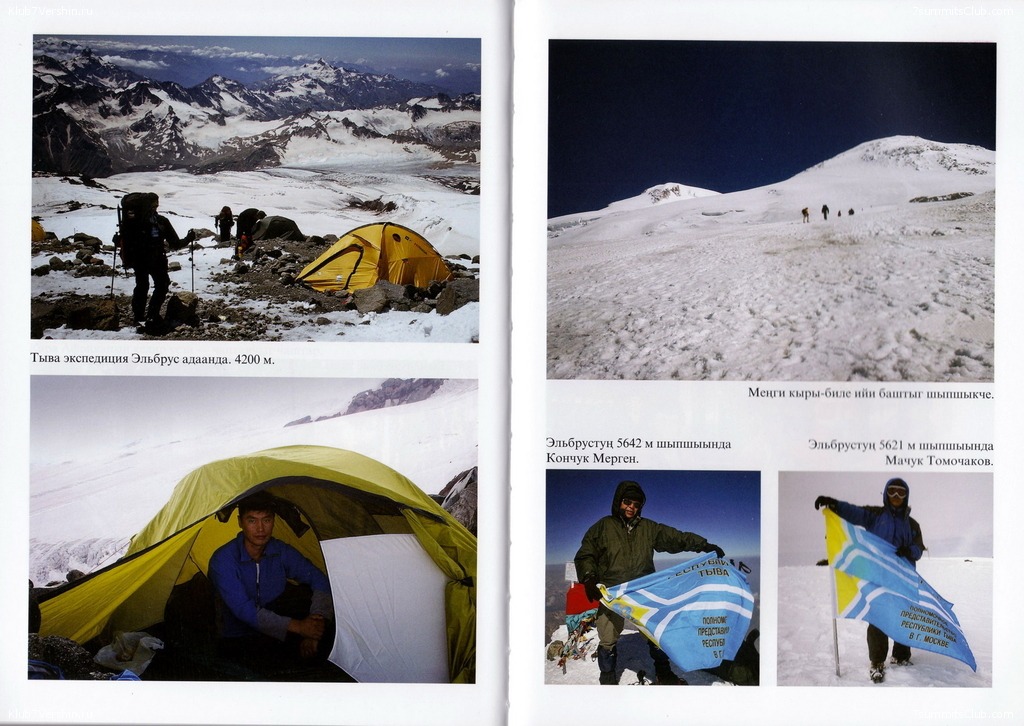
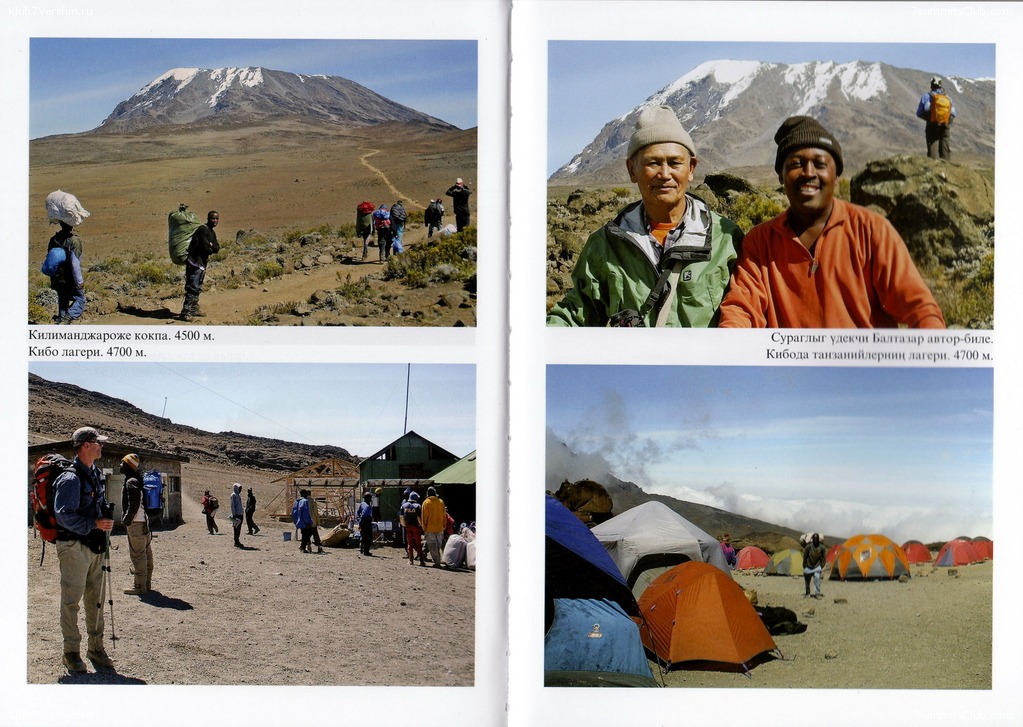
A Book about Seven Summits issued on Tuvan Language
Elbrus.
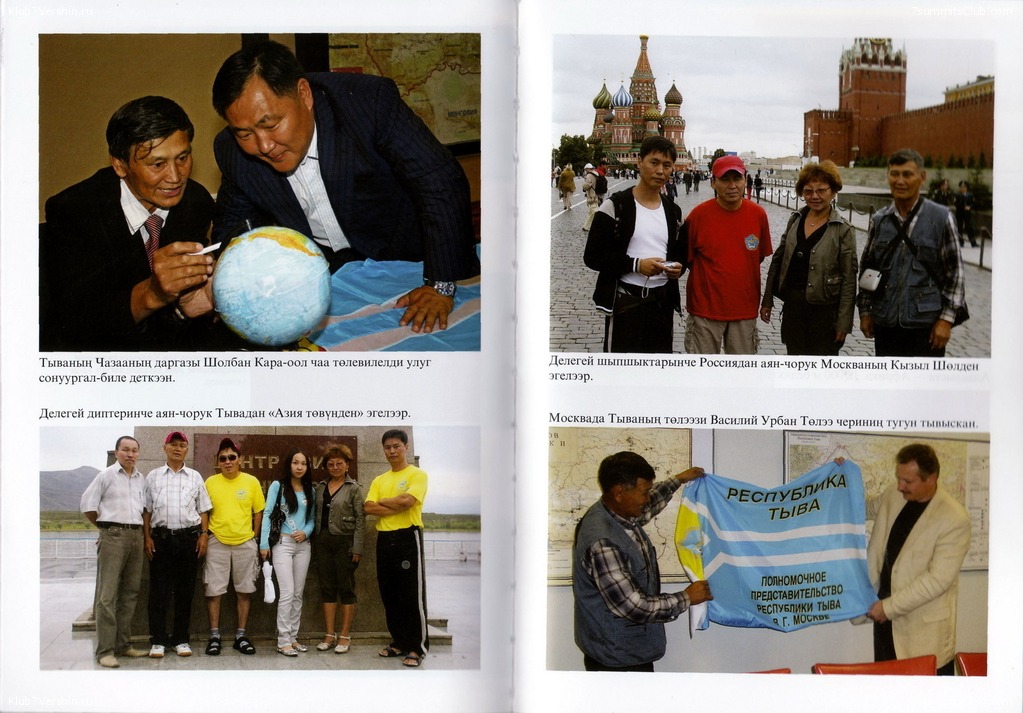
The project to conquer the seven highest points of seven continents was started in 2007 with the support of the Prime Minister of the Republic of Tuva Sholban Kara-ool. During next year four Tuvan climbers climbed two of the seven ...
The project to conquer the seven highest points of seven continents was started in 2007 with the support of the Prime Minister of the Republic of Tuva Sholban Kara-ool. During next year four Tuvan climbers climbed two of the seven highest peaks in the world - Elbrus (5,642 m) and Kilimanjaro ( 5895m), where they established national flags of Russia and Tuva. In March of 2009 , three athletes from Tuva climbed the highest peak in South America - Aconcagua (6962 m), dedicating their victory to the 65th anniversary of the Voluntary Entering of the Tuva People's Republic to Russia (noted in October 2009). In June 2010 the project leader Maadyr Khovalyg and women-climber Marianna Surunchal reached the summit of McKinley.
Under the plan, until 2014 Tuva athletes must conquer the highest peak of planet Mount Everest (8848 meters), Vinson Massif (4897 m) in Antarctica and Mount Kosciuszko (2228 m) in Australia. Our friends Maadyr and Marianna will start for Australia in the beginning of next year.
Maadyr Khovalyg (63 years old) is best-known and well-published writer who writes on the Tuvan language. This book devoted to the first three climbs of the project. We are sure that it will be continued….



How Element3 became Element4 for Swiss climbers of Aconcagua
Aconcagua.
Three young persons from Swiss invented a rather original program for their trip. Three elements, three ways to travel, and all without motorized means, without hotels and restaurants, without guides or porters. From the doors of their ...
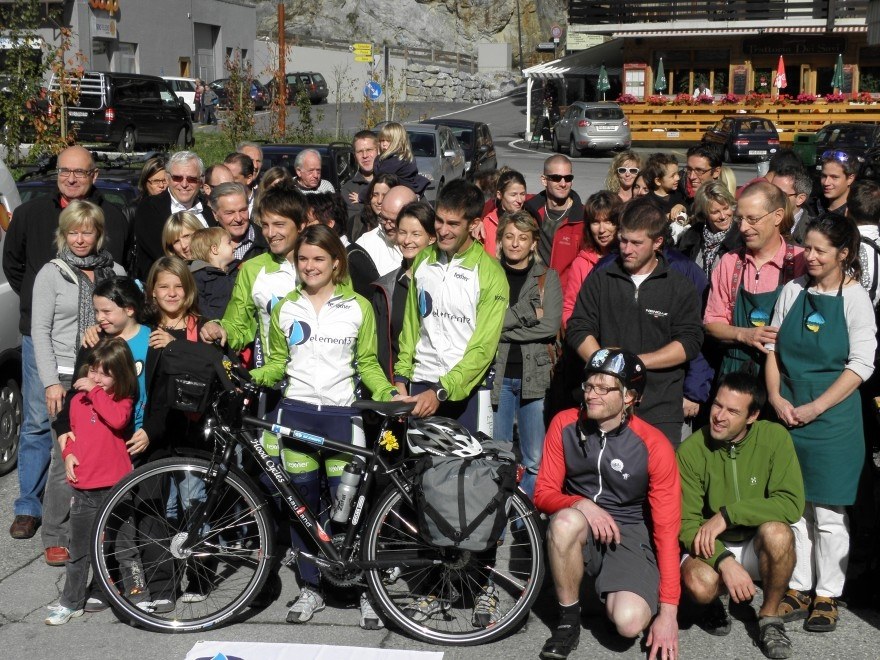
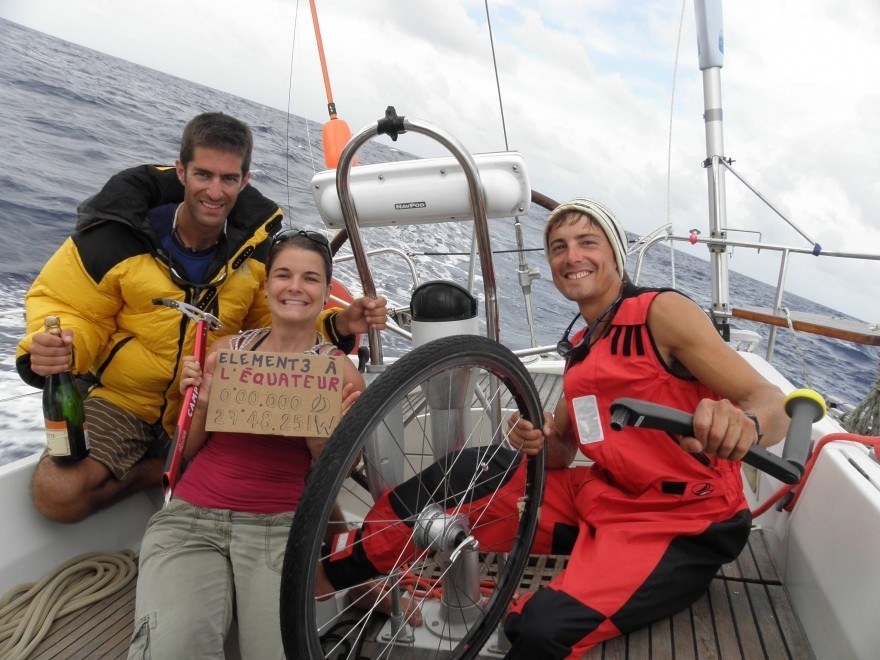
Three young persons from Swiss invented a rather original program for their trip. Three elements, three ways to travel, and all without motorized means, without hotels and restaurants, without guides or porters. From the doors of their homes - to the summit of Aconcagua. This means: from the resort of Nendaz in Pennine Alps, first to the French port of Camargue by bikes (600 kms), then across the Atlantic Ocean on a simple boat (up to Buenos Aires - more than 11 thousand kilometers), then again by bicycle to the gates of the Aconcagua National Park (about 1000 kms). And further, a start of a climbing program, high-altitude climbing to the highest summit of South America. They called their project elenent3 and site - elenent3.ch.
All three adventurers are medicine workers, and age mates, they are 29 years. Jessica Mermoud was born in Montreux, was educated in Lausanne and then moved to the mountains to work. Guenole Addor (center) was born in Lausanne, however, spent much time in the homeland of his ancestors in Britton, on the archipelago of Glenanes. There he was accustomed from childhood to seamanship, was engaged in yachting, what, in fact, has become a key point in creating a new project elenent3. Pierre Metrailler also studied medicine in Lausanne, but later mastered another profession. In 2007 he became a professional mountain guide.


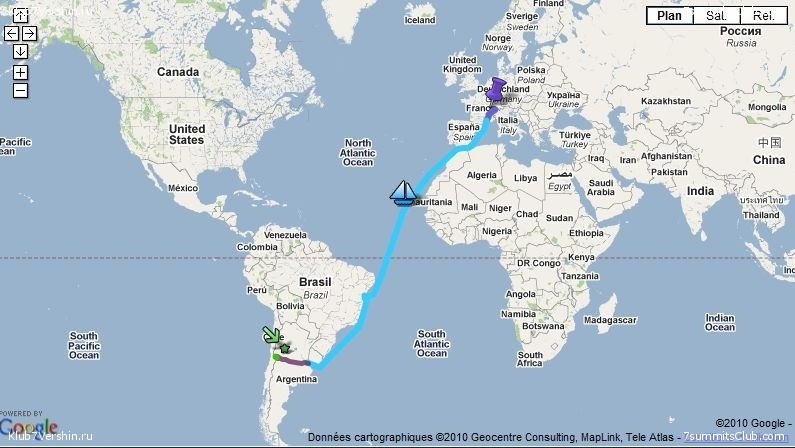
It so happened, that in their journey "the fourth" element was involved. Damage of boat and bad weather delayed travel on the islands of Cape Verde. The delay was three weeks long. They had to change travel plans. So there appeared a "fourth element" - a South American bus. This simple popular form of transportion has been chosen as a compromise, the main thing - do not go by plane. Friends crossed Atlantic Ocean and landed in the Brazilian port of Salvador. From there they reached a sity of Mendoza by different buses travelling about 5,000 kms
In itself, this is an amazing adventure.
A route according a plan
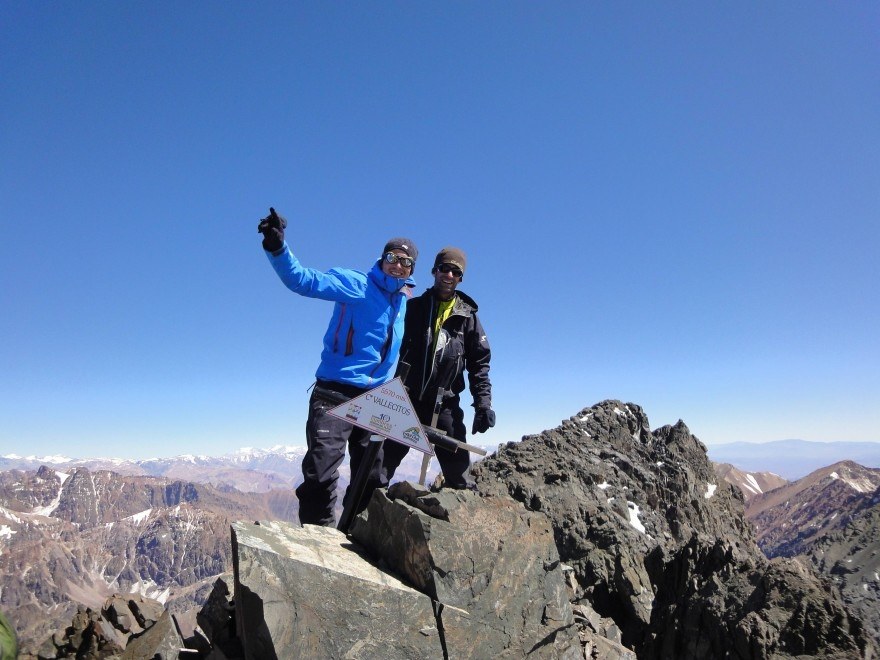
As a result, the team saved a few days, which were used for acclimatization ascent to the top of Cerro Valesitos (5400m). After that, they were joined by Guenole’s girlfriend Sylvia. And at four, they went in the direction of Aconcagua, highest peak in South America ...


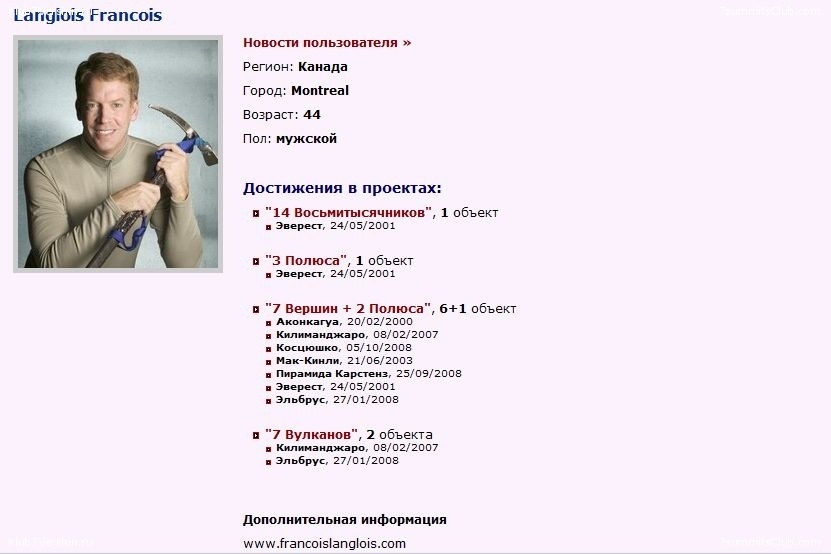
Our congratulations: Quebecer Franсois Langlois conquers the Seven Summits
Elbrus.
A member of 7 Summits Club François Langlois has reached the top of Antarctica's Vinson Massif, marking a decade challenge to climb the seven summits - the highest mountains of each of the seven continents: Mount Aconcagua, ...
A member of 7 Summits Club François Langlois has reached the top of Antarctica's Vinson Massif, marking a decade challenge to climb the seven summits - the highest mountains of each of the seven continents: Mount Aconcagua, Argentina, 2000; Mount Everest, Nepal, 2001, 2009; Mount Logan, Canada/Mount McKinley, U.S., 2003; Mount Elbrus, Russia, 2008; Carstensz Pyramid, Indonesia, 2008, Kilimanjaro, Tanzania, 2009; Vinson Massif, Antarctica, 2010. The glorious mountaineering quest was realised by Langlois with a noble purpose - to raise money for children's charities.
“I was born prematurely at 4 pounds, with underdeveloped lungs. I spent the first 5 weeks of my life in an incubator, dropped to 2 pounds and had multiple blood transfusions, jaundice, basically fighting off a whole slew of illnesses, fighting for my right to stay! 35 years have now gone by and with my fully developed lungs; I had the privilege to set foot a top of the world’s highest mountain; Everest. In those beautiful 15 minutes that I stood there, gazing at our amazing world, I made a promise; to help give back the gift I received. Recently, we found out that the pain in my chest was in fact a 2 pound benign tumour the size of a grapefruit on my left lung. It seems that I have carried this tumour with me since birth and climbed with it over the years. It was with me on Everest. As they removed the tumour, it burst, spilling a pint of fluid outside instead of in my lungs. I was spared from a pulmonary oedema that while on the Everest, would have been fatal. I enjoy with what eyes I see the world today!“ exclaims François Langlois.
Langlois supports, among other, Fondation Centre de cancerologie Charles-Bruneau, Child Haven International, The Montreal Children’s Hospital (McGill University Health Centre), The Make-A-Wish Foundation and World Vision.

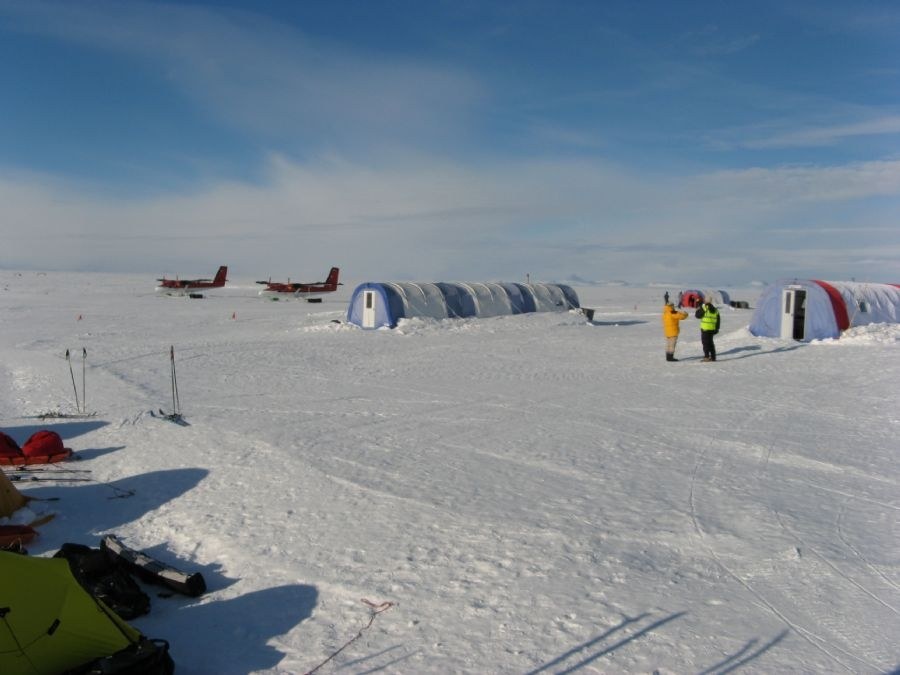

Richard Parks ready to take on the world
South Pole.
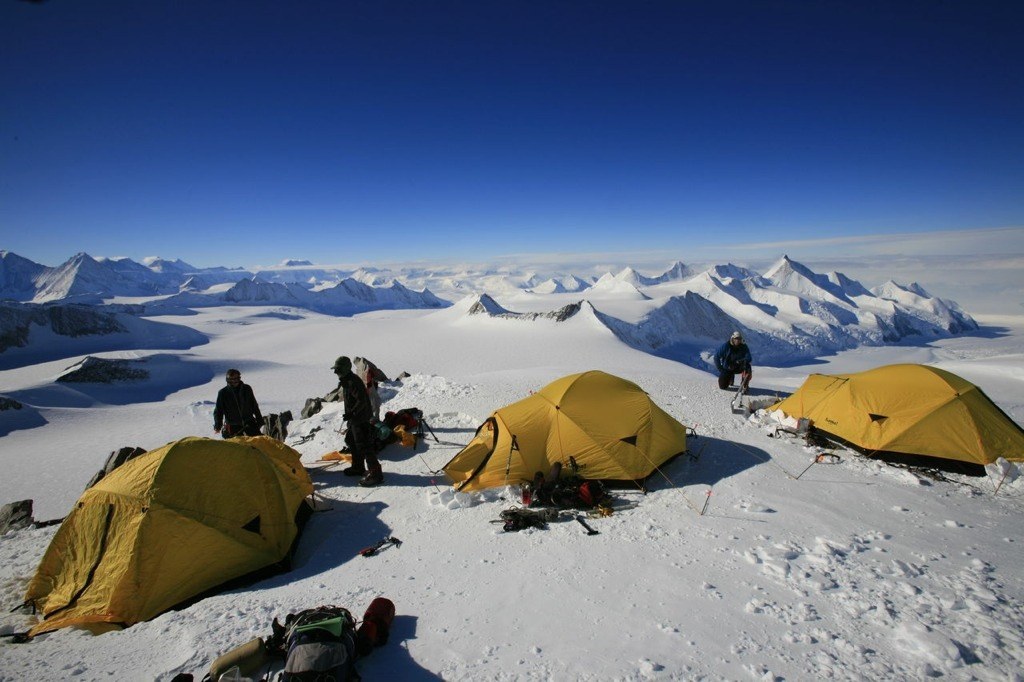
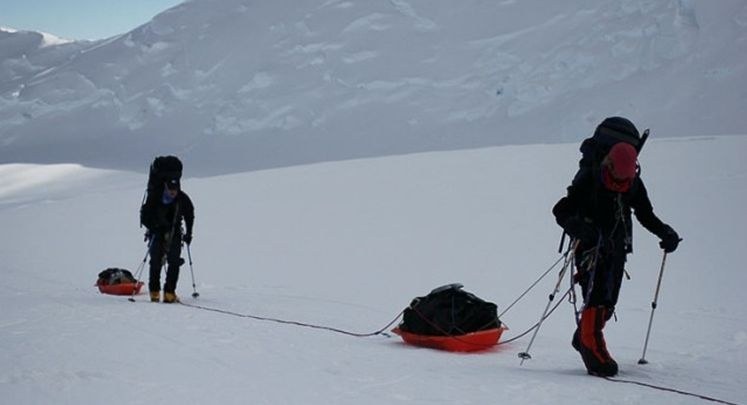
In the third of his BBC columns, Richard talks about his final preparations for his '737 Challenge' during which he aims to climb the highest mountain on each continent, plus reaching both the South Pole and the North Pole for charity - all ...
In the third of his BBC columns, Richard talks about his final preparations for his '737 Challenge' during which he aims to climb the highest mountain on each continent, plus reaching both the South Pole and the North Pole for charity - all within seven months in a bid to raise £1m.
The clock is now ticking towards 12 December when I fly to South America and then Antarctica on the way to the start of this most gruelling of challenges.
It's just mind-blowing to think how quickly the challenge has come round from conceiving it 15 months ago. I'm both scared and excited, but just want the whole thing to start.
I've done all the training now and I don't think I can do any more. I feel physically and mentally prepared for the challenge, which if successful will see me become the first person to stand on the continental summits and the poles in the same calendar year.
The challenge consists of the South Pole, Mount Vinson (4,897m), Aconcagia (6,962m), Mount Kilimanjaro (5895m), Carstensz Pyramid (4,884m), the North Pole, Mount Everest (8,850m), Mount Denali (6,194m) and Mount Elbrus (5,642m).
If all goes to plan I'll be at the South Pole on 1 January and finish up at the top of Mount Elbrus on 31 July.
Over the last few months, and especially my final training on Cho Oyu in the Himalayas, I have developed this toolbox of mountaineering skills that will give me the best chance of success. But ultimately we are in the hands of mother nature and she could put a spanner in the works!
Since coming back from the Himalayas in October there has been no let up in attempting to boost my aerobic capacity. I competed in the Cardiff half marathon and then took part in the Cardiff Burn - a 10k run, a 42k bike and a 3k kayak. That was hard, but great preparation.
Everest would seem to be the biggest challenge but we have highlighted Denali as the toughest leg because in it's a brutal mountain in its own right
But I did have a setback when I lost my training partner on a run on the Ogmore coastal trail. Unfortunately my dog Ben fell down a hole and broke his leg. He's feeling a bit sorry for himself but he'll be okay.
The last couple of weeks I have been trying to taper down the training and have given Kevin Morgan, the former Wales international full-back who is helping me train, something of a poser.
I told him I want to be fit and fat before I go! I want to maintain my fitness but also to go into the challenge carrying a bit of extra weight with a big intake of carbohydrates.
A lot of my energies have been put in to the packing and sorting my gear out. I have to pack bags now that will be air freighted on to Everest base camp. Packing for nine legs over seven months is pretty challenging to say the least.
And on the other hand is the charity. I recently visited the cancer day care centre which was a real humbling experience and gave me some real inspiration for my trip.
I have spent every penny I have and every waking hour of the last 15 months on this unique challenge because I am very serious about it and its integrity. I was very down after my rugby career was ended with a shoulder injury and this has given me something to focus on.
At half-time during the Wales v New Zealand international at the Millennium Stadium I was presented with a special badge by Carwyn Jones, Wales' first minister, and WRU chief Roger Lewis. To get the ovation I did from the 70,000-odd fans in the stadium was a real lift.
After leaving on 12 December I don't get much thinking time because I'll be in Antarctica on 14 or 15 December and straight into the challenge. The plan is we get to the South Pole on 28 December.
And that poses a problem because I will have to wait there until 1 January so it qualifies with the calendar year requirements of the challenge. That has been one of the logistical hurdles I've had to overcome and I will have to get a flight back on my own on a supply plane.
Then it's back to Mount Vinson on Antarctica and then on to Aconcagia in South America - the highest mountain outside the Himalayas.
The crux of the challenge is further down the line - the North Pole, followed by Mount Everest and then on to Mount Denali. The North Pole presents the highest risk of cold or frost injury, and every day we are battling the north pole we are missing a day acclimatising on Everest.
Everest would seem to be the biggest challenge but we have highlighted Denali as the toughest leg because in it's a brutal mountain in its own right. Extreme weather systems and I will be doing it at my weakest mentally and physically because I will be coming straight off Everest.
We are aiming to be on Everest in April and May. Statistically the highest summit success rate is early May and after that we are looking at four to six days to climb Denali.
The aim then is to reach the summit of Mount Elbris before 31 July.
Richard Parks was speaking to BBC Sport Wales' Richard Thomas
Source:
http://news.bbc.co.uk/sport2/hi/rugby_union/welsh/9239634.stm

We have updated the registration system on our website, please check your dates
We finished the next stage of development of our Internet projects (our sites). We have made several important changes and improvements. And it is made for you, our friends. First of all, we changed the registration system. In this regard, ...
We finished the next stage of development of our Internet projects (our sites). We have made several important changes and improvements. And it is made for you, our friends. First of all, we changed the registration system. In this regard, we ask you to review your own data, which were transferred from the previous version of registration. Inform us if you have any problem with registration.
Also, now you can join not only the "7 Summits" project, but also you could register your achievements in other projects, namely:
3 Poles
A new is a total ranking of member - a summary from all these projects. We also added "additional" peaks and objects to these projects ...
And you can leave now your comments to news and articles. It is very important to us. On the one hand, we are happy just to hear from each of you. On the other hand, we look forward to use your comments to improve quality of our publications.
To register your achievements in projects use following links
Russian version http://7vershin.ru/enter/
English version http://7summits-club.com/enter/
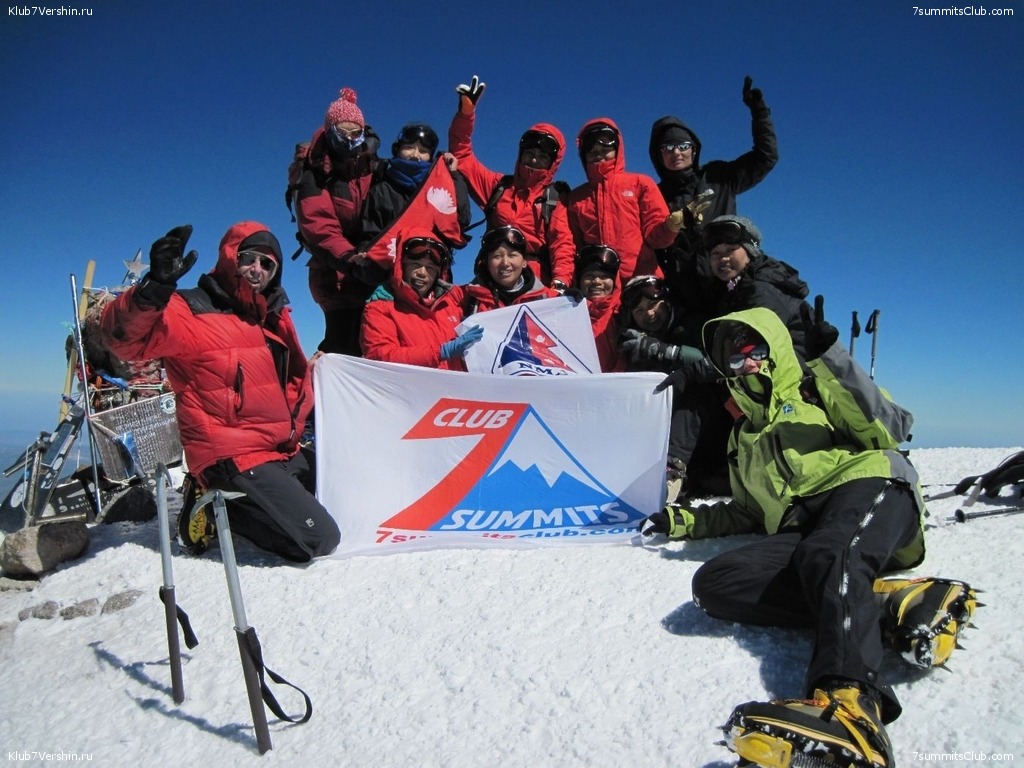
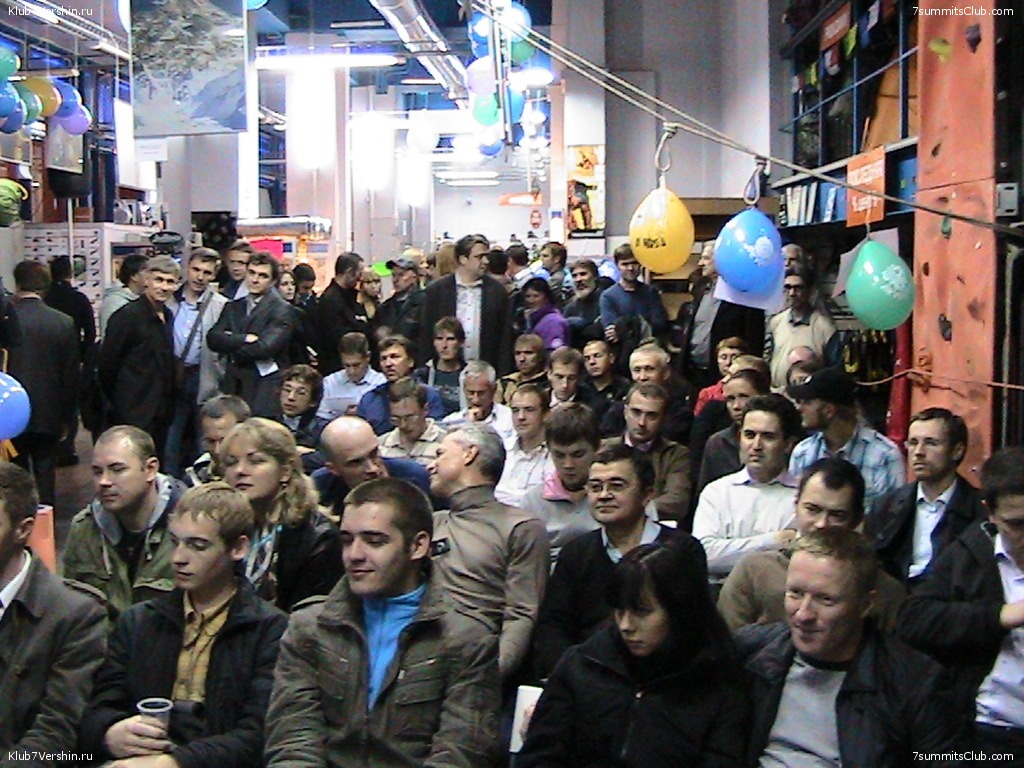
Evening party of 7 Summits Club was a great success
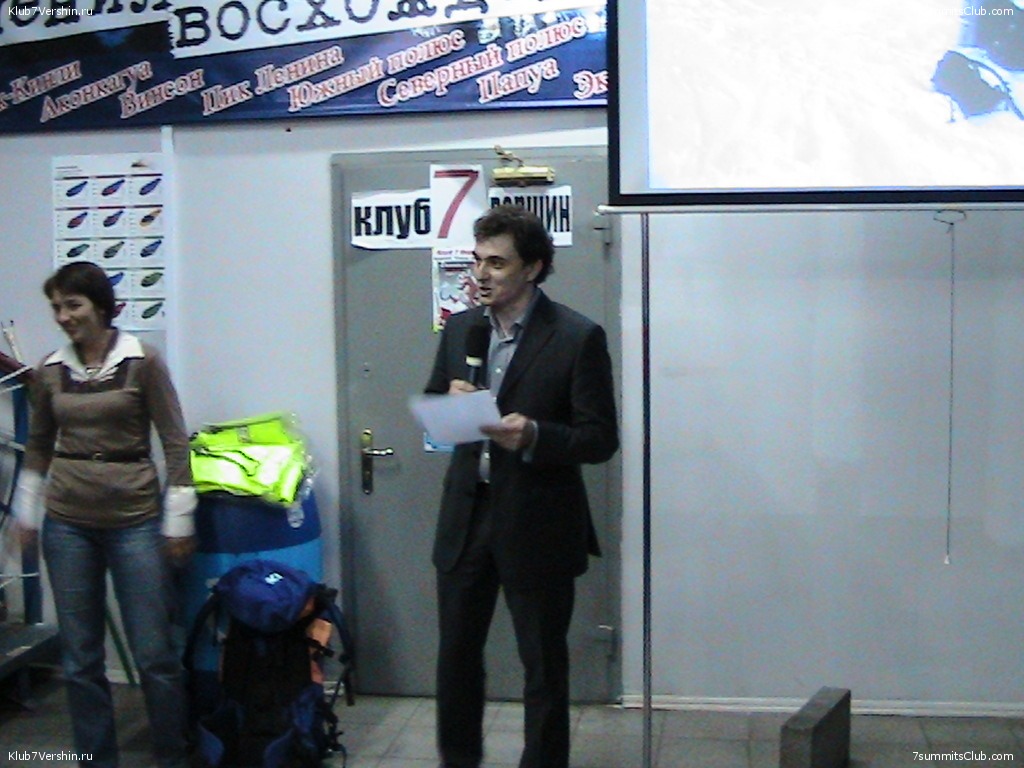
September, 30 we had a traditional evening meeting friends of 7 Summits Club. At this time, a record number of people came to hear reports on our expeditions. The famous mountain climber, winner of the Piolet d'Or Jury Koshelenko was the ...
September, 30 we had a traditional evening meeting friends of 7 Summits Club. At this time, a record number of people came to hear reports on our expeditions. The famous mountain climber, winner of the Piolet d'Or Jury Koshelenko was the chief guest. He spoke about his expeditions to Peru and the Pamirs. Then our guides were made with tales of his expeditions, we have shown films and pictures. Victor Bobok and Oleg Banar sang songs, we gave prizes for the best slogan for the club, played the lottery etc…
Photos from the party – full gallery is here >>>>>>>



Seven summits to fly from. Project of South African climbers
Elbrus.
A team of three intrepid athletes is preparing to climb the seven highest mountains on all seven continents, and then paraglide down, to raise funds for charity. THE paraglider slowly drifted down from the ...
A team of three intrepid athletes is preparing to climb the seven highest mountains on all seven continents, and then paraglide down, to raise funds for charity.
THE paraglider slowly drifted down from the blue sky, moving in broad circles as he lined up to land alongside a banner reading "Seven summits, 7 flights".
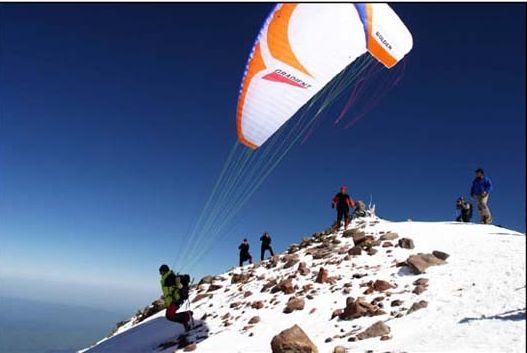
Pierre Carter paraglides in to the press briefing at Delta Park Pierre Carter's aim was perfect - he landed softy and gently ran up to the crowd gathered in Delta Park in northern Joburg, his rectangular orange and white parachute billowing behind him.
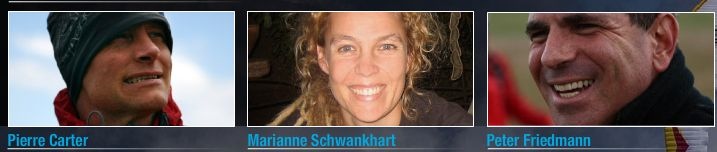
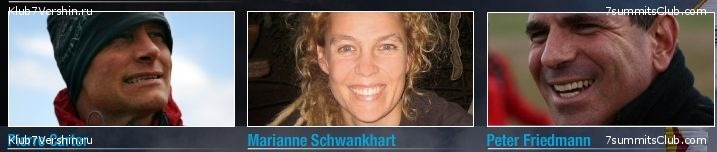
Carter is one of three athletes to tackle this "journey of a life time", in which they will be the first team in the world to summit the highest mountain on each of the seven continents, and once on the summits, paraglide down to their starting points. The other members of the team are 33-year-old Marianne Schwankhart and Peter Friedman. Carter and Friedman are both 43.
They will set off on Sunday, 11 July and begin by tackling Mount Elbrus in Russia, at 5 642 metres. The other summits on which they will be leaving their footprints are: Carstensz Pyramid in West Papua, Indonesia (4 884m), Mount Vinson in Antarctica (4 897m), Kilimanjaro in Tanzania (5 895m), Denali in Alaska (6 194m), Aconcagua in Argentina (6 959m), and the tallest of them all, Everest in Nepal (8 850m).
They admit that Carstensz Pyramid is the one that makes them the most nervous; despite the fact that it is the lowest, it is the most dangerous, and no one has ever tried to paraglide off it before.
"Walking back down a mountain is the most dangerous part of climbing, so paragliding down will reduce the risks," says Carter. All three members of the expedition recognise that there are great risks involved.
Problems for paragliders at these heights include strong winds and temperatures dropping to -30°C, or -50°C with the wind chill element. If the winds are too strong they will have to wait until they drop, for up to eight hours, if necessary.
The three have had special lightweight gliders made, weighing 10 kilograms. A standard glider weighs 40kgs.
Carter and Schwankhart will do a tandem paraglide off the summits, so that Schwankhart can photograph the summits on the way down, while Friedman will attempt the flights as a single glider. They will be taking along two cameramen, Guy Habbard and Kyle O'Donaghue, to capture the three of them climbing and flying. Both are climbers as well.
Everest
The idea originates with Carter, who has had this dream since 1991. The team expects to finish the challenge in around two years, largely driven by financial constraints and weather and seasons. For instance, Mount Everest can only be climbed between March and May.
The idea of climbing the seven summits originated with Dick Bass in 1985. Since then more than 200 people have climbed all seven. Climbing and paragliding off them has been attempted before, by a French couple, but they never completed the task.
Carter has been paragliding since 1988, and represented South Africa in the world paragliding championships for five consecutive years between 1991 and 1995. He has been climbing for almost 30 years and has summited and paraglided off two of the seven mountains - Elbrus and Aconcagua. He is considered to be one of the 15 greatest paragliders in the world, and will be the team leader of the expedition.
Mountaineer
Schwankhart, an award-winning photo journalist with The Times newspaper, has been a climber since 1995. She was the first woman to climb the sheer east face of the central tower of the Torres del Paine in Chile in 2003, and returned in 2008 and climbed all three of the peaks, again setting the record for a woman.
Paragliding off Mt Elbrus in Russia In 2005, she climbed the Trango Tower in Pakistan - 900m of vertical rock face - to a height of 6 500m. The same year she climbed Cerro Torre in Patagonia, Argentina. Climbing a sheer cliff face requires the climber to sleep for several nights on the mountain, sleeping in a suspended hammock-like contraption, hanging from the mountainside.
In 2006, she filmed No Need for Parking - an Africa Rock Adventure, a record of her climbs in southern Africa. Remarkably, Schwankhart doesn't see the climbing or the sub-zero temperatures as her greatest challenge in the venture; she wants to be able to take good photographs.
"The purpose of my trip is to take amazing photographs, so I hope I can do this. My main worry is whether my camera batteries are charged," she explains. The climbing is of secondary concern. "Mount Elbrus is an easy mountain, I am not too worried. I can rely on muscle memory for the climb."
She is not a paraglider though, and is a little concerned about being air sick.
Friedman has been paragliding for eight years and has fixed-wing and helicopter licences. He has a black belt in karate and has represented South Africa in Japan at the world karate championships. He has also represented South Africa in the world surf skiing championships in the United States.
He has been the driving force behind putting the expedition together, raising the all-important funding and sponsors.
Flight from Elbrus by Carter
Funds
The expedition will be raising funds for The Trust, an organisation that raises funds for 100 charities, with causes ranging from crime survivors, abused animals, HIV and Aids sufferers, to protecting the environment. This year's particular cause is fighting human trafficking, in partnership with Cintron Africa, says Tracey-Lee Cohen, the managing trustee.
The Trust will run a series of TV and radio adverts by R&B singer Akon to assist in raising awareness of human trafficking. "The anti-human trafficking case is just one example of a social cause that will benefit from the bravery and initiative shown by the 7 Summits 7 Flights team," says Cohen.
The expedition will also be raising funds for The Smile Foundation, a charity involved in assisting children with facial anomalies get surgery.
"We admire the dedicated work of charitable organisations such as The Smile Foundation and hope to help provide them with the resources and funds they need to do their work and overcome their own challenges," says Carter.
The three estimate they will need about R7-million to complete the whole venture. All the gear has been sponsored, but funding is still needed. Donations can be made through their website.
The team can be followed on a range of social media: they will be updating their website, Twitter and Facebook pages every few days, and articles will appear in The Times newspaper. DSTV will provide R2-million in airtime to the expedition.
Read more: http://www.joburg.org.za/content/view/5430/266/#ixzz0tBukqMMj
*********************************************************************

THE MISSION
7 Summits 7 Flights is an initiative pioneered by Pierre Carter, Marianne Schwankhart and Peter Friedmann with the aim of raising funds for Smile Foundation and The Trust, an umbrella charity providing a safe and transparent conduit to various charities, by climbing to the summits of the highest mountains of each of the seven continents and paraglide from their summits. All contributions will benefit both charities as well as the Seven Summit Seven Flights project.
The notion of climbing the seven summits was first conceptualized by Dick Bass, an American businessman and amateur climber, who completed all seven summits in 1985. Since then, more than 200 climbers have completed the challenge, with the youngest being eighteen year-old Samantha Larson and the oldest seventy three year-old Ram—n Blanco. What makes this initiative remarkable, apart from the sheer challenge that the seven summits pose, is that the three climbers will paraglide their descent, a feat that has never been achieved, although attempted. To share the experience as closely as possible, award-winning photographer Marianne will fly in tandem with acclaimed paragliding adventurer, Pierre, to photograph and document the journey and the mountains, thus providing a unique view of the adventure from a new perspective where no one else has gone before. Two experienced film crew will compile the video footage into a documentary that will be screened worldwide.
Apart from the thrill of paragliding off all seven summits, the hope of the South African team, is that the time and effort invested in this endeavor will help South Africans in need; that the obstacles they overcome in their struggles against nature will eliminate the obstacles that many face back at home. For the team, the risk that this challenge poses is a chance of a lifetime to realize the limits of the human body in dire situations “it’s not the mountain we conquer but ourselves”. Sir Edmund Hillary. In addition to enriching their own lives, their motivation for this endeavor is to translate their life changing experience into changing the lives of thousands of less fortunate South Africans and at the same time bringing climate awareness, something highly necessary in light of our current climate change crisis.
The project launches in June, with our first trip to Denali Ð we hope to complete all seven summits within fourteen months. By teaming up with The Trust as the beneficiary of this project, 7Summits7Flights is truly an example of climbing for humanity.
It’s the ultimate adventure!
Three explorers will climb to the summits of the 7 highest mountains on the 7 continents and paraglide off them. No-one as yet has flown from the top of all seven summits and this will raise the bar in extreme adventure and exploration in 2010. They will share their experience via photographs, video and blogs from the most remote and fragile corners of the earth. This will allow others to realise their potential for our planet and will raise money for “The Trust”, a charity aimed at assisting the underprivileged in reaching for their own dreams.
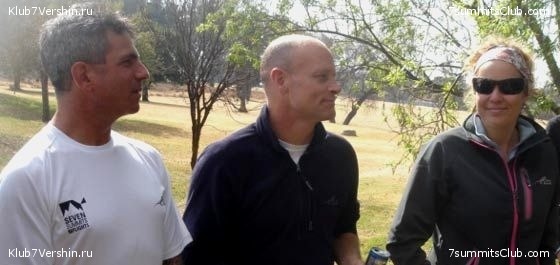
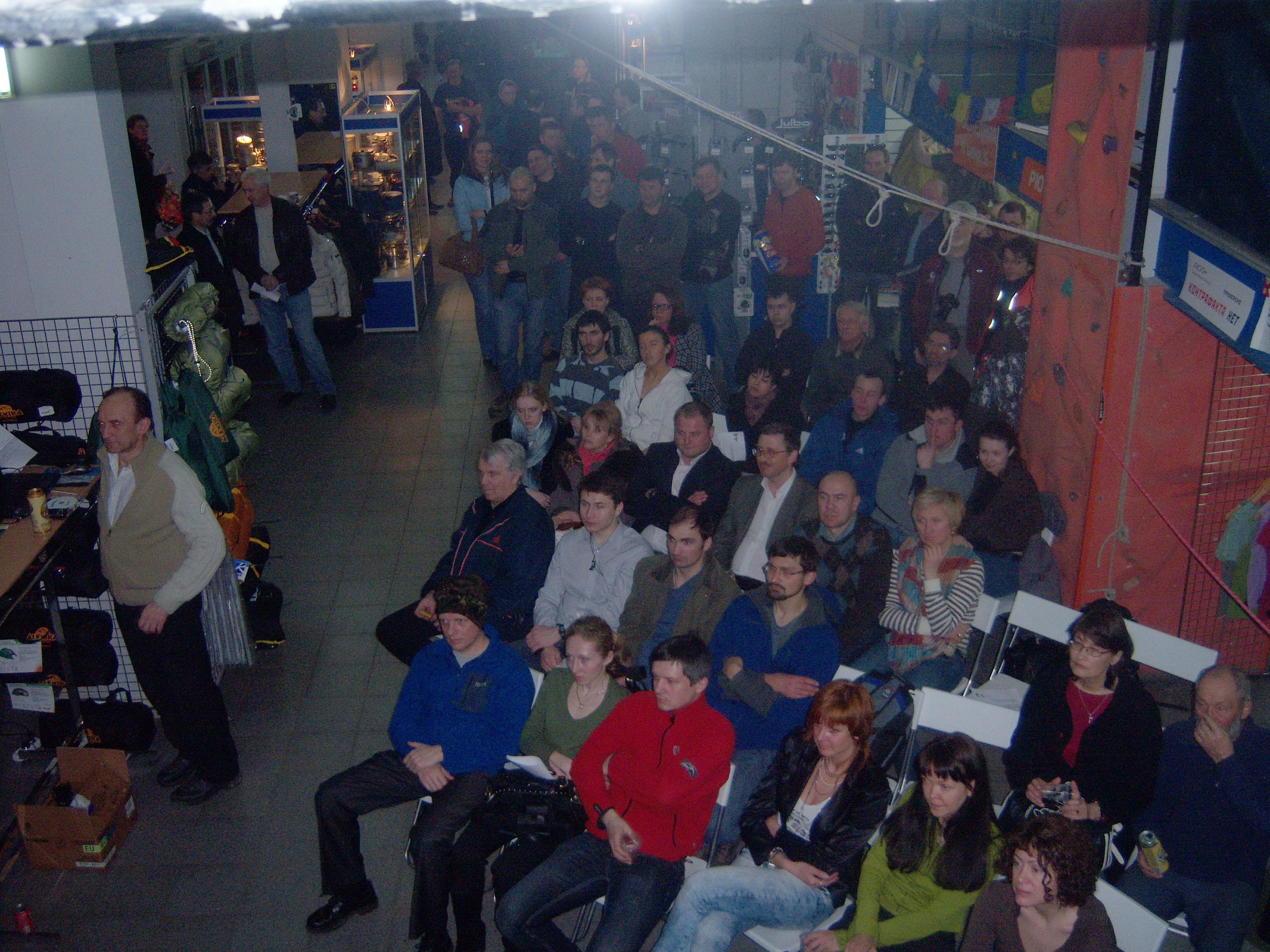
Party of the 7 Summits Club was fantastic, thanks Rozov, Alferov .... Everyone!
Elbrus.
Perhaps it was the best party in the history of the 7 Summits Club. First of all, thanks to famous Russian skydiver and basejumper Valery Rozov, which came out three times on the podium. His presence inspired all the other speakers ...
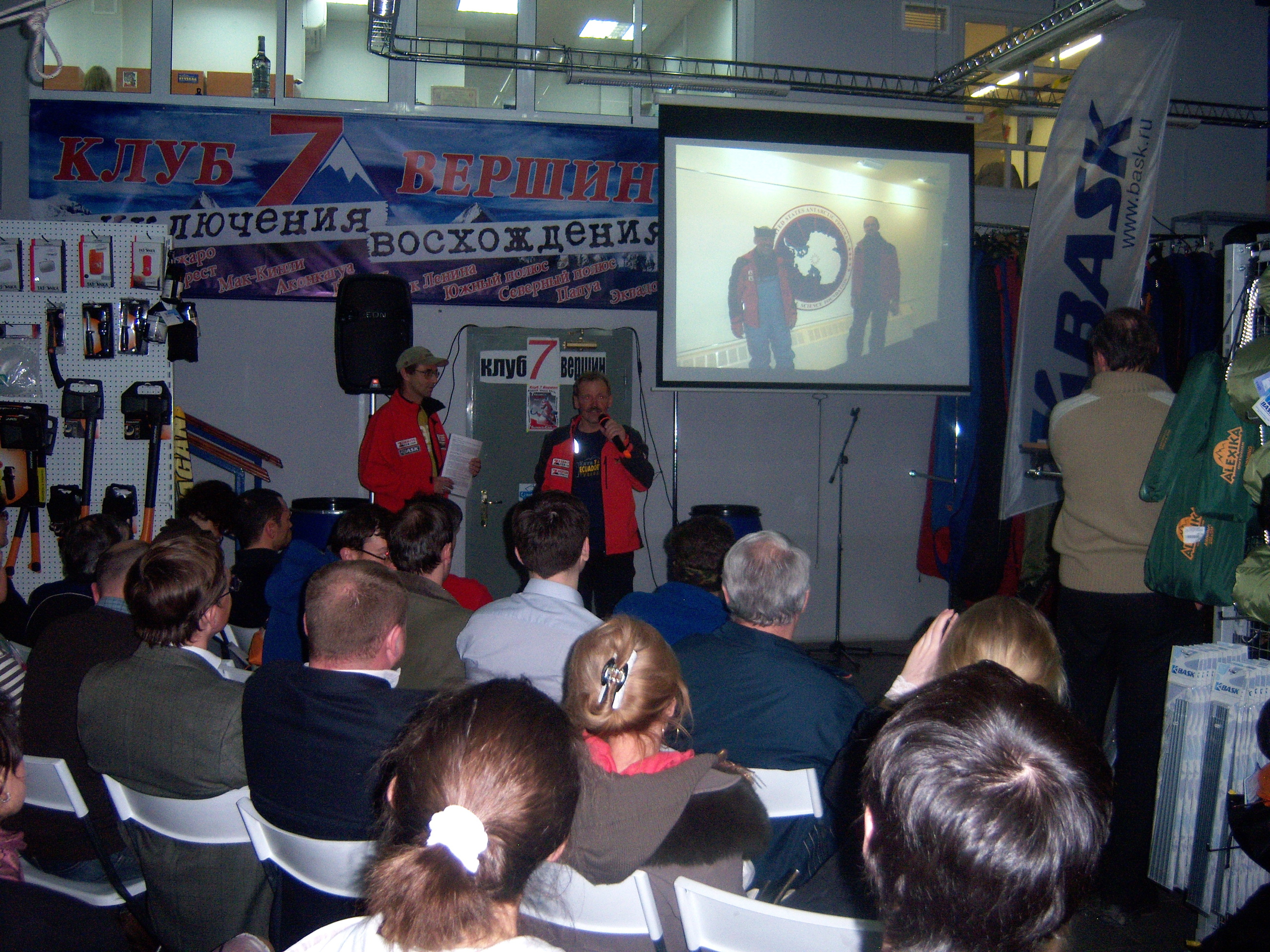
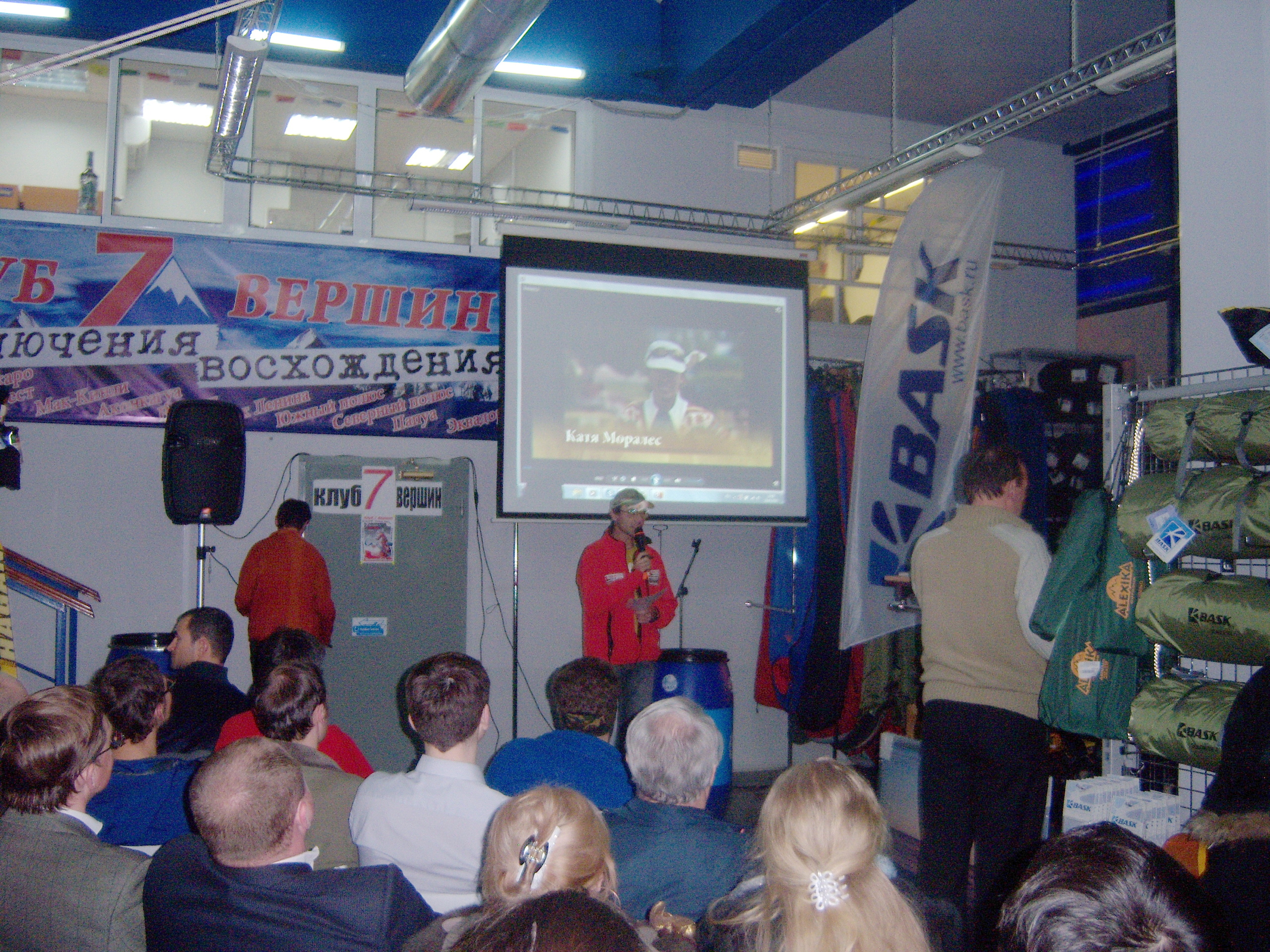
Perhaps it was the best party in the history of the 7 Summits Club. First of all, thanks to famous Russian skydiver and basejumper Valery Rozov, which came out three times on the podium. His presence inspired all the other speakers be concise and accurate time. For the first time, our guides have prepared almost all the reports in the form of slide-films. The technical level is growing. It was so interesting that the guests could not find time to come to the table.
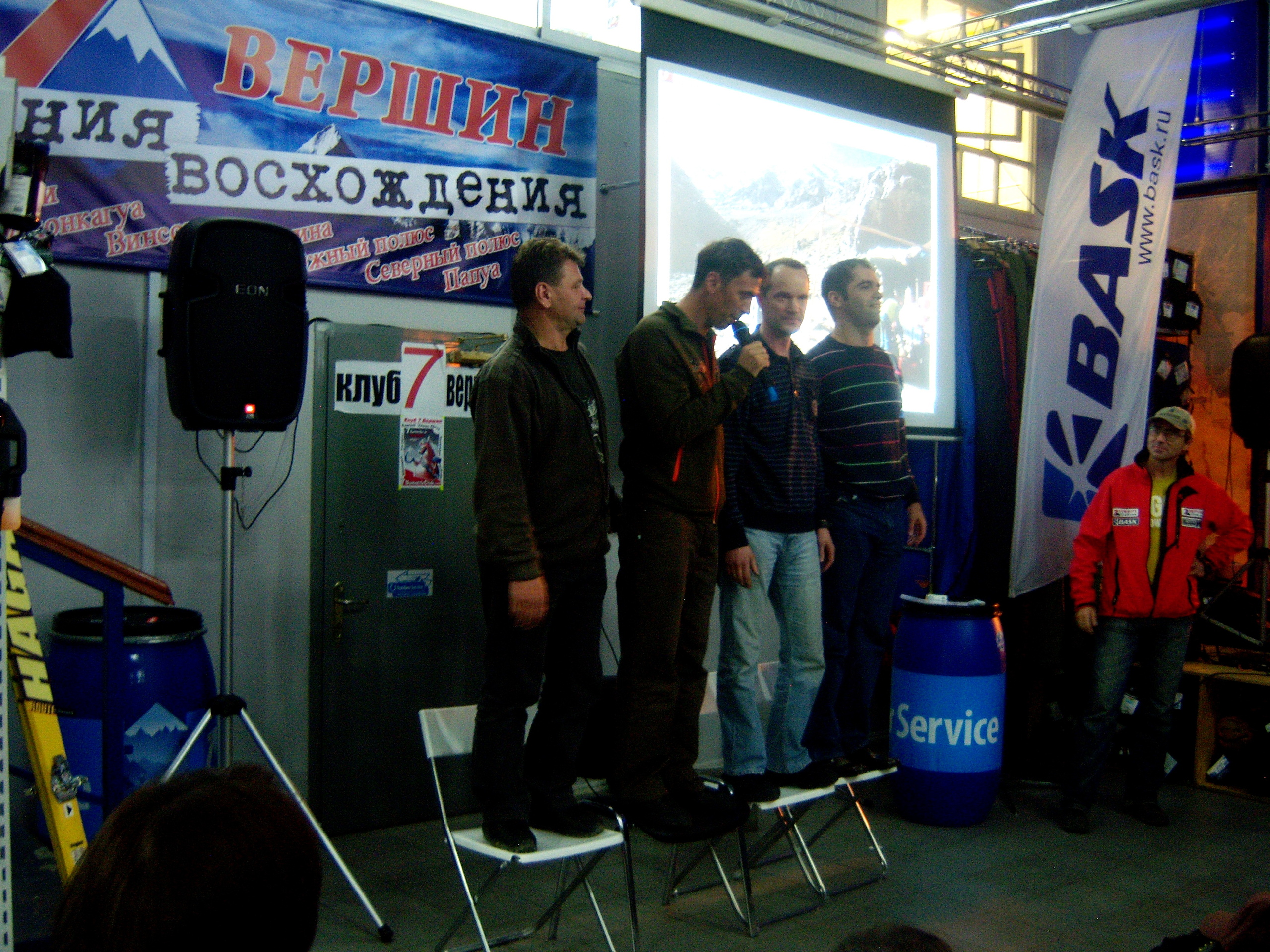
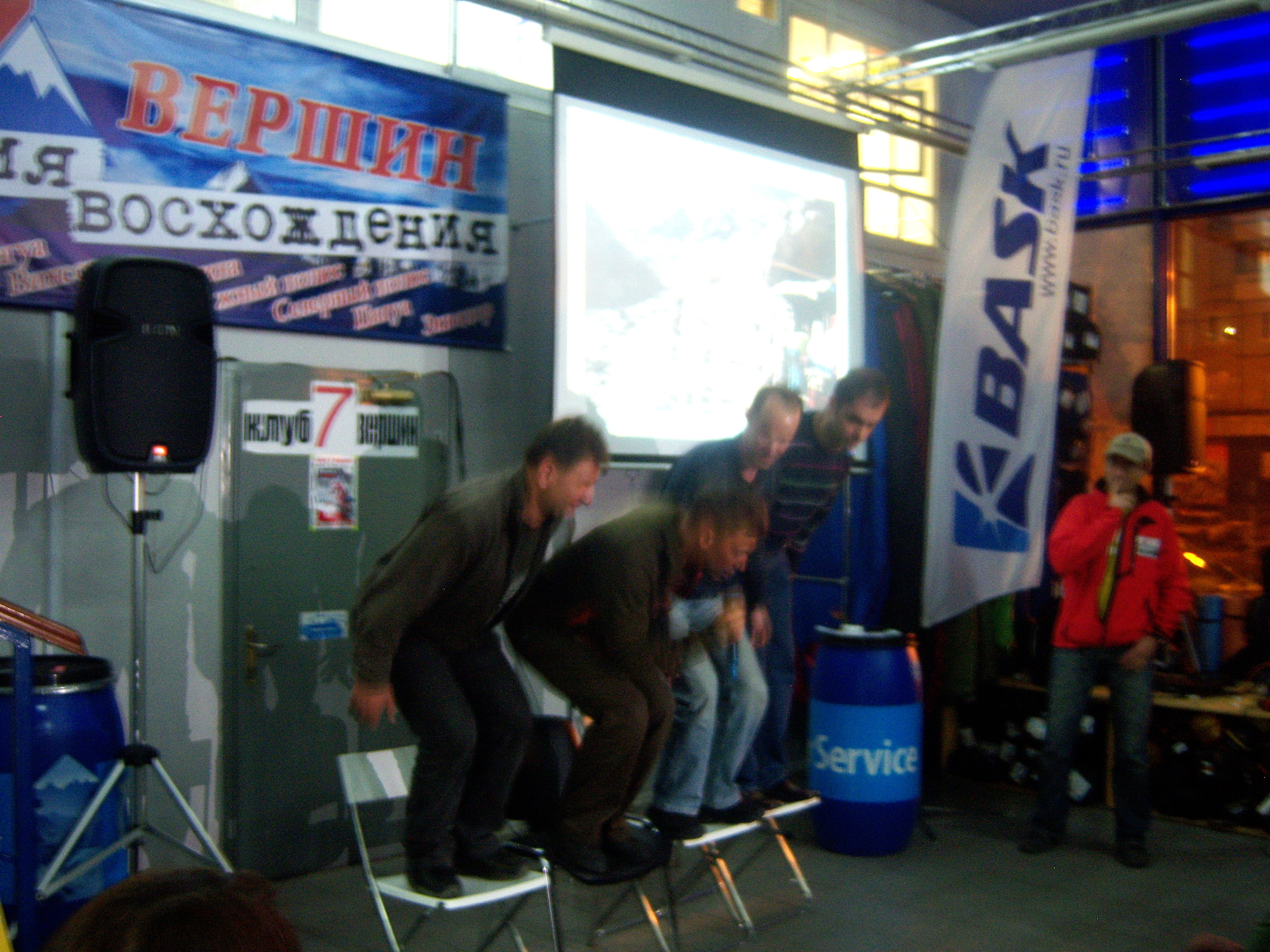
Valery Rozov showed two films and in the conclusion of the evening played the main prize - a certificate for a parachute jump in tendeme with Valery Rozov. This is a real auction. Three of the most deserving on the same evening jumped along with Valery Rozov. See photo. Do not think that we played out of people. Valery Rozov personally agreed with each of the winners of the joint jumping.
In the party we summed up the competition for the best story about your ascent to one of the SEVEN SUMMITS. The Winner Vadim Alferov from Voronezh personally come for the main prize - a certificate on any trip to the 7 Summits Club par 1000 USD!!!
Seeing this, the Everest Expedition 2010, leader Alexander Abramov, guides Nikolai Dmitrievich Cherny, Sergei Larin, Maxim Bogatyrev, Mount Everest, as well as Victor Bobok to the North Pole, and the other guides in Nepal, Tibet and other territories have turned bright and memorable. In June, we all hope to gather for final meeting.
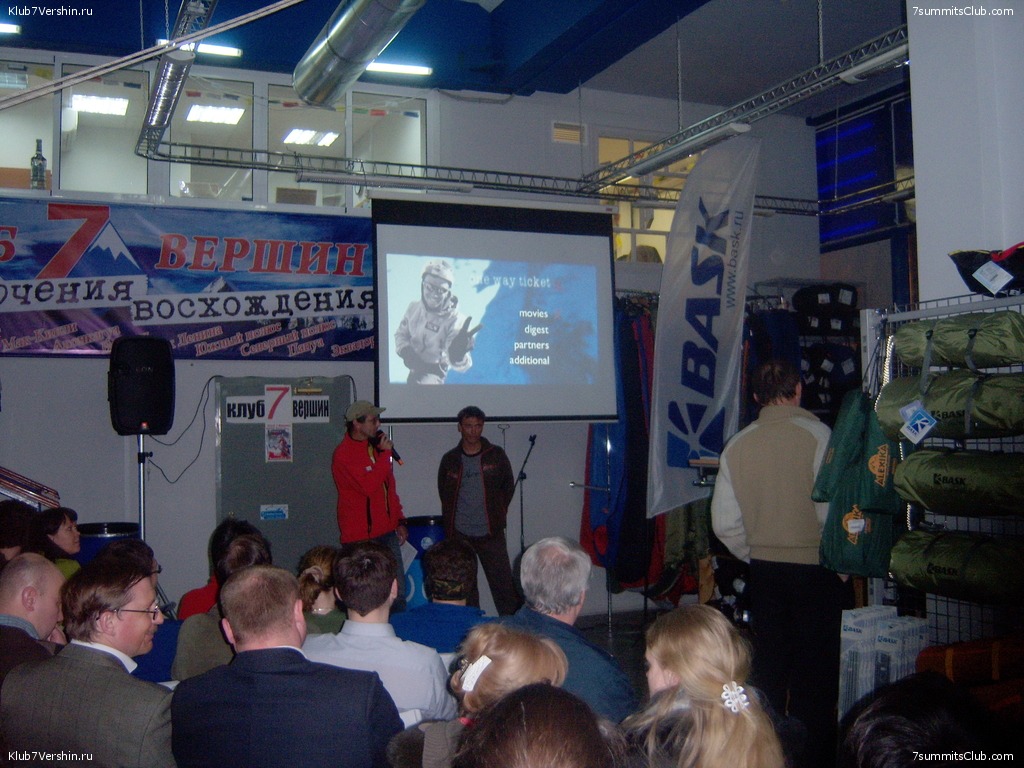

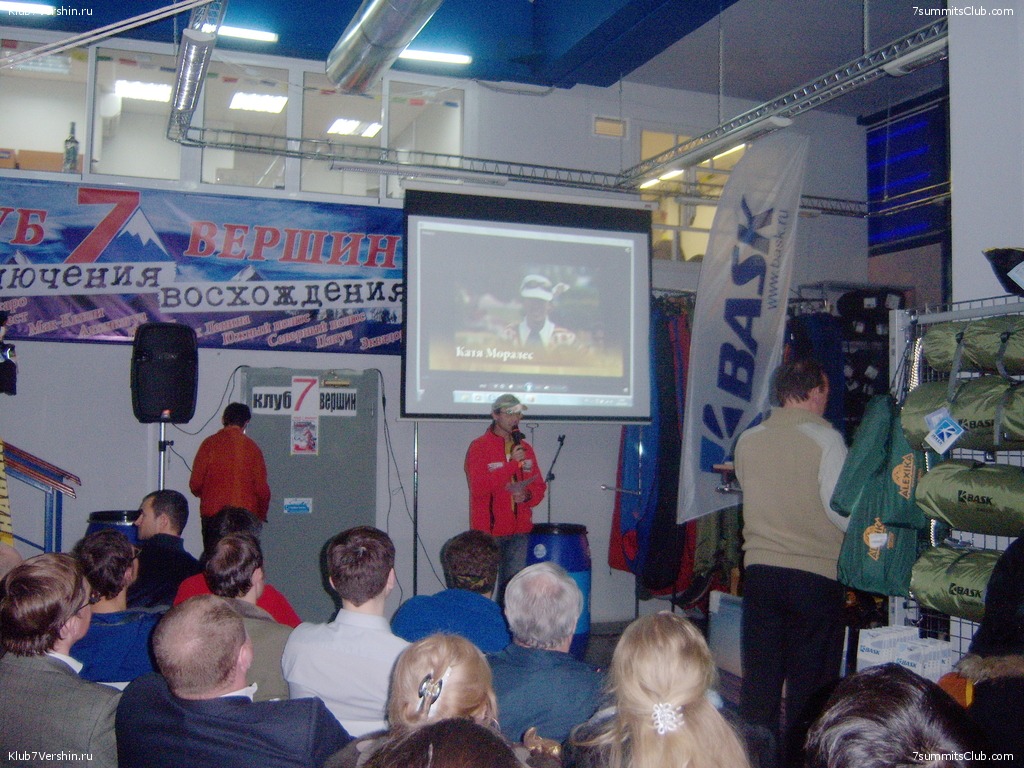
Expedition "Russia on the tops of the world" at the summit of Aconcagua
Aconcagua.
7th of March a group of mountaineers from the expedition "Russia on the tops of the world" at 1 p.m. local time, reached the summit of Aconcagua. According a preliminary information, the highest point was reached by 20 climbers. In ...
7th of March a group of mountaineers from the expedition "Russia on the tops of the world" at 1 p.m. local time, reached the summit of Aconcagua. According a preliminary information, the highest point was reached by 20 climbers. In the evening all climbers successfully descended to the camp Colera. Now, in the morning, the expedition began descent to the base camp at Plaza de Mulos. There climbers will celebrate two holidays at once: summit and 8 March.
…
“Russia at the tops of the world" expedition started at 24th of February, with logistic support of 7 Summits Club. The team consists of 25 climbers from North Ossetia plus a guide of 7 Summits Club Lubov Ivanova.
The idea of this campaign was born almost two years ago, its initiator famous Russia climber, chairman of the Federation of North Ossetia, Kazbek Khamitsaev. In 2008, the project began, first summit to climb was Mount Kilimanjaro. The next goal is South American highest peak - Aconcagua.
The 2010 is also scheduled to climb the summit of Mount Kosciuszko - the highest point of Australia. In 2011 Russia climbers going up on Mount McKinley in North America, in 2012 - on Mount Vinson in Antarctica. Next year Khamitsaev will climb North Face Mount Everest by a new route.
Finally, during the 2014 Olympics the team plans to climb Mount Elbrus with Olympic flame. From this climb it will be organized a teleconference with the Sochi.
The project is supported by the Government of the Republic of North Ossetia-Alania, Mountaineering Federation of Russia, Mountaineering Federation of the Republic of North Ossetia-Alania, the Alpine Club of the Republic of North Ossetia-Alania "Kazbek".
Project Partner - OAO MegaFon
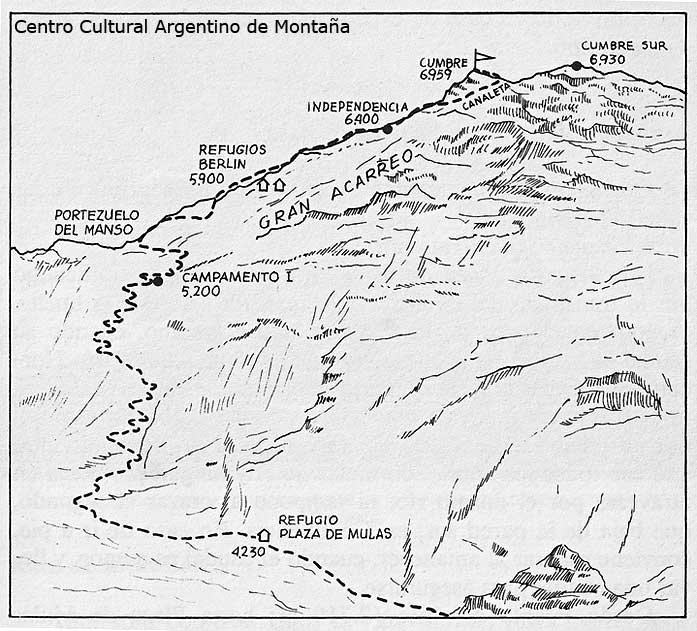
The team “Russia at the tops of the world" with Luba to finish acclimatization
Aconcagua.
According the information from Luba Ivanova a guide of Club "7 Summits", the first day of spring, the team “Russia at the tops of the world" has reached Plaza Canada (4850 m) . Here they were met by huge storm. Earlier, a few days in ...
According the information from Luba Ivanova a guide of Club "7 Summits", the first day of spring, the team “Russia at the tops of the world" has reached Plaza Canada (4850 m) . Here they were met by huge storm. Earlier, a few days in a row district Aconcagua was badly shaken, the epicenter of the catastrophic Chilean earthquake was located only 200 km. Officially, in region of the highest peaks in South America, the earthquake had a force of 7-8 points.
March, 2 the group started to climb Nido de Condores (5350 m), where they will overnight for acclimatization. By this the stage of acclimatization will be completed and begin preparations for the summit bid.
“Russia at the tops of the world" expedition started at 24th of February, with logistic support of 7 Summits Club. The team consists of 25 climbers from North Ossetia plus a guide of 7 Summits Club Lubov Ivanova.
The idea of this campaign was born almost two years ago, its initiator famous Russia climber, chairman of the Federation of North Ossetia, Kazbek Khamitsaev. In 2008, the project began, first summit to climb was Mount Kilimanjaro. The next goal is South American highest peak - Aconcagua.
The 2010 is also scheduled to climb the summit of Mount Kosciuszko - the highest point of Australia. In 2011 Russia climbers going up on Mount McKinley in North America, in 2012 - on Mount Vinson in Antarctica. Next year Khamitsaev will climb North Face Mount Everest by a new route.
Finally, during the 2014 Olympics the team plans to climb Mount Elbrus with Olympic flame. From this climb it will be organized a teleconference with the Sochi.
The project is supported by the Government of the Republic of North Ossetia-Alania, Mountaineering Federation of Russia, Mountaineering Federation of the Republic of North Ossetia-Alania, the Alpine Club of the Republic of North Ossetia-Alania "Kazbek".
Project Partner - OAO MegaFon
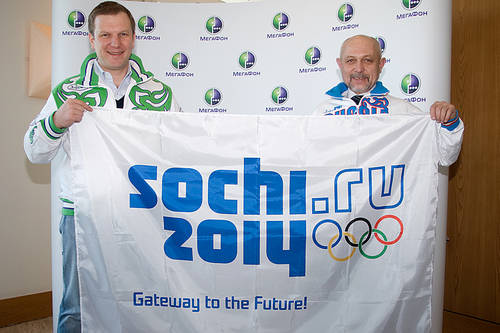
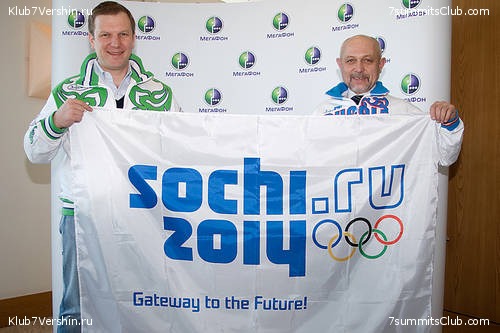
Sochi 2014 Ambassadors are a select group of sporting and cultural icons who help to promote Russia's first Winter Games and spread the Olympic values worldwide.
Kazbek Khamitsaev. "Climbers know that when conquering the summit, you suddenly acquire a second wind. We wish the Sochi Games organizers to always move forward - from peak to peak- and ultimately, to conquer the main summit and hold the best Olympic and Paralympic Games."
Expedition chief Kazbek Khamitsaev is very experienced climber. He was the leader of three expeditions to Mount Everest, twice climbed the highest peak of the world, making professional video shoot at the top. He also led four expeditions to Pamir and Tien Shan mountains, climbing the five 7,000m peaks: Lenin Peak (7134m), Korzhenevskaya Peak (7105m), Communism Peak, the highest peak of the USSR (7495m), Khan Tengri (7010m), and Pobeda Peak (7439m). So Kazbek ”Snow Leopard.”
Josu Feijoo climbed Aconcagua controlling their diabetes and finished his 7 summits challenge
Aconcagua.
The mountaineer form Vitoria (Basque, Spain) Josu Feijoo and teammate Jon Goikoetxea from a team of athletes with diabetes have managed to climb Mount Aconcagua - the highest mountain in South America. Josu has been climbed all times ...
- The mountaineer form Vitoria (Basque, Spain) Josu Feijoo and teammate Jon Goikoetxea from a team of athletes with diabetes have managed to climb Mount Aconcagua - the highest mountain in South America. Josu has been climbed all times controlling disease through 'Emminens Connect', a telemedicine system created by Roche 'Emminens Connect', which sent the message levels for mobile physicians in Spain. Josu became the third of diabetics to climb the highest peaks on all continents.
- Completion of this program a long time was postponed due of Fejoo's participation in the space program by Richard Branson. Last year he passed all tests in the U.S. astronaut training centers, but the flight is delayed. In April 2009, Josu chose the time and went to the "green continent", made an ascent of Mount Kosciuszko and Carstensz. On Aconcagua, he took with him another two diabetic climbers from other parts of Spain …
High on the Carstensz
- In 2006, Josu Feijoo climbed on the north side Everest and was on the summit on May 18, as the first diabetic in history. Two others famous diabetic Austrian Geri Winkler and American Will Cross climbed from the south. The Austrian, who came to the foot of the mountain on bike from the level of the Dead Sea (the lowest point of land on Earth) was on the top on May 20, and an American (father of six children), climbed Mount Everest on May 22. With this ascent Cross completed a program of "Seven Summits", Winkler did it two years later.
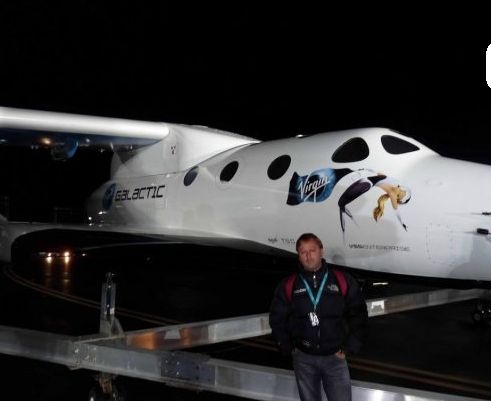
- Become the first astronaut among people living with diabetes - this is now the main objective of Josu. Basque is going to fly within a team of Virgin Galactic, the private space tourism project, which implements the famous billionaire Richard Branson. During the flight, he intends to use insulin, a new generation, which has a longer effect.
- With his spaceship

- Now Feyo is 43 and 19 years ago he was diagnosed with diabetes type-1. He never stops mountain climbing, but only in recent years, he managed to reach a new level. He managed to establish permanent cooperation with sponsors and become almost a professional traveler. In addition to the "seven summits" on account Fahey dozens difficult climb at home and in the Alps, independent trips to the North and South Poles, and much more. Josu married, wife's name is Tanya and their daughter grows up.

- "I have learnt how to exploit it, but not just for Josu Feijoo, more than anything I’ve done it for the whole group"
- www.irrika.net
- Published in : Enthusiast Written by Lorea Arakistain on 2009-04-06
- “Where there’s a will, there’s a way”. And as far as this mountaineer is concerned, there’s no doubt that there is. He will shortly be packing away his mountaineering boots and, wrapped up in an astronaut’s suit, will be heading into Space. If everything goes according to plan, he will be the very first diabetic astronaut. So far, he is the first diabetic to have reached the two Poles and Mount Everest.
- You’re going into space!
- When I was five and used to write to the Three Kings of the Orient, I used to put: “I want to be an astronaut”. And yes, I can say that Melchior, Caspar and Balthasar, and Santa Claus or Olentzero do exist. Because in a few months’ time my dream is going to come true and I’m going to be so proud to be able to take my country’s flag, the ikurriña [the red, white and green Basque flag], into space.
- Aren’t the eight thousand metre peaks close enough to the sky?
- Mountaineering is a way of life, I’m going to be a mountaineer all my life. Life goes on, you meet that challenge, you do the North and South Poles, you scale 8,000 metre peaks, Mount Everest... But age, the social commitments you have with respect to research… cause you to close some circles and open up others. And if you combine the fact of closing certain circles with your dream of becoming an astronaut, you get the right chemical combination to make this little reality come true.
- How did this proposal come about?
- 5 years ago when I was surfing the Internet, I saw that an American company was designing a spacecraft. I started sending e-mails to support the venture. And then to my surprise they sent me an e-mail thanking me for my encouragement and asking what they could do for me. I replied immediately saying: “I want to be an astronaut.” And they said: “You could try, only you’ll have to pay for the fuel.” And that was it.
- And who is going to pay for the fuel?
- A trip into space is terribly expensive, it costs thousands of millions. I spoke to the laboratories, to the companies that had been sponsoring my climbing projects. I have the support of some Basque companies that would love to see the ikurriña in Space, thanks to a few Basque politicians who spoke to them. These companies are not after the marketing, but are doing it to support the chronically ill. The impact that my trip is going to make as a chronically ill person is considerable. Nothing is going to be impossible any more. It will be complicated, but not impossible.
You’re going to conduct an experiment, and it won’t be the first one, will it?- We’re going to experiment with a new kind of insulin in which the hormone has been slowed down to a maximum. It isn’t about the hope of a cure but about improving quality of life. We’re also going to try out a new device for measuring glucose in the blood; it’s more modern and has a telemedicine system.
- An adventurer, How and since when?
- In the Basque Country being a mountaineer is easier than unwrapping a lollipop. But I don’t regard myself as an adventurer, although I do get itchy feet. I would never have thought that because I scale mountains that there would be companies that would want to acquire my image rights and that I could live off that. Although I’m in no doubt that this will soon be coming to an end.
- A diabetic can’t be a fire fighter but can be a mountaineer or go into space.
- There are people who have climbed with me and who cannot be forest rangers. It’s today’s Spanish legislation that imposes these barriers on us. I know that when many school kids find out I’ve reached the summit of Mount Everest, they say: “Why not?… I can do the same sport”.
- How has diabetes changed your life?
- It has transformed it. It started when I was 23. With your first wages you like having a night out, but all of a sudden an endocrinology specialist appears and tells you to forget everything you used to do and that you have to change all your habits. I was depressed for nine months; I had a really bad time. But then I realised that I didn’t want to live for diabetes.
- You say you are finding out how to exploit your diabetes.
- I can’t hide the fact that there are companies out there. I think I have learnt how to exploit it, but not just for Josu Feijoo, more than anything I’ve done it for the whole group.



The next success on Aconcagua
Aconcagua.
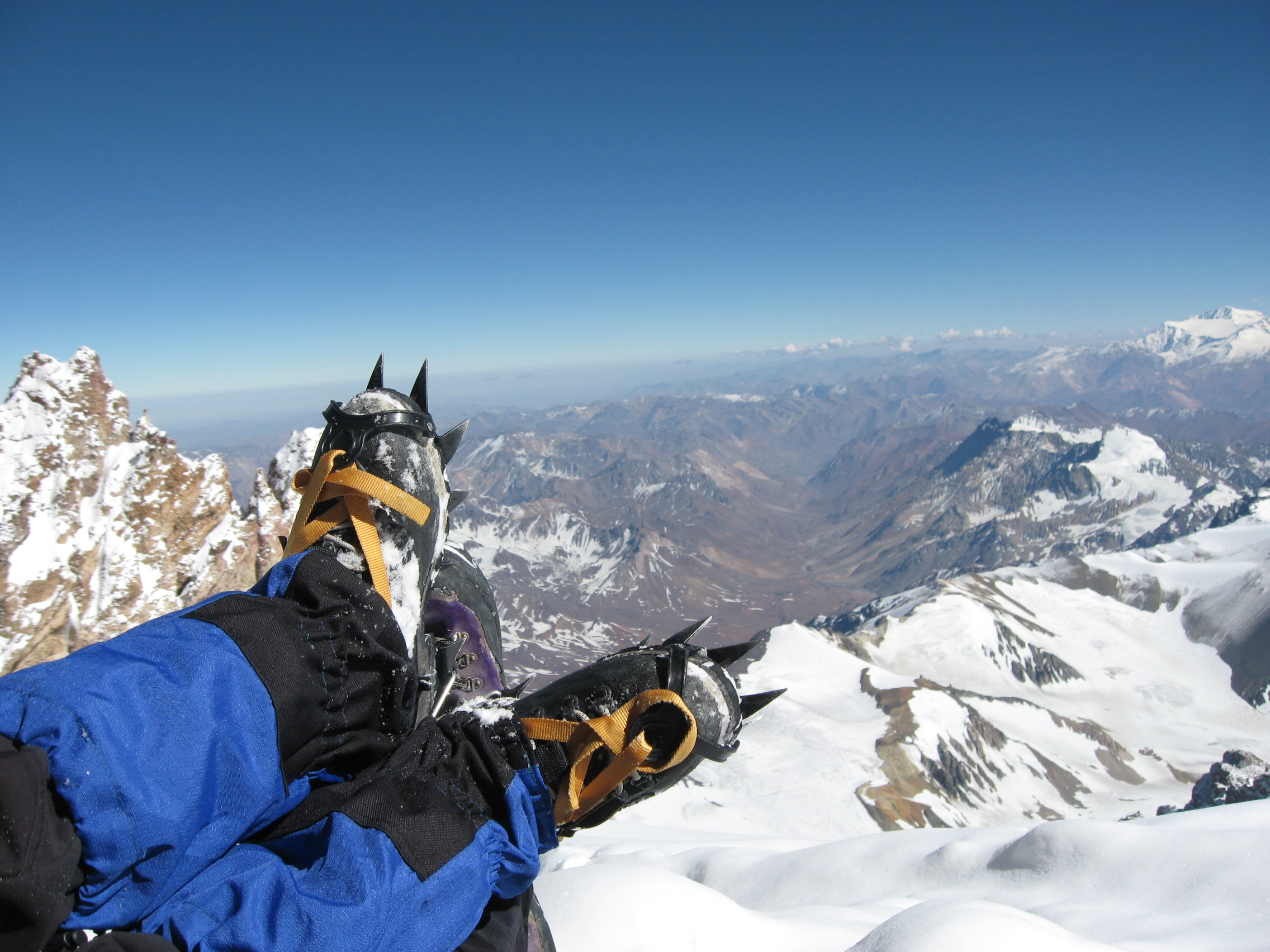
Today we received a message from our guide Victor Bobok from Aconcagua. Yesterday, 16 February, the group climbed the summit. The ascent was complicated by the fact that was started from the camp "Nido de Condores”. Everybody is very ...
- Today we received a message from our guide Victor Bobok from Aconcagua. Yesterday, 16 February, the group climbed the summit. The ascent was complicated by the fact that was started from the camp "Nido de Condores”.
- Everybody is very tired, but generally feels good.
- Here is a list of those who stood on the highest peak of South America:
- Victor Bobok - guide
- Oleg Vorobyev
- Valery Kurennoy
- Andrew Levin
- Anton Ostapenko
- Andrew Podolyan
- Tatiana Stukalova
- Alexei Sushkov
- Stanislav Shitkov
- Congratulations to all !
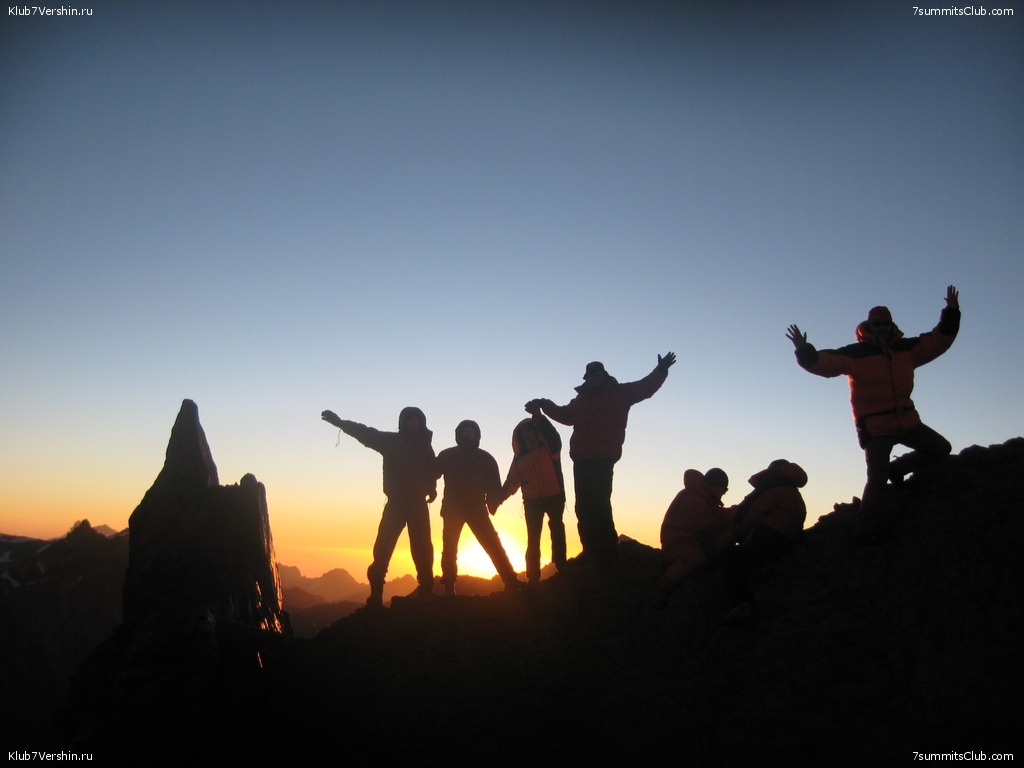
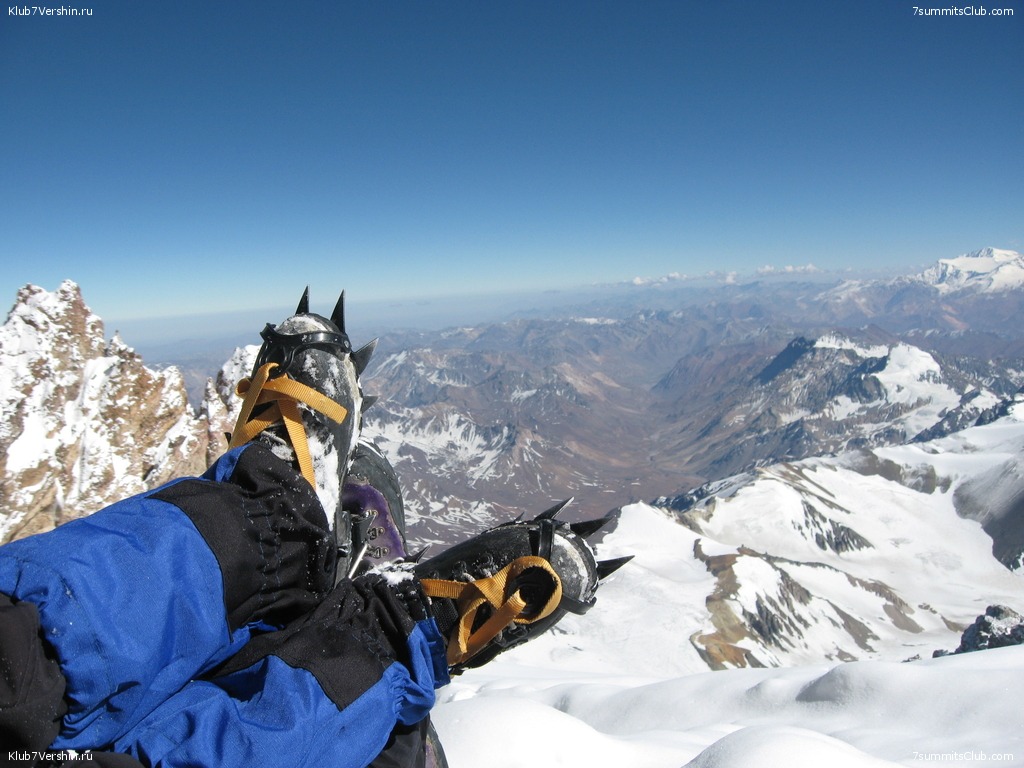
Campanini Foundation saves lives
Aconcagua.
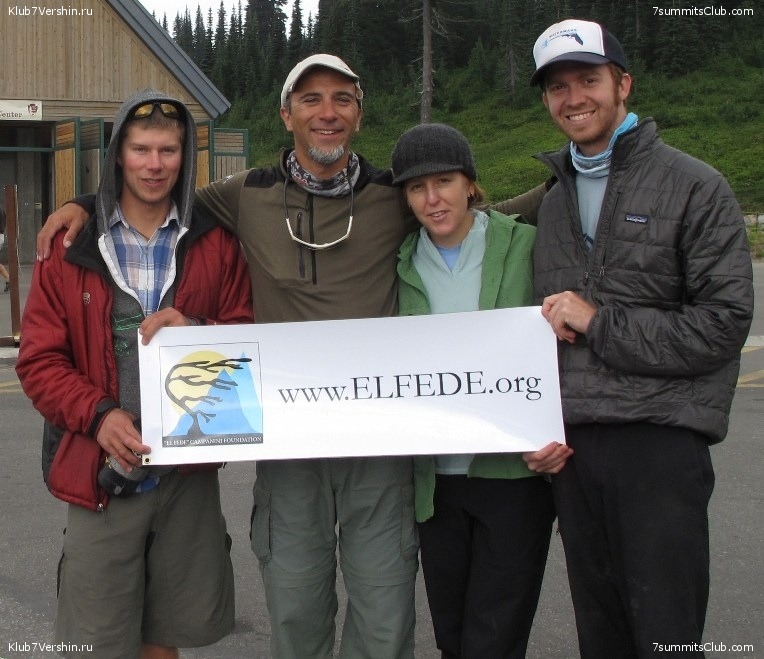
Federico Campanini lost his life on Aconcagua in January 2009. Created in memory of Federico, The “El Fede” Campanini Foundation is dedicated to providing information, guidance, training and financial assistance to support ...
Federico Campanini lost his life on Aconcagua in January 2009. Created in memory of Federico, The “El Fede” Campanini Foundation is dedicated to providing information, guidance, training and financial assistance to support ongoing efforts to improve mountain rescue on Aconcagua and in other commercial climbing areas.
- elfede.org
- Federico, or as he was fondly known, “El Fede,” Campanini was an Argentine climber and mountain guide whose passion for the mountains and for life was contagious. Federico found solace and purpose in the mountains and he loved sharing his knowledge and love of them with everyone who knew him; the lives of his family, friends, clients, and many others were changed forever by his presence.
- Mission Statement:
- The endeavor will not be easy, but it is possible through the support from those who share Federico’s love for the mountains.
-
Text by Amber Christiansen, widow of Federico
-
- Off to move mountains…it moved me
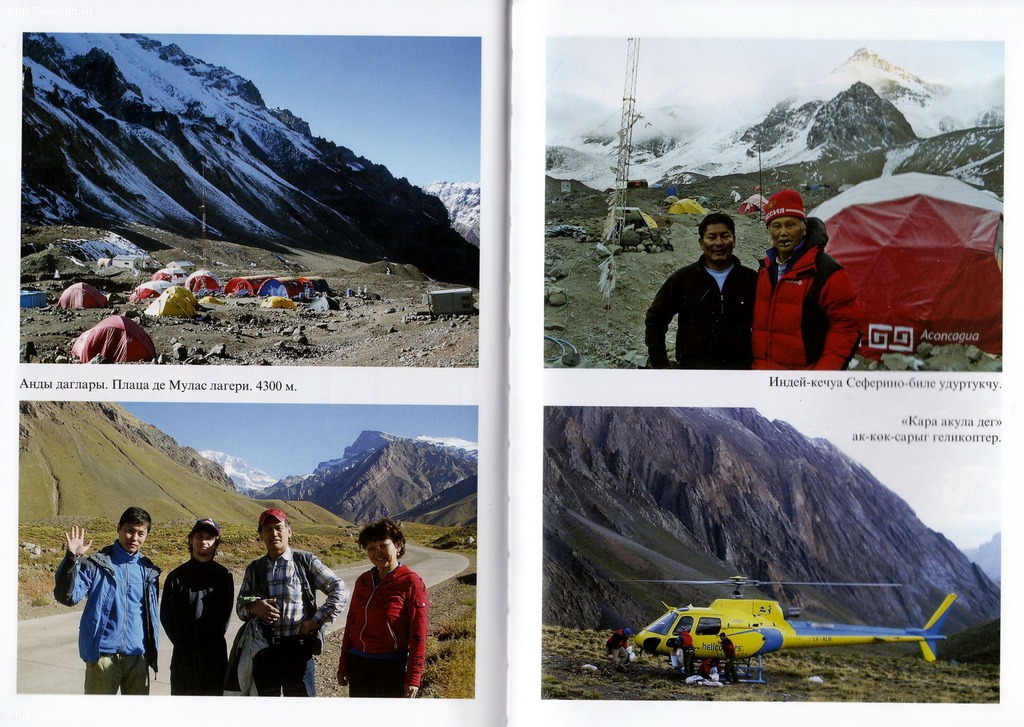
- I left for Aconcagua on Jan. 13 with the head park ranger of Aconcagua. On January 15 we arrived at Plaza de Mulas base camp (14,000 ft) and we stayed there for 4 days in order to acclimatize. It was quite an amazing time in which I talked to many people who participated in the rescue efforts of Fede and the Italians (more than 60 in total participated in some form, whether by melting snow or trying to save Fede's life). All were very moved and affected by the loss of Fede's life and I think my presence was a positive one, a reminder that something positive can come from a tragedy. We talked a lot and discussed ideas for the future and everyone learned how to use the equipment. Many, both locals and foreigners expressed interests to support rescue efforts. In addition, National Geographic was doing a documentary on Aconcagua and its search and rescue system. They interviewed me; hopefully this will also generate international interest, we shall see...
- In four days time, there were four separate rescue efforts. In each one, the equipment that the foundation donated was used.
- On January 19 we installed the first rescue cache at Nido de Condores (17,700 ft). That night, a Czech climber suffered from pulmonary edema and we used the oxygen from the cache.
- On January 20 we left at 7a.m. from Nido de Condores to Independencia (21,000ft.) Another group went to La Canaleta (22,000ft). After we installed the cache at Independencia we spent an hour and a half resting and talking about life. One hour later we received news that a woman collapsed at the summit of Aconcagua. The same group of individuals that had installed the rescue cache at La Canaleta helped the woman by using a litter and oxygen that they had put in the cache just one hour before. We had already started descending when we heard the call for help. We waited at Camp Berlin (about 19,000ft) for three hours to help them with the descent of the woman in the litter. By the time they arrived it was dark and ten of us (me being the only woman) took turns carrying the sled. It was a crazy time, and I kept focusing on the woman's eyes, to make sure she didn't close them. She was French and didn't speak any Spanish and very little English. She was scared and I tried to soothe her fears. When we got to Nido she was put on oxygen and then they descended her to Plaza de Mulas in a litter where she was evacuated the following day in a helicopter.
- My goal was to save one person's life with the rescue equipment and this occurred just one hour after they were installed.
- The next day a woman fell while descending and broke her leg. Again the litter was used as well as a trauma kit for stabilizing the break. The first aid kits that were stored at Nido de Condores were never stored, they were used every day, one incident after another.
- I cannot explain life, or the events that occur, or why, when Fede was struggling for his life this equipment wasn't there, but it is there now, it is there now.
- After this experience, and being there, and seeing the summit, I decided I needed to summit, to see what happened.
- On January 23 at 12:00p.m. I summited Aconcagua. It was a struggle, I felt nauseas, but I understood the efforts of so many individuals who tried to save Fede.
- Aconcagua is a community of people that share a love for the mountains, they take care of each other. Unfortunately they don't have the support of a government which should provide more resources.
- So, on January 25 I began my return to the entrance to Aconcagua Provincial park. I decided I wanted to walk, even though I was offered a ride in the helicopter. It was difficult to leave, this community that works together and saw me as a hero. I am not a hero, but I did love Fede and I do also, love the mountains. I have learned more about the accident, and it continues to break my heart, but life must continue, it must.
- T o understand death is to understand life.
- There is still a lot of work to do but something is moving.
- Please help support our cause to improve rescue efforts by sharing your thoughts and ideas in the forum or donating to our funds for rescue and training efforts.
- Please contact amber@elfede.org for more information or questions on how to donate.



Chad Kellogg: Solo New Route on Aconcagua South Face…
Aconcagua.
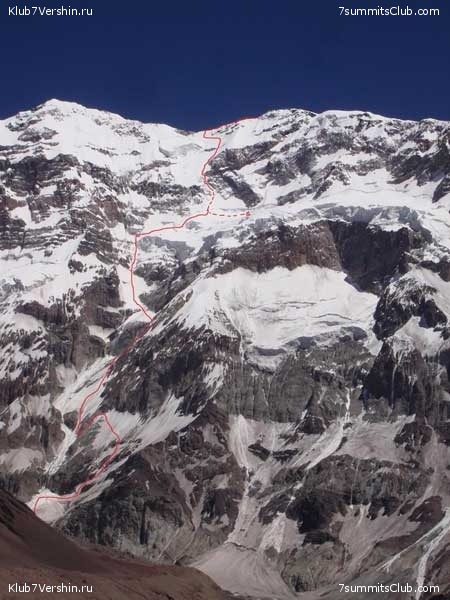
The line of Medicine Buddha (VI WI4 M4, 6,500'/1,980m of new ground) on the 3,000-meter south face of Aconcagua. Chad Kellogg joined the Messner Route and then the upper Argentinean Variation above the enormous serac band. American ...
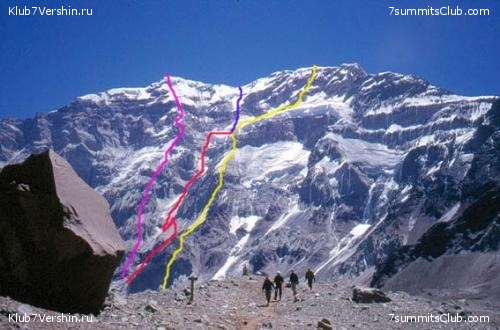
The line of Medicine Buddha (VI WI4 M4, 6,500'/1,980m of new ground) on the 3,000-meter south face of Aconcagua. Chad Kellogg joined the Messner Route and then the upper Argentinean Variation above the enormous serac band.
American Chad Kellogg has soloed a dangerous new line on the famed south face of Aconcagua (6,962 m).
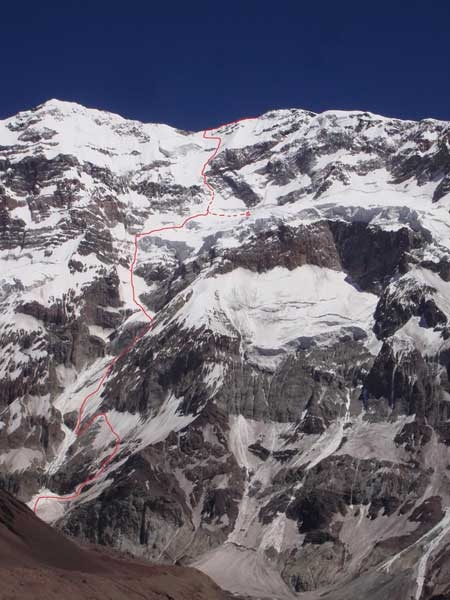
Red line - route of Kellog, blue - exit variant of Messner
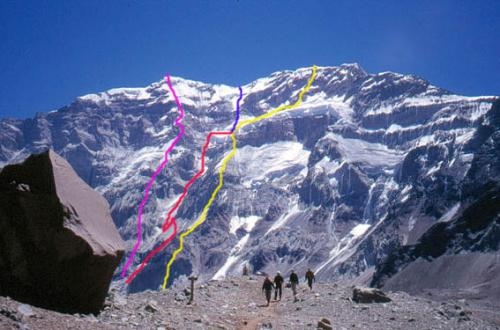
Kellogg traveled to Argentina with Rory Stark, aiming to acclimatize on the normal route on Aconcagua's north side and then attempt a line on the south face. Kellogg also wanted to try a one-day round trip on the normal route.
As planned, Kellogg summited via the normal route on December 17, but Stark was stricken with pneumonia high on the mountain. With the help of some fellow Americans, they descended all the way to base camp that day, but Stark remained severely ill and had to be helicoptered to town for treatment; he eventually returned to his home in Alaska and recovered.
On December 21, after repacking their gear and laying plans for a solo attempt on the south face, Kellogg hiked in to the base. A snowy winter and recent poor weather had plastered the face with ice and filled in crevasses, leaving it primed for a solo attempt. Kellogg scoped an unclimbed, avalanche-threatened line between the 1982 Slovenian Route to the left and the 1954 French Route (the original line on the face) on the right.
That afternoon, he hiked up to the foot of the face to check conditions. In an account of the climb that he wrote after returning, Kellogg said, “I was able to determine that the initial bergschrund was crossable and that the initial WI5+ pitch was flowing heavily with water and was best avoided. It seemed as though the majority of the climb was 65°-70° snow and ice, punctuated with vertical ice steps. The real difficulty lay in surviving the ice avalanches from the frequent serac falls. It was the summer solstice, after all, and the temps had really heated up. I walked away from the base, and minutes later a huge avalanche swept the route and avalanche cone where I had just been standing. I tried to steel my nerves against the possibility that I could be swept into that debris at the base from any point on the route within the next 6,500 vertical feet. I told myself that this was my route and in eight hours I would be on it.”
Kellogg hoped to complete the route in one long day, and he took minimal gear: a 30-meter, 8.1mm rope, about a dozen pieces of protection, and a stove and one fuel cartridge. He brought a few extra clothes and double boots for warmth, but no tent or sleeping bag. “I managed to rest for a few hours before I got up at 1:30 a.m.,” Kellogg wrote. “I centered myself with a meditation session before preparing for my departure.”
Leaving his camp at 4 a.m., Kellogg approached the face, crossing two large crevasses and the bergschrund. After climbing some snow slopes to bypass the steep, wet ice pitch at the base, he traversed left and then downclimbed and rappelled a couple of hundred feet to reach the central gully, where snow and ice patches allowed faster progress-a good thing because of the enormous serac bands that loomed thousands of feet overhead.
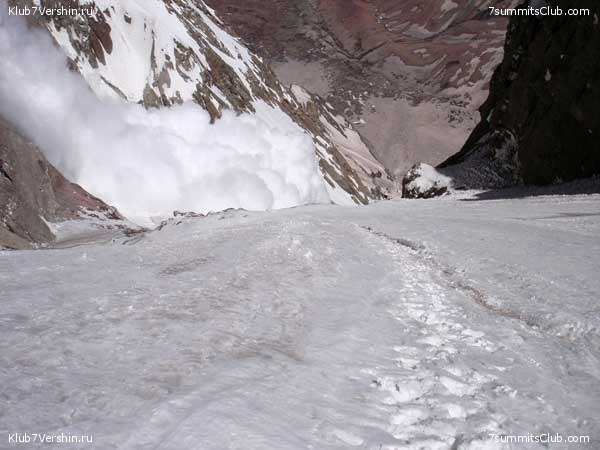
Several avalanches fell down the route as he climbed, but Kellogg escaped harm. Above a rock step and ice pitch, he reached a snow basin below the biggest serac band at ca. 6,000 meters. A very steep, short pitch of ice on the left side of the seracs gained the upper glacier. At this point Kellogg had climbed about 2,000 meters in 12 and a half hours and was on pace for a one-day ascent.
After a rest stop to brew a couple of liters of water, he traversed right to join the Messner Route (Reinhold Messner's 1974 solo direct variation to the French Route), still hoping to finish the climb that night. However, he soon encountered unconsolidated sugar snow and began wallowing. At 11 p.m., realizing he'd never make it to the top that night in such conditions, he downclimbed to the glacier and prepared for an open bivy.
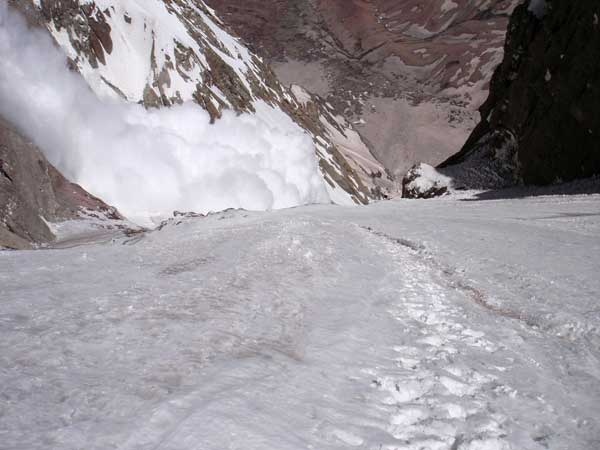
Serac avalanche sweeps the lower gully where Kellogg had ascended. Photo by Chad Kellogg
Kellogg shivered for seven hours in temperatures he estimated at 10°F (-12°C). When the sun hit him in the morning, he continued upward, finding some better snow along with vertical ice and mixed passages on the upper Messner Route. By early afternoon he was within 400 meters of the summit ridge, but the snow conditions were very poor again. He had run out of water in midmorning, and he had no more fuel to melt snow As he continued upward, Kellogg's hands got soaked in the wet snow, and by evening he realized he had frostbite on his right thumb. He radioed rangers and told them he was near the ridge, and they encouraged him to keep moving and said they'd meet him at the Nido de Cóndores ranger station (at 5,300 meters) as he descended.
At 10 p.m., Kellogg reached the high ridgeline between Aconcagua's two summits. He had been on the face for 42 hours. In high winds, he struggled down the rocky ridge crest until he reached the Canaleta scree gully and joined the normal route. At 1:30 a.m., he made it down to the ranger station, where he finally could relax and get some hot drinks.
Kellogg called his new line Medicine Buddha (VI WI4 M4).
A few days later, on December 29, after recovering from his effort and getting treatment for his frostbitten thumb, Kellogg began an attempt on a one-day climb: a 50-mile round trip with 14,000 feet (4,275m) of elevation gain. He ran and climbed as far as Berlin Camp at 5,950 meters in 9 hours 15 minutes, but there he discovered that someone had broken into his gear cache and stolen the boots and equipment he needed for the summit. The speed attempt was over.
Dates of New Route Ascent: December 22-24, 2009
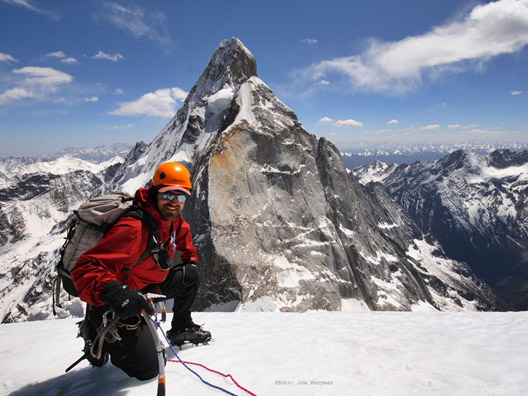



Sources: Chad Kellogg, American Alpine Journal
New seven Summits Club's expedition to Aconcagua.
Aconcagua.
Feb. 1. Today started new expedition of 7 Summits Club to the highest point of South America – mount Aconcagua. It is the fifth expedition in our Club to Aconcagua in this season. All previous expeditions were very successful. More ...
Feb. 1. Today started new expedition of 7 Summits Club to the highest point of South America – mount Aconcagua. It is the fifth expedition in our Club to Aconcagua in this season. All previous expeditions were very successful. More than 30 people reached Aconcagua summit with our Club in this season.
Good luck and good weather!