Asia - Page 105
9-year-old to climb Mount Everest and more news
Everest.
(CNN) -- This year a 13-year-old from California stunned the world when he became the youngest person to summit Mount Everest. Now a 9-year-old Nepalese boy says he can do it, too. Or at least that's what the child's father is reportedly ...
(CNN) -- This year a 13-year-old from California stunned the world when he became the youngest person to summit Mount Everest. Now a 9-year-old Nepalese boy says he can do it, too. Or at least that's what the child's father is reportedly promising.
Sherpa Pemba Dorje, who holds the world record for the fastest Everest ascent (8 hours, 10 minutes), recently boasted that his grade-schooler will try to conquer the globe's tallest mountain in 2011.
To illustrate his seriousness, Dorje and his son Tseten last week climbed Mount Ramdung, a 19,440-foot peak in the Dolakha region of Nepal, according to the Himalayan Times daily and the Indo-Asian News Service. Dorje told reporters it was a practice run for Everest, which is more than 29,000 feet.
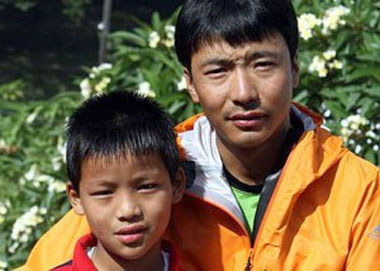
The notion of another baby-faced adventurer -- backed by an ambitious parent --sailing the widest seas or climbing the tallest mountain unearths a familiar question: Does inherently dangerous record-setting have an age limit?
"Little children do not belong on big mountains," said Jiban Ghimire, a Nepali renown for leading multiple expeditions on Everest. Ghimire's Shangri-La Treks & Expeditions, a go-to climbing assistance company, has employed Dorje as a guide. "I know Pemba Dorje, and I know he's said he wants his child to do this, that his son is capable of it.
"I would not want to discover, on that mountain, that the boy is not capable," Ghimire said. "I feel that you ask for something bad with this."
The obvious objections to allowing a child to climb Everest, or any major mountain, have to do with the physical toll it could take on his or her body. While there's no conclusive research that an adolescent is more susceptible to developing potentially fatal altitude sickness, anecdotes of mental and physical woe abound.
Past Everest climbers have experienced motor-skill dysfunction, sleep troubles, language disassociation and other problems that may be related to depriving the brain of oxygen while climbing, experts say.
Alan Arnette, a Colorado-based climber, has been on 20 expeditions from Tibet to Argentina. He most recently climbed 27,500 feet up Everest.
"Nobody doubts how talented Sherpa Pemba is," Arnette said. "Any Westerner would be smart to trust their life with him on the mountain. But that's any adult."
"When you get up there, it's not like you're gasping for air, you feel like you want to sit down and sleep forever -- that's altitude sickness," he said. "You have to be aware of what your body is doing and act accordingly. That's an adult's experience. Who knows what would happen to a developing child."
Besides, Arnette surmises that the odds of the boy making it past base camp are "just about zero."
The China Tibet Mountaineering Association, which regulates expeditions in Tibet, issued new climbing rules this year that ban anyone younger than 18 from climbing the Tibet side of Everest. A climber must be 16 to attempt Everest from the Nepali side. Penalties for breaking the rules are stiff, ranging from high fines to prison.
Arnette points out that every expedition must have a permit, which can cost tens of thousands of dollars. It's relatively easy for Everest authorities to catch someone trying to climb illegally, he said. Permits must be shown to officials when entering the park, and liaison officers from the Nepal Ministry of Tourism are assigned to each expedition group to help in case something goes wrong, and to ensure groups aren't leaving behind garbage.
In Dorje's case, everyone on the mountain knows who he is. He's clearly drumming up publicity for the climb. So why? Is it money? Arnette doesn't think so.
"No company or sponsor is going to get behind this. There's too much risk," he said. "My best guess is that he's motivated by national pride."
In May American Jordan Romero, 13, became the youngest person to summit Everest.
"I think all the Everest records should be held by Nepalese people," Dorje told London's Daily Mail.
Jordan received worldwide press for his feat, most of it glowing, and he encouraged younger kids to follow in his bootsteps. "Age is not a matter," Jordan told reporters in Kathmandu a day after he returned from his climb, which took 10 months and 10 days. "My body did cope with the altitude very well."
The teenager broke a record few thought possible.
"The American boy is famous. When many people think of Everest, they say his name," Ghimire said. "But a mountain doesn't care who you are."
*************************************************************************
Adventurer Chessell hangs up his boots
Adelaide adventurer Duncan Chessell, a three-time conqueror of the world's highest mountain, has hung up his climbing boots and is planning to go prospecting for gold and uranium.
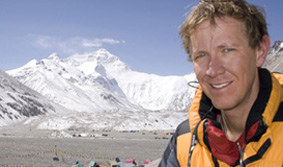
Chessell has joined newly formed company Endeavour Discoveries as its managing director and will take a break from leading expeditions to such places as the Himalayas or Antarctica for a few years.
"I have faced many challenges and overcome almost all of them by working with extraordinary teams of people on seven continents and have enjoyed almost every minute of it," Chessell said in an email to his clients and supporters on Monday.
"I have now reached a stage where I am over living from backpacks though.
"So thanks for coming along for the ride, sail, paddle, walk, climb - it has been simply awesome."
In May this year Chessell became the first Australian to reach the summit of Mt Everest three times in an expedition hampered in its final push by heavy snowfalls.
His triumph followed his two previous trips to the top of the world in 2001 and 2007.
Chessell has sold his Chessell Adventures company to friend and sales and office manager Katie Sarah. Sarah was part of the group that reached the Everest summit this year.
As the boss of Endeavour Discoveries Ltd, he plans to take the company to a public float in the next 12 to 18 months. "We are aiming to discover gold and uranium deposits in South Australia and the Northern Territory," he said.
**************************************************************************
Bad Weather Strands Thousands near Mt. Everest
Flights are still grounded at the air strip closest to Mt. Everest, stranding around 2,000 foreign tourists, including some Americans, in the small town of Lukla in eastern Nepal.
"Again the weather was very bad today," wrote Phurba Gyeljen Sherpa, proprietor The Irish Pub and Internet Caf?. "Very few airplanes were able to go out and the Americans here, and other nationalities, have grown weary and frustrated."
The military stepped in and posted flyers at the airport telling people not to pay more than $350 for private helicopter companies.
"Then they flew in large MI-17 military transport helicopters, cable of carrying 24 people each," continued Sherpa.
The military chose who would fly out first by who was stranded there the longest, instead of those willing to pay the most money.
Since there was only a brief period of good weather, the military quickly ferried the stranded people to a nearby airstrip in Ramechhap, where the weather was more stable.
When the weather destabilized, the military returned to Ramechhap and tourists to Kathmandu.
Slightly over 75 percent of westerners were evacuated.
******************************************************************
Will Wi-Fi ruin Mount Everest?
Broadband arrives on the world's tallest mountain. But having hiked it, I worry the magic will vanish
By Jeff Greenwald
When I began my career as a travel journalist in the 1980s, there was lots of talk about "remoteness." This was what many travelers were looking for: places so hard to get to, and so different from the world we knew, that their very existence seemed almost miraculous.
Today, the value has shifted. What we look for now is connectedness: the opportunity to check our e-mail, upload video clips and chat on Skype -- even if we happen to be on the Khumbu Icefall, 18,000 feet high in the Nepal Himalaya.
Last week, a network of eight 3G base stations began operating along the route to Mount Everest, in Sagarmatha National Park. They were installed by Ncell, a Nepali telecom firm. The news didn't surprise me. But I felt that, irreversibly, another blow had been struck against magic.

Access to the Internet is starting to seem like a human right, so let me offer a disclaimer. There is no rational downside to the arrival of broadband on the flanks of Everest. I'm not a Luddite, and would never suggest that developing nations should be denied, for any reason, the global access that technology can provide. This 3G network will undoubtedly save lives -- not only by providing weather information and support to Everest climbers and trekkers, but as an alert system for the nearby villages threatened by flash floods from Glacial Lake Overflow (GLOF), another peril caused by global warming.
It's a good thing. So why did the news make me feel like Robert Conway in "Lost Horizon," looking back on a land to which I can never return?
During my earliest visit to Nepal in 1979, phoning home even from Kathmandu was an adventure. I'd bike to the Telecommunications Office at 2 a.m. (mid-afternoon in New York), fill out a form, and wait hours for my trunk call to go through. The costly result was often a busy signal -- or a barely audible connection. The most reliable means of communication was "snail mail": a metaphor that, with three weeks of lag time between a letter and its response, seemed literally true.
Even this much contact was a marvel, compared to the situation in the mountains. When I first trekked the Everest route, in October 1983, it felt as though I'd entered a world completely detached from the familiar. After a harrowing flight to the tiny airstrip at Lukla, the 10-day hike to Base Camp (with an elevation gain of more than 8,000 vertical feet) began. Immersion in the Sherpa Buddhist lifestyle was inescapable, and transformative. Phone calls were impossible. Even writing a postcard was like putting a message in a bottle, and tossing it out to sea.
None of this seemed like an inconvenience. Though there were bouts of homesickness, and the occasional longing for new music and old friends, it was exhilarating to have entered such an isolated realm. This, actually, was the point. Travelers embarked on our journeys to Everest or the Annapurnas aware that it would be a full-body experience -- an equation that included our brains.
As a result, trekking in the Himalaya never felt like sightseeing. It was a commitment to the here and now, demanding full-time engagement with both Nepalis and fellow travelers. There were infinite opportunities to forge new friendships, experience Sherpa Buddhist culture, or enjoy exquisite solitude. By day, you could walk alone or with companions; at night, the lodges flickered with candles and butter lamps. Out came the maps, backgammon sets and tattered journals. Tales of avalanches and Yeti sightings were shared, along with cups of the dizzying local rakshi.
During my most recent trek to Everest region in 2008, it was clear that the area was changing. Though the mountains looked the same, they felt less like a world apart. For one thing, it was a lot more crowded; an estimated 15,000 trekkers shared the narrow trails. Cellphones were already in use between the main villages, and the isolating aspects of technology were taking hold. Sherpa guides and sinewy porters marched up the steep mountain grades with telltale white headphone cords snaking beneath their parka collars, lost in the private soundtracks of their MP3 files.
Getting online was a different story. There were only a handful of cybercafes along the trekking route -- the highest of which was at Everest Base Camp itself, at 17,500 feet -- with Internet access via satellite. Connections were sluggish; it often took Gmail more than five minutes to load. Sitting in a cozy inn, immersed in conversation, was far more seductive than surfing the Web.
The arrival of 3G will change all that -- and not just how quickly trekkers can upload their photos to Flickr, keep tabs on their investments, or stream the latest episode of "Mad Men." Wireless broadband, barely imaginable even 25 years ago, will change the way future travelers and locals interact in the world's highest mountains.
For the Sherpas of Sagarmatha, of course, it may well seem that one kind of magic has simply been traded for another. Broadband on Everest! What next? If the Yeti buys an iPad, he might even decide to "friend" Bigfoot on Facebook.
For the rest of us, this constant connectedness may have a bittersweet aftertaste. My recent trek into the Himalaya was a reminder of the pleasures of remoteness. It was a joy to escape from the hamster wheel of distractions, and immerse myself in the expanded moment of real time. Because being connected -- really connected, with the place you're in and the people you're with -- requires disconnecting, at least temporarily, from everywhere else.
We are far past the time when we can expect to a find a Shangri-la, anywhere, beyond the reach of the Internet. But as the world races toward connectivity, travelers might stop to consider why we travel in the first place, and which connections we really want to make.
Autumn 2010, summary from Ang Tsering and Explorerweb
Nepal Expeditions - Autumn 2010 (Government Peaks): The following is the detail of the permits issued to expedition teams for 8000m Peaks by the Ministry of Tourism and Civil Aviation in this Autumn Season 2010: 2 Teams of 1 member each on ...
Nepal Expeditions - Autumn 2010 (Government Peaks):
The following is the detail of the permits issued to expedition teams for 8000m Peaks by the Ministry of Tourism and Civil Aviation in this Autumn Season 2010:
2 Teams of 1 member each on Mt. Everest (Nepal Side)
2 Teams with a total 6 members on Mt. Lhotse
8 Teams with a total of 86 members on Mt. Manaslu
2 teams with total of 9 members Mt. Dhaulagiri from Nepal Himalayas
The above figures do not include the number of high altitude Sherpa (HAS) climbers.
Tibet Expeditions - Autumn 2010:
The following are the teams permitted on 8000m Peaks in Tibet:
2 Teams with a total of 12 climbers on Mt. Everest (including HAS)
25 Teams with a total of 340 climbers on Mt. Cho-oyu (including HAS)
3 Teams with a total of 45 climbers on Mt. Shishapangma(including HAS)
Death and Casualties:
Mt. Dhaulagiri (8167m):
An avalanche on Mt. Dhaulagiri killed three Japanese climbers, Osumu Tanabe(49 yrs),Toshio Yamamoto(36 yrs) and Daisuke Honda(32 yrs) and a Nepalese Guide Pasang Geylu Sherpa on 28th September.
Mt. Cho-Oyu (8201m):
The leader of the Cho-Oyu South West Face Expedition 2010, Walter Nones(39 yrs) of Italy had a fatal fall on 3rd October and died while climbing Mt. Cho-Oyu from South West Face New Route.
Mt. Manaslu (8163m) Base Camp:
Mr. Nobuaki Kuwabara(61 yrs) of Japan diet at the Base Camp of Manaslu on 24 September 2010. He was member of "Adventure Guides Mt. Manaslu Exp.2010" under the Leadership of Mr. Kenji Kondo of Japan.
We pray that may all the departed souls rest in peace and express our condolence to their family members and friends.
UIAA General Assembly Highlight:
The UIAA General Assembly which was held from 6th-9th October in Bormio was very fruitful. The outcome of the assembly is beneficial to all the members of UIAA. It focused on the necessity of the Expedition Commission to be re-activated. On the sidelines of the 2010 UIAA General Assembly, leading members of the global climbing community discussed the concerns of climbers and challenges of undertaking expeditions to high and remote mountain ranges.
The next general assembly of UIAA will be held on 5th to 8th October 2011 and the general assembly of UAAA will be held on 9th October 2011. Both the events will be hosted by Nepal in Kathmandu. Since the same year Nepal is celebrating Nepal Tourism Year 2011, I hope that both the events will be instrumental in promoting Nepal Tourism Year 2011 to make it a great success, as well as bringing many benefits to the mountaineering community.
Summit of Manaslu

Explorerweb
October 15 at 12:30 PM Eric Larsen plus Sherpas Dawa Gylatzen, Tshering (Chhering) Dorje, Pasang Temba and Dawa Tenzing bagged the first Everest fall season summit in four years. The Terramar sponsored expedition concluded Larsen’s quest to reach the “Three Poles” in record time.
Serial Everest summiteer lost on Baruntse The loss of Chhewang Nima Sherpa put a sad end to the climbing autumn season, wrapped up in a special report by Ang Tshering Sherpa. 19x Everest summiter Chhewang Nima Sherpa was caught in an avalanche while fixing ropes on Baruntse upper sections.
Marty Schmidt’s “shortest Himalaya expedition ever” Marty cut his solo 4-day Lhotse attempt short in order to guide a client on Ama Dablam.
Jordises out of Lhotse Spanish “K2 pirates” Corominas and Tosas finally threw in the towel on Lhotse, due to dangerous conditions.
Shisha Pangma South Koreans Chang-Ho Kim, 41, and Sung-Ho Suh summited Shisha Pangma at 2:15PM on October 14, after climbing the British route on the peak’s south side. Chang-Ho Kim claims Shisha as his twelfth 8000er without supplementary O2; Sung-Ho Kim his tenth.
Cho Oyu summit mysteries German Ralf Arnold told ExplorersWeb he was the first Cho Oyu summiteer of the season, topping out October 1, 2010 at 10:30AM in a 15 hours roundtrip from C2. An October 7 Cho Oyu summit claimed by Argentinean Adrian Sanchez was questioned after the alleged summit picture turned out shot in C1 by expedition mate Marcelo Hernandez.
Dhaulagiri Search parties found the body of Daisuke Honda, one of the four climbers swept by an avalanche, buried in snow at about 5,000 meters on Dhaula.
Manaslu Together with a Japanese climber and his two Sherpas, Mexican couple Badía Bonilla and Mauricio López reached Manaslu summit sans O2 at 2:40PM, local time on October 1, some time after the HiMex and Carlos Pauner’s groups. “We were the last to summit that day,” Badia debriefed back in Kathmandu.
Blind Everest summiteer Erik Weihenmayer led a team of war-battered soldiers to the top of the 20,075-foot Lobuche on October 13.
Putha Hiunchuli (7,246m) was topped out on October 8 by Dutch Dick Valk, Kaji Sherpa and expedition leader Paul Boslooper.

303 photos from the fabulous Nepal
Everest BC (Nepal).
Group led by Viktor Bobok: Dmitri Alexeev, Konstantin Ananin, Maria Vanifatova, Andrew Galaev, Ksenia Smirnova and Julia Smirnova - went the route of the republic Nepal, visiting the valley of Khumbu, reached Everest base camp and ...
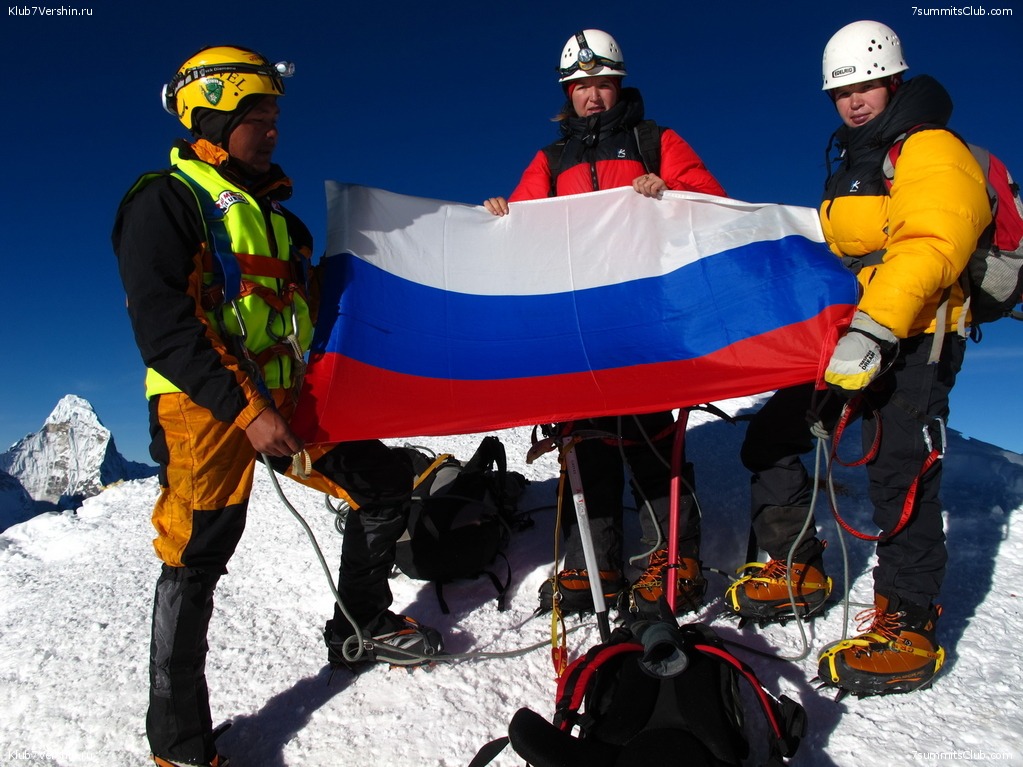
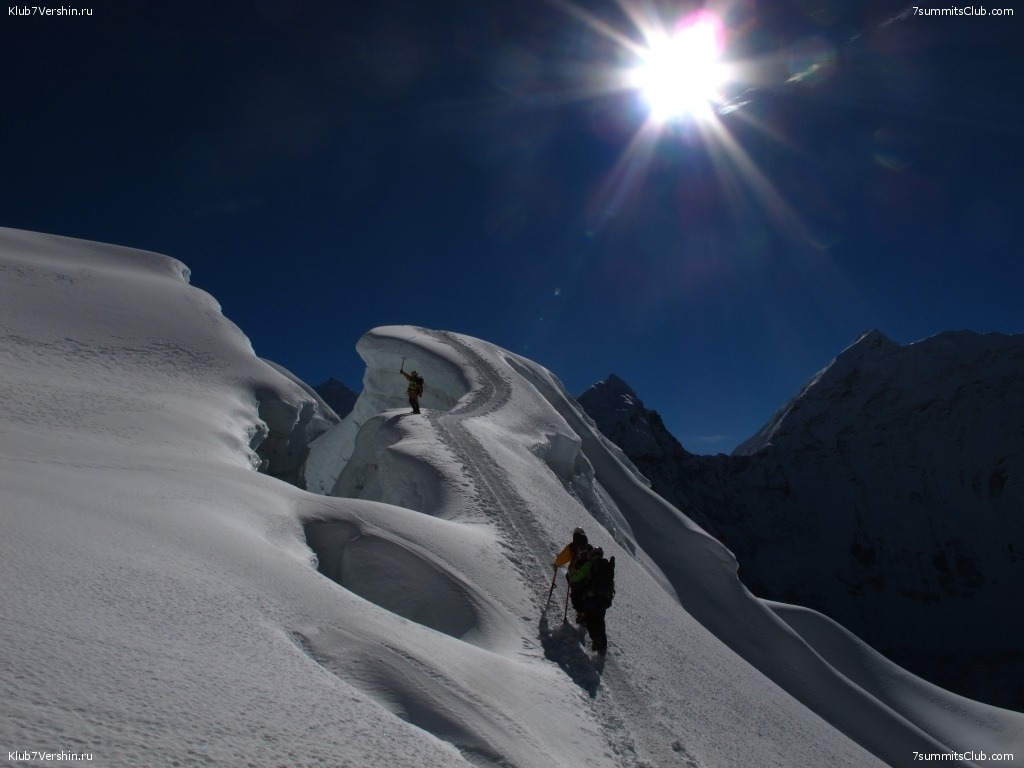
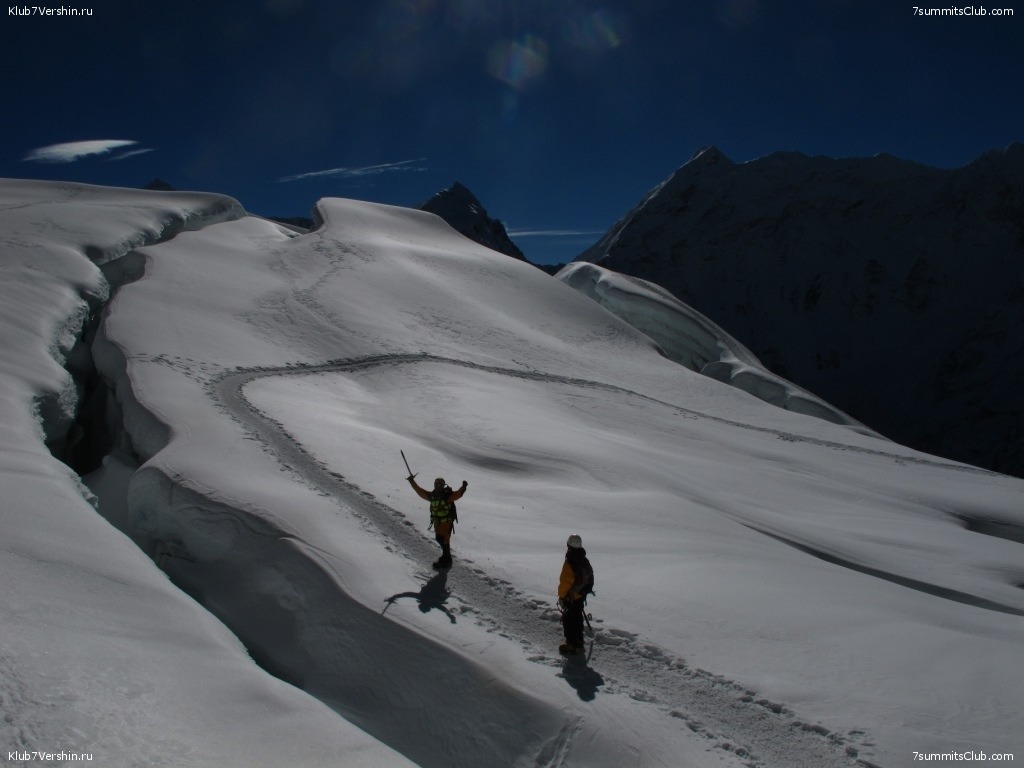
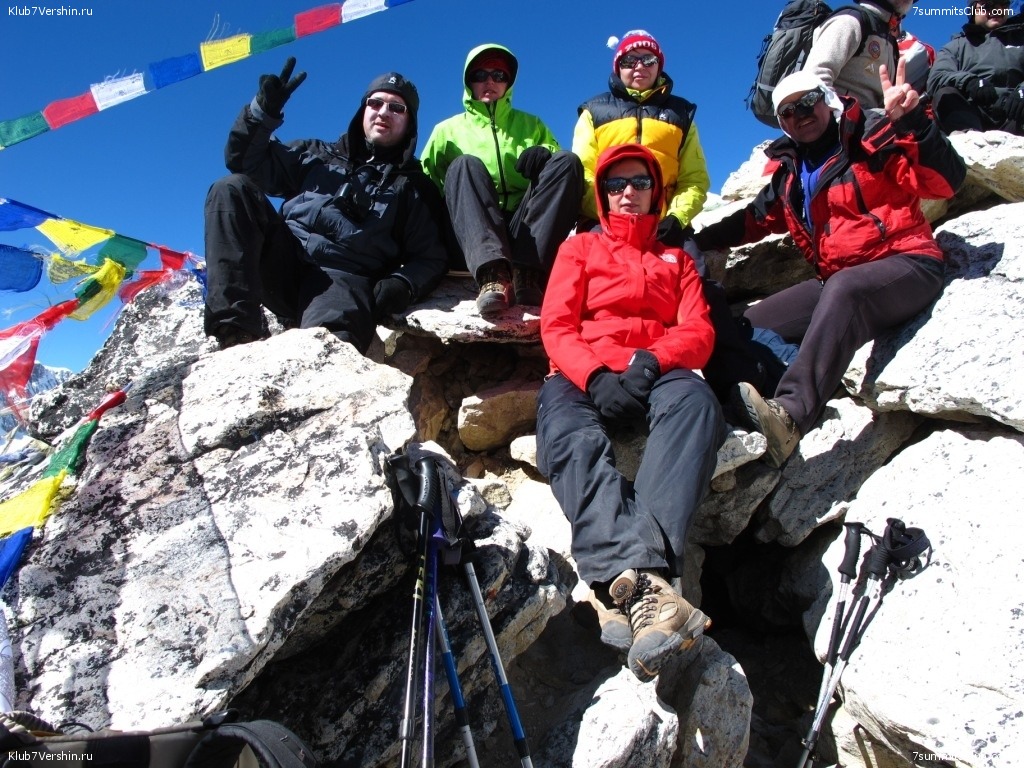
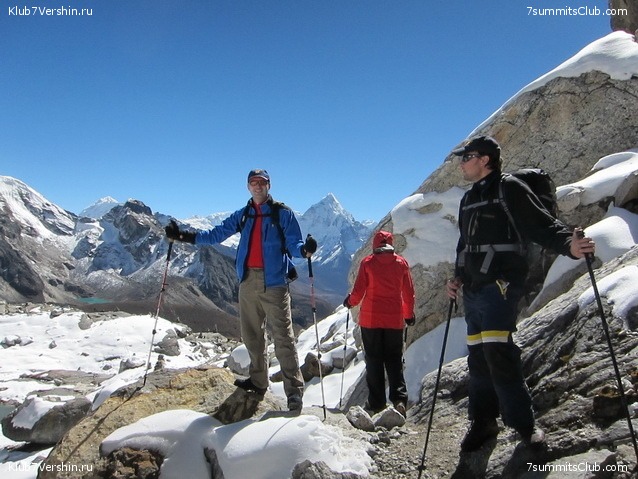
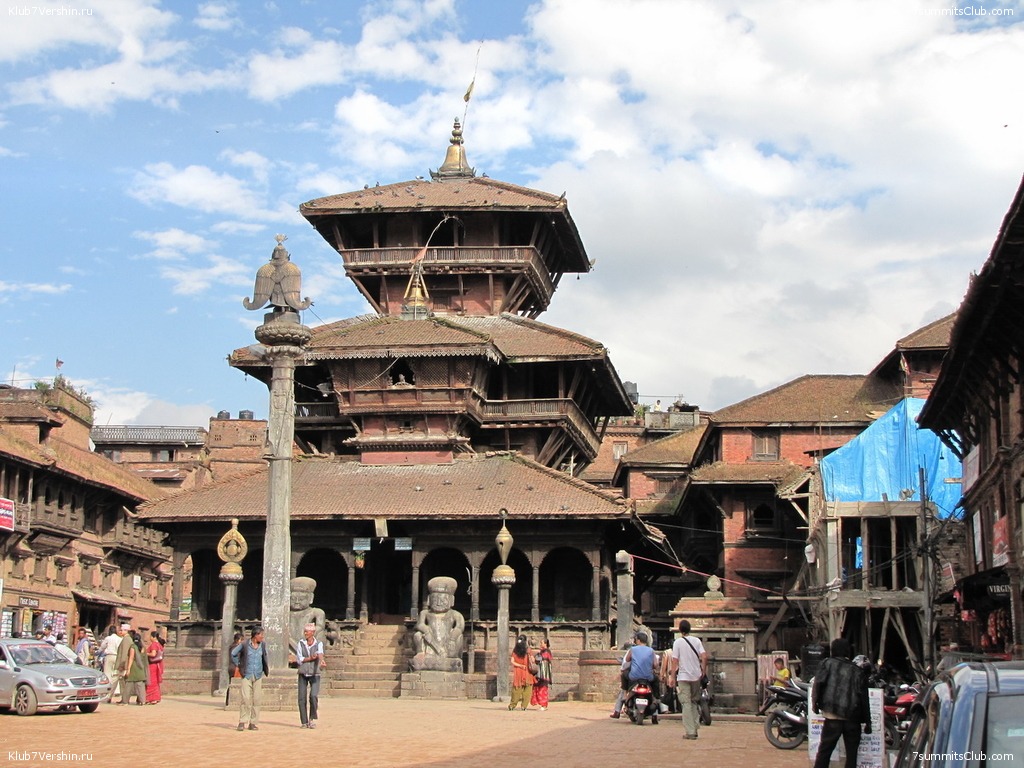
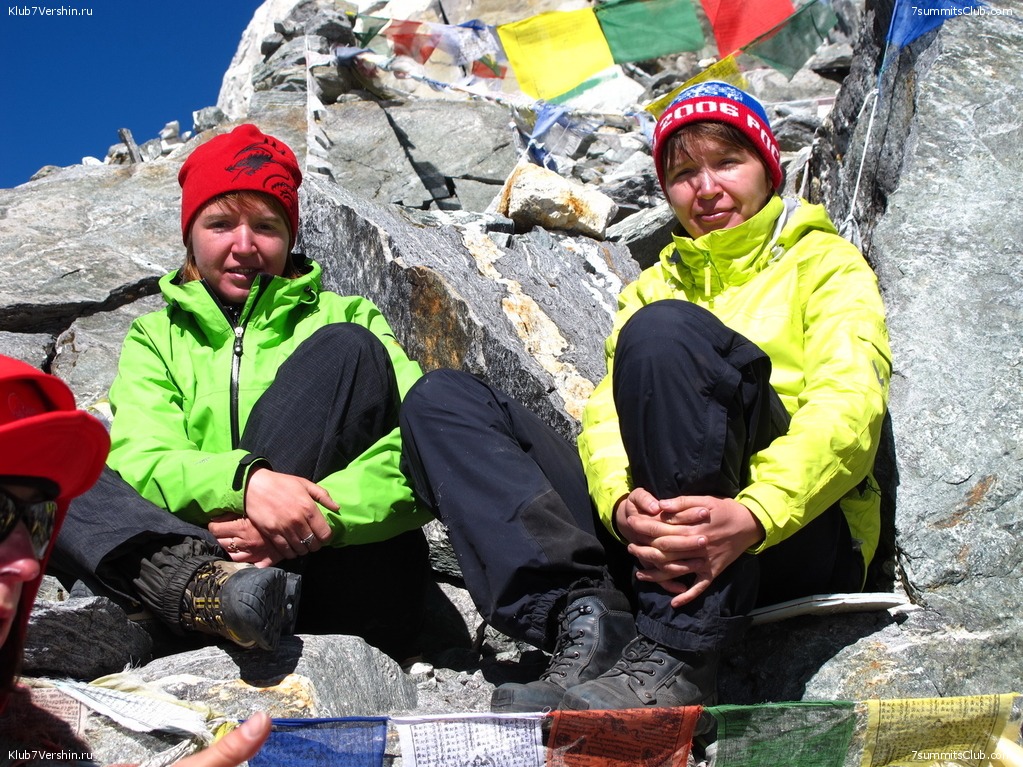
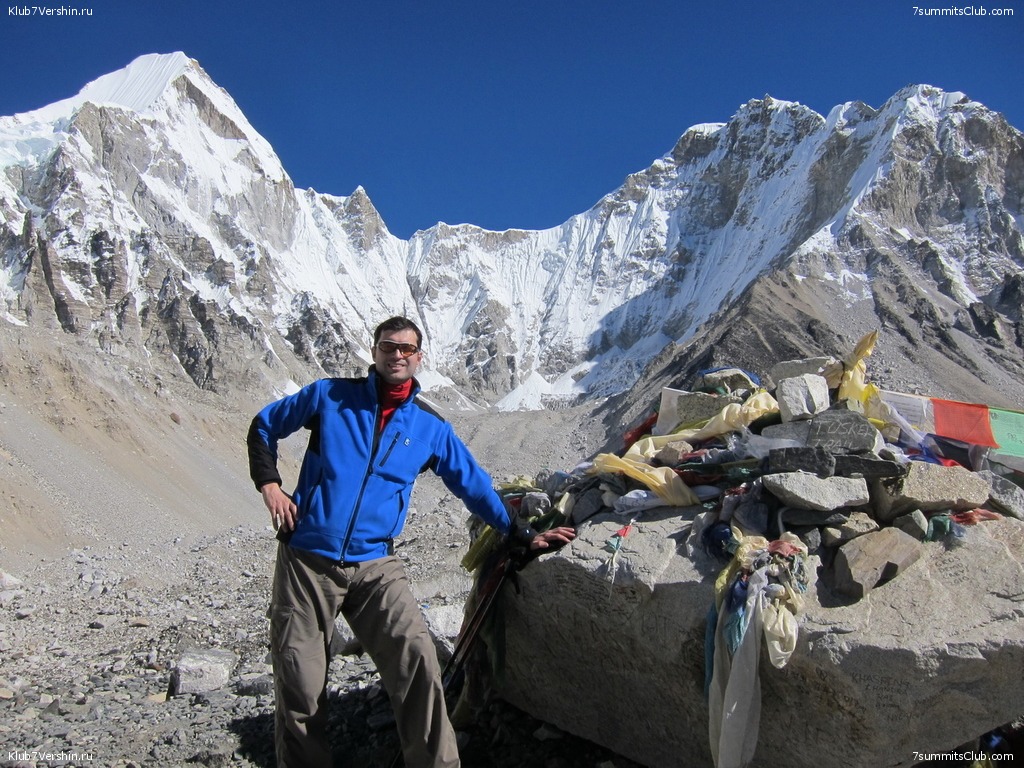
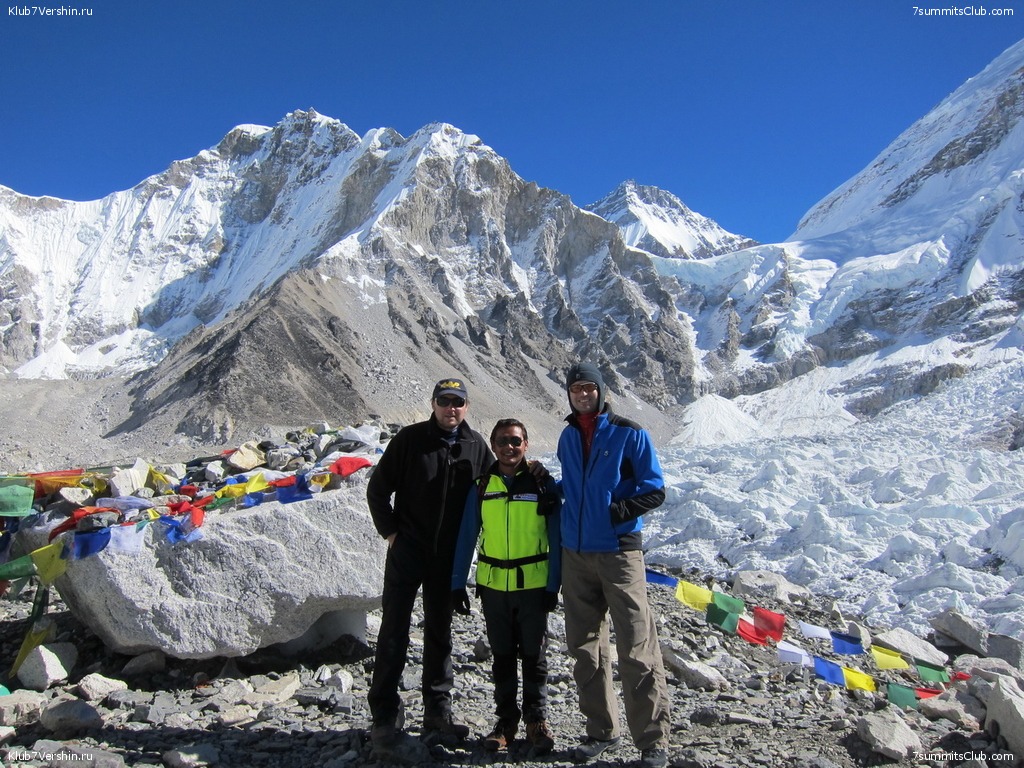
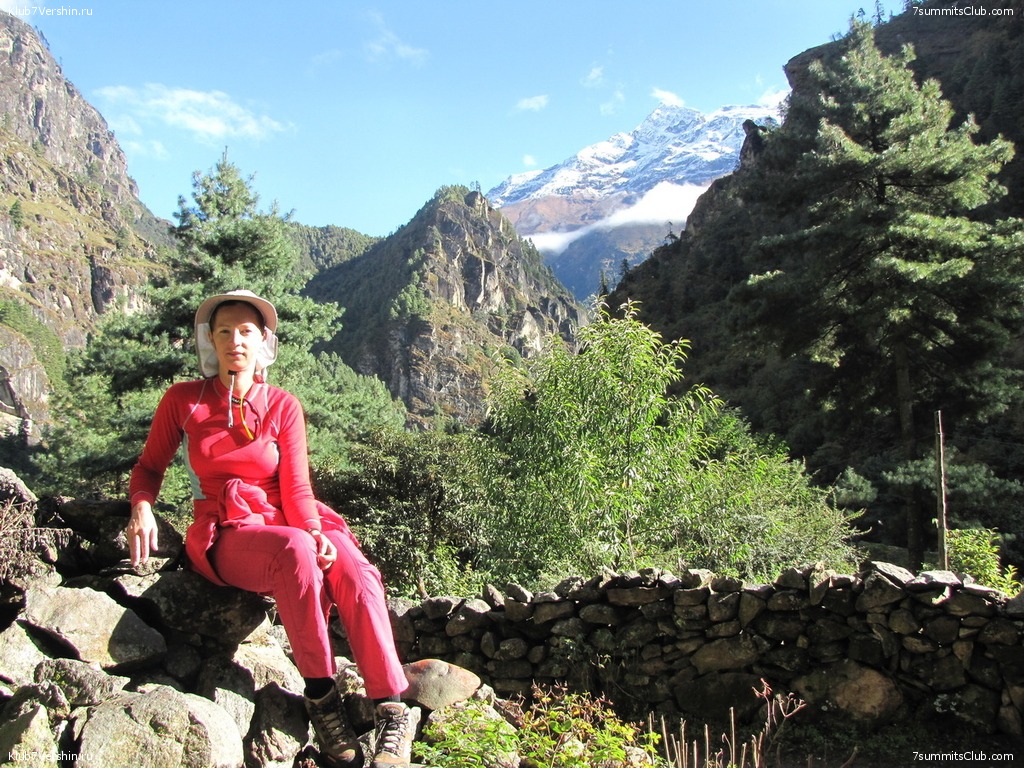
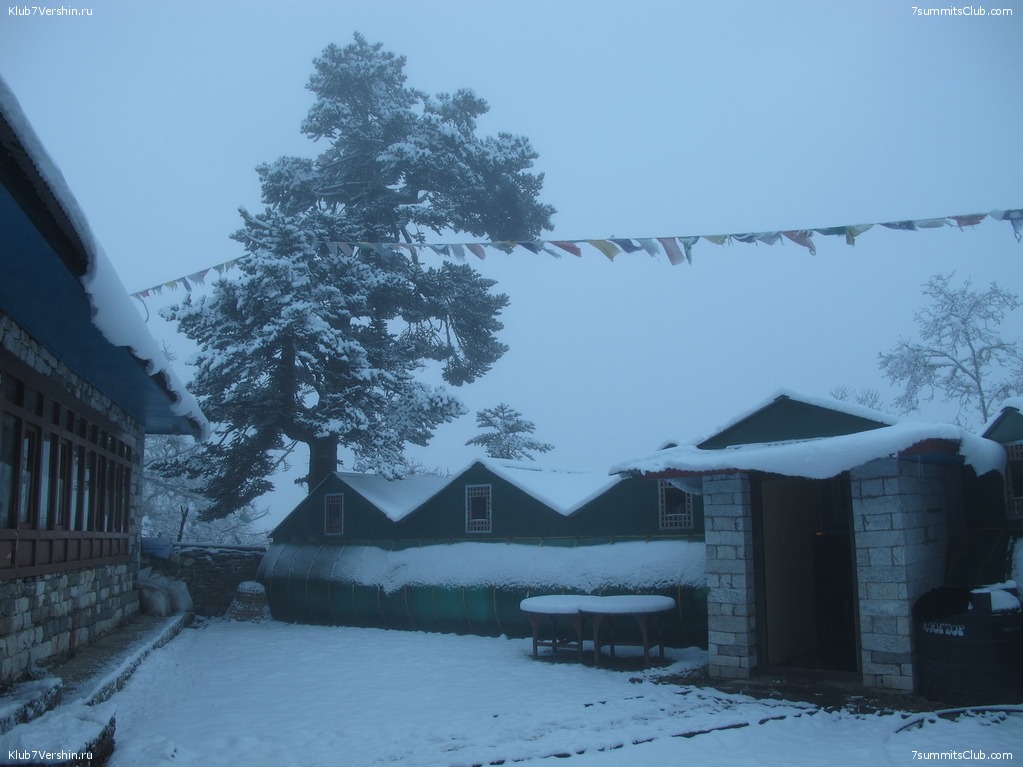
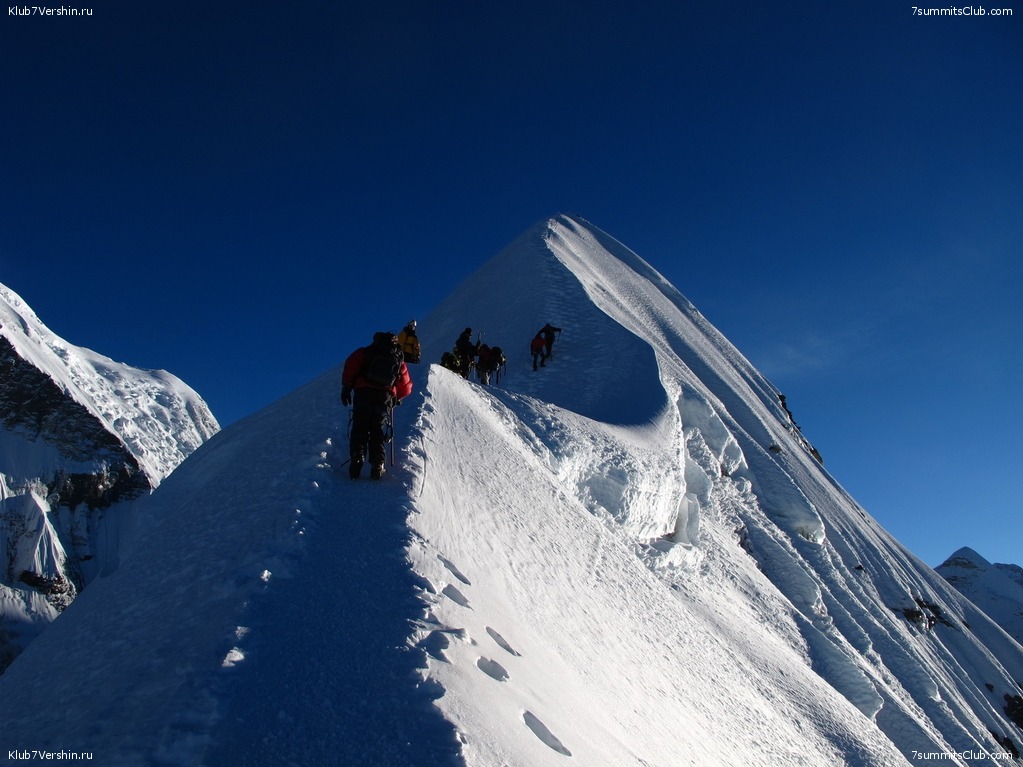
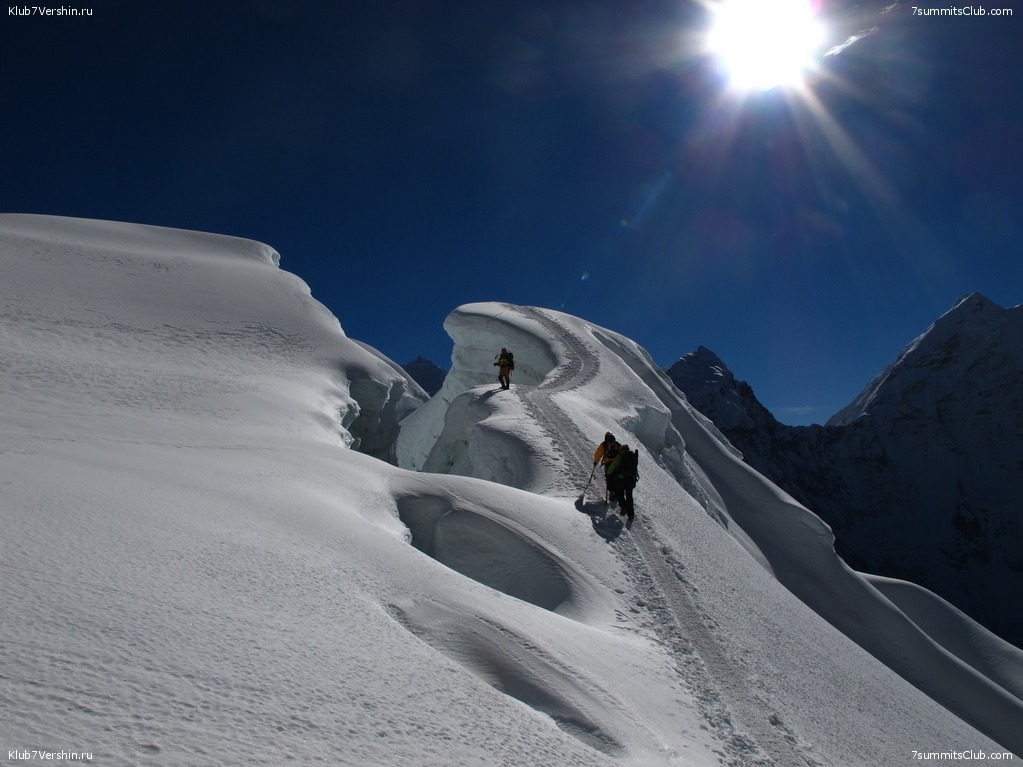
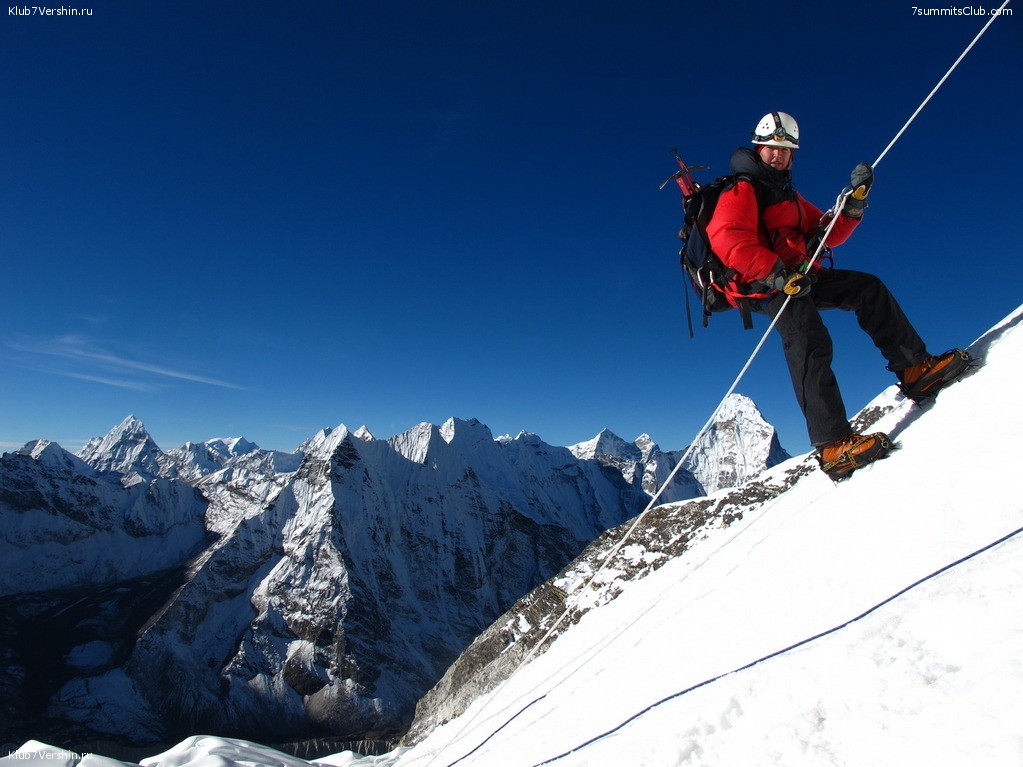
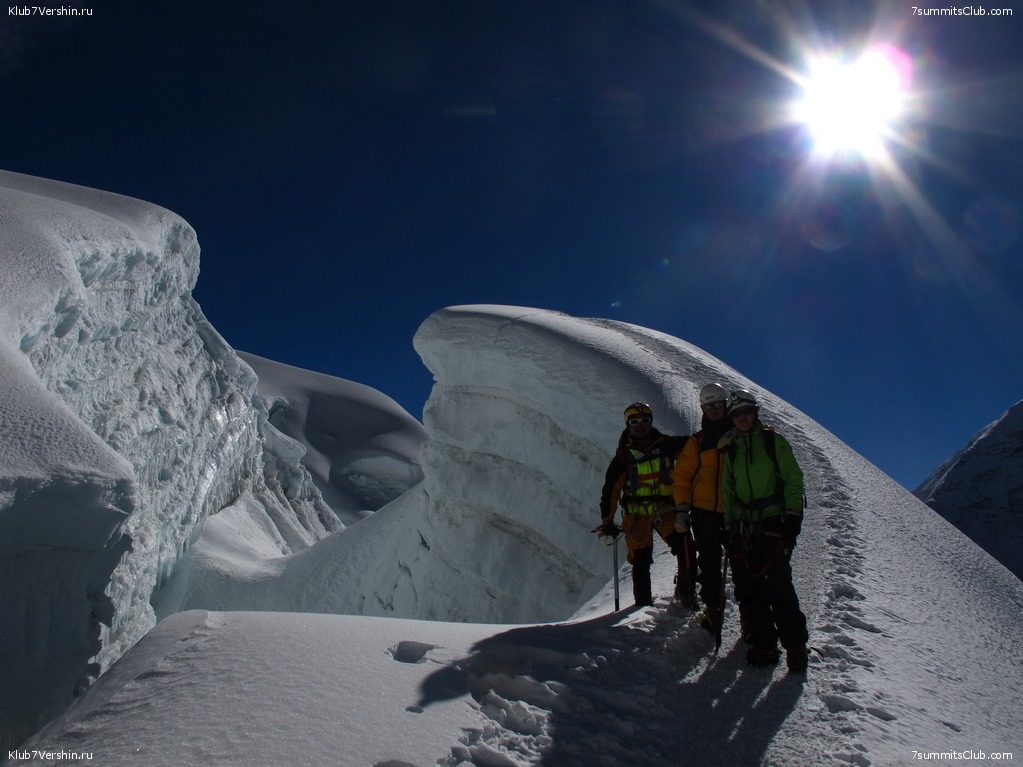
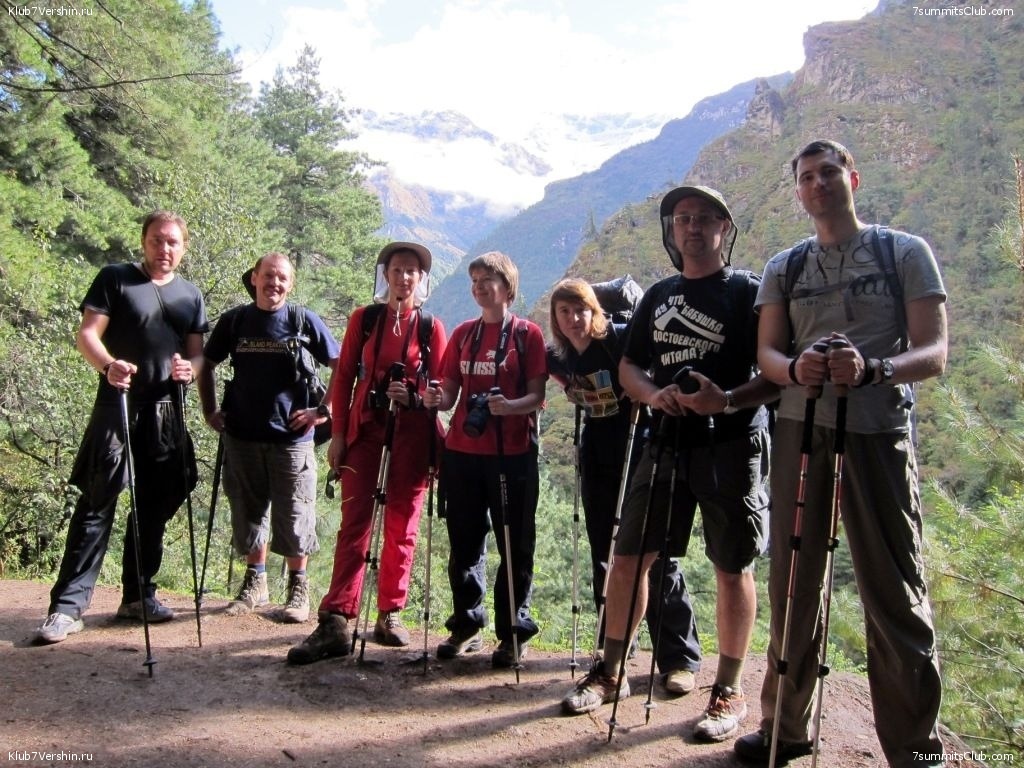
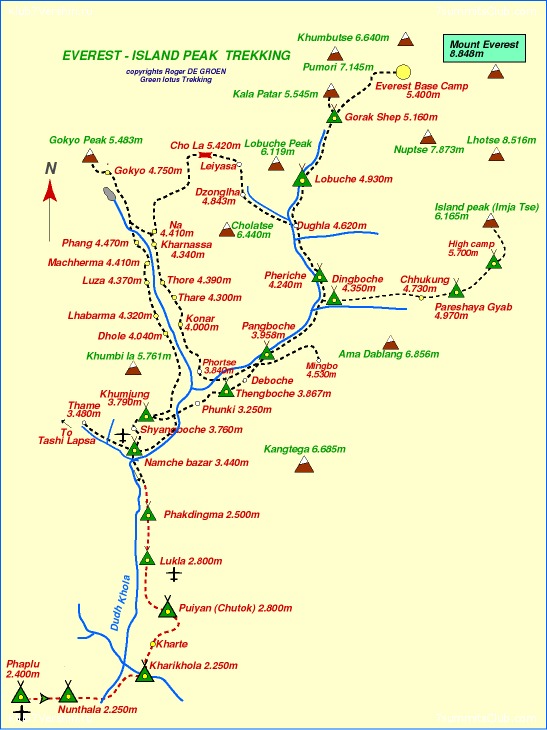
Group led by Viktor Bobok: Dmitri Alexeev, Konstantin Ananin, Maria Vanifatova, Andrew Galaev, Ksenia Smirnova and Julia Smirnova - went the route of the republic Nepal, visiting the valley of Khumbu, reached Everest base camp and Kalapatar, climbed Island Peak. They gathered together 10 gigabytes of photos. Some of them (303 pieces) can be viewed in our gallery.
And some of them here:




Very sad news: the main rescuer of Nepal is dead
Everest BC (Nepal).
KATHMANDU: On a day of double celebration in Nepal -- Bhai Tika or Brother's Day, and the start of the Newari new year 1131 – tragedy struck in the Himalayan ranges in the north as a helicopter rescue operation for two Japanese ...
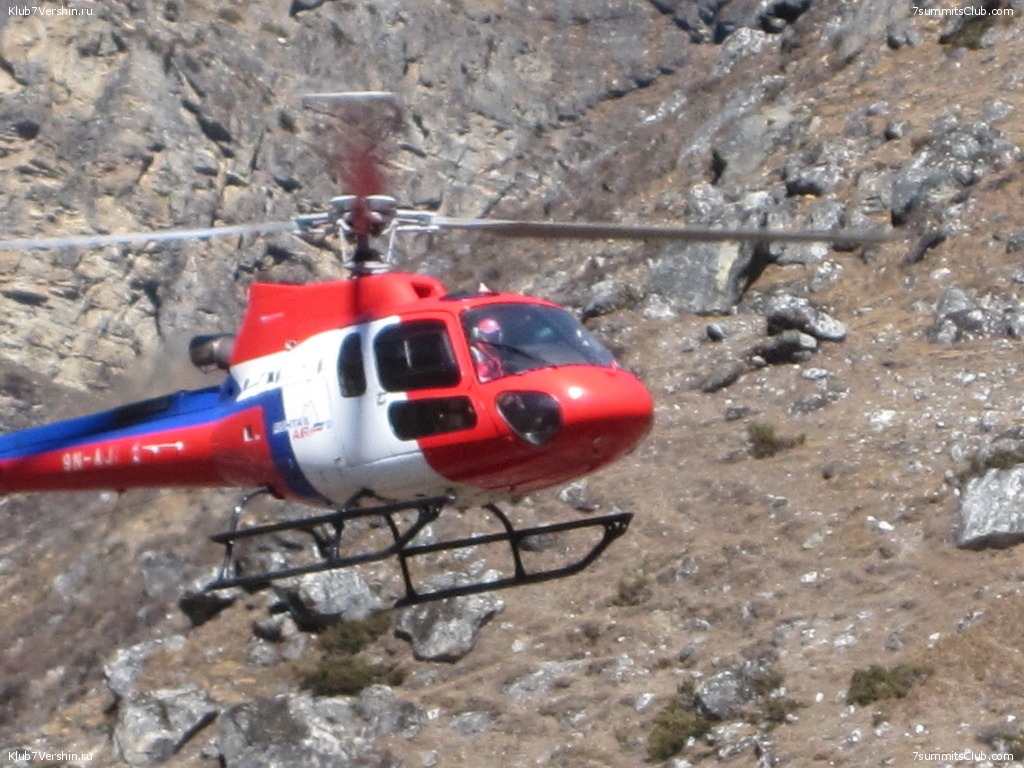
KATHMANDU: On a day of double celebration in Nepal -- Bhai Tika or Brother's Day, and the start of the Newari new year 1131 – tragedy struck in the Himalayan ranges in the north as a helicopter rescue operation for two Japanese climbers ended in a crash at 6000m above sea level, killing both the pilot and his companion.
While Nepal was celebrating its four-day Tihar holiday, Nepali pilot Sabin Basnet and technician Purna Awale were scouring the upper ranges of Mt Ama Dablam – meaning mother's necklace – a Himalayan range whose main peak juts up to 6812m above sea level. They had been sent by domestic airline Fishtail Air to airlift two Japanese climbers who had fallen ill.
After successfully rescuing the first climber, the two men went back for the second when high winds buffeted the aircraft and caused it to crash while trying to land. Two other helicopters sent to locate the missing chopper and its crew had to search the area for hours before they could locate the wreck and the bodies. Fishtail officials said they have now started the difficult operation of bringing the bodies down from the inaccessible mountain range.
This is the second air accident since August that resulted in casualties. In August, an aircraft crashed near Kathmandu valley, killing all 14 people on board, including a Japanese tourist. Last month, three Japanese climbers and their Nepali guide were swept away by an avalanche while climbing Mt Dhaulagiri, the seventh highest peak in the world.
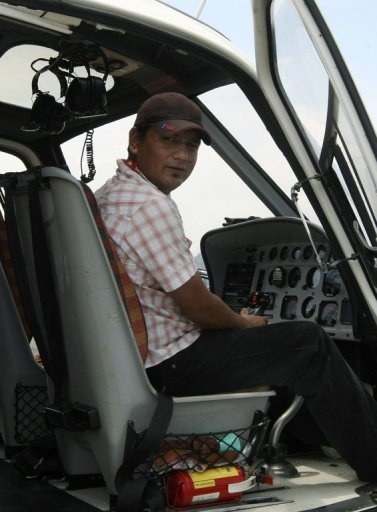
The best high-altitude pilot, a real pioneer of rescue above 7000 m - Sabin Basnet

With swiss team after Lantang flight to find Tomas Humar
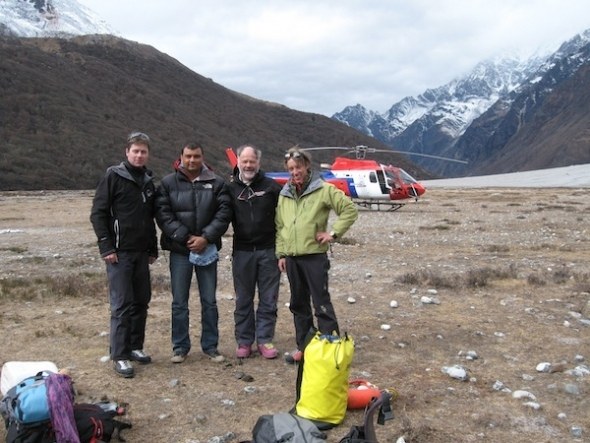
After epic Dhaulagiri rescue withh his swiss teachers
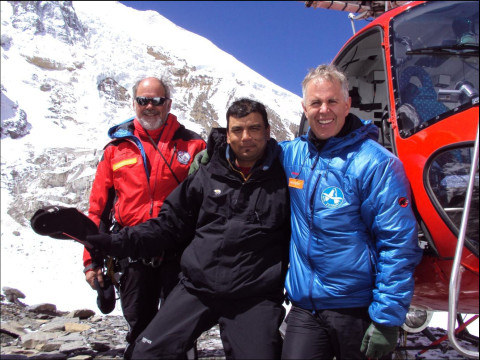
Victor Bobok was in Skype and sent wonderful photos
Everest BC (Nepal).
Victor Bobok, guide of 7 Summits Club, was today on Skype from Namche Bazaar. Short statement of the report reduced to the following facts. Ascent of Island Peak was made by a group of four people: Xenia and Julia Smirnova, Victor Bobok and ...
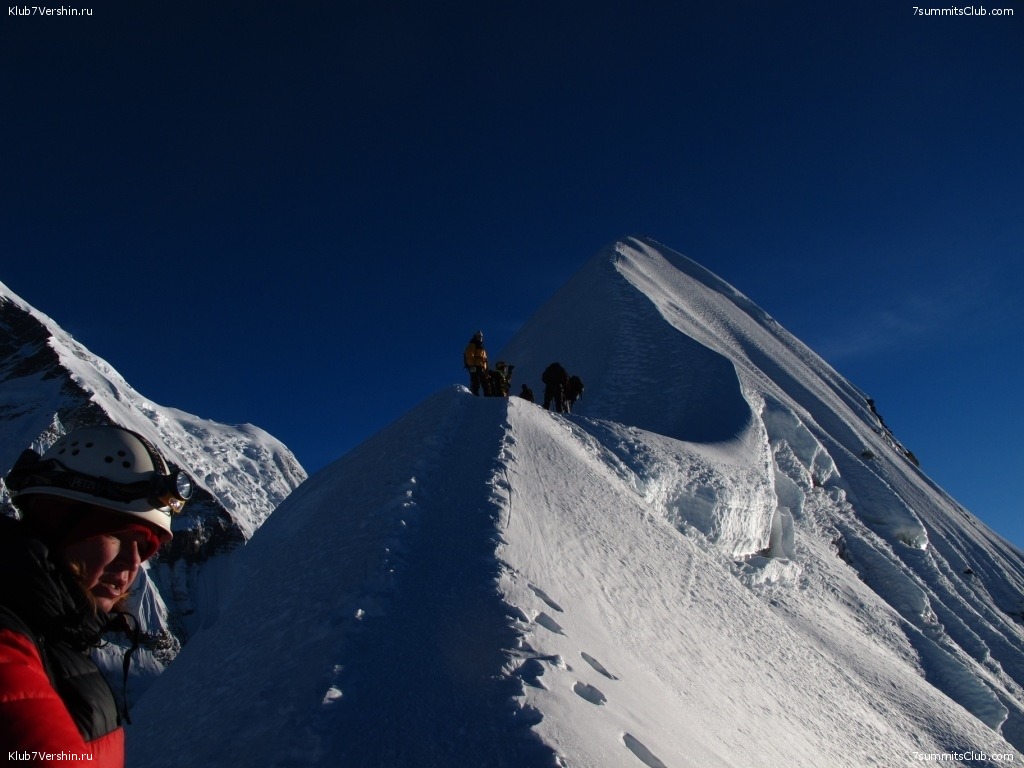
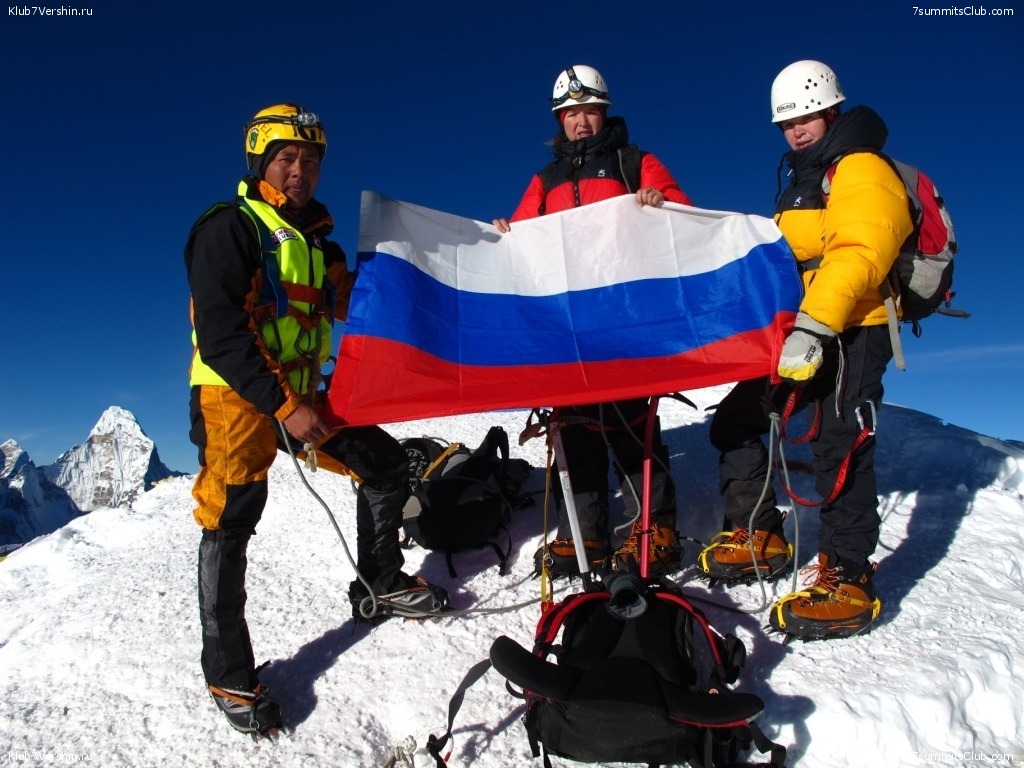
Victor Bobok, guide of 7 Summits Club, was today on Skype from Namche Bazaar. Short statement of the report reduced to the following facts. Ascent of Island Peak was made by a group of four people: Xenia and Julia Smirnova, Victor Bobok and Sirdar Tsering. This happened on October 30. Dmitri Alexeev decided did not go on this mountain. Earlier, Dmitry with Bobok and sisters climbed onthe top Kalapatar. While Ttsering together with Konstantin Ananin, Maria Vanifatova, Andrey Galaev went to the Everest base camp.
Now a group of three trekkers had already departed from Nepal. Quartet of climbers descended to Namche Bazaar and enjoys the benefits of civilization: the Internet, showers, a variety of drinks ....
The weather has allowed the group to make a magnificent climb to the top of Island Peak. We got pictures that evoke a sense of great envy the lucky persons. We are waiting for them back home. A way to Lukla tomorrow, and the day after a plane to Kathmandu.


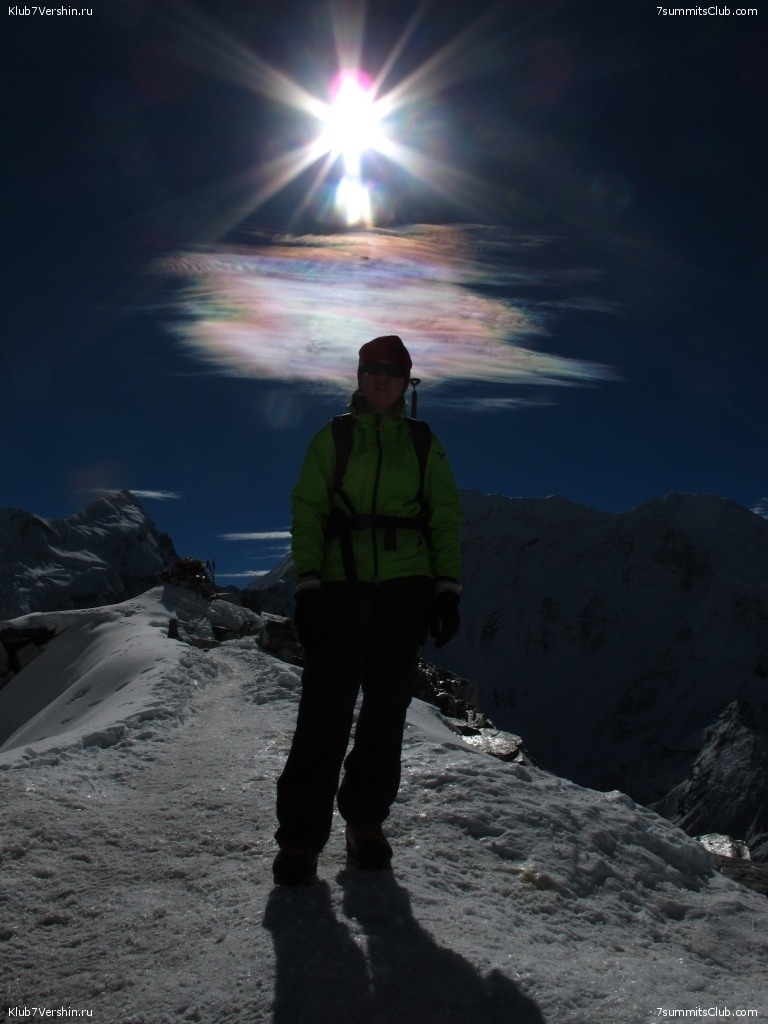
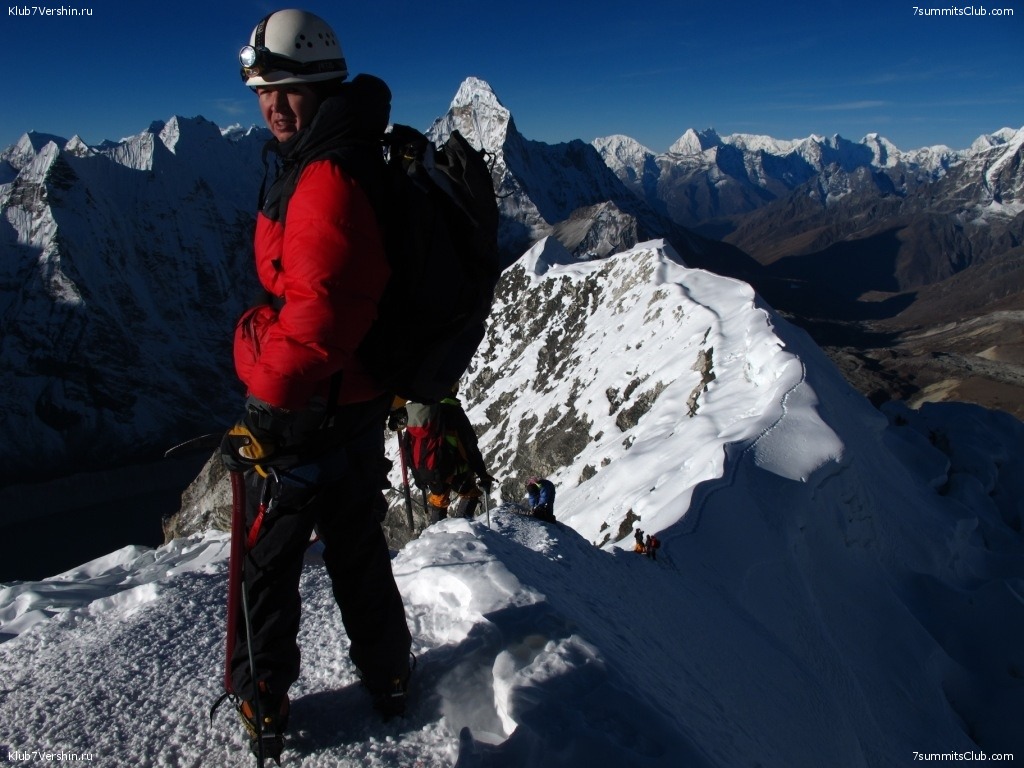

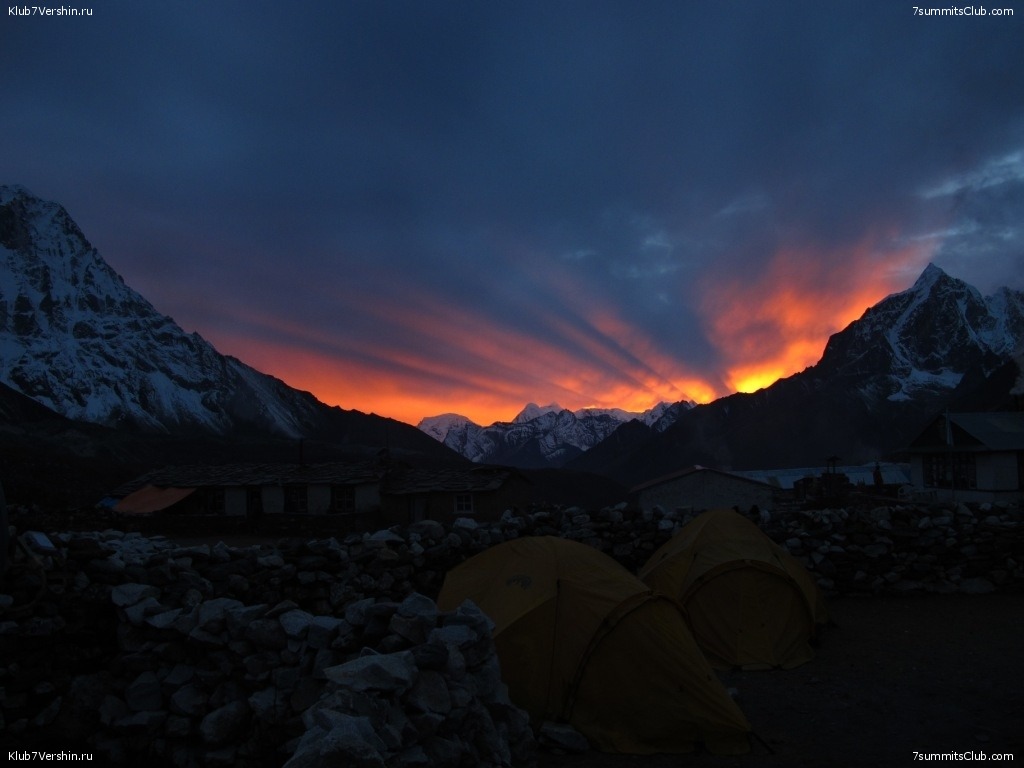
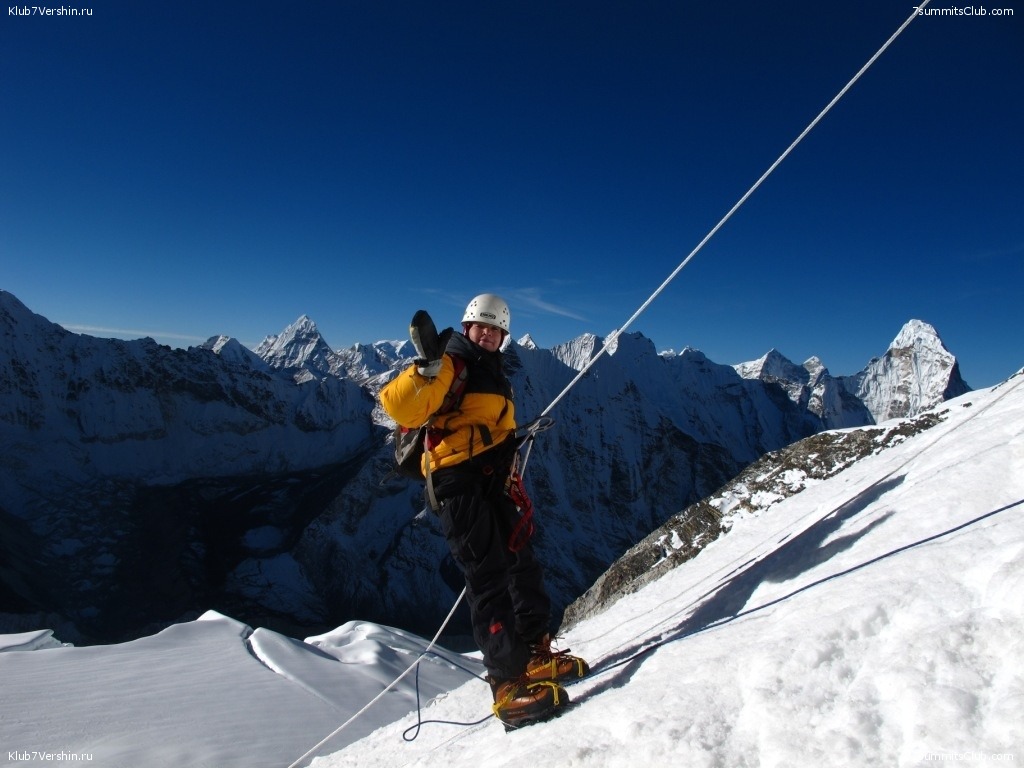
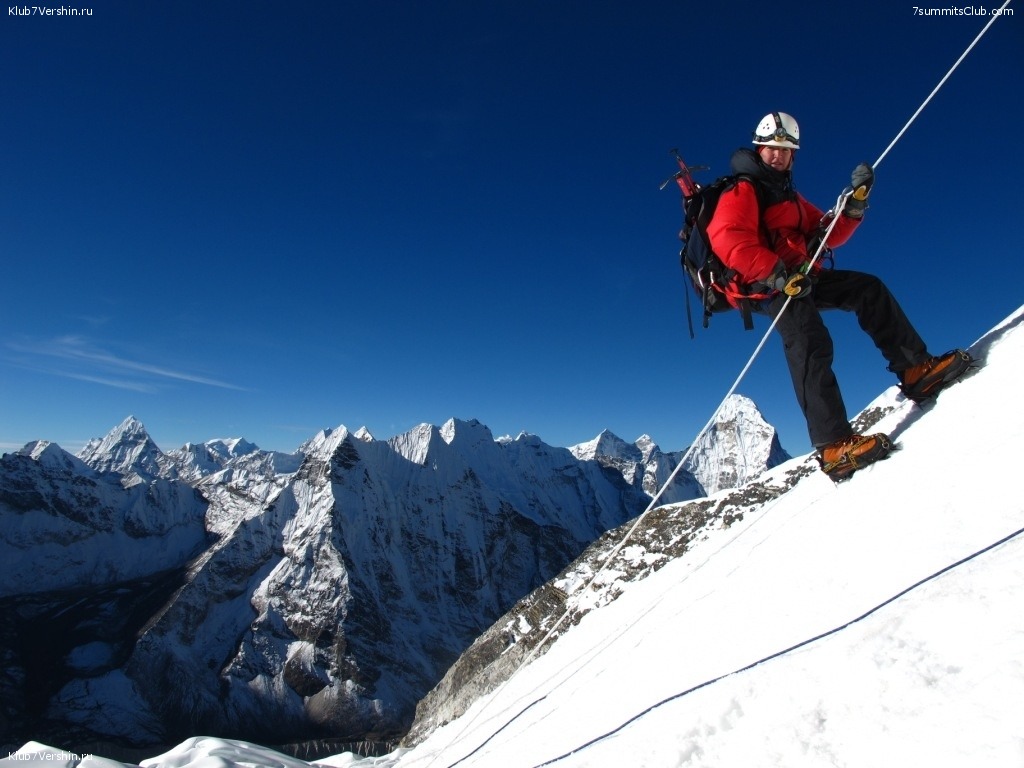

Group Victor Bobok is in Lobuche. Tomorrow go to the base camp of Mount Everest
Everest BC (Nepal).
Today, a group of 7 Summits Club under the leadership of Victor Bobok successfully overcame the Cho La Pass, leading from the valley Gokio in the Khumbu valley itself. For overnight they stopped at a lodge in the village of Lobuche. For ...
Today, a group of 7 Summits Club under the leadership of Victor Bobok successfully overcame the Cho La Pass, leading from the valley Gokio in the Khumbu valley itself. For overnight they stopped at a lodge in the village of Lobuche. For tomorrow is scheduled early exit, to climb Kala Patar, then to reach a place of base camp of Mount Everest and still have time to get down lower than Lobuche. All members of trip feel very good. And in the morning, and in the afternoon and in the evening. Especially at evening party. The fact is that six of seven members of the expedition play guitar quite well.

Alan Arnette: Himalayan Successes of Different Types
Everest.
Climbing Himalayan mountains in the Fall can be risky at best. Each day is shorter, it is progressively colder and winter looms. So every summit, especially Everest, is highly valued by the climbers. This year, Fall 2010, we saw two summit ...
Climbing Himalayan mountains in the Fall can be risky at best. Each day is shorter, it is progressively colder and winter looms. So every summit, especially Everest, is highly valued by the climbers. This year, Fall 2010, we saw two summit successes of very different types.
First up is the only Fall Everest summit since the Fall of 2008. Eric Larsen and his small Sherpa team summited Everest at around 6:35 AM local time on October 15th. They broke trail and fixed their own ropes on the way to the top. Eric reported in an emotional audio post from the summit that they summited . He later reported they threaded the needle of a tiny weather window descending in white-out conditions to the South Col. He promised more details upon return to Base Camp.
His outfitter, Himalayan Trailbalzer listed the Sherpa team as: Mr. Tshering Sherpa, Pasang Temba Sherpa, Mr. Nima Dorje Tamang, Nima Dorje Tamang, Dawa Gelzen Sherpa, Pasang Dawa Sherpa and Da Tenji Sherpa.
There had been other teams on both the north and south but all abandoned plans throughout the season. Dangerous snow conditions were the culprit on the north side and running out of time was cited on the south. But Eric, wanting to complete a year long goal to ski to both poles and summit Everest on behalf of his "Save the Poles" mission persevered. Eric's stated goal:
"This expedition will tell the story of these remote places so we can better understand how our actions affect the poles and ultimately the planet," Larsen says. "We all need to be reminded that we must act now to stop global warming."
Please visit his website for more details. Congratulations Eric!
Another impressive summit was the Soldiers to the Summit team lead by Everest summiter and blind climber Eric Weihenmayer. They put 8 soldiers on the summit of Lobuche, 20,075′, which is often used for acclimatization for Everest climbs. From their site, Soldiers to the Summit: The goal of the Expedition and World TEAM Sports is to demonstrate to everyone that great things can be achieved no matter how high the obstacles.
From the team website:
We did it! On October 13th, eight of our injured soldiers reached the 20,075-foot summit of Lobuche. These men and women overcame their injuries, gave it their all, and achieved a great victory—not only for themselves but for other veterans, disabled people, and all of our sponsors.
We set out from high camp at 17,000 feet in two teams. The first team—consisting of Brad Bull, Steve Baskis, Sherman Bull, myself, Jeff Evans, Kami Tenzing, Ashley Crandall, Michael Brown, Rex Pemberton, and Didrik Johnck—left at 1:15 AM; Ashley felt the altitude and turned back. The second team—Charley Mace, Matt Nyman, Matt Murray Luis Benitez, Ike Isaacson, Dan Sidles, Kevin Cherilla, Chris Morris, Nico Moroulis, Chad Jukes, Chad Butrick, Brian Mockenhaupt—left camp at 3 AM. Catherine Raggazino (Rizzo) also felt the altitude and stayed at camp and Cody Miranda elected to stay with her.
Congratulations to all these climbers. See the previous report on their expedition.
The fall season is not over with climbs on Pumori, Ama Dablam and a few other Himalayas mountains underway.
Climb On!
Alan
Arnette is a speaker, mountaineer and Alzheimer's Advocate. He is climbing the 7 Summits starting with Mt. Vinson in November 2010 to raise $1 million for Alzheimer's research. You can read more on his site.

It is the end of Сho Oyu expedition
Part of our expedition is already in Kathmandu, the team leader with best climbers is coming down. The weather on Cho Oyu again deteriorated. Strong winds and high avalanche danger made it impossible to attack the top for our advance team ...
Part of our expedition is already in Kathmandu, the team leader with best climbers is coming down. The weather on Cho Oyu again deteriorated. Strong winds and high avalanche danger made it impossible to attack the top for our advance team (I.Svergun, S. Bublik, A. Zakolodny, A.Kijko). They decided that climb above Camp 3 (7400m) is extremely difficult because of deep snow and very dangerous. Besides, the last few days the strong wind was blowing in the upper part of the route.
Just a few climbers remain at base camp. Only the Koreans decided to starve and wait at base camp the weather, which by forecasters was promised in 5 days.
Our climbers, have tickets from Kathmandu on October 16, so they can not stay for another 10 days.
As they say: "The Mountain does not allow me go!" We go back to come again.
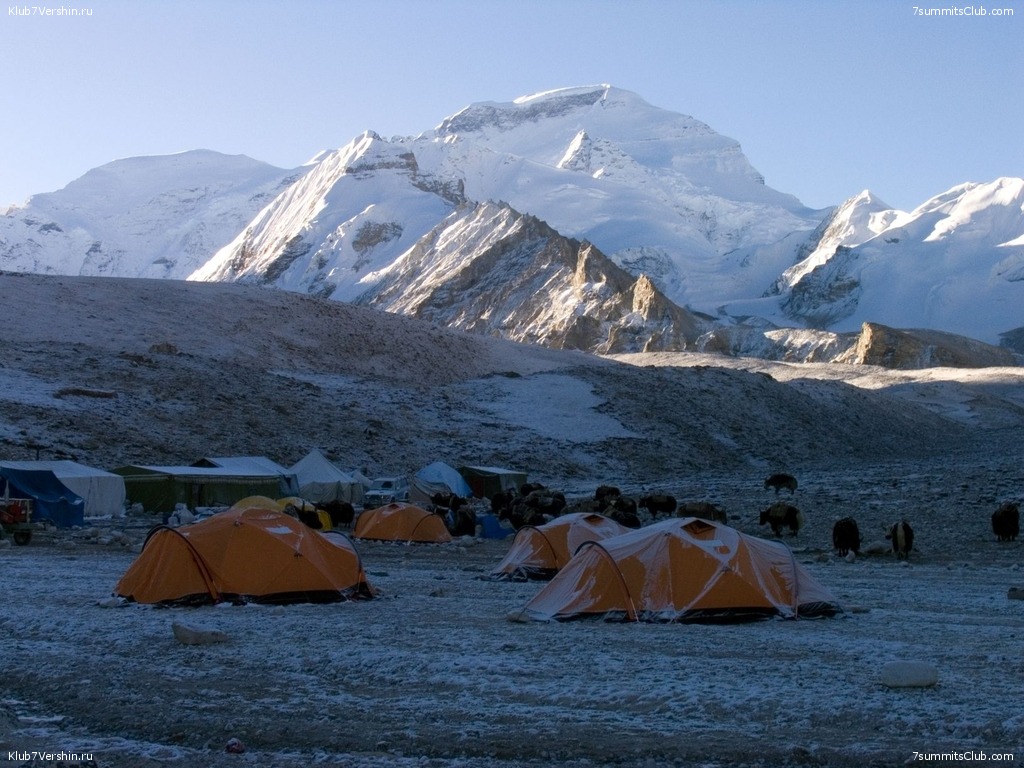
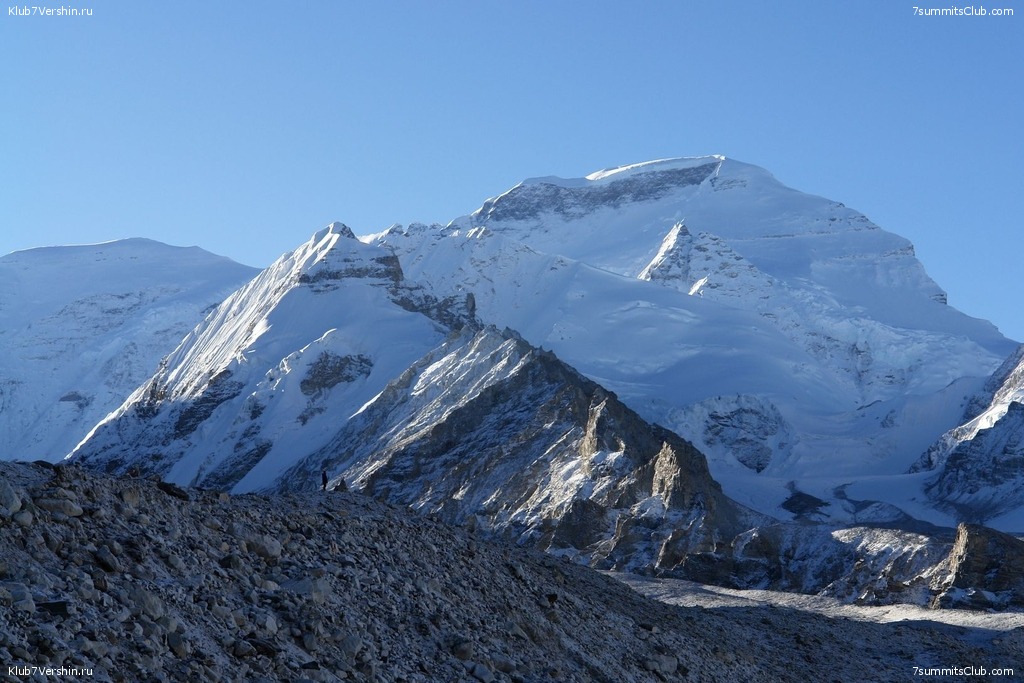
Our Cho Oyu Expedition continuie work and other news from the Himalayas ...
Everest.
At the beginning of last week there were doubts about the fact that someone even be able to climb Cho-Oyu. A significant part of expeditions turned their work. The head of our expedition (Ukraine - Himalaya 2010 + 7 Summits Club) Igor ...
At the beginning of last week there were doubts about the fact that someone even be able to climb Cho-Oyu. A significant part of expeditions turned their work. The head of our expedition (Ukraine - Himalaya 2010 + 7 Summits Club) Igor Svergun and Sirdar Mingma Gelu (7summits Adventure) also inclined to the idea of shutting down. However, after getting fairly good prognosis, as well as reports of the successful ascent of some German climber, they decided to continue the expedition. Tickets from Kathmandu were taken on October 16, so that you can still compete.
Manaslu
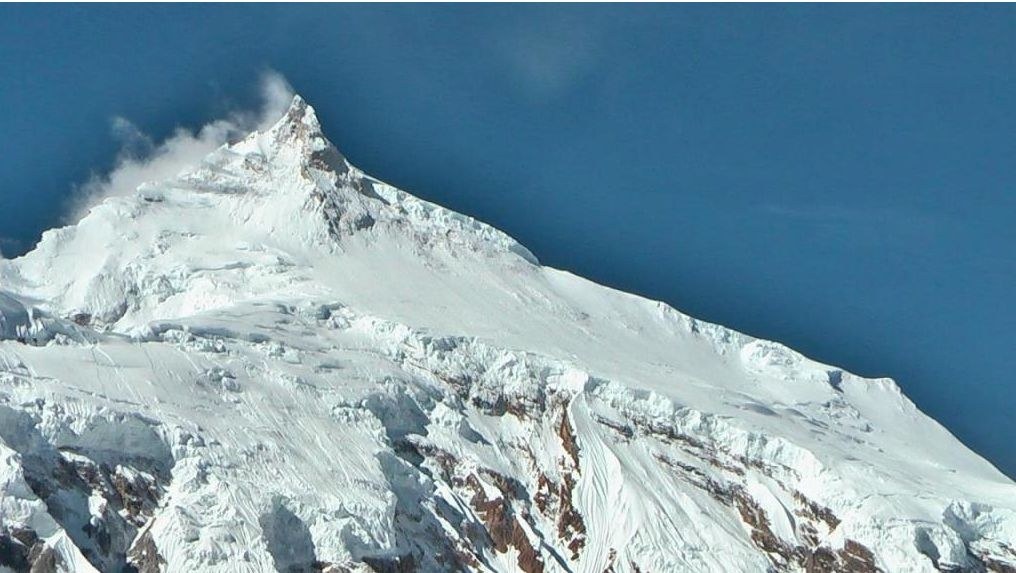
Hard season: the Himalayas against the climbers ... first autumn climbing and loss of ...
September 28 Japanese climbers from the team of the Association of Mountain Guides have got in an avalanche on the way from base camp to Camp 1 on the slope of Dhaulagiri. Mountain Guides Osamu Tanabe (49 years), Toshio Yamamoto (1936), Daisuke Honda (32) and Sherpa Pasang Gyelu Sherpa are died. Tanabe was the leader of Himalayan mountaineering in the country of the Rising Sun ". He has had 9 eight-thousanders, including Mount Everest in winter by south-west face, K2 and Makalu by a new routes.
Osamu Tanabe
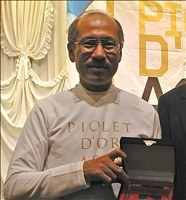
Season on Manaslu is more successful. Although not without sacrifice. A Japanese mountaineer has died at the base camp.
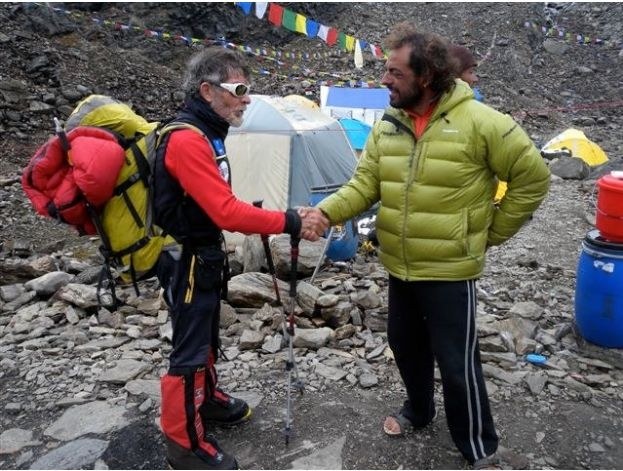
Success of the Spaniards is in a focus. Carlos Pauner reached his 10th eight-thousander. And Carlos Soria, who turns 71 years old, went on the 9 th. This year veteran of the Spanish mountaineering completed the program of "Seven Summits", and plans "to make" 14X8000 before 2014
Soria and Pauner in the base camp
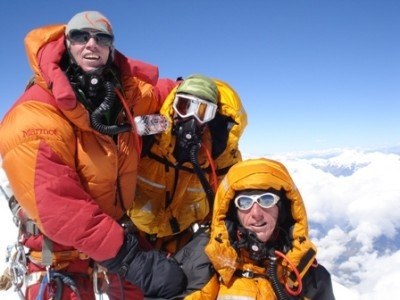
In the team of Himex a large group of climbers reached the summit of Manaslu on October 1. Russell Brice CEO (58 years) for the fourteenth time climbed peaks above 8,000 meters. True, 9 times it was Cho-Oyu. For Sirdar Phurba it was, by the way, 23th 8000 m peak (15 times Everest) and he became the leader among the Sherpas in this field.
Guides of Himex on the summit: Adrian, Russel and Marc
And the first of the season on top Manaslu was a leader of the expedition Dream Guides Kenton Cool. He led the team of three members and three sherpas. According to Kenton, tireless Dorjee Sherpa make almost all the way to the summit as first. From the summit of Manaslu Cool and one of the clients Andrew Eggleston went to the camp 4 on skis. It was September, 30th.
According to information from an expedition leader Fabrizio Zangrilli, 1th October, some German climber managed to reach the summit of Cho Oyu. This immediately restored power to several companies, they have resumed the upward movement in the camps.
Later it turned out that they were two experienced climbers 42-year-old Austrian Rupert Hauer and guide of the expedition 39-year-old Alix von Melle, known as a girlfriend of Luis Stitzinger. Ascent from Camp 3 to the top took 6,5 hours. There was a very strong wind, but good visibility.
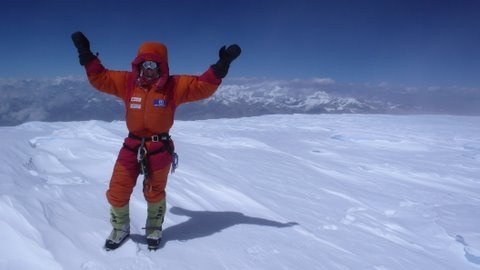
If a forecast will be justified, we could expeat another climbs on Cho Oyu. We hope that among the lucky winners will be the names of our climbers.
Chao, Walter ...
Italian Walter Nones was found dead under the SW face of Cho Oyu, he was 39 years old. During a reconnaissance of a new route for south-western face, he climbed to an altitude of 6,800 meters with the Sherpas. Later he came out already in the solo assault. Misfortune.
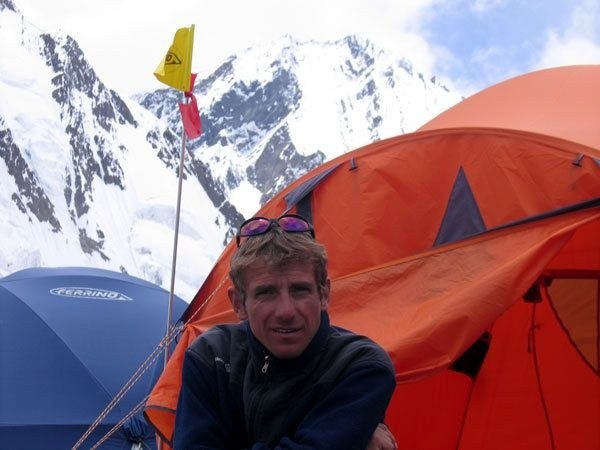
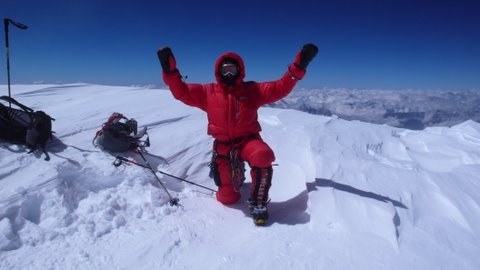

Information from Cho-Oyu expedition
September 27, 17:10. Today, our group went up to Camp 2 at an altitude of 7,150 m. We have overcome heavy wind so the way took more than 7 hours. On the way, there was an ice wall and a few steep parts, which significantly delayed the temp ...
September 27, 17:10. Today, our group went up to Camp 2 at an altitude of 7,150 m. We have overcome heavy wind so the way took more than 7 hours. On the way, there was an ice wall and a few steep parts, which significantly delayed the temp of our group. Many groups came down to one "thread" on the fixed route, and we had to wait in line.
Quality of fixed ropes leaves much to be desired. The group of Tibetan climbers who have fix it did not return to base camp to continue operations.
Two Sherpas, who yesterday had stopped by a small avalanche, today tried to reach the summit. But they again got on top of a slope in an avalanche, which, fortunately, it was scattered along the slope, and no one caught. As a result, no one managed yet to reach the summit. But the way to the top now is almost trodden.
We have scheduled two nights at 7150m, then at 7500m and will be on the way back tomorrow. Descend to thr base camp: for rest and preparation for the main summit assault.
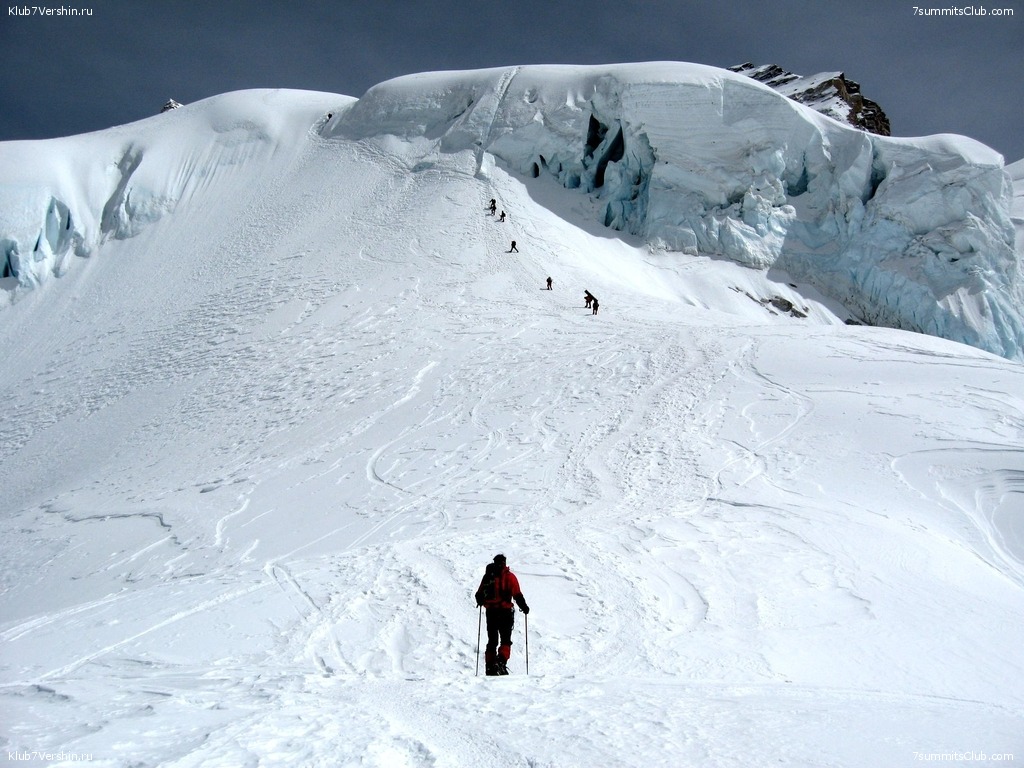
Expedition Cho Oyu: Igor Svergun reported from 6400 m on the phone
September 25 - the first day when we can say that the weather is good. While none of the expeditions of unable to climb to Camp 3. Chinese "cooperative", which had to fix route has long gone down. Expeditions should make route joining ...
September 25 - the first day when we can say that the weather is good. While none of the expeditions of unable to climb to Camp 3. Chinese "cooperative", which had to fix route has long gone down. Expeditions should make route joining efforts.
Igor Svergun - leader of the expedition
 Our climbers Kijko - Zakolodny – Bublik reached the Camp 2 at 7150m altitude in the last outing and went down. After that, the way was blocked by snow. Two Sherpas, who tried to make a scheduled shipment, were crushed by the powdery snow on a steep section of the ridge. Fortunately, they managed to rescue themselves.
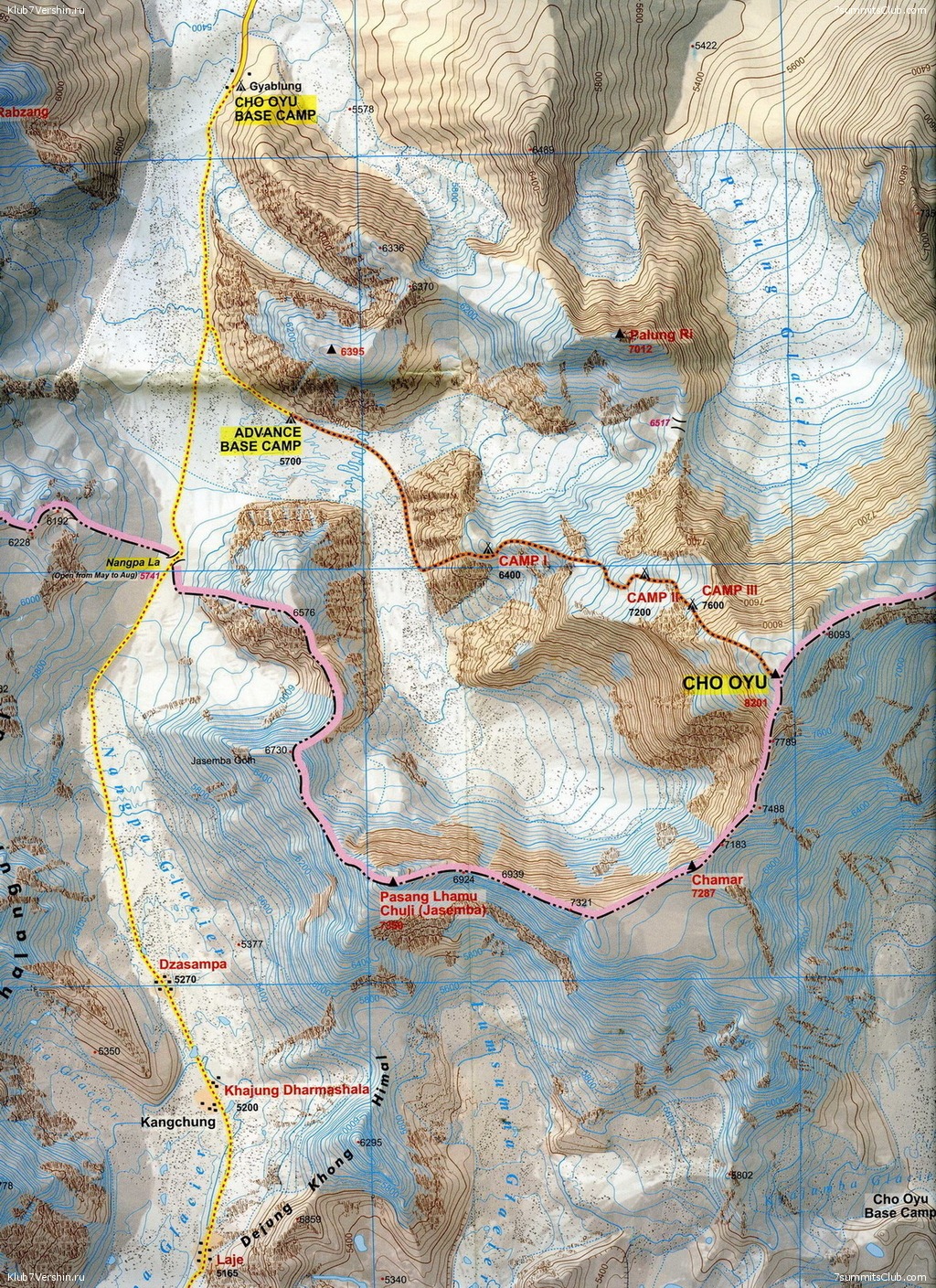
And now, today - September 26, our team finally got to Camp 1 at 6400m. Then we plan to reach a height of 7500m, with two overnight stays at 7150m.
All members are in good shape, not counting the usual maladies that accompany climbers - a cold, illness, throat, runny nose, cough ... But it all goes away as soon as putting on a backpack on your back.
Rodiontsev and Chistovsky intend to ski descent from 7500m. Today Rodiontsev tried to go off on a snowboard from a height of 6700m in an oxygen mask. Everything turned out. We hope that he will be able to descend on skis from the summit.
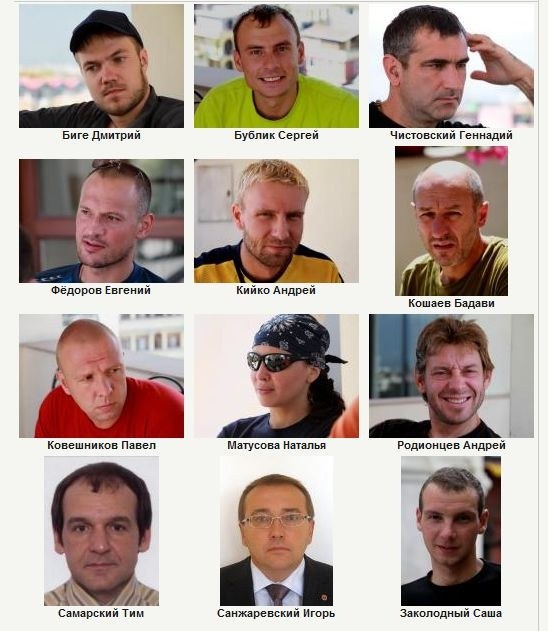
Members
Ararat record by RESO-Garantia and 7 Summits Club
Ararat.
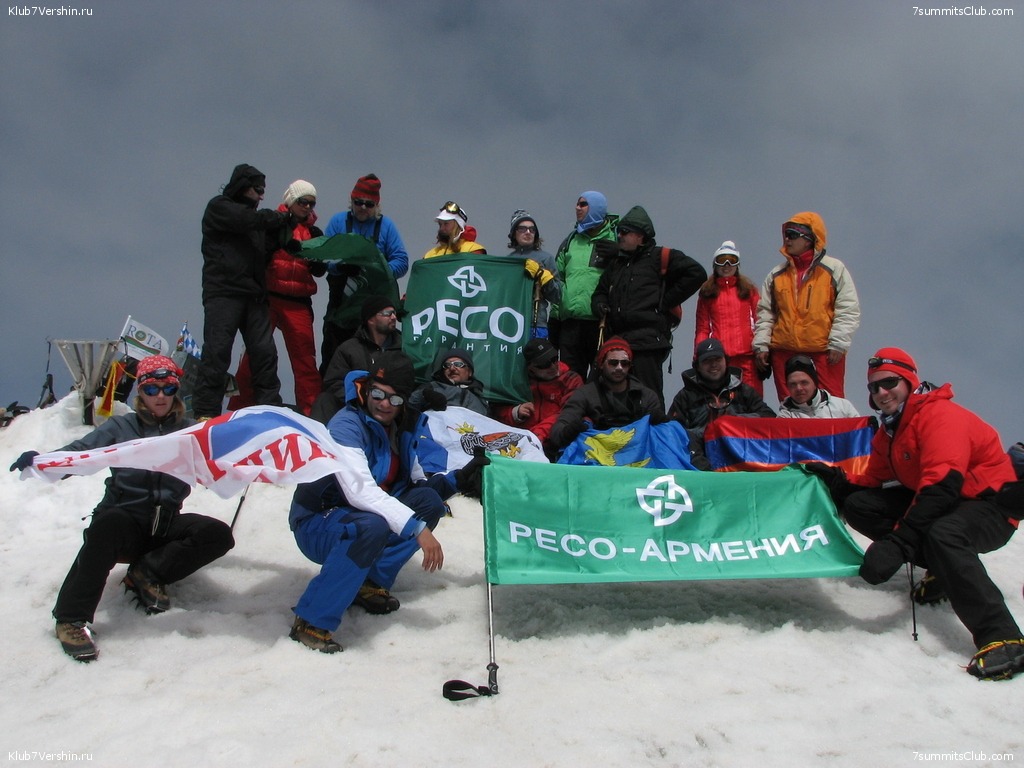
The insurance company RESO-Garantia established with our 7 Summits Club a world record. 35 people from one insurance company at once were stayed on the top of Mount Ararat. Sergey Sarkisov, founder and principal shareholder, Chairman of the ...
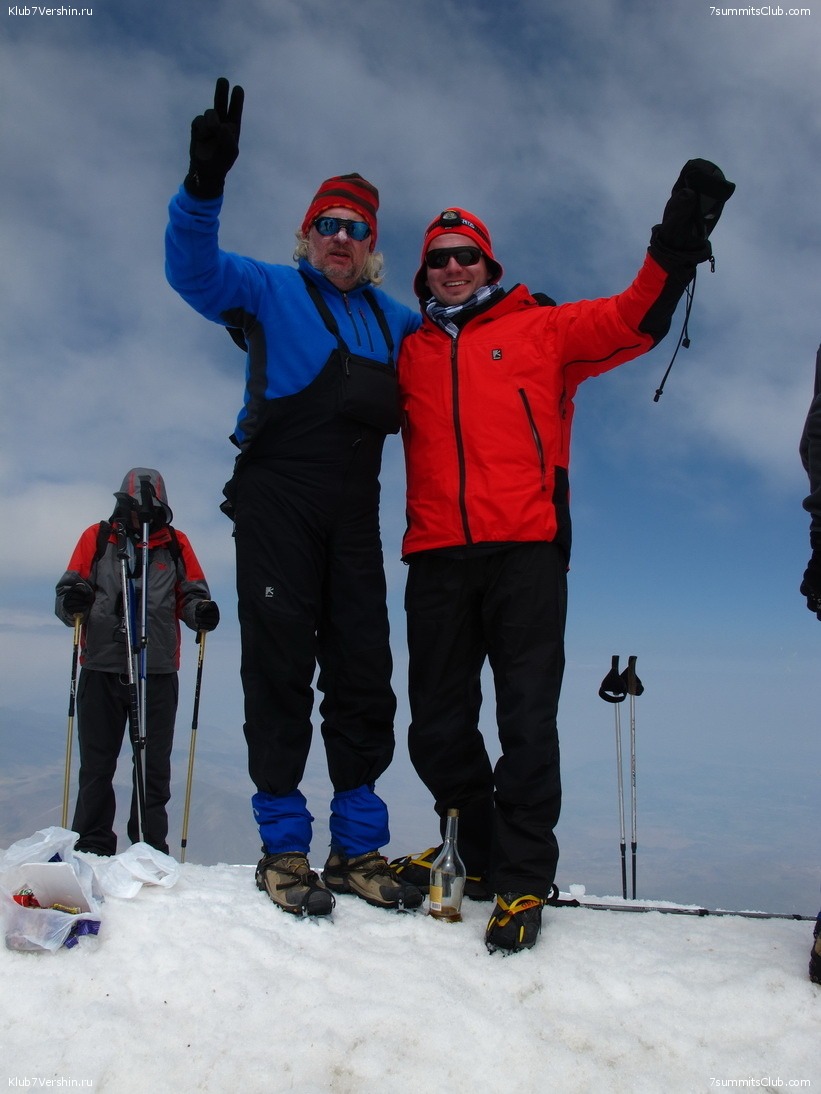
The insurance company RESO-Garantia established with our 7 Summits Club a world record. 35 people from one insurance company at once were stayed on the top of Mount Ararat. Sergey Sarkisov, founder and principal shareholder, Chairman of the Board of Directors of RESO-Garantia and the Group Reso was among the lucky ones. September 16th, members of this historic expedition gathered at a restaurant in Moscow, to sum up the event. The culmination of evening was awarding summiters by climbing certificates and badges "Mountaineer of the USSR”. That was done by expedition guides, representatives of the 7 Summits Club Vladimir Shataev, Victor Bobok, Lyubov Ivanova and Olga Rumyantseva in a solemn ceremony.
RESO-Garantia - one of the bigest insurance companies in Russia, and Sergei Sarkisov one of the 50 richest people in our country.
Expedition to Cho Oyu arrived at base camp and went above ....
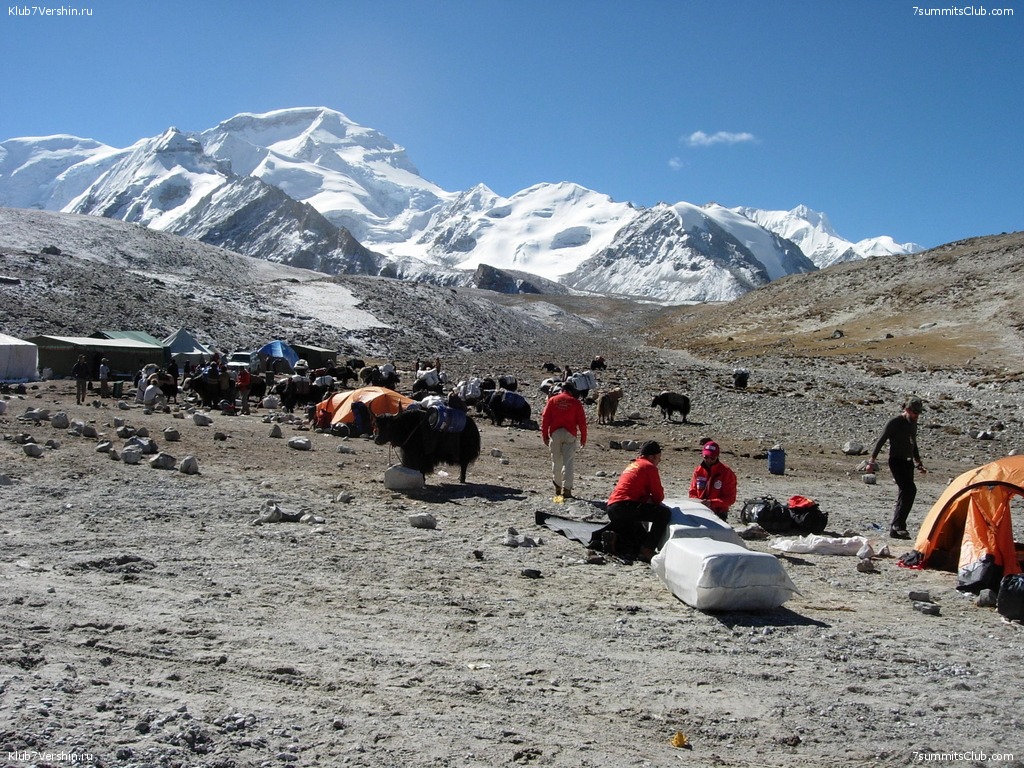
Expedition leader Igor Svergun reported from Tibet following. Sept. 15 an auto-part of our expedition ended at the Base Camp (BC), Cho Oyu at an altitude of 5100m. Today Sherpas and yaks begin to transport goods to Advanced Base Camp (ABC, ...
Expedition leader Igor Svergun reported from Tibet following. Sept. 15 an auto-part of our expedition ended at the Base Camp (BC), Cho Oyu at an altitude of 5100m. Today Sherpas and yaks begin to transport goods to Advanced Base Camp (ABC, 5700m).
After a day of rest and acclimatization at BC, all members of the expedition "7 Summits Club - Ukraine-Himalaya-2010" also make pedestrian crossing (with a stopover at 5400m) to ABC (5700m), where it will be the main base needed to climb the summit of Cho Oyu (8201m).
Results of medical examination conducted at the Base Camp, showed that all members received sufficient at this stage of acclimatization. Pressure and pulse are within normal limits, there is no health claims.

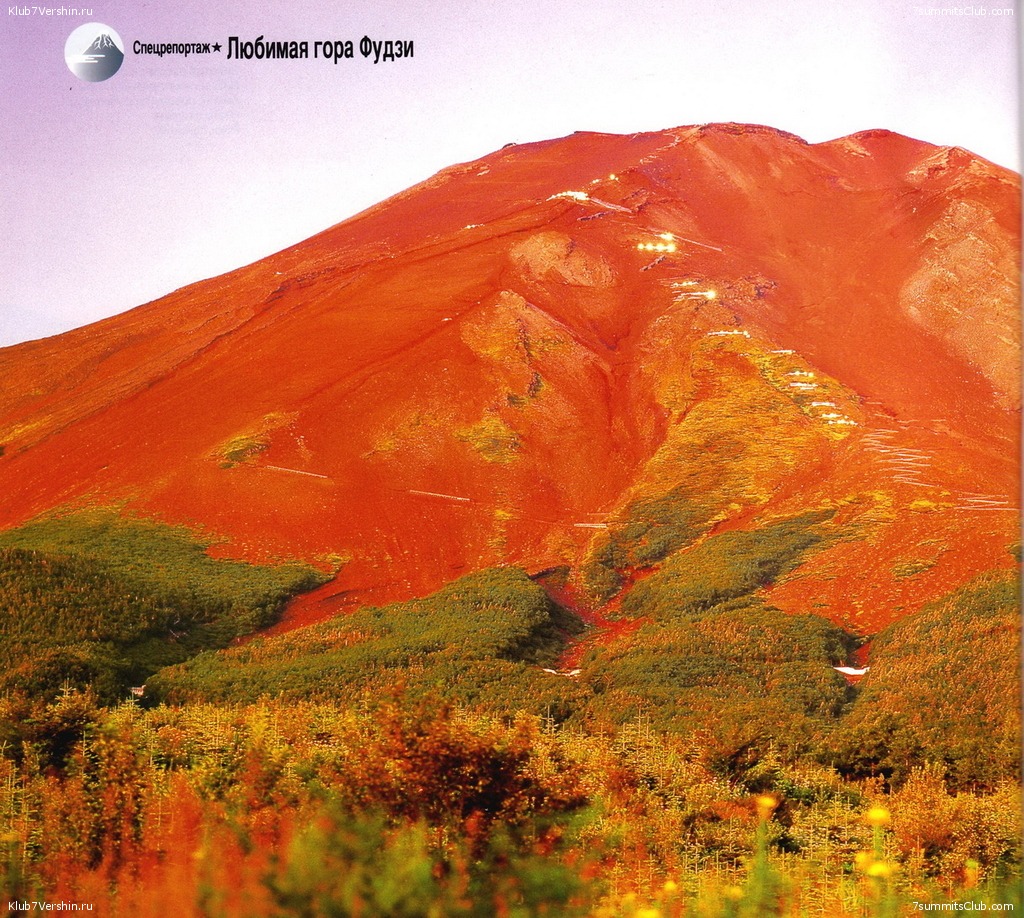
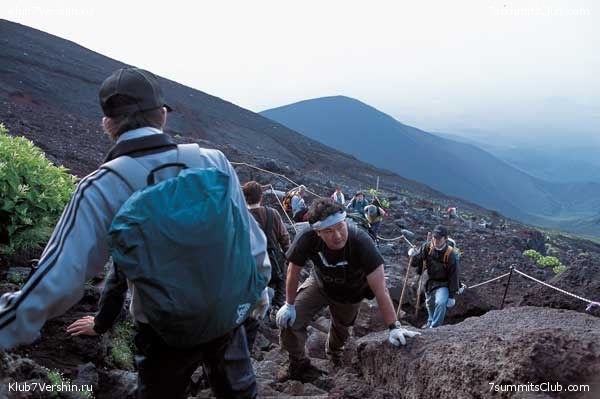
Japan May Charge Visitors to Climb Mount Fuji
Sept. 1 (Bloomberg) -- Japan may start charging people to climb Mount Fuji as a surge in visitors strains facilities on the nation’s highest peak. Local governments of six towns around the cone-shaped mountain are considering ...
Sept. 1 (Bloomberg) -- Japan may start charging people to climb Mount Fuji as a surge in visitors strains facilities on the nation’s highest peak. Local governments of six towns around the cone-shaped mountain are considering introducing the fee, said Masatoshi Hada, spokesman for the Fujiyoshida city government. No decision has been made on the level or timing of any charge.
The number of climbers of the 3,776-meter (12,388 feet) peak has risen 46 percent during the last four years. It costs government and local companies about 35 million yen ($414,000) a year to maintain mountain huts, toilets and other facilities for climbers, Hada said.
“Costs are going up with the huge increase in visitors,” Hada said by telephone today. “We think most people won’t object about a small charge because it’s funding facilities.”
The Fujiyoshida government collected 1.7 tons of plastic bottles, cigarette butts and other garbage on the mountain last year. Fujiyoshida is located about 100 kilometers (62 miles) west of Tokyo.
The Japan tourism organization says the ascent from the 2,305-meter fifth station of the most popular route takes about six hours, and recommends climbing in July or August.
About 292,000 people climbed to at least 3,100 meters in the year ended March 31, from 200,000 in 2005, according to the Ministry of Environment.

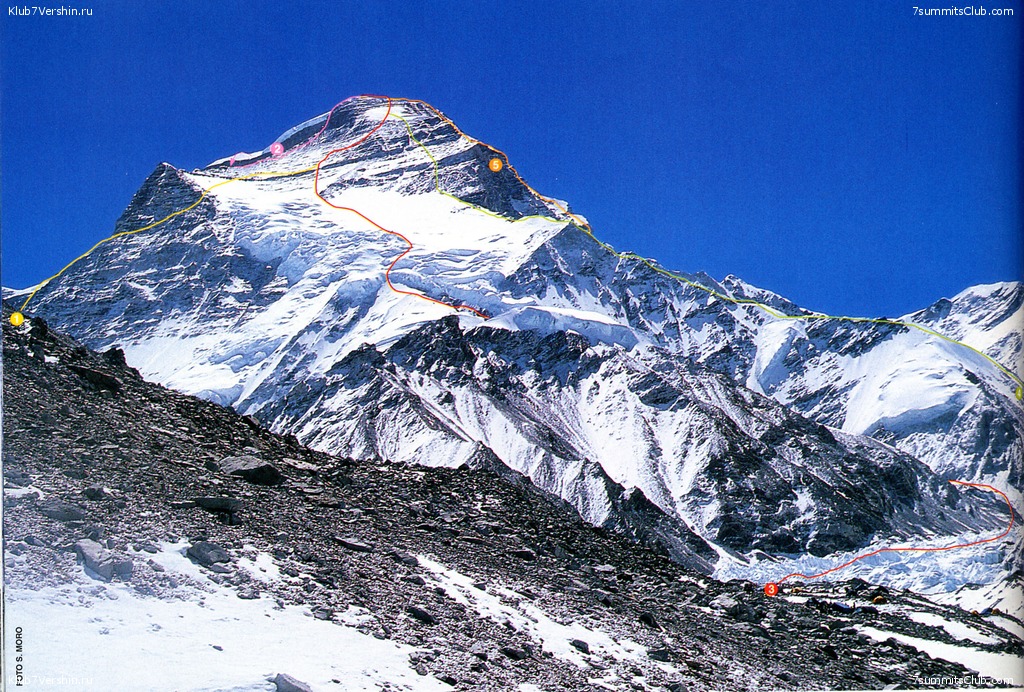
Expedition 7 Summits Club on Cho Oyu is in Tibet ...
Expedition leader Igor Svergun reports from Tibet: "On 10 September the team successfully reached the Chinese border. The road from Kathmandu in a few places is covered by mudflows and forwarding cargo was transferred manually with the help ...
Expedition leader Igor Svergun reports from Tibet: "On 10 September the team successfully reached the Chinese border. The road from Kathmandu in a few places is covered by mudflows and forwarding cargo was transferred manually with the help of the local population. This means additional cost.
Some teams who drop in to Tibet, has already lost 5 days on transportation. Total for Cho-Oyu in the fall season showed up about 35 expeditions. We are somewhere in the middle. On the way to the base camp we will have another 5 days of acclimatization. Today we made an ascent to an unnamed peak height of 4250m. I was pleasantly surprised by the changes that have occurred in recent years: first, a perfect road from the border, it blends harmoniously into the mountain landscape. And the new chic (at a glance undemanding climber) hotel in the town of Niola. We moved into it at the personal request of our Sirdar Mingma Gelu, director of the company 7 Summits Adventure, organizing ascent.
In view of the most powerful in recent years monsoon, in the mountains there is a lot of snow. According to our records, nobody begins climbing part of expeditions. Our goods, accompanied by Andrei Kiyko and Sergei Bublikt, move ahead of the main expedition, they are into the next village of Tingri at 4100 m. We want to reach the base camp sooner to get the best places for tents.

Mingma

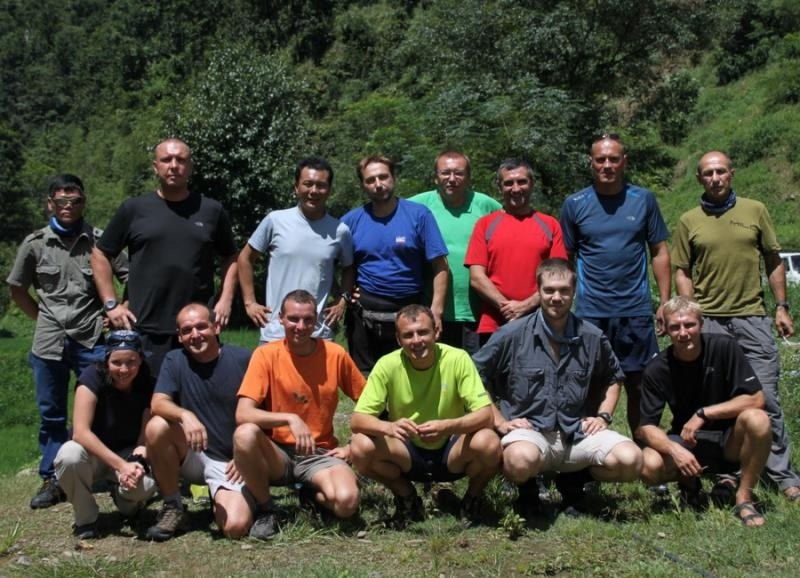

Russian expedition on Shisha Pangma
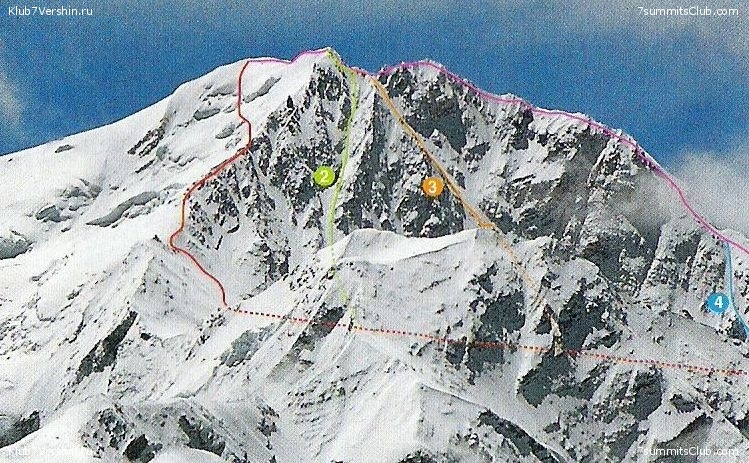
Three Russians, Viktor Afanasyev, Irina Kukueva and Valery Evgrafov from 11 September to 4 October 2010, will attempt to climb the summit of Shisha Pangma (8027m.) Viktor Afanasyev - one of the leaders of the Russian high-altitude ...
Three Russians, Viktor Afanasyev, Irina Kukueva and Valery Evgrafov from 11 September to 4 October 2010, will attempt to climb the summit of Shisha Pangma (8027m.) Viktor Afanasyev - one of the leaders of the Russian high-altitude mountaineering, has to his credit ascents on K2, new routes on Broad Peak and Gasherbrum I, together with Valery Babanov.
Viktor Afanasyev and Valery Babanov
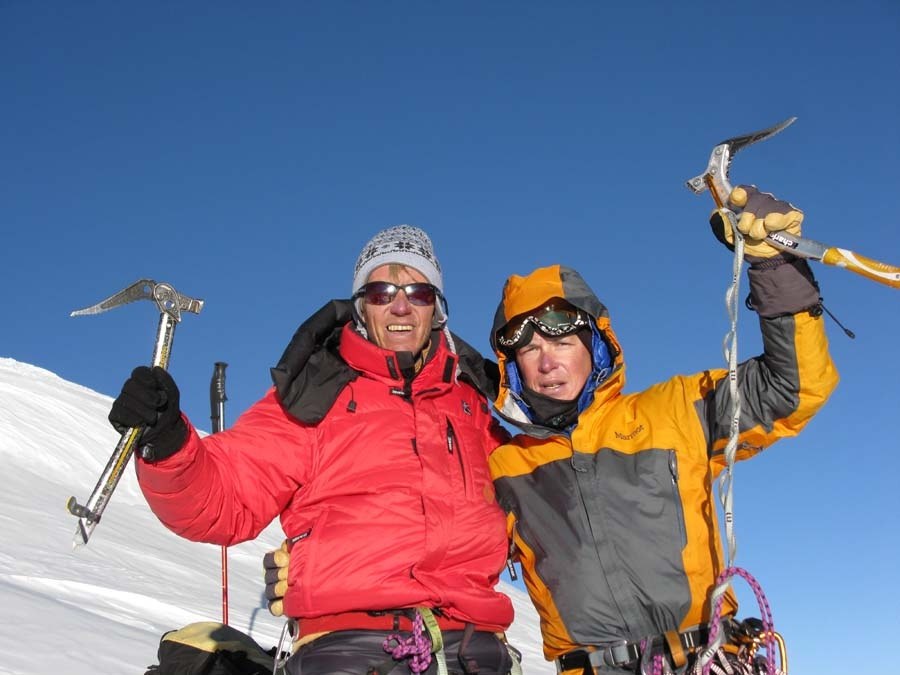
Viktor Afanasyev: "In preparation for the expedition we managed to find several variations on the theme " the height of the main summit”. And the numbers "jumping" from 8013m to 8046m mark. Most frequently used figure - 8027m. Conventionally, while we use this figures”.
Viktor Afanasyev was born May 15, 1979 in Adygeya, in the mountains since 1994 - Master of Sports in mountaineering, rock climbing, 3-time champion of Russia on mountaineering.
In his thirty years he made over 300 ascents in the Caucasus, the Pamirs, Alaska, Karakorum and Nepal, 53 - the highest category of difficulty. He climbed Mount Elbrus in more than 50 times!.
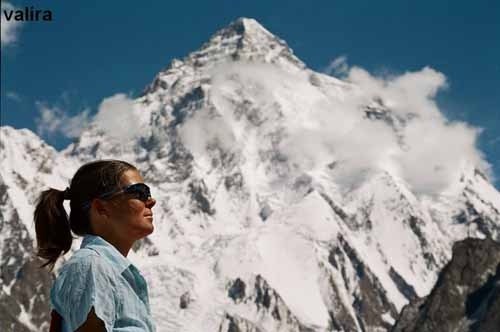
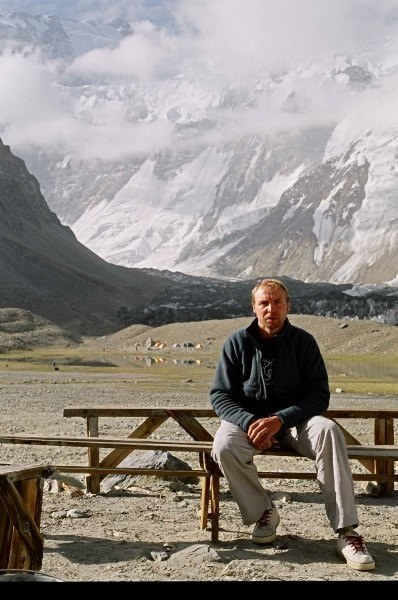
Muscovite Irina Kukueva is known as the first Russian woman-climber reached eight-thousander in Karakorum (Broad Peak in 2007). She runs marathons skiing, touring the world on a bicycle, she has two sons and a cat called Shisha, which also applies to the subject of this article. And Valery Evgrafov - it's her constant companion for life, travel and climbing. Incidentally, he was the leader of the expedition on Broad Peak, although he did not go to the top. Together they went on Kilimanjaro, Lenin Peak, Mount Fuji, Korjenevskaya, Communism ...
Expedition to Cho Oyu was launched on Sunday
7 Summits Club and our subsidiary Nepalese company 7Summits Adventures (director Mingma Gela) organizes an international climbing expedition on Cho Oyu. Project Manager is 7 Summits Club guide Igor Svergun, who gathered to take part in the ...
7 Summits Club and our subsidiary Nepalese company 7Summits Adventures (director Mingma Gela) organizes an international climbing expedition on Cho Oyu. Project Manager is 7 Summits Club guide Igor Svergun, who gathered to take part in the ascent climbers from Ukraine and Russia. This action is called also the international expedition "Ukraine-Himalaya-2010". September 4th all Ukrainian participants departed from the airport "Borispol" (Kiev) in Kathmandu, where they were waiting for Russian colleagues.
The expedition consists of experienced climbers, that were as members in the spring expedition "Ukraine-Makalu-2010 (Sergey Boublik, Andrey Kiiko, Alexander Zakolodny), and climbers who will be first time to climb 8000m. The basis of the expedition are kharkovites. The leader – an experienced Himalayan climbers, master of sports of international class, Igor Svergun.
Ukrainian climbers consider climbing Cho Oyu as the initial phase of the multi-year program of conquering all the highest peaks of the world, 14 eight-thousanders . This "battle test" the new team of high-altitude climbers, working out tactics and operating mode of Himalayan experience.
Success and weather!
International expedition "Ukraine-Himalaya-2010":
Igor Svergun (Kharkov) - expedition leader
1. Kiiko Andrew (Kharkiv)
2. Zakolodny Aleksanndr (Kharkiv)
3. Kashaev Badawi (Kharkiv)
4. Boublik Sergey (Sumy)
5. Chistovsky Gennady (Sumy)
6. Rodiontsev Andrew (Kiev)
7. Samarsky Tim (Zaporozhye)
8. Sanzharevsky Igor (Zaporozhye)
9. Fedorov Evgeny (Moscow)
10. Koveshnikov Pavel (Moscow)
11. Matusova Natalia (Moscow)
12. Bige Dmitry (Moscow)
The organizer of the expedition - the Federation of Mountaineering and Climbing Kharkiv region (President, MSMK Gennady Kopeika, vice president, ZMS, ZTU Sergei Bershov).
Sponsorships - OOO Stalkonstruktsia "(Kharkov, SM Evel).
Information support - Federation of alpinism and rock climbing of Ukraine (President ZTU, MC V. Simonenko)
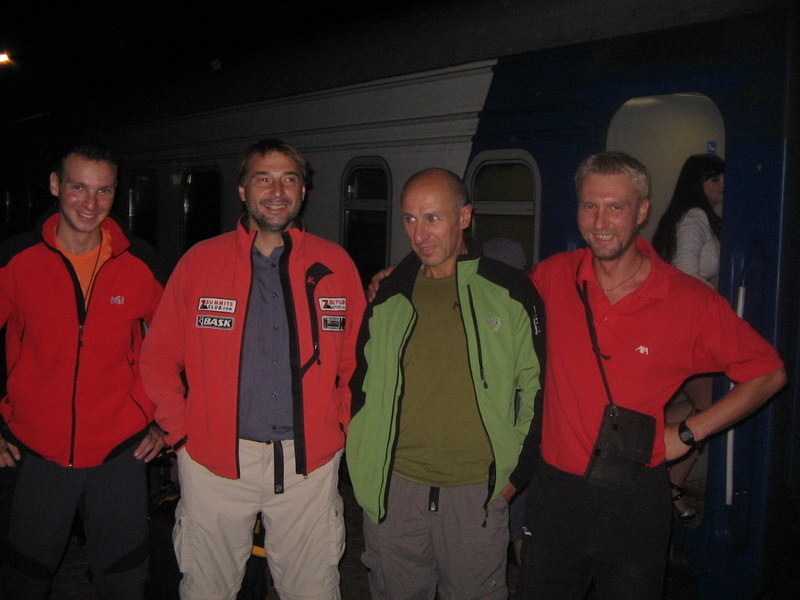
Igor Svergun
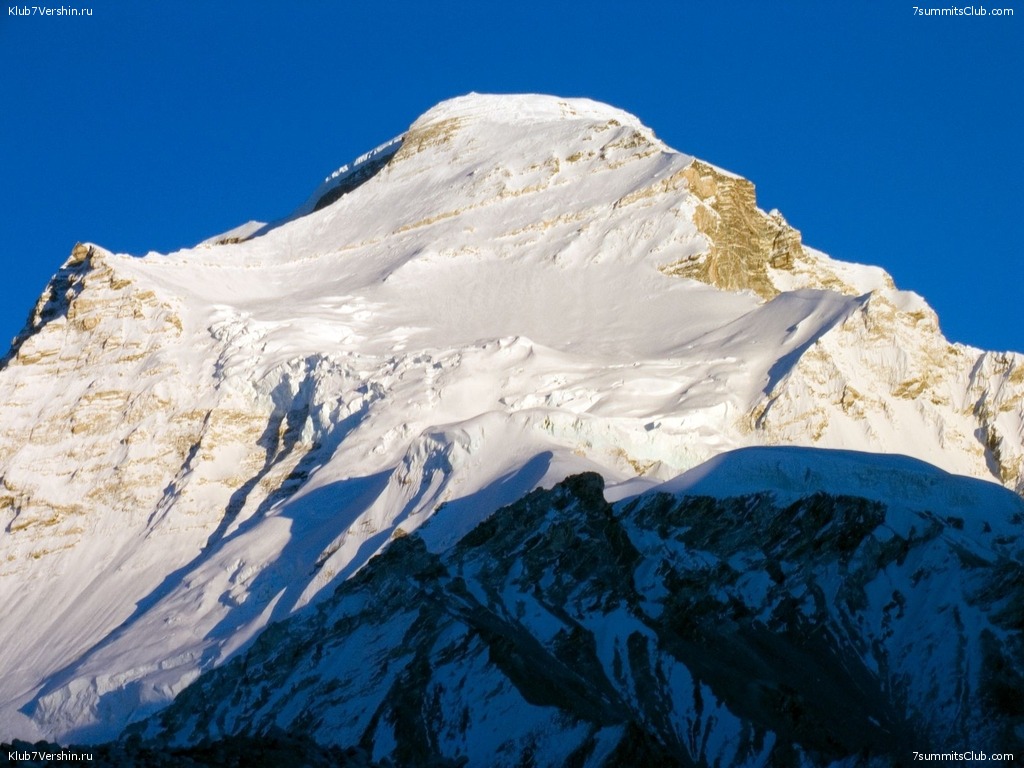

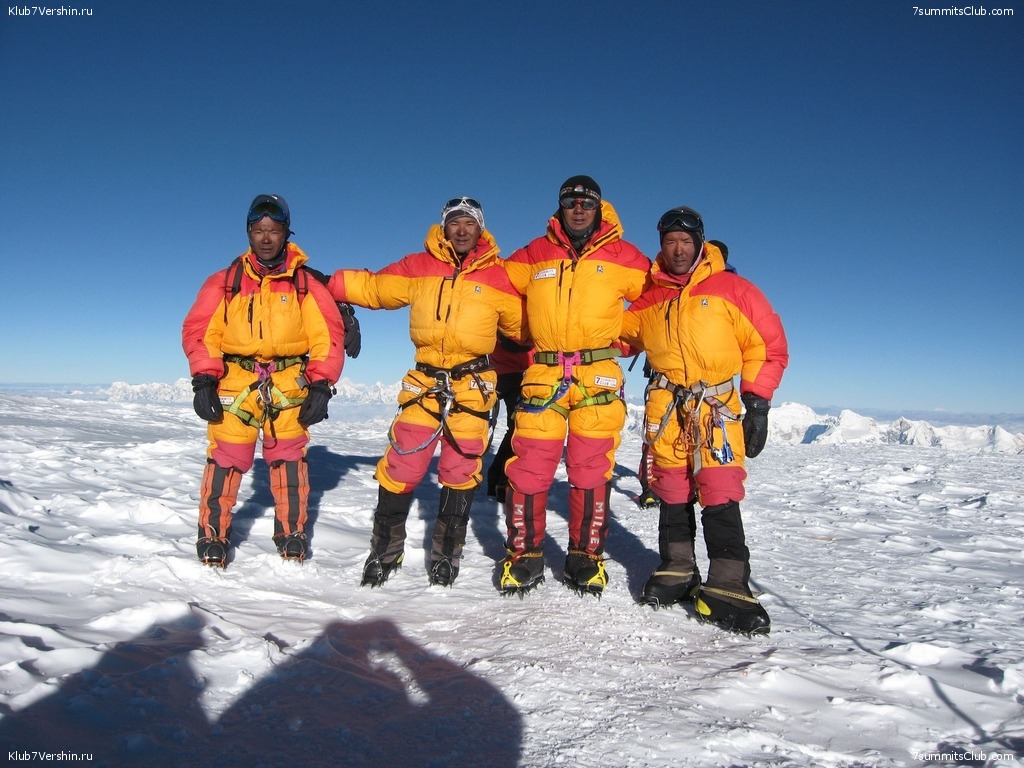
Mingma at the top ofr Cho Oyu (on the right)
New doubts over Korean Oh Eun-Sun's climbing record
Fresh doubt has been cast on the record of a Korean climber, who was hailed in April as the first woman to climb the world's 14 highest peaks. Oh Eun-sun "probably failed" to reach the top of the world's third-highest peak, Kangchenjunga, ...
Fresh doubt has been cast on the record of a Korean climber, who was hailed in April as the first woman to climb the world's 14 highest peaks.
Oh Eun-sun "probably failed" to reach the top of the world's third-highest peak, Kangchenjunga, the Korean Alpine Federation (KAF) judged on Thursday.
Top Himalayan record keeper Elizabeth Hawley is investigating the KAF ruling.
If she decides to list the 2009 ascent as "unrecognised", the record will pass to Spanish climber Edurne Pasaban.
Ms Oh climbed Annapurna, the last of her 14 mountains above 8,000m, on 27 April. Ms Pasaban completed the list by scaling Shisha Pangma just under three weeks later, on 17 May.
Ms Oh responded to the Korean Alpine Federation's verdict - issued at a meeting of seven local climbers who have scaled the 8,586m mountain - by describing it as "a unilateral opinion".

"All participants were climbers who had doubts about my achievement from the beginning, so their conclusion must have been already set," she said in an interview with MBC television, quoted by the AFP news agency.
Miss Hawley, keeper of the authoritative Himalayan Database, told the BBC in June it was looking "unlikely" that Ms Oh summited Kangchenjunga.
This came after one of the three sherpas who accompanied her on the ascent of Kangchenjunga said she stopped 150m below the summit, in high winds.
The sherpa, Nurbu, told Miss Hawley he was leading the group when the others waved at him to come down.
Another sherpa, Dawa Wangchuk, has already stated publicly that the group did reach the summit.
"I'm sure she's not lying. She just believed her guide, Dawa Wangchuk. She had great confidence in him," Miss Hawley told the BBC.
Jin Park, a spokesman for Ms Oh's sponsors, the Korean outdoor clothing firm Blackyak, said Dawa Wangchuk had climbed Kangchenjunga four times.
"So I think there is no possibility for confusion about the summit," he said.
Evidence 'piling up'
Doubts have been circulating about Ms Oh's ascent of Kangchenjunga for months.

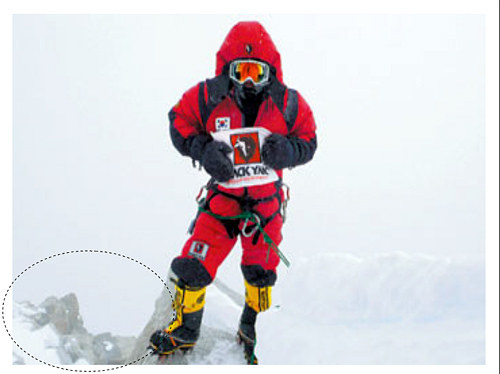
Experts say there is no convincing picture of Ms Oh on the summit, and have questioned whether she could have finished the last 200m or so of the climb, when clouds obscured the view from below, in the time available to her.
Continue reading the main story
Is Oh Eun-Sun a record-breaker?
A member of the next team to reach the peak of Kangchenjunga, in May 2009, the Norwegian climber Jon Gangdal, says he found Ms Oh's Korean flag weighed down by stones, some 50m or 60m below the summit.
At present, the ascent is listed as "disputed" in Miss Hawley's Himalayan Database. In June she said it seemed likely to remain that way, even though evidence was "piling up" against her.
Questions about Miss Oh's ascent of Kangchenjunga first arose in Korea itself just weeks after she claimed to have reached the summit. Climbers linked to a rival woman climber Go Mi-Young (who died in a climbing accident in July 2009) were particularly sceptical.
Korean Alpine Federation secretary general Lee Eui-Jae said participants in Thursday's meeting all shared the view that Miss Oh's photographs on Kangchenjunga did not "seem to match the actual landscape".
"They also agreed that Oh's previous explanations on the process of her ascent to Kangchenjunga are unreliable," he told AFP.
Meanwhile, Eberhard Jurgalski, from the website 8000-ers.com, points out that most climbers who want recognition for their ascents either take conclusive summit photographs or have eyewitnesses.
He says he has seen convincing photographs of Miss Oh on the summit of only eight of the 14.
"If someone is collecting peaks and wants to be accepted as the first woman to have climbed all 14 8,000ers, she should be able to give more evidence of her climbs," he says.
"The whole attitude of people who want to be accepted as having done exceptional things must change."
By Joanna Jolly and Stephen Mulvey BBC News
Our team on Ararat
Ararat.
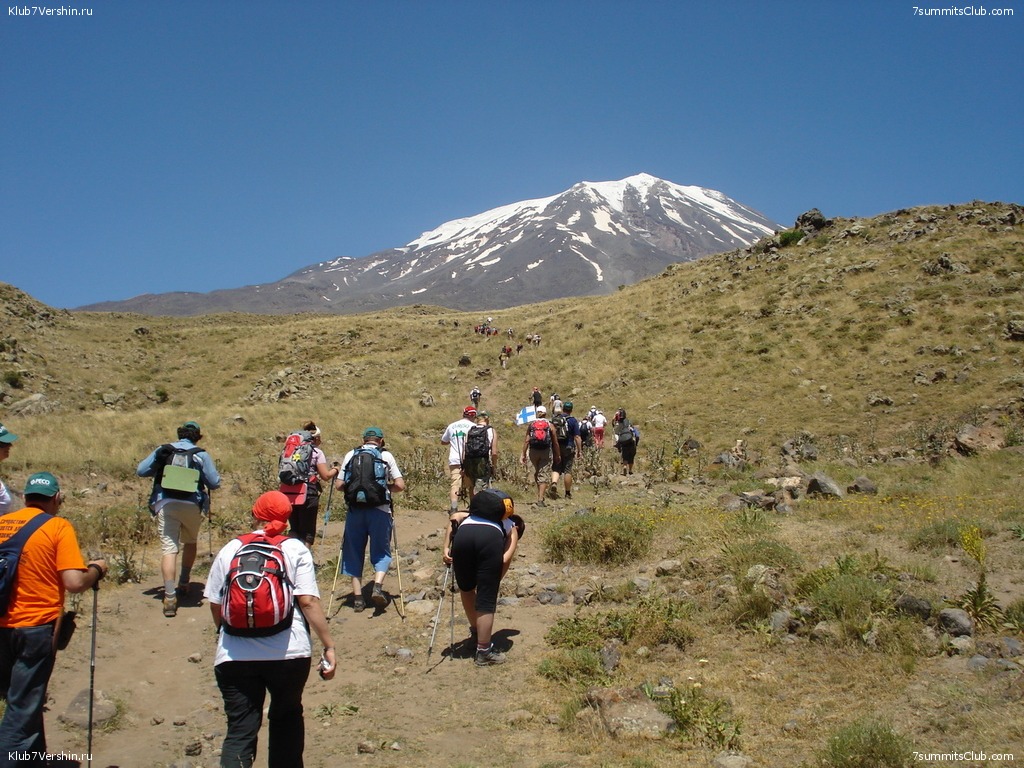
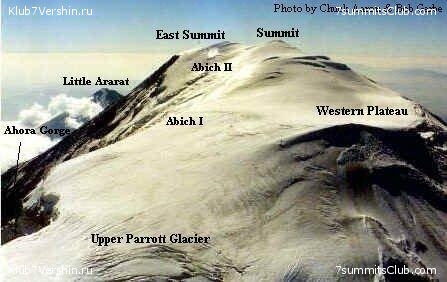
By morning the good weather came on Ararat, and a group of climbers from 7 Summits Club to seize the opportunity. From the camp at an altitude of 4100 meters, our team reached the summit of the legendary mountain for six and a half hours. ...
By morning the good weather came on Ararat, and a group of climbers from 7 Summits Club to seize the opportunity. From the camp at an altitude of 4100 meters, our team reached the summit of the legendary mountain for six and a half hours. Almost all members of the expedition reached the highest point of Mount Ararat: Vladimir Babanov, Konstantin Babanov, Vladimir Gusakovsky, Alexei Kabanov, Margarita Sizikova, Tatiana Sizikova and guide Marina Nemirova. Sergei Andronov reached the height of 4700 meters.
On the descent the weather began to deteriorate gradually, and when climbers went to the camp of 3300 meters, was thick snowfall. In such conditions, the team decided to descend straight down and go to the hotel. This, of course, was difficult, but all agreed that it is better to avoid another wet night. Congratulations to the climbers and wait for their return!
Christian Stangl K2 summit pic and report: "It was not fun at all"
(ExplorersWeb/Madrid) “If mountain climbing were as the last 70 hours here at K2, I would immediately stop,” Christian Stangl ensured at arrival back in BC. The Austrian sky-runner bagged the only K2 summit this season on ...
(ExplorersWeb/Madrid) “If mountain climbing were as the last 70 hours here at K2, I would immediately stop,” Christian Stangl ensured at arrival back in BC. The Austrian sky-runner bagged the only K2 summit this season on Aug12th, at 10:00am, local time, in a lonely 70 hours-long push up the Abruzzi Spur.
Although a larger debrief is expected upon his return home, Christian reported some details on the ascent and a summit pic via sat-phone, before leaving BC yesterday.
Snow, falling rocks and just one stop on the way up
“I set off from BC on Tuesday at 5:00pm, up the Abruzzi Spur, and climbed all the way to my C3 at 7,100m,” Christian told his home team. “It snowed all the time and some rocks fell on my way.”
“In C3 the skies cleared – just as Charly Gabl had forecasted,” Stangl noted.”I had to hurry up since I knew I just had some hours time before conditions worsened up again.”
At 10:00 am on Thursday, Christian stood on the top only a few moments, before speeding back to C3. "The visibility was not very good,” he stated. “I took no pleasure at being on the summit – that mountain is so dangerous! Technically is not that difficult, but otherwise it is certainly the most dangerous mountain I've ever tried or done!”
A ghostly visitor
"Thursday at 5:00pm I continued down the Abruzzi Spur. During the night, I was guided by my GPS, although at times I separated from the original route, since the ropes were so soaked that rappelling was impossible. At midnight I looked for shelter under a ledge and fell asleep. I woke up again by at dawn, at about 4 am.
“You won’t believe me now but – as I woke up, I saw an animal (like a cat) standing in front of me!” Back at BC I was told it may have been a snow leopard. Back then though, I thought I was freaking out.”

Not fun at all
“Summarizing: In the last three years I’ve spent 4 and a half months on this mountain, and had only one nice day – which I used to reach the top,” Christian pointed out. “As I said before – this is not fun at all; otherwise topping-out is a compensation for all the hardships endured though. Now, I just want to return home as fast as possible."
After sleeping for 12 hours, Christian packed up and left. On his latest call home yesterday, he was already trekking towards Skardu. “I am craving good food and a bier,” he said.
However, both things may have to wait. K2 and Gasherbrums teams are reporting on difficulties to reach Skardu, and an even tougher time to catch a plane seat to Islamabad (read a separate report on ExplorersWeb.com later today).
Update, 10:00am EST: It's over for the Polish team
"Jet Stream up the mountain and avalanches at lower parts have forced us to draw back," Polish Boguslaw Ogrodnik reported. "Devastated we have already come down to the base camp. We reserved the porters for the 18th of August."
July 4, 2009: Christian Stangl turned back at 8,300 meters on a speed attempt on K2. One year later, the Austrian sky-runner returned to repeat the feat, “plus the 316 meters I left undone to the summit,” he stated.
Devoted to speed ascents, in May 2006 Christian summited Everest w/o O2 in only 16 hours 42 minutes. from BC to the top, and six more hours back to BC.
K2 is the first stage of Christian’s current project. After bagging the speed "seven summits" (including Everest in 16h 42min w/o O2 or high camps), Stangl hopes to run up the “second highest 'seven'”. After K2, he will head to Mount Tyree, Antarctica’s tallest peak after Vinson.
ExWeb